大家好,我是前端西瓜哥。
我们经常需要将图形放到到特定的矩形容器中,常用的的有两种策略:fit 和 fill。
fit
fit,合身、适应、匹配之意。
也有些地方叫做 contain(比如 CSS),差不多的意思,也是让目标图形装到容器下。
fit 的场景是希望看到完整的内容,比如 zoom to fit 让画布调整 zoom 值可以看到所有的图形,或者展示图标、公司的 logo,裁剪掉一部分就不太好了。
其策略的关键在于,将图形等比放大和缩小后,刚好把这个图形 "完整地" 放到容器下。
可能会留下缝隙,只要图形和容器的宽高比不同,就一定会发生。
也就是说,缩放后的图形的宽高 "都要" 小于等于容器的宽高。
为了让图形能刚刚好放入,通常是图形的一侧和容器对应的一侧是相等的,另一侧则是小于等于容器对应侧。
另外要让图形的中心点和容器的中心点对齐。
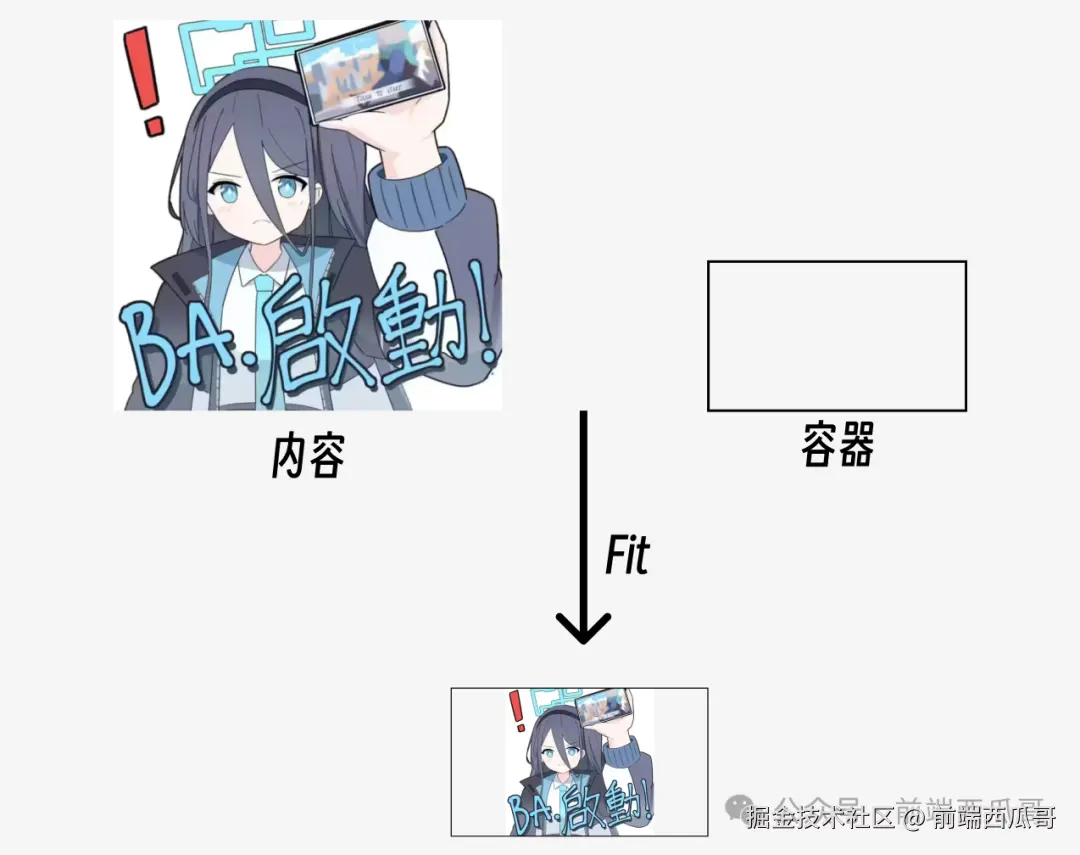
求需要应用的缩放比,算法实现就是分别计算图形的宽高到容器的宽高,分别要缩放的值 scaleWidth 和 scaleHeight,取 其中小的值 即可。
ts
const calcFitScale = (
  container: {
    width: number;
    height: number;
  },
  content: {
    width: number;
    height: number;
  },
) => {
const scaleX = container.width / content.width;
const scaleY = container.height / content.height;
const scale = Math.min(scaleX, scaleY);
return scale;
};
我们可以写成求一个矩阵的形式,图形移动到容器需要应用的矩阵。
这样的话需要再提供 x 和 y 的值(图形的左上角位置),这样才知道要怎么移动。
ts
const calcFitMatrix = (
  container: {
    x: number;
    y: number;
    width: number;
    height: number;
  },
  content: {
    x: number;
    y: number;
    width: number;
    height: number;
  },
) => {
const scaleX = container.width / content.width;
const scaleY = container.height / content.height;
const scale = Math.min(scaleX, scaleY);

const contentCenterX = content.x + content.width / 2;
const contentCenterY = content.y + content.height / 2;

const containerCenterX = container.x + container.width / 2;
const containerCenterY = container.y + container.height / 2;

const matrix = new Matrix()
    // content 的中心移动到原点
    .translate(-contentCenterX, -contentCenterY)
   // 缩放
    .scale(scale, scale)
   // 中心对齐到 container
    .translate(containerCenterX, containerCenterY);

return matrix;
};
这种写法还有个额外的好处:对矩阵做逆矩阵,就得到保持图形位置不变,让容器去移动缩放实现 fit 效果的矩阵。
fill
fill,填充、充满之意 。也有地方叫做 cover(覆盖),让图形完全地 "填满" 容器,不留一点缝隙。
fill 的场景是让内容充满,不留一点空隙,通常应用于图片,比如给 3D 模型的面贴图。
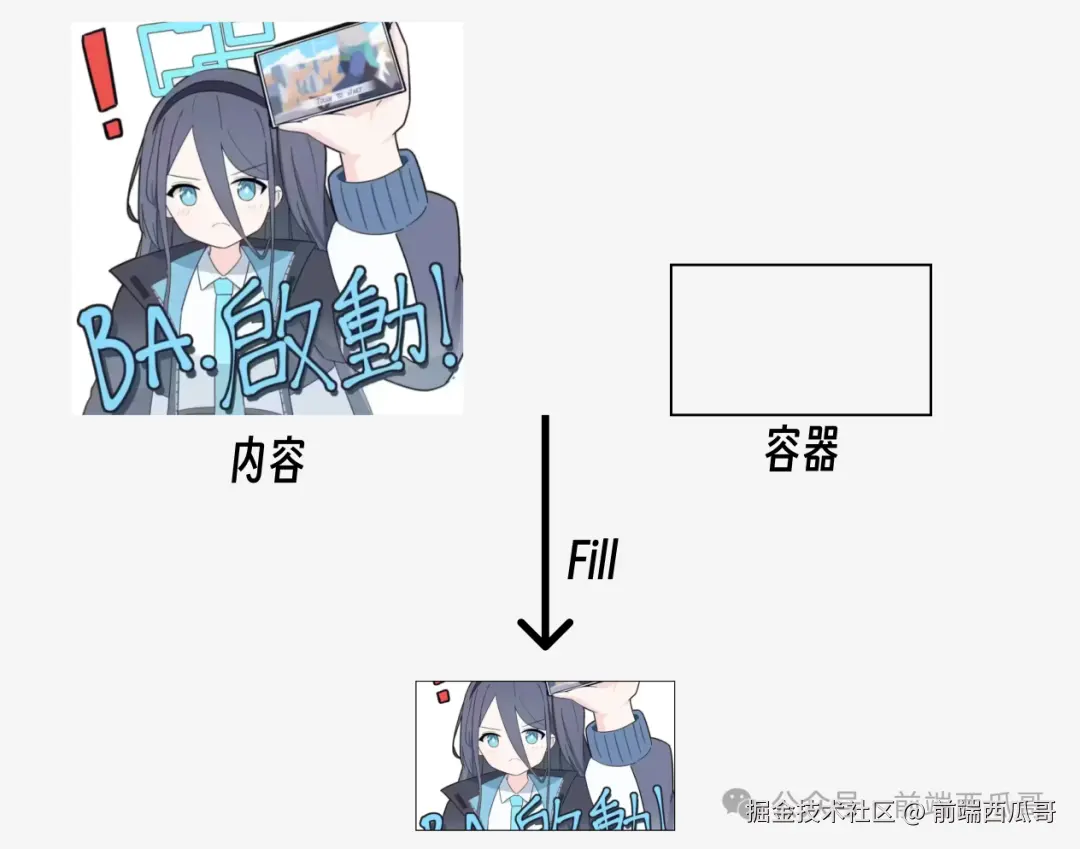
我们把裁剪效果去掉,看下图形和容器的大小和位置关系。

可以看到,缩放后的图形的宽高 "都要" 大于等于容器的宽高。至少有一边是和容器对应边是一致的。
和前面的 fit 策略的唯一区别,就是将原来的取 scaleX 和 scaleY 中的小值,改为 取大值 即可。
最后再裁剪掉多余的地方(或者做蒙版 mask),这个需要你自己用自己的渲染引擎处理,和我们要实现的算法无关。
计算缩放比的写法:
ts
const calcFillScale = (
  container: {
    width: number;
    height: number;
  },
  content: {
    width: number;
    height: number;
  },
) => {
const scaleX = container.width / content.width;
const scaleY = container.height / content.height;
const scale = Math.max(scaleX, scaleY);
return scale;
};
计算矩阵的写法:
ts
const calcFillMatrix = (
  container: {
    x: number;
    y: number;
    width: number;
    height: number;
  },
  content: {
    x: number;
    y: number;
    width: number;
    height: number;
  },
) => {
const scaleX = container.width / content.width;
const scaleY = container.height / content.height;
const scale = Math.max(scaleX, scaleY);

const contentCenterX = content.x + content.width / 2;
const contentCenterY = content.y + content.height / 2;

const containerCenterX = container.x + container.width / 2;
const containerCenterY = container.y + container.height / 2;
const matrix = new Matrix()
    // content 的中心移动到原点
    .translate(-contentCenterX, -contentCenterY)
    // 缩放
    .scale(scale, scale)
    // 中心对齐到 container
    .translate(containerCenterX, containerCenterY);

return matrix;
};
线上 demo
写了个简单 demo,感兴趣的读者可以体验一番。
结尾
fit 是做适应的,让容器刚好装下,可留空隙,但要完整。
fill 是尽量填充,让容器充满,不要留缝隙,但也不要放太大。
我是前端西瓜哥,关注我,学习更多平面几何知识。
相关阅读,