需求描述:
最近在看一个开源项目,想前端本地调试,调用它线上地址:https://****.ai/apps
实现方案:
前端直接配置,代理它线上地址
实现:
前端 next.config.ts 配置:
csharp
const nextConfig: NextConfig = {
  // ...
  async rewrites() {
    return [
      {
        source: '/console/api/:path*',
        destination: `https://cloud.dify.ai/console/api/:path*`,
      }
    ]
  }
}
代理的结果是 相关接口使用调用不成功;
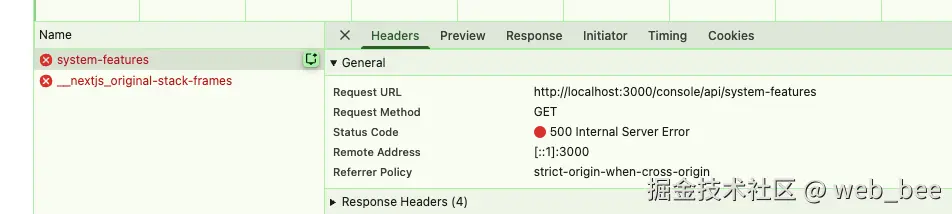
理论上 真实的代理地址是:
https://cloud.dify.ai/console/api/system-features
在项目中访问 无法正常调用;
然后我通过浏览器直接访问;
通过浏览器是可以正常访问的;✅

问题:
浏览器可以访问,前端项目中代理时不能访问
环境:
本地网络环境是,开启了相关网络环境
最终问题确认:
Next.js 的 rewrites 代理请求没有走本地 Clash 代理 。这是因为 Next.js 在服务端(Node.js 环境)执行 rewrites 时,其底层使用的是标准的 HTTP/HTTPS 客户端(如 http、https 模块或 undici),而 这些客户端默认不会自动使用系统或本地的 HTTP/HTTPS 代理(如 Clash) ,除非显式配置
所以,我们的前端项目没有走系统代理,所以访问不了接口;
解决方案:
方案一:
使用 http-proxy-agent + 自定义 fetch (推荐用于 Next.js 13+ App Router)
但注意:rewrites 是 Next.js 内置功能,无法直接注入自定义代理逻辑。所以更可行的做法是:
❌ 不要用
rewrites做跨域代理到需要走代理的外部 API ✅ 改用 API Route(pages/api/proxy.ts)做中转,并在该路由中显式配置代理
推荐做法:用 API 路由中转 + 配置代理
- 删除
next.config.js中的rewrites - 创建一个 API 路由 :
pages/api/console/[...path].ts
typescript
// pages/api/console/[...path].ts
import { NextApiRequest, NextApiResponse } from 'next';
import { createProxyMiddleware } from 'http-proxy-middleware';
// 注意:http-proxy-middleware 在 Vercel 上不工作,仅适用于本地开发或自托管
const proxy = createProxyMiddleware({
target: 'https://cloud.dify.ai',
changeOrigin: true,
pathRewrite: {
'^/api/console': '/console', // 将 /api/console/foo → /console/foo
},
agent: process.env.NODE_ENV === 'development'
? new (require('https-proxy-agent'))('http://127.0.0.1:7890')
: undefined,
});
export default function handler(req: NextApiRequest, res: NextApiResponse) {
return new Promise((resolve, reject) => {
(proxy as any)(req, res, (result: unknown) => {
if (result instanceof Error) {
reject(result);
} else {
resolve(result);
}
});
});
}
export const config = {
api: {
bodyParser: false,
externalResolver: true,
},
};-
安装依赖:
npm install http-proxy-middleware https-proxy-agent
-
前端代码中将请求指向你的本地 API 路由:
原来可能请求:
bash
/console/api/workspaces现在改为:
bash
/api/console/api/workspaces或者你在前端统一配置 baseURL 为 /api/console。
注意事项
http-proxy-middleware和https-proxy-agent只适用于 Node.js 环境,不能在浏览器中运行。- 如果你部署到 Vercel,Clash 代理不可用,这种代理方式只适合 本地开发。
- 如果你只是本地开发,也可以考虑 让 Clash 全局接管流量(TUN 模式) ,这样 Node.js 请求也会被透明代理。但不是所有 Clash 客户端都默认开启 TUN。
方案二:
替代思路:开启 Clash 的 TUN 模式(透明代理)
如果你使用的是 Clash Verge / Clash Meta 等支持 TUN 模式的客户端:
- 开启 TUN 模式(或"增强模式")
- 这样所有本地应用(包括 Node.js)的网络请求都会被强制走代理
- 此时 Next.js 的
rewrites就能自动走 Clash,无需改代码
✅ 优点:无需改代码 ❌ 缺点:依赖客户端配置,且可能影响其他网络请求
总结
| 方案 | 是否推荐 | 说明 |
|---|---|---|
改用 API 路由 + https-proxy-agent |
✅ 强烈推荐(可控) | 显式指定代理,适合开发 |
| 开启 Clash TUN 模式 | ✅ 简单快捷 | 适合纯本地开发,但全局生效 |
继续用 rewrites |
❌ 不可行 | Node.js 不会自动走 HTTP 代理 |
个人使用的是方案二、最终接口能访问了;
不过登录之后的接口还是报错,token问题; 应该是后端接口做了限制,开发中不能直接使用线上地址;
最后还是需要自己本地启动一下它的后端服务;