注:本文为 " 电流的世纪之争" 相关合辑。
英文引文,机翻未校。
中文引文,略作重排。
图片清晰度受引文原图所限。
未整理去重,如有内容异常,请看原文。
How Edison, Tesla and Westinghouse Battled to Electrify America
爱迪生、特斯拉与威斯汀豪斯:为美国电气化展开的角逐
Published: January 30, 2015
Last Updated: September 05, 2025
The epic race to standardize the electrical system---later known as the War of the Currents---lit up 19th-Century America.
这场为确立电力系统标准展开的宏大角逐(后被称作电流之战),点亮了 19 世纪的美国。
Image Source/Getty Images
In the late 19th century, three brilliant inventors, [Thomas Edison, [Nikola Tesla and [George Westinghouse, battled over which electricity system---direct current (DC) or alternating current (AC)--would become standard. During their bitter dispute, dubbed the War of the Currents, Edison championed the direct-current system, in which electrical current flows steadily in one direction, while Tesla and Westinghouse promoted the alternating-current system, in which the current's flow constantly alternates.
19 世纪末,三位杰出发明家托马斯·爱迪生(Thomas Edison)、尼古拉·特斯拉(Nikola Tesla)与乔治·威斯汀豪斯(George Westinghouse),围绕直流电(DC)与交流电(AC)何种电力系统成为行业标准展开了争夺。在这场被称作电流之战的激烈纷争中,爱迪生支持直流电系统,电流沿单一方向稳定流动;特斯拉与威斯汀豪斯则推广交流电系统,电流方向持续交替变化。
The most famous of the three visionary men, Edison, developed the [world's first practical light bulb in the late 1870s, then began building a system for producing and distributing electricity so businesses and homes could use his new invention. He opened his first power plant, in New York City, in 1882. Two years later, Tesla, a [young engineer from Croatia, immigrated to America and went to work for Edison. Tesla helped improve Edison's DC generators while also attempting to interest his boss in an AC motor he'd been developing; however, the Wizard of Menlo Park, a firm supporter of DC, claimed AC had no future. Tesla quit his job in 1885 and a few years later received a number of patents for his AC technology. In 1888, he sold his patents to industrialist George Westinghouse, whose Westinghouse Electric Company had quickly become an Edison competitor.
三位先驱中最为知名的爱迪生,于 19 世纪 70 年代末研制出世界上首款实用型白炽灯,随后着手搭建电力生产与配送系统,使企业与家庭能够使用这项新发明。1882 年,他在纽约市建成了首座发电厂。两年后,来自克罗地亚的青年工程师特斯拉移民美国并入职爱迪生公司。特斯拉协助改进了爱迪生的直流发电机,同时尝试让上司关注自己研发的交流电动机;而作为直流电坚定支持者的门洛帕克奇才爱迪生,却宣称交流电毫无前景。1885 年特斯拉离职,数年后为其交流电机技术获得多项专利。1888 年,他将专利转让给实业家乔治·威斯汀豪斯,后者创立的威斯汀豪斯电气公司迅速成为爱迪生的竞争对手。
Feeling threatened by the rise of AC, which could be distributed over long distances much more economically than DC, Edison launched a propaganda campaign to discredit AC and convince the public it was dangerous. As part of this campaign, animals were publicly electrocuted with AC, and when New York State sought a more humane alternative to hanging its death-penalty prisoners, Edison, once an opponent of capital punishment, recommended alternating current-powered electrocution as the fastest, deadliest option. In 1890, convicted murderer William Kemmler became the first person to die in the electric chair. The apparatus, designed by an electricity salesman secretly on Edison's payroll, was powered by a Westinghouse AC generator.
交流电相较直流电可更经济地实现远距离输电,其发展让爱迪生感受到威胁,于是他发起宣传运动抹黑交流电,向公众宣扬其危险性。该运动期间,出现了使用交流电公开电刑处死动物的行为;当纽约州寻求替代绞刑、更为人道的死刑方式时,曾反对死刑的爱迪生,提议采用交流电驱动的电刑,称其为最迅速、最致命的选择。1890 年,被判谋杀罪的威廉·凯姆勒成为首位死于电椅的人。该刑具由一名暗中受雇于爱迪生的电气销售员设计,供电设备则为威斯汀豪斯公司的交流发电机。
Ultimately, however, Edison failed in his efforts to discredit AC. Westinghouse won the contract to supply electricity to the 1893 World's Fair in Chicago---beating out rival General Electric, which was formed in 1892 by a merger involving Edison's company---and the expo became a dazzling showcase for Tesla's AC system. Westinghouse also received an important contract to construct the AC generators for a hydroelectric power plant at Niagara Falls; in 1896, the plant started delivering electricity all the way to Buffalo, New York, 26 miles away. The achievement was regarded as the unofficial end to the War of the Currents, and AC became dominant in the electric power industry.
但最终,爱迪生抹黑交流电的行动以失败告终。威斯汀豪斯击败由爱迪生公司参与合并组建于 1892 年的通用电气公司,赢得 1893 年芝加哥世博会供电合同,这场博览会也成为特斯拉交流系统的精彩展示舞台。威斯汀豪斯还获得重要合同,为尼亚加拉瀑布水电站建造交流发电机;1896 年,该电站开始向 26 英里外的纽约州布法罗市输送电力。这一成果被视作电流之战非正式落幕的标志,交流电自此在电力行业占据主导地位。
War of the Currents: How AC Defeated DC in the Race to Electrification
电流之战:交流电如何在电气化进程中战胜直流电
February 07, 2025 by Luke James
In 19th-century America, some of the world's greatest engineers and industrialists battled to standardize the electrical system.
在 19 世纪的美国,全球多位顶尖工程师与实业家围绕电力系统的标准化展开了激烈角逐。
The so-called [War of the Currents in the late 19th century marked a defining moment for the future of electricity. The battle pitted two competing systems against each other: direct current (DC), championed by Thomas Edison, and alternating current (AC), supported by George Westinghouse and Nikola Tesla. Its outcome shaped the way electricity is delivered to homes and businesses worldwide today.
19 世纪后期的所谓电流之战,是电力发展历程中的标志性事件。这场竞争将两种电力系统推向对立:托马斯·爱迪生所倡导的直流电(DC),以及乔治·威斯汀豪斯与尼古拉·特斯拉所支持的交流电(AC)。其最终结果决定了当今全球家庭与工商业的电力输送方式。
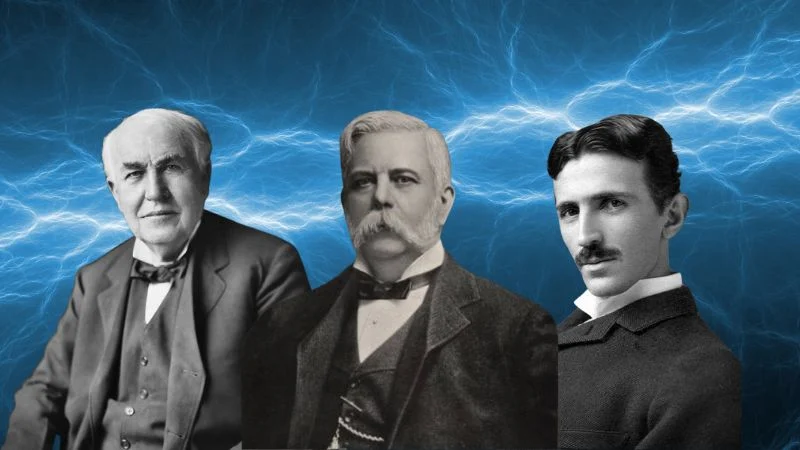
Thomas Edison (left), George Westinghouse (middle), and Nikola Tesla (right) were the main figures of the War of the Currents. Image (modified) used courtesy of Wikimedia Commons (Public domain) and the Library of Congress
托马斯·爱迪生(左)、乔治·威斯汀豪斯(中)与尼古拉·特斯拉(右)是电流之战的主要人物。图片(经修改)来源于维基共享资源(公有领域)与美国国会图书馆
Electrification Takes Off
电气化进程兴起
By the 1880s, the United States was on the brink of electrifying its cities. Thomas Edison, already famous for inventing the practical incandescent light bulb, was a major player in this movement. He opened his Pearl Street Station in New York City in 1882, the first commercial power plant to supply DC electricity to customers.
到 19 世纪 80 年代,美国城市即将迈入电气化时代。因发明实用型白炽灯而声名鹊起的托马斯·爱迪生,是这场运动的重要参与者。1882 年,他在纽约市建成珍珠街电站,这是首座为用户供应直流电的商用发电厂。
Edison's direct current system worked well over short distances. However, it couldn't efficiently transmit electricity beyond about 0.9 miles. To power entire cities, DC would need a dense network of power stations, which was an expensive and impractical solution at the time.
爱迪生的直流电系统在短距离内运行稳定,但无法高效输送电力至约 0.9 英里以外的区域。若要为整座城市供电,直流电需要密集的电站网络,这在当时成本高昂且不具备可行性。
Alternating current (AC) emerged as a viable alternative. AC electricity could transmit over long distances with minimal power loss. Nikola Tesla, who once worked for Edison, developed the key technologies behind AC. His polyphase system enabled transformers to step up voltages for long-distance transmission and step them down for safe household use.
交流电成为可行的替代方案。交流电可实现远距离传输且电力损耗极低。曾供职于爱迪生团队的尼古拉·特斯拉,研发出交流电的关键技术。其多相系统可通过变压器升压以实现远距离传输,再降压供家庭安全使用。
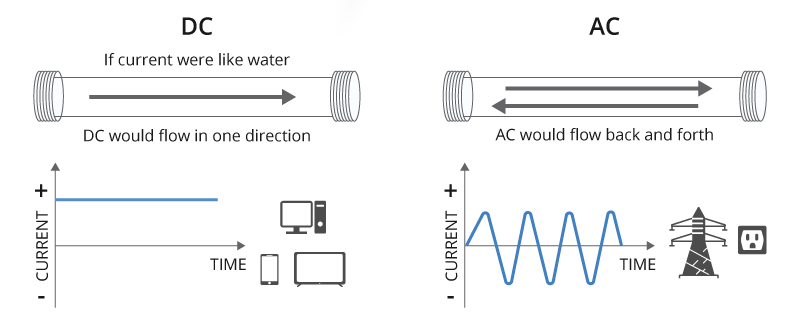
DC vs. AC. Image used courtesy of [FS.com
直流电与交流电对比
Westinghouse, an industrialist who recognized AC's potential, backed Tesla's work and acquired his patents, and thus the stage was set for a clash between Edison's DC system and Westinghouse's AC system.
实业家威斯汀豪斯察觉到交流电的潜力,为特斯拉的研究提供支持并收购其专利,由此拉开了爱迪生直流电系统与威斯汀豪斯交流电系统对抗的序幕。
The AC vs. DC Showdown
交流电与直流电的对决
Edison's DC system offered a steady, one-directional flow of electricity. This had its advantages: Lower voltages made it safer for household use, and DC electricity could be stored in batteries. However, its short transmission range required thicker copper wires and more power stations, significantly driving costs up. AC power solved these issues in three ways. It provided:
爱迪生的直流电系统可提供稳定的单向电流,具备一定优势:较低的电压使其更适合家庭使用,且直流电可通过电池储存。但该系统传输距离短,需要更粗的铜导线与更多电站,大幅推高成本。交流电从三个方面解决了这些问题,具体表现为:
- Longer range : AC could be transmitted over hundreds of miles using transformers to adjust voltage levels.
传输距离更远:交流电可通过变压器调节电压,实现数百英里的远距离传输。 - Cost efficiency : AC required fewer power stations and thinner, cheaper wiring.
成本更优:交流电所需电站数量更少,导线更细且造价更低。 - Flexibility : Voltage could be increased for transmission and reduced for safe home use.
灵活性更强:电压可在传输时升高,在家庭使用时降低。
That's not to say that AC was without its challenges. Early AC systems lacked a practical motor, and higher voltages were considered dangerous. Edison recognized and exploited these concerns, leveraging public fear in AC to launch a smear campaign against it. He claimed AC was lethal and publicly staged demonstrations where animals were electrocuted with AC power to highlight its dangers. Edison even pushed for the term "Westinghoused" as a synonym for electrocution.
交流电并非毫无缺陷。早期交流电系统缺少实用型电动机,且高电压被认为存在安全隐患。爱迪生抓住并利用公众对交流电的恐惧,发起抹黑攻势。他宣称交流电具有致命性,并公开演示用交流电电击动物,以此凸显其危险性。爱迪生甚至推动使用"威斯汀豪斯化"一词作为电刑的代名词。
Westinghouse countered by focusing on AC's technical strengths and economic benefits. He demonstrated that AC could power rural areas far beyond DC's limited reach. To compete with Edison, Westinghouse undercut DC prices, even selling AC systems at a loss to gain market share.
威斯汀豪斯则聚焦交流电的技术优势与经济效益予以反击。他证明交流电可为直流电无法覆盖的偏远农村地区供电。为与爱迪生竞争,威斯汀豪斯压低交流电价格,甚至亏本销售交流电系统以抢占市场份额。
The war's turning point came in 1893 at the Chicago World's Fair. Westinghouse won the contract to illuminate the fairgrounds by significantly underbidding Edison. The result was a stunning display of AC power; hundreds of thousands of light bulbs lit up the fair, showcasing AC's reliability and safety to the public.
1893 年芝加哥世界博览会成为电流之战的转折点。威斯汀豪斯以远低于爱迪生的报价,赢得博览会场馆照明项目合同。最终,交流电呈现出震撼效果,数十万盏灯泡点亮会场,向公众展现了交流电的可靠性与安全性。
AC's Eventual Victory
交流电的最终胜利
Tesla's continued innovations in AC ultimately led to its widespread success. Notably, his polyphase AC system allowed for efficient power transmission over long distances, while his AC induction motor also gave AC the ability to drive industrial machinery, solving one of its initial drawbacks.
特斯拉在交流电领域的持续创新,最终推动其取得广泛成功。其多相交流电系统可实现高效远距离电力传输,而交流感应电动机则让交流电能够驱动工业机械,解决了该技术早期的一项缺陷。
The practical advantages of AC quickly became apparent when in 1896, a hydroelectric power plant at Niagara Falls began transmitting AC electricity 26 miles to Buffalo, New York. This is something that would have been impossible with DC.
1896 年,尼亚加拉瀑布水电站开始向纽约州布法罗市输送 26 英里外的交流电,交流电的实用优势迅速凸显。这一传输距离是直流电无法实现的。
It was at this point that Edison's DC system was no longer viewed as sustainable, and in 1892, Edison's company merged with Thomson-Houston to form General Electric, which adopted AC technology. Westinghouse and Tesla had finally won the War of the Currents, and AC prevailed as the go-to current for electrical power transmission.
至此,爱迪生的直流电系统不再被认为具备可持续性。1892 年,爱迪生公司与汤姆森-休斯顿公司合并成立通用电气公司,该公司转而采用交流电技术。威斯汀豪斯与特斯拉最终赢得电流之战,交流电成为电力传输的主流选择。
That's not to say that DC was remitted to the history books, however. Although modern power grids are powered by AC, many devices convert AC to DC for internal use, including all battery-powered devices that flow electricity in a single direction. But for the most part, it's AC that powers today's infrastructure.
直流电并未就此退出历史舞台。现代电网以交流电为动力,但众多设备会将交流电转换为直流电供内部使用,包括所有依靠电池供电、电流单向流动的设备。但整体而言,当今电力基础设施主要依靠交流电运行。
Why Data Centers Are Switching to High-Voltage DC Power
数据中心为何转向高压直流电供电
Michael Heumann
Dec 17, 2025
The 19th-century Current Wars are getting a 21st-century sequel.
19 世纪的电流之争,在 21 世纪迎来续篇。
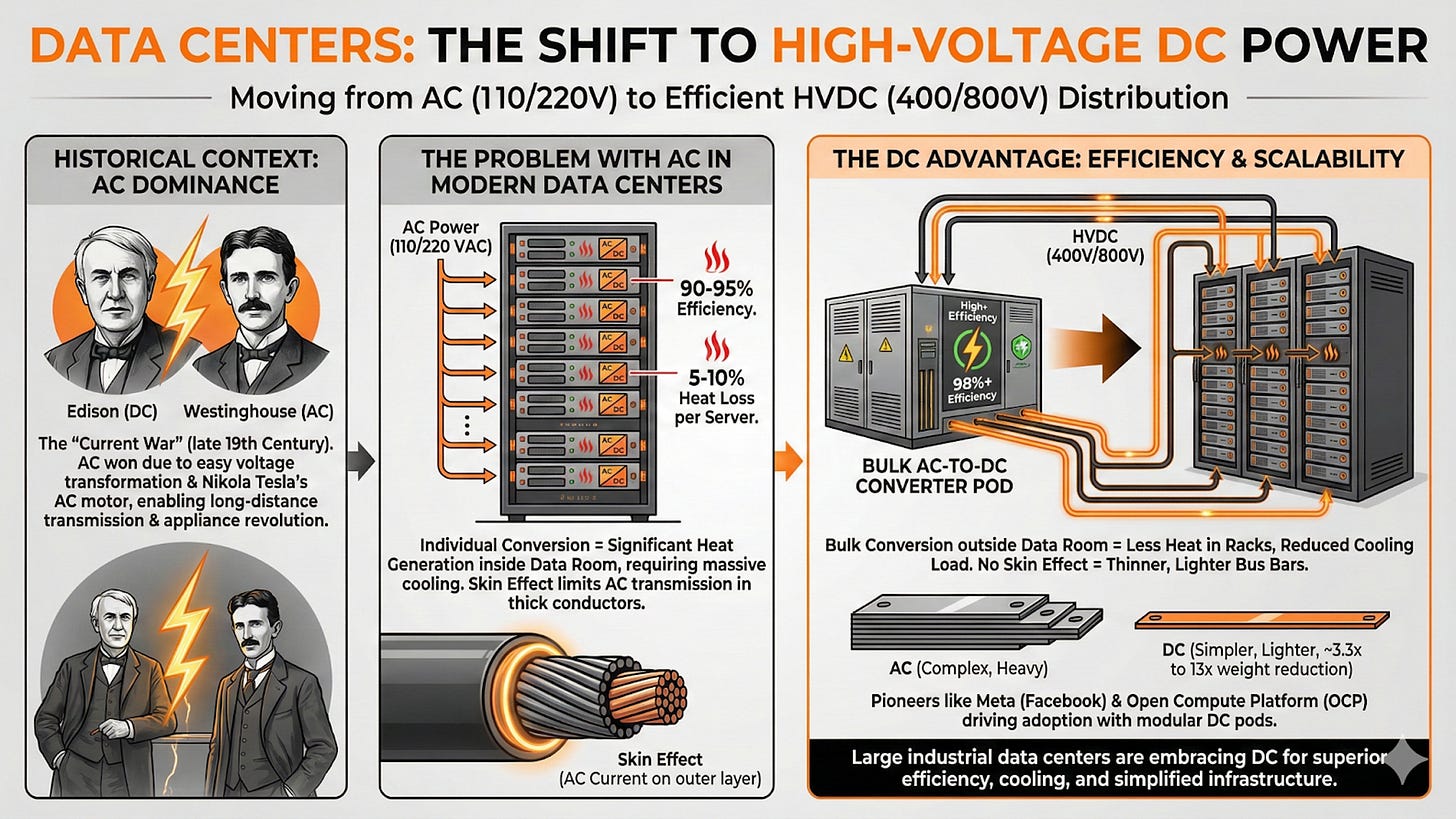
One of the areas that The Fusion Report has focused on over time is data centers and their role in the evolution of the utility grid (both positive and negative) in the developed world, particularly in the United States. One of the more interesting aspects of this is the shift in the power distribution of data centers from AC power (usually 110 VAC or 220 VAC at the server) to high-voltage DC power (typically 400 VDC or 800 VDC at the server). In this article, we will explore the reasons why this shift is being made, who is pioneering it, and the benefits.
《融合报告》长期关注的领域之一,是数据中心及其在发达国家(尤其是美国)公用电网发展进程中的作用(包括积极与消极层面)。其中一个值得关注的现象,是数据中心供电方式从交流电(服务器端通常为 110 VAC 或 220 VAC)向高压直流电(服务器端通常为 400 VDC 或 800 VDC)转变。本文将探讨这一转变的原因、行业先行者及其带来的效益。
DC vs AC -- The Current Wars Are Still Alive In The 21st Century
直流电与交流电------电流之争延续至 21 世纪
In the late 19th century (at least in the US), there was an event known as "The Current War" (which was made into a pretty good movie in 2017). The "Current War" was about the rivalry between Thomas Edison and George Westinghouse over how best to supply electricity to homes in the US, with Westinghouse advocating for alternating current (AC) and Edison pushing direct current (DC). The primary weakness of DC for electrical distribution was the difficulty of converting it between high and low voltages, an issue that was easily addressed in the late 1880s with transformers. The result was that DC power distribution systems of the 1880s lost significant amounts of energy to resistive heating, limiting the distances at which DC electricity could be transmitted.
19 世纪后期(至少在美国)发生了一场被称为"电流之战"的事件(该事件于 2017 年被改编为一部优质电影)。这场争端围绕托马斯·爱迪生与乔治·威斯汀豪斯展开,双方就美国家庭最佳供电方式产生分歧,威斯汀豪斯支持交流电,爱迪生则推崇直流电。直流电在配电领域的主要缺陷,是难以实现高低电压转换,这一问题在 19 世纪 80 年代末通过变压器得到解决。由此,19 世纪 80 年代的直流配电系统因电阻发热产生大量电能损耗,限制了直流电的传输距离。
However, the nail in the coffin for DC power distribution was Nikola Tesla's invention of the AC motor in 1888. This motor, purchased along with Tesla's AC patent portfolio by Westinghouse, was then used by Tesla. These technologies enabled the creation of hundreds of machines, appliances, and other labor-saving devices, thereby starting the electrical revolution we live in now.
1888 年尼古拉·特斯拉发明交流电动机,成为直流配电模式落幕的关键因素。威斯汀豪斯收购了该电动机及特斯拉的交流电专利组合,并由特斯拉将其投入应用。这些技术催生了数百种机械、电器及其他省力设备,开启了当今所处的电气革命时代。
The Evolution of the Data Center and How It Is Powered
数据中心的发展及其供电方式演变
Like most electrical devices since the 1880s, data center devices such as servers, networking switches, and other data center equipment are powered by AC electricity (in the US, this is typically 110 VAC or 220 VAC, with 220 VAC used in both single-phase and three-phase). However, like many things since the 1880s, DC power has evolved considerably since the 1880s. Today, the advent of solid-state electronics has significantly simplified the conversion of DC electricity across multiple voltage ranges, with voltages easily into the hundreds of kilovolts (kV) and even past 1 megavolt (1 MV). The graphic above from 2022 illustrates this trend, but understates the trend in 2025.
与 19 世纪 80 年代以来的多数电气设备相同,服务器、网络交换机等数据中心设备均采用交流电供电(美国通常为 110 VAC 或 220 VAC,220 VAC 包含单相与三相供电)。但直流电自 19 世纪 80 年代以来已发生巨大变革。如今,固态电子技术的出现大幅简化了直流电多电压等级转换流程,电压可轻松达到数百千伏(kV),甚至超过 1 兆伏(1 MV)。上文 2022 年的图表展现了这一趋势,却未能体现 2025 年该趋势的发展程度。
More importantly, DC electricity has always avoided the "skin effect" that impacts the transmission of AC electricity, which limits how much power you can put into an AC transmission line. For instance, 60 Hz AC voltage is only carried on the outer 8.5 mm of a wire; not an issue for a typical household wiring (which has a diameter of roughly 2.05 mm), but has a significant impact on thicker conductors such as high-voltage long-distance transmission lines with typical diameters of 100 mm, or bus bars in server racks. The usual approach for transmission lines is to use multi-strand cables; for bus bars, it typically involves more complex bus bar geometries, such as laminated and/or hollow bus bars. However, even with these technologies, distributing 110 VAC or 220 VAC power in server racks at power ratings approaching 100 kV is problematic, requiring hundreds of pounds of copper per 机架。For 400 VDC or 800 VDC, the weight of the bus bars (which is proportional to the square of the current going through them) drops by a factor of roughly 3.3X for 400 VAC, and by over 13X for 800 VDC.
更重要的是,直流电不存在影响交流电传输的"集肤效应",该效应会限制交流输电线路的载流量。例如,60 Hz 交流电仅在导线外层 8.5 mm 范围内传输;这对直径约 2.05 mm 的普通家用导线无明显影响,但对直径通常为 100 mm 的高压远距离输电导线或服务器机柜母线排等较粗导体影响显著。输电线路通常采用多股线缆,母线排则采用叠层或空心等复杂结构。即便采用此类技术,在额定功率接近 100 kV 的服务器机柜中分配 110 VAC 或 220 VAC 电力仍存在问题,单机柜需数百磅铜材。采用 400 VDC 或 800 VDC 时,母线排重量(与流经电流的平方成正比)相较 400 VAC 降低约 3.3 倍,相较 800 VAC 降低超 13 倍。
Top Ten Reasons to Move to DC Data Centers
数据中心转向直流电供电的十大原因
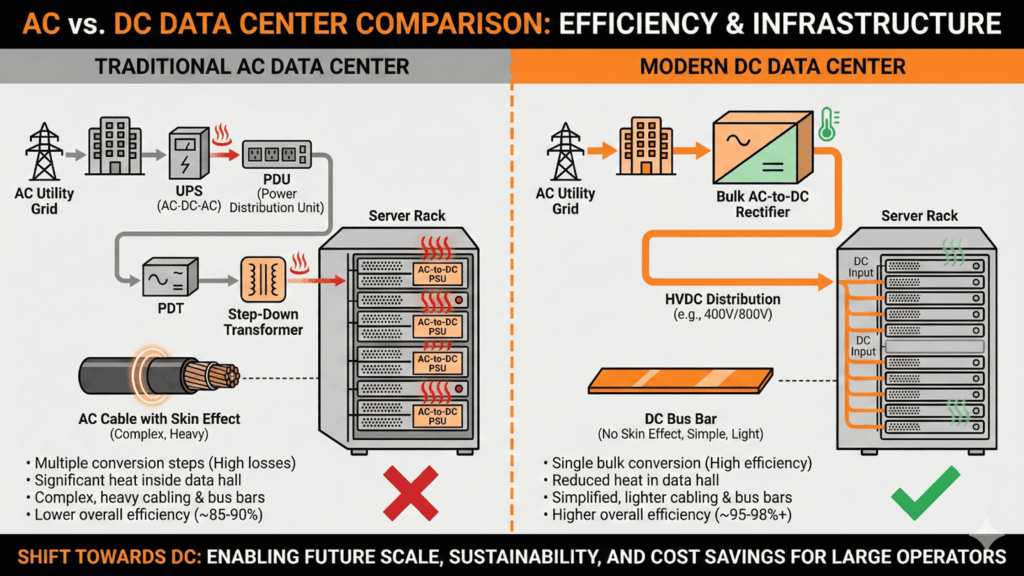
The other primary drivers towards DC power distribution in data centers are cooling and efficiency. Like most things in technology, bigger is usually more efficient, which is absolutely true for AC-DC power conversion. Today, AC-powered servers individually convert their incoming AC power into DC, with a typical efficiency of 90%-95%. The remaining 5%-10% is converted into heat by the power supply. For a 1,000-watt server, the remaining 5%-10% equates to 50-100 watts, roughly the same as a home curling iron. However, when you put 20 servers into a rack, this produces 1,000-2,000 watts of heat from power conversion alone, which must be removed from the rack.
推动数据中心采用直流配电的另一主要因素是散热与能效。与多数技术领域相同,规模化运行通常能提升效率,这一规律在交直流转换中同样适用。当前,交流供电服务器需单独将输入交流电转换为直流电,转换效率通常为 90%--95%,剩余 5%--10% 能量由电源转化为热量。一台 1000 瓦的服务器,其损耗功率为 50--100 瓦,与家用卷发器功率相近。若一个机柜搭载 20 台服务器,仅交直流转换就会产生 1000--2000 瓦热量,这些热量必须从机柜中排出。
One of the most significant advantages of DC data centers is that it allows the data center architects to consolidate the AC-to-DC conversion process outside the data rooms (where the servers are located). This both removes the AC-to-DC heat generated from the data room, reducing the cooling required there. Moreover, it allows the AC-to-DC power conversion to happen "in bulk", where it is more efficient (and remember, even a 1% efficiency gain in a 100 megawatt (MW) data center equals 1 MW, enough to power several server racks.
直流数据中心的一大优势,是可将交直流转换流程集中部署在服务器所在机房之外。这一方式可消除机房内交直流转换产生的热量,降低机房散热需求。同时,规模化交直流转换能提升转换效率(需注意,100 兆瓦(MW)数据中心的转换效率每提升 1%,即可节省 1 兆瓦电能,足以供应多个服务器机柜)。
Data centers are moving toward DC power mainly to cut conversion losses, reduce space and cooling needs, and better support high‑density AI and renewable integration. The shift is evolutionary, often starting with rack‑level or HVDC distribution rather than full end‑to‑end DC.
数据中心转向直流电供电,主要目的是降低转换损耗、减少空间与散热需求,同时更好地适配高密度人工智能算力与可再生能源接入。这一转变为渐进式过程,通常先从机柜级或高压直流配电起步,而非直接实现全程直流供电。
- Higher end‑to‑end efficiency -- DC architectures remove several AC--DC and DC--AC conversion stages (UPS, PDU transformers, server PSUs), eliminating 7--20% of energy loss in typical AC chains. Lab and field demos show 10--20% total facility energy savings when DC is adopted broadly in distribution.
端到端能效更高------直流架构省去多组交直流、直交流转换环节(不间断电源、配电单元变压器、服务器电源单元),可消除传统交流配电链路中 7%--20% 的电能损耗。实验室与现场测试表明,大范围采用直流配电可使数据中心整体能耗降低 10%--20%。 - Lower cooling load -- Fewer conversion stages mean less waste heat inside the white space, directly reducing cooling energy and improving PUE. Less heat in power paths also improves component lifetimes and stability under high rack densities.
散热负荷更低------转换环节减少可降低机房内部废热,直接减少散热能耗并提升电源使用效率。供电路径热量降低,还能延长元器件寿命,提升高密度机柜运行稳定性。 - Reduced electricity and carbon costs -- Higher electrical efficiency and lower cooling translate into substantial Opex reduction over the life of a facility. Because less energy is wasted, DC designs help operators hit sustainability and carbon‑reduction targets.
电力与碳成本降低------电力效率提升与散热需求减少,可大幅降低数据中心全生命周期运营成本。直流设计减少能源浪费,助力运营方实现可持续发展与碳减排目标。 - Supports higher rack power density (AI/GPU) -- HVDC (for example ±400--800 V) distributes large amounts of power to tens‑of‑kilowatt racks without oversized copper or bulky AC UPS gear, which is critical for AI "factories." This enables more compute per rack and per square foot while keeping power distribution manageable.
适配更高机柜功率密度(人工智能/图形处理器)------高压直流电(如 ±400--800 V)可为数十千瓦级机柜输送大功率电力,无需加粗铜材或配备大型交流不间断电源设备,这对人工智能算力中心至关重要。该模式可提升单机柜与单位面积算力,同时保证配电系统可控。 - Smaller footprint and more usable white space -- DC gear is typically more compact, reduces transformer and PDU count, and allows lighter cabling, which can cut power‑infrastructure floor space by double‑digit percentages. That freed space can be redeployed for additional racks or cooling infrastructure instead of electrical rooms.
占地面积更小,可用机房空间更多------直流设备结构更紧凑,可减少变压器与配电单元数量,同时采用轻量化线缆,能使电力基础设施占地面积减少两位数百分比。释放的空间可增设机柜或散热设备,替代原有的电气机房。 - Simpler distribution and fewer failure points -- DC power chains have fewer conversion stages, do not require phase balancing, and reduce harmonic issues, which simplifies design and operations. Fewer components and interfaces reduce points of failure and can improve overall system reliability.
配电系统更简化,故障点更少------直流配电链路转换环节少,无需相位平衡,可降低谐波问题,简化设计与运维流程。元器件与接口数量减少,可降低故障发生概率,提升系统整体可靠性。 - Better integration with batteries and renewables -- Batteries, fuel cells, and PV arrays are inherently DC, so tying them to a DC bus avoids multiple intermediate conversion steps. This improves round‑trip efficiency for on‑site storage and makes it easier to add solar or other DC sources directly into the data‑center power path.
更易与电池及可再生能源适配------电池、燃料电池与光伏阵列均为直流输出,接入直流母线可省去多级中间转换环节,提升现场储能往返效率,便于将太阳能等直流电源直接接入数据中心供电链路。 - Improved power quality and stability -- DC distribution eliminates many AC‑specific issues (frequency, many harmonics) and can offer more stable voltage at the rack, especially with modern HVDC and modular power electronics. Cleaner, more stable power reduces nuisance trips and stress on sensitive IT equipment.
供电质量与稳定性提升------直流配电可消除频率、多数谐波等交流电特有问题,结合现代高压直流与模块化电力电子技术,能为机柜提供更稳定的电压。纯净稳定的电力可减少误跳闸现象,降低对精密信息技术设备的损耗。 - Modular, scalable growth model -- DC architectures (especially rectifier‑plus‑battery strings or packetized/fault‑managed power) can be expanded incrementally as load grows, instead of oversizing AC UPS from day one. This aligns capex with actual demand and makes it faster to add containers, prefabricated modules, or edge sites.
模块化可扩展扩容模式------直流架构(尤其是整流器加电池组或分组故障管理供电模式)可随负载增长逐步扩容,无需初期就配备大容量交流不间断电源。该模式使资本支出与实际需求匹配,加快集装箱式、预制模块化或边缘站点的部署速度。 - Modern safety and manageability features -- New DC and "digital electricity" approaches implement fast fault detection, current limiting, and per‑circuit monitoring, addressing historic safety concerns around HVDC. Centralized digital control over DC circuits also improves visibility, troubleshooting, and SLA compliance in large‑scale facilities.
具备现代化安全与管理特性------新型直流与"数字电力"技术可实现故障快速检测、限流与单回路监测,解决高压直流电传统安全隐患。直流回路集中数字化管控,可提升大型数据中心的供电可视性、故障排查效率与服务等级协议履约能力。
The Future of DC Data Centers
直流数据中心的发展前景
Historically, one of the earliest companies to build DC data centers was Facebook (now Meta), which has been sharing its data center concepts with the data center industry via the Open Compute Platform (OCP) initiative. Several companies that are part of the OCP initiative are now providing large, containerized DC power "pods" that convert AC to DC and can simply be "plugged in" externally to the data center. There are also companies building filter modules to improve DC power quality within the rack. While not all data centers will go to DC, the large industrial ones are clearly moving in that direction.
早期建设直流数据中心的企业之一是脸书(现元宇宙平台公司),该公司通过开放计算项目计划向数据中心行业分享其设计理念。目前,多家开放计算项目成员企业推出大型集装箱式直流供电单元,可将交流电转换为直流电并直接外接至数据中心。另有企业研发滤波模块,提升机柜内部直流供电质量。并非所有数据中心都会采用直流电,但大型工业级数据中心正明确向这一方向发展。
1893 芝加哥世博会:白城、摩天轮与成年礼
2025-08-15
时间:1893 年 5 月 1 日至 10 月 30 日
1893 年夏天,芝加哥举办的不只是一场博览会,更是一个关乎未来的构想,仿佛一个年轻国家的成年礼。这场正式名为"世界哥伦布纪念博览会"(World's Columbian Exposition)的盛会,纪念的是哥伦布发现新大陆 400 周年,但其意义早已超越历史纪念,它昭示着一个国家正踏上变革的门槛。六个月的展期内,超过 2750 万人次前来参观,接近当时美国人口的一半。他们涌入密歇根湖畔的梦幻之地,在那里,奇观与进步交相辉映。
主办权之争激烈异常。纽约、华盛顿、圣路易斯与芝加哥各陈其长。纽约虽人口众多,资源丰富,却受限于空间;芝加哥所提园址开发难度大,但其本身位居全美腹地,交通便利,公园用地宽广,又是全国铁路网络的交汇点。
1890 年,总统本杰明·哈里森宣布芝加哥胜出,一时间,来自全国各地的建筑师、艺术家与工程师纷至沓来,投入一项宏伟而大胆的城市构想。项目总指挥是芝加哥著名建筑师丹尼尔·伯纳姆(Daniel Burnham),他接手了密歇根湖畔一片面积达 686 英亩的沼泽地,并邀请美国景观设计奠基人、纽约中央公园设计者弗雷德里克·奥姆斯特德(Frederick Law Olmsted)共同规划设计。
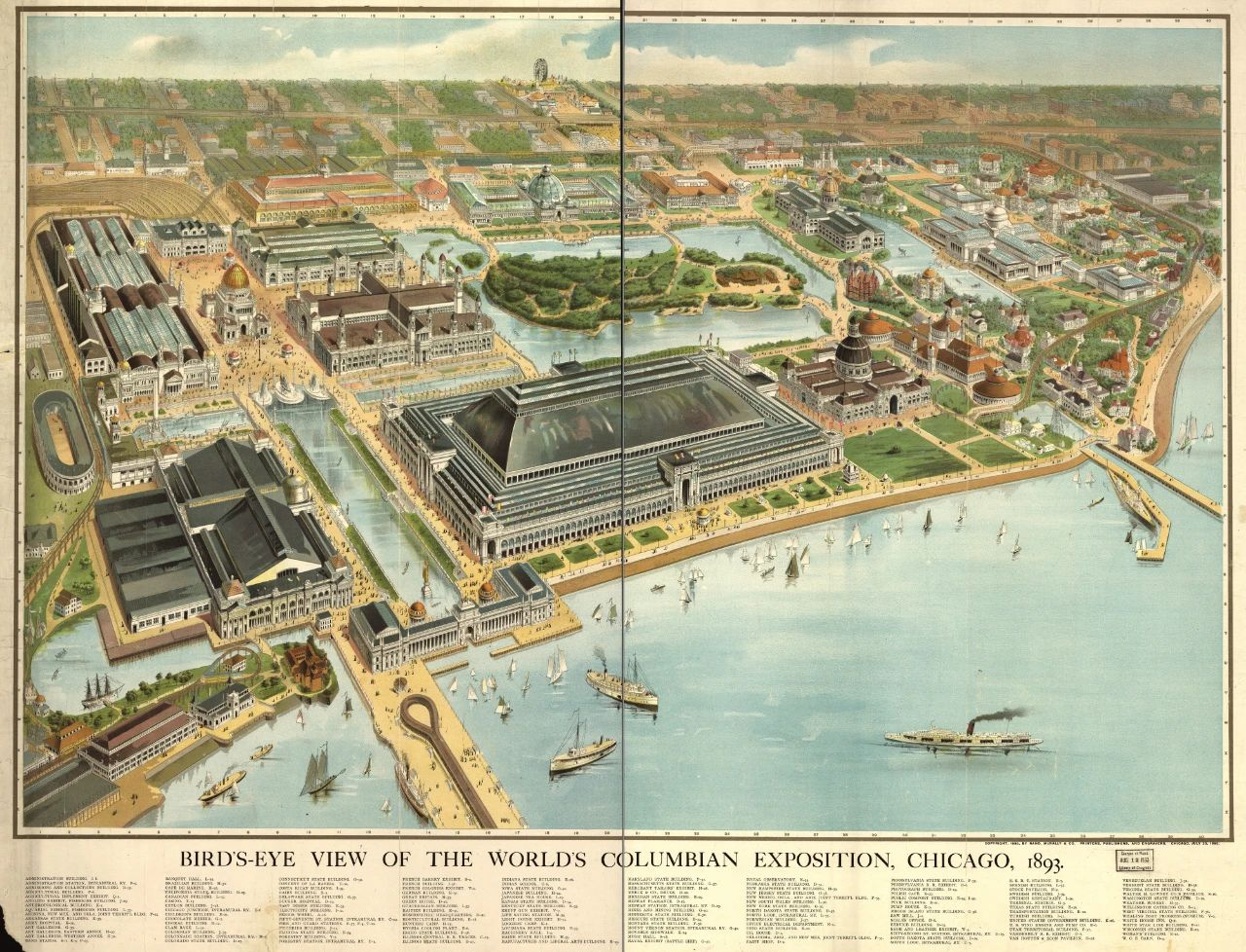
▲芝加哥世博会鸟瞰图。(美国国会图书馆)
从杰克逊公园的湿地上崛起,是一座 白城(White City)。十四座披着白色石膏外衣的新古典主义风格的建筑,统称为宏伟建筑(Great Buildings),环绕着荣誉广场(Court of Honor)和一座宽阔的人工泻湖而建。泻湖水面之上,矗立着一尊高达 20 米的共和国雕像(Statue of the Republic),出自雕塑家丹尼尔·切斯特·弗伦奇(Daniel Chester French)之手。
白日里,贡多拉游船在水面轻盈滑行;入夜后,湖面在电灯的映照下波光粼粼。这些电灯由乔治·威斯汀豪斯(George Westinghouse)的交流电系统供能。在当时,这项技术对大多数美国人而言仍属新奇,而白城的璀璨夜景,正是对它最直观而震撼的展示。
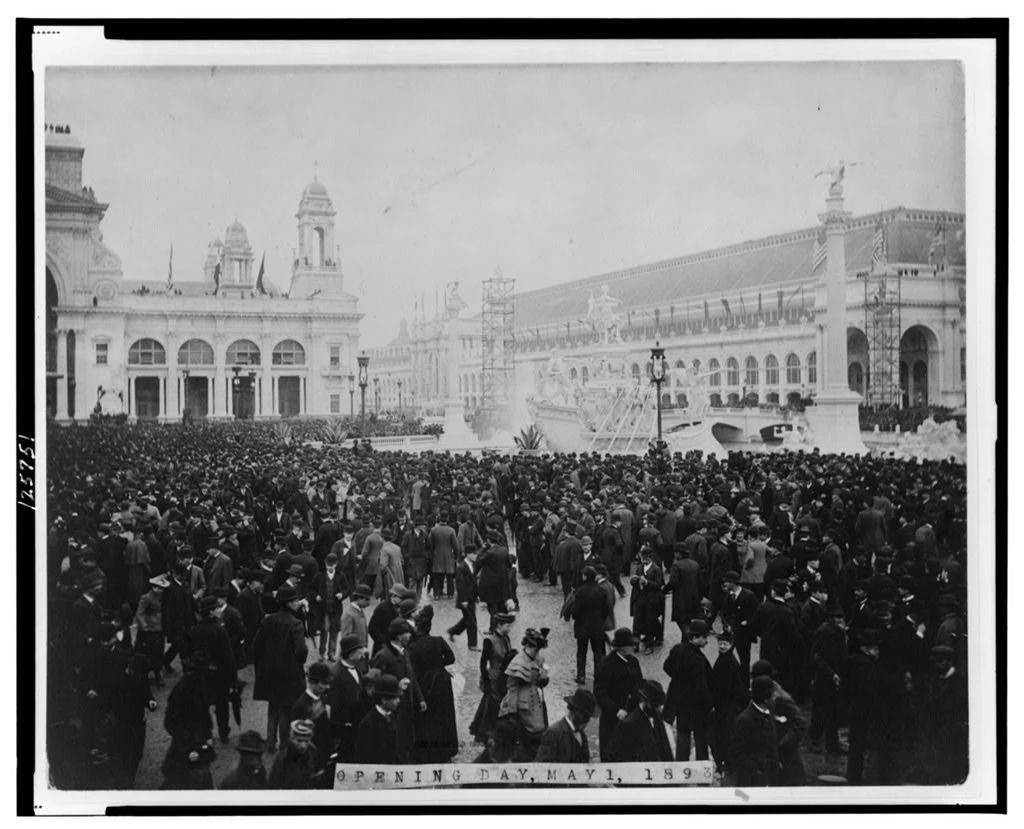
▲芝加哥世博会开幕当天的人潮。(美国国会图书馆)
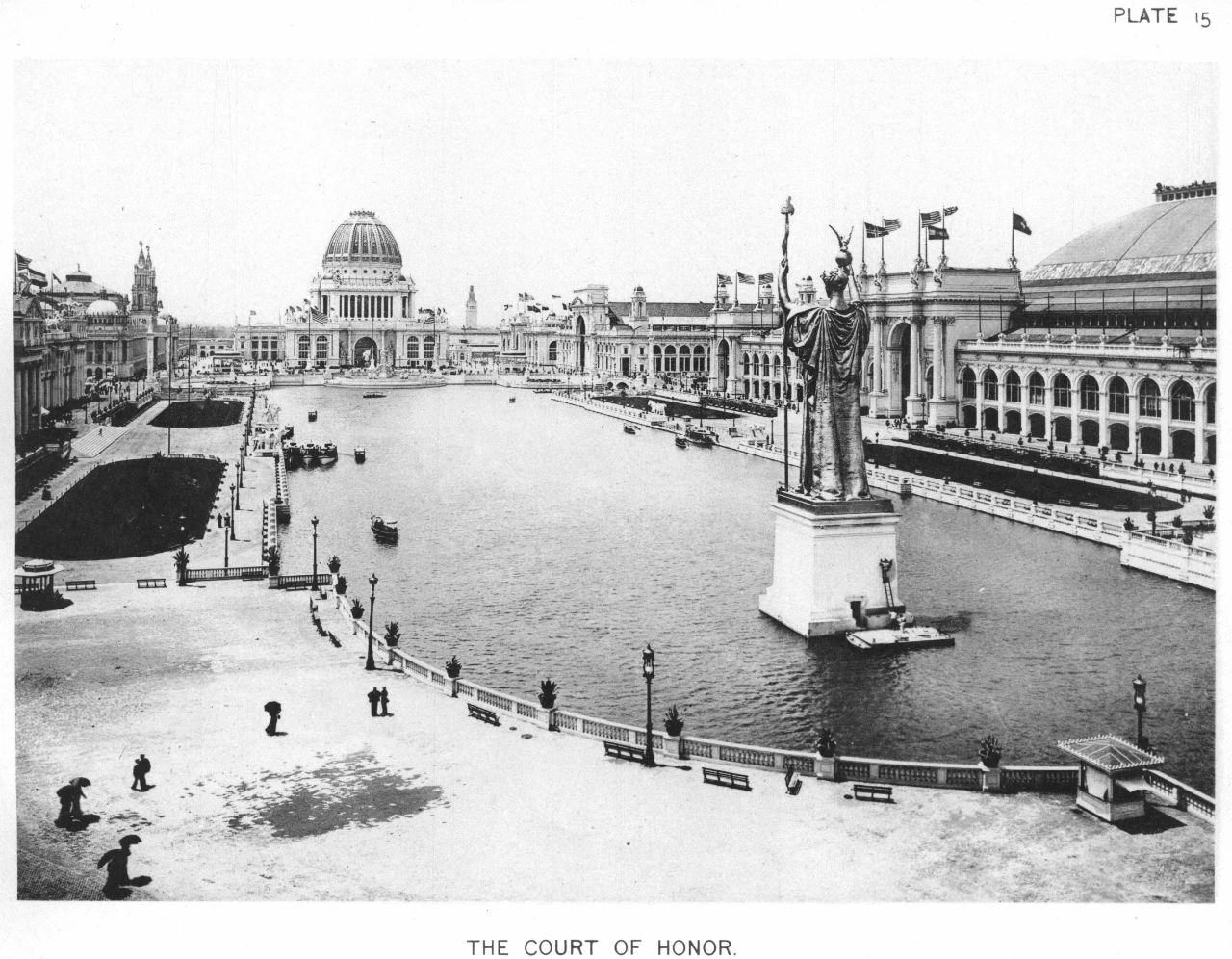
▲荣誉广场全景。(公共领域)
在这片宏伟建筑群中,最为瞩目的莫过于由建筑师乔治·波斯特(George Post)设计的制造商楼和文化艺术大楼。它占地 32 英亩,是当时全球最大的建筑,相当于四座罗马斗兽场。展馆内部为无柱大空间,最多可同时容纳 30 万人,恢弘尺度令人惊叹。
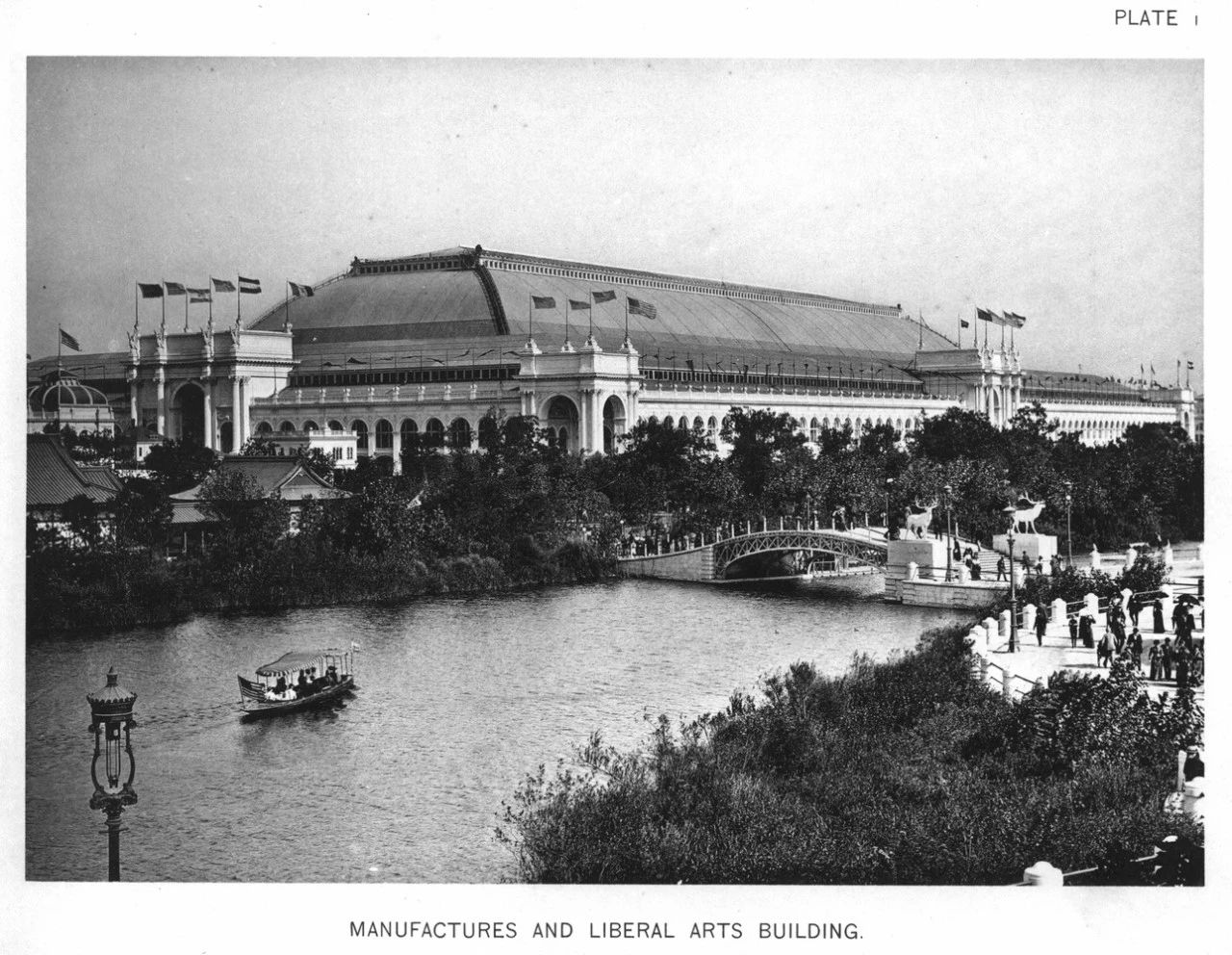
▲制造商楼和文化艺术大楼。(公共领域)
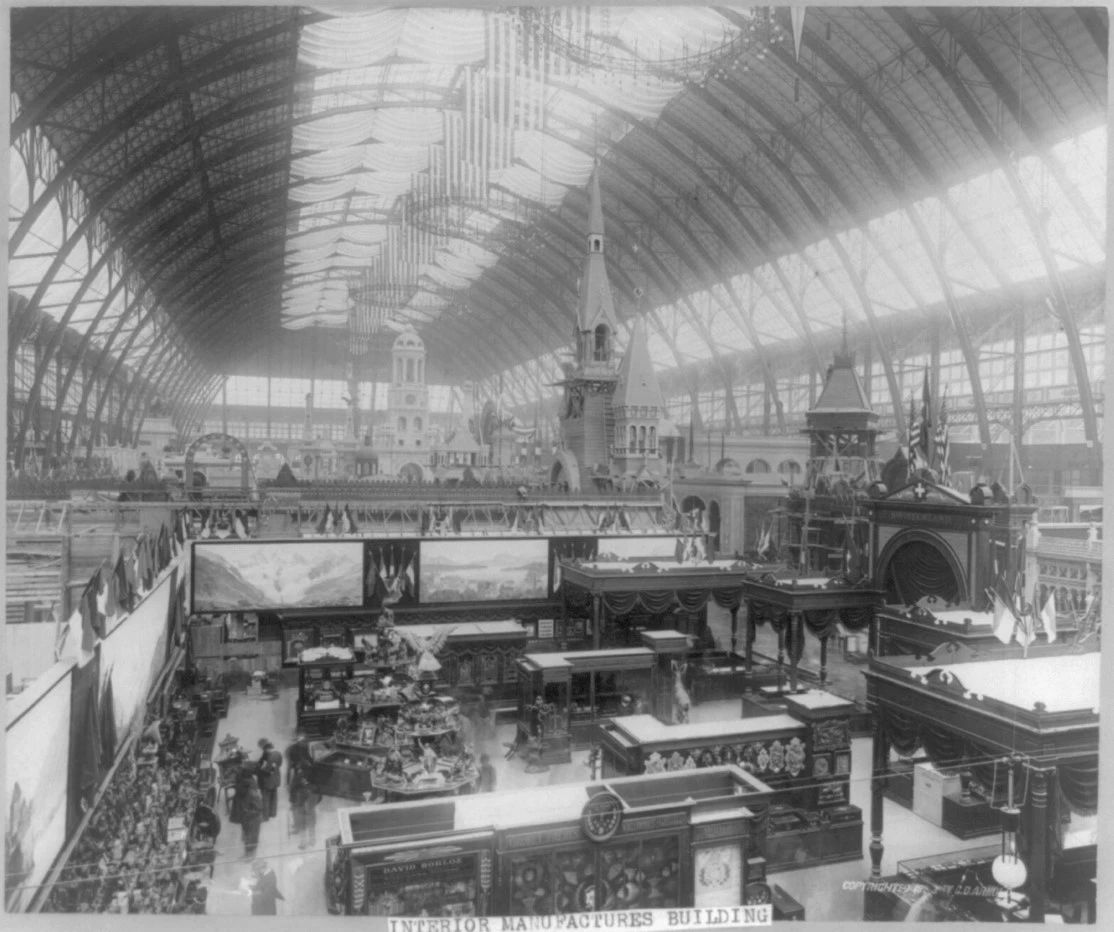
▲制造商楼和文化艺术大楼内景。(国会图书馆)
这届世博会充满了首创。来自匹兹堡的工程师乔治·华盛顿·盖尔·费里斯(George Washington Gale Ferris Jr.)提出了一个大胆构想:建造一座巨型摩天轮,直指四年前巴黎世博会的埃菲尔铁塔。最终,世界上第一座摩天轮诞生了------高达 264 英尺(约 80 米),设拥有 36 个车厢,每个车厢配备 40 把旋转座椅,最多可载 60 人。满载时,它能同时承载 2,160 名乘客,堪称美国工程史上的一大奇迹。
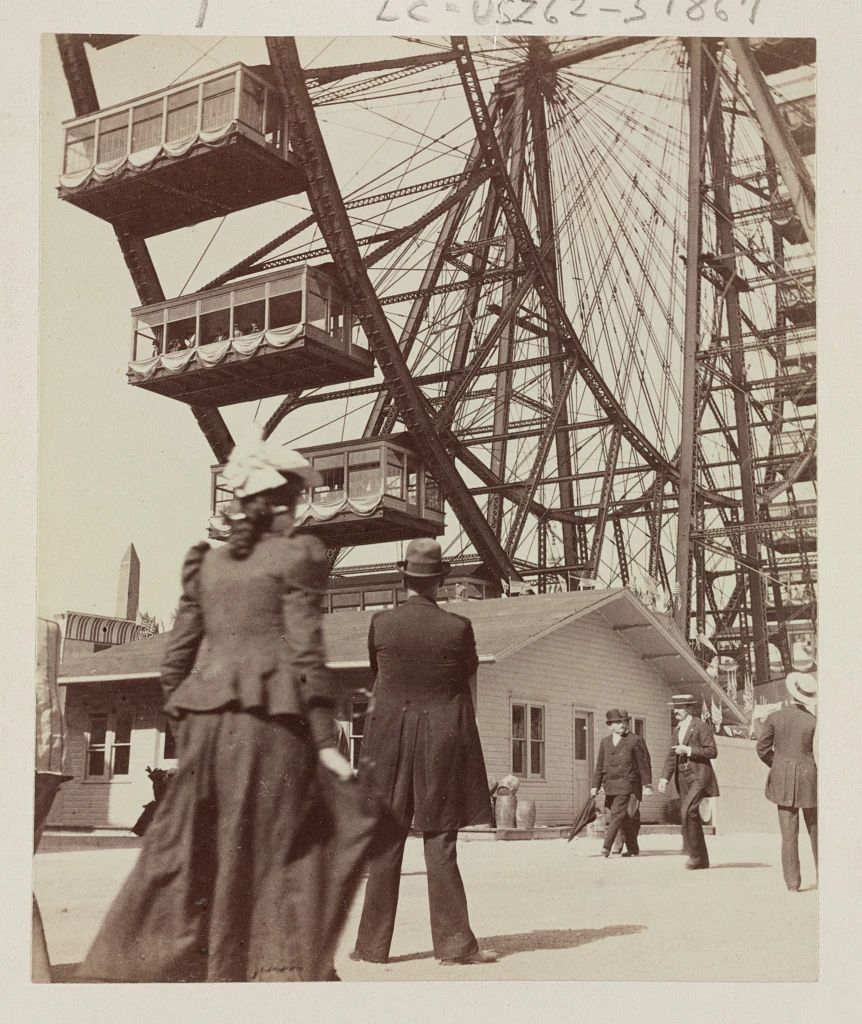
▲芝加哥世博会上展出的世界首个摩天轮,可同时搭载 2,160 名乘客。(国会图书馆)
此外,爱迪生的活动电影机(kinetoscope)让公众首次看到了动态影像。高架环内铁路、明信片、纪念邮票与纪念币也在展会上首次亮相。
展会上还首次推出了世界上第一条自动步道------大码头自动步道(Great Wharf Moving Sidewalk),由建筑师约瑟夫·莱曼·西尔斯比(Joseph Lyman Silsbee)设计。它设有座位区和站立区,载着游客沿湖滨码头前往娱乐场。这种机械长廊,如今已成为机场的常见设施。
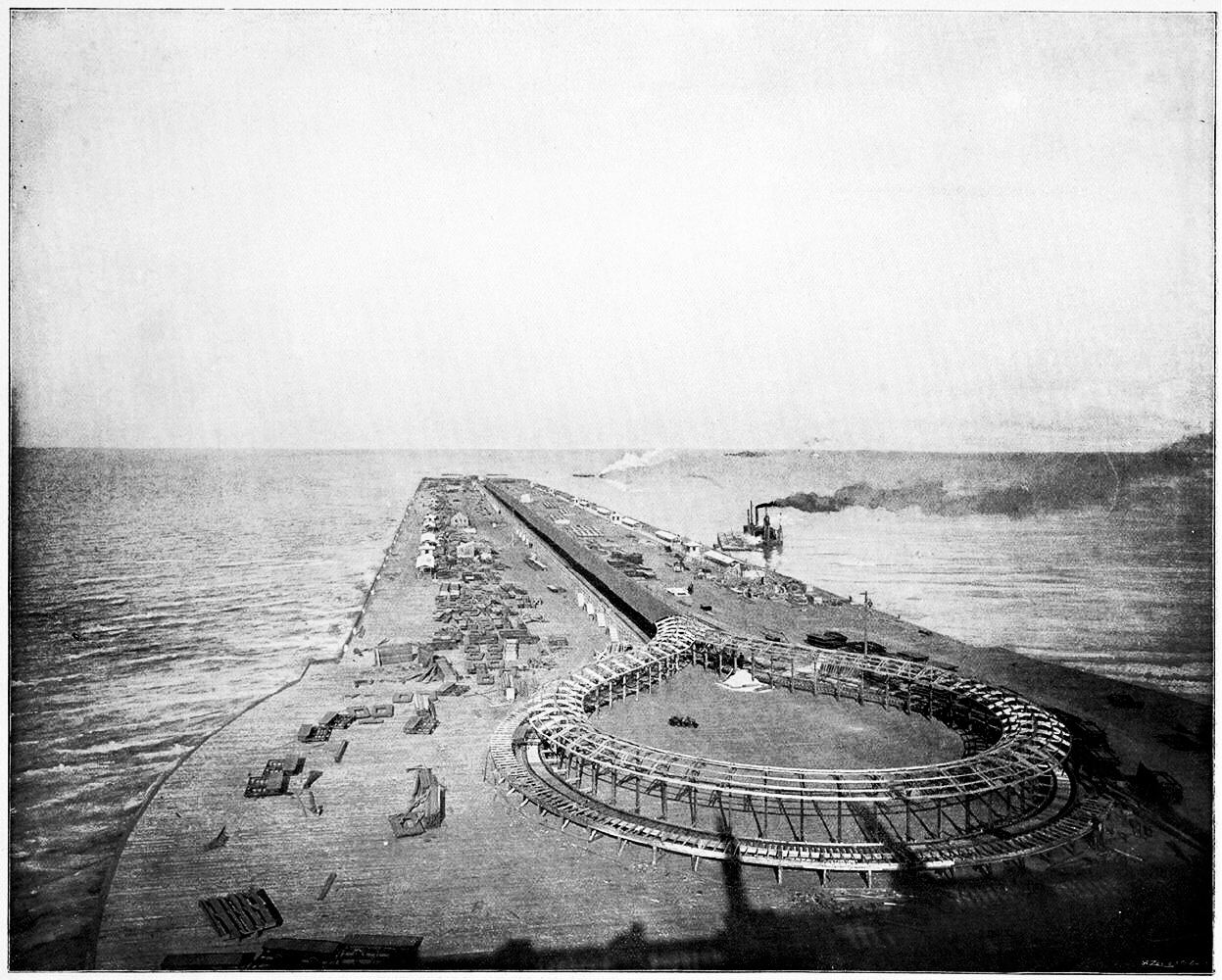
▲世界上第一条自动步道:大码头自动步道。(公共领域)
1893 年芝加哥世博会为美国的文化、科技和城市规划留下了深远影响。它催生了"城市美化运动"(City Beautiful Movement),启发了几代设计师,也参与塑造了美国人走进博物馆的方式。展会中的美术宫(Palace of Fine Arts)至今仍在,现为芝加哥科学与工业博物馆,继续见证着那个时代的雄心与想象。
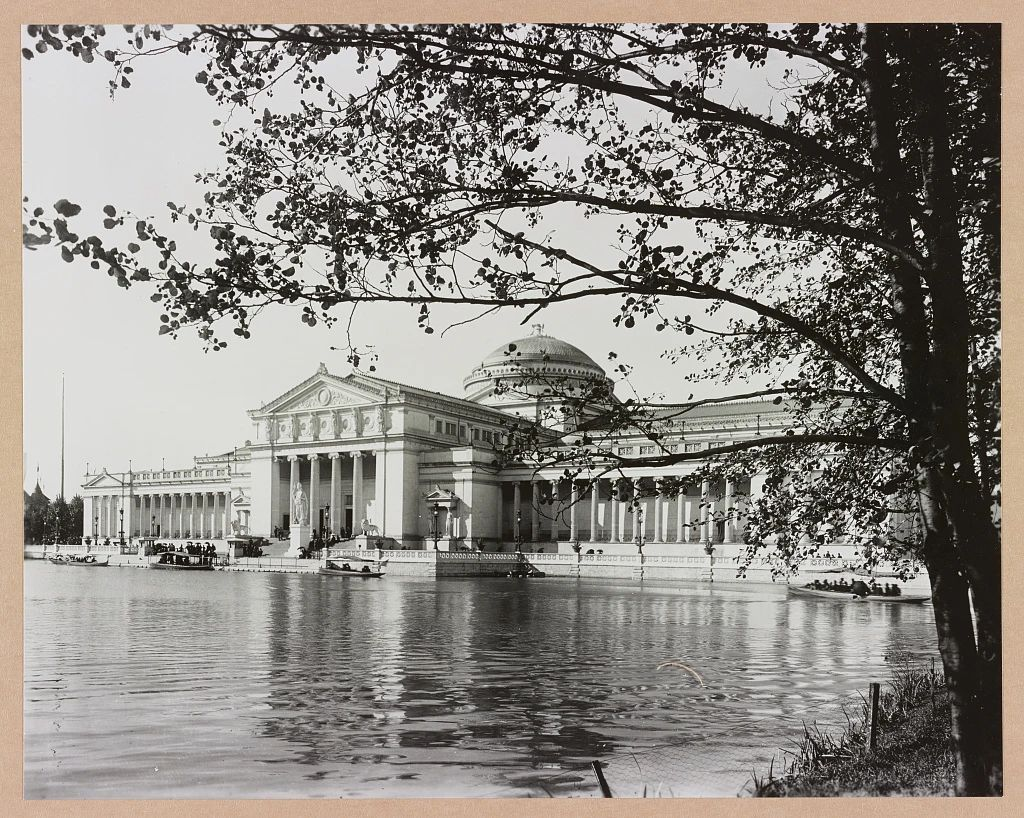
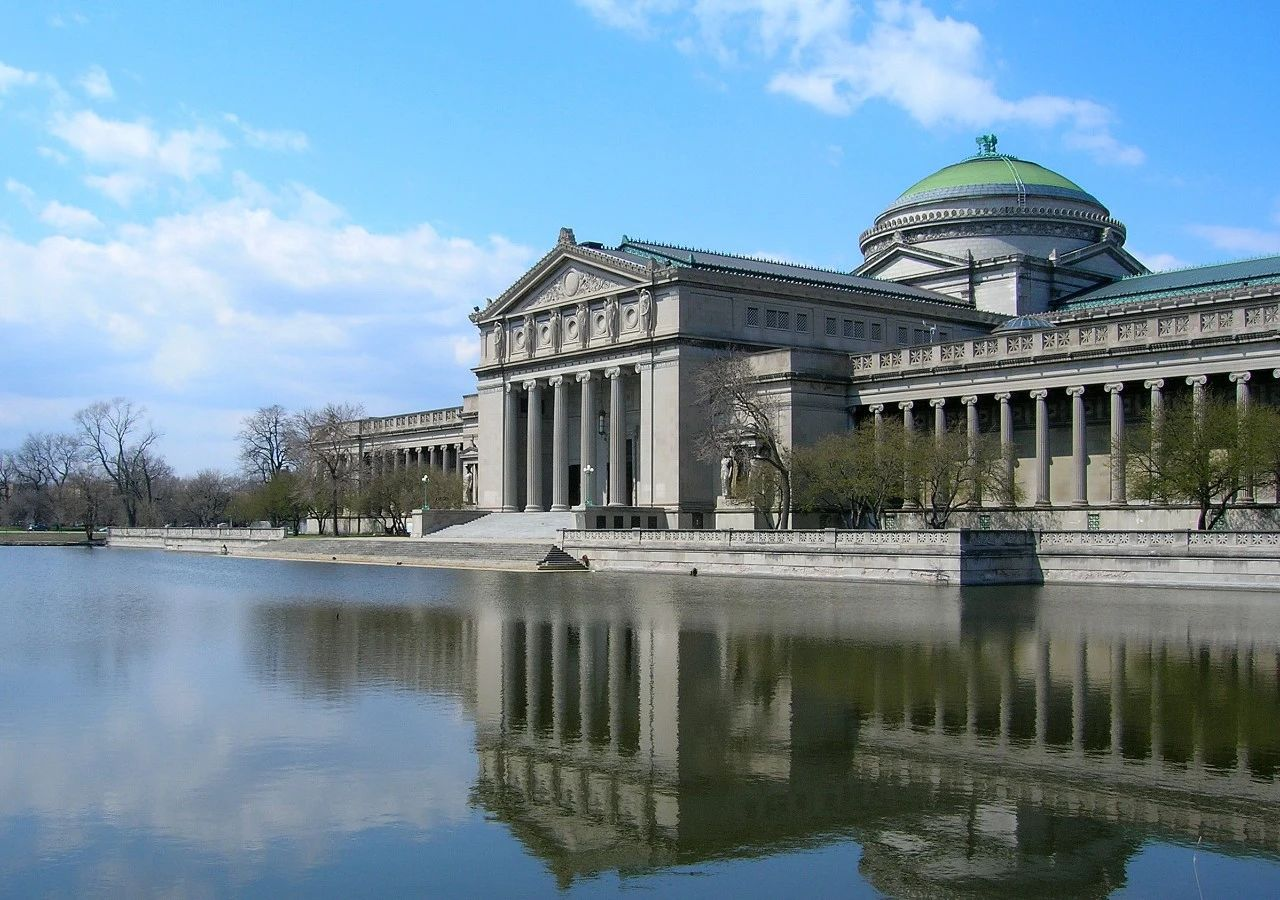
▲上图:芝加哥世博会期间的美术宫。(国会图书馆)下图:现在的芝加哥科学与工业博物馆。(Photobyzooey,licensedunderCCBY2.0viaWikimediaCommons)
(美国驻上海总领馆)
爱迪生输掉的"电力之战",140 年后被 AI 翻盘了
原创 加洋 DeepTech 深科技 2026 年 3 月 25 日 19:39 北京
一、十九世纪的电流之争:交流电终结直流时代
1880 年代的美国,煤气灯尚未从街头彻底退场,两种截然不同的电力系统已开始争夺未来能源格局。这段历史后来被搬上银幕,即 2017 年由马丁·斯科塞斯担任执行制片、"卷福"等人主演的电影《电力之战》(The Current War)。这场发生在 19 世纪末的技术路线之争,至今仍是商业史上极具代表性的经典案例之一。
一方是以爱迪生为代表的直流电阵营。1882 年,他在纽约珍珠街建成全球首个商用配电系统,以 110 V 直流电点亮曼哈顿下城区数百盏白炽灯。爱迪生坚信直流电是电力发展的方向,并投入重金搭建完整配电网络。直流电的突出局限在于电压难以调节,低压直流在导线传输过程中电流大、能量损耗高,传输距离达到一两公里后电压便出现显著衰减。该方案的服务范围,本质上仅能覆盖发电站周边数个街区。
另一方则是乔治·威斯汀豪斯主导的交流电阵营。他收购了尼古拉·特斯拉的交流电相关专利,其中包含改变电力发展历程的交流感应电机。交流电的显著优势依托变压器实现,仅通过简单的铜线圈与铁芯组合,便可将电压从数百伏提升至数万伏。电压升高后,相同功率传输条件下电流随之减小,线路传输损耗大幅降低。发电厂可先对电压进行升压处理,完成远距离输送后,在用户端再进行降压使用。
这一技术优势具备压倒性。1893 年芝加哥世博会上,威斯汀豪斯采用交流电点亮整个展会场地,正式宣告"电流战争"的胜负已定,爱迪生的直流电方案落败。在此后一百三十余年里,交流电占据主导地位,覆盖从家庭插座到工厂生产线的几乎全部用电场景,数据中心领域同样遵循这一格局。
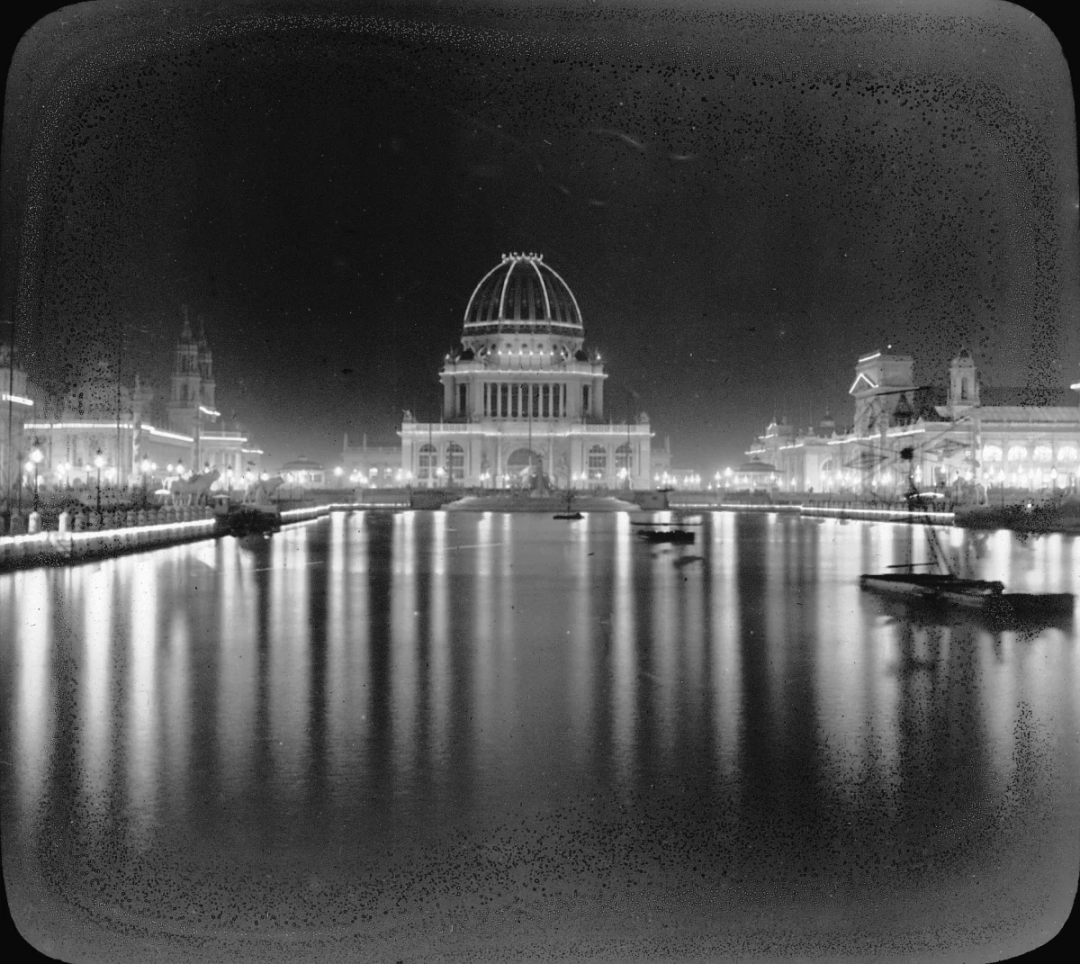
图丨 1893 年芝加哥世博会(来源:Paleofuture)
二、AI 算力浪潮:交流电供电触及物理边界
时间推进至 2025 年,交流电长达一个多世纪的统治地位开始出现松动。
英伟达(NVIDIA)在当年 5 月台北国际电脑展(Computex)上,发布一套全新的 800 V 高压直流(HVDC)供电架构,计划自 2027 年起,替代数据中心长期沿用的 54 V 直流配电方案。数月后,在开放计算项目(OCP)全球峰会上,该架构配套技术白皮书正式对外发布。白皮书发布后不到半年,英飞凌、德州仪器、意法半导体、台达、维谛(Vertiv)、施耐德、伊顿等供电产业链上的主要企业,均同步公布各自的 800 V 产品规划。整条产业链在不到一年时间内完成集体转向,主要原因在于交流配电在 AI 数据中心场景下,已触及难以突破的物理极限。
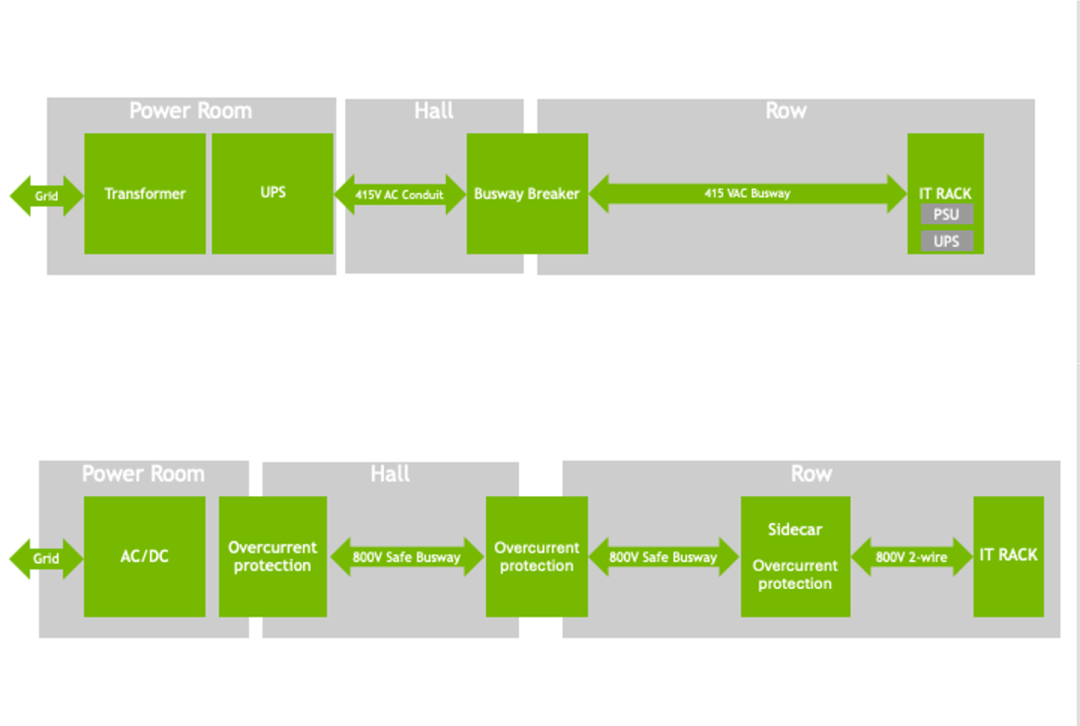
图丨当前数据中心供电架构(上)与 NVIDIA 800 VDC 架构对比(下)(来源:NVIDIA)
目前绝大多数数据中心的供电链路遵循统一模式:接入交流市电,经变压器降压后,由不间断电源(UPS)完成整流与逆变处理,输送至机架后,再通过服务器自带电源模块(PSU)进行一次交流转直流转换,最终输出芯片可使用的直流电。整条供电链路至少经历三至四次电压转换,每次转换均伴随能量损耗。行业通用数据显示,交流配电系统端到端效率维持在 85% 至 90% 区间,即从电网购入的电能,有七分之一至十分之一在到达芯片前转化为热能损耗。
此类效率损耗在传统数据中心阶段可被接受,彼时单机架功率仅 10 至 15 千瓦,转换损耗产生的废热可被冷却系统有效承载。而本轮人工智能算力浪潮,彻底打破了这一平衡。英伟达现有 GB200 NVL72 机架功率已接近 120 千瓦,计划 2027 年量产的 Rubin Ultra 平台,单机架功率目标更是达到 500 千瓦至 1 兆瓦级别。在该功率密度条件下,交流配电的问题不再是性能不足,而是在物理层面已无法满足应用需求。
第一道限制来自铜材消耗。功率数值等于电压与电流的乘积,采用 54 V 配电方案承载 1 兆瓦负载时,电流数值接近两万安培,承载该电流所需铜排规格极高。英伟达测算数据显示,单机架铜排用量需达到 200 公斤,若建设 1 吉瓦级数据中心,仅机架内部铜排用量便达 20 万公斤。将电压提升至 800 V 后,相同功率下电流降低约 15 倍,导体截面积与电流平方成正比,铜材用量可实现一个数量级以上的下降。
第二道限制来自机架空间。以现有 GB300 NVL72 系统为例,单机架需安装最多 8 个电源架完成供电。若兆瓦级机架继续沿用 54 V 架构,据英伟达估算,电源设备将占用全部 64 个 U 位,机架空间被电源完全占据,无剩余空间部署计算设备。该问题已超出效率范畴,属于空间布局层面的无法实现。英伟达在 2025 年图形处理器技术大会(GTC)上展示的替代方案,为 800 V 独立电源边柜(sidecar),可支持单机架 576 块 Rubin Ultra 图形处理器供电,实现电源设备与计算空间的物理分离。
第三道限制来自散热压力。交流供电链路中,每台服务器需独立完成交流转直流转换,转换效率通常为 90% 至 95%,未被利用的能量以热能形式散发在机架内部。单机架部署二十台服务器时,仅电源转换环节便可产生一千至两千瓦废热,大幅加重冷却系统负担。
三、高压直流重构:集中转换提升供电效率
高压直流架构的设计逻辑与交流方案存在本质区别:将交流转直流的转换环节,集中至机架外部甚至建筑外部的大型整流设备完成,直接以 800 V 直流形式配送至机架。集中式转换可借助规模效应提升转换效率,同时废热产生于机房外部,降低机房冷却系统负荷。对于 100 兆瓦级数据中心而言,供电效率每提升 1 个百分点,便可节省 1 兆瓦电能,可满足数个服务器机架的用电需求。
英伟达给出的综合预期为:端到端能效最高提升 5%,维护成本最高降低 70%,总拥有成本最高下降 30%。
仅依靠英伟达的架构设计无法实现落地应用,800 V 直流供电体系的普及,需要从电网到芯片的全产业链协同适配。2025 年下半年至 2026 年初,整条产业链以高速节奏完成重组与升级。
功率半导体领域,英飞凌与英伟达达成合作,共同开发 800 V 供电平台全链路方案,依托碳化硅(SiC)与氮化镓(GaN)器件实现高频高效电压转换,单级转换效率可达 98%。
德州仪器在 2026 年 3 月图形处理器技术大会上,展示完整 800 V 直流电源架构,采用两级转换设计:先将 800 V 电压降至 6 V 中间母线,再转换为图形处理器所需亚 1 V 核心电压,其中 800 V 至 6 V 转换环节效率达 97.6%。
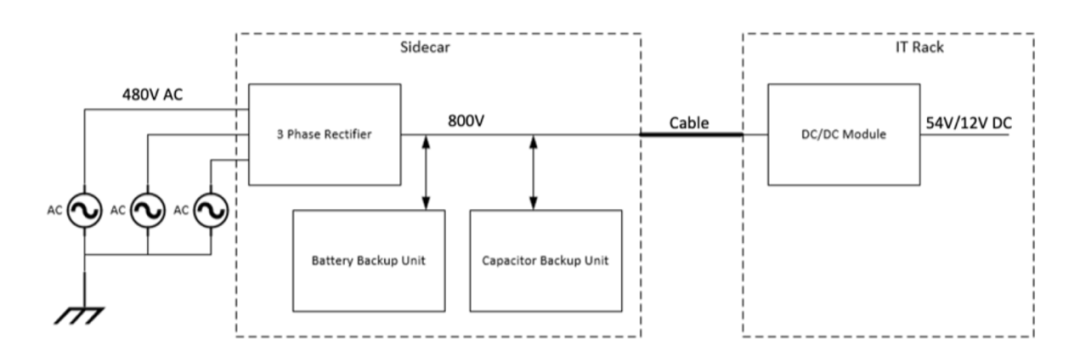
图丨德州仪器 800V DC 电源架构(来源:Texas Instrument)
意法半导体推出 12 千瓦与 20 千瓦两款功率交付板,其中 12 千瓦型号在 800 V 至 50 V 转换过程中,实现 97.5% 峰值效率与 2500 W/in³ 功率密度。纳微半导体(Navitas)依托氮化镓技术,实现 800 V 至 6 V 单级直接转换,省去传统 48 V 中间母线环节。
系统集成领域,台达发布 660 千瓦 800 V 直流列间电源机架,内置 480 千瓦电池备份单元。维谛宣布其 800 V 直流生态产品线将于 2026 年下半年实现商用,适配英伟达 Rubin Ultra 平台。
施耐德推出自主 800 V 边柜方案,可服务英伟达、谷歌、元平台(Meta)等多家企业,并承诺在英伟达新一代平台发布前,提前推出配套电源与散热方案。伊顿同期发布面向人工智能数据中心的 800 V 直流参考架构。
机架标准层面同样迎来变革。数据中心动态(DCD)近期报道援引罗格朗(Legrand)高级产品管理总监卡尔文·尼科尔森(Calvin Nicholson)表述,开放计算项目标准下电源架持续迭代:初代开放计算项目电源架功率为 18 千瓦,现已升级至 33 千瓦,下一代研发目标为 72 千瓦。
罗格朗近年深度布局开放计算生态,开发多款母排与电源架方案,先后收购冷却企业与后门热交换器公司,逐步将机架、母排、电源与散热系统整合为一体化方案交付客户。
尼科尔森在采访中提及行业转型阻力:关键基础设施运营方具备风险规避倾向,交流电应用超过百年,相关部署、维护与安全规范已十分成熟。切换至直流供电体系后,机柜、母排与安全规程均需全面更新。
客户通常会将机柜、母排与电源架在实验室进行反复测试,验证满足需求后再投入生产环境。该流程保守且合理,涉及安全培训与运维规范的全面更新。客户面临的另一难题在于,多数供应商聚焦超大规模客户需求,缺乏针对中小客户的技术普及与支持服务。
四、中国的独特定位:特高压积累与代际升级
在本次全球供电架构转型进程中,中国所处位置具备特殊性。
一方面,中国在远距离高压直流输电领域积累处于全球领先水平。国家电网与南方电网已建成超 40 条特高压输电通道,包含全球首条 ±800 千伏特高压柔性直流工程与 ±1100 千伏特高压直流线路,后者可在 0.01 秒内将新疆电力输送至 3300 公里外的安徽。中国是全球唯一掌握全系列特高压技术并实现大规模商用的国家,电力电子领域长期积累的工程能力与人才储备,为数据中心高压直流发展奠定基础。
另一方面,中国在数据中心直流供电实践方面早于海外开展探索。2007 年,江苏电信启动 240 V 高压直流供电试点。此后,百度、阿里、腾讯为代表的互联网企业,在自建数据中心广泛采用"一路市电 + 一路高压直流"双路架构。2019 年,阿里巴巴联合台达与中恒电气推出"巴拿马电源"方案,实现 10 千伏中压交流直接转换为 240 V 直流,省去传统架构多级中间设备,系统效率达 97.5%,占地面积缩减近 50%。
截至 2024 年,台达巴拿马电源在线运行数量超 500 套,百度、腾讯与三大通信运营商均在自有数据中心部署高压直流方案。国内高压直流市场中,中恒电气占据 30% 至 40% 份额,为阿里巴巴巴拿马电源提供重要供应支持。
国内当前主流高压直流电压等级为 240 V,与英伟达推动的 800 V 方案存在代际差距。2025 年 8 月,台达联合中讯邮电咨询设计院发布国内首部《数据中心 800V 直流供电技术白皮书》,推动国内向更高电压等级演进。2026 年初,字节跳动在最新一轮人工智能数据中心招标中,首次引入 800 V 高压直流方案,计划将新建园区高压直流渗透率提升至 30% 至 40%,同步启动楼宇级数十兆瓦规模 800 V 试点项目。
据相关消息,除阿里、腾讯外,国内其他云厂商已开始小批量部署高压直流方案。中恒电气、科士达、麦格米特、禾望电气等企业加速 800 V 产品研发,部分企业以维谛、施耐德等海外企业分包商身份,进入全球供应链体系。
五、全球技术路线:过渡方案与终局架构并行
从全球视角来看,800 V 高压直流落地时间表逐步清晰,技术路线呈现多元化特征。微软、谷歌与元平台在 2025 年开放计算项目欧洲、中东、非洲会议上,联合推出"迪亚波罗山(Mount Diablo)"项目,采用 ±400 V 方案而非英伟达主推的 800 V 方案,更注重短期可行性与电动车行业成熟供应链的复用。
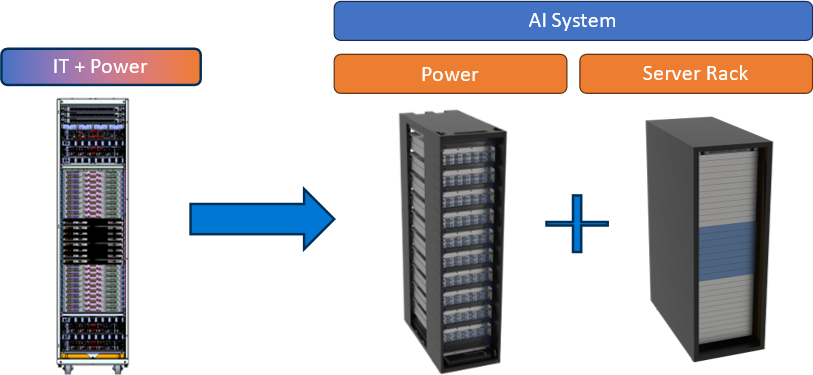
图丨 Mount Diablo 将电源与计算分离(来源:Microsoft)
元平台 ±400 V 方案预计 2026 年第一季度率先落地,英伟达 800 V 方案则定档 2027 年,与 Rubin Ultra 平台量产节点匹配。两条路线并非相互排斥,±400 V 更偏向过渡型方案,800 V 则是面向兆瓦级机架的最终架构。长远来看,固态变压器(SST)可将中压电网输入直接转换为 800 V 直流,省去独立整流环节,进一步逼近供电效率物理极限。
上述变革在一年前仍仅存在于白皮书构想中,2026 年 3 月图形处理器技术大会上,参展商展台已展出可实际体验的 800 V 电源模块、母排与边柜原型机。台达 800 V 高压直流电源机架设计功率达 570 千瓦,施耐德 800 V 边柜已进入工程验证阶段。英伟达在技术博客中表示:团队不仅在研发性能更强的图形处理器,更是在重新设计整套供电体系。
爱迪生或许未曾预见,为直流电实现翻盘的并非全新物理理论,而是一颗颗功耗持续攀升的人工智能芯片。
运营/排版:何晨龙
reference
- How Edison, Tesla and Westinghouse Battled to Electrify America | HISTORY
https://www.history.com/articles/what-was-the-war-of-the-currents - War of the Currents: How AC Defeated DC in the Race to Electrification - News
https://www.allaboutcircuits.com/news/war-of-the-currents-how-ac-defeated-dc-race-to-electrification/- AC vs. DC power: Unraveling the Epic Duel
https://www.fs.com/blog/ac-vs-dc-power-unraveling-the-epic-duel-1879.html
- AC vs. DC power: Unraveling the Epic Duel
- The War of the Currents: A Battle of Patents and Power - Schmeiser Olsen
https://schmeiserolsen.com/the-war-of-the-currents-a-battle-of-patents-and-power/ - The War of the Currents: AC vs. DC Power | Department of Energy
https://www.energy.gov/articles/war-currents-ac-vs-dc-power - 1893 芝加哥世博会:白城、摩天轮与成年礼(美中報道)
http://www.uschinews.com/static/content/JDHT/MGWX/2025-08-15/1406031971142893568.html - 爱迪生输掉的"电力之战",140 年后被 AI 翻盘了
https://mp.weixin.qq.com/s/PCfNaY4Sq9UjoxiEsXp3_w - Why Data Centers Are Switching to High-Voltage DC Power
https://thefusionreport.substack.com/p/why-data-centers-are-switching-to - The future of rack power for high-density environments - DCD
https://www.datacenterdynamics.com/en/marketwatch/the-future-of-rack-power-for-high-density-environments/