🌈个人主页 :一条泥憨鱼 (欢迎各位大佬莅临)

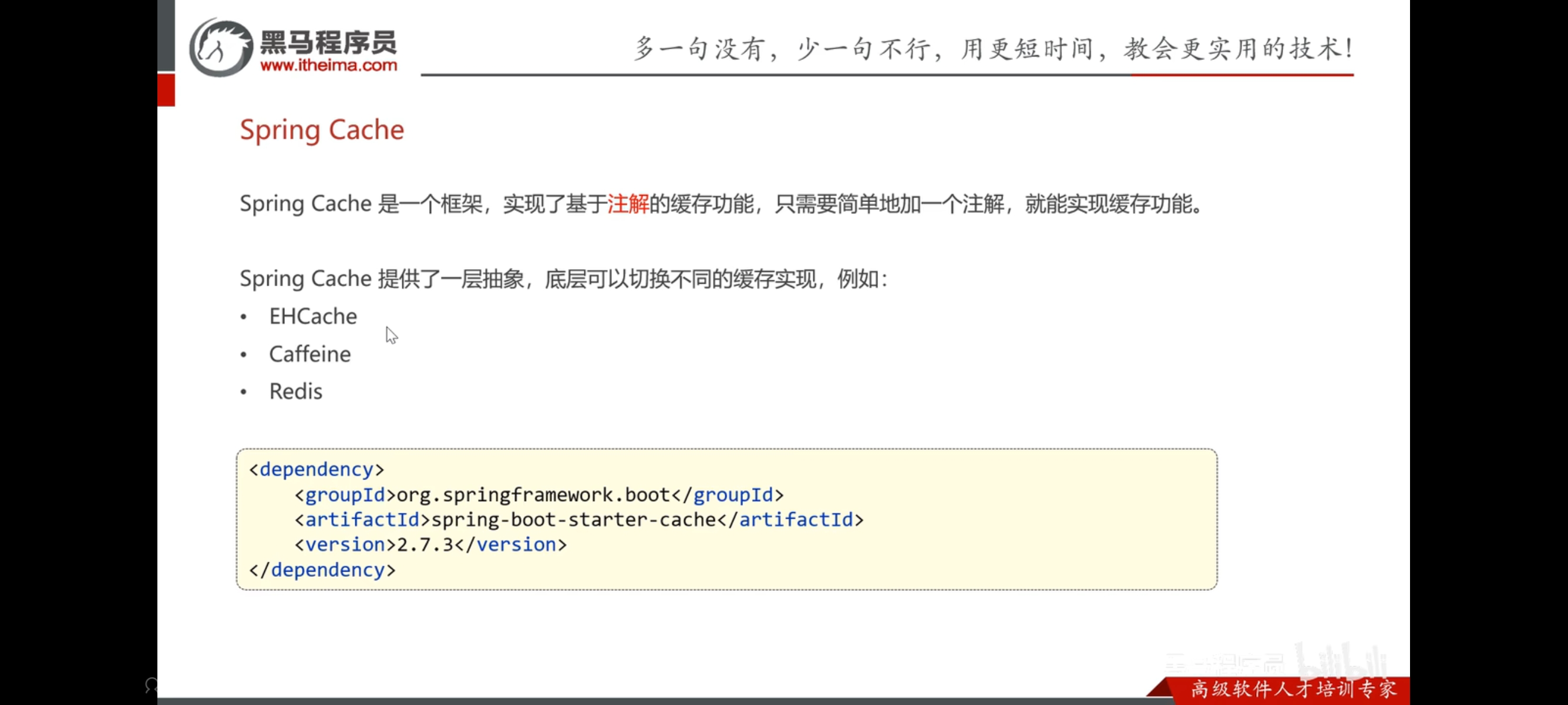
Spring Cache
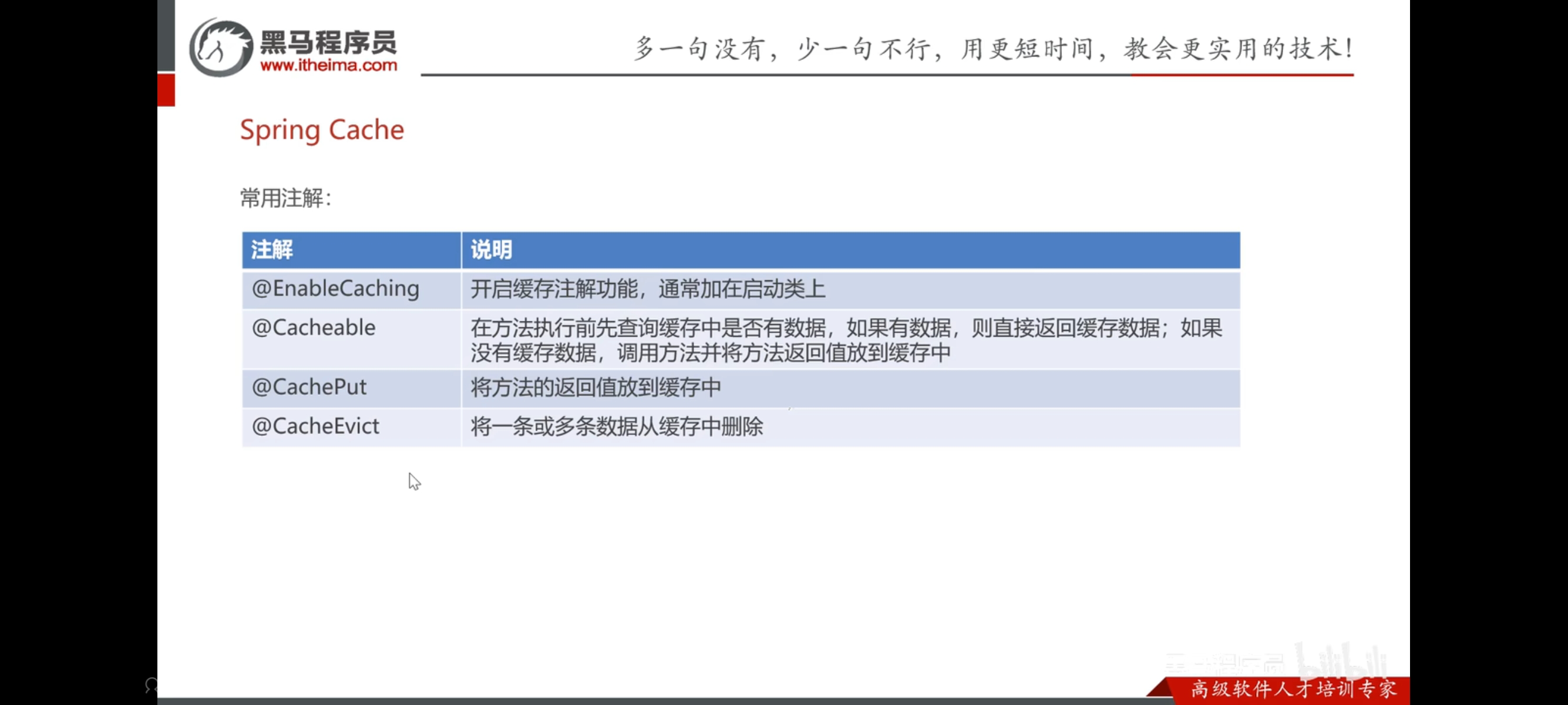
Spring Cache常用注解
代码开发
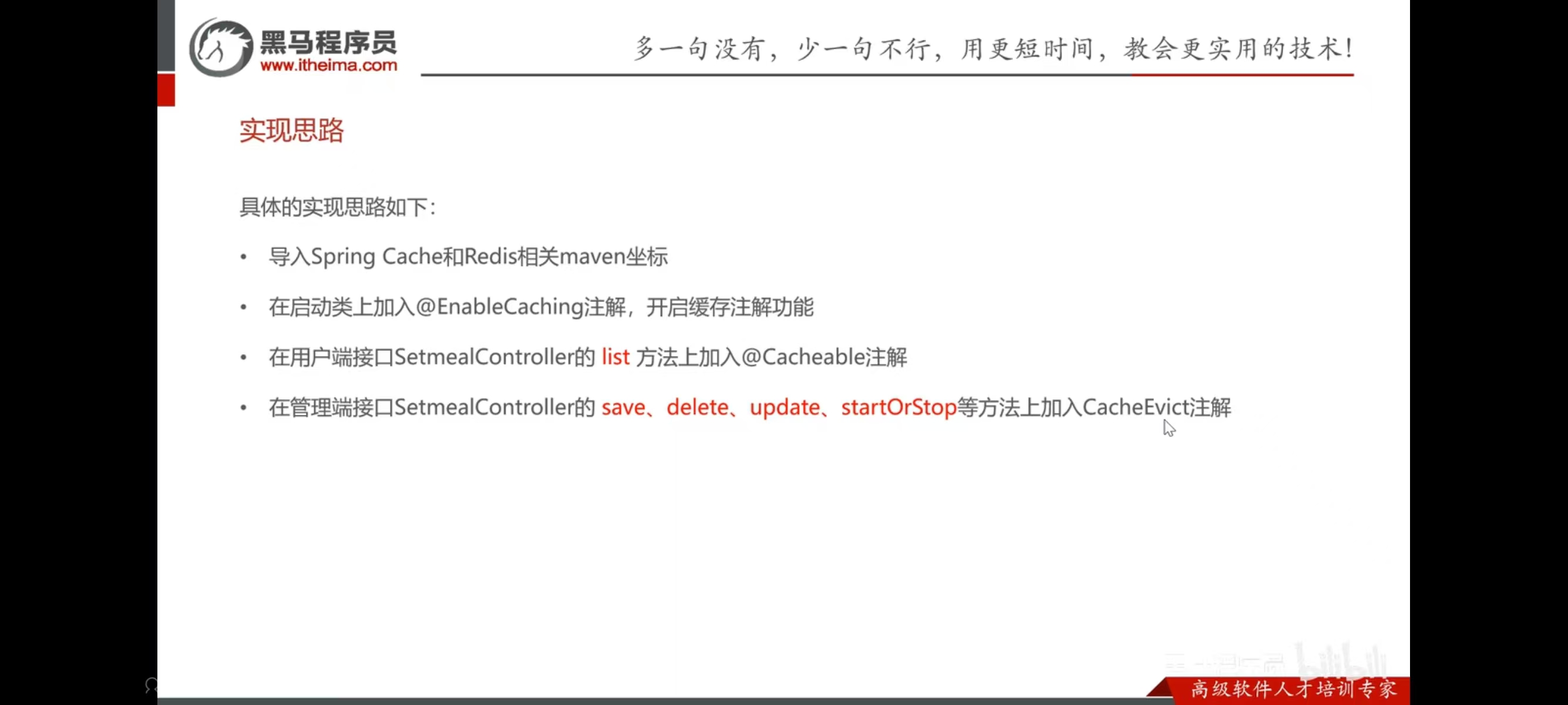
实现思路
一、整体架构概览
套餐缓存模块采用 Spring Cache 注解驱动 方式,结合 Redis 作为缓存后端实现。
┌──────────────────────────────────────────────────────────────┐
│                    Spring Cache 架构                          │
├──────────────────────────────────────────────────────────────┤
│                                                              │
│  ┌──────────────────┐        ┌──────────────────────────┐    │
│  │   C端查询接口     │        │     Admin管理接口        │    │
│  │  @Cacheable      │        │   @CacheEvict           │    │
│  └────────┬─────────┘        └────────────┬─────────────┘    │
│           │                               │                  │
│           ▼                               ▼                  │
│  ┌─────────────────────────────────────────────────────┐     │
│  │              Spring Cache 抽象层                      │     │
│  │  (CacheManager + CacheResolver)                    │     │
│  └─────────────────────┬───────────────────────────────┘     │
│                        │                                     │
│                        ▼                                     │
│  ┌─────────────────────────────────────────────────────┐     │
│  │                    Redis 缓存层                       │     │
│  │  Key: setmealCache::categoryId                      │     │
│  │  Value: List<Setmeal>                               │     │
│  └─────────────────────────────────────────────────────┘     │
│                        │                                     │
│                        ▼                                     │
│  ┌─────────────────────────────────────────────────────┐     │
│  │                    MySQL 数据库                        │     │
│  │                   setmeal 表                          │     │
│  └─────────────────────────────────────────────────────┘     │
│                                                              │
└──────────────────────────────────────────────────────────────┘
二、核心组件解析
1. 缓存开启配置
文件 :/sky/SkyApplication
java
@SpringBootApplication
@EnableTransactionManagement
@EnableCaching  // 关键:开启缓存注解支持
public class SkyApplication {
    public static void main(String[] args) {
        SpringApplication.run(SkyApplication.class, args);
    }
}作用说明:
@EnableCaching注解启用 Spring 的缓存管理功能- 自动扫描并处理
@Cacheable、@CacheEvict、@CachePut等缓存注解 - 配合 Redis 配置,自动将缓存数据存储到 Redis
2. Redis 依赖与配置
依赖 (pom.xml):
XML
<dependency>
    <groupId>org.springframework.boot</groupId>
    <artifactId>spring-boot-starter-cache</artifactId>
</dependency>
<dependency>
    <groupId>org.springframework.boot</groupId>
    <artifactId>spring-boot-starter-data-redis</artifactId>
</dependency>
配置 (application.yml):
yaml
XML
spring:
  redis:
    host: ${sky.redis.host}
    port: ${sky.redis.port}
    password: ${sky.redis.password}
    database: ${sky.redis.database}
三、缓存读取机制(C端)
文件 : user/SetmealController.java
java
@GetMapping("/list")
@ApiOperation("根据分类id查询套餐")
@Cacheable(cacheNames = "setmealCache", key = "#categoryId")  // 核心注解
public Result<List<Setmeal>> list(Long categoryId) {
    Setmeal setmeal = new Setmeal();
    setmeal.setCategoryId(categoryId);
    setmeal.setStatus(StatusConstant.ENABLE);  // 只查询起售中的套餐

    List<Setmeal> list = setmealService.list(setmeal);
    return Result.success(list);
}
@Cacheable 注解解析
| 属性 | 值 | 说明 |
|---|---|---|
cacheNames |
"setmealCache" |
缓存名称,作为Key前缀 |
key |
"#categoryId" |
SpEL表达式,使用方法参数作为缓存键 |
value |
方法返回值 | 自动缓存方法返回的 List<Setmeal> |
缓存Key生成规则
完整Key格式: cacheNames::key
示例:        setmealCache::100
执行流程
用户请求 → @Cacheable 拦截 → 检查缓存
              │
              ├── 缓存存在 → 直接返回缓存数据(不执行方法体)
              │
              └── 缓存不存在 → 执行方法体 → 将返回值写入缓存 → 返回结果
四、缓存失效机制(Admin端)
文件 : admin/SetmealController.java
4.1 精准失效(新增套餐)
java
@PostMapping
@ApiOperation("新增套餐")
@CacheEvict(cacheNames = "setmealCache", key = "#setmealDTO.categoryId")
public Result save(@RequestBody SetmealDTO setmealDTO) {
    setmealService.saveWithDish(setmealDTO);
    return Result.success();
}失效策略: 只删除新增套餐所属分类的缓存
4.2 全量失效(删除/修改/状态变更)
java
// 批量删除
@DeleteMapping
@CacheEvict(cacheNames = "setmealCache", allEntries = true)
public Result delete(@RequestParam List<Long> ids) {
    setmealService.deleteBatch(ids);
    return Result.success();
}

// 修改套餐
@PutMapping
@CacheEvict(cacheNames = "setmealCache", allEntries = true)
public Result update(@RequestBody SetmealDTO setmealDTO) {
    setmealService.update(setmealDTO);
    return Result.success();
}

// 起售停售
@PostMapping("/status/{status}")
@CacheEvict(cacheNames = "setmealCache", allEntries = true)
public Result startOrStop(@PathVariable Integer status, Long id) {
    setmealService.startOrStop(status, id);
    return Result.success();
}
@CacheEvict 注解解析
| 属性 | 值 | 说明 |
|---|---|---|
cacheNames |
"setmealCache" |
缓存名称 |
key |
"#setmealDTO.categoryId" |
精准删除指定键(可选) |
allEntries |
true |
删除该缓存名称下的所有条目 |
beforeInvocation |
默认false |
方法执行后再删除缓存 |
五、失效策略对比
| 操作 | 策略 | 注解配置 | 原因 |
|---|---|---|---|
| 新增套餐 | 精准失效 | key="#setmealDTO.categoryId" |
只影响当前分类 |
| 删除套餐 | 全量失效 | allEntries=true |
无法确定影响范围 |
| 修改套餐 | 全量失效 | allEntries=true |
分类可能改变 |
| 状态变更 | 全量失效 | allEntries=true |
影响所有分类列表 |
六、Spring Cache 工作原理解析
6.1 注解处理流程
┌────────────────────────────────────────────────────────────┐
│                   @Cacheable 执行流程                       │
├────────────────────────────────────────────────────────────┤
│                                                            │
│  1. 方法调用                                               │
│       │                                                    │
│       ▼                                                    │
│  2. CacheInterceptor 拦截                                  │
│       │                                                    │
│       ▼                                                    │
│  3. 根据 cacheNames + key 生成缓存键                         │
│       │                                                    │
│       ▼                                                    │
│  4. 查询 CacheManager → Redis                              │
│       │                                                    │
│       ├── 命中 → 返回缓存值,不执行方法                      │
│       │                                                    │
│       └── 未命中 → 执行方法 → 将结果写入缓存 → 返回结果       │
│                                                            │
└────────────────────────────────────────────────────────────┘
6.2 缓存抽象层架构
┌─────────────────────────────────────────────────────┐
│              Spring Cache 抽象层                    │
├─────────────────────────────────────────────────────┤
│                                                     │
│  @Cacheable / @CacheEvict / @CachePut              │
│         │                                           │
│         ▼                                           │
│  CacheInterceptor (AOP切面)                         │
│         │                                           │
│         ▼                                           │
│  CacheManager (缓存管理器)                           │
│         │                                           │
│         ▼                                           │
│  RedisCacheManager (Redis实现)                       │
│         │                                           │
│         ▼                                           │
│  RedisTemplate                                      │
│         │                                           │
│         ▼                                           │
│  Redis Server                                       │
│                                                     │
└─────────────────────────────────────────────────────┘
七、与菜品缓存的对比
| 维度 | 菜品缓存 (Dish) | 套餐缓存 (Setmeal) |
|---|---|---|
| 实现方式 | 手动 RedisTemplate 操作 | Spring Cache 注解 |
| 缓存键格式 | dish_{categoryId} |
setmealCache::{categoryId} |
| 读取方式 | redisTemplate.opsForValue().get(key) |
@Cacheable 注解自动处理 |
| 失效方式 | cleanCache(pattern) 手动方法 |
@CacheEvict 注解自动处理 |
| 代码侵入性 | 需要手动编写缓存逻辑 | 零侵入,注解声明式 |
| 扩展性 | 需要手动维护 | 支持多种缓存后端切换 |
至此,缓存套餐的代码已经开发完毕
下一期将为大家带来对购物车进行操作的代码开发讲解