Vue2 中使用 gmap - marker 和 GmapCluster 实现谷歌地图标点与聚合
一、安装与配置依赖
在项目开始前,请确保已安装vue2-google-maps依赖。若尚未安装,在项目根目录下运行以下命令:
npm install vue2-google-maps随后,在main.js文件中进行基础配置,引入你的谷歌地图 API 密钥(可在谷歌云平台申请):
javascript
import Vue from 'vue';

import App from './App.vue';

import { VueGoogleMaps } from 'vue2-google-maps';

Vue.use(VueGoogleMaps, {

 load: {

   key: 'YOUR\_API\_KEY',

   libraries: 'places' // 若需使用地点相关功能,可添加此选项

 }

});

new Vue({

 render: h => h(App)

}).$mount('#app');
二、创建地图组件
在src/components目录下创建地图组件,例如GoogleMapWithCluster.vue。
xml
<template>

 <gmap-map

   :center="{lat: 37.7749, lng: -122.4194}"

   :zoom="12"

   map-type-id="roadmap"

   style="width: 100%; height: 500px;"

 >

   <gmap-cluster>

     <gmap-marker

       v-for="(marker, index) in markers"

       :key="index"

       :position="marker.position"

       :title="marker.title"

     />

   </gmap-cluster>

 </gmap-map>

</template>

<script>

import { GmapMap, GmapMarker } from 'vue2-google-maps';

import GmapCluster from 'vue2-google-maps/src/components/cluster';

export default {

 components: {

   GmapMap,

   GmapMarker,

   GmapCluster

 },

 data() {

   return {

     markers: [

       {

         position: { lat: 37.7749, lng: -122.4194 },

         title: 'Marker 1'

       },

       {

         position: { lat: 37.7761, lng: -122.4185 },

         title: 'Marker 2'

       },

       {

         position: { lat: 37.7755, lng: -122.4178 },

         title: 'Marker 3'

       }

       // 可按需添加更多标记数据

     ]

   };

 }

};

</script>

<style scoped>

/\* 地图样式可依需求调整 \*/

</style>
代码说明:
模板部分通过gmap-map组件创建地图,设置了地图的中心坐标、缩放级别和地图类型。
将gmap-cluster作为gmap-map的子组件,在gmap-cluster内部通过v-for循环渲染gmap-marker组件,每个gmap-marker对应一组标记数据,以此实现标点和聚合的展示。
脚本部分引入所需的GmapMap、GmapMarker和GmapCluster组件,并在components选项中进行局部注册。同时,在data中定义markers数组,用于存储标记数据。
三、使用地图组件
在App.vue文件中使用刚创建的GoogleMapWithCluster.vue组件:
xml
<template>

 <div id="app">

   <GoogleMapWithCluster />

 </div>

</template>

<script>

import GoogleMapWithCluster from './components/GoogleMapWithCluster.vue';

export default {

 components: {

   GoogleMapWithCluster

 }

};

</script>

<style>

#app {

 font-family: Avenir, Helvetica, Arial, sans-serif;

 -webkit-font-smoothing: antialiased;

 -moz-osx-font-smoothing: grayscale;

 text-align: center;

 color: #2c3e50;

 margin-top: 60px;

}

</style>
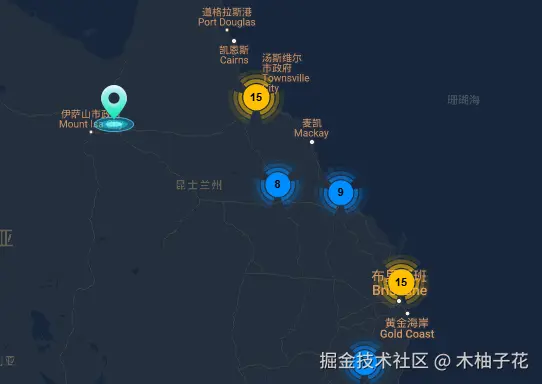
下图是效果(样式是经过修改):