并行工具,FutureTask 的增强版,也可以叫完全体,超级强大
- Runable 是没有返回结果的行为
- Callable 是有返回结果的行为
- Future封装了 Callable 和 Runnable,委托给线程池执行,需要取回返回结果 --> 同步阻塞
- CompletableFuture封装了Future ,拥有回调功能,在某个行为执行完成之后,可以继续进行下一个动作 --> 异步非阻塞

真是业务场景中,都是多任务组合来进行处理
一、FutureTask存在的问题
FutureTask是一个同步阻塞处理任务的方式 --> 很多人说是同步非阻塞,但是调用get()方法会阻塞调用线程,个人认为这块还是同步阻塞,但是任务是异步执行
问题1:FutureTask获取线程执行的结果前,其他线程调用get()方法一直阻塞,需要等待FutureTask执行完call方法,才可以拿到返回结果。
问题2:如果不通过get()方法去挂起线程,通过while循环,不停的判断任务的状态是否结束,结束后,再拿结果,如果任务长时间没执行完毕,CPU 会一直调度查看任务状态,浪费 CPU 资源
以上两个问题,用 CompletableFuture就可以解决,CompletableFuture是一个异步非阻塞的方式,实现了 Future接口,提供了各种丰富的函数去执行各种操作
二、简单案例
写个简单案例,入个门,底层原理留在后续进行研究。
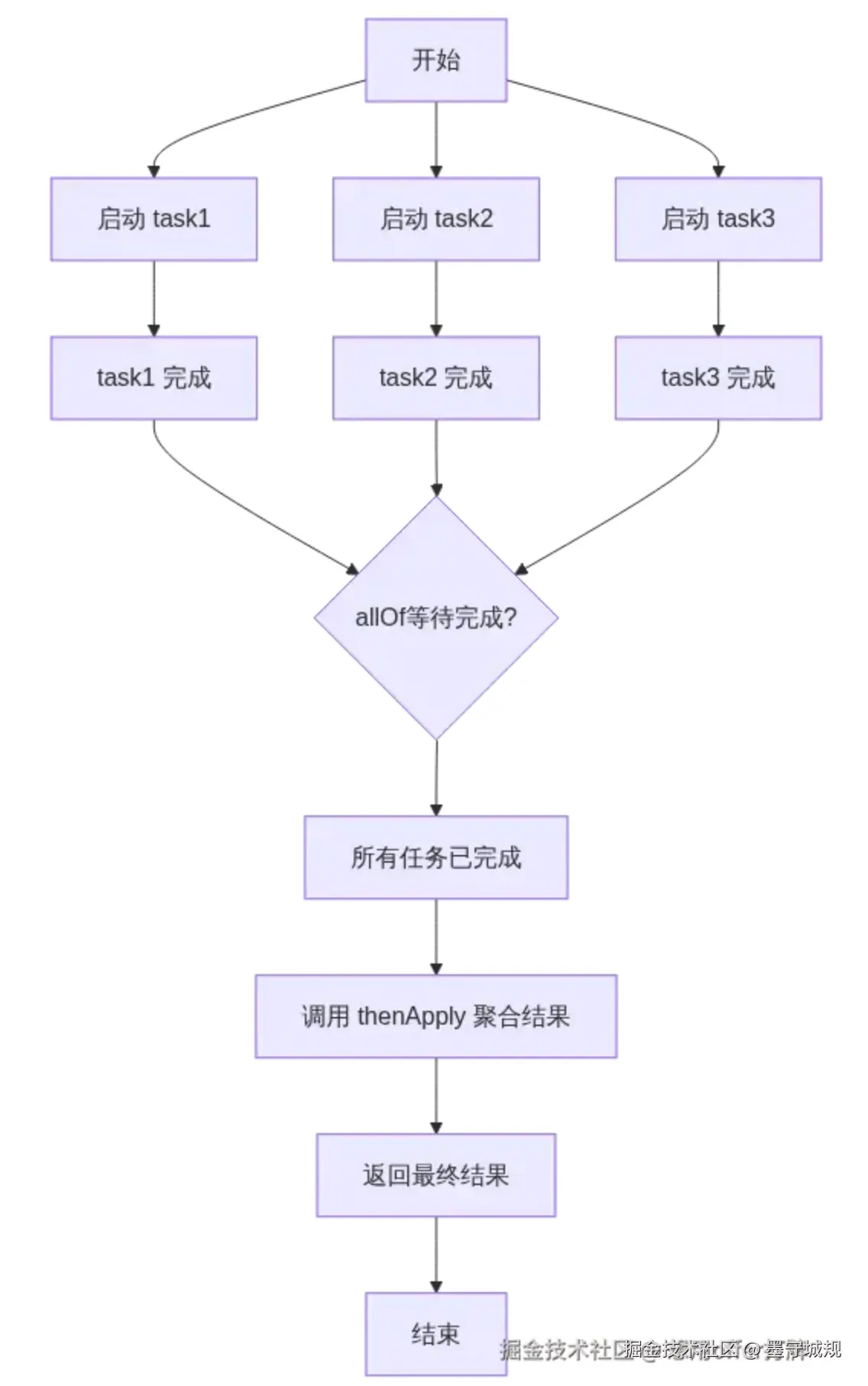
在真实的业务场景中,一个接口里用到了互不影响的几个流程,就可以用并行编排来进行性能优化。
csharp
public boolean checkOrder1(){
    if (!basicCheck()){
        return false;
    }
    List<CompletableFuture> list = new ArrayList<>();
    // 异步编排  supplyAsync 有返回结果 创建编排任务
    CompletableFuture<Boolean> checkRiskControl =  CompletableFuture.supplyAsync(() -> {
        System.out.println("任务 1");
        return true;
    });
    list.add(checkRiskControl);
    CompletableFuture<Boolean> checkCoupon =  CompletableFuture.supplyAsync(() -> {
        System.out.println("任务 2");
        return true;
    });
    list.add(checkCoupon);
    CompletableFuture<Boolean> checkGoods =  CompletableFuture.supplyAsync(() -> {
        System.out.println("任务 3");
        return true;
    });
    list.add(checkGoods);
    CompletableFuture<Boolean> checkInventory =  CompletableFuture.supplyAsync(() -> {
        System.out.println("任务 4");
        return true;
    });
    list.add(checkInventory);

    // 编排到一块  allof --> 所有的任务都执行完后,才执行allof
    CompletableFuture<Boolean> result = CompletableFuture.allOf(
            list.toArray(new CompletableFuture[0])
    ).thenApply(res -> { // thenApply 拿到所有的结果 进行下一步
        System.out.println("thenApply 拿到了所有结果 最后进行执行!!");
        return checkGoods.join() && checkInventory.join() && checkCoupon.join()&& checkRiskControl.join();
    });

    // get方法 与 join方法区别:get是阻塞的 get 拿不到返回值一直到 join是非阻塞的
    System.out.println("订单完成前置校验结果为:" + result.join());
    return true;
}
这里用到了三个CompletableFuture的功能:
- supplyAsync() --> 异步执行,有返回值
- allof() --> 全部执行完成,进行下一步
- thenApply() --> 依赖上一步的执行结果,有传参(上一个任务的结果就是入参),有返回值
- join() --> 获取执行结果 【这个方法是非阻塞的】 get() --> 是阻塞的
三、源码分析
以 JDK21 版本为例,着重分析异步回调是怎么实现的
着重以runAsync()方法以及then()方法为例子来进行分析,后续所有的方法大同小异
kotlin
// 再来一个没有返回结果的任务
// 默认使用的是 ForkJoin线程池 --> 守护线程,当主线程执行结束,守护线程也跟着结束,所有这个打印结果有可能输出,也有可能不输出
CompletableFuture<Void> voidCompletableFuture = CompletableFuture.runAsync(() -> {
    System.out.println("没有返回结果!!!");
});
voidCompletableFuture.thenRun(() -> System.out.println("11"));
voidCompletableFuture.thenRun(() -> System.out.println("22"));
voidCompletableFuture.thenRun(() -> System.out.println("33"));
1、CompletableFuture的关键属性
就看下面的两个关键属性
arduino
// 存放任务返回的最终结果,即使返回值为 void 类型的,也会封装结果,封装的结果为NIL
volatile Object result;

// 一些then方法,后继要执行的任务存储的栈结构
volatile Completion stack;
stack底层其实通过链表来实现的

2、runAsync()方法
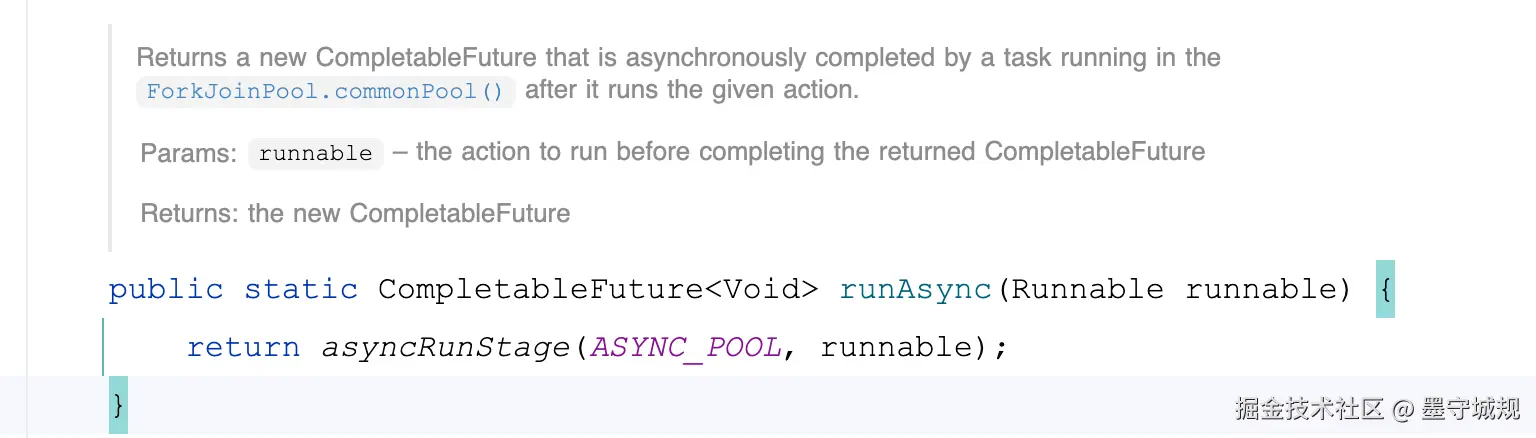
没有指定线程池,默认使用ForkJoinPool

javascript
static CompletableFuture<Void> asyncRunStage(Executor e, Runnable f) {
    // 边界判断,如果传进来的runable的lambda是空的,抛异常
    if (f == null) {
        throw new NullPointerException();
    }
    // 声明当前任务的CompletableFuture对象,主要是为了触发后续任务的执行
    CompletableFuture<Void> d = new CompletableFuture<Void>();
    // 将任务和CompletableFuture封装到一起,作为 AsyncRun对象,交给线程池进行执行
    e.execute(new AsyncRun(d, f));
    return d;
}
交给线程池执行,具体会运行到 AsyncRun对象的run方法
scala
static final class AsyncRun extends ForkJoinTask<Void>implements Runnable, AsynchronousCompletionTask {

    // 当前 CompletableFuture对象
    CompletableFuture<Void> dep;

    // 具体任务
    Runnable fn;

    // 构造器
    AsyncRun(CompletableFuture<Void> dep, Runnable fn) {
        this.dep = dep; this.fn = fn;
    }

    public void run() {
        CompletableFuture<Void> d;
        Runnable f;
        // 源码编写人的编码风格 --> 判空处理的同时,将成员变量做临时存储
        if ((d = dep) != null && (f = fn) != null) {
            // 方便 GC,将成员变量置null
            dep = null; fn = null;
            // 判断当前任务是否已经执行完毕
            if (d.result == null) { // 等于null 说明任务还没有执行
                try {
                    // 执行任务
                    f.run();
                    // 设置结果 --> runAsync()没有返回结果,给当前CompletableFuture对象封装返回结果
                    // 为null的结果是NIL
                    d.completeNull();
                } catch (Throwable ex) {
                    // 抛出异常,封装异常
                    d.completeThrowable(ex);
                }
            }
            // 从栈里取后续任务进行执行
            d.postComplete();
        }
    }
}
这里分析一下d.completeNull()方法 和 d.completeThrowable(ex)这两个方法是怎么封装结果的
java
final boolean completeNull() {
    // 通过 CAS 将result设置为 NIL
    return RESULT.compareAndSet(this, null, NIL);
}

final boolean completeThrowable(Throwable x) {
    // 通过 CAS 的方式将result封装异常结果
    return RESULT.compareAndSet(this, null, encodeThrowable(x));
}
接着分析,当前任务执行完毕后,后续栈里的任务具体是怎么处理的 --> d.postComplete()方法
kotlin
/*
* 总结:
*    1、栈里没值跳过
*	 2、栈里有值从栈顶开始依次取值,执行具体任务
*/
final void postComplete() {
    // 拿到当前的CompletableFuture对象
    CompletableFuture<?> f = this;

    // 局部栈变量
    Completion h;
    // 拆开来看
    // (h = f.stack) != null  --> 把当前CompletableFuture对象的stack变量赋值给局部变量h 并且判断 是不是为null --> 如果为空:说明没有后继任务,不需要往下执行
    // (f != this && (h = (f = this).stack) != null) ---> 完全是为了健壮性判断,f如果不是当前对象,赋值成当前对象再进行判断
    while ((h = f.stack) != null || (f != this && (h = (f = this).stack) != null)) { // 这个目的就是判断当前CompletableFuture对象的stack属性值是否为空 并且将栈顶数据赋值给h
        CompletableFuture<?> d;
        Completion t;
        // 将当前CompletableFuture对象的 Stack 值设置为 h.next [栈顶换为next], h为栈顶元素
        if (STACK.compareAndSet(f, h, t = h.next)) {
            if (t != null) { // next不为null
                if (f != this) { // f不是当前对象
                    pushStack(h); // 还原,再给压回去
                    continue;
                }
                // 移除掉h的next值 --> 删除h节点
                NEXT.compareAndSet(h, t, null); // try to detach
            }
            // 具体执行栈顶的任务
            f = (d = h.tryFire(NESTED)) == null ? this : d;
        }
    }
}
具体执行任务的方法 h.tryFire(NESTED) ,这个tryFire()就得看具体的实现类是怎么执行的,怎么看具体的实现类 --> 就得知道调用完runAsync()方法, 后继方法调用的是什么,给栈里存放的具体任务的值 --> 后继方法调用的thenRun()这个方法
csharp
// 调用的后续方法是thenRun() ---> 看这个方法的具体实现类
task.thenRun(() -> System.out.println("11"));
查看调用链,发现最后封装成一个UniRun对象
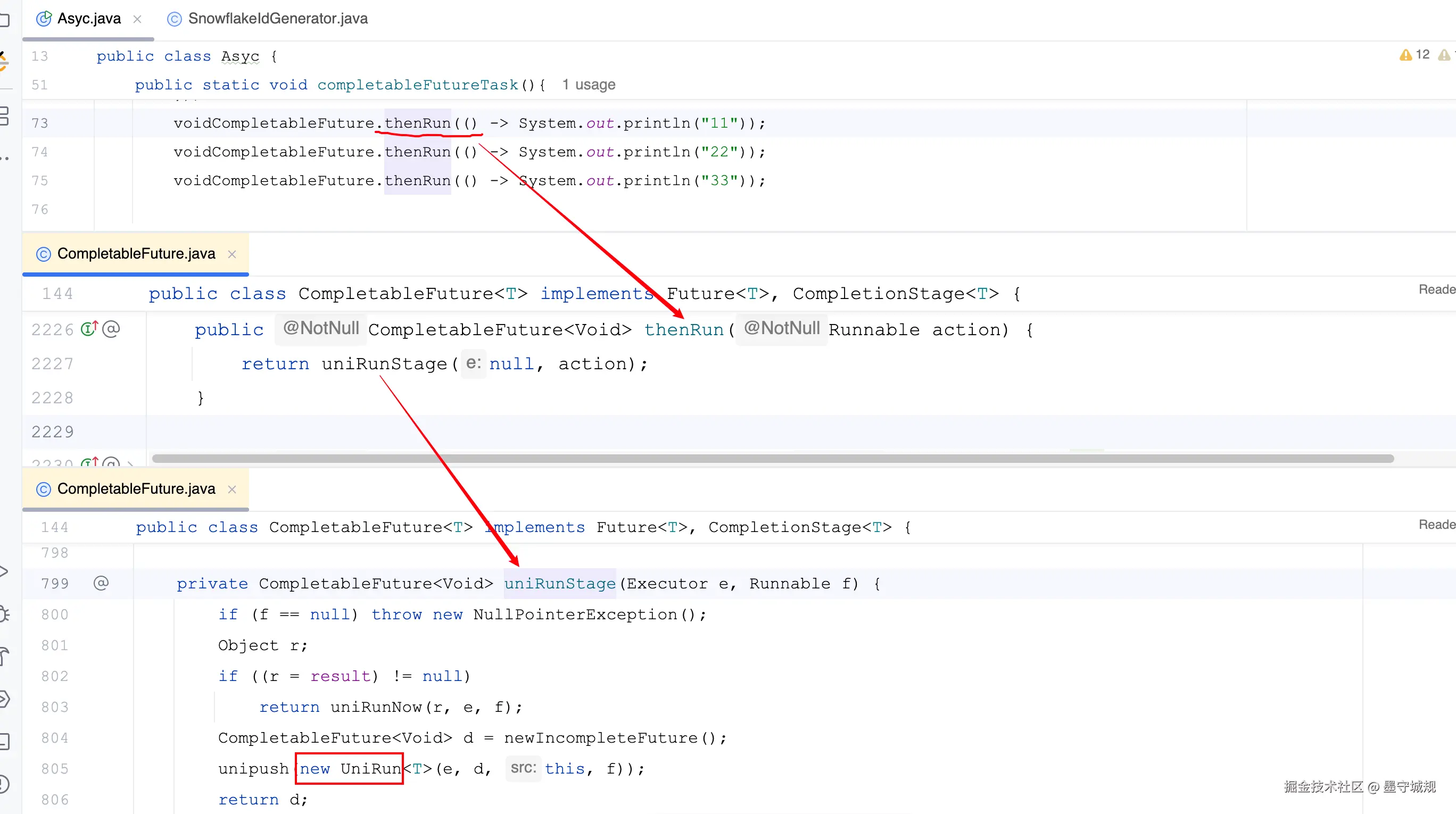
UniRun 继承 UniCompletion , UniCompletion 继承了 Completion
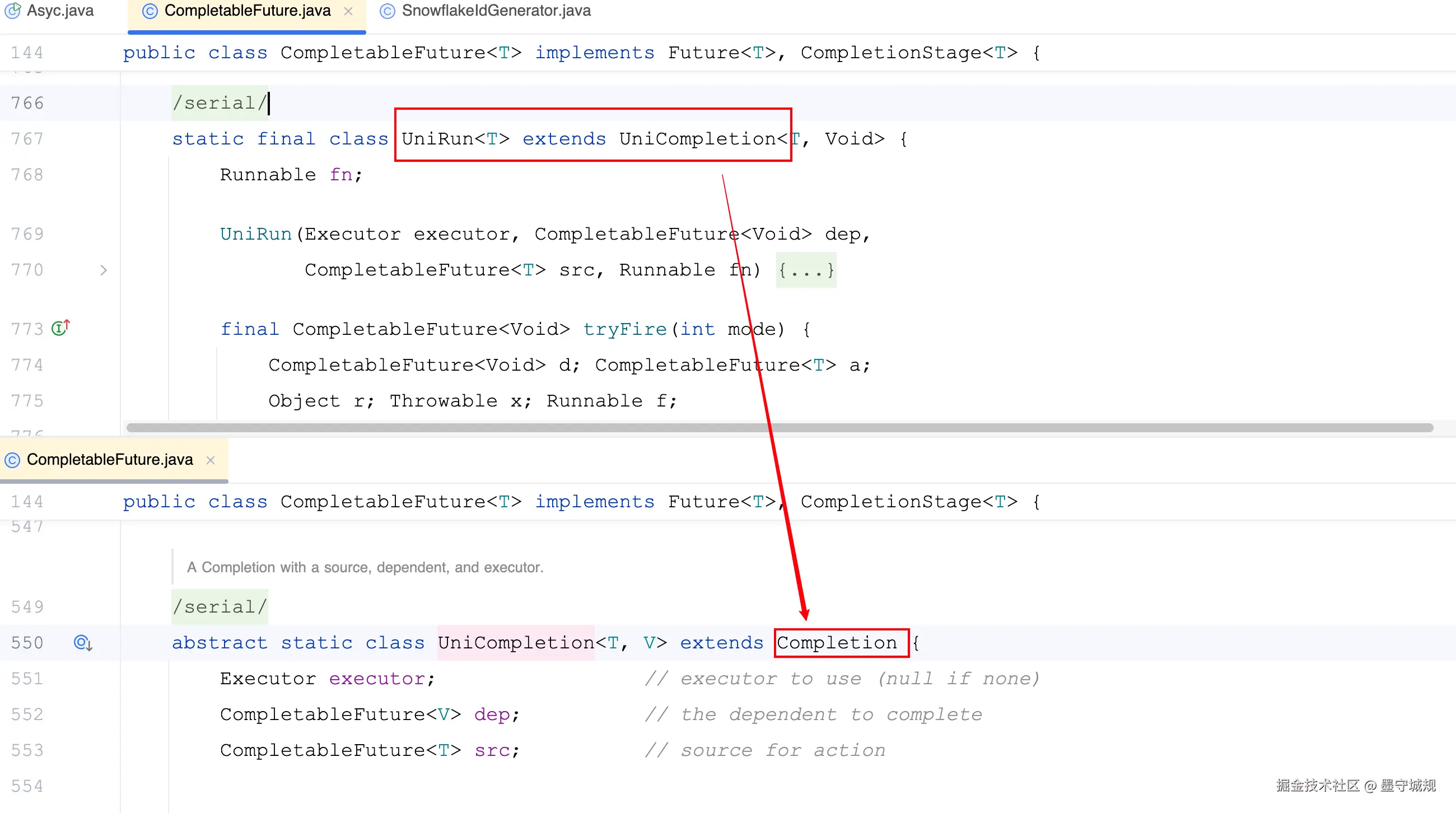
所以具体执行任务的 tryFire方法,就先看 UniRun内部类的实现
php
// Modes for Completion.tryFire. Signedness matters.
static final int SYNC   =  0; // 异步执行
static final int ASYNC  =  1; // 同步执行
static final int NESTED = -1; // 嵌套执行

// mode模式 --> 分为 同步、异步、嵌套
final CompletableFuture<Void> tryFire(int mode) {
    CompletableFuture<Void> d; // 后继任务
    CompletableFuture<T> a; // 前继任务
    Object r; // 前继任务的结果
    Throwable x; // 前继任务出现了异常
    Runnable f; // 当前具体任务
    // src表示前继任务
    // dep表示后继任务
    // fn表示具体任务
    // 边界判断
    if ((a = src) == null || (r = a.result) == null || (d = dep) == null || (f = fn) == null){
        return null;
    }

    // 判断后继任务是否执行
    if (d.result == null) {
        // 后继任务没执行
        if (r instanceof AltResult && (x = ((AltResult)r).ex) != null){
            // 前继任务执行中出现了异常,后续任务就不再执行,封装异常
            d.completeThrowable(x, r);
        }else{ // 执行后继任务
            try {
                // 根据模式进行判断,是否交由线程池来执行
                // 具体异步执行任务方法 claim() --> 交给线程池来执行
                if (mode <= 0 && !claim()){
                    return null;
                }else { // mode == 1 同步执行 另一种情况:线程池为null 也会走到else 同步执行
                    f.run(); // 直接执行具体的run方法
                    d.completeNull(); // 封装结果
                }
            } catch (Throwable ex) {
                // 出现异常,封装异常
                d.completeThrowable(ex);
            }
        }
    }
    // 方便 GC,将成员变量置null
    src = null;
    dep = null;
    fn = null;
    // 继续执行前继任务的后续任务
    return d.postFire(a, mode);
}
claim()方法 --> 用线程池来执行任务
java
// 异步/嵌套执行后继任务
final boolean claim() {
    // 赋值线程池给局部变量
    Executor e = executor;
    // 判断当前任务标记是否已经执行
    if (compareAndSetForkJoinTaskTag((short)0, (short)1)) {
        if (e == null){
            // 线程池为null 说明是同步执行,直接返回true
            return true;
        }
        executor = null; // 方便 GC,成员变量置为null
        // 异步执行,使用线程池来执行
        e.execute(this);
    }
    return false;
}
3、thenRun()方法
这里就是具体分析看看后继任务是怎么执行的
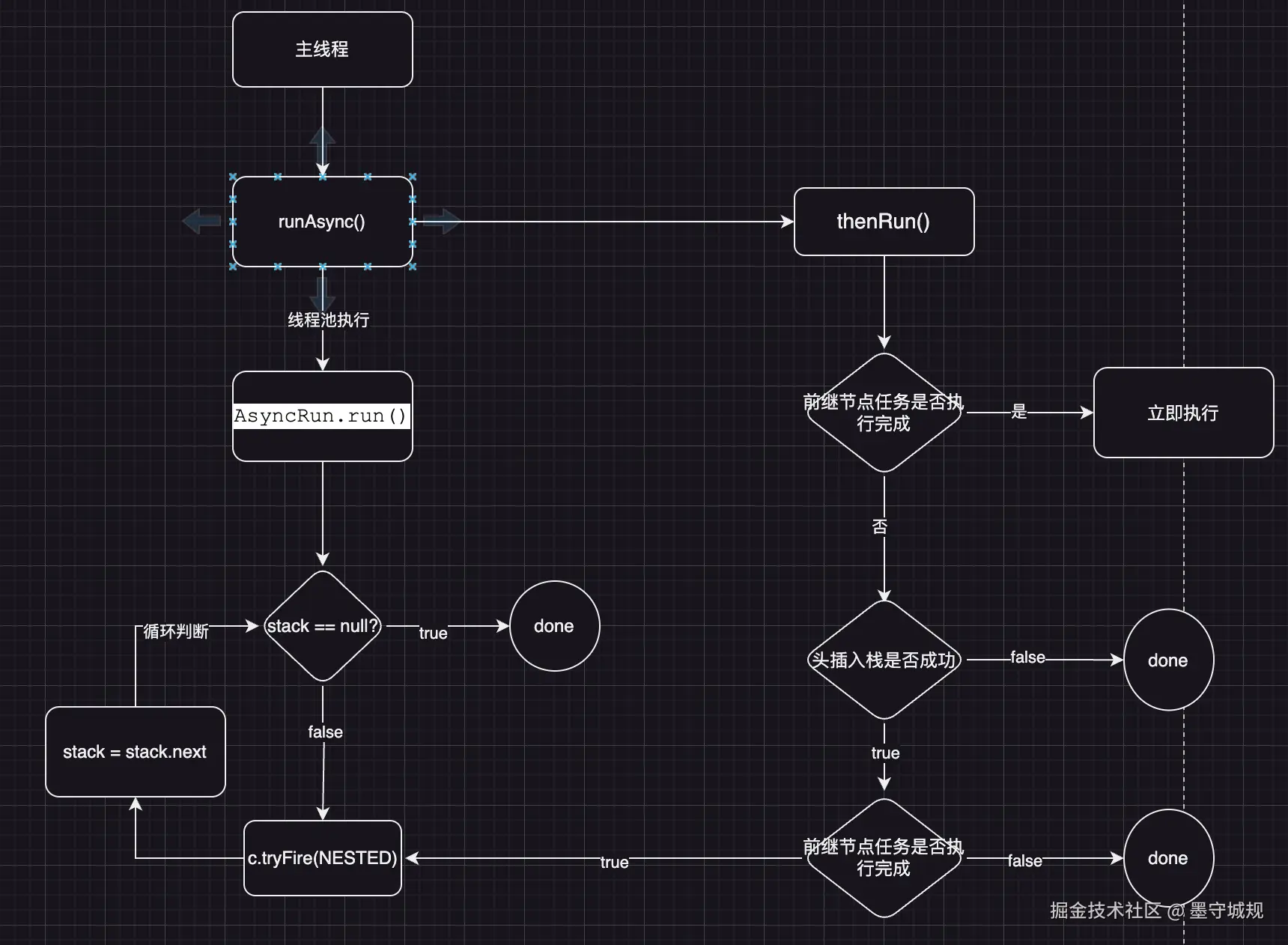
发现问题:是通过压栈来具体进行执行的,但是在实际的代码测试中,发现后继任务的执行,并不是严格按照先进后出来进行打印的,而是随机顺序。
原因:如果前继任务执行完,就直接执行后继任务,不入栈
thenRun()相同的功能有三种方法,这里分析thenRun不带线程池的方式
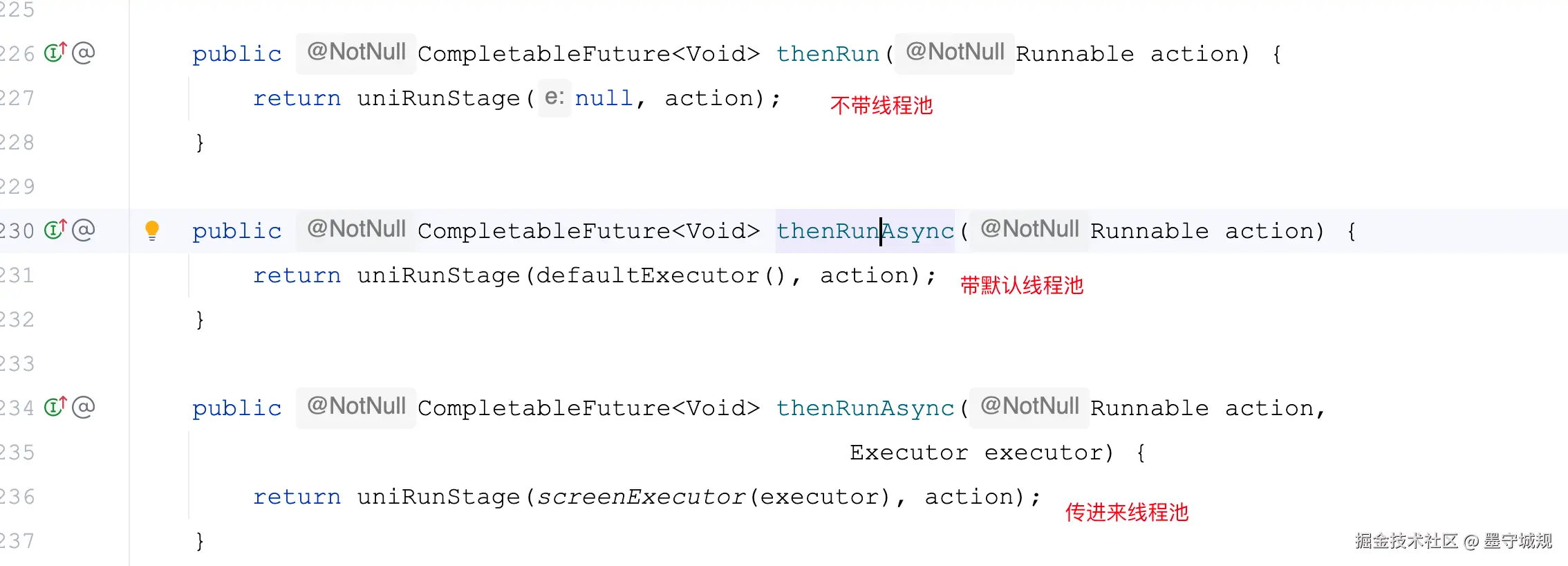
分析uniRunStage()方法
kotlin
private CompletableFuture<Void> uniRunStage(Executor e, Runnable f) {
    // 边界处理
    if (f == null) {
        throw new NullPointerException();
    }
    Object r;
    // result是this.result 代表当前任务的是否已经执行完毕
    if ((r = result) != null){
        // 如果当前任务已经执行完毕,不需要入栈,直接执行后继任务
        return uniRunNow(r, e, f);
    }
    // 构建后继任务的CompletableFuture d --> 方便后继任务的后继任务执行
    CompletableFuture<Void> d = newIncompleteFuture();
    // 压栈
    // e --> 线程池
    // d --> 后继任务的 CompletableFuture 对象
    // this --> 当前对象的 CompletableFuture
    // f --> 后继任务的具体任务
    unipush(new UniRun<T>(e, d, this, f));
    return d;
}分析到这就可以回答开头的问题:如果task.thenRun(() -> System.out.println("11"));这个task任务已经执行完了,那就不需要压栈,直接执行 () -> {System.out.println("11")},如果task没执行完,才需要压栈。
uniRunNow()立即执行后继任务的源码
typescript
// 立即执行的源码
 private CompletableFuture<Void> uniRunNow(Object r, Executor e, Runnable f) {
    Throwable x;
    // 还是得构建一个继任务的CompletableFuture d
    CompletableFuture<Void> d = newIncompleteFuture();
    if (r instanceof AltResult && (x = ((AltResult)r).ex) != null){
        // 前继任务出现了异常,后继任务也不需要执行
        d.result = encodeThrowable(x, r);
    }else{
        try {
            if (e != null) {
                // 线程池不为空,用线程池异步来执行
                e.execute(new UniRun<T>(null, d, this, f));
            } else {
                // 直接同步执行
                f.run();
                // 封装后继任务的结果
                d.result = NIL;
            }
        } catch (Throwable ex) {
            // 出现异常,封装后继任务的异常结果
            d.result = encodeThrowable(ex);
        }
    }
    return d;
}
在执行入栈时,会构造一个 UniRun 对象,我们先分析一下这个构造器
scala
// UniRun 继承 UniCompletion 抽象类
static final class UniRun<T> extends UniCompletion<T,Void> {
        Runnable fn;
        // executor 线程池
        // dep 后继任务
        // src 前继任务
        // fn 具体的任务
        UniRun(Executor executor, CompletableFuture<Void> dep,CompletableFuture<T> src, Runnable fn) {
            super(executor, dep, src);
            this.fn = fn;
        }
}

abstract static class UniCompletion<T,V> extends Completion {
        Executor executor;                 // executor to use (null if none)
        CompletableFuture<V> dep;          // the dependent to complete
        CompletableFuture<T> src;          // source for action

        UniCompletion(Executor executor, CompletableFuture<V> dep,
                      CompletableFuture<T> src) {
            this.executor = executor; this.dep = dep; this.src = src;
        }
}
再看具体的入栈方法unipush()
csharp
// 入栈源码
 final void unipush(Completion c) {
    if (c != null) {  // 边界判断,这个一定是true,不为空
        // 自旋入栈
        while (!tryPushStack(c)) {
            // CAS 入栈失败
            if (result != null) { // 前继任务已经执行完了
                NEXT.set(c, null); // 将c的next设置为null
                break;
            }
        }
        // 前继任务已经执行完了,开始执行后继任务
        if (result != null){
            // 同步执行c这个节点任务
            c.tryFire(SYNC);
        }
    }
}
头插法入栈
arduino
final boolean tryPushStack(Completion c) {
    // 当前前继任务的stack属性赋值给局部变量h
    Completion h = stack;
    // 头插法,将c的next指向h  --> 模拟栈
    NEXT.set(c, h);
    // 当前前继任务的stack值变为c
    return STACK.compareAndSet(this, h, c);
}
4、总结
runAsync()与thenRun()方法是配合使用的
为了方便理解,做如下声明
runAsync()存放的是前继任务
thenRun()存放的是后继任务