注:本文为 "技术采用曲线" 相关合辑。
英文引文,机翻未校。
未去重,两篇文章主题一样,案例不一样。
如有内容异常,请看原文。
The 5 Stages of the Technology Adoption Curve
技术采用曲线的 5 个阶段
28th February 2023
The technology adoption lifecycle describes how new products, ideas or technologies disseminate through a population over time. By categorising attitudes towards new technology into five groups, the model helps businesses tailor their approach to the needs of different customers.
技术采用生命周期描述了新产品、新想法或新技术如何随着时间的推移在人群中传播。该模型将人们对新技术的态度划分为 5 个群体,助力企业根据不同客户的需求调整运营策略。
Whilst frequently used by sales and marketing teams, the adoption curve concept is a useful for anyone tasked with rolling out a new product, service or idea, such as learning and development teams delivering employee training on new workplace technology.
尽管采用曲线的概念常被销售和营销团队使用,但对于所有负责推出新产品、新服务或新想法的人员而言,这一概念同样具有参考价值,例如为员工开展职场新技术培训的学习与发展团队。
In this article, we'll look in detail at the mindset and typical behaviour of each adopter category and explore how this knowledge can be used to enhance L&D programmes.
在本文中,我们将详细分析每个采用者群体的思维模式和典型行为,并探讨如何运用这些知识优化学习与发展项目。
What is the adoption curve concept?
什么是采用曲线概念?
The adoption curve concept, also known as the diffusion of innovations theory, was first introduced by Everett Rogers in his 1962 book, "Diffusion of Innovations." Rogers was a sociologist who studied how new ideas and technologies spread within communities.
采用曲线概念,也被称为创新扩散理论 ,由社会学家 Everett Rogers 于 1962 年在其著作《创新扩散》Diffusion of Innovations 中首次提出。Rogers 致力于研究新想法和新技术在社群内部的传播规律。
Rogers categorised people into five groups: innovators, early adopters, early majority, late majority, and laggards. He found that each group had its own characteristics and adopted new technology at a different rate.
Rogers 将人群划分为 5 个类别:创新者、早期采用者、早期大众、晚期大众和落后者。他发现,每个群体都有其独特的特征,且采用新技术的速度各不相同。
The model has been widely used in many areas of business and has implications for all companies, not just those selling technology based products and services. For example, marketers have used the model to understand better consumer behaviour and how to approach an audience with new concepts. And in learning and development, it has a role to play in helping employees adopt new workplace technology.
该模型已在商业的多个领域得到广泛应用,对所有企业均具有指导意义,并非仅适用于销售技术类产品和服务的企业。例如,营销人员利用该模型更深入地理解消费者行为,以及如何向受众传递新的概念;而在学习与发展领域,该模型能够帮助员工接受职场中的新技术。
In recent years, the model has been subject to some criticism, especially regarding its linearity and the assumption that all adopters are alike. However, it's an influential model in technology management and marketing to explain and predict technology adoption, and remains widely used in many fields, including the adoption of new medical practices, the spread of political ideologies, and the diffusion of new consumer products.
近年来,该模型也受到了一些批评,尤其是其线性特征以及对"所有采用者特征趋同"的假设。但在技术管理和营销领域,该模型仍是解释和预测技术采用行为的经典模型,至今仍在诸多领域被广泛应用,包括新医疗手段的推广、政治理念的传播以及新型消费品的市场扩散。
What are the 5 Stages of Technology Adopters?
技术采用者的 5 个阶段分别是什么?
According to Rogers, the five adopter categories are distributed as follows:
根据 Rogers 的研究 According to Rogers,5 个采用者群体的占比分布如下:
-
5% are Innovators
5% 为创新者
-
5% are Early Adopters
5% 为早期采用者
-
34% are Early Majorities
34% 为早期大众
-
34% are Late Majorities
34% 为晚期大众
-
16% are Laggards
16% 为落后者
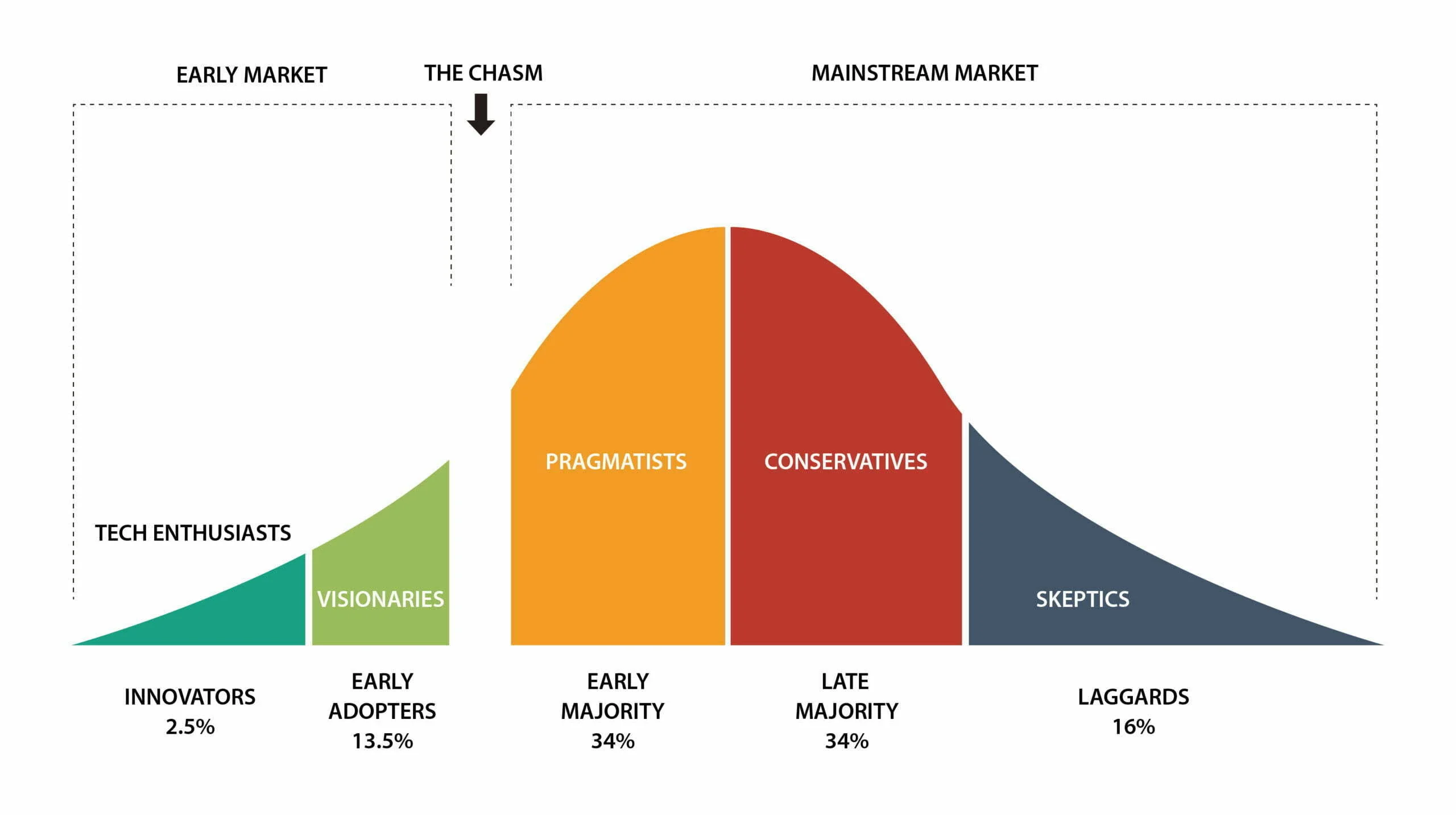
It's important to note that the group of Laggards is much larger than the group of Innovators, at the opposite end of the spectrum.
需要说明的是,处于采用曲线另一端的落后者群体,其规模远大于创新者群体。
Innovators (2.5%)
创新者(2.5%)
These are the first people to adopt new technology, products and services and are typically willing to take risks. They are often industry thought leaders. Technology vendors target innovators by reaching out to them directly and offering them early access to their products.
创新者是首批采用新技术、新产品和新服务的人群,他们通常愿意承担风险,且多为行业意见领袖。科技企业会通过直接对接的方式触达创新者,为其提供产品的早期试用权限。
Although small in number (2.5% of the population), they play a crucial role as they are proactive, curious, and enthusiastic about new ideas and products.
尽管创新者的占比仅为 2.5%,人数较少,但他们对新想法和新产品抱有积极的探索欲、好奇心和热情,因此在技术传播中发挥着关键作用。
They're more than just willing to test new ideas and actively search for the most advanced options. They are motivated to find solutions to specific challenges -- a more efficient banking method, a flexible and transparent pension option, or a way to invest their residual funds.
创新者不仅愿意尝试新想法,还会主动寻找最前沿的选择。他们的行为动机是为具体的问题寻找解决方案------例如更高效的银行业务模式、灵活且透明的养老金方案,或是闲置资金的投资方式。
They continuously look for new information -- studying, investigating, and registering for early access even before a product is publicly available. Innovators are often the first to be aware of new developments.
他们会持续搜集新信息,通过研究、调研等方式,甚至在产品正式发布前就申请早期试用权限。创新者通常是最早了解行业新动态的人群。
Behaviours typical of early innovators include:
创新者的典型行为包括:
-
Those who were in the queue overnight to buy the first-ever iPhone.
为抢购首款 iPhone 彻夜排队
-
The first to experience staying in an Airbnb host's spare room.
首批体验 Airbnb 民宿的人群
-
The first to open a Monzo digital bank account.
首批开通 Monzo 数字银行账户的人群
-
The first to ride with Uber rather than take a taxi.
首批选择 Uber 出行而非传统出租车的人群
Typical traits of the "Innovator" persona
创新者的典型特征
-
They're quick to try new products and services.
快速尝试新产品和新服务
-
Open-minded and adventurous with innovative concepts.
对创新理念持开放态度,乐于探索
-
Well-educated and financially stable to be able to afford new gadgets.
受教育程度高,经济状况稳定,有能力购买新式产品
-
Knowledgeable about new technologies and how to use them.
了解新技术及其使用方法
-
Actively engaged in testing and experimenting with new offerings.
积极参与新产品的测试和试用
-
Considered trendsetters and leaders in their communities.
被视为所在社群的潮流引领者和意见领袖
-
Have a favourable view of new products and services.
对新产品和新服务持积极态度
-
Assured in their decision-making abilities.
对自身的决策能力充满自信
-
Typically, stay up-to-date with industry advancements.
持续关注行业发展动态,紧跟前沿
-
Willing to invest in cutting-edge and innovative products.
愿意为前沿的创新产品投入资金
Early adopters (13.5%)
早期采用者(13.5%)
These are the next group to adopt new technology, products and services and are typically more risk-averse than innovators. They'll usually wait until the product or service receives some reviews before making a purchase.
早期采用者是继创新者之后,第二批采用新技术、新产品和新服务的人群,他们的风险规避意识相较于创新者更强。他们通常会等待产品或服务获得一定的市场评价后再进行购买。
They are often opinion leaders, highly regarded by their peers, and can influence the decision-making of others. Organisations can target early adopters by offering them product demonstrations, case studies, and other evidence that demonstrate their products' value. This has become an established tactic, with brands spending large amounts of their marketing budget using well-known influencers to promote new products and services.
早期采用者也多为意见领袖,在同龄人中拥有较高的认可度,能够影响他人的决策。企业可以通过提供产品演示、案例分析等能体现产品价值的资料触达这一群体。这一方式已成为成熟的营销策略,众多品牌会投入大量营销预算,邀请知名博主推广新产品和新服务。
Behaviours typical of early adopters include:
早期采用者的典型行为包括:
-
Purchasing the latest smartphone model as soon as it is released, even if their current device is still functioning well.
即便当前使用的手机仍能正常运行,仍会在新款智能手机发布后立即购买
-
Investing in new home automation technology, such as smart thermostats or smart lights.
购置智能恒温器、智能灯具等新型家居自动化设备
-
Adopting a new social media platform before it becomes mainstream.
在新的社交媒体平台成为主流前率先使用
-
Trying out new virtual reality or augmented reality experiences.
体验新型虚拟现实或增强现实产品
-
Being one of the first to switch to electric vehicles or other alternative energy sources.
首批更换电动汽车或使用其他新能源的人群
-
Participating in new health and wellness trends, such as wearable fitness trackers or plant-based diets.
参与穿戴式健身追踪器、植物性饮食等新型健康养生潮流
Typical traits of the "Early Adopter" persona
早期采用者的典型特征
-
Adventurous in experimenting with new products and technologies.
乐于尝试新产品和新技术
-
Open-minded towards innovations and often pioneers in adopting them.
对创新事物持开放态度,常为首批采用者
-
Typically well-educated and financially stable.
受教育程度高,经济状况稳定
-
Excited about trying new products and services and eager to experiment.
对尝试新产品和新服务充满兴趣,乐于探索
-
Constantly searching for and participating in trials of new offerings.
持续寻找并参与新产品的试用活动
-
Regarded as leaders and trendsetters among their peers.
被同龄人视为意见领袖和潮流引领者
-
Hold a positive view towards new products and services.
对新产品和新服务持积极态度
-
Confident in their decision-making abilities.
对自身的决策能力充满自信
-
Well-informed about industry advancements and current trends.
熟悉行业发展动态和当下潮流
-
Willing to pay for new and innovative products before they become widely adopted.
愿意在创新产品普及前为其付费
Early Majority (34%)
早期大众(34%)
People in the early majority adopt new technology, products and services after it has been validated by early adopters. They are typically more cautious and need more proof before making a purchase.
早期大众会在新技术、新产品和新服务得到早期采用者的验证后再进行采用。这一群体的消费行为更为谨慎,需要更多的证据支撑才会做出购买决策。
Retailers can appeal to the early majority by providing product demonstrations, customer case studies, and testimonials.
企业可以通过提供产品演示、客户案例分析和用户评价的方式吸引早期大众群体。
Behaviours typical of early majority consumers include:
早期大众的典型消费行为包括:
-
Delaying the purchase of a new smartphone until there is sufficient customer feedback or reviews.
等待新款智能手机积累足够的用户反馈和评价后再购买
-
Purchasing a popular tech product only when its price decreases.
仅在热门科技产品降价后才进行购买
-
Joining a new social media platform once a large number of friends and family have signed up.
当大量亲友注册使用某款新社交媒体平台后,才选择加入
-
Avoid a new piece of exercise equipment until it is widely recommended by fitness experts.
直到某款新型健身器材得到健身专家的广泛推荐后才会使用
-
Holding off on visiting a new restaurant until it becomes well-reviewed and popular among many sources.
等待新餐厅获得多方好评、积累较高人气后再前往消费
Typical traits of the "early majority" persona
早期大众的典型特征
-
Adopt new technology after it has been proven successful.
仅在新技术被验证成功后才会采用
-
More cautious and require more proof before buying.
消费行为谨慎,需要更多证据支撑才会购买
-
Pragmatic approach to new products and services.
对新产品和新服务秉持务实的态度
-
Wait-and-see attitude towards new technologies.
对新技术持观望态度
-
Rely on trusted sources for info and recommendations.
依赖可信的渠道获取信息和建议
-
Not involved in the early adoption of new ideas/products.
不会参与新想法或新产品的早期采用
-
Not trendsetters or influencers.
并非潮流引领者或意见领袖
-
Lower levels of education or income compared to early adopters.
受教育程度和收入水平相较于早期采用者更低
-
Adopt a product/service after it becomes widely adopted.
仅在产品或服务得到一定程度的普及后才会采用
Late majority: (34%)
晚期大众(34%)
The late majority, who make up 34% of the market, is a significant group of consumers. These people adopt new technology only after it has been widely adopted and proven to be successful. They are typically the most risk-averse group and require the most evidence before making a purchase.
晚期大众占据市场 34%的份额,是规模较大的消费群体。这一群体仅在新技术被广泛采用并验证成功后才会接受,是风险规避意识最强的群体,需要最多的证据支撑才会做出购买决策。
They tend to be conservative, wary of new technology, and prioritize cost over innovation. They are also more likely to be influenced by the decisions of others and may only adopt a product or service once it has become widely accepted.
晚期大众的消费观念偏保守,对新技术持警惕态度,相较于创新更看重成本。他们的决策更容易受到他人影响,通常仅在产品或服务被市场广泛接受后才会采用。
Retailers can target the late majority by offering them detailed product information, customer testimonials, and guarantees of satisfaction.
企业可以通过提供详细的产品信息、用户评价和满意度保障的方式触达晚期大众群体。
Behaviours typical of the late majority include:
晚期大众的典型行为包括:
-
Waiting for a movie to be released on streaming services before watching it.
等待电影在流媒体平台上线后再观看
-
Being comfortable with a traditional mobile phone for communication and wary of new technology.
习惯使用传统功能机进行沟通,对新技术持警惕态度
-
Sticking to cash payments and shying away from new digital payment methods.
坚持使用现金支付,不愿尝试新型数字支付方式
-
Only shopping in stores and cautious of trying new online retailers.
仅在实体店铺消费,对新兴的线上零售商持谨慎态度
-
Waiting for a restaurant to be highly recommended before trying it.
等待餐厅获得高度推荐后再前往消费
-
Using well-known social media sites and hesitant to experiment with new platforms.
仅使用知名的社交媒体平台,不愿尝试新平台
Typical traits of the "late majority" persona
晚期大众的典型特征
-
Doubtful of new concepts or technologies.
对新的概念和技术持怀疑态度
-
Rather rely on tried and tested methods.
更愿意依赖经过验证的成熟方法
-
Requires confirmation from others before adoption.
需得到他人的认可后才会采用新事物
-
Apprehensive about taking risks or dealing with ambiguity.
不愿承担风险,对不确定的事物持谨慎态度
-
Conducts thorough research before making a decision.
做出决策前会进行全面的调研
-
Has low urgency to adopt new developments.
采用新事物的意愿较低,无迫切需求
-
Relies on familiar sources for information and guidance.
依赖熟悉的渠道获取信息和建议
-
Has a fear of error or making a poor investment.
担心做出错误的决策或进行不当的投资
-
Prioritises the practicality and cost-effectiveness of new solutions.
最看重新方案的实用性和性价比
-
Prefers slow and gradual changes rather than revolutionary innovations.
相较于颠覆性的创新,更倾向于缓慢、渐进的改变
Laggards (16%)
落后者(16%)
These are the last people to adopt new technology and are typically resistant to change. They are a large group of people, representing 16% of the total. They require the most evidence before making a purchase.
落后者是最后一批采用新技术的人群,他们通常对变革持抵触态度。这一群体占据 16%的市场份额,规模较大,需要最多的证据支撑才会做出购买决策。
Retailers can target laggards by offering them detailed product information, customer testimonials, and guarantees of satisfaction, as well as addressing their specific concerns and objections.
企业可以通过提供详细的产品信息、用户评价、满意度保障,并针对性解决他们的顾虑和异议的方式触达落后者群体。
Behaviours typical of laggards include:
落后者的典型行为包括:
-
Avoiding the use of digital platforms such as online banking, e-commerce, or cloud storage.
拒绝使用网上银行、电子商务、云存储等数字平台
-
Using outdated equipment or software instead of upgrading to new technology.
坚持使用老旧的设备或软件,不愿升级新技术
-
Opposing the introduction of new business processes or organisational modifications.
反对企业引入新的业务流程或进行组织架构调整
-
Being slow to implement new marketing or sales approaches.
迟迟不愿推行新的营销或销售策略
-
Being reluctant to adopt environmentally friendly or sustainable practices.
不愿采用环保、可持续的发展模式
-
Not keeping pace with advancements in the industry or field.
无法跟上所在行业的发展步伐
-
Holding on to traditional products or services despite changes in the market.
即便市场发生变化,仍坚持使用传统的产品或服务
-
Adhering to outdated methods of production or manufacturing despite advancements in automation and efficiency.
尽管自动化和生产效率不断提升,仍坚持使用老旧的生产制造方式
-
Not actively seeking new markets or expanding into new territories.
不主动开拓新市场或拓展新的业务领域
-
Failing to adapt to evolving customer needs and preferences.
无法适应客户不断变化的需求和偏好
Typical traits of the "laggard" persona
落后者的典型特征
-
May not have exposure to new products or services.
可能很少接触新产品或新服务
-
Depend on the opinions of others rather than forming their own.
依赖他人的意见,缺乏独立的判断
-
Often have less education and financial resources.
受教育程度较低,经济实力有限
-
May view new products or services with cynicism.
可能对新产品或新服务持嘲讽、否定的态度
-
Have a cautious approach to new opportunities.
对新的机会持极度谨慎的态度
-
Tend to be less informed about current developments in their field.
对所在领域的最新发展动态了解甚少
-
Only adopt new products or services when they become widespread or necessary.
仅在产品或服务成为主流,或出于实际必需时才会采用
-
Refuse to use new technology or digital platforms.
拒绝使用新技术或数字平台
-
Stick with traditional and familiar methods, even if they are less efficient.
即便传统方式效率较低,仍坚持使用
-
Avoid learning new skills or acquiring new knowledge.
不愿学习新的技能或掌握新的知识
-
Resistant to change, even in the face of new challenges or opportunities.
即便面临新的挑战或机会,仍对变革持抵触态度
-
Reluctant to try new products or services.
不愿尝试任何新产品或新服务
The Technology Adoption Curve Chasm
技术采用曲线的鸿沟
The technology adoption curve chasm, also known as the "chasm" or the "early market chasm," refers to the gap between the early adopters and the early majority in the technology adoption curve. This gap represents a challenge for retailers, as it can be difficult to transition from early adopters to the early majority.
技术采用曲线的鸿沟 ,也被简称为"鸿沟"或"早期市场鸿沟",指的是技术采用曲线中早期采用者和早期大众之间的断层。这一断层对企业而言是一大挑战,因为从早期采用者向早期大众的市场过渡难度极大。
According to Geoffrey Moore, who wrote the book "Crossing the Chasm", the reason for the gap is that early adopters are willing to take risks and try new products, while the early majority is more sceptical and requires more evidence before making a purchase. The early majority also tends to be more mainstream, and their purchasing decisions are influenced by the opinion leaders in their community.
《跨越鸿沟》Crossing the Chasm 一书的作者 Geoffrey Moore 认为,这一鸿沟存在的原因在于:早期采用者愿意承担风险、尝试新产品,而早期大众则更具怀疑精神,需要更多的证据才会购买。同时,早期大众属于更主流的消费群体,其购买决策会受到所在社群意见领袖的影响。
To cross the chasm, retailers need to tailor their marketing and sales efforts to the early majority by offering them more evidence-based information about the product, such as case studies and customer testimonials, and addressing the specific concerns and objections of this group.
要跨越这一鸿沟,企业需要针对早期大众的特征调整营销和销售策略,为其提供更多有实际依据的产品信息,例如案例分析和用户评价,并针对性解决这一群体的顾虑和异议。
Tactics could include:
具体策略包括:
-
Targeting a specific market segment.
聚焦特定的细分市场
-
Ensuring a strong product-market fit and addressing product weaknesses.
确保产品与市场高度契合,并完善产品的不足之处
-
Having a clear value proposition and messaging that appeals to the early majority.
制定清晰的价值主张,传递能够吸引早期大众的品牌信息
-
Building partnerships and alliances with established companies and industry leaders.
与成熟的企业和行业领袖建立合作关系
-
Providing education and support to help early majority customers feel confident adopting the new technology.
为早期大众提供产品相关的培训和支持,增强其采用新技术的信心
The chasm model does have its critics. MIT Sloan School of Management professor Erik Brynjolfsson has argued that it oversimplifies the role of technology in the market, and Alexander Osterwalder, a prominent business strategy consultant, criticised the theory for its limited applicability to current market conditions. However, the concept of a chasm in the technology adoption curve is widely recognised as a challenge that retailers must overcome to bring products to market successfully.
鸿沟模型也存在反对者。麻省理工学院斯隆管理学院的 Erik Brynjolfsson 教授 Erik Brynjolfsson 认为,该模型过度简化了技术在市场中的作用;知名商业战略顾问 Alexander OsterwalderAlexander Osterwalder 则批评该模型在当下的市场环境中适用范围有限。但不可否认的是,技术采用曲线中的鸿沟已被广泛认为是企业成功将产品推向市场必须克服的挑战。
Applying the Adoption Curve to learning and development
采用曲线在学习与发展领域的应用
Understanding the mindset of learners is a vital prerequisite of any successful learning and development programme, and the adoption curve offers a useful perspective on learners' attitudes to novel subjects.
了解学习者的思维模式是开展成功的学习与发展项目的重要前提,而采用曲线为分析学习者对新内容的态度提供了实用的视角。
Dr Mark Murphy, author of "Hard Goals: The Secret to Getting from Where You Are to Where You Want to Be," states that "The first step in creating effective learning experiences is understanding the mindset of learners. We must understand how they think, how they process information, and what motivates them." Delivering successful learning outcomes depends on matching the content, format and delivery of learning to the mindset of the learner. This is because different individuals have different learning styles, motivations, and goals.
《宏伟目标:从当下走向理想的秘诀》, 一书的作者 Mark Murphy 博士表示:"打造有效的学习体验,第一步是了解学习者的思维模式。我们必须清楚他们的思考方式、信息处理方式以及行为动机。" 学习效果的达成,取决于学习的内容、形式和交付方式是否与学习者的思维模式相契合,因为不同的学习者拥有不同的学习风格、学习动机和学习目标。
Learning and development professionals can apply the five categories of Rogers's model, tailoring the learning experience to reflect the receptivity of learners based on their classification as innovators, early adopters, early majority, late majority or laggards.
学习与发展领域的从业者可以运用 Rogers 模型的五个群体分类,根据学习者所属的创新者、早期采用者、早期大众、晚期大众或落后者类别,结合其对新学习内容的接受程度,定制个性化的学习体验。
Here are some practical ways the technology adoption curve can be applied to an L&D context:
以下是技术采用曲线在学习与发展领域的具体应用方式:
-
Getting an innovator or early adopter on board with new workplace processes as part of a digital transformation programme will be a lot easier and quicker than for the late majority or laggards.
在企业数字化转型过程中,让创新者或早期采用者接受新的职场流程,远比让晚期大众或落后者接受要容易、快速得多
-
Course and content creators can use the model to understand the mindset of learners and take this into account when creating a relevant learning experience.
课程和学习内容的开发者可以借助该模型了解学习者的思维模式,并以此为依据打造贴合需求的学习体验
-
Understanding learners' mindsets this way can identify and address any barriers that may prevent them from achieving their full potential.
透过该模型了解学习者的思维模式,能够发现并解决可能阻碍其发挥自身潜力的问题
-
Innovators and early adopters can be used as peer-level examples of learning success to bridge the 'gap' between employees who are willing to embrace new learning and early and late majority employees who may be more reluctant and sceptical.
可以将创新者和早期采用者树立为内部学习标杆,拉近乐于接受新学习内容的员工,与持观望、怀疑态度的早期大众和晚期大众员工之间的距离。
By understanding the learner mindset, HR and L&D professionals can tailor courses and content to meet the needs of individual learners and create a more effective learning experience.
人力资源和学习与发展领域的从业者通过了解学习者的思维模式,能够定制符合个体需求的课程和内容,打造更高效的学习体验。
In summary
总结
The Technology Adoption Curve helps to explain why some products and ideas are widely adopted, while others fail to gain traction.
技术采用曲线能够解释为何部分产品和想法能够被广泛接受,而另一部分则无法获得市场认可。
By understanding the different stages of adoption and the characteristics of each segment, businesses and organisations can tailor their marketing, innovation and L&D strategies to target and engage with different groups of adopters more effectively.
企业和组织通过了解技术采用的不同阶段,以及每个群体的特征,能够调整其营销、创新和学习与发展策略,更高效地触达并吸引不同的采用者群体。
What Is A Technology Adoption Curve? The Five Stages Of A Technology Adoption Life Cycle
什么是技术采用曲线?技术采用生命周期的五个阶段
By Gennaro Cuofano / April 15, 2024
In his book, Crossing the Chasm, Geoffrey A. Moore shows a model that dissects and represents the stages of adoption of high-tech products. The model goes through five stages based on the psychographic features of customers at each stage: innovators, early adopters, early majority, late majority, and laggards.
在其著作《跨越鸿沟》中,杰弗里·A·摩尔提出了一个剖析并呈现高科技产品采用阶段的模型。该模型根据每个阶段客户的心理特征分为五个阶段:创新者、早期采用者、早期大众、晚期大众和落后者。
https://www.youtube.com/embed/YxC0YwV7fNI
技术采用生命周期各阶段
| Stages 阶段 | Description 描述 | Examples 实例 | Strategies 策略 | Challenges 挑战 |
|---|---|---|---|---|
| Innovators 创新者 | -- Earliest adopters 最早的采用者 -- Love novelty and innovation 热爱新奇事物与创新 -- Tolerate imperfections 容忍产品缺陷 -- Visionaries who see potential 能洞察技术潜力的远见者 -- Risk-takers, tech enthusiasts 敢于冒险的科技爱好者 | -- First-generation iPhone buyers 第一代 iPhone 购买者 -- Early users of emerging programming languages or frameworks 新兴编程语言/框架的早期用户 -- Early cryptocurrency miners 早期加密货币矿工 -- Developers exploring new AR/VR applications 探索新型 AR/VR 应用的开发者 | -- Companies target tech communities and developer networks to build a buzz. 企业瞄准科技社区与开发者网络制造市场热度 -- Foster innovation hubs and partnerships to showcase potential. 培育创新中心并建立合作关系,展示技术潜力 -- Offer early access programs or beta testing opportunities. 推出早期访问计划或 Beta 测试体验机会 -- Highlight future possibilities and unique features. 重点宣传技术的未来应用价值与独特功能 | -- Limited market size; lower revenue initially. 市场规模有限,初期营收偏低 -- Managing expectations around product imperfections. 合理引导用户对产品缺陷的接受预期 -- Need to maintain innovators' interest while broadening the user base. 在扩大用户群体的同时,保持创新者的关注与认可 |
| Early Adopters 早期采用者 | -- Tech-savvy and trend-aware 精通技术且敏锐捕捉行业趋势 -- Research-oriented 做决策前注重调研分析 -- Appreciate potential benefits 重视技术的潜在价值与收益 -- Willing to try new products 愿意尝试未成熟的新产品 -- Influence others' adoption decisions 能够影响他人的技术采用决策 | -- Early cloud computing adopters (businesses) 云计算的企业早期采用者 -- Gaming enthusiasts buying new consoles 购买新款游戏机的游戏爱好者 -- Professionals adopting AI tools for productivity 使用 AI 工具提升工作效率的专业人士 -- Early social media influencers 早期社交媒体意见领袖 | -- Leverage influential early adopters for testimonials and endorsements. 借助有影响力的早期采用者发布口碑评价与背书 -- Provide comprehensive documentation and support for trial users. 为试用用户提供完善的使用文档与技术支持 -- Showcase practical use cases and success stories. 展示技术的实际应用场景与成功案例 -- Create communities and forums for knowledge sharing. 搭建社区与论坛,促进用户间的知识共享 | -- Balancing product refinement with early adoption pressures. 在产品迭代优化与早期市场推广压力间寻求平衡 -- Ensuring scalability to accommodate increasing user interest. 保障产品的可扩展性,以承接持续增长的用户需求 -- Addressing the potential disconnect between early adopter feedback and mainstream user needs. 解决早期采用者的反馈与主流用户需求间可能存在的偏差 |
| Early Majority 早期大众 | -- Pragmatic and solution-focused 行事务实,以解决实际问题为核心 -- Prefer proven technologies 偏好经过市场验证的成熟技术 -- Watch for successful adoption cases 关注技术的实际成功应用案例 -- Seek practical benefits 追求技术带来的实际收益 -- Value convenience and reliability 重视使用的便捷性与产品的可靠性 | -- Widespread smartphone adoption 智能手机的大规模普及 -- Adoption of social media for marketing (businesses) 企业将社交媒体用于营销推广 -- Online banking becoming mainstream 网上银行成为主流金融服务方式 -- E-commerce platforms reaching a broad consumer base 电商平台覆盖广泛的消费群体 | -- Invest in marketing campaigns to build trust and credibility. 投入营销活动,建立品牌的市场信任与公信力 -- Highlight reliability, ease of use, and customer testimonials. 重点强调产品的可靠性、易用性与真实用户评价 -- Develop user-friendly interfaces and onboarding processes. 设计友好的产品界面与简易的新手入门流程 -- Establish partnerships for broader distribution and accessibility. 建立合作关系,扩大产品的分销渠道与触达范围 | -- Competition intensifies as more players enter the market. 随着更多参与者入局,市场竞争日趋激烈 -- Ensuring product scalability and stability for a larger user base. 保障产品对大规模用户群体的可扩展性与稳定性 -- Meeting diverse needs and preferences of a broader user demographic. 满足不同特征用户群体的多样化需求与使用偏好 |
| Late Majority 晚期大众 | -- Cautious and skeptical 行事谨慎,对新技术持怀疑态度 -- Wait for technology norms 等待技术成为行业通用标准后再采用 -- Motivated by peer pressure 技术采用行为受周边人群的影响较大 -- Follow established practices 倾向遵循已形成的主流使用习惯 -- Slow to change 改变原有使用方式的意愿与速度较慢 | -- Widespread use of email for communication 电子邮件成为主流沟通方式 -- Adoption of digital photography by traditionalists 传统摄影爱好者接受数码摄影技术 -- Mainstream adoption of GPS navigation GPS 导航成为大众主流的导航方式 -- Shift from physical to e-books in the reading community 阅读群体从纸质书向电子书的逐步转变 | -- Address concerns through education and support resources. 通过科普教育与配套支持资源,打消用户的使用顾虑 -- Showcase peer adoption and growing prevalence of the technology. 展示技术的周边采用情况与市场普及趋势 -- Offer transition assistance and incentives to switch from legacy systems. 提供从传统系统迁移的配套支持与激励措施 -- Simplify adoption processes and minimize disruption. 简化技术采用流程,最大限度降低对原有使用习惯的干扰 | -- Resistance may require significant time and effort to overcome. 克服用户的使用抵触需投入大量的时间与精力 -- Mitigating potential backlash from late adopters experiencing discomfort. 缓解晚期采用者因使用不适应产生的抵触情绪 -- Recognizing that some late majority individuals may never fully embrace the technology. 需认识到部分晚期大众可能永远无法完全接受该技术 |
| Laggards 落后者 | -- Resistant to change 从根本上抗拒技术变革 -- Strong preference for tradition 对传统使用方式有强烈的偏好 -- Avoid technology adoption 主动规避各类新技术的采用 -- Only adopt when necessary or forced 仅在必要或外部压力下才会采用技术 -- Reluctant to leave familiar practices 不愿放弃熟悉的传统操作方式 | -- Individuals using paper-based address books 坚持使用纸质通讯录的人群 -- Reliance on physical maps for navigation 依赖纸质地图进行导航的人群 -- Avoidance of online shopping for in-person retail 坚持实体店购物、拒绝网购的人群 -- Traditional handwritten correspondence 坚持手写通信的传统人群 | -- Identify critical pain points that necessitate adoption and communicate solutions. 挖掘需通过技术解决的核心痛点,并清晰传递解决方案 -- Provide extensive training and assistance for reluctant users. 为抵触使用的用户提供全面的操作培训与一对一协助 -- Offer incentives or discounts for transitioning to new technologies. 为转向使用新技术的用户提供激励政策与折扣优惠 -- Respect and accommodate the comfort of familiar practices. 尊重并迁就用户对传统方式的使用习惯与舒适感 | -- Persistence may be required to gradually shift laggards' perspectives. 需通过长期持续的努力,逐步改变落后者的观念 -- Limited potential revenue due to the small size of this segment. 该用户群体规模较小,能带来的潜在营收有限 -- Avoidance of alienating or pressuring laggards, which can backfire. 避免疏远或施压落后者,此类行为可能会适得其反 |
Why is the technology adoption life cycle useful?
技术采用生命周期为何有用?
There is a peculiar phase in the life cycle of a high-tech product that Moore calls a "chasm."
高科技产品的生命周期中存在一个特殊阶段,摩尔称之为"鸿沟"。
This is the phase in which a product is getting used by early adopters but not yet by an early majority.
这一阶段的产品已被早期采用者使用,但尚未被早期大众接受。
There is a wide gap between those two psychographic profiles in that stage.
在该阶段,这两类心理特征群体之间存在巨大差距。
Indeed, many startups fail because they don't manage to have the early majority pick up where the early adopters left.
事实上,许多初创企业失败的原因在于未能让早期大众接棒早期采用者的步伐。
Understanding the technology adoption of a product helps you assess at which stage a product is and when the chasm is close to how to fill the gap and allow the early majority to pick up the void left by the early adopters.
了解产品的技术采用情况有助于评估产品所处阶段、鸿沟何时临近、如何填补差距,以及让早期大众承接早期采用者留下的市场空白。
That void is created when the early adopters are ready to leave a product that is about to go mainstream.
当早期采用者准备放弃即将成为主流的产品时,这一空白便会产生。
The market is plenty of examples of companies trying to conquer the early majority but failing in doing so.
市场上有许多企业试图赢得早期大众但未能成功的案例。
In the process also lost the enthusiasts that made that product successful in the first place.
在这一过程中,那些最初让产品取得成功的爱好者也会流失。
Crossing the Chasm with Seth Godin
与塞思·戈丁一起跨越鸿沟
In a blog post entitled attention vs. the chasm, Seth Godin highlighted:
在一篇题为《注意力与鸿沟》的博客文章中,塞思·戈丁强调:
One way they're thinking about it:**Attention is the new innovation.**I don't agree...
他们对此的一种看法是:"注意力是新的创新。"我不同意......
...Moore's Crossing the Chasm helped marketers see that while innovation was the tool to reach the small group of early adopters and opinion leaders, it was insufficient to reach the masses. Because the masses don't want something that's new , they want something thatworks , something that others are using, something that actually solves their productivity and community problems.
...摩尔的《跨越鸿沟》帮助营销人员认识到,虽然创新是触达少数早期采用者和意见领袖的工具,但不足以触达大众。因为大众不想要"新"的东西,他们想要"有用"的东西、别人正在使用的东西、能真正解决他们生产力和社交问题的东西。
...Early adopters are thrilled by the new. They seek innovation.
...早期采用者对新事物感到兴奋。他们追求创新。
...Everyone else is wary of failure. They seek trust.
...其他人则担心失败。他们追求信任。
What are the stages of a technology adoption life cycle?
技术采用生命周期包含哪些阶段?
The stages of a technology adoption life cycle, comprises five main psychographic profiles:
技术采用生命周期包含五个主要的心理特征群体:
-
Innovators
创新者
-
Early Adopters
早期采用者
-
Early Majority
早期大众
-
Late Majority
晚期大众
-
and Laggards
以及落后者
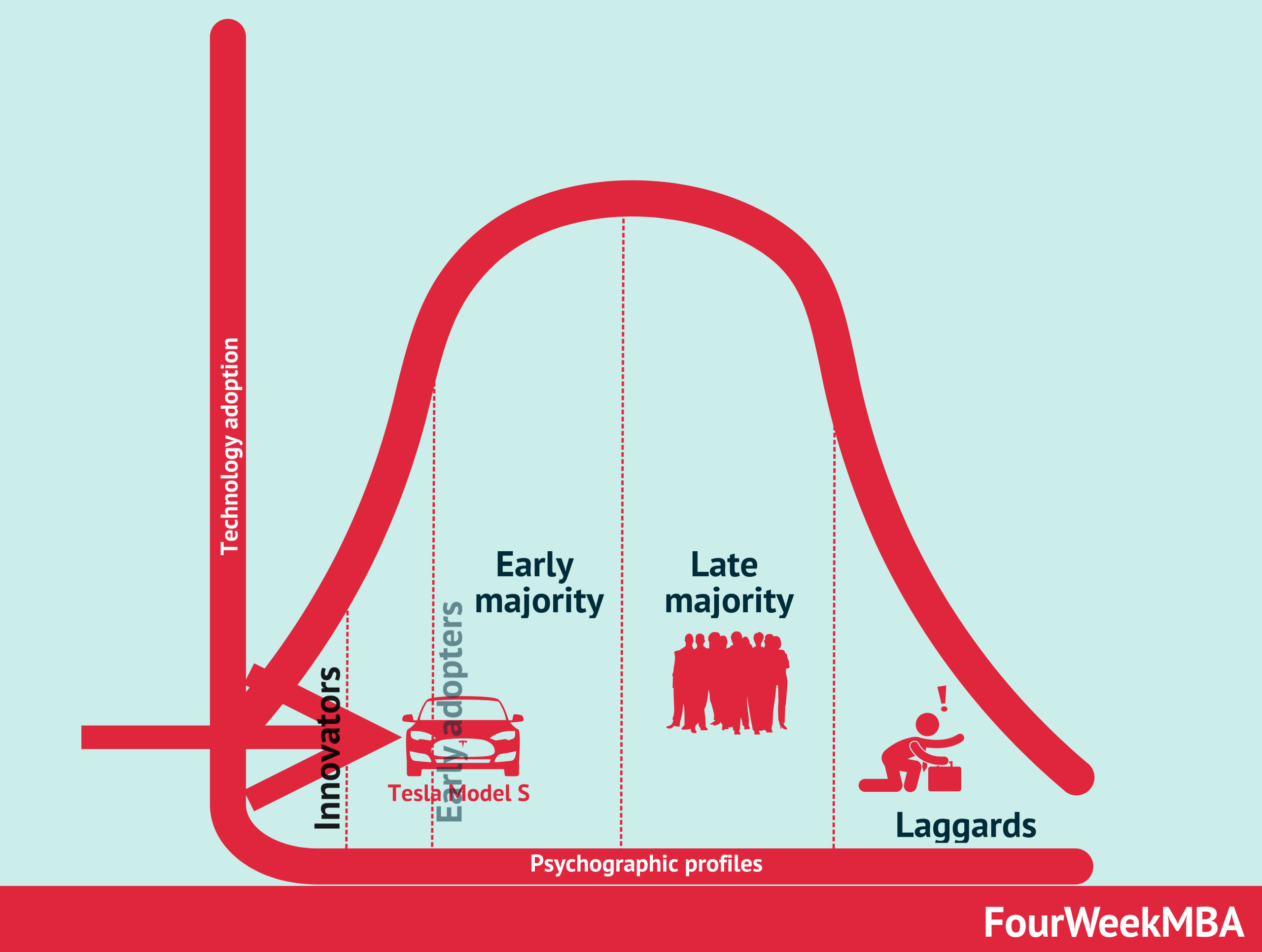
Innovators
创新者
Innovators are the first to take action and adopt a product, even though that might be buggy.
创新者是最先采取行动并采用产品的人,即使产品可能存在缺陷。
Those people are willing to take the risk, and those will be the people ready to help you shape your product when that is not perfect.
这些人愿意承担风险,并且在产品不完善时愿意帮助你优化产品。
As they're in love with the innovative aspect behind it, they are ready to sustain that. This psychographic profile is all about the innovation itself.
由于他们痴迷于产品背后的创新点,因此愿意承受这些不足。这一心理特征群体的核心在于创新本身。
As this is sort of a hobby for them, they are ready and willing to take the risk of using something that doesn't work perfectly, but it has great potential.
对他们而言,这某种程度上是一种爱好,因此他们愿意冒险使用功能虽不完善但潜力巨大的产品。
Early Adopters
早期采用者
Early adopters are among those people ready to try out a product at an early stage. They don't need you to explain why they should use that innovation.
早期采用者是愿意在产品早期阶段进行尝试的群体。他们无需你解释为何应该使用该创新产品。
The early adopter has already researched it, and she is passionate about the innovation behind that, however, while the innovator will adopt the high-tech product for the sake of the innovation behind it.
早期采用者已经对产品进行了研究,并对其背后的创新充满热情。然而,创新者采用高科技产品是为了创新本身,而早期采用者则会做出基于充分信息的购买决策。
The early adopter will make an informed buying decision. In that stage, even though the product is only appealing to a small niche of an early adopter, it's great and ready.
在这一阶段,尽管产品仅吸引少数早期采用者细分群体,但产品本身已具备良好的可用性。
Those early adopters feel different from the early majority. And if you "betray them" they might probably leave you right away. That is where the chasm stands.
这些早期采用者认为自己与早期大众不同。如果你"背叛"了他们,他们可能会立即放弃你的产品。这正是鸿沟所在。
Early majority
早期大众
The early majority is the psychographic profile made of people that will help you "cross the chasm." Getting traction means making a product appealing to the early majority. Indeed, the early majority is made of more conscious consumers, that look for useful solutions but also beware of possible fads.
早期大众是帮助你"跨越鸿沟"的心理特征群体。产品获得市场吸引力意味着要让早期大众产生兴趣。事实上,早期大众由更理性的消费者组成,他们寻求实用的解决方案,同时警惕可能的潮流陷阱。
Late Majority
晚期大众
The late majority kicks in only after a product is well established and it has a more skeptical approach to technological innovation and it feels more comfortable in the adoption only when a product has gone mainstream.
晚期大众仅在产品站稳脚跟后才会采用。他们对技术创新持更怀疑的态度,只有当产品成为主流后,才会更安心地采用。
Laggards
落后者
Laggards are the last in the technology adoption cycle. While the late majority is skeptical of technological innovation, the laggard is adverse to it.
落后者是技术采用周期中的最后一个群体。如果说晚期大众对技术创新持怀疑态度,那么落后者则对其持反对态度。
Thus, unless there is a clear, established an advantage in using a technology those people will hardly become adopters. For some reason, which might be tied to personal or economic aspects, those people are not looking to adopt a technology.
因此,除非使用某项技术存在明确且已被证实的优势,否则这些人几乎不会成为采用者。由于某些可能与个人或经济相关的原因,这些人并不打算采用新技术。
Other factors influencing technological adoption
影响技术采用的其他因素
One of my favorite authors is Jared Diamond, a polymath whose knowledge goes beyond books, education, or instruction.
贾里德·戴蒙德是我最喜欢的作家之一,他是一位博学家,知识领域远超书本、教育或常规教学的范畴。
In fact, Jared Diamond is an ecologist, geographer, biologist, and anthropologist.
事实上,贾里德·戴蒙德是生态学家、地理学家、生物学家和人类学家。
Whatever you want to label him, the truth is Jared Diamond is just one of the most curious people on earth.
无论你如何定义他,事实是贾里德·戴蒙德是地球上最具好奇心的人之一。
As we love to put a label on anything, we get impressed by as many labels one person has.
由于我们热衷于给一切事物贴标签,因此会对一个人拥有的众多头衔印象深刻。
However, Jared Diamond has been just curious, looking for answers to compelling and hard questions about our civilization.
然而,贾里德·戴蒙德只是出于好奇,寻求关于人类文明中那些引人深思且难以解答的问题的答案。
Searching for those answers has made him an expert in many disciplines.
追寻这些答案的过程,让他成为了多个学科领域的专家。
In fact, even though he might not know what's the latest news about Google's algorithm update, Apple's latest product launch, or what features the new iPhone has, I believe Jared Diamond is the most equipped person to understand how the technological landscape evolves.
事实上,即便他可能不了解谷歌算法更新、苹果最新产品发布或新款 iPhone 搭载的功能等最新资讯,我依然认为贾里德·戴蒙德是最能洞悉科技格局演变规律的人。
The reason being Jared Diamond has been looking at historical trends for thousands of years and dozens of cultures and civilizations.
究其原因,是他研究了数千年间、数十种文化与文明的历史发展趋势。
He's also lived for short periods throughout his life with small populations, like New Guineans.
他一生中还曾与新几内亚人等小众族群短期共同生活。
In his book Guns, Germs & Steel, there is an excerpt that tries to explain why western civilizations were so technologically successful and advanced compared to any other population in the world, say New Guinea.
在其著作《枪炮、病菌与钢铁》中,有一个章节试图解释,为何西方文明在科技层面的发展成果与先进程度,远超世界上其他族群------例如新几内亚族群。
For many in the modern, hyper-technological world, the answer seems trivial. With the advent of the digital world, even more.
对于身处高度科技化现代社会的许多人而言,这个问题的答案似乎显而易见,在数字时代到来后,这种感受更是愈发强烈。
We love to read and get inspired every day by the incredible stories of geniuses and successful entrepreneurs that are changing the world.
我们热衷于阅读那些改变世界的天才与成功企业家的传奇故事,并从中获得启发。
Jared Diamond has a different explanation for how technology evolves and what influences its adoption throughout history, and it has only in part to do with the ability to make something that works better than what existed before.
对于科技的演变方式,以及历史上影响科技采用的因素,贾里德·戴蒙德有着截然不同的解读。而这一解读,仅在一定程度上与"研发出比现有产品性能更优的事物"的能力相关。
Why the heroic theory of invention is flawed
为何发明的英雄史观存在缺陷
If you read the accounts of many entrepreneurs that have influenced our modern society, those seem to resemble the stories of heroes, geniuses, and original thinkers.
当你翻阅那些影响了现代社会的企业家的传记时,会发现这些故事仿佛都是关于英雄、天才与具有原创思维的开拓者的叙事。
In short, if we didn't have Edison, Watt, Ford, and Carnegie, the western world wouldn't have been so wildly successful.
简而言之,人们会认为,若没有爱迪生、瓦特、福特和卡内基这些人,西方世界便无法取得如此辉煌的发展成就。
For how much we love this theory, that doesn't seem to resemble history.
尽管我们对这一理论深信不疑,但它与历史事实并不相符。
True, those people were way ahead of their times.
诚然,这些人都有着超越时代的远见。
They were geniuses, risk-takers, and in some cases, mavericks.
他们是天才,是敢于冒险的人,在某些情况下,还是特立独行的开拓者。
However, were they the only ones able to advance our society? That is not the case.
但,推动人类社会进步的真的只有他们吗?答案是否定的。
Assuming those people were isolated geniuses able to come up with the unimaginable, if the culture around hadn't been able to acknowledge those inventions, we wouldn't have traces as of now of those discoveries.
即便假设这些人都是独来独往的天才,能创造出前所未有的发明,倘若当时的社会文化无法接纳这些发明,那么这些创造成果如今也早已湮没在历史中,无迹可寻。
So what influenced technological adoption?
那么,究竟是哪些因素影响了技术的采用呢?
The four macro patterns of technological adoption
影响技术采用的四大宏观模式
According to Jared Diamond, there are four patterns to look at when looking for technological adoption:
根据贾里德·戴蒙德的研究,分析技术采用的影响因素时,需关注四大模式:
-
A relative economic advantage with existing technology.
相较于现有技术的相对经济优势
-
Social value and prestige.
社会价值与声望
-
Compatibility with vested interests.
与既得利益的兼容性
-
The ease with which those advantages can be observed.
技术优势的可感知性
The relative economic advantage of existing technology
相较于现有技术的相对经济优势
The first point seems obvious.
这一点看似是显而易见的。
In fact, one technology to win over the other doesn't have just to be better; but way more effective.
事实上,一项技术要取代另一项技术,并非只需要做到性能更优,而是要具备远超后者的效用。
To think of a recent example when Google took off the search industry. When Google got into the search industry, it was not the first player.
举一个近期的例子,谷歌在搜索引擎行业的崛起。谷歌进入搜索引擎领域时,并非该行业的先行者。
It was a latecomer. Yet its algorithm, PageRank, was so superior to its competition that it quickly took off.
它是后来者,但其研发的 PageRank 算法,相较于竞争对手的技术有着压倒性优势,这也让谷歌迅速实现了崛起。
What's next?
接下来还有哪些影响因素?
Social value and prestige
社会价值与声望
This is less intuitive.
这一因素的影响并不容易被直观感知。
In fact, of how much we love to think of ourselves as rational creatures, we might be way more social than we're rational.
事实上,尽管我们总认为自己是理性的生物,但在实际生活中,我们的行为受社会因素的影响,远大于受理性的影响。
Thus, the social value and prestige of a technological innovation play as much of a role in its adoption as its innovative aspects.
因此,一项技术创新的社会价值与声望,对其被采用的推动作用,与它本身的创新属性同等重要。
Think about Apple's products.
以苹果的产品为例。
Apple follows a business model that can be defined as a razor and blade business model. In short, the company attracts users on its platform, iTunes or Apple Store, by selling music or apps conveniently while selling its iPhones at very high margins.
苹果采用的是一种可被定义为"剃须刀与刀片"的商业模式。简而言之,该公司通过 iTunes 或苹果应用商店,为用户提供便捷的音乐、应用购买服务,以此吸引用户入驻其平台,同时以超高的利润率销售 iPhone 手机。
However, it is undeniable that what makes Apple able to sell its computers and phones at a higher price than competitors is the brand the company was able to build over the years.
但不可否认的是,苹果之所以能将其电脑和手机以远高于竞争对手的价格出售,核心原因是其多年来打造的品牌价值。
In short, as of the time of this writing, Apple still represents a status quo that makes the company highly profitable.
简而言之,在本文撰写之时,苹果品牌仍象征着一种社会地位,这也让该公司始终保持着高额的利润。
Compatibility with vested interests
与既得利益的兼容性
In Jared Diamond's book Germs, Guns & Steel, to prove this point, he uses the story of the QWERTY keyboard.
在贾里德·戴蒙德的《枪炮、病菌与钢铁》一书中,他以 QWERTY 键盘的发展历程为例,印证了这一观点。
This is the keyboard you're using right now on your mobile device or computer.
这正是你如今在手机或电脑上使用的键盘布局。
It is called this way because its first left-most six letters form the name "QWERTY."
这种布局被命名为 QWERTY,原因是其键盘左上角的前六个字母依次为 Q、W、E、R、T、Y。
Have you ever wondered why you use this standard? You might think this has to do with efficiency.
你是否曾疑惑,为何我们会沿用这一键盘标准?你可能会认为,这是出于打字效率的考量。
But instead, that is the opposite. This standard was invented at the end of the 1800s when typewriters became the standard.
但事实恰恰相反。这一标准诞生于 19 世纪末,彼时打字机正逐渐成为主流的文字输入工具。
When typists were typing too fast (page 248 of Germs, Guns & Steel), typewriters jammed.
据《枪炮、病菌与钢铁》第 248 页记载,当时的打字员若打字速度过快,打字机的字键便会出现卡壳的问题。
In short, they devised a system that was thought to slow down typists so that typewriters wouldn't get jammed anymore.
于是,人们设计出了 QWERTY 这种键盘布局,其初衷是降低打字员的打字速度,从而避免打字机卡壳。
Yet as more than a century went by and we started to use computers and mobile devices instead of switching to a more efficient system, we kept the old one.
然而,一个多世纪过去了,即便我们的输入工具早已从打字机升级为电脑和手机,我们也并未更换更高效的键盘布局,而是一直沿用着这一老旧的标准。
Why?
这是为何?
According to Jared Diamond, the most compelling reason for not being able to switch to a new standard was the vested interests of small lobbies of typists, typing teachers, typewriters, and computer salespeople.
贾里德·戴蒙德认为,无法更换新键盘标准的核心原因,是打字员、打字教师、打字机制造商和电脑销售商这些小众利益群体的既得利益使然。
The ease with which those advantages can be observed
技术优势的可感知性
When technological advancement can be easily recognized as the fruit of the success of an organization, country, or enterprise, it will be adopted by anyone that wants to keep up with it.
当一项技术进步的优势,能被清晰地认定为某个组织、国家或企业取得成功的核心原因时,所有想要跟上发展步伐的主体,都会纷纷采用这项技术。
Think, for instance, about two countries going to war.
举个例子,假设有两个国家爆发了战争。
One of them has a secret weapon that makes them win the war.
其中一方拥有一种秘密武器,并凭借这一武器赢得了战争。
As soon as the enemy that lost the battle finds that out, next time, that weapon will also be adopted by the losing side.
战败的一方一旦发现这一秘密,便会在后续的对抗中,立刻采用这种武器。
Think also of another more recent example.
再举一个近些年的例子。
As big data has become a secret technological weapon used by Obama to win his electoral campaign.
大数据曾成为奥巴马赢得总统大选的秘密科技武器。
So Trump used it to take over his competitors during the last US political campaign.
而在之后的美国大选之中,特朗普也借助大数据技术,击败了自己的竞争对手。
Now that we know the four macro patterns of technological adoption and how the technology adoption curve might work, it might be easier for you to cross the chasm!
如今,当你了解了影响技术采用的四大宏观模式,以及技术采用曲线的运行逻辑后,跨越鸿沟的过程,或许就会变得更加顺利。
Technology adoption curve examples
技术采用曲线的实例分析
Let's now look at the iPhone's technology adoption curve.
接下来,我们以 iPhone 为例,分析其技术采用曲线。
Apple iPhone
苹果 iPhone 手机
The Apple iPhone was released to the United States market in July 2007.
苹果 iPhone 于 2007 年 7 月正式登陆美国市场。
While the reasons behind the success of the iPhone are well-known, it is essential to note that the earliest iteration was somewhat different from the one consumers are accustomed to today.
尽管 iPhone 成功的原因早已为人熟知,但需要明确的是,初代 iPhone 与如今消费者所使用的机型,有着诸多不同。
The first iPhone had no third-party apps and ran exclusively on AT&T's slow and unreliable cell network.
初代 iPhone 不支持第三方应用,且只能在美国电话电报公司(AT&T)网速缓慢、稳定性较差的移动网络中使用。
Moreover, it was only available in five other countries: Germany, France, the United Kingdom, Ireland, and Austria.
此外,当时这款手机仅在另外 5 个国家发售:德国、法国、英国、爱尔兰和奥地利。
There was also a general belief that the iPhone would never attain a significant market share.
彼时,市场上还普遍认为,iPhone 永远无法占据可观的市场份额。
Techcrunch and even The Unofficial Apple Weblog (TUAW) predicted its imminent demise, while there were less surprising but similar predictions from Microsoft CEO Steve Ballmer and Blackberry CEO Mike Lazaridis.
科技媒体 Techcrunch、甚至苹果非官方博客 TUAW 都预测 iPhone 会迅速走向失败;微软首席执行官史蒂夫·鲍尔默、黑莓首席执行官迈克·拉扎里迪斯也做出了类似的预测,尽管这些预测并不令人意外。
Innovators and early adopters
创新者与早期采用者
According to the technology adoption curve, innovators were the first to use the iPhone.
从技术采用曲线的角度来看,创新者是最早使用 iPhone 的群体。
Many were content with overlooking some of the flaws and feature omissions instead of its impressive touch screen, camera, and intuitive design.
许多创新者愿意忽略这款手机的部分缺陷和功能缺失,只因被其惊艳的触摸屏、摄像头和人性化的设计所吸引。
Innovators were also tech-savvy enough to purchase an iPhone in one of the five approved countries, unlock the SIM card from AT&T, and adapt it for use in their home countries.
这些创新者具备足够的专业技术能力,他们会在上述 5 个发售国家购买 iPhone,解锁其绑定的 AT&T 手机卡,再将其改装为可在本国使用的机型。
This would prove critical to the product's early aspirations as instructions on how to jailbreak the iPhone spread across the internet.
当苹果手机的越狱教程在网络上广泛传播后,这一行为也成为了推动 iPhone 实现早期市场目标的关键因素。
At this point, the curve transitioned from innovators to early adopters who shared their experiences with friends and family and realized the iPhone was complementary to social media sites such as Facebook.
就在这一阶段,技术采用曲线完成了从创新者到早期采用者的过渡。早期采用者会向亲友分享自己使用 iPhone 的体验,同时也发现,iPhone 与脸书等社交媒体平台的适配性极佳。
Early majority
早期大众
In 2008, the App Store was launched, turning the iPhone into anything from a motion-sensitive video game device to a means of paying bills or route-finding.
2008 年,苹果应用商店正式上线,这一举措让 iPhone 的功能得到了极大拓展------它既可以成为体感游戏机,也能被用作账单支付、路线导航的工具。
Around the same time, Apple officially released the smartphone in more countries without exclusivity deals with cell network carriers.
几乎在同一时期,苹果在更多国家正式发售这款智能手机,且不再与移动运营商签订独家合作协议。
With increased functionality and global reach, the early majority of the technology curve started using the iPhone.
随着功能的完善和全球布局的推进,技术采用曲线中的早期大众群体,开始逐步使用 iPhone。
By the first quarter of 2012, almost 25% of all smartphone shipments were iPhones.
截至 2012 年第一季度,iPhone 的出货量占全球智能手机总出货量的比例已接近 25%。
Late majority
晚期大众
Between 2006 and 2016, Apple grew its business revenue by a factor of ten. Revenue for 2016 was $215.6 billion, with 63% of sales that year driven by the iPhone.
2006 年至 2016 年的十年间,苹果的营收规模增长了 10 倍。2016 年,苹果的营收达到 2156 亿美元,其中 63% 的营收由 iPhone 贡献。
This was helped to some extent by younger generations of consumers with disposable income who needed to purchase every model update as a matter of life and death.
这一成绩的取得,在一定程度上得益于年轻消费群体------他们拥有可支配收入,且热衷于购买每一代新款 iPhone,近乎达到了"追捧"的程度。
However, it was also helped by the late majority of individuals who were perhaps more price-conscious and preferred to purchase an older model that had already been on the market for a few years.
但与此同时,晚期大众群体也为苹果的营收增长提供了助力。这一群体对价格更为敏感,更愿意购买已经上市数年的旧款 iPhone。
Many of these consumers were aged 40 and above and were essentially forced to purchase a smartphone to communicate with friends and family members.
这类消费者中,许多人都在 40 岁以上,他们购买智能手机,本质上是为了能与亲友保持便捷的沟通。
Laggards
落后者
Today, it is estimated that 83.89% of the world's population owns a smartphone.
如今,据统计,全球已有 83.89% 的人口拥有智能手机。
While many of the remaining 16% are children, others are laggards who are reluctant to use smartphone technology over traditional forms of communication such as telephones.
在尚未拥有智能手机的 16% 人口中,大部分是儿童,其余则是落后者------他们不愿使用智能手机,更倾向于电话等传统的沟通方式。
Some may lack the technical nous because of their advanced age, while others avoid smartphones for personal, cultural, or idealistic reasons.
其中,部分人因年事已高,缺乏使用智能手机的技术能力;还有一部分人则出于个人、文化或理念层面的原因,拒绝使用智能手机。
Others reside in third-world nations and lack the financial means to purchase a smartphone.
还有一些人生活在发展中国家,不具备购买智能手机的经济能力。
These individuals may be forced to wait many years before an iPhone purchase becomes viable.
这类人群或许需要再等待数年,才有可能具备购买 iPhone 的条件。
Tesla technology adoption curve
特斯拉的技术采用曲线
In this example, we'll discuss the technology adoption curve of the Tesla Model 3 and electric vehicles in general.
本章节将以特斯拉 Model 3 为例,分析其技术采用曲线,同时也会对电动汽车行业整体的技术采用曲线进行探讨。
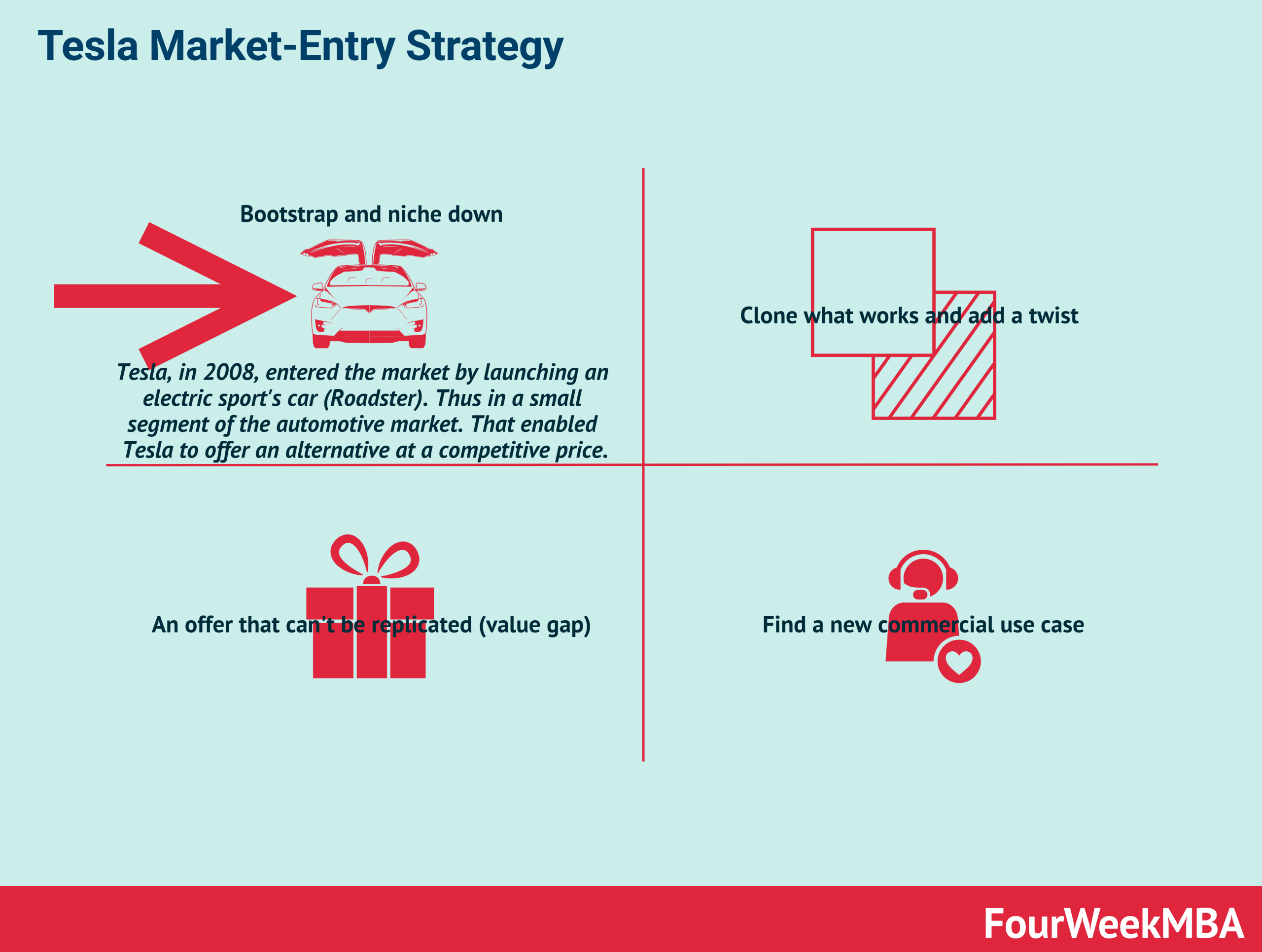
To enter the EV market, Tesla used a niche-down strategy, showing the viability of EVs through high-performance sports cars.
为进入电动汽车市场,特斯拉采取了小众市场深耕的策略,通过打造高性能电动跑车,向市场证明电动汽车的可行性。
Innovators and early adopters
创新者与早期采用者
Tesla started taking pre-orders for the Model 3 sedan on March 31, 2016.
2016 年 3 月 31 日,特斯拉正式开启 Model 3 轿车的预售。
Touted as the "working man's electric vehicle ," the company could secure 325,000 reservations for the Model 3 without spending a cent on paid advertisements.
这款被标榜为"工薪阶层电动座驾"的车型,让特斯拉在未投入任何付费广告的情况下,收获了 32.5 万辆的订单。
Each individual, who forked out a down payment of $1,000 for a vehicle with specifications yet to be ironed out, was motivated to do so because of Tesla's ability to win over innovators and early adopters.
许多消费者为一款参数尚未最终确定的车型,支付了 1000 美元的定金,究其原因,是特斯拉早已成功赢得了创新者和早期采用者的认可。
Indeed, thousands of affluent consumers were more than willing to buy into Musk's vision of a future where personal transport is green and high-tech.
事实上,成千上万的高收入消费者,都十分愿意为马斯克的愿景买单------一个以绿色、高科技方式实现个人出行的未来。
According to the diffusion of innovations theory put forth by Everett Rogers, these consumers equate to around 16% of all buyers.
根据埃弗雷特·罗杰斯提出的创新扩散理论,这部分消费者约占所有购车者的 16%。
Early majority
早期大众
However, it became evident in 2019 that Tesla was having trouble moving buyers from early adopters to the early majority -- a process author Geoffrey Moore described as crossing the chasm and a point where many products falter.
但到了 2019 年,一个问题开始凸显:特斯拉难以推动消费者群体从早期采用者向早期大众过渡。这一过程,正是杰弗里·摩尔所描述的"跨越鸿沟",也是许多产品都会遭遇的发展瓶颈。
One indicator of Tesla's trouble came from lackluster sales of the Model S and X and increased Model 3 competition from Audi, Jaguar, Porsche, and Mercedes-Benz.
特斯拉的发展困境,从多个方面都能得到体现:Model S 和 Model X 销量惨淡,Model 3 则面临着奥迪、捷豹、保时捷、奔驰等品牌的激烈竞争。
Many also speculated that Tesla was cannibalizing its more profitable models with the Model 3.
市场上还普遍猜测,特斯拉推出 Model 3 的行为,正在对其利润更高的车型产生"自噬效应"。
Many of the Model 3's features have also been detrimental to its success. These include:
此外,Model 3 自身的一些设计特点,也成为了其赢得市场的阻碍,具体包括:
-
Unique interiors -- for better or worse, Tesla interiors are a radical departure from what most are accustomed to in a Toyota or Mazda. Most controls are accessed on the vehicle's enormous screen, but the tech is not driver-friendly or intuitive and could be considered unsafe while driving.
独特的内饰设计------无论褒贬,特斯拉的内饰设计与丰田、马自达等主流品牌的内饰风格有着天壤之别。车辆的大部分操控功能都集成在一块超大中控屏中,这种设计既不贴合驾驶员的操作习惯,也缺乏人性化,甚至在行驶过程中存在安全隐患。 -
Perceived quality issues -- while many of the quality control issues associated with previous Tesla models have been resolved, there is still a perception that Tesla models are unreliable.
消费者对品控的质疑------尽管特斯拉已经解决了此前车型存在的诸多品控问题,但消费者仍对其车型的可靠性存有疑虑。 -
Lack of ride comfort -- Tesla manufactures its own seats while competitors source them from third parties. This is to the company's detriment as the Model 3 seats are known to be rather uncomfortable.
驾乘舒适性不足------特斯拉的汽车座椅为自主研发生产,而其竞争对手则选择与第三方供应商合作。这一选择也让特斯拉付出了代价:Model 3 的座椅舒适性广受诟病。
Those inspired by Musk's vision are likely to look past these issues but to reach the early majority, the company will need to make the Model 3 more appealing to those who have certain expectations around the purchase of a new vehicle.
受马斯克愿景感召的消费者,或许会忽略这些问题,但特斯拉若想赢得早期大众的认可,就必须对 Model 3 进行优化,使其更符合普通消费者对一款新车的期待。
As a possible indication that Tesla is making inroads in North America, the Model 3 was the 7th bestselling vehicle for Q4 2019 and the only one with a price point of $40,000.
2019 年第四季度,Model 3 成为北美市场销量第七的车型,也是该销量榜单中唯一一款售价在 4 万美元左右的车型------这一成绩或许预示着,特斯拉正在逐步打开北美市场。
That same year, twice as many Model 3 were sold in the Netherlands as the second most popular automobile.
同年,Model 3 在荷兰的销量,是当地销量第二车型的两倍。
The Model 3 has also more recently reached the early majority stage in Australia.
而在近些年,Model 3 也在澳大利亚市场完成了向早期大众阶段的过渡。
Late majority and laggards
晚期大众与落后者
A transitional business model is used by companies to enter a market (usually a niche) to gain initial traction and prove the idea is sound. The transitional business model helps the company secure the needed capital while having a reality check. It helps shape the long-term vision and a scalable business model.
过渡性商业模式,是企业进入某一市场(通常是小众市场)时所采用的策略,其目的是获得初步的市场认可,证明商业构想的可行性。这种商业模式能帮助企业获得发展所需的资金,同时让企业对市场现状有清晰的认知,进而构建长期的发展愿景和可规模化的商业模式。
The late majority and laggards tend to be those from older generations who grew up with internal combustion engines (ICEs) or were involved in the automotive industry in some way.
特斯拉的晚期大众和落后者群体,主要是老一辈人群------他们伴随着内燃机汽车成长,部分人还曾从事与汽车行业相关的工作。
To appeal to these buyers, Tesla must find a way to offer a comparable driving experience.
若想赢得这一群体的认可,特斯拉必须打造出能与内燃机汽车相媲美的驾乘体验。
The range of a Model 3 must be able to match its ICE-based competition to combat so-called "range anxiety" -- particularly for those car enthusiasts who like to drive at speed.
为缓解消费者的"续航焦虑",Model 3 必须实现与同级别内燃机汽车相当的续航能力,这一点对于喜爱高速驾驶的汽车爱好者而言,尤为重要。
Aside from addressing the issues mentioned above, the most obvious way for Tesla to increase its target audience is to start marketing to them.
除了解决上述问题,特斯拉扩大目标受众最直接的方式,就是针对这一群体制定专属的营销策略。
It must move beyond tech-loving men in their 40s and 50s and market the Model 3 as a safe, comfortable, reliable, and intuitive car brand.
特斯拉的营销受众,不能再局限于 40 至 50 岁的科技爱好者男性,而是要将 Model 3 打造为一个安全、舒适、可靠、人性化的汽车品牌。
Women drivers are just one example of an underserved and underutilized market segment the company could target.
女性驾驶员群体,就是特斯拉尚未充分挖掘的目标受众之一。
Case Studies
案例研究
-
Apple iPhone:
苹果 iPhone:
-
Innovators and Early Adopters: Enthusiasts who embraced the iPhone's innovative touch screen and design.
创新者与早期采用者:被 iPhone 创新的触摸屏和设计所吸引的爱好者群体。 -
Early Majority: Adoption surged with the introduction of the App Store and its expansion to more countries.
早期大众:随着应用商店的上线和全球市场的拓展,iPhone 的市场采用率大幅提升。 -
Late Majority and Laggards: Represent individuals still hesitant to adopt smartphones, for various reasons.
晚期大众与落后者:因各类原因,仍对智能手机持观望态度的人群。
-
-
Tesla Model 3 and Electric Vehicles:
特斯拉 Model 3 与电动汽车:
-
Innovators and Early Adopters: Tesla's early success was driven by innovators and tech-savvy early adopters who were passionate about the concept of electric vehicles.
创新者与早期采用者:特斯拉的早期成功,由对电动汽车理念充满热情的创新者和精通技术的早期采用者推动。 -
Early Majority: Transitioning to this stage proved challenging, with issues like quality, comfort, and marketing needing attention.
早期大众:向该阶段的过渡面临诸多挑战,品控、舒适性、营销策略等问题均亟待解决。 -
Late Majority and Laggards: To reach these segments, Tesla needs to address concerns and expand its target audience.
晚期大众与落后者:若想赢得这一群体,特斯拉需解决消费者的顾虑,并进一步扩大目标受众范围。
-
-
Microsoft Windows Operating System:
微软 Windows 操作系统:
-
Innovators: Tech enthusiasts and developers who embraced the early versions of Windows, despite limitations.
创新者:尽管早期 Windows 存在诸多局限,但仍愿意尝试的科技爱好者和开发者。 -
Early Adopters: Businesses and individuals who recognized the potential of a graphical user interface, leading to increased adoption.
早期采用者:看到图形用户界面潜力的企业和个人,推动了该系统的进一步普及。 -
Early Majority: Windows gained widespread popularity among consumers and businesses, becoming the dominant OS.
早期大众:Windows 在消费者和企业群体中广泛普及,成为主流的操作系统。 -
Late Majority: Some businesses and individuals resisted the shift to Windows initially but eventually adopted it due to compatibility and industry standards.
晚期大众:部分企业和个人最初拒绝使用 Windows,但受兼容性和行业标准的影响,最终选择采用。 -
Laggards: Individuals or organizations who clung to older operating systems or alternative platforms.
落后者:始终坚持使用老旧操作系统或其他替代平台的个人和组织。
-
-
Google Search Engine:
谷歌搜索引擎:
-
Innovators: Early internet users who experimented with new search engines, including Google, driven by curiosity.
创新者:受好奇心驱使,愿意尝试谷歌等新型搜索引擎的早期互联网用户。 -
Early Adopters: Tech-savvy individuals who appreciated Google's minimalist design and accurate search results.
早期采用者:认可谷歌极简设计和精准搜索结果的精通技术的人群。 -
Early Majority: As Google improved its search algorithms and gained a reputation for reliability, it became the go-to search engine for mainstream users.
早期大众:随着谷歌优化搜索算法、树立起可靠的品牌形象,其成为了主流用户的首选搜索引擎。 -
Late Majority: Some users who were initially loyal to other search engines eventually switched to Google due to its dominance.
晚期大众:部分原本忠实于其他搜索引擎的用户,因谷歌的市场主导地位,最终选择切换平台。 -
Laggards: A small group of users who stuck with older or less-known search engines out of habit or resistance to change.
落后者:因习惯或抗拒改变,始终使用老旧或小众搜索引擎的少数用户。
-
-
Facebook Social Media Platform:
脸书社交媒体平台:
-
Innovators: College students and tech-savvy individuals who joined Facebook when it was limited to certain universities.
创新者:在脸书仅对部分大学开放阶段,就选择注册的大学生和精通技术的人群。 -
Early Adopters: As Facebook expanded its user base beyond universities, early adopters from various demographics joined.
早期采用者:脸书的用户群体突破大学范围后,来自不同人群的早期采用者开始加入。 -
Early Majority: Facebook's user-friendly interface and network effects led to widespread adoption among individuals and businesses.
早期大众:脸书人性化的界面和网络效应,使其在个人和企业群体中广泛普及。 -
Late Majority: Some individuals who initially resisted social media eventually created Facebook accounts to connect with friends and family.
晚期大众:部分最初拒绝使用社交媒体的人群,为与亲友沟通,最终注册了脸书账号。 -
Laggards: People who remained offline or avoided joining social media platforms like Facebook for privacy or personal reasons.
落后者:因隐私或个人原因,始终不使用网络,或拒绝加入脸书等社交媒体平台的人群。
-
-
Amazon Kindle E-Reader:
亚马逊 Kindle 电子书阅读器:
-
Innovators: Early e-book enthusiasts who adopted the Kindle despite its limited selection and early technology.
创新者:尽管初代 Kindle 存在书籍资源有限、技术不成熟等问题,但仍愿意尝试的早期电子书爱好者。 -
Early Adopters: Readers who appreciated the convenience of e-books and embraced the Kindle as the e-reader of choice.
早期采用者:认可电子书便捷性,并将 Kindle 作为首选电子书阅读器的读者群体。 -
Early Majority: As Amazon expanded its e-book library and improved device features, the Kindle gained popularity among avid readers.
早期大众:随着亚马逊扩充电子书库、优化设备功能,Kindle 在资深读者群体中收获了高人气。 -
Late Majority: Some traditional book readers eventually transitioned to e-books and adopted the Kindle due to its market dominance.
晚期大众:部分传统纸质书读者,因 Kindle 的市场主导地位,最终转向电子书并选择使用该设备。 -
Laggards: Individuals who continued to prefer physical books and resisted e-readers like the Kindle.
落后者:始终偏爱纸质书,拒绝使用 Kindle 等电子书阅读器的人群。
-
Key Highlights
核心要点
-
"Crossing the Chasm" Model by Geoffrey A. Moore:
杰弗里·A·摩尔的《跨越鸿沟》模型:
-
The model explains the stages of adoption for high-tech products: Innovators, Early Adopters, Early Majority, Late Majority, and Laggards.
该模型阐释了高科技产品的五个采用阶段:创新者、早期采用者、早期大众、晚期大众、落后者。
-
The "chasm" phase is crucial, where the product is embraced by early adopters but hasn't gained traction with the early majority.
"鸿沟"阶段是关键节点,此时产品已被早期采用者接受,但尚未获得早期大众的认可。
-
Many startups fail due to not bridging this gap between early adopters and the early majority.
许多初创企业的失败,原因在于未能填补早期采用者与早期大众之间的差距。
-
Understanding the technology adoption cycle helps assess a product's stage and strategies to transition from one stage to another.
了解技术采用周期,有助于评估产品所处的发展阶段,并制定向下一阶段过渡的策略。
-
The challenge is to retain the early adopters' enthusiasm while appealing to the early majority.
企业面临的挑战是,在吸引早期大众的同时,保持早期采用者对产品的热情。
-
-
Technology Adoption Life Cycle Stages:
技术采用生命周期的各阶段特征:
-
Innovators: First adopters who embrace the product's innovative aspects, even if it's not perfect.
创新者:最先采用产品的群体,即便产品存在缺陷,也会被其创新属性吸引。
-
Early Adopters: Eager to try new products, they value innovation and have researched the product's potential.
早期采用者:热衷于尝试新产品,重视创新,且会提前研究产品的潜力。
-
Early Majority: Critical for crossing the chasm, they seek practical solutions with proven benefits.
早期大众:是企业跨越鸿沟的关键,这一群体追求具备实际效用、且收益已被证实的解决方案。
-
Late Majority: Skeptical of technological innovation, they adopt once a product is well-established.
晚期大众:对技术创新持怀疑态度,仅在产品站稳市场后才会选择采用。
-
Laggards: Adverse to technology adoption unless clear advantages are evident.
落后者:抗拒采用新技术,除非其优势十分显著。
-
-
Seth Godin's Perspective on Chasm:
塞思·戈丁对"鸿沟"的解读:
-
Moore's model helps marketers understand that innovation is insufficient for reaching the masses.
摩尔的模型让营销人员认识到,仅依靠创新,无法触达大众群体。
-
Early adopters seek innovation, while the majority seeks trust and solutions that work.
早期采用者追求创新,而大众群体则更看重信任,以及能切实解决问题的方案。
-
-
Jared Diamond's Patterns of Technological Adoption:
贾里德·戴蒙德提出的技术采用影响模式:
-
Four patterns influencing adoption: relative economic advantage, social value, compatibility with vested interests, ease of observing advantages.
影响技术采用的四大模式:相对经济优势、社会价值、与既得利益的兼容性、技术优势的可感知性。
-
Example: QWERTY keyboard's adoption was influenced by vested interests.
实例:QWERTY 键盘的普及,受既得利益群体的影响颇深。
-
-
Technology Adoption Curve Examples:
技术采用曲线的实例总结:
-
iPhone's Curve:
iPhone 采用曲线:-
Innovators and early adopters were drawn to its touch screen and design.
创新者和早期采用者被其触摸屏和设计所吸引。
-
App Store's launch attracted the early majority.
应用商店的上线,吸引了早期大众群体。
-
Expansion to more countries increased adoption.
全球市场的拓展,进一步提升了产品的采用率。
-
Late majority and laggards represent those still hesitant to adopt smartphones.
晚期大众和落后者是仍对智能手机持观望态度的人群。
-
-
Tesla Model 3's Curve:
特斯拉 Model 3 采用曲线:-
Tesla secured initial interest from innovators and early adopters.
特斯拉率先获得了创新者和早期采用者的关注。
-
Challenges arose in transitioning to the early majority.
向早期大众阶段过渡时,企业面临诸多挑战。
-
Tesla faced quality, comfort, and marketing challenges.
特斯拉遭遇了品控、舒适性、营销策略等方面的问题。
-
To reach late majority and laggards, Tesla needs to address these issues and expand its target audience.
若想赢得晚期大众和落后者,特斯拉需解决上述问题,并扩大目标受众范围。
-
-
技术采用生命周期企业案例
| Stage 阶段 | Company 企业 | Product/Service 产品/服务 | Description 描述 |
|---|---|---|---|
| Innovators 创新者阶段 | Tesla 特斯拉 | Electric Vehicles (EVs) 电动汽车 | Tesla's groundbreaking electric cars were initially adopted by tech enthusiasts and innovators. 特斯拉具有开创性的电动汽车,最初被科技爱好者和创新者所采用。 |
| Early Adopters 早期采用者阶段 | Apple 苹果 | iPhone iPhone 手机 | Apple's iPhone gained traction quickly among early adopters due to its revolutionary design and features. 苹果 iPhone 凭借颠覆性的设计和功能,迅速获得早期采用者的认可。 |
| Early Majority 早期大众阶段 | Samsung 三星 | Galaxy smartphones 盖乐世系列智能手机 | Samsung's Galaxy series smartphones attracted a wider audience, appealing to early majority consumers. 三星盖乐世系列智能手机吸引了更广泛的受众,获得了早期大众消费者的青睐。 |
| Late Majority 晚期大众阶段 | Google 谷歌 | Android OS 安卓操作系统 | Android's open-source mobile operating system became widely adopted among late majority consumers. 谷歌开源的安卓移动操作系统,在晚期大众消费者中得到了广泛采用。 |
| Laggards 落后者阶段 | Nokia (formerly) 诺基亚(昔日) | Feature Phones 功能机 | Feature phones by Nokia were eventually adopted by laggards who resisted smartphones' advances. 诺基亚的功能机,最终被抗拒智能手机发展的落后者群体所采用。 |
技术采用相关理论框架
| Related Frameworks 相关理论框架 | Description 描述 | When to Apply 适用场景 |
|---|---|---|
| Diffusion of Innovations Theory 创新扩散理论 | The Diffusion of Innovations Theory explains how new ideas, products, or technologies spread through society over time. It identifies key factors influencing adoption, such as innovation attributes, communication channels, social networks, and adopter characteristics. 该理论阐释了新想法、新产品、新技术如何在社会中逐步传播。它明确了影响技术采用的关键因素,包括创新属性、传播渠道、社交网络以及采用者特征。 | When studying the adoption process of innovations or new technologies , understanding factors that influence adoption rates , or designing strategies to facilitate diffusion by targeting influential adopters , leveraging social networks , or emphasizing key attributes that appeal to early adopters and majority adopters . 适用于研究创新或新技术的采用过程、分析影响采用率的因素,或通过瞄准有影响力的采用者、利用社交网络、强调吸引早期采用者和大众采用者的核心属性,制定推动技术扩散的策略。 |
| Rogers' Five Factors Framework 罗杰斯五因素框架 | Rogers' Five Factors Framework complements the Diffusion of Innovations Theory by highlighting five key factors influencing the adoption of innovations: Relative Advantage , Compatibility , Complexity , Trialability , and Observability . It helps assess the attractiveness and feasibility of innovations for potential adopters. 该框架是对创新扩散理论的补充,强调了影响创新采用的五大关键因素:相对优势、兼容性、复杂性、可试用性、可观察性。它有助于评估创新对潜在采用者的吸引力和可行性。 | When evaluating or promoting innovations , assessing factors that influence adoption decisions , or tailoring innovations to meet the needs and preferences of target audiences by emphasizing benefits , compatibility , ease of use , trial opportunities , and observable outcomes to encourage adoption and reduce resistance to change. 适用于评估或推广创新、分析影响采用决策的因素,或通过强调收益、兼容性、易用性、试用机会和可感知的成果,调整创新以满足目标受众的需求和偏好,从而鼓励采用、减少变革阻力。 |
| Geoffrey Moore's Crossing the Chasm Model 杰弗里·摩尔的跨越鸿沟模型 | Crossing the Chasm is a model proposed by Geoffrey Moore that describes the challenges of transitioning from early adopters to mainstream customers in the technology adoption lifecycle. It identifies a "chasm" between early adopters and the early majority and emphasizes the need for targeted strategies to bridge this gap and achieve widespread adoption. 该模型由杰弗里·摩尔提出,阐释了技术采用生命周期中,从早期采用者向主流客户过渡过程中面临的挑战。它明确了早期采用者与早期大众之间的"鸿沟",并强调需要制定针对性策略,填补这一差距,实现技术的广泛采用。 | When introducing disruptive innovations or new technologies to the market, navigating the transition from early adopters to the mainstream market , or developing marketing and sales strategies to cross the chasm by addressing specific needs and concerns of the early majority and building momentum for widespread adoption and market success . 适用于向市场推出颠覆性创新或新技术、实现从早期采用者向主流市场的过渡,或通过解决早期大众的特定需求和顾虑、为技术的广泛采用和市场成功积累动力,制定跨越鸿沟的营销和销售策略。 |
| Everett M. Rogers' Adoption Process 埃弗雷特·M·罗杰斯的采用过程模型 | Everett M. Rogers' Adoption Process outlines the stages that individuals go through when adopting a new innovation: Awareness , Interest , Evaluation , Trial , and Adoption . It provides insights into the psychological and behavioral dynamics of adoption and helps identify barriers and facilitators at each stage. 该模型勾勒出了个人采用一项新创新的五个阶段:认知、兴趣、评估、试用、采用。它揭示了技术采用背后的心理和行为动因,有助于识别每个阶段的阻碍因素和推动因素。 | When introducing innovations or new products , understanding the sequential stages of adoption , or designing communication and marketing strategies to cater to individuals' needs and influence adoption decisions by addressing information gaps , building interest , facilitating trial , and reducing perceived risks to encourage adoption and accelerate market penetration . 适用于推出创新或新产品、理解技术采用的阶段性特征,或通过填补信息空白、培养兴趣、提供试用机会、降低感知风险,制定贴合个人需求的传播和营销策略,影响采用决策、鼓励技术采用、加快市场渗透。 |
| Geoffrey Moore's Technology Adoption Lifecycle 杰弗里·摩尔的技术采用生命周期模型 | Geoffrey Moore's Technology Adoption Lifecycle expands on the Technology Adoption Curve by describing the adoption process in terms of different adopter categories: Innovators , Early Adopters , Early Majority , Late Majority , and Laggards . It emphasizes the importance of targeting specific segments with tailored messaging and strategies. 该模型在技术采用曲线的基础上进行了拓展,以创新者、早期采用者、早期大众、晚期大众、落后者这五类不同的采用者群体为维度,阐释了技术采用过程。它强调了针对不同细分群体,制定个性化信息和策略的重要性。 | When introducing new technologies or products , segmenting target audiences , or developing marketing and sales strategies to address the needs and concerns of different adopter groups by tailoring messages , highlighting benefits , and leveraging influencers to maximize adoption rates and market penetration across varied customer segments . 适用于推出新技术或新产品、细分目标受众,或通过定制传播信息、强调针对性收益、利用意见领袖,制定满足不同采用者群体需求和顾虑的营销和销售策略,在不同客户群体中实现最高的采用率和市场渗透率。 |
| Everett M. Rogers' Innovator's Dilemma 埃弗雷特·M·罗杰斯的创新者困境 | Innovator's Dilemma refers to the challenge faced by innovators and disruptors in introducing radical innovations that may initially be inferior to existing solutions in the market. Everett M. Rogers highlights the dilemma of balancing the pursuit of groundbreaking innovations with the need to satisfy existing customer demands and preferences. 创新者困境指的是,创新者和颠覆者在推出突破性创新时面临的挑战------这类创新在初期的性能,可能不如市场上现有的解决方案。埃弗雷特·M·罗杰斯强调,企业面临的困境是,如何在追求突破性创新与满足现有客户需求和偏好之间实现平衡。 | When developing or introducing disruptive innovations , understanding the trade-offs between radical innovation and market acceptance , or navigating the risks and opportunities associated with challenging incumbent products and established markets by strategically managing product evolution and market positioning to maximize long-term success and sustainable growth . 适用于研发或推出颠覆性创新、理解突破性创新与市场接受度之间的权衡关系,或通过战略性地管理产品迭代和市场定位,应对挑战现有产品和成熟市场带来的风险与机遇,实现长期成功和可持续发展。 |
| Gartner Hype Cycle 高德纳技术成熟度曲线 | The Gartner Hype Cycle maps the maturity and adoption of emerging technologies through five phases: Innovation Trigger , Peak of Inflated Expectations , Trough of Disillusionment , Slope of Enlightenment , and Plateau of Productivity . It helps businesses understand the lifecycle of technologies and anticipate their potential impact on industries and markets. 该曲线将新兴技术的成熟度和采用过程划分为五个阶段:技术触发期、期望膨胀顶峰、泡沫破裂低谷、启蒙爬升期、生产力成熟期。它有助于企业理解技术的生命周期,预判技术对行业和市场的潜在影响。 | When evaluating emerging technologies or market trends , understanding cycles of technology adoption and maturity , or making strategic decisions regarding technology investment and adoption by anticipating and managing risks and opportunities associated with emerging trends to gain competitive advantage and drive innovation in dynamic markets . 适用于评估新兴技术或市场趋势、理解技术采用和成熟的周期特征,或通过预判并管理新兴趋势带来的风险与机遇,制定技术投资和采用的战略决策,在动态市场中获得竞争优势、推动创新。 |
| Product Lifecycle Management (PLM) 产品生命周期管理(PLM) | Product Lifecycle Management (PLM) is a systematic approach to managing the entire lifecycle of a product from inception, through design and manufacturing, to service and disposal. It encompasses processes, tools, and strategies to optimize product development, ensure quality, and maximize value throughout the lifecycle. 这是一种系统化的管理方法,覆盖了产品从概念提出、设计制造,到售后服务、报废处理的全生命周期。它包含了优化产品研发、保障产品质量、实现产品全生命周期价值最大化的流程、工具和策略。 | When developing or managing products , optimizing product lifecycles , or enhancing cross-functional collaboration and efficiency by integrating product data and processes , streamlining workflows , and ensuring compliance and quality throughout product development and lifecycle management to maximize product value and minimize time-to-market . 适用于产品研发或产品管理、优化产品生命周期,或通过整合产品数据和流程、简化工作流、在产品研发和生命周期管理的全过程中保障合规性和质量,提升跨部门协作效率,实现产品价值最大化、缩短产品上市时间。 |
| Market Adoption Model 市场采用模型 | The Market Adoption Model is a framework that examines how innovations spread across markets, industries, or regions. It considers factors such as market dynamics, competitive landscape, regulatory environment, and customer behavior to predict adoption patterns and market penetration rates for new technologies or products. 该框架分析了创新如何在不同市场、行业、地区间传播。它综合考虑了市场动态、竞争格局、监管环境、消费者行为等因素,用于预判新技术或新产品的采用模式和市场渗透率。 | When assessing market potential or entering new markets , analyzing adoption patterns and market dynamics , or developing market entry and expansion strategies by anticipating market needs and competitive challenges , identifying growth opportunities , and tailoring approaches to maximize market penetration and sustain long-term success in diverse market environments . 适用于评估市场潜力或进入新市场、分析技术采用模式和市场动态,或通过预判市场需求和竞争挑战、识别增长机遇、定制适配策略,制定市场进入和扩张策略,在不同的市场环境中实现市场渗透率最大化、保持长期成功。 |
What is chasm in technology adoption life cycle?
技术采用生命周期中的"鸿沟"指的是什么?
In his book, Crossing the Chasm, Geoffrey A. Moore shows a model that dissects and represents the stages of adoption of high-tech products. The model goes through five stages based on the psychographic features of customers at each stage: innovators, early adopters, early majority, late majority, and laggards.
在其著作《跨越鸿沟》中,杰弗里·A·摩尔提出了一个剖析并呈现高科技产品采用阶段的模型。该模型根据每个阶段客户的心理特征分为五个阶段:创新者、早期采用者、早期大众、晚期大众和落后者。
创新采用曲线及相关创新框架
What is the innovation adoption curve?
什么是创新采用曲线?
The technology adoption lifecycle is a model put together in the book, Crossing the Chasm which is built upon the Diffusion Of Innovations Theory by E.M. Rogers. It highlights how the adoption of high-tech products depends on the way five key psychographic groups think about innovation. The model moves from innovators who look at technology for its own sake, early adopters, early majority, late majority, and laggards who are skeptical about innovation.
技术采用生命周期是在《跨越鸿沟》一书中整合提出的模型,该模型以 E.M.罗杰斯的创新扩散理论为基础。它揭示了高科技产品的采用情况,如何受五个核心心理特征群体对创新的认知方式影响。这一模型涵盖的群体从为技术本身关注技术的创新者、早期采用者、早期大众、晚期大众,一直到对创新持怀疑态度的落后者。
What are the four stages of the technology adoption life cycle?
技术采用生命周期的四个阶段是什么?
According to the technology life cycle, there are four key stages: research and development, ascent, maturity, and decline depending on the adoption of high-tech products by giving main psychographic groups: innovators, early adopters, early majority, late majority, and laggards, each with a different set of features.
依据技术生命周期理论,结合创新者、早期采用者、早期大众、晚期大众、落后者这五类各具特征的核心心理特征群体对高科技产品的采用情况,技术采用生命周期分为四个关键阶段:研发阶段、上升阶段、成熟阶段和衰退阶段。
What are the 5 adopter categories?
五类采用者群体分别是什么?
According to the Diffusion Of Innovations Theory by E.M. Rogers, a communication theorist at the University of New Mexico, in 1962, there are five stages of high-tech product adoption based on the psychographic features of customers at each stage: innovators, early adopters, early majority, late majority, and laggard.
1962 年,新墨西哥大学的传播理论家 E.M.罗杰斯在其创新扩散理论中,根据不同阶段消费者的心理特征,将高科技产品的采用划分为五个类型,对应五类采用者群体:创新者、早期采用者、早期大众、晚期大众和落后者。
Related Innovation Frameworks
相关创新框架
Business Model Innovation
商业模式创新
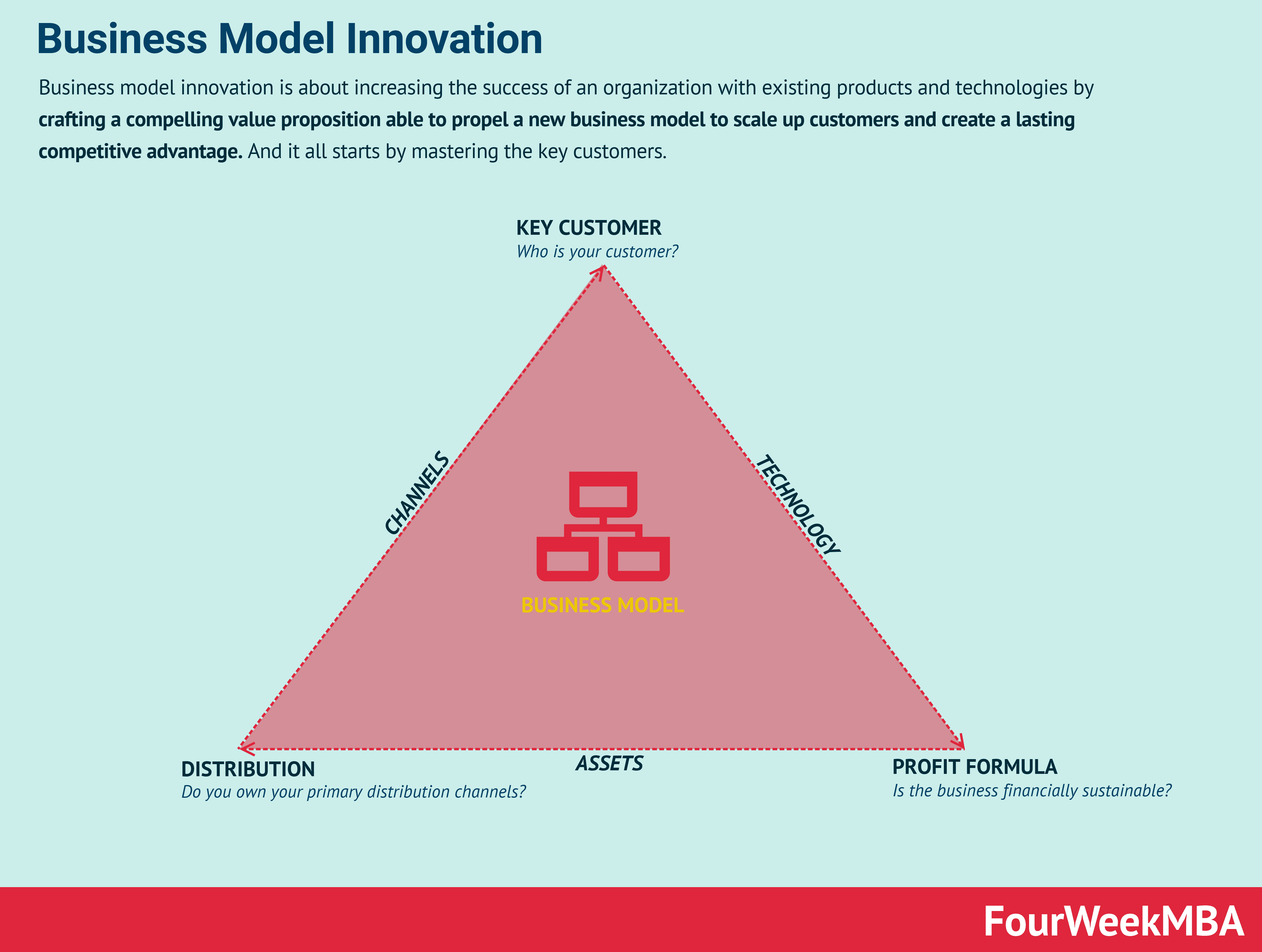
Business model innovation is about increasing the success of an organization with existing products and technologies by crafting a compelling value proposition able to propel a new business model to scale up customers and create a lasting competitive advantage. And it all starts by mastering the key customers.
商业模式创新指的是,通过打造具有吸引力的价值主张,依托现有产品和技术提升企业的发展成效;这一价值主张能够推动新商业模式实现用户规模扩张,并构建持久的竞争优势。而商业模式创新的一切,都始于对核心用户的深度洞察与把握。
Innovation Theory.
创新理论
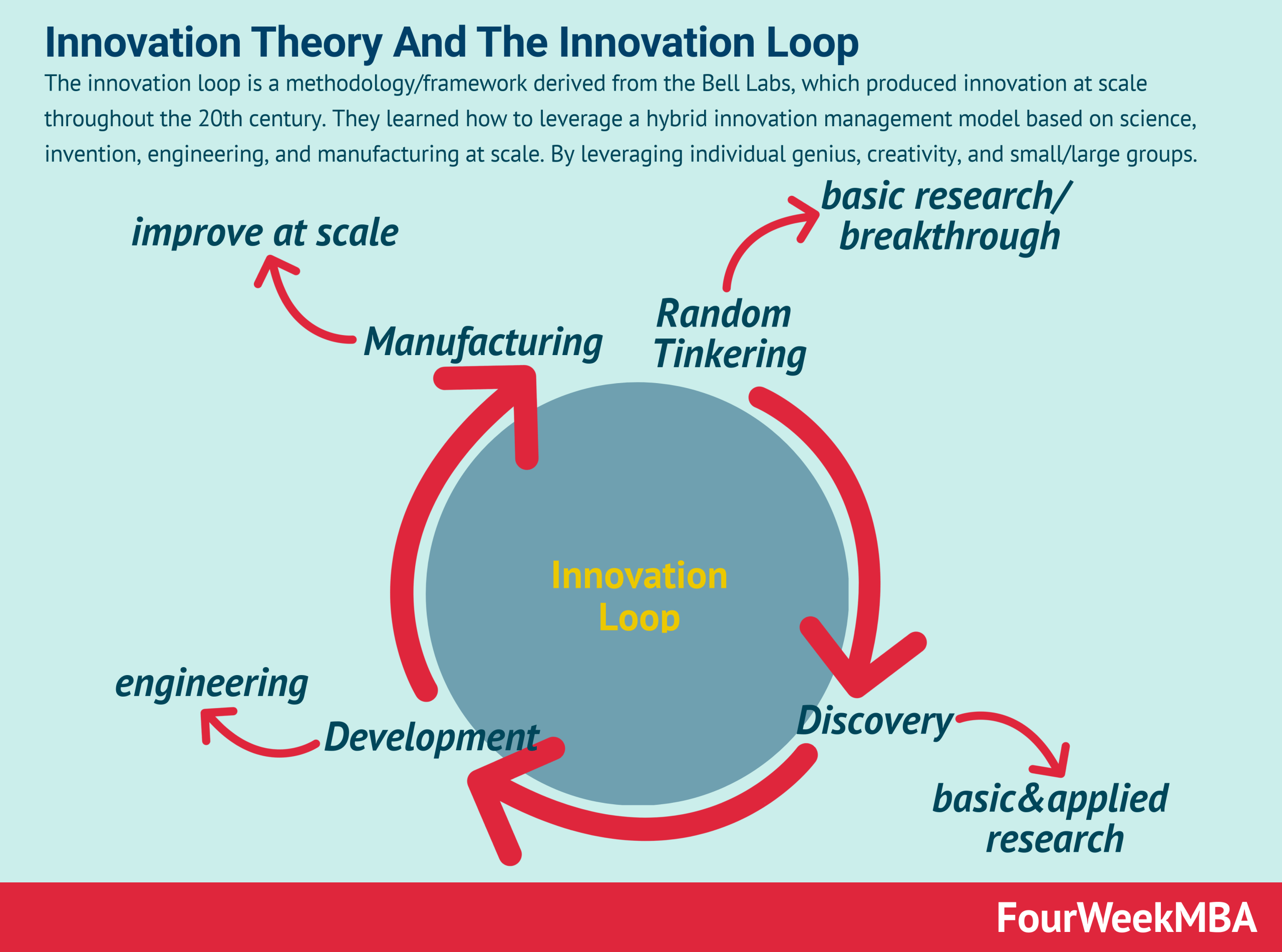
The innovation loop is a methodology/framework derived from the Bell Labs, which produced innovation at scale throughout the 20th century. They learned how to leverage a hybrid innovation management model based on science, invention, engineering, and manufacturing at scale. By leveraging individual genius, creativity, and small/large groups.
创新循环是源自贝尔实验室的一种方法论与框架,贝尔实验室在整个 20 世纪实现了大规模的创新成果产出。该实验室摸索出一套融合型创新管理模式的运用方法,这一模式以科学研究、发明创造、工程开发和规模化制造为基础,充分发挥个人天赋、创新创造力,以及各类大小团队的协作价值。
Types of Innovation.
创新的类型
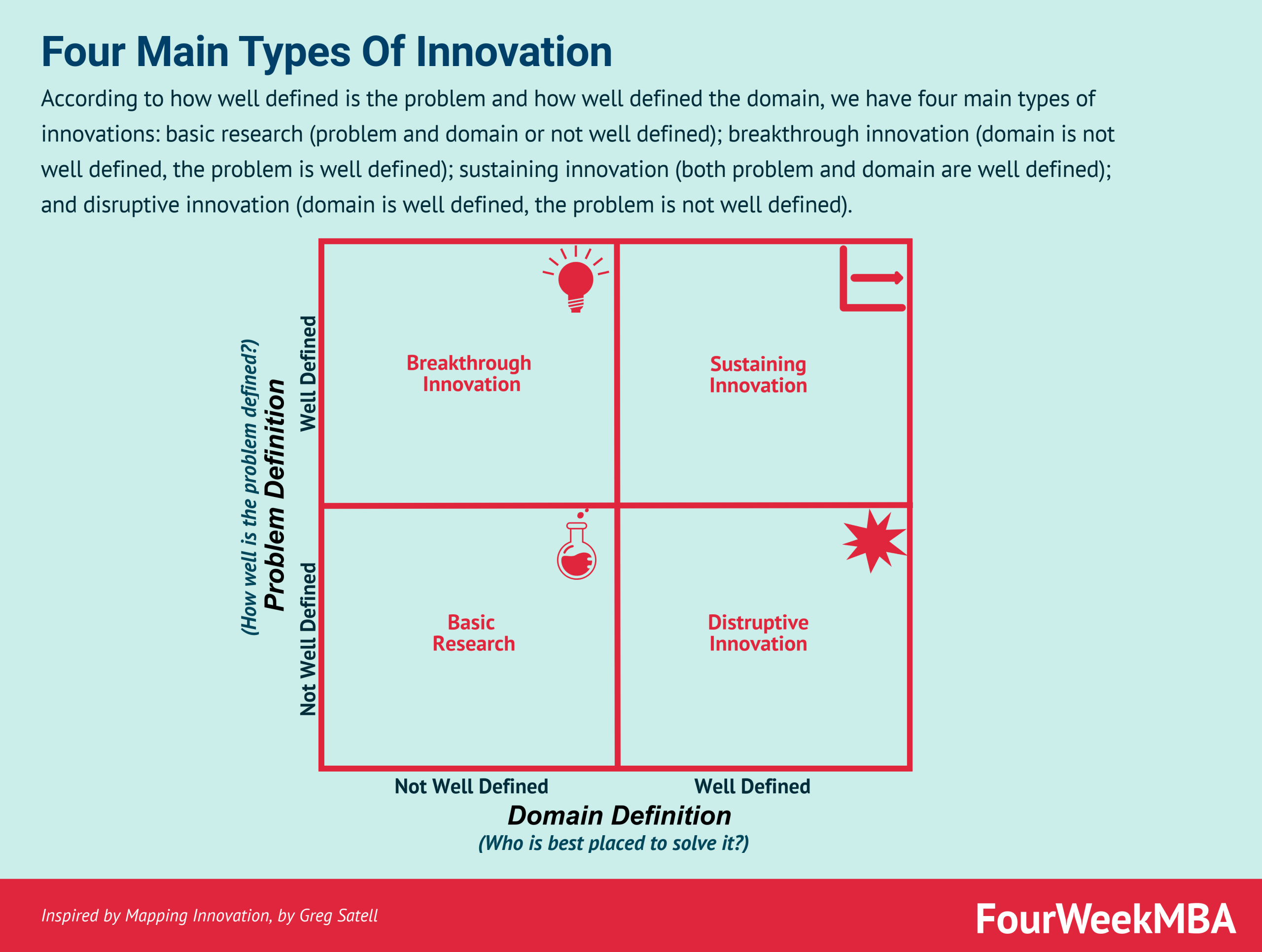
According to how well defined is the problem and how well defined the domain, we have four main types of innovations: basic research (problem and domain or not well defined); breakthrough innovation (domain is not well defined, the problem is well defined); sustaining innovation (both problem and domain are well defined); and disruptive innovation (domain is well defined, the problem is not well defined).
根据问题的明确程度和领域的明确程度,创新主要分为四类:基础研究型创新(问题与领域均未明确)、突破性创新(领域未明确,问题已明确)、持续性创新(问题与领域均已明确)和颠覆性创新(领域已明确,问题未明确)。
Continuous Innovation.
持续性创新
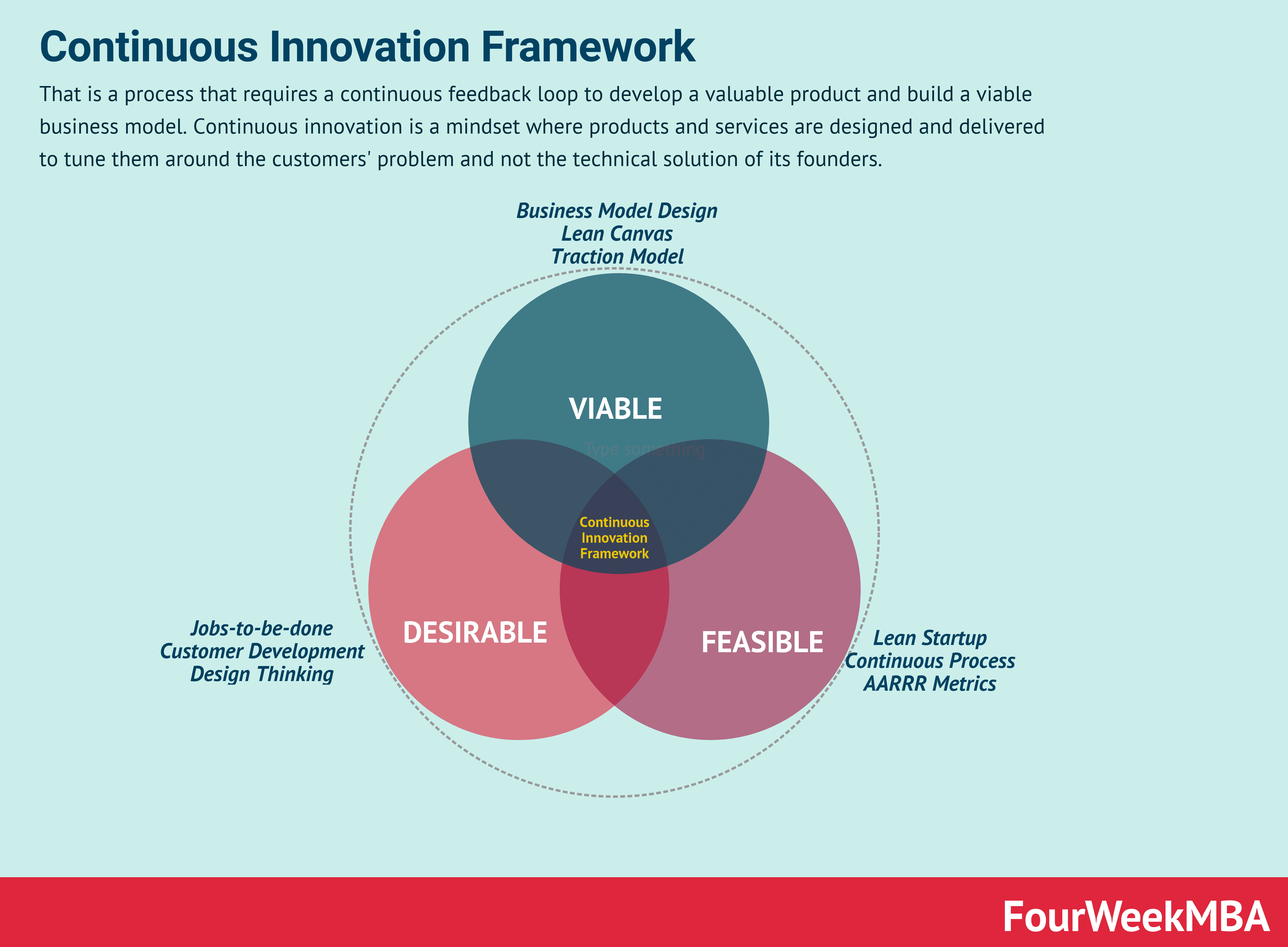
That is a process that requires a continuous feedback loop to develop a valuable product and build a viable business model. Continuous innovation is a mindset where products and services are designed and delivered to tune them around the customers' problem and not the technical solution of its founders.
持续性创新是一个需要通过持续的反馈循环,来开发有价值的产品并构建可行商业模式的过程。同时它也是一种思维模式,在这一模式下,产品与服务的设计和交付始终围绕用户的实际问题展开,而非局限于企业创始人提出的技术解决方案。
Disruptive Innovation.
颠覆性创新
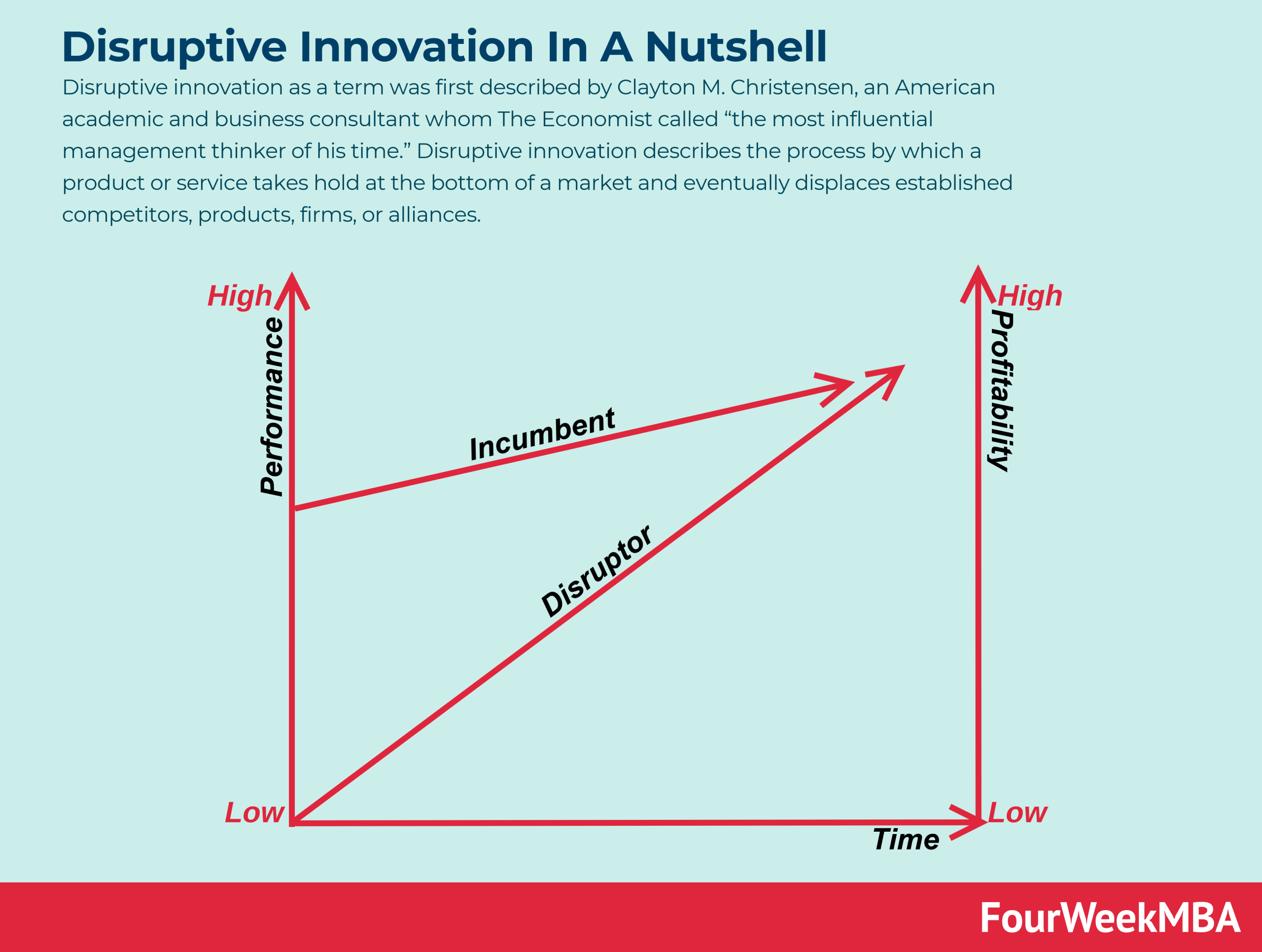
Disruptive innovation as a term was first described by Clayton M. Christensen, an American academic and business consultant whom The Economist called "the most influential management thinker of his time." Disruptive innovation describes the process by which a product or service takes hold at the bottom of a market and eventually displaces established competitors, products, firms, or alliances.
"颠覆性创新"这一概念由美国学者、商业顾问克莱顿·M·克里斯坦森首次提出,《经济学人》称其为"同时代最具影响力的管理思想家"。颠覆性创新指的是某一产品或服务从市场底层站稳脚跟,最终取代现有的竞争对手、产品、企业或联盟的发展过程。
Business Competition.
商业竞争
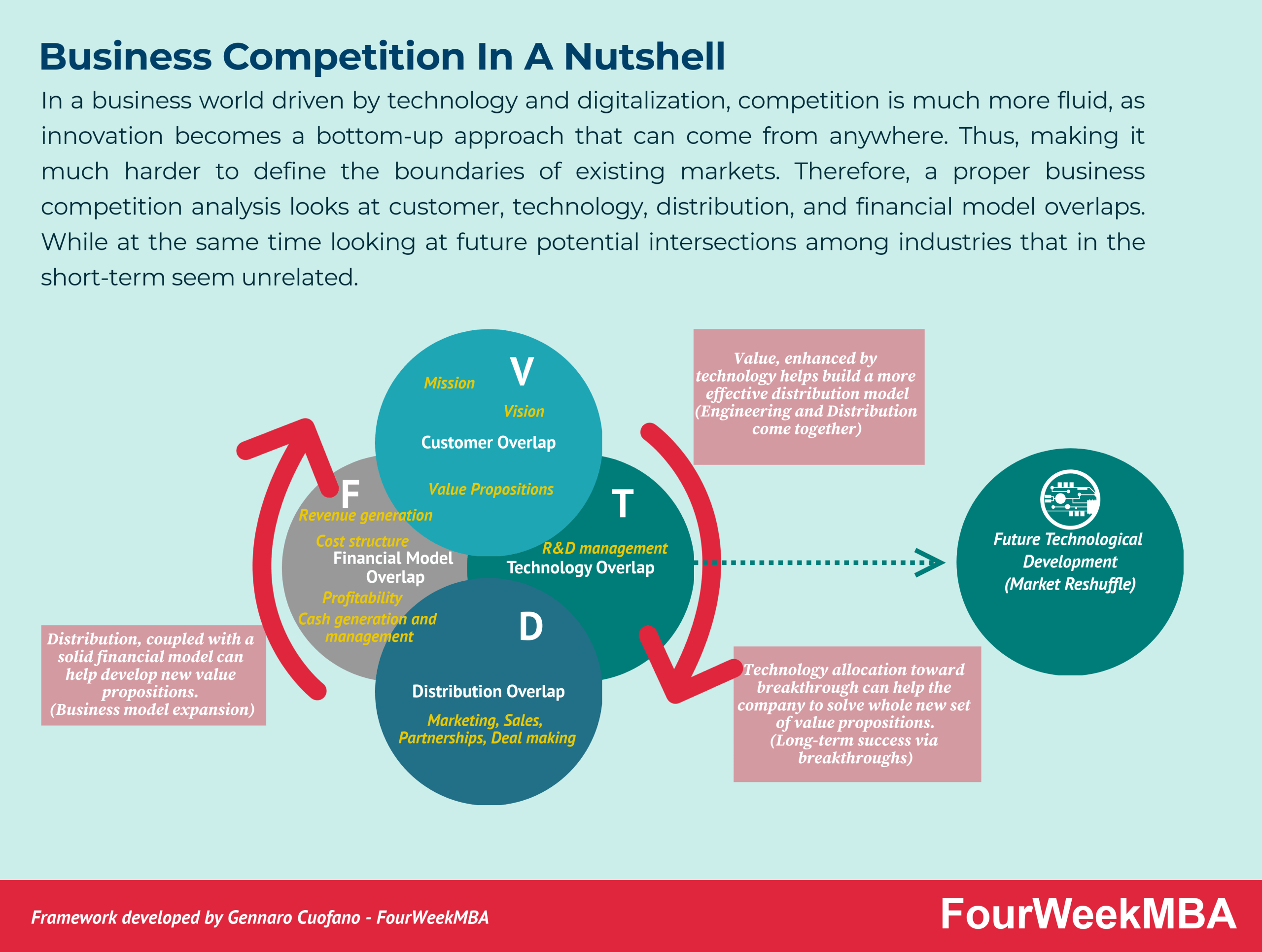
In a business world driven by technology and digitalization, competition is much more fluid, as innovation becomes a bottom-up approach that can come from anywhere. Thus, making it much harder to define the boundaries of existing markets. Therefore, a proper business competition analysis looks at customer, technology, distribution, and financial model overlaps. While at the same time looking at future potential intersections among industries that in the short-term seem unrelated.
在技术与数字化驱动的商业环境中,市场竞争的格局变得更加多变,因为创新成为了一种自下而上的发展方式,其灵感和成果可来源于任何地方,这也让现有市场的边界难以界定。因此,一份完善的商业竞争分析,需要分析不同主体在用户、技术、分销渠道和财务模型上的重叠之处,同时也要关注那些短期内看似无关的行业,未来可能产生的交叉融合点。
Technological Modeling.
技术建模
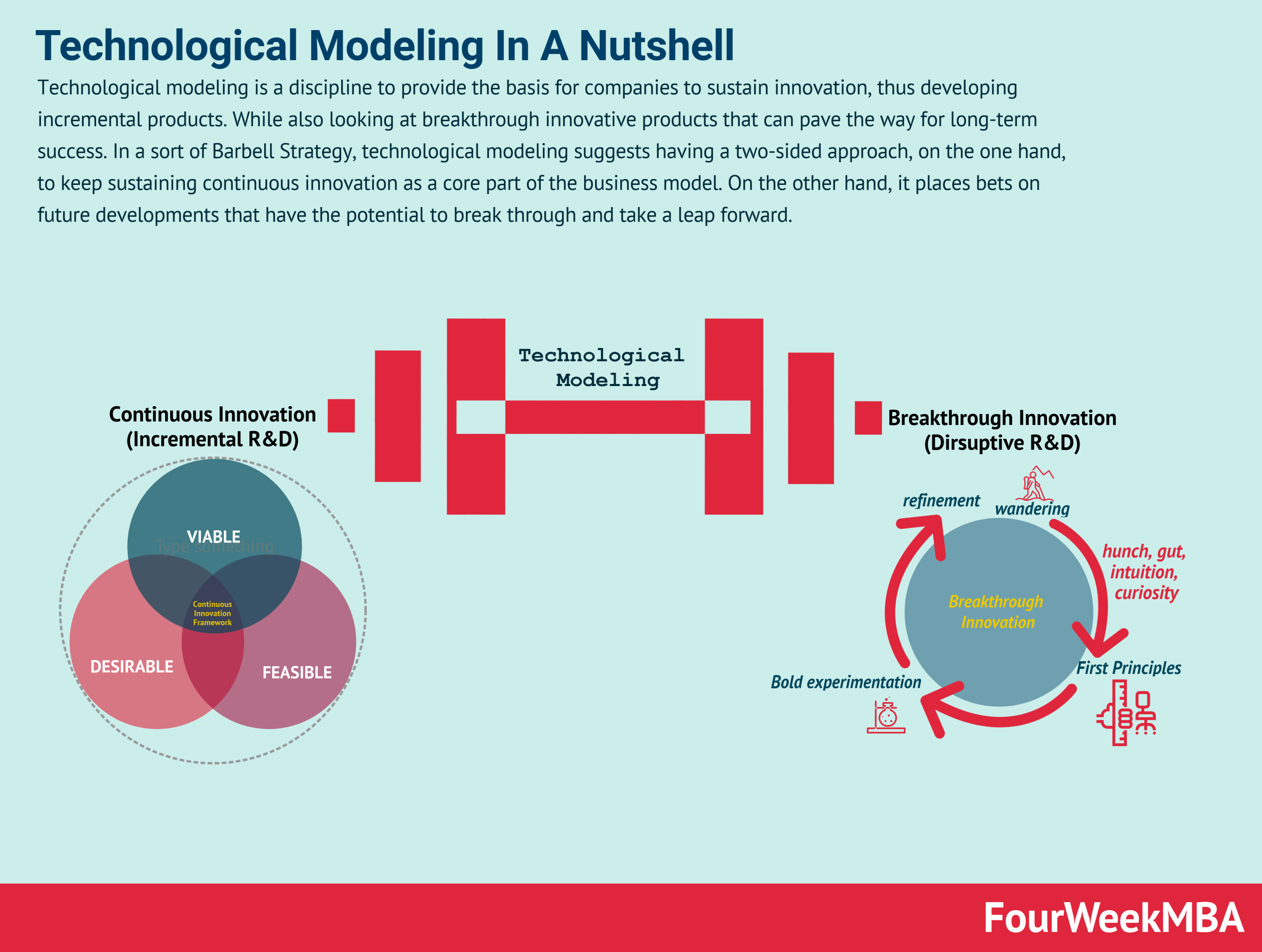
Technological modeling is a discipline to provide the basis for companies to sustain innovation, thus developing incremental products. While also looking at breakthrough innovative products that can pave the way for long-term success. In a sort of Barbell Strategy, technological modeling suggests having a two-sided approach, on the one hand, to keep sustaining continuous innovation as a core part of the business model. On the other hand, it places bets on future developments that have the potential to break through and take a leap forward.
技术建模是一门为企业持续创新奠定基础的学科,依托这一学科,企业可开发渐进式改进的产品,同时也能研发可为长期发展奠定基础的突破性创新产品。技术建模借鉴了杠铃策略的思路,提出一种双向发展的方法:一方面,将持续性创新作为商业模式的核心组成部分并持续推进;另一方面,对具有突破潜力、能推动企业实现跨越式发展的未来技术方向进行布局。
Diffusion of Innovation.
创新扩散
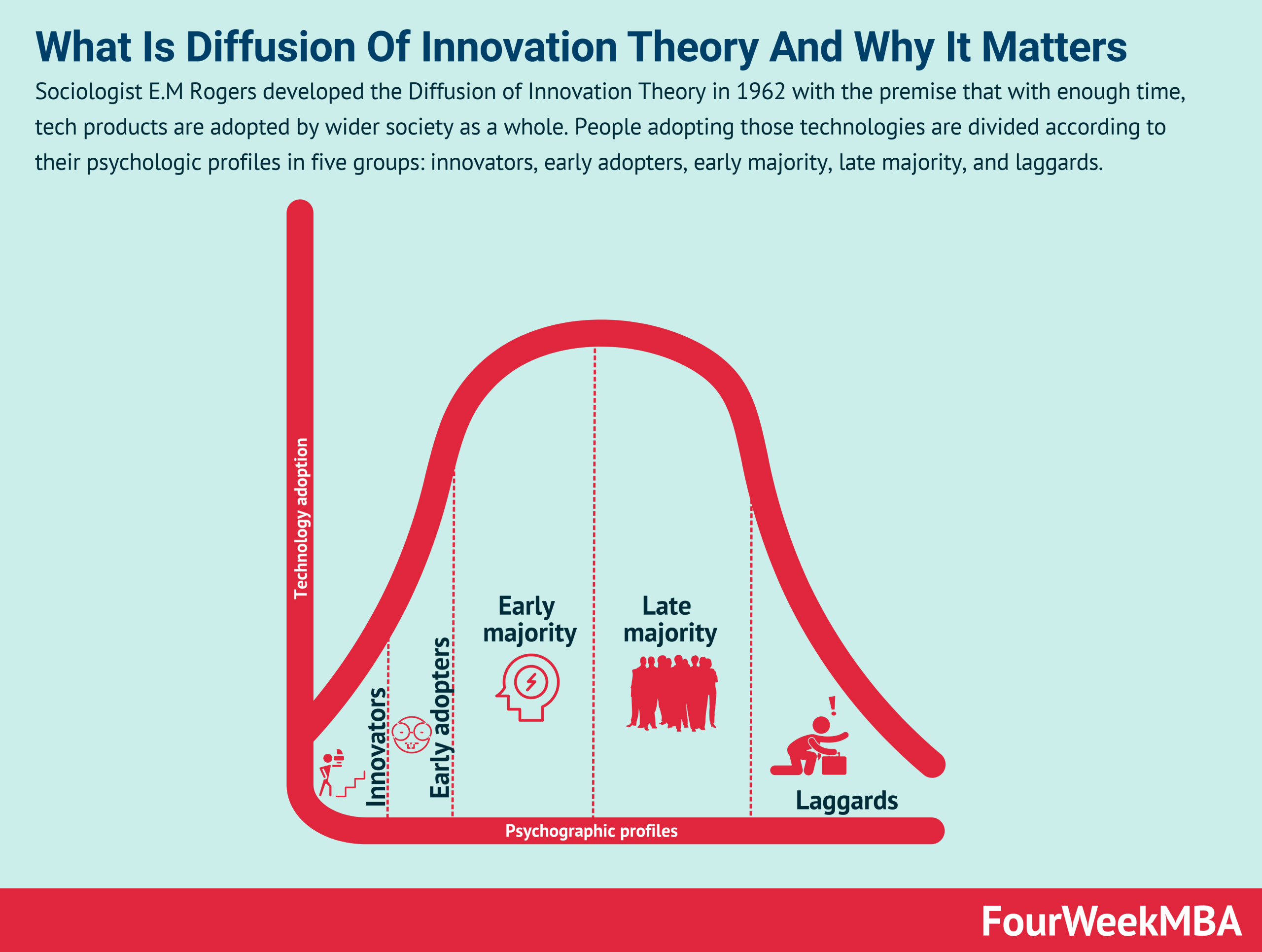
Sociologist E.M Rogers developed the Diffusion of Innovation Theory in 1962 with the premise that with enough time, tech products are adopted by wider society as a whole. People adopting those technologies are divided according to their psychologic profiles in five groups: innovators, early adopters, early majority, late majority, and laggards.
社会学家 E.M.罗杰斯于 1962 年提出了创新扩散理论,该理论的前提假设是:假以时日,科技产品终将被整个社会的广大群体所接受。罗杰斯根据使用者的心理特征,将技术采用者划分为五个群体:创新者、早期采用者、早期大众、晚期大众和落后者。
Frugal Innovation.
节俭式创新
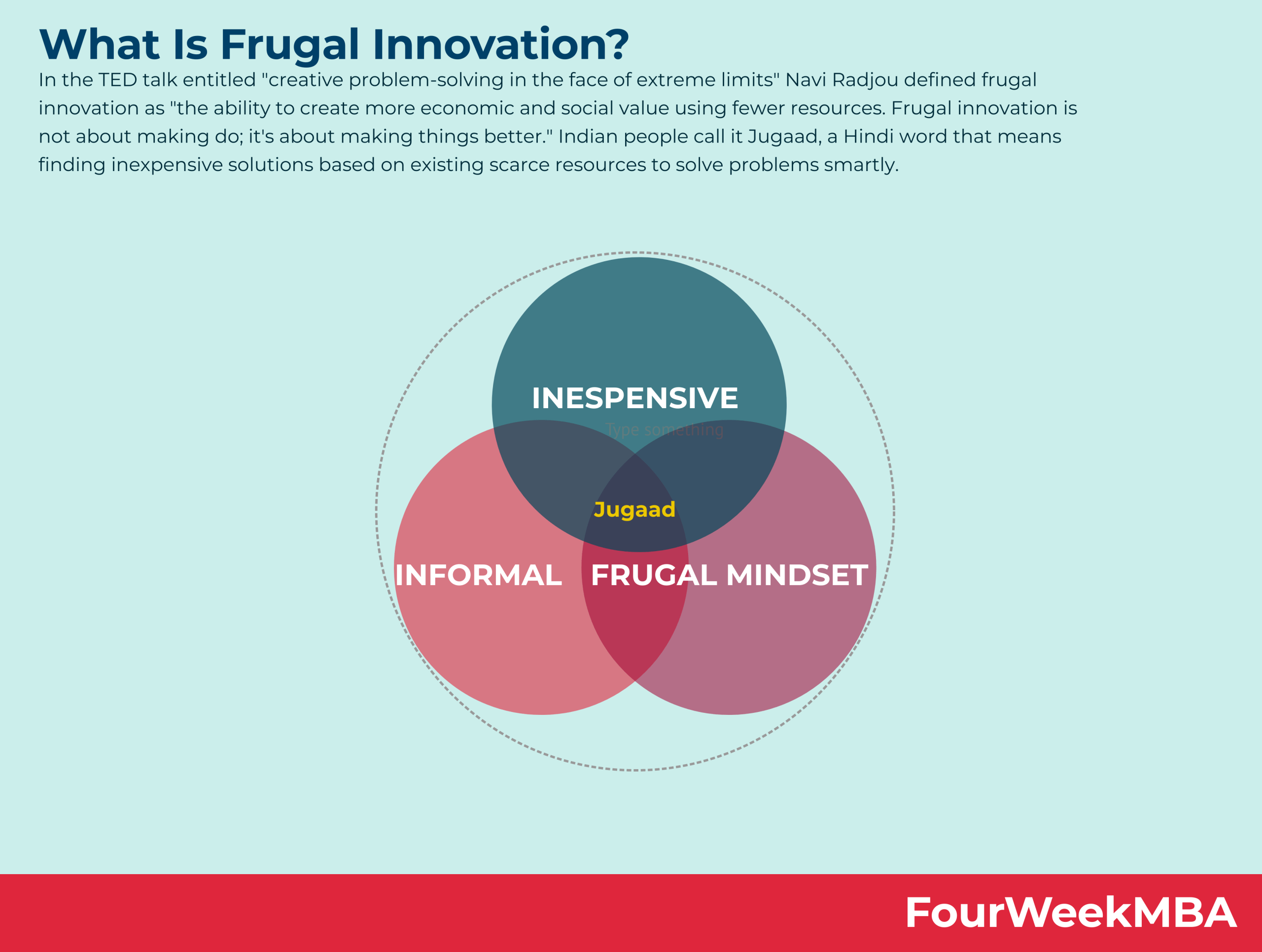
In the TED talk entitled "creative problem-solving in the face of extreme limits" Navi Radjou defined frugal innovation as "the ability to create more economic and social value using fewer resources. Frugal innovation is not about making do; it's about making things better." Indian people call it Jugaad, a Hindi word that means finding inexpensive solutions based on existing scarce resources to solve problems smartly.
在题为《在极端限制下的创造性解决问题》的 TED 演讲中,纳维·拉乔将节俭式创新定义为"用更少的资源创造更多经济价值和社会价值的能力。节俭式创新并非勉强凑合,而是让事物变得更好"。印度人将这种创新方式称为"Jugaad",这个印地语词汇的含义是,利用现有稀缺资源找到低成本的解决方案,巧妙地解决问题。
Constructive Disruption.
建设性颠覆
A consumer brand company like Procter & Gamble (P&G) defines "Constructive Disruption" as: a willingness to change, adapt, and create new trends and technologies that will shape our industry for the future. According to P&G, it moves around four pillars: lean innovation, brand building, supply chain, and digitalization & data analytics.
宝洁这类消费品品牌企业将"建设性颠覆"定义为:主动寻求变革、适应变化,并创造能够塑造行业未来发展的新趋势和新技术的意愿。宝洁认为,建设性颠覆的发展围绕四大支柱展开:精益创新、品牌建设、供应链管理以及数字化与数据分析。
Growth Matrix.
增长矩阵
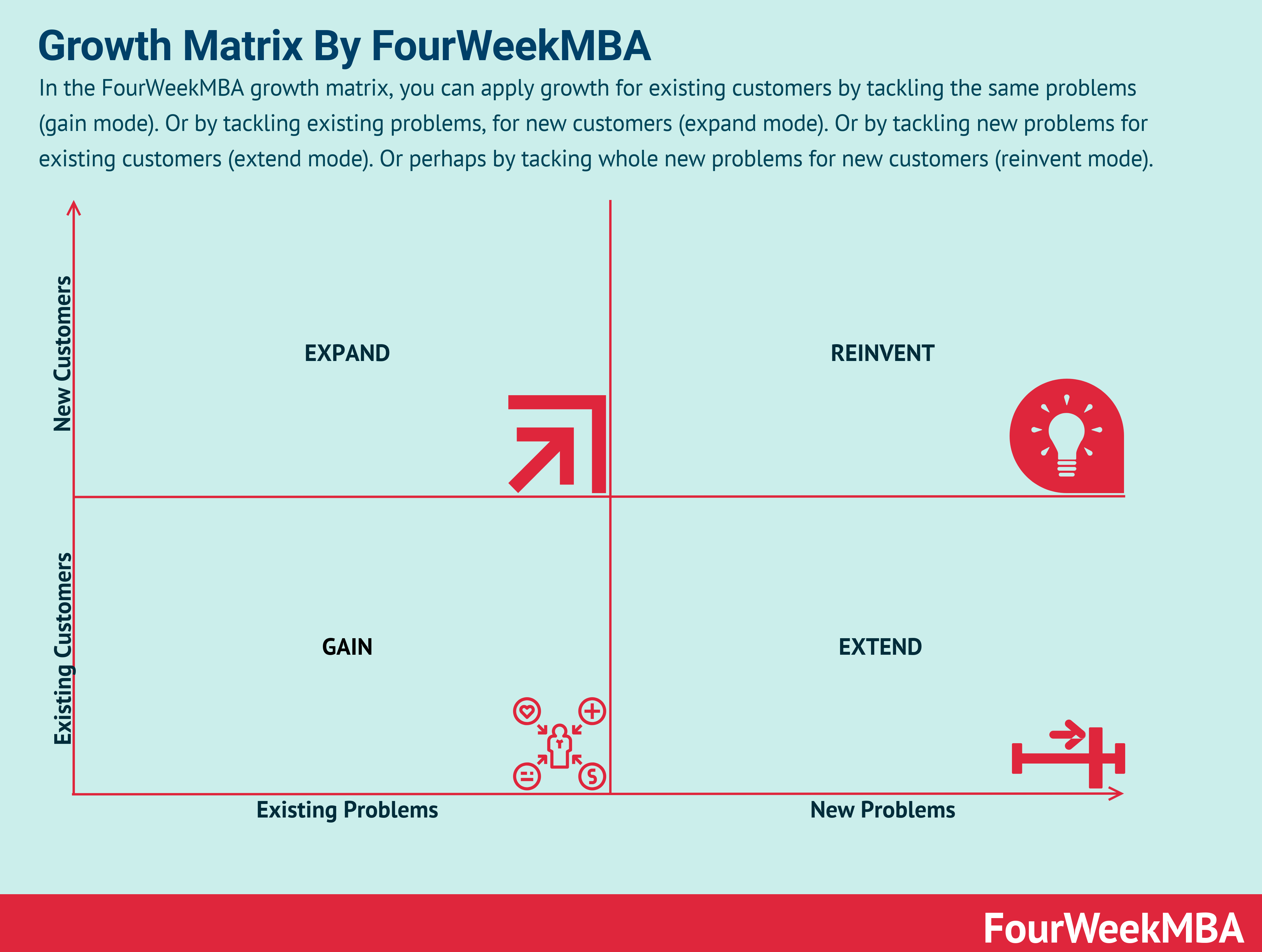
In the FourWeekMBA growth matrix, you can apply growth for existing customers by tackling the same problems (gain mode). Or by tackling existing problems, for new customers (expand mode). Or by tackling new problems for existing customers (extend mode). Or perhaps by tackling whole new problems for new customers (reinvent mode).
在 FourWeekMBA 增长矩阵中,企业实现增长的方式分为四种:针对现有用户,解决其原有需求(增益模式);针对新用户,解决行业原有需求(拓展模式);针对现有用户,解决其新的需求(延伸模式);针对新用户,解决全新的需求(重塑模式)。
Innovation Funnel.
创新漏斗
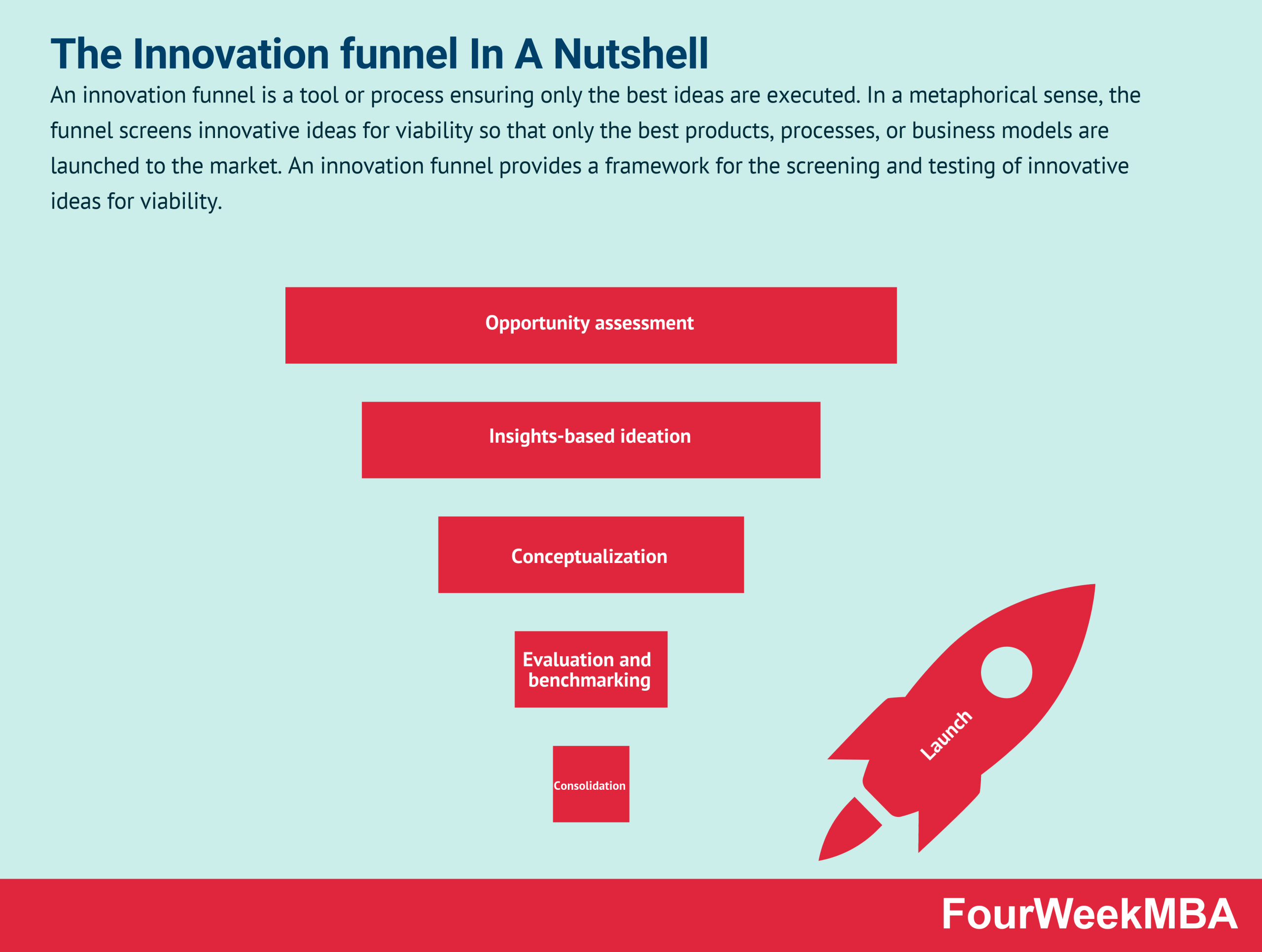
An innovation funnel is a tool or process ensuring only the best ideas are executed. In a metaphorical sense, the funnel screens innovative ideas for viability so that only the best products, processes, or business modelsare launched to the market. An innovation funnel provides a framework for the screening and testing of innovative ideas for viability.
创新漏斗是一种确保只有优质创新想法得以落地执行的工具或流程。从比喻意义上讲,创新漏斗会对各类创新想法进行可行性筛选,最终只有最优的产品、流程或商业模式能够推向市场。同时,创新漏斗也为创新想法的可行性筛选与验证,提供了一套完整的框架。
Idea Generation.
创意生成
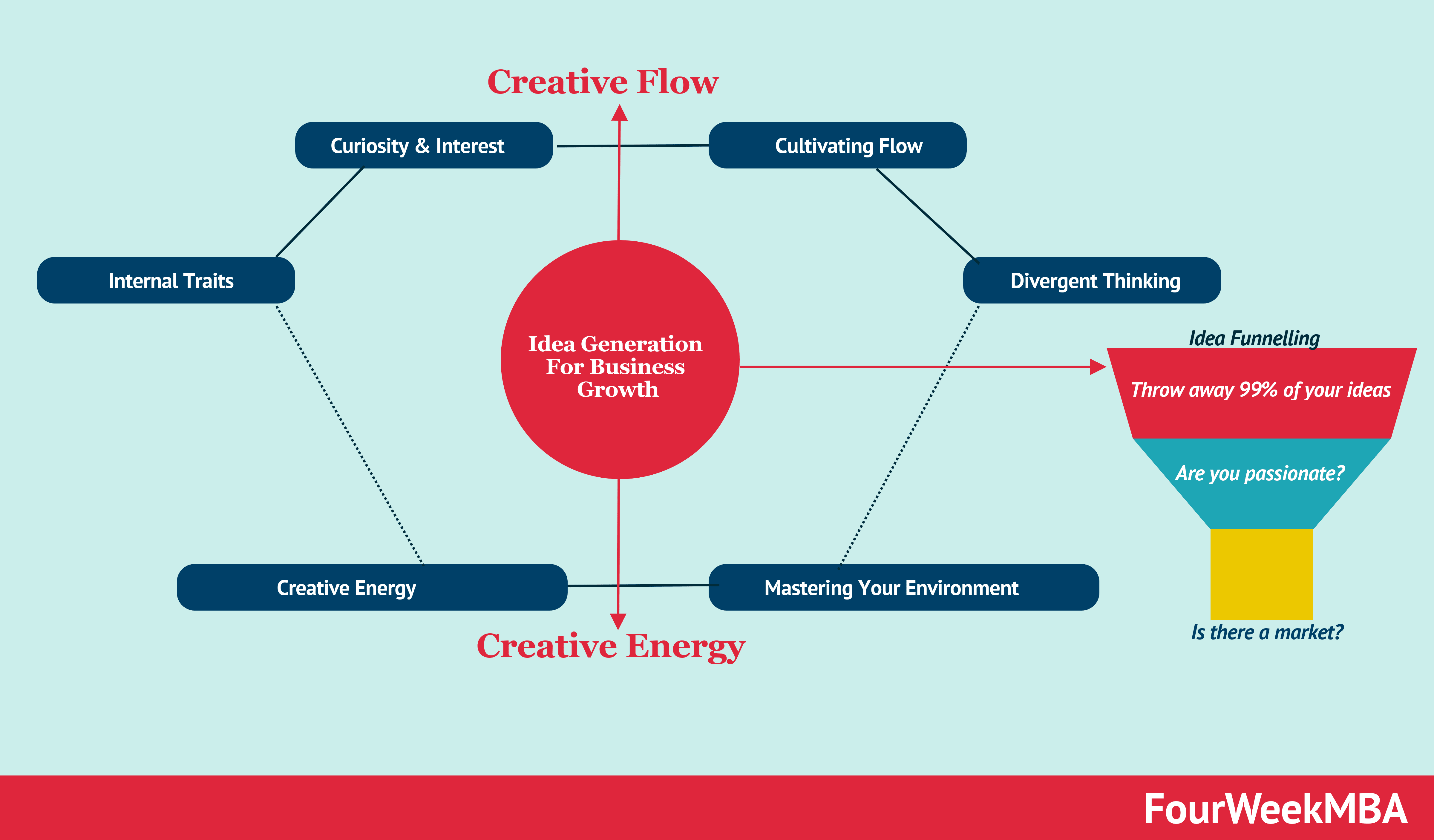
Design Thinking.
设计思维
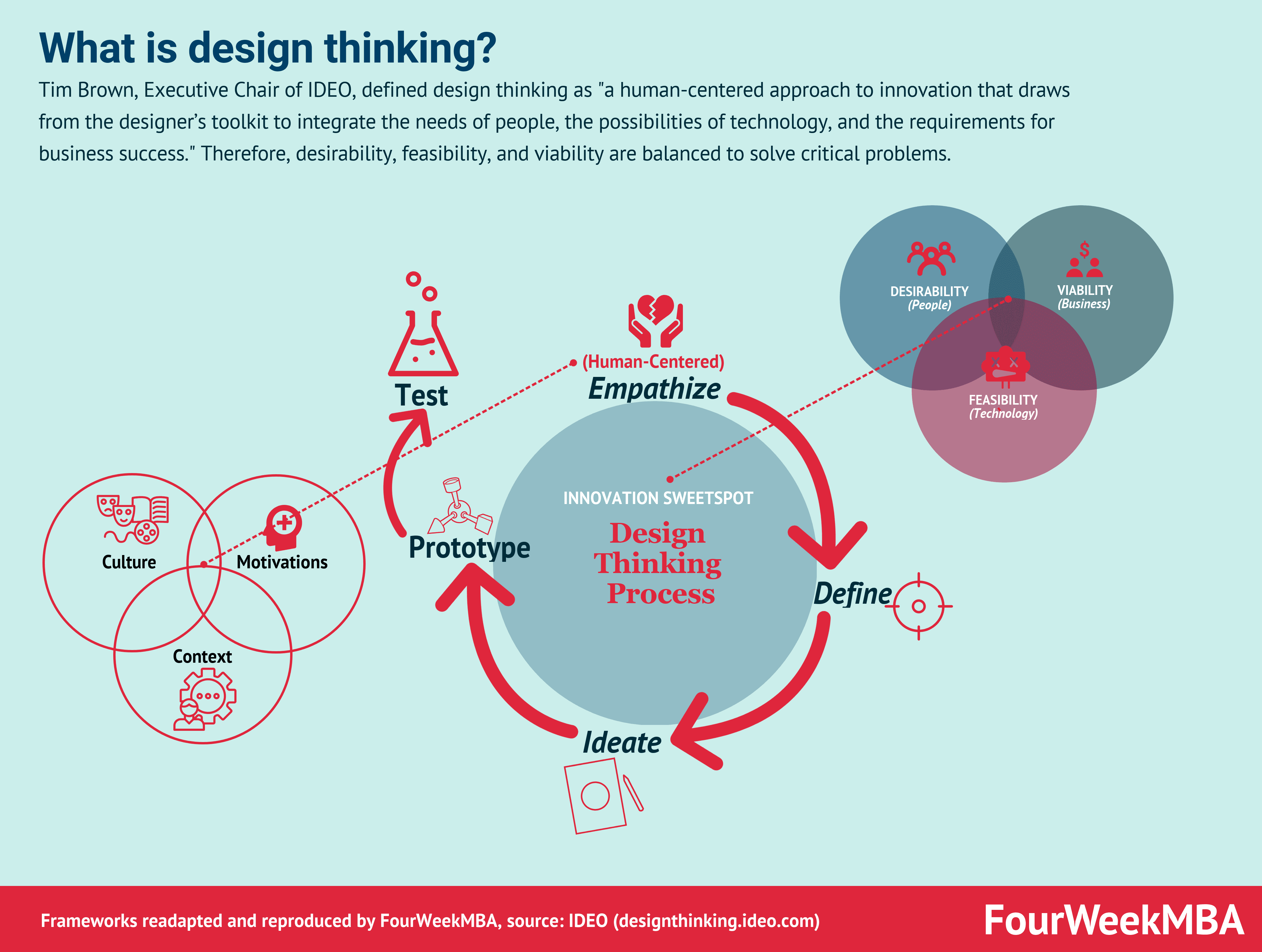
Tim Brown, Executive Chair of IDEO, defined design thinking as "a human-centered approach to innovation that draws from the designer's toolkit to integrate the needs of people, the possibilities of technology, and the requirements for business success." Therefore, desirability, feasibility, and viability are balanced to solve critical problems.
IDEO 公司执行董事长蒂姆·布朗将设计思维定义为"一种以人为中心的创新方法,它借鉴设计师的工作方法,将人的需求、技术的可能性和商业成功的要求融为一体"。通过设计思维,企业能够在用户需求性、技术可行性和商业可持续性三者之间实现平衡,从而解决核心问题。
FourWeekMBA Business Toolbox
FourWeekMBA 商业工具库
Business Engineering.
商业工程
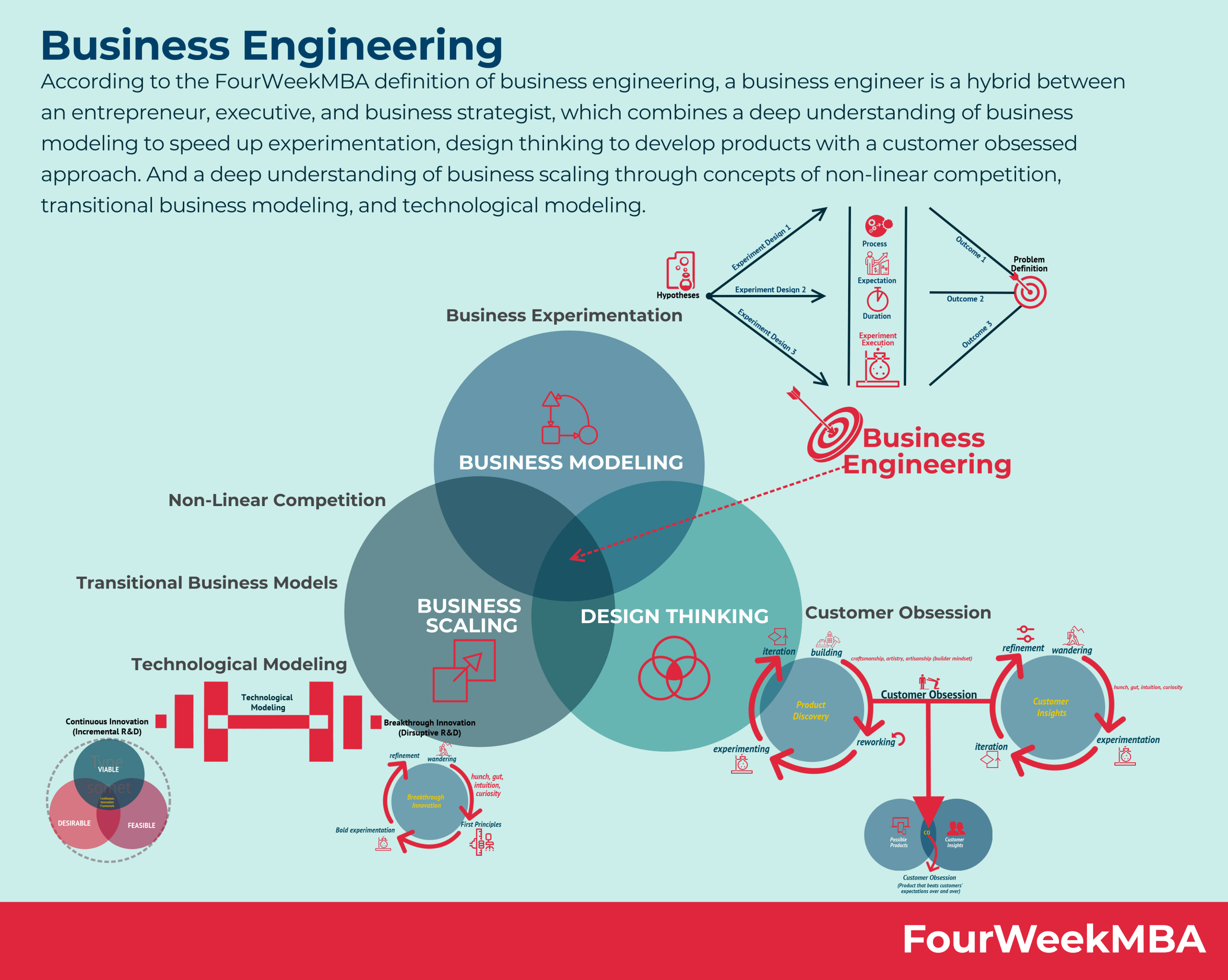
Tech Business Model Template.
科技企业商业模式模板
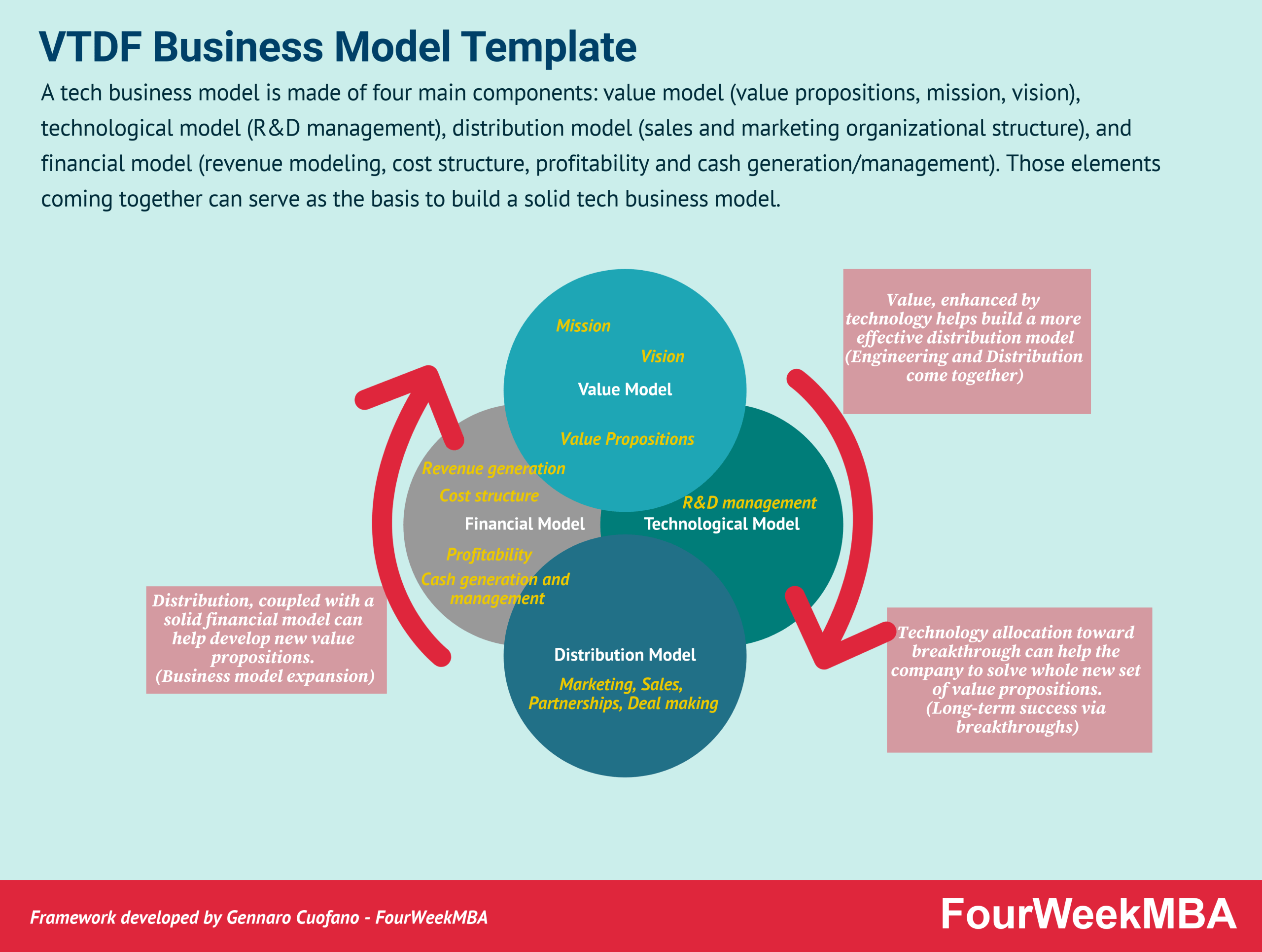
A tech business model is made of four main components: value model (value propositions, mission, vision), technological model (R&D management), distribution model (sales and marketing organizational structure), and financial model (revenue modeling, cost structure, profitability and cash generation/management). Those elements coming together can serve as the basis to build a solid tech business model.
科技企业的商业模式由四大核心组件构成:价值模型(包含价值主张、企业使命、企业愿景)、技术模型(研发管理体系)、分销模型(销售与营销的组织架构)和财务模型(收入建模、成本结构、盈利能力及现金流创造与管理)。这些要素相互结合,构成了构建稳固科技企业商业模式的基础。
Web3 Business Model Template.
Web3 商业模式模板
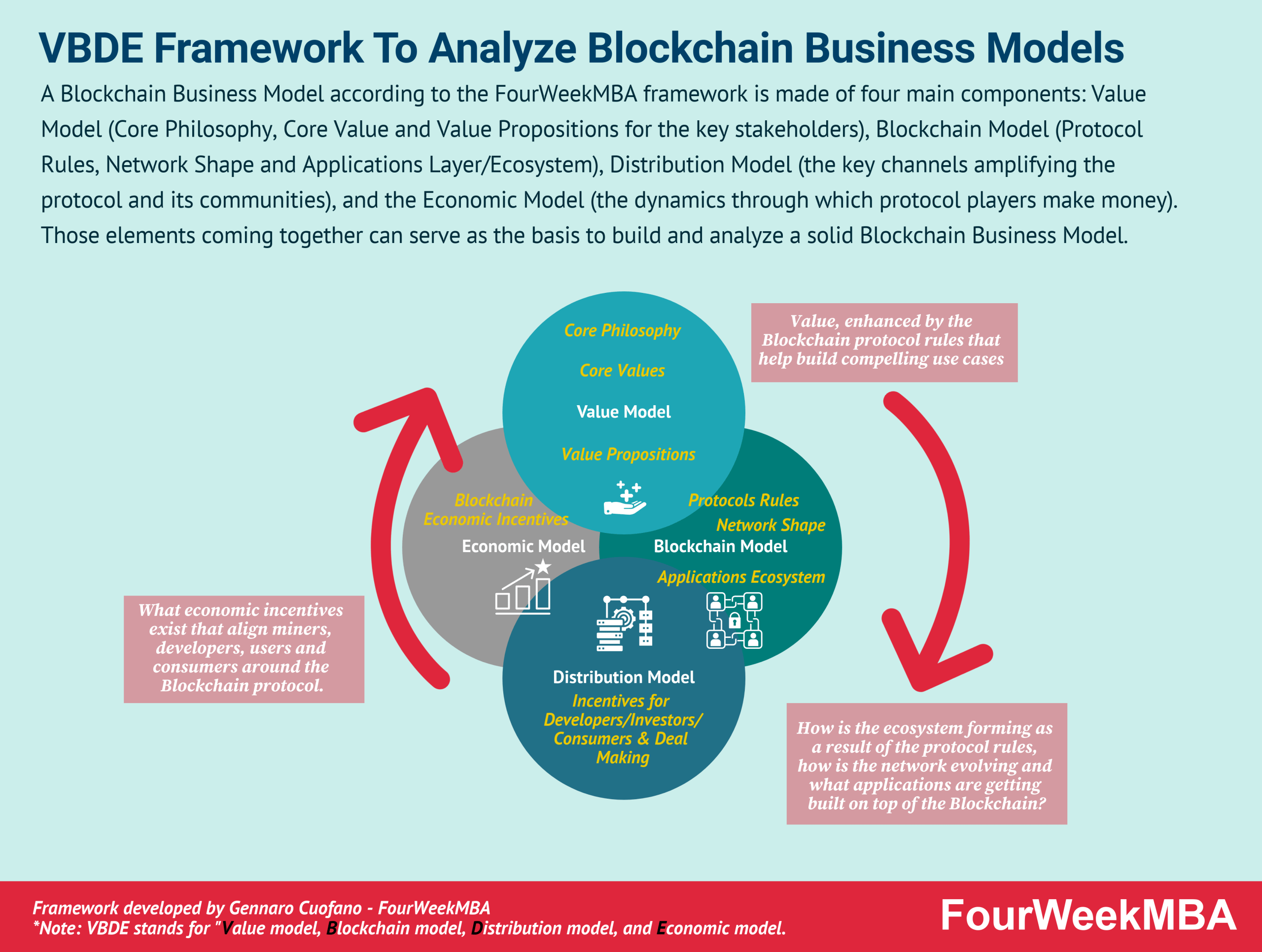
A Blockchain Business Model according to the FourWeekMBA framework is made of four main components: Value Model (Core Philosophy, Core Values and Value Propositions for the key stakeholders), Blockchain Model (Protocol Rules, Network Shape and Applications Layer/Ecosystem), Distribution Model (the key channels amplifying the protocol and its communities), and the Economic Model (the dynamics/incentives through which protocol players make money). Those elements coming together can serve as the basis to build and analyze a solid Blockchain Business Model.
根据 FourWeekMBA 的框架,区块链商业模式由四大核心组件构成:价值模型(核心理念、核心价值观及为核心利益相关者提供的价值主张)、区块链模型(协议规则、网络形态及应用层/生态体系)、分销模型(传播协议并赋能其社区的核心渠道)和经济模型(协议参与者的盈利机制与激励模式)。这些要素相互融合,成为构建和分析稳固区块链商业模式的基础。
Asymmetric Business Models.
非对称商业模式
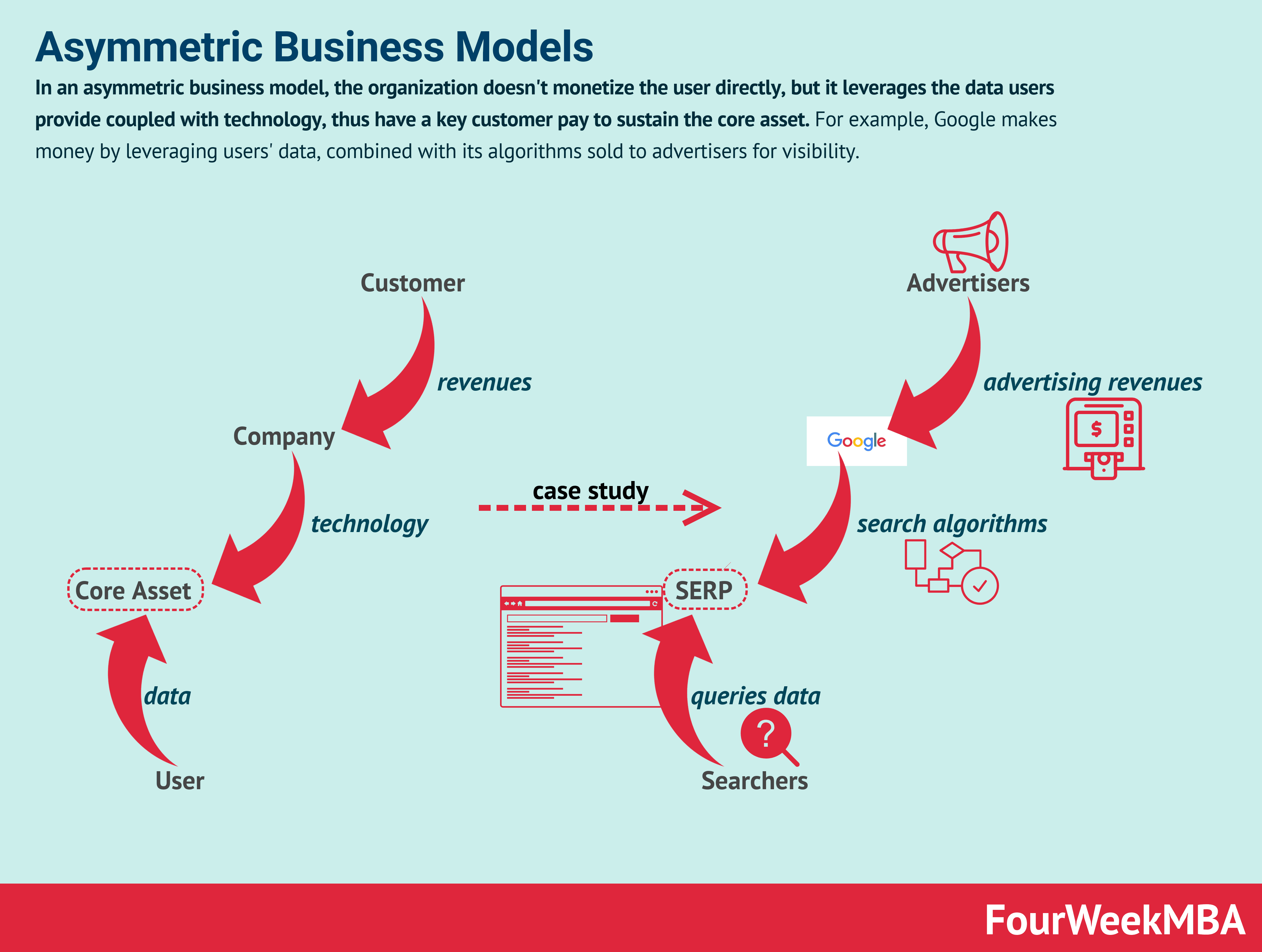
In an asymmetric business model, the organization doesn't monetize the user directly, but it leverages the data users provide coupled with technology, thus have a key customer pay to sustain the core asset. For example, Google makes money by leveraging users' data, combined with its algorithms sold to advertisers for visibility.
在非对称商业模式中,企业并不直接从普通用户身上实现盈利,而是利用用户提供的数据结合技术手段,让核心客户付费,以此支撑企业的核心资产。例如,谷歌通过将用户数据与其算法相结合,向广告商出售流量曝光服务,从而实现盈利。
Business Competition.
商业竞争
In a business world driven by technology and digitalization, competition is much more fluid, as innovation becomes a bottom-up approach that can come from anywhere. Thus, making it much harder to define the boundaries of existing markets. Therefore, a proper business competition analysis looks at customer, technology, distribution, and financial model overlaps. While at the same time looking at future potential intersections among industries that in the short-term seem unrelated.
在技术与数字化驱动的商业环境中,市场竞争的格局变得更加多变,因为创新成为了一种自下而上的发展方式,其灵感和成果可来源于任何地方,这也让现有市场的边界难以界定。因此,一份完善的商业竞争分析,需要分析不同主体在用户、技术、分销渠道和财务模型上的重叠之处,同时也要关注那些短期内看似无关的行业,未来可能产生的交叉融合点。
Technological Modeling.
技术建模
Technological modeling is a discipline to provide the basis for companies to sustain innovation, thus developing incremental products. While also looking at breakthrough innovative products that can pave the way for long-term success. In a sort of Barbell Strategy, technological modeling suggests having a two-sided approach, on the one hand, to keep sustaining continuous innovation as a core part of the business model. On the other hand, it places bets on future developments that have the potential to break through and take a leap forward.
技术建模是一门为企业持续创新奠定基础的学科,依托这一学科,企业可开发渐进式改进的产品,同时也能研发可为长期发展奠定基础的突破性创新产品。技术建模借鉴了杠铃策略的思路,提出一种双向发展的方法:一方面,将持续性创新作为商业模式的核心组成部分并持续推进;另一方面,对具有突破潜力、能推动企业实现跨越式发展的未来技术方向进行布局。
Transitional Business Models.
过渡性商业模式
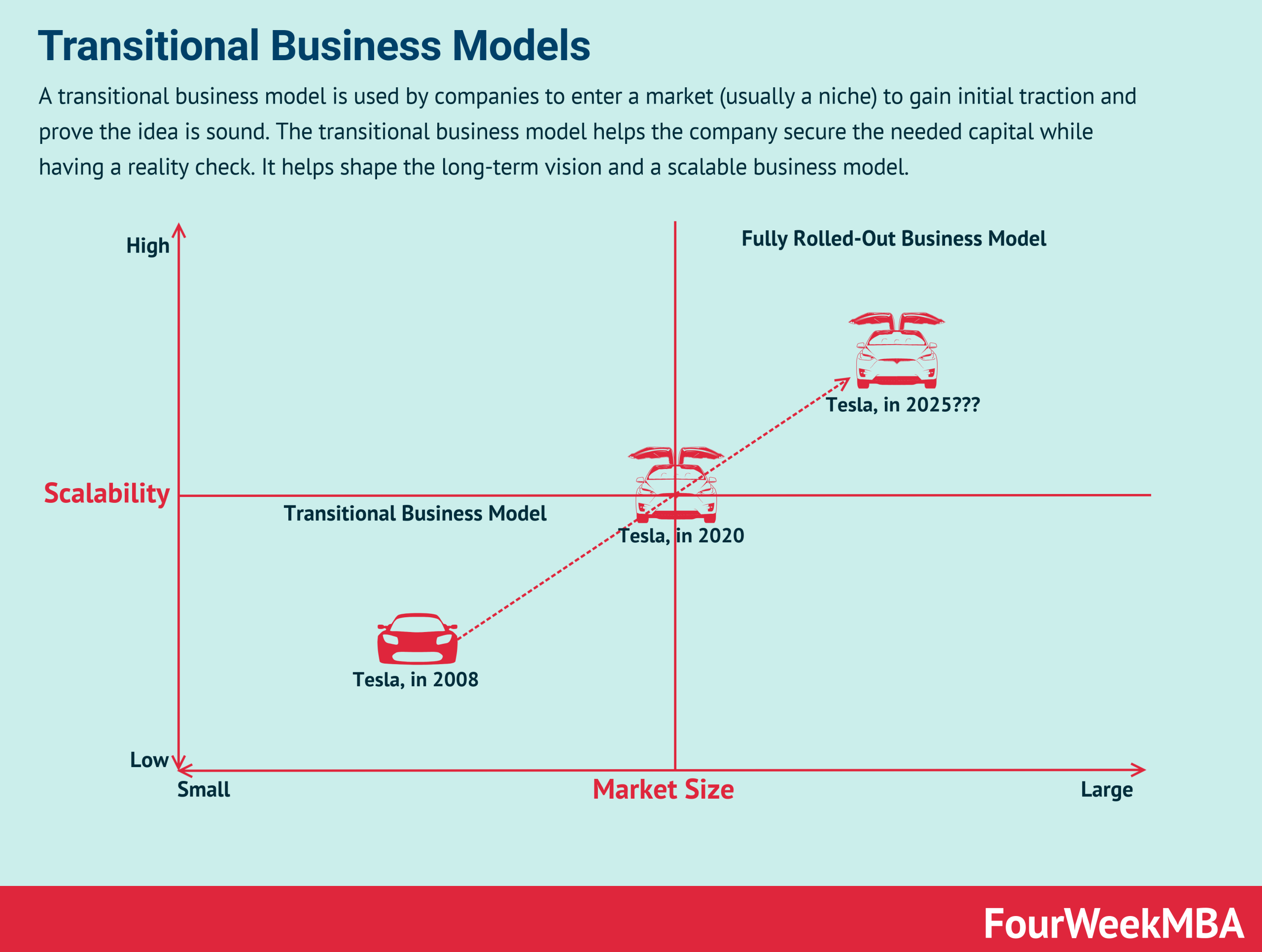
A transitional business model is used by companies to enter a market (usually a niche) to gain initial traction and prove the idea is sound. The transitional business model helps the company secure the needed capital while having a reality check. It helps shape the long-term vision and a scalable business model.
过渡性商业模式是企业用于进入某一市场(通常是利基市场)的模式,借助这一模式,企业能够获得初步的市场认可,验证商业想法的可行性。同时,过渡性商业模式能帮助企业获得发展所需的资金,同时让企业对市场现实有清晰的认知,还能为企业塑造长期发展愿景、构建可规模化的商业模式提供支撑。
Minimum Viable Audience.
最小可行受众
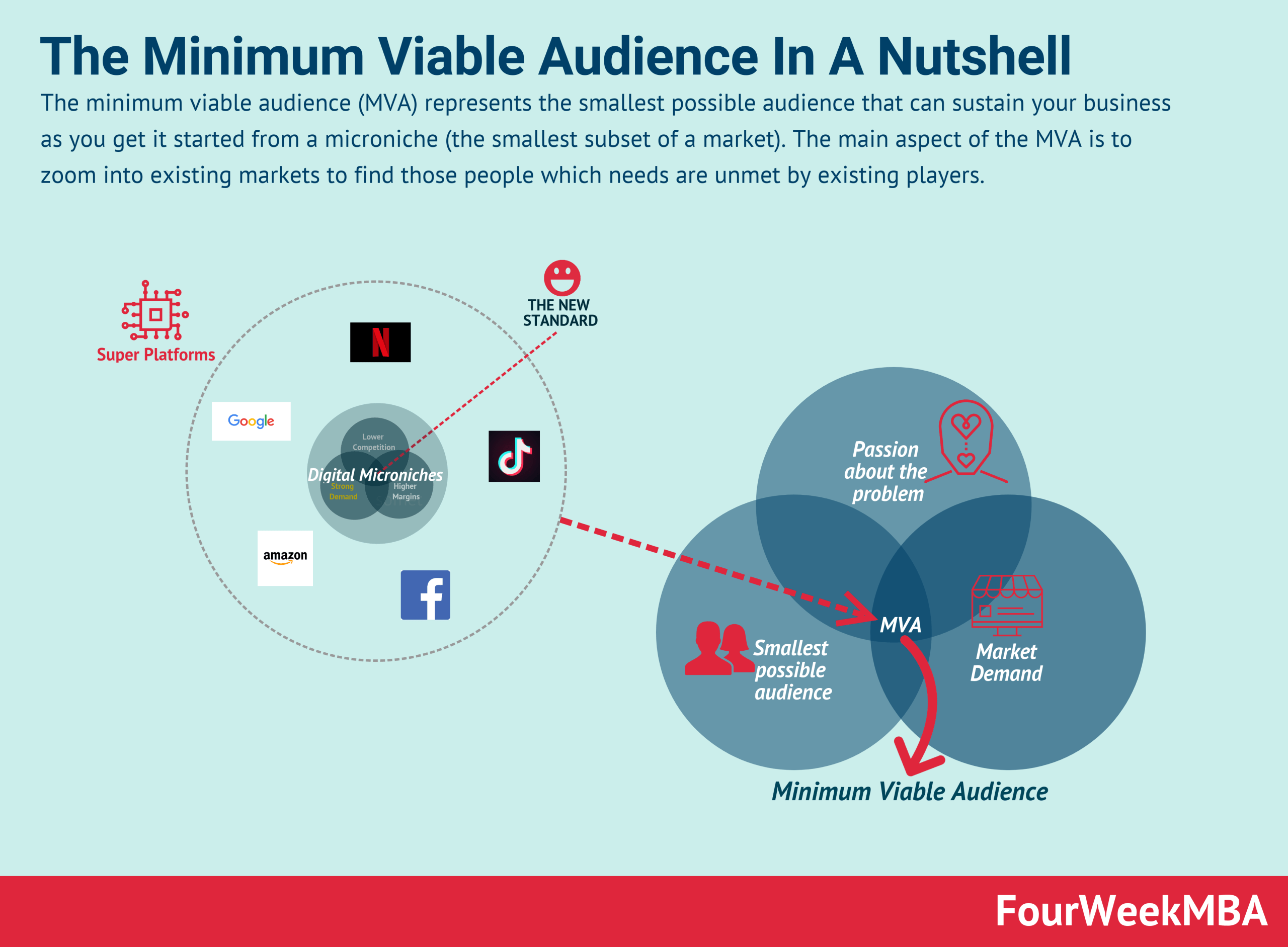
The minimum viable audience (MVA) represents the smallest possible audience that can sustain your business as you get it started from a microniche (the smallest subset of a market). The main aspect of the MVA is to zoom into existing markets to find those people which needs are unmet by existing players.
最小可行受众是指,企业从微观利基市场(市场中最小的细分领域)起步时,能够支撑企业运营的最小用户群体。挖掘最小可行受众的核心,是深入现有市场,找到那些需求尚未被现有市场参与者满足的用户。
Business Scaling.
企业规模化
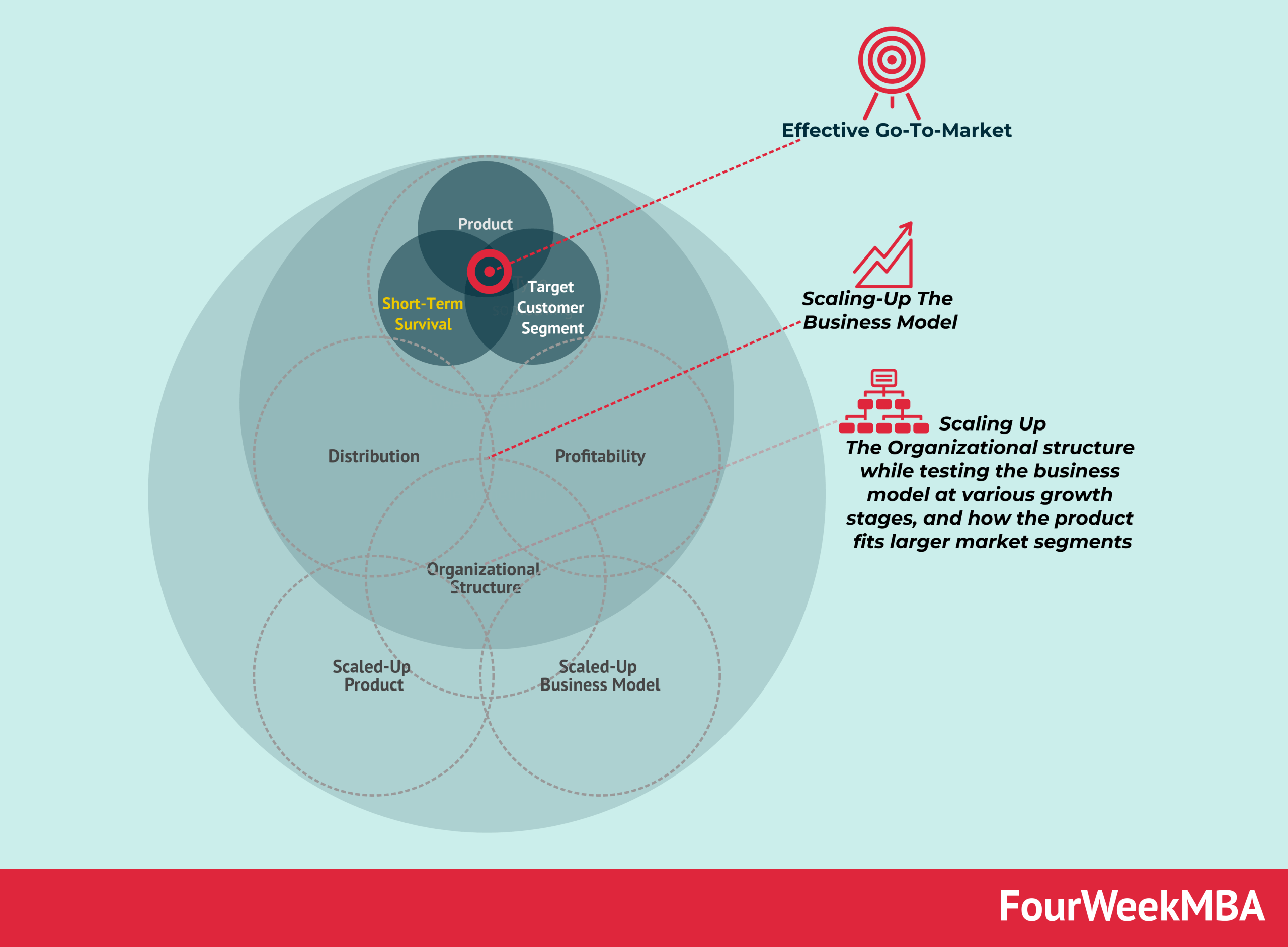
Business scaling is the process of transformation of a business as the product is validated by wider and wider market segments. Business scaling is about creating traction for a product that fits a small market segment. As the product is validated it becomes critical to build a viable business model . And as the product is offered at wider and wider market segments, it's important to align product, business model, and organizational design, to enable wider and wider scale.
企业规模化是指,当产品被越来越多的市场细分群体认可后,企业所经历的转型过程。企业规模化的第一步,是让适配小众细分市场的产品获得市场认可。当产品的市场可行性得到验证后,构建可行的商业模式就成为核心任务;而当产品推向更广泛的市场细分群体时,实现产品、商业模式与组织设计的协同适配,是推动企业持续规模化发展的关键。
Market Expansion Theory.
市场扩张理论
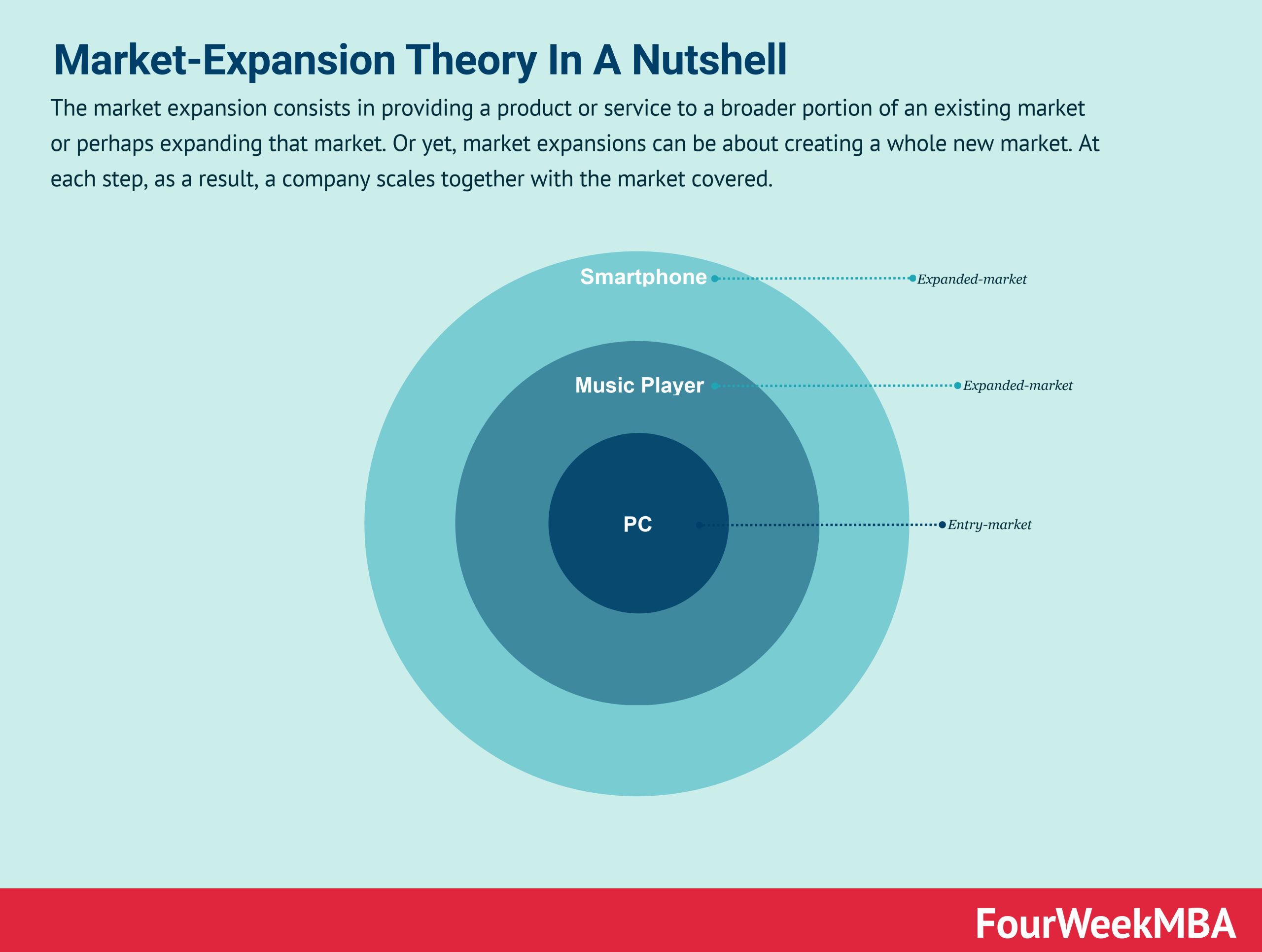
The market expansion consists in providing a product or service to a broader portion of an existing market or perhaps expanding that market. Or yet, market expansions can be about creating a whole new market. At each step, as a result, a company scales together with the market covered.
市场扩张指的是企业将产品或服务推向现有市场的更广泛群体、拓展现有市场的边界,或是创造一个全新的市场。在市场扩张的每一个阶段,企业的规模都会随着其覆盖的市场范围扩大而同步增长。
Speed-Reversibility.
速度-可逆性原则
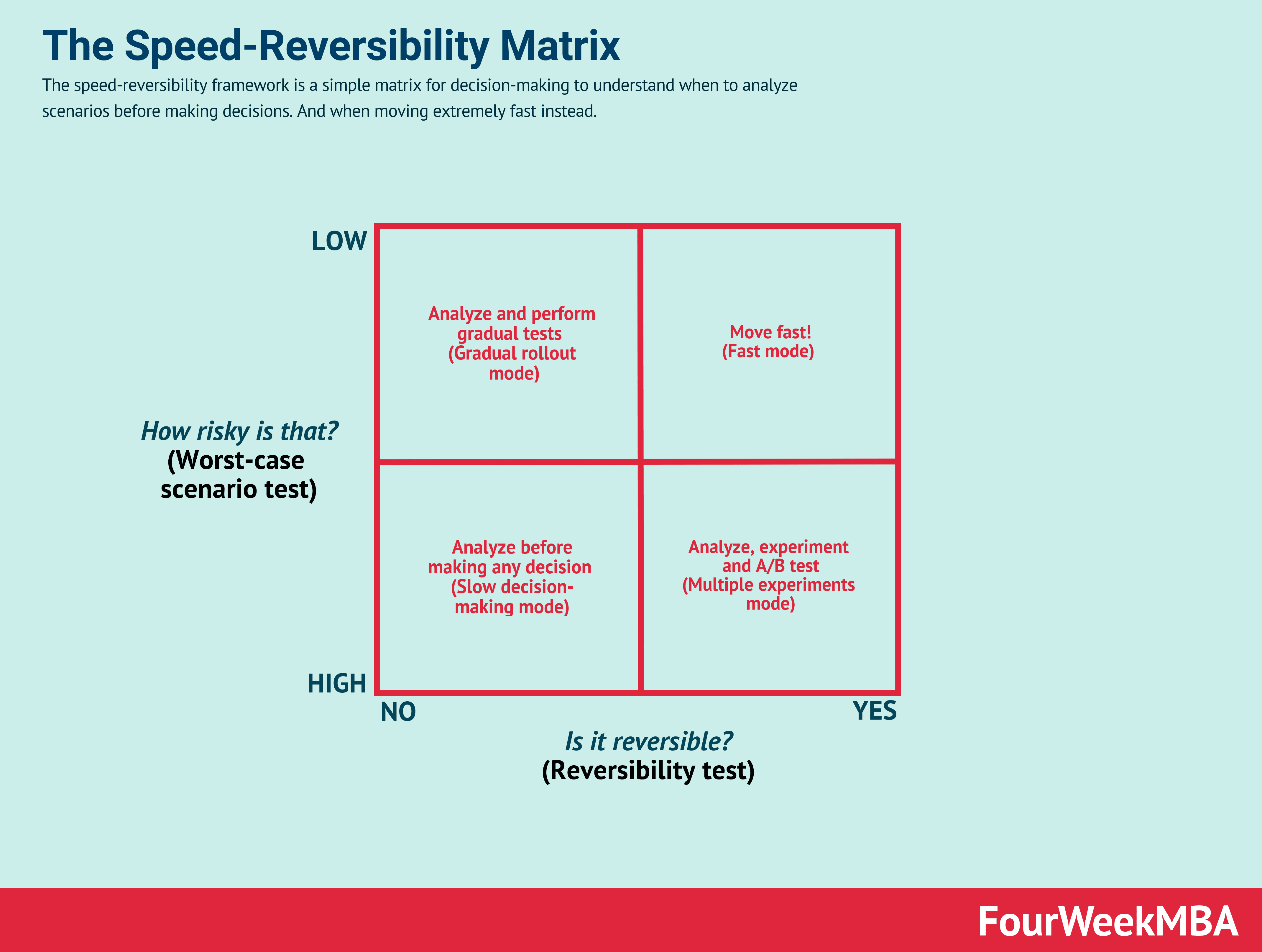
Asymmetric Betting
非对称投注
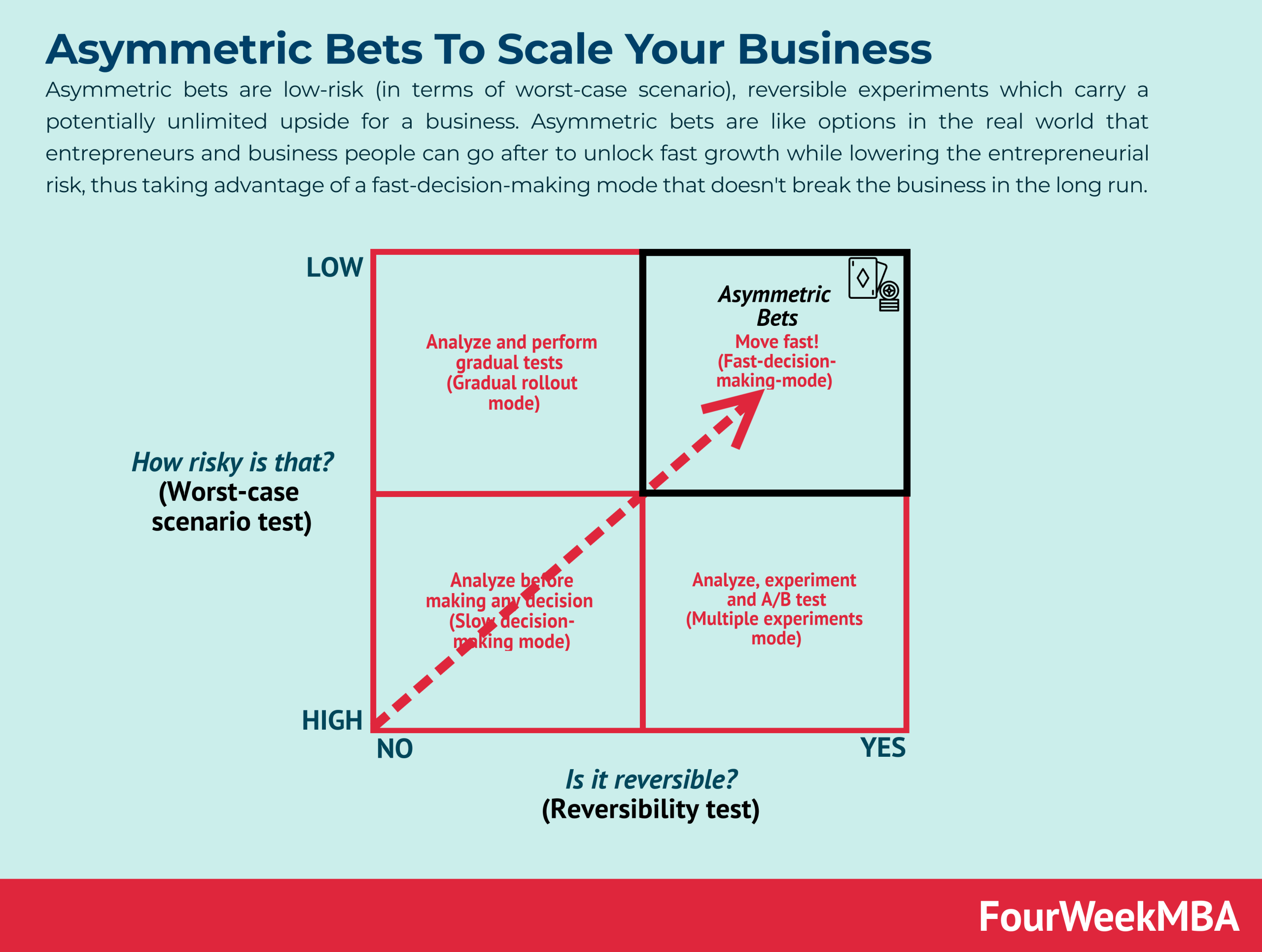
Growth Matrix.
增长矩阵
In the FourWeekMBA growth matrix, you can apply growth for existing customers by tackling the same problems (gain mode). Or by tackling existing problems, for new customers (expand mode). Or by tackling new problems for existing customers (extend mode). Or perhaps by tackling whole new problems for new customers (reinvent mode).
在 FourWeekMBA 增长矩阵中,企业实现增长的方式分为四种:针对现有用户,解决其原有需求(增益模式);针对新用户,解决行业原有需求(拓展模式);针对现有用户,解决其新的需求(延伸模式);针对新用户,解决全新的需求(重塑模式)。
Revenue Streams Matrix.
收入流矩阵
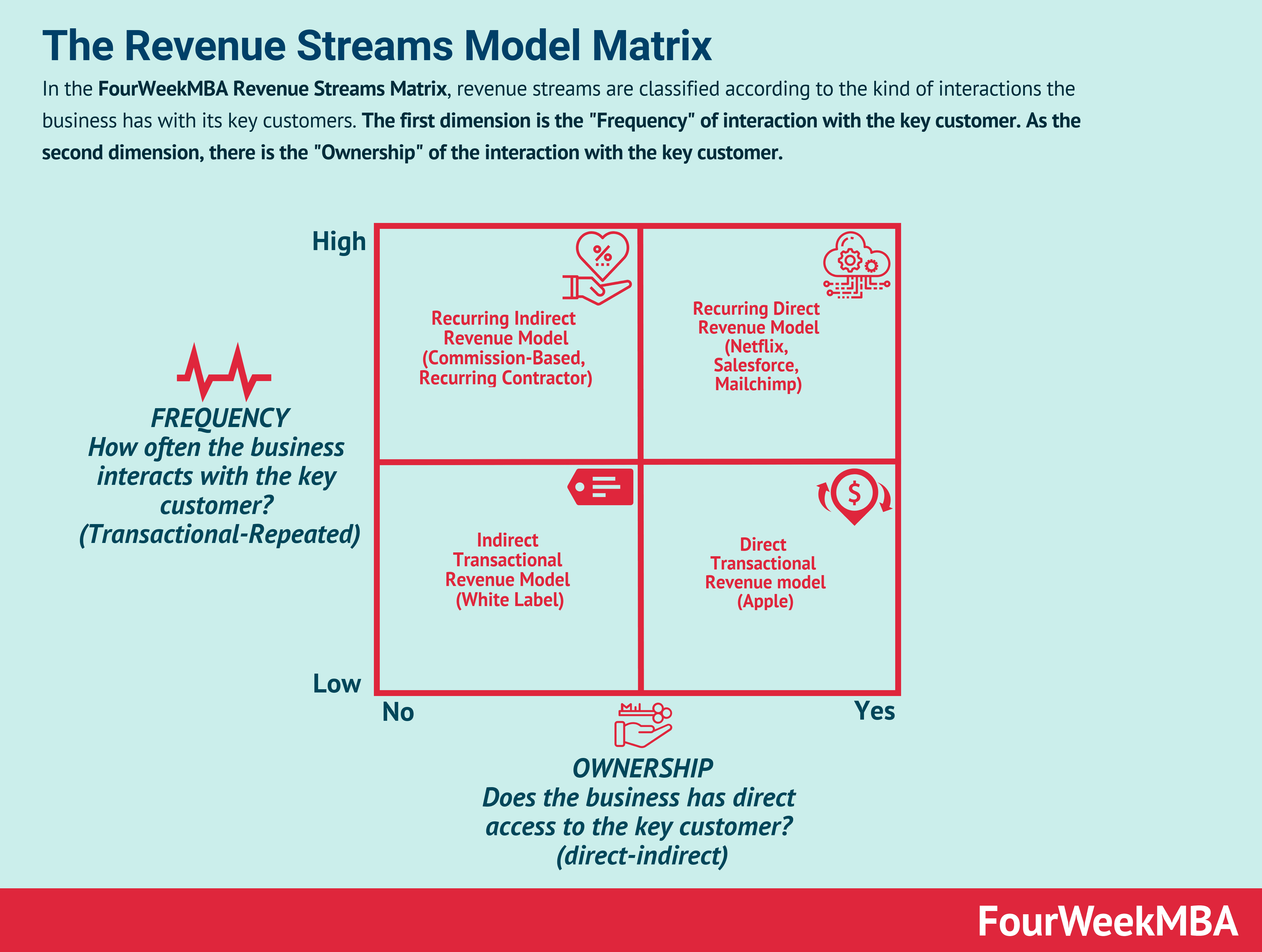
In the FourWeekMBA Revenue Streams Matrix, revenue streams are classified according to the kind of interactions the business has with its key customers. The first dimension is the "Frequency" of interaction with the key customer. As the second dimension, there is the "Ownership" of the interaction with the key customer.
在 FourWeekMBA 收入流矩阵中,企业的收入流根据其与核心用户的互动类型进行分类,分类的两大维度分别是:企业与核心用户的互动频率,以及企业对与核心用户互动环节的掌控权。
Revenue Modeling
收入建模
Revenue model patterns are a way for companies to monetize their business models. A revenue model pattern is a crucial building block of a business model because it informs how the company will generate short-term financial resources to invest back into the business. Thus, the way a company makes money will also influence its overall business model.
收入模型模式是企业将其商业模式变现的方式,也是商业模式的核心组成部分。因为收入模型模式决定了企业如何创造短期财务资源,并将其重新投入企业发展,而企业的盈利方式也会进一步影响其整体的商业模式设计。
Pricing Strategies.
定价策略
A pricing strategy or model helps companies find the pricing formula in fit with their business models. Thus aligning the customer needs with the product type while trying to enable profitability for the company. A good pricing strategy aligns the customer with the company's long term financial sustainability to build a solid business model.
定价策略或定价模型能帮助企业找到与自身商业模式相适配的定价方式,在匹配用户需求与产品类型的同时,实现企业的盈利目标。一套优质的定价策略,能够实现用户需求与企业长期财务可持续性的平衡,从而为构建稳固的商业模式奠定基础。
via:
- The 5 Stages of the Technology Adoption Curve | Omniplex Learning
https://omniplexlearning.com/blog/technology-adoption-curve-stages/ - What Is A Technology Adoption Curve? The Five Stages Of A Technology Adoption Life Cycle
https://fourweekmba.com/technology-adoption-curve/