注:本文为 "开源软件发展史" 相关合辑。
英文引文,机翻未校。
未整理去重,如有内容异常,请看原文。
The Open Source Movement
开源运动
Open Source represents the notion that innovation is a collaborative process. Those who have bought into the Open Source mindset believe that the way to create the best products is to invite the best minds to see what is being done and ask for their input. These people are less concerned with who owns the rights or who is making the money and instead focus on moving technology forward.
开源(Open Source)代表着一种理念,即创新是一个协作过程。认同开源理念的人认为,打造最佳产品的方式是邀请最优秀的人才了解正在进行的工作,并征求他们的意见。这些人不太关心谁拥有权利或谁在盈利,而是专注于推动技术发展。
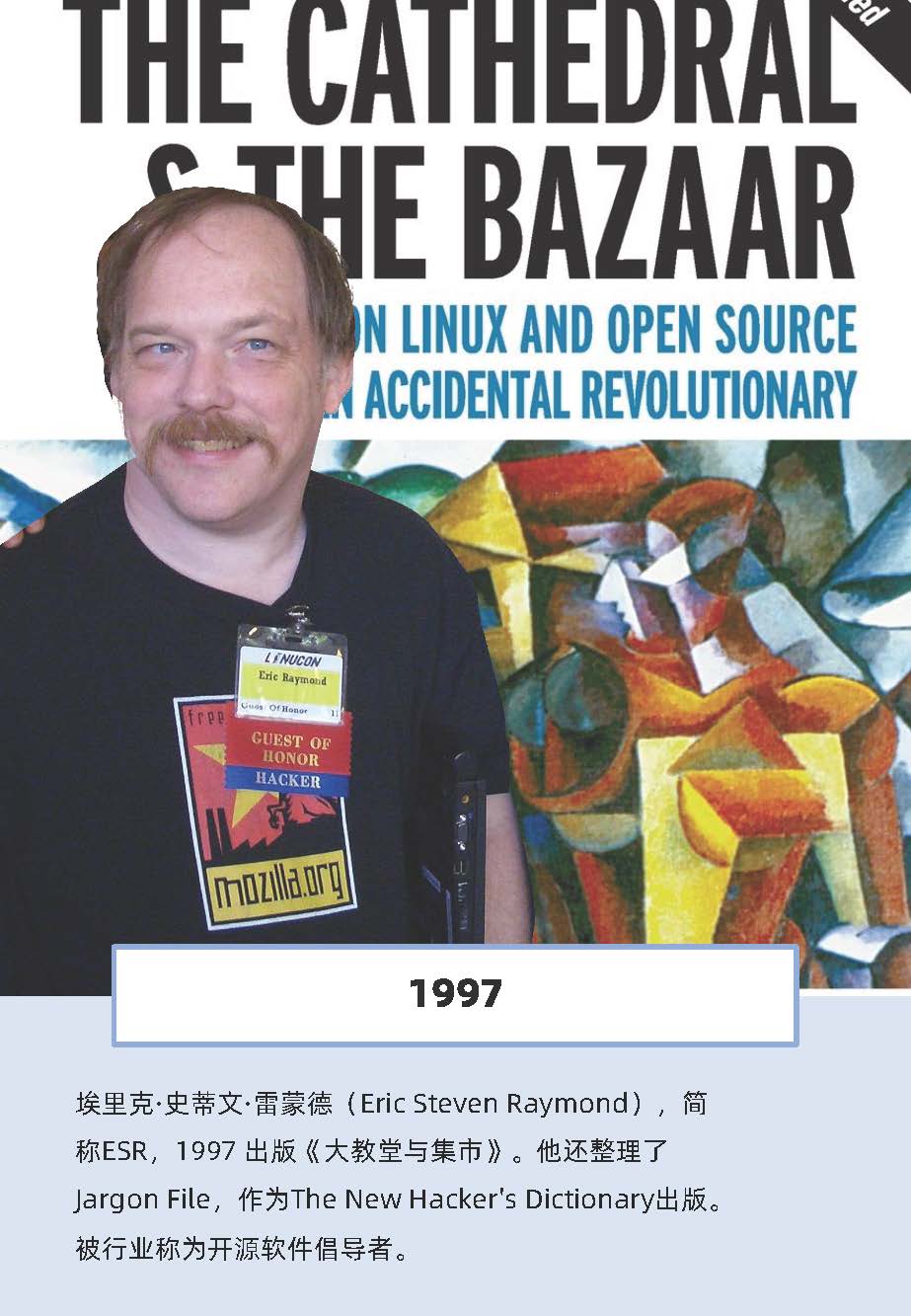
The concept began with a publication written by Eric Raymond in 1997 entitled "The Cathedral and the Bazaar" which described the practices of the hacker community. The community relied heavily on peer review and collaboration. Raymond's paper was an influencing factor for Netscape to announce in January of 1998 that it would release the source code for its web browser.
这一概念起源于 1997 年埃里克·雷蒙德(Eric Raymond)撰写的一篇题为《教堂与市集》(The Cathedral and the Bazaar)的文章,该文章描述了黑客社区的实践模式。该社区高度依赖同行评审与协作。雷蒙德的这篇文章是促使网景公司(Netscape)于 1998 年 1 月宣布将发布其网页浏览器源代码的一个重要影响因素。
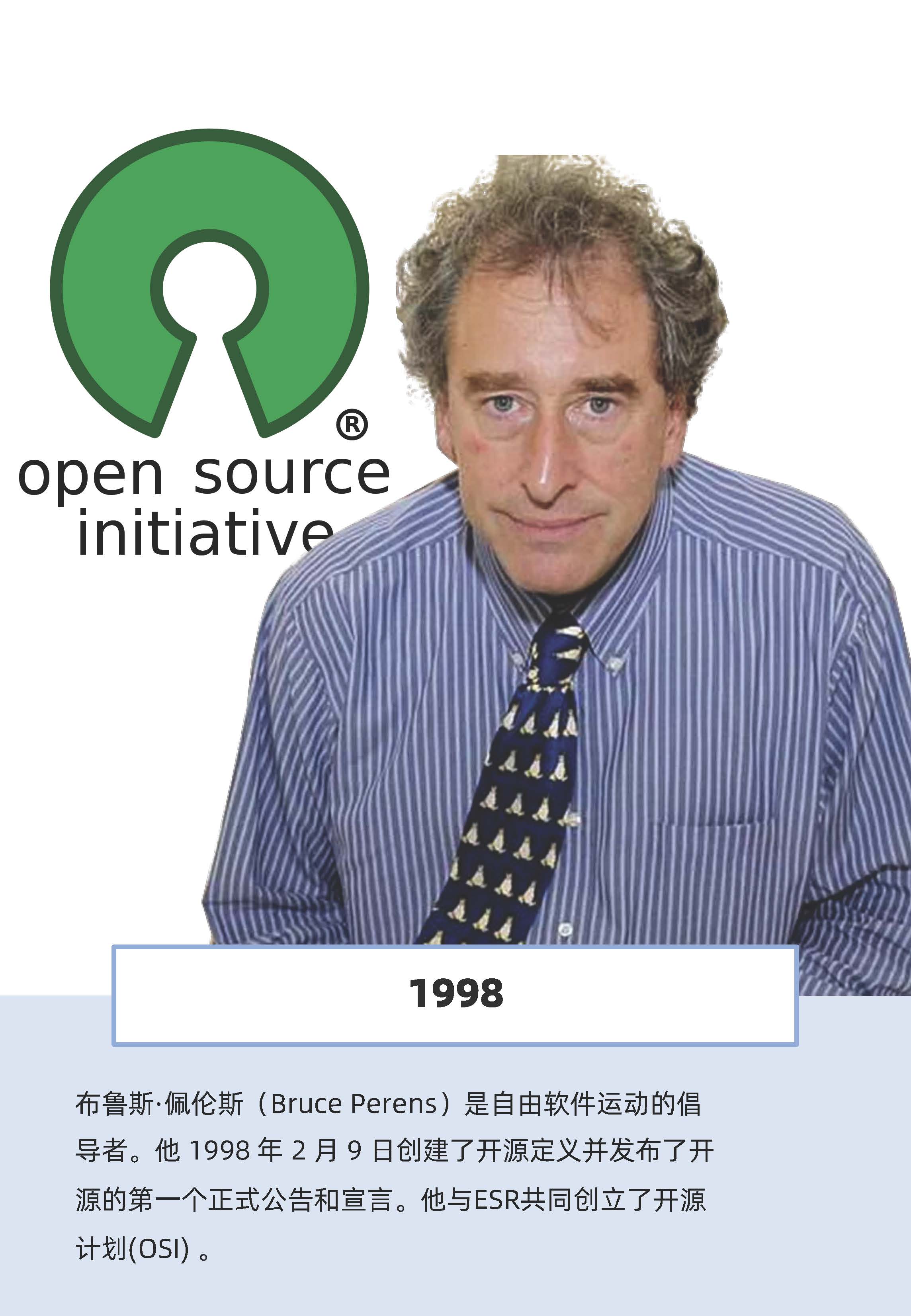
The Open Source Initiative (OSI) is a body formed in 1998 by Eric Raymond and Bruce Perens as an ideal model to promote the idea of "free software". Its founders felt that "free software" was not an appropriate way to describe the movement that was beginning to unfold. They saw that there was an entire community behind the principle that needed to be represented and the OSI stands as that representation. The OSI is a worldwide organization with representatives in North America, South America, Europe, Japan and India.
开源促进会(The Open Source Initiative,简称 OSI)是 1998 年由埃里克·雷蒙德(Eric Raymond)和布鲁斯·佩伦斯(Bruce Perens)成立的机构,旨在作为推广"自由软件"(free software)理念的理想载体。其创始人认为,"自由软件"这一表述并不适合描述这场正在兴起的运动。他们意识到,这一原则的背后有一个完整的社区需要被代表,而 OSI 正是这一社区的代表。OSI 是一个全球性组织,在北美、南美、欧洲、日本和印度均设有代表处。
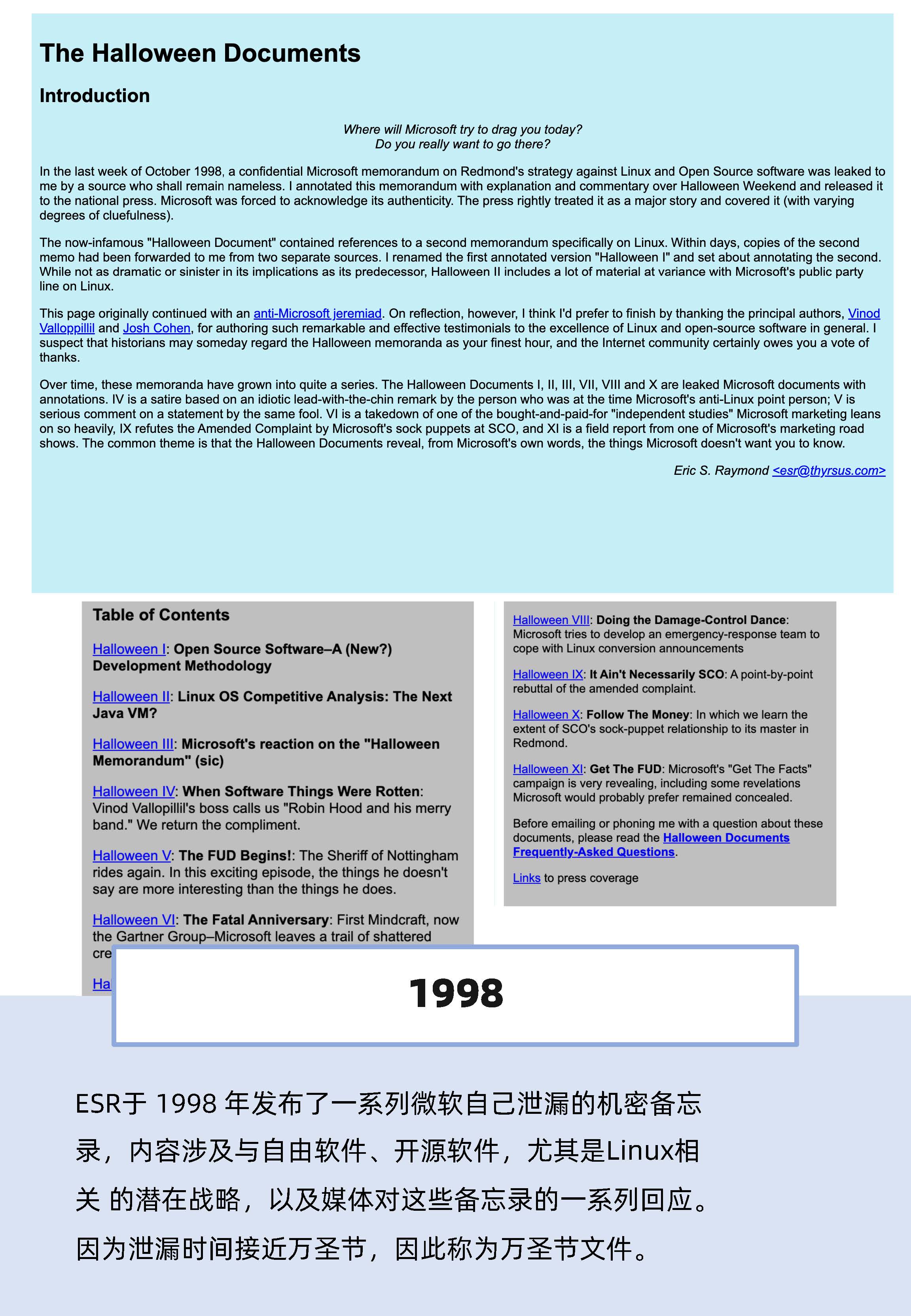
The Open Source movement was for a long time dismissed by those with power in the computing industries. There was great fear in the idea of sharing what many had worked so hard to keep for themselves. Titans such as Microsoft considered the Open Source movement to be a "cancer". Microsoft was not, until recently, willing to share their source code with the world. Once it became clear that this movement was here to stay, Microsoft jumped on board as if they had never doubted it.
长期以来,开源运动一直被计算机行业的掌权者所忽视。对于分享许多人费尽心力想要独占的东西这一想法,他们深感担忧。微软(Microsoft)等行业巨头曾将开源运动视为"毒瘤"。直到最近,微软才愿意向世界分享其源代码。当人们清楚地认识到这场运动势不可挡、将长期存在时,微软也加入了进来,仿佛从未怀疑过它的价值。
The Internet makes the Open Source concept possible. Before the Internet Revolution, communication was nowhere near what it is today. The Open Source movement is beginning to envelop more of the world than just technology. Many Universities believe in the movement as well. There are professors who post entire lectures on the web. The idea beginning that learning and the access to knowledge should be a universal right, not a privilege.
互联网使开源理念成为可能。在互联网革命之前,通信方式远不及今天这般便捷。开源运动正开始席卷全球,不再局限于技术领域。许多大学也认同这一运动。有些教授会将完整的课程讲义发布在网上。一种理念正在兴起:学习和获取知识应是一项普遍权利,而非特权。
The Open Source mindset has been from the very beginning what separated major corporations like Google from Microsoft. The Open Source movement is a core value of the Web 2.0 generation and is in the eyes of many, what divides the good guys from the bad guys in the industry.
开源理念从一开始就将谷歌(Google)等大公司与微软(Microsoft)区分开来。开源运动是 Web 2.0 一代的核心价值观,在许多人看来,它也是区分行业中"正派"与"反派"的标准。
The history of Open Source
开源的发展历程
Introduction
引言
The open source movement has fundamentally transformed the software industry by promoting collaboration, transparency, and freedom in software development. From its early roots in academic and hacker culture to the creation of foundational projects and organizations, open source has reshaped how software is built, shared, and commercialized. This blogpost presents a detailed timeline of the open source movement from its inception to the conception of the Open Source Science (OS-SCi) in 2022, highlighting key milestones, pivotal figures, and major projects that have defined this transformative journey.
开源运动通过倡导软件开发过程中的协作、透明与自由,从根本上改变了软件行业的发展格局。从发轫于学术与黑客文化的早期形态,到各类基础性项目和组织的诞生,开源重新定义了软件的开发、共享与商业化模式。本文梳理了开源运动从诞生到 2022 年开源科学(OS-SCi)概念提出的详细时间线,介绍了推动这场变革性发展的重要节点、关键人物与核心项目。
Detailed Open Source Timeline
开源发展详细时间线
| Year | Event Description | Key Figures Involved | Significant Projects/Technologies Introduced |
|---|---|---|---|
| 1950 s | Early computing era: Software freely shared among academics and researchers; SHARE users group founded ( 1955 ). 早期计算时代:软件在学者与研究人员之间自由共享;SHARE 用户组成立( 1955 年)。 | MIT researchers, SHARE members 麻省理工学院研究人员、SHARE 成员 | Early mainframe software, collaborative computing culture 早期大型机软件、协作式计算文化 |
| 1960 s | Hacker culture emerges at MIT, centered around the Tech Model Railroad Club and MIT AI Lab. 麻省理工学院诞生黑客文化,以科技模型铁路俱乐部和麻省理工学院人工智能实验室为核心发展。 | William Eccles, Jack Dennis, Marvin Minsky 威廉·埃克尔斯、杰克·丹尼斯、马文·明斯基 | PDP- 1 minicomputer, early AI and computing experiments PDP- 1 小型计算机、早期人工智能与计算实验相关技术 |
| 1970 s | Transition from open software sharing to proprietary software models; CONTU decision ( 1974 ). 软件从开放式共享模式向专有软件模式转型;美国版权技术审查委员会发布相关决议( 1974 年)。 | Legal and industry figures 法律界与行业界人士 | Proprietary software licensing begins 专有软件授权模式开始落地 |
| 1983 | Richard Stallman launches the GNU Project to create a free operating system. 理查德·斯托曼发起 GNU 项目,旨在打造一款自由的操作系统。 | Richard Stallman 理查德·斯托曼 | GNU Project, Free Software Movement begins GNU 项目启动、自由软件运动正式兴起 |
| 1985 | Free Software Foundation (FSF) founded to promote free software and enforce the GNU GPL. 自由软件基金会(FSF)成立,致力于推广自由软件并推行 GNU 通用公共许可证。 | Richard Stallman 理查德·斯托曼 | GNU General Public License (GPL), GNU Manifesto GNU 通用公共许可证(GPL)、《GNU 宣言》发布 |
| 1991 | Linus Torvalds creates the Linux kernel, a pivotal open source operating system. 林纳斯·托瓦兹开发出 Linux 内核,一款具有里程碑意义的开源操作系统内核。 | Linus Torvalds 林纳斯·托瓦兹 | Linux kernel Linux 内核诞生 |
| 1995 | Apache HTTP Server released, becoming the dominant web server software. Apache HTTP 服务器发布,并逐渐成为主流的网页服务器软件。 | Apache Group (later ASF) 阿帕奇小组(后发展为阿帕奇软件基金会) | Apache HTTP Server Apache HTTP 服务器 |
| 1998 | Term "open source" coined; Open Source Initiative (OSI) founded; Netscape open sources its browser. "开源"术语被创造;开源促进会(OSI)成立;网景公司将其浏览器开源。 | Eric Raymond, Bruce Perens, Linus Torvalds 埃里克·雷蒙德、布鲁斯·佩伦斯、林纳斯·托瓦兹 | Mozilla project, Open Source Definition 摩斯拉项目启动、《开源定义》发布 |
| 1999 | Apache Software Foundation (ASF) incorporated; Red Hat and VA Linux IPOs mark commercialization. 阿帕奇软件基金会(ASF)正式成立;红帽公司与 VA Linux 公司首次公开发行股票,标志着 Linux 商业化开启。 | ASF founders, Red Hat, VA Linux 阿帕奇软件基金会创始人、红帽公司、VA Linux 公司 | ASF formed, Linux commercialization 阿帕奇软件基金会成立、Linux 商业化进程启动 |
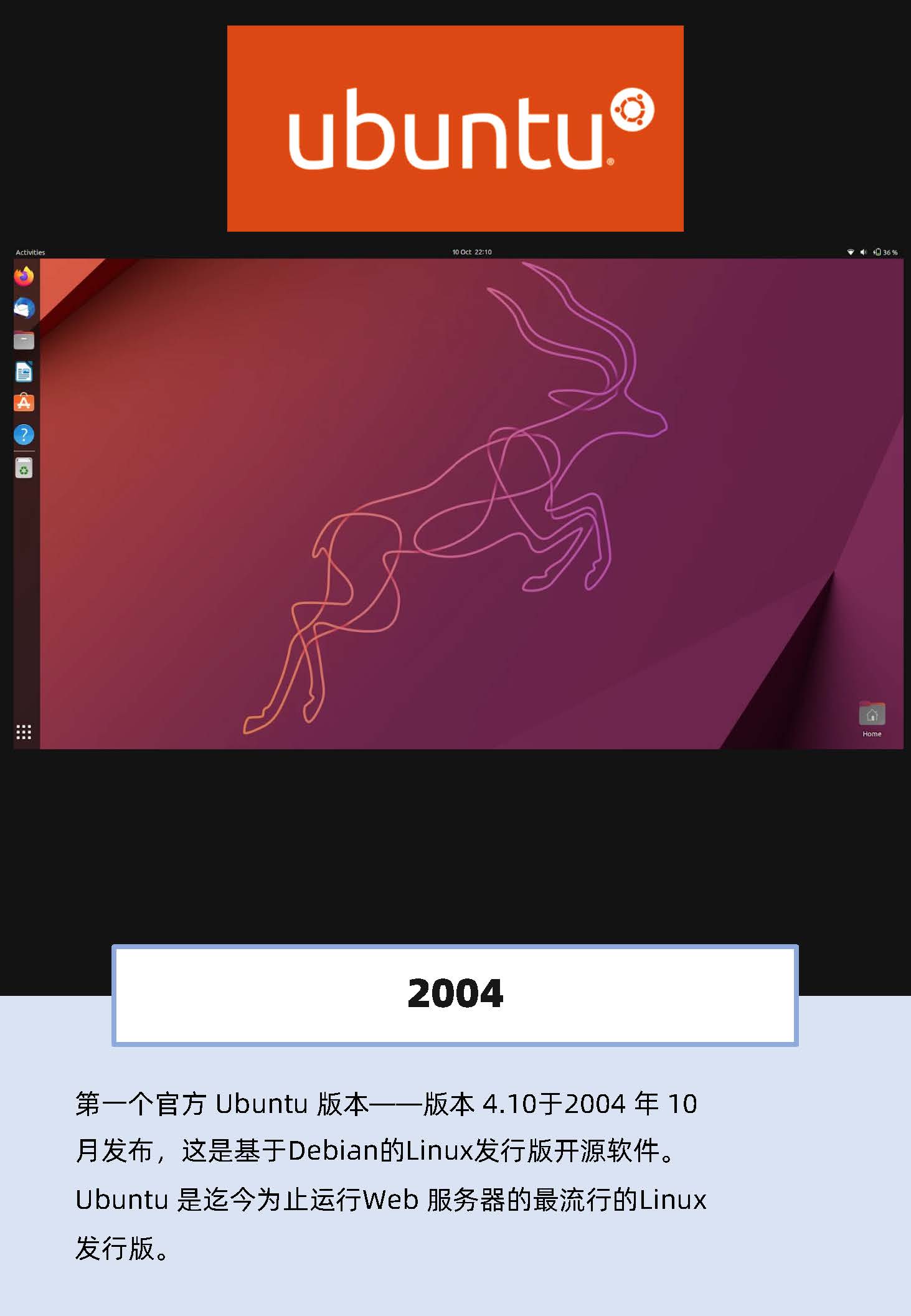
| 2004 | Mozilla Firefox released as a free and open source web browser. 摩斯拉火狐浏览器发布,这是一款免费的开源网页浏览器。 | Mozilla Foundation 摩斯拉基金会 | Mozilla Firefox 摩斯拉火狐浏览器 |
| 2022 | Open Source Science Initiative (OSSci) launched by Prof. Ir. Erik Mols, focusing on training the next generation of FOSS engineers using open source technologies and philosophy in a project learning environment. 埃里克·莫尔斯教授发起开源科学倡议(OSSci),该倡议以项目式学习为场景,运用开源技术与理念培养下一代自由及开源软件工程师。 | Prof. Ir. Erik Mols 埃里克·莫尔斯教授 | OSSci initiative for scientific discovery 服务于科学发现的开源科学倡议(OSSci) |
Narrative Overview
发展历程概述
Early Foundations and Hacker Culture ( 1950 s-- 1970 s)
早期基础与黑客文化( 20 世纪 50 年代至 70 年代)
The open source movement's roots lie in the 1950 s when software was freely exchanged among researchers and academics. Institutions like MIT fostered a culture of openness and experimentation, with groups such as the Tech Model Railroad Club pioneering the hacker ethos. The PDP- 1 minicomputer at MIT in 1961 became a focal point for early hackers who explored computing's potential through playful innovation. This culture valued sharing, modification, and collaborative improvement of software, setting the stage for the open source philosophy.
开源运动的起源可追溯至 20 世纪 50 年代,彼时软件在研究人员与学者之间自由流通。麻省理工学院等机构孕育了开放与实验的文化氛围,科技模型铁路俱乐部等团体成为黑客精神的先驱。 1961 年,麻省理工学院的 PDP- 1 小型计算机成为早期黑客的研究核心,他们以趣味创新的方式探索计算机的应用潜力。这种文化崇尚软件的共享、修改与协作优化,为开源理念的形成奠定了基础。
The Rise of Proprietary Software and the Free Software Movement ( 1980 s)
专有软件的兴起与自由软件运动( 20 世纪 80 年代)
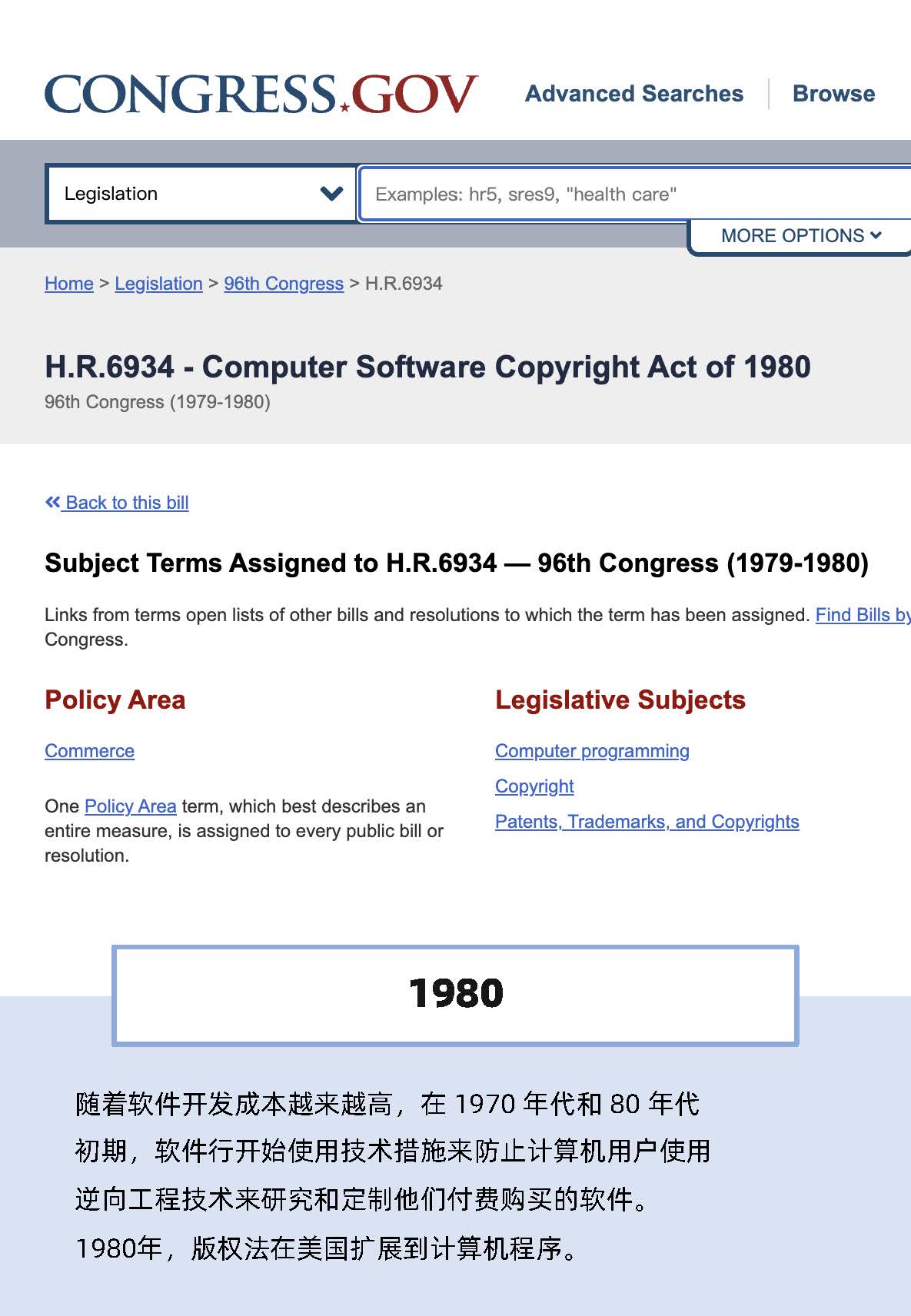
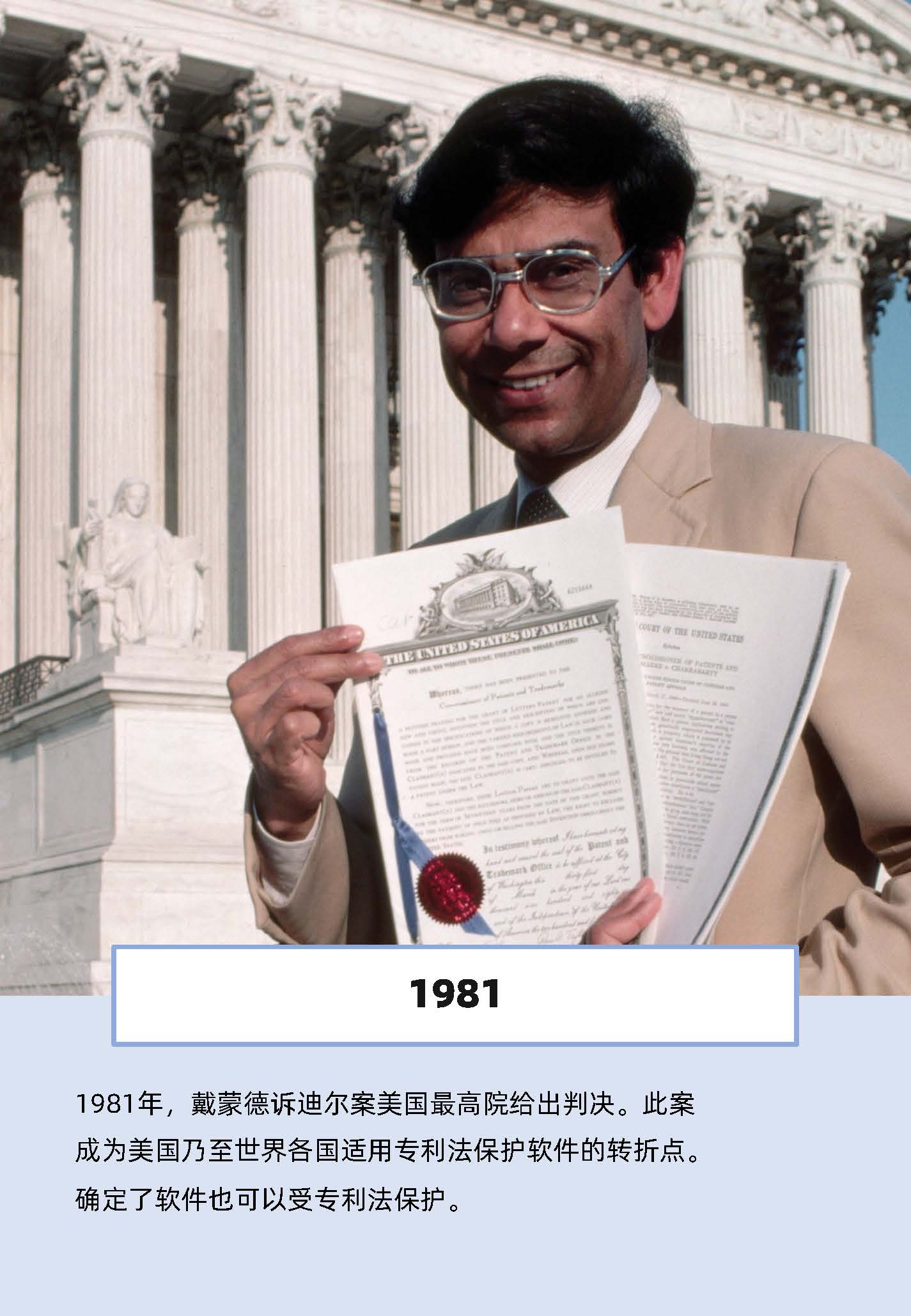
The late 1970 s and early 1980 s saw a shift toward proprietary software as legal decisions granted software copyright protection, enabling commercial licensing models. In response, Richard Stallman launched the GNU Project in 1983 to create a free operating system and founded the Free Software Foundation in 1985 . The GNU Manifesto articulated the moral and practical imperatives of software freedom, advocating for users' rights to study, modify, and distribute software. This period marked the formalization of the free software movement, which laid the ideological and legal groundwork for open source.
20 世纪 70 年代末至 80 年代初,相关法律决议赋予软件版权保护,专有软件模式开始兴起,商业授权模式也随之落地。作为回应,理查德·斯托曼于 1983 年发起 GNU 项目,旨在开发一款自由操作系统,并于 1985 年成立自由软件基金会。《GNU 宣言》阐释了软件自由在道德与实践层面的必要性,倡导用户拥有学习、修改和分发软件的权利。这一时期,自由软件运动正式走向规范化,为开源运动奠定了思想与法律基础。
The Birth and Growth of Open Source ( 1990 s)
开源的诞生与发展( 20 世纪 90 年代)
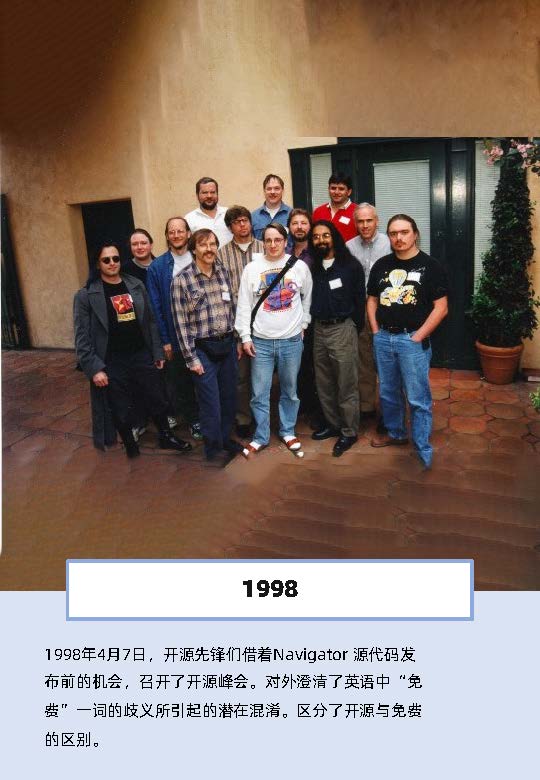
The term "open source" was popularized in 1998 at a summit organized by Tim O'Reilly and supported by key figures including Linus Torvalds. The Open Source Initiative (OSI) was founded to promote open source software pragmatically, focusing on licensing and community collaboration. This decade also saw the rise of major open source projects such as the Linux kernel ( 1991 ), the Apache HTTP Server ( 1995 ), and the Mozilla browser ( 1998 ). These projects demonstrated the viability of open source as a development model and began to challenge proprietary software's dominance.
1998 年,在蒂姆·奥赖利主办、林纳斯·托瓦兹等核心人物支持的一场峰会上,"开源"这一术语被广泛传播。开源促进会(OSI)随之成立,该组织以务实的方式推广开源软件,核心聚焦于软件授权与社区协作。这十年间,一系列重要的开源项目相继涌现,包括 1991 年的 Linux 内核、 1995 年的 Apache HTTP 服务器以及 1998 年的摩斯拉浏览器。这些项目印证了开源作为一种开发模式的可行性,并开始挑战专有软件的主导地位。
Professionalization and Commercialization (Late 1990 s-- 2000 s)
职业化与商业化发展( 20 世纪 90 年代末至 21 世纪初)
The late 1990 s and early 2000 s marked the professionalization of open source with the IPOs of companies like Red Hat and VA Linux, which commercialized Linux distributions. The Apache Software Foundation (ASF) was incorporated in 1999 to support the growing ecosystem of open source projects. Mozilla Firefox's release in 2004 further expanded open source's reach into web browsing, emphasizing privacy and security. These developments showcased open source's economic potential and its ability to support sustainable business models.
20 世纪 90 年代末至 21 世纪初,红帽、VA Linux 等企业完成首次公开发行股票,将 Linux 发行版商业化,标志着开源运动步入职业化发展阶段。 1999 年,阿帕奇软件基金会(ASF)正式成立,为不断发展的开源项目生态提供支持。 2004 年摩斯拉火狐浏览器的发布,进一步将开源的应用范围拓展至网页浏览领域,同时强调隐私与安全属性。这些发展成果充分展现了开源的经济潜力,以及其支撑可持续商业模式的能力。
Open Source in Science and Education ( 2022 )
开源在科学与教育领域的应用( 2022 年)
In 2022 , Open Source Science (OS-SCi) was launched by Prof. Ir. Erik Mols, focusing on training the next generation of FOSS engineers using open source technologies and philosophy in a project learning environment. OS-SCi focuses on connecting open source industry, students and developers to enhance existing open source tools and create new ones. This initiative underscores the growing recognition of open source's role in advancing open source computer technology, fostering collaboration across academia, industry, and government.
2022 年,埃里克·莫尔斯教授发起开源科学(OS-SCi)倡议,该倡议以项目式学习为场景,运用开源技术与理念培养下一代自由及开源软件工程师。开源科学倡议致力于联结开源行业、学生与开发者,对现有开源工具进行优化并开发新工具。这一倡议表明,开源在推动开源计算机技术发展、促进学术界、产业界与政府间协作方面的作用,正得到越来越多的认可。
Conclusion
结语
The open source movement has evolved from a culture of academic sharing and hacker innovation into a global phenomenon that underpins modern computing and scientific discovery. Key milestones such as the GNU Project, Linux, Apache, and Mozilla have revolutionized the software industry, demonstrating the power of collaborative development and open licensing. Organizations like the FSF, OSI, and ASF have provided governance and advocacy, ensuring open source's sustainability and growth. The conception of OS-SCi in 2022 highlights open source's expanding role into education, promising to accelerate discovery through community-driven innovation, with software development. This timeline encapsulates the movement's transformative journey, emphasizing its enduring impact on technology, industry, and society.
开源运动从最初的学术共享文化与黑客创新文化,逐步发展为支撑现代计算技术与科学发现的全球现象。GNU 项目、Linux 内核、阿帕奇软件、摩斯拉浏览器等重要里程碑,彻底改变了软件行业的发展格局,印证了协作开发与开放授权的强大力量。自由软件基金会、开源促进会、阿帕奇软件基金会等组织发挥了治理与倡导的作用,保障了开源的可持续发展。 2022 年开源科学倡议的提出,标志着开源的应用领域向教育行业进一步拓展,有望通过社区驱动的创新模式,在软件开发领域推动科学发现的加速落地。本时间线梳理了开源运动的变革历程,展现了其对科技、产业与社会的深远且持久的影响。
A Brief History of Open Source
开源简史
By Agnes Nduta, April 3 , 2023
It's difficult to imagine a world without open source. Open source is ubiquitous. In fact, open source is what powers the internet.
很难想象一个没有开源的世界,开源技术的应用已无处不在,甚至可以说,是开源为互联网的运行提供了核心支撑。
For example, 60% of the world's websites run on Apache and Nginx, the most popular web servers. And yes, even Fortune 500 companies use Nginx.
例如,全球 60% 的网站都运行在当下最主流的 Apache 和 Nginx 网页服务器之上,即便是《财富》世界 500 强企业,也在使用 Nginx 技术。
One of the reasons open source software (OSS) has massive usage is that there are lots of contributors.
开源软件(OSS)能够得到广泛应用,原因之一在于拥有数量庞大的贡献者。
Developers from anywhere in the world can bring their ideas, perspectives, and use cases to software, making it more dynamic. This leads to wider adoption.
来自世界各地的开发者都能将自己的想法、视角和应用场景融入软件的开发过程,让软件更具灵活性,这也推动了开源软件的进一步普及。
The crazy thing is, OSS has not always been here. There was a time when you needed to build your own compilers, text editors, and maybe an operating system before you could write a program!
令人难以想象的是,开源软件并非从计算机诞生之初就存在。曾经有这样一个阶段,人们在编写程序前,需要先自主开发编译器、文本编辑器,甚至操作系统。
In this article, we take a walk through history and explore the beginnings of open source, its rise, its downsides, and what the future of open source could look like.
本文将回顾开源的发展历史,探究其起源、崛起历程、现存问题,以及未来的发展趋势。
What is Open Source? A Definition
何为开源?定义解析
As a software engineer, it might seem silly to stop and think about the meaning of "open source."
对于软件工程师而言,专门停下来思考"开源"的含义,或许会显得有些多余。
But have you ever stopped to explain open source to someone who isn't in technology or to the proverbial five-year-old?
但你是否曾尝试向非技术领域的人,或是向孩童解释开源的含义?
At its core, open source is an idea. It's a concept that revolves around access. You can access someone else's source code (or even a company's). This way, you can customize it for your use case, find bugs, and fix them too.
开源本质上是一种理念,一种围绕"可获取性"展开的理念。任何人都可以获取他人或企业的源代码,根据自身的应用场景对其进行定制化修改,同时发现并修复代码中的漏洞。
Better still, you can share your "version" of the source code with others in addition to the original.
更重要的是,你还可以将自己修改后的源代码版本,与原始版本一同分享给其他人。
The person who writes the inceptive source code gives this access, which is an invitation to contribute, based on existing licenses. Different licenses will have certain limitations or obligations.
源代码的原始开发者会依据现有授权协议,向外界开放源代码的获取权限,这也是对所有开发者发出的贡献邀请。不同的授权协议,会附带不同的限制条件或履行要求。
Open source can also be seen as a movement. Yes, initially, open source was a "rebellion" against closed source (proprietary software whose source code is "owned" by a certain company or organization and therefore is not accessible).
开源也可被视作一场运动。事实上,开源最初的诞生,是对闭源软件的一种"反抗"------闭源软件即专有软件,其源代码归特定企业或组织所有,外界无法获取。
Developers did not want to keep paying for software that did not meet their use cases, had bugs that they could not always fix, and had security issues. They also didn't want to have to wait for the next big update to have even the smallest bug fixes. Let's not even get started with vendor lock-in.
开发者不愿为不符合自身应用场景、存在无法自主修复的漏洞且有安全隐患的软件持续付费,也不愿为修复一个微小的漏洞,等待软件厂商的大型版本更新,更不必说供应商锁定带来的种种问题。
Richard Stallman, who is hailed as the father of open source, seems to prefer to use "free software" instead. He believes that open source and free software have come to stand for very different philosophies over time.
被誉为"开源之父"的理查德·斯托曼,更倾向于使用"自由软件"这一表述。他认为,随着时间的推移,开源与自由软件已逐渐代表两种截然不同的理念。
Who Owns Open Source Software?
开源软件的所有权归属
Software developer | Image by DCStudio on Freepik
软件开发人员 | 图片来源:Freepik 平台 DCStudio 创作
So, is there any particular person or group of people who own a particular piece of OSS?
那么,一款开源软件的所有权,是否归某个特定的人或群体所有?
Ideally, the authors of the software are its owners. This is, however, a tricky way to look at it because, in some cases, there are thousands of authors.
从理论上来说,软件的原始开发者即为其所有权人,但这种界定方式实际存在诸多难题,因为部分开源软件的开发者数量可达数千人。
A better way to look at "ownership" would be in terms of rights, intellectual property, or copyright.
从权利、知识产权或版权的角度,去界定开源软件的"所有权",会是更为合理的方式。
Software Licenses
软件授权协议
This is where licenses come into play. There are licenses that do not allow for the sale of the original software or its versions, while others require you to "update" the initial code base with the changes you make.
而软件授权协议,正是界定这些权利的核心依据。部分授权协议禁止对原始软件及其修改版本进行售卖,还有部分协议要求开发者将自身的修改内容同步更新至原始代码库。
The terms of "ownership" are therefore defined by the licenses the code is distributed under. Since you are likely to have several libraries and frameworks within your open-source code base, you need to adhere to those other licenses, too.
因此,开源代码的"所有权"相关条款,由其分发时所依据的授权协议确定。由于一个开源代码库中,通常会包含多个类库与框架,开发者也需要遵守这些类库和框架对应的授权协议。
There can be different "levels of ownership" for open source projects, from contributors to maintainers to committers.
开源项目存在不同的"所有权层级",涉及贡献者、维护者、提交者等不同角色。
All these levels have different types of access to the code base. The "higher tiers" get to approve changes that will be included in the core code base for official releases.
不同层级的角色,拥有对代码库的不同操作权限,层级更高的角色,有权批准将修改内容纳入核心代码库,用于软件的官方版本发布。
Committees and organizations like the Apache Software Foundation (ASF) are in charge of bigger open source projects. There is an Apache Project Management Committee (PMC) that helps manage the code bases.
阿帕奇软件基金会(ASF)这类委员会和组织,负责管理大型开源项目,该基金会还设立了阿帕奇项目管理委员会(PMC),协助管理各类开源项目的代码库。
It is important to note that open source is a concept that is applicable to other fields beyond technology.
需要明确的是,开源并非仅适用于技术领域的理念,其应用范围已延伸至其他行业。
How Did Open Source Software Come About?
开源软件的诞生历程
The roots of OSS go deep, wide, and far back into the past, as early as the 1950 s.
开源软件的起源由来已久,最早可追溯至 20 世纪 50 年代。
The 1950 s -- the A- 2 system
20 世纪 50 年代------A- 2 系统
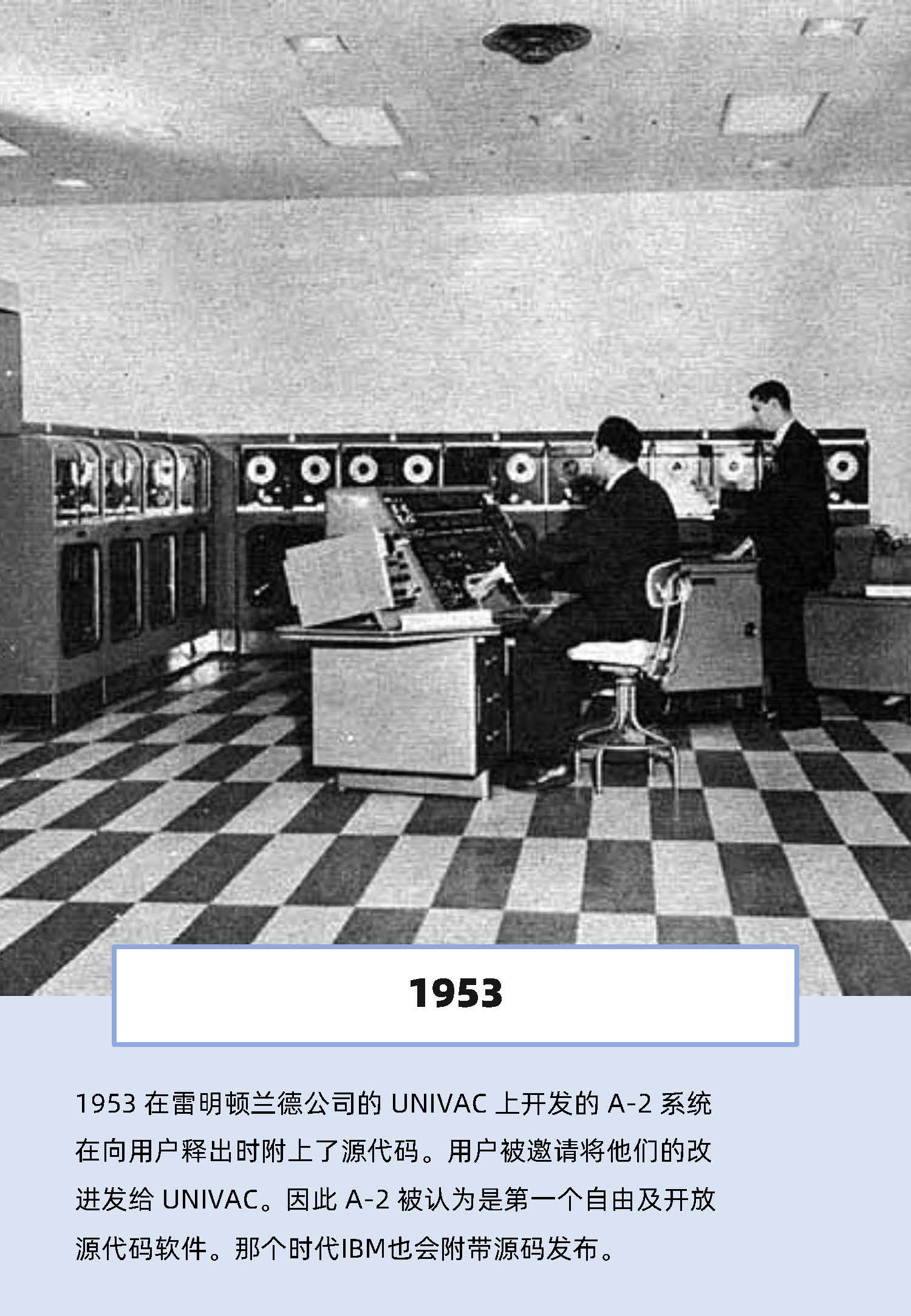
In 1953 , the A- 2 system (an equivalent of today's compilers) was released together with its source code, and customers were asked to send any improvements to UNIVAC (the Universal Automatic Computer).
1953 年,A- 2 系统(相当于如今的编译器)与其源代码一同发布,开发方还要求用户将该系统的优化建议反馈给通用自动计算机公司(UNIVAC)。
UNIVAC was a division under Remington Rand, Inc., an early American business machine manufacturer. Remington Rand had acquired UNIVAC patents as well as its creators, J. Presper Eckert, Jr., and John Mauchly.
通用自动计算机公司是美国早期商用机器制造商雷明顿·兰德公司的子公司,雷明顿·兰德公司收购了通用自动计算机的相关专利,以及该技术的发明者------J·普雷斯珀·埃克特与约翰·莫奇利。
There were a few decades of OSS "silence" after the 1950 s. Creating software was an expensive and exceedingly complex process. Giving it away for free was thus out of the question.
20 世纪 50 年代后,开源软件的发展进入了数十年的"沉寂期"。彼时,软件开发的成本高昂、流程极为复杂,免费分享软件根本无从谈起。
The 1980 s -- GNU
20 世纪 80 年代------GNU 项目
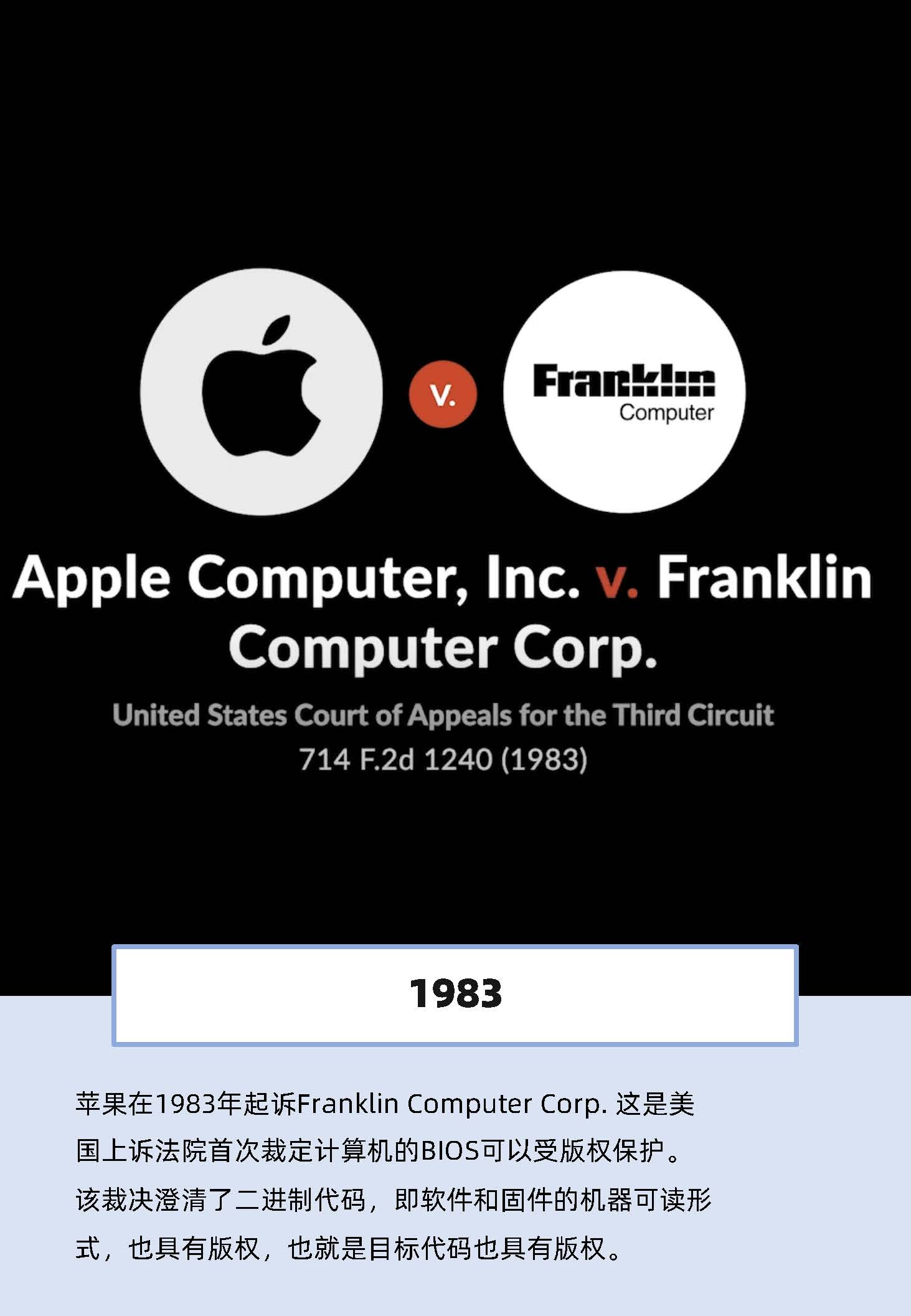
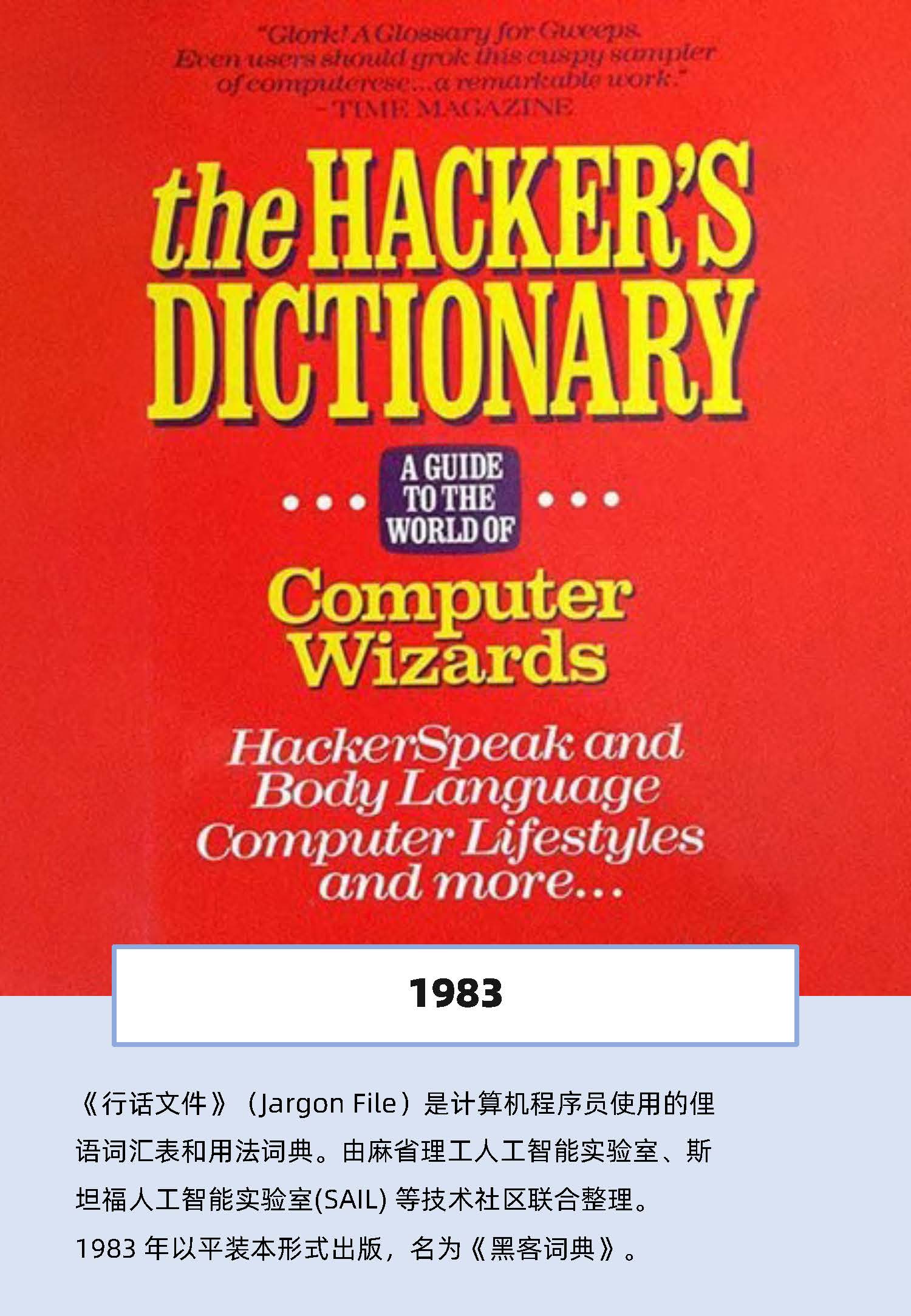
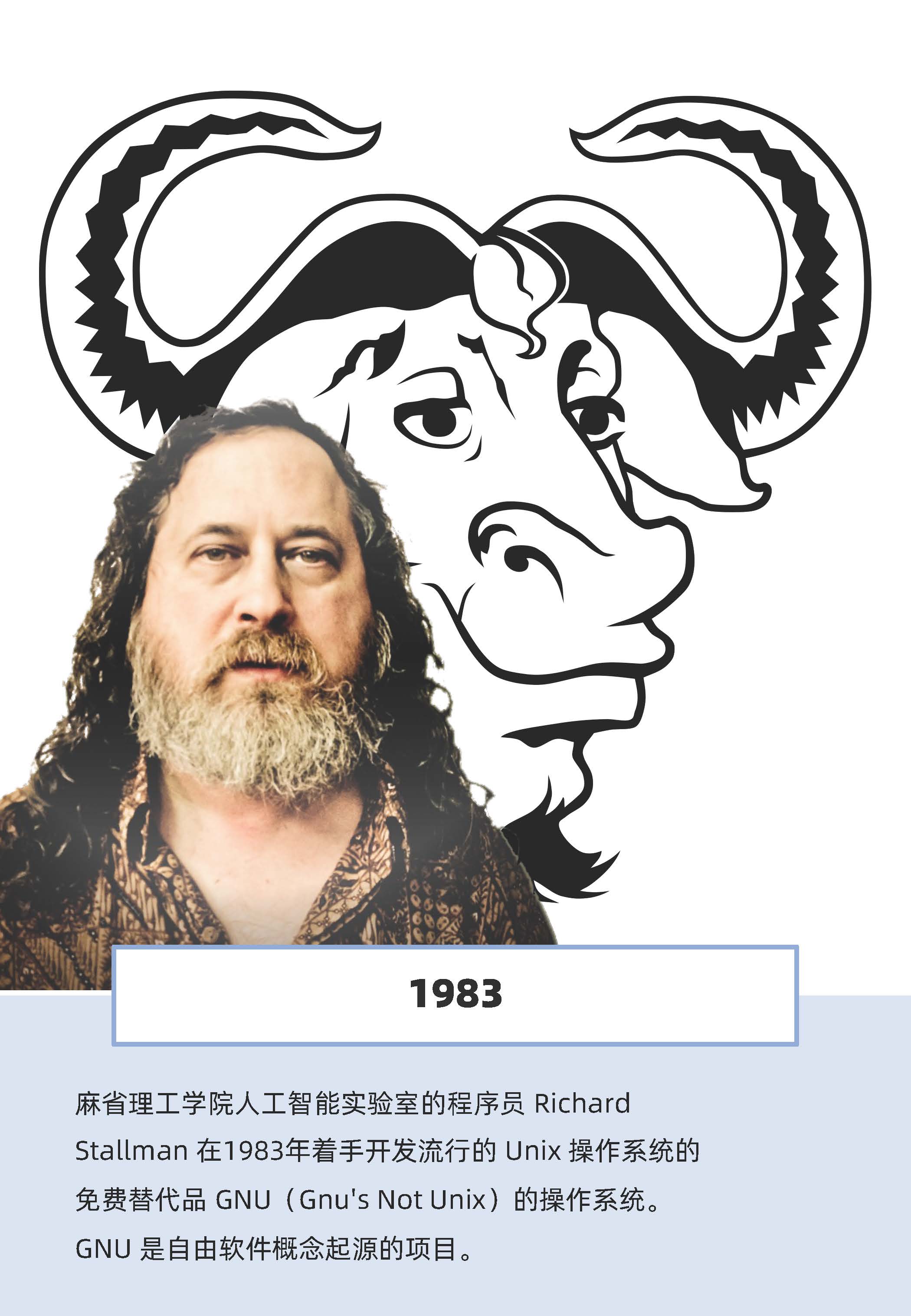
In 1983 , however, Richard Stallman started to work on the GNU project, which was made up of rewrites of closed software he frequently used.
但在 1983 年,理查德·斯托曼启动了 GNU 项目,该项目的核心是对他日常使用的各类闭源软件进行重写。
GNU stands for "GNU's Not Unix" and is pronounced as one syllable with a hard g.
GNU 是"GNU's Not Unix"的递归缩写,发音为单音节,其中字母G发重音。
In 1984 , Stallman spearheaded the creation of the GNU, a free operating system that was made to counter closed systems.
1984 年,斯托曼牵头开发 GNU 自由操作系统,这款系统的诞生,正是为了对抗闭源操作系统。
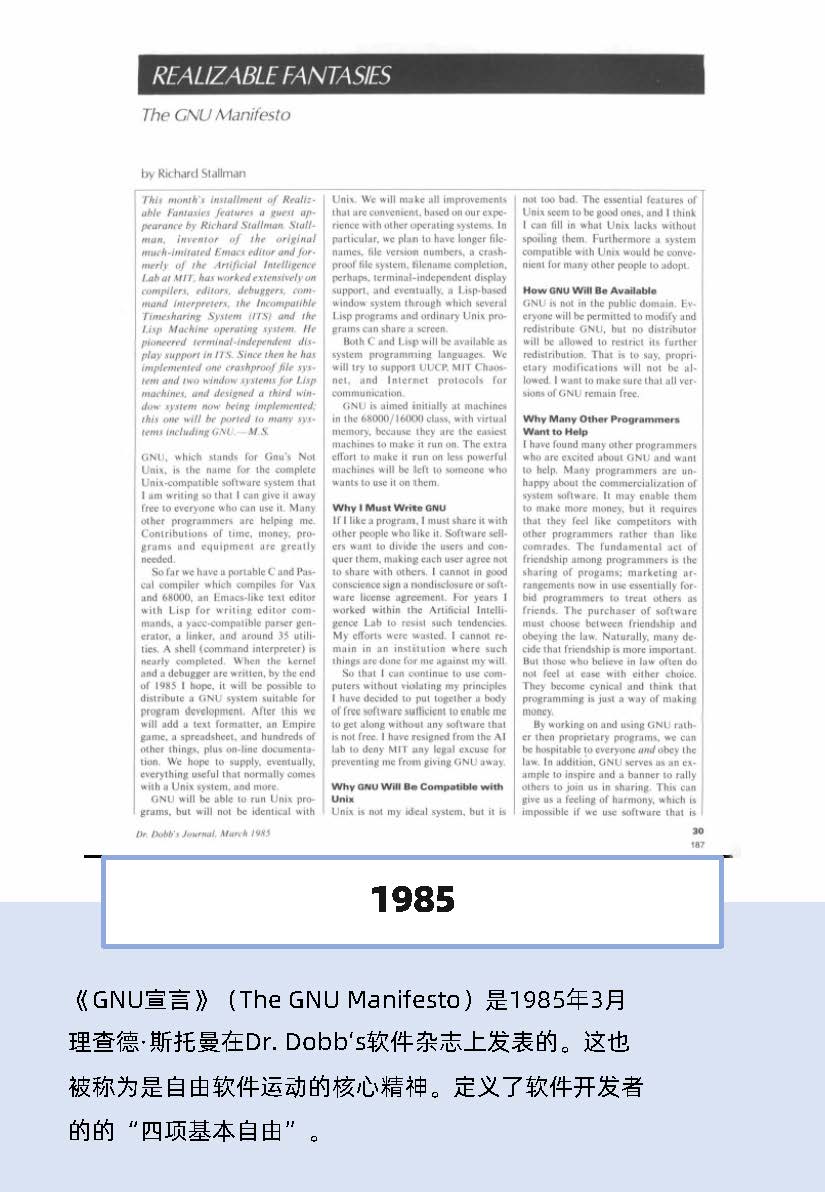
In 1985 , he wrote the GNU Manifesto, asking for support in the development of the GNU operating system.
1985 年,他撰写了《GNU 宣言》,为 GNU 操作系统的开发寻求各界支持。
He also founded the Free Software Foundation (FSF), a nonprofit that was aimed at promoting freedom in computer use.
同时,他还成立了自由软件基金会(FSF),这是一家致力于推广计算机使用自由的非营利组织。
By 1987 , most of the essential components of the GNU operating system were complete. There was an assembler, editor, and various Unix utilities like grep and ls. A C compiler was almost finalized.
到 1987 年,GNU 操作系统的大部分核心组件已开发完成,包括汇编器、编辑器,以及 grep 、ls 等各类 Unix 工具,C 语言编译器也接近开发完成。
In the 1980 s, Stallman also created the GNU General Public License (GPL). All the components of the GNU operating system were released under this license.
20 世纪 80 年代,斯托曼还制定了 GNU 通用公共许可证(GPL),GNU 操作系统的所有组件均依据该协议发布。
Today, the GPL allows for the freedom to share and change all program versions, ensuring that they remain accessible to all users.
如今,GNU 通用公共许可证保障了用户共享和修改所有程序版本的自由,同时确保这些程序版本始终对所有用户开放。
The 1990 s
20 世纪 90 年代

The Linux Operating System | Image by Clker-Free-Vector-Images from Pixabay
Linux 操作系统
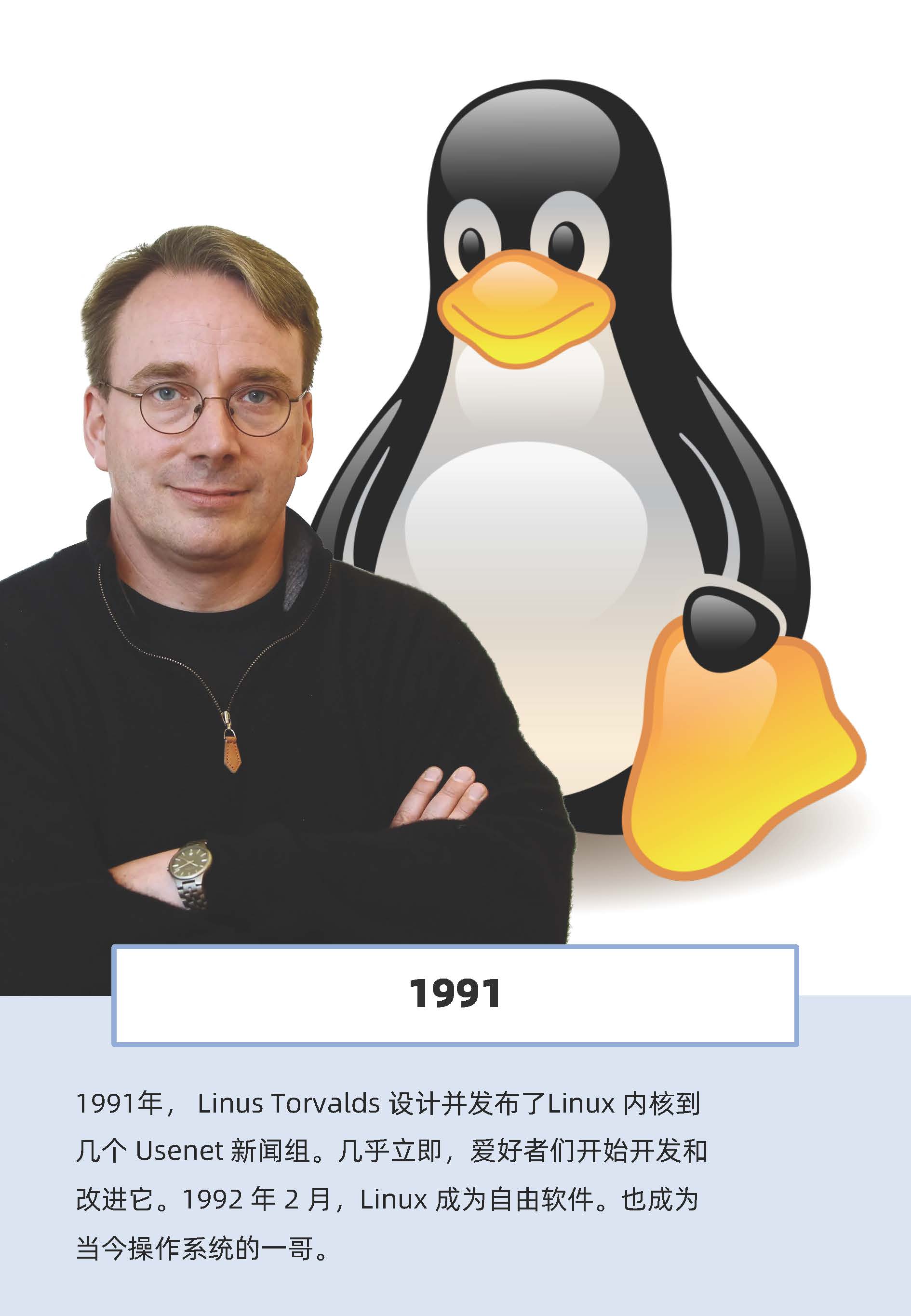
In the 1990 s, Linus Torvalds pushed OSS even further by creating the Linux kernel. He then released it to the public in 1991 , along with its source code.
20 世纪 90 年代,林纳斯·托瓦兹开发出 Linux 内核,进一步推动了开源软件的发展,并于 1991 年将该内核与其源代码一同向公众发布。
It became the kernel for the GNU operating system.
Linux 内核也成为了 GNU 操作系统的核心内核。
Other salient events in the 1990 s that significantly shaped OSS include:
20 世纪 90 年代,还有诸多对开源软件发展产生重要影响的关键事件,具体包括:
- The publication of the Python interpreter source code ( 1991 )
1991 年,Python 解释器源代码发布 - The launch of the Apache HTTP Server ( 1995 )
1995 年,Apache HTTP 服务器正式推出 - The coining of the term "open source" ( 1998 )
1998 年,"开源"术语被创造 - The release of the Netscape browser's source code ( 1998 )
1998 年,网景浏览器源代码发布 - The release of Open Office's source code, the free software counterpart to Microsoft Office ( 2000 )
2000 年,微软 Office 办公软件的免费替代产品------Open Office 办公软件的源代码发布
The 20 th century laid a sturdy foundation for OSS. We'll explore more recent open source developments a bit later on.
20 世纪为开源软件的发展奠定了坚实的基础,下文将介绍开源软件近年来的发展历程。
The Origins of the Open Source Movement and Community
开源运动与开源社区的起源
In this section, we'll trace the origins of open source as a movement and community. We already came across efforts like Stallman's Free Software Foundation (FSF).
本节将追溯开源作为一场运动、一个社区的起源,此前我们已经介绍了理查德·斯托曼创立的自由软件基金会(FSF)等相关组织的探索。
Other significant open source organizations include the Open Source Initiative (OSI). The OSI was created to counter the "free software" approach that Stallman had propagated.
另一重要的开源组织是开源促进会(OSI),该组织的成立,初衷是为了与斯托曼所倡导的"自由软件"理念形成差异化发展。
They felt that "open source" took away the focus on "price" and the confusion that "free" elicited from people who heard about it for the first time.
该组织认为,"开源"这一表述能够摆脱人们对"免费"的价格聚焦,同时消除首次接触该理念的人对"自由"一词的理解误区。
Eventually, OSI began to focus on licenses and published "OSI-approved licenses."
此后,开源促进会将工作核心聚焦于软件授权协议,并发布了"开源促进会认可的授权协议"清单。
As more OSS was released, different foundations and communities began to form around it. Python became fully open source in 1999 , and in 2001 , the Python Software Foundation (PSF) was founded.
随着越来越多开源软件的发布,围绕不同开源软件的基金会与社区相继成立。 1999 年,Python 语言实现完全开源, 2001 年,Python 软件基金会(PSF)正式成立。
The Apache Software Foundation (ASF) was established in 1999 . The first members were some of the creators of the Apache HTTP server, which was released in 1995 .
阿帕奇软件基金会(ASF)成立于 1999 年,其首批成员包含 1995 年发布的 Apache HTTP 服务器的部分开发者。
To date, these non-profits have contributed to the growth of open source by encouraging contributions from developers, supporting community events, ensuring the OSS code base stays up-to-date, and releasing new versions.
时至今日,这些非营利组织仍在推动开源的发展,具体方式包括鼓励开发者贡献代码、支持开源社区活动、保障开源软件代码库的及时更新,以及发布软件的新版本。
Docker, for instance, was launched during PyCon 2013 .
例如,Docker 技术便是在 2013 年的 Python 开发者大会上正式推出。
How Did Open Source Continue to Develop?
开源的后续发展历程
The 2000 s and 2010 s saw exponential growth in open source. Here is a summary:
21 世纪初至 2010 年代,开源软件迎来了指数级的发展,以下是其发展历程的总结:
Open Source in the 2000 s
21 世纪初的开源发展
-
The Free Software Foundation Europe is created to support free software in Europe ( 2001 )
2001 年,欧洲自由软件基金会成立,致力于在欧洲推广自由软件
-
Version 1.0 of Mozilla Firefox becomes available to the public ( 2004 )
2004 年,摩斯拉火狐浏览器 1.0 版本正式向公众发布
-
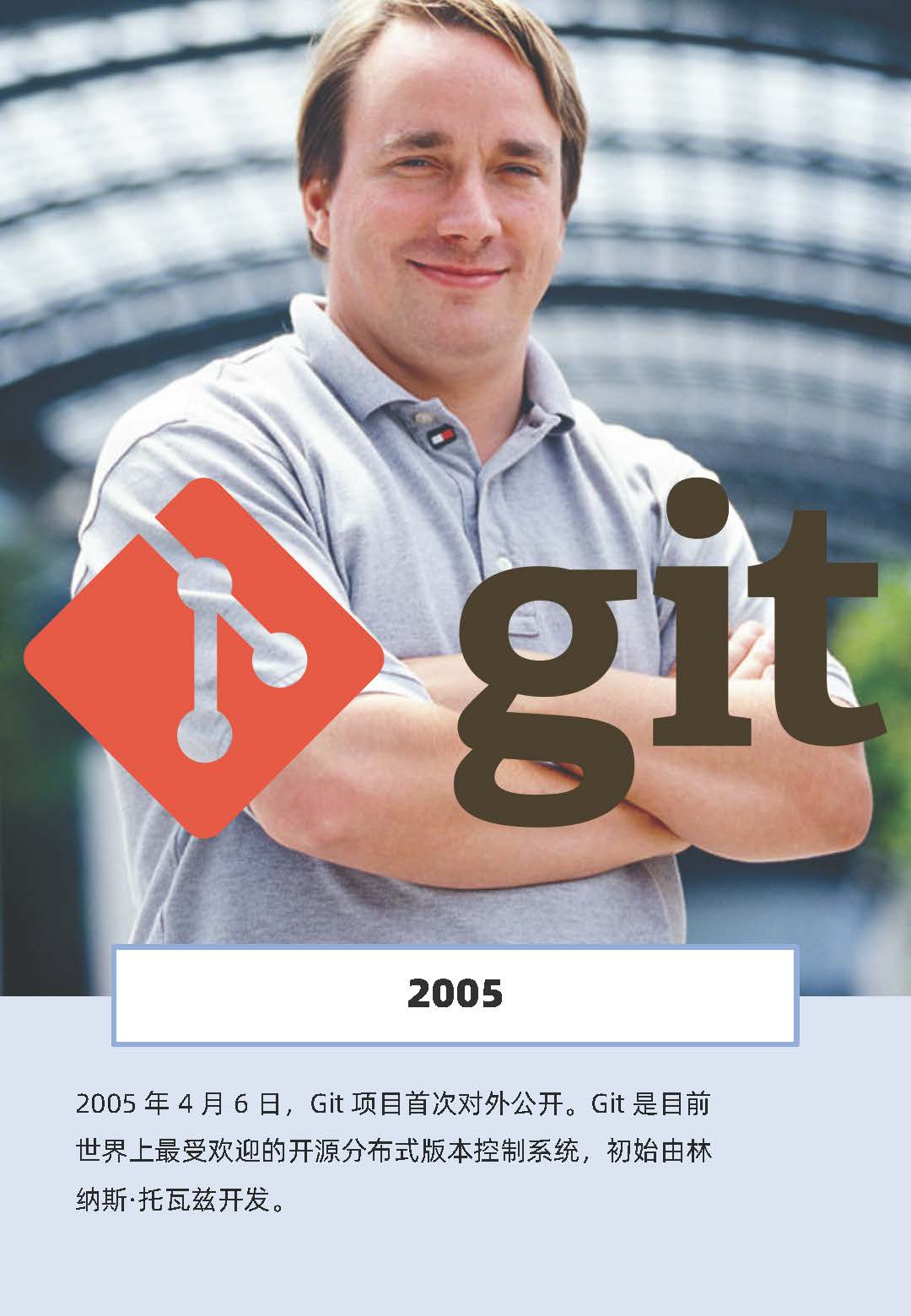
Git, a version control system, was released in 2005 by Linus Torvalds, Linux's creator.
2005 年,Linux 内核的开发者林纳斯·托瓦兹发布了版本控制系统 Git
-
Google releases the Android mobile OS ( 2008 )
2008 年,谷歌公司发布安卓移动操作系统
-
Blockchain is built on lots of open source technologies and developers contribute to its code base ( 2008 )
2008 年,区块链技术基于多款开源软件构建,众多开发者为其代码库贡献内容
-
Node.js comes out ( 2009 )
2009 年,Node.js 运行环境正式推出
-
Google Chrome is based on the Chromium project's open source code. Chrome was initially released in 2011
谷歌浏览器基于 Chromium 项目的开源代码开发,并于 2011 年首次发布
-
A lot of open source tools power IoT, including the Linux Kernel. IoT became a conglomeration of technologies in 2013
2013 年,物联网技术成为多技术融合的产物,包括 Linux 内核在内的多款开源工具为物联网的运行提供支撑
-
Containers and container orchestration (Docker 2013 and Kubernetes 2014 )
2013 年 Docker 容器技术、 2014 年 Kubernetes 容器编排技术相继推出
-
The cloud ( 2016 )
2016 年,云计算技术迎来规模化发展,开源成为云计算技术的核心支撑
-
Firefox Quantum ( 2017 ). Firefox's biggest update in 2017 , saw it rise to become the third most used browser.
2017 年,火狐量子浏览器发布,这是 2017 年火狐浏览器的重大版本更新,也让火狐浏览器跻身全球使用量第三的网页浏览器行列
How Open Source Became So Popular
开源的普及原因
As we have seen, initial open source efforts were geared towards fighting closed source and the exorbitant "rental pricing" that they had for software.
正如前文所述,开源最初的发展,初衷是对抗闭源软件,以及闭源软件高昂的"授权使用费"。
Developers, therefore, began by building the most commonly used components of software, for example, operating systems (think about GNU).
因此,开发者最初从开发软件最常用的核心组件入手,例如操作系统(如 GNU 操作系统)。
Over time, more and more developers collaborated on building these software components. Non-profit organizations began to publish software under licenses like the GPL.
随着时间的推移,越来越多的开发者协作开发这些软件组件,各类非营利组织也开始依据 GNU 通用公共许可证等协议发布软件。
In the mid- 1990 s, companies began to create OSS. For example, MySQL AB, a Swedish company, created and released MySQL in 1995 .
20 世纪 90 年代中期,企业开始参与开源软件的开发,例如,瑞典的 MySQL AB 公司于 1995 年开发并发布了 MySQL 数据库。
The open source subscription model
开源订阅模式
By the early 2000 s, companies that created open source projects offered access to their source code for free but charged subscription fees for enterprise-grade support.
21 世纪初,开发开源项目的企业开始采用免费开放源代码、为企业级技术支持收取订阅费用的模式。
One of the pioneers of the "open source subscription model" was Red Hat. Its offering was the Linux server in 2002 , which was known as the "Red Hat Linux Advanced Server." It is currently known as Red Hat Enterprise Linux (RHEL).
红帽公司是"开源订阅模式"的先驱之一,该公司于 2002 年推出了 Linux 服务器产品------红帽 Linux 高级服务器,该产品如今更名为红帽企业版 Linux(RHEL)。
Developers could access Red Hat's Linux server's source code for free but had to pay for support.
开发者可免费获取红帽 Linux 服务器的源代码,但如需技术支持,则需要支付相应费用。
As more and more companies began to follow the subscription model, developers began to contribute to these products.
随着越来越多的企业采用这种订阅模式,开发者也开始为这些企业开发的开源产品贡献代码。
Their contributions were eventually added to the initial code base.
开发者的代码贡献,最终会被纳入产品的原始代码库。
The open source subscription model, however, evolved into something akin to the freemium model. Companies would release a free version of their software, and developers and businesses would pay to access more features.
此后,开源订阅模式逐渐演变为类免费增值模式,企业会发布软件的免费版本,开发者和企业如需使用更多功能,则需要付费解锁。
With the introduction of the cloud, the free versions began to be hosted in the cloud, resulting in the Software as a Service (SaaS) model.
云计算技术出现后,企业开始将软件的免费版本部署在云端,软件即服务(SaaS)模式也随之诞生。
These free versions are still available for developers to contribute to. Today, many developers contribute to software whose original code base was written by employees of a particular company. This is true even for Big Tech.
这些云端的免费版本仍对开发者开放代码贡献通道。如今,许多开发者会为原始代码库由特定企业员工开发的软件贡献代码,科技巨头的开源项目也不例外。
If the contributions are deemed significant, they are assimilated into the core code base.
如果开发者的代码贡献具有重要价值,这些代码会被纳入软件的核心代码库。
Developers give feedback and even request features that better suit their use cases. As a result, a lot of open source companies will share a roadmap of their upcoming features and include some of their users' suggestions in their game plans.
开发者会为开源软件提供反馈,甚至提出更贴合自身应用场景的功能需求。因此,许多开源企业会公布软件的后续功能开发路线图,并将部分用户建议纳入开发计划。
The best thing is that all the contributions and conversations happen on GitHub, Discord, Slack, community forums, and even Hacker News or Reddit. If the companies are proactive, then both their products and the developer community benefit.
值得一提的是,所有的代码贡献与交流讨论,都会在 GitHub、Discord、Slack、开源社区论坛,甚至黑客新闻、红迪网等平台进行。如果企业能够积极参与这些交流,其产品开发与开源开发者社区的发展将实现双赢。
Developers will identify bugs and test new features too. As the product's GitHub stars and forks increase, more users are willing to use it, and more people are willing to contribute.
开发者会在交流过程中发现软件漏洞,并测试新功能。随着产品在 GitHub 平台的星标数和复刻数不断增加,会有更多用户愿意使用该产品,也会有更多开发者愿意为其贡献代码。
As developers discover these open source projects, they incorporate them into their own projects and sometimes even work projects.
开发者在接触这些开源项目后,会将其融入自身的个人项目,甚至是工作项目中。
As a result, organizations and businesses end up using the OSS as part of their final product. Eventually, they could even pay for the enterprise versions.
这也使得各类组织和企业将开源软件纳入其最终产品的开发体系,甚至会购买开源软件的企业版本。
Some companies still use the freemium model, where developers can use the software for free and access the source code. They only get to pay if they are looking to scale, for example.
部分企业仍在沿用免费增值模式,开发者可免费使用软件并获取源代码,仅在需要进行规模化部署等场景下才需要付费。
Why the Open Source Movement Has Grown So Much Recently
开源运动近期快速发展的原因
According to the 2023 State of Open Source Report by OSI and OpenLogic by Perforce, 80.04% of the respondents said that their organization had increased its use of OSS in the last 12 months.
根据开源促进会与珀弗利公司旗下的 OpenLogic 联合发布的《 2023 年开源现状报告》, 80.04% 的受访者表示,其所在组织在过去 12 个月中增加了开源软件的使用量。
The same survey listed the top reasons for OSS adoption among organizations as:
该调研还列出了企业采用开源软件的主要原因,具体包括:
-
Better access to innovations and the latest technologies
能够更便捷地接触创新成果与前沿技术
-
Faster deployments
能够实现更快速的产品部署
-
Access to stable technologies with community long-term support
可使用由社区提供长期支持的稳定技术
-
The ability to contribute to, and influence the direction of open source projects
能够为开源项目贡献代码,并影响项目的发展方向
-
Vendor lock-in
可规避供应商锁定问题
The community aspect of open source is a vital contributor to the growth and adoption of OSS among organizations. It is the heartbeat of the open source as a movement, too.
开源的社区属性,是推动企业采用并推广开源软件的重要因素,也是开源作为一场运动的核心生命力。
The open source community has supported the open source movement and software through its generous contributions via feedback, and trying out as well as improving the OSS that is released, since the 1950 s.
自 20 世纪 50 年代起,开源社区便通过提供反馈、试用并优化已发布的开源软件等多种形式的积极贡献,为开源运动与开源软件的发展提供支撑。
And the community is here to stay. In 2021 , there were 413 million contributions made to the open source projects on GitHub.
开源社区的发展也具有持续性, 2021 年,GitHub 平台的开源项目共收到 4.13 亿次代码贡献。
OSS, which has the backing of the community, not only has a wide reach but is more stable and up-to-date with patches.
拥有社区支撑的开源软件,不仅应用范围广泛,其稳定性也更高,漏洞补丁的更新也更及时。
Newer and better versions are also released more frequently. Community-backed OSS also caters to more use cases.
同时,这类开源软件的新版本发布频率更高,产品体验也更优,能够满足更多的应用场景需求。
Issues with Open Source
开源存在的问题
Despite the eminent success of open source, there are a few downsides to it.
尽管开源取得了显著的发展成果,但仍存在一些问题与弊端。
First, the licenses that govern open source are quite fragmented. There could be multiple licenses in a single open source project, for example.
其一,规范开源软件的授权协议体系较为分散,例如,一个开源项目中可能会包含多种不同的授权协议。
You might have used several open source libraries. Depending on the size of the project, it may be virtually impossible to tell how many licenses you need to comply with.
开发者在开发过程中,可能会使用多个开源类库,而根据项目规模的不同,开发者甚至可能无法明确需要遵守的授权协议数量。
This affects the scalability of OSS, especially in a business context where compliance matters.
这一问题会影响开源软件的规模化应用,尤其是在对合规性要求较高的商业场景中。
Second, with the advent of technologies like the cloud, keeping projects open source is becoming harder and harder. A lot of open source projects are powered by closed cloud products.
其二,随着云计算等技术的发展,维持开源项目的开源属性变得愈发困难,许多开源项目的运行,实则依赖闭源的云产品。
There is a need for the cloud to adhere to open source principles if open source is going to thrive in the cloud, too.
如果希望开源在云计算领域也能实现蓬勃发展,云计算行业需要遵循开源的核心理念。
Third, as more and more organizations adopt OSS, there's a lack of people with the technical skill set to help them integrate it into their existing systems.
其三,随着越来越多的组织采用开源软件,具备将开源软件集成至企业现有系统的专业技术人才出现了短缺。
There are also challenges that stem from support, as shown in the following image.
同时,开源软件在技术支持方面也存在诸多难题,具体如下图所示。
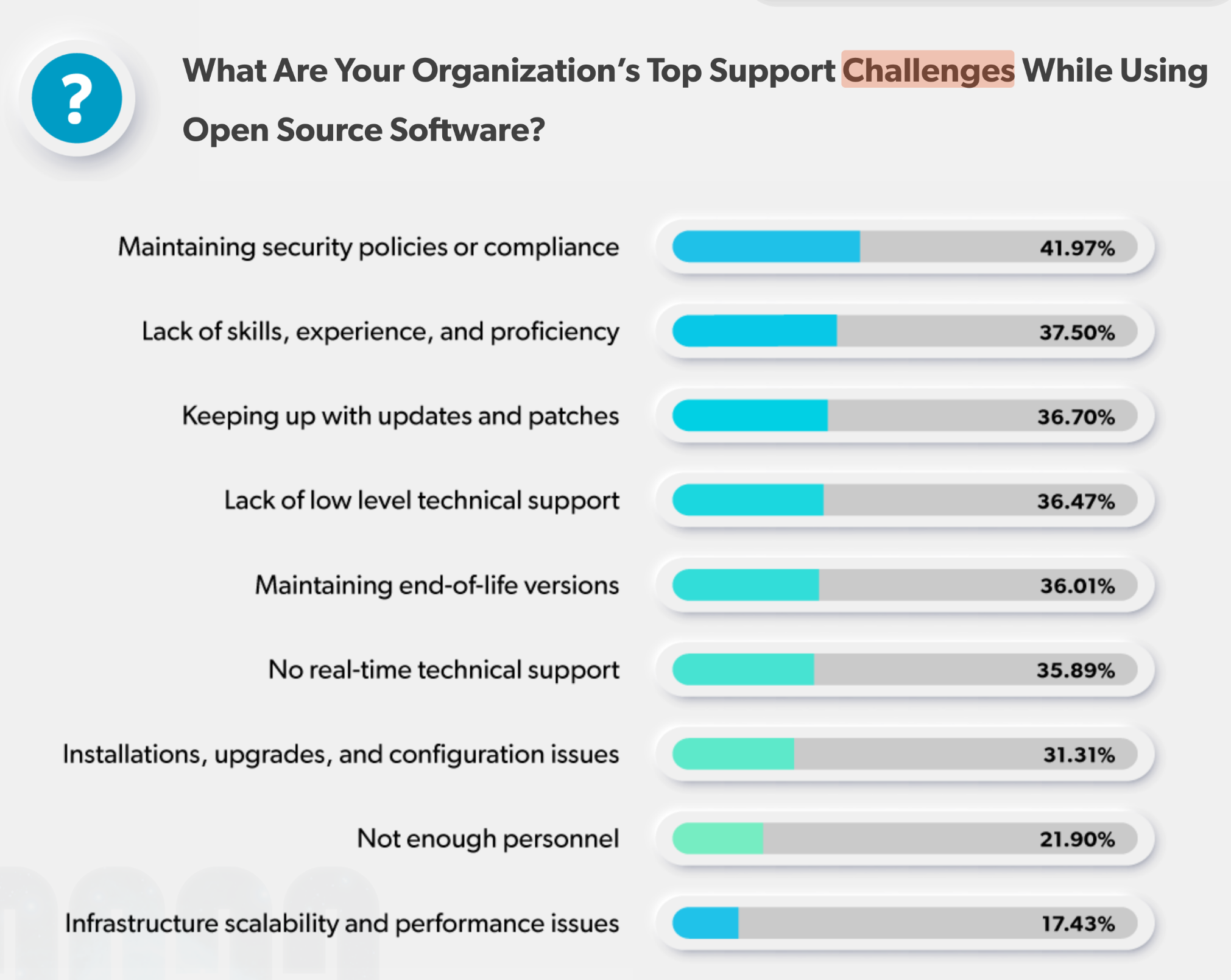 OSS support challenges | Source: 2023 State of Open Source Report by OSI and OpenLogic by Perforce
开源软件的技术支持难题 | 来源:开源促进会与珀弗利公司旗下 OpenLogic 联合发布的《2023年开源现状报告》
What Are Your Organization's Top Support Challenges While Using Open Source Software?
组织在使用开源软件时面临的主要支持挑战是什么?
| 挑战项 | 占比 |
|---|---|
| Maintaining security policies or compliance 维护安全策略或合规性 | 41.97% |
| Lack of skills, experience, and proficiency 技能、经验与熟练度不足 | 37.50% |
| Keeping up with updates and patches 跟进更新与补丁 | 36.70% |
| Lack of low level technical support 缺乏底层技术支持 | 36.47% |
| Maintaining end-of-life versions 维护已终止支持的版本 | 36.01% |
| No real-time technical support 无实时技术支持 | 35.89% |
| Installations, upgrades, and configuration issues 安装、升级与配置问题 | 31.31% |
| Not enough personnel 人员不足 | 21.90% |
| Infrastructure scalability and performance issues 基础设施的可扩展性与性能问题 | 17.43% |
Fourth, sometimes OSS is poorly documented, difficult to use, and doesn't always work outside the box. This is because OSS may not always focus on user experience (UX). To get a piece of OSS running, you need to have the technical know-how to install and configure it.
其四,部分开源软件的文档编写较为简陋、使用难度较高,无法实现开箱即用。这是因为开源软件的开发并非始终将用户体验(UX)作为核心,要让一款开源软件正常运行,开发者需要具备相应的安装与配置技术能力。
Some OSS also have a very small team of developers actively working on them. This may affect things like UX and even the frequency of updates and upgrades, as well as the speed of innovation.
还有部分开源软件的核心开发团队规模较小,这不仅会影响软件的用户体验,还会对软件的版本更新频率与创新速度造成限制。
The Future of Open Source
开源的未来发展
The future of open source is bright. With technologies like containerization and the cloud, developers will need to work with a set of tools that make their own work easier.
开源的未来发展前景广阔,随着容器化、云计算等技术的发展,开发者需要一套能够提升开发效率的工具体系,而开源正是该体系的核心支撑。
With containers, for example, developers can build once and use the same code base in multiple environments without much setup and configuration.
以容器技术为例,开发者可实现一次开发,将同一代码库无需过多配置,即可部署至多个运行环境。
Internally, developer teams will need to build workflows that can help them deliver faster. DevOps is already doing that with CI/CD pipelines.
在企业内部,开发团队需要搭建能够实现快速交付的工作流,而开发与运维一体化(DevOps)模式,已通过持续集成/持续部署(CI/CD)流水线实现了这一目标。
The 2023 State of Open Source Report by OSI and OpenLogic by Perforce showed that larger organizations (with over 5,000 employees) intended to use Kubernetes and Kubernetes operators over the next 18 months.
开源促进会与珀弗利公司旗下的 OpenLogic 联合发布的《 2023 年开源现状报告》显示,大型企业(员工数量超过 5000 人)计划在未来 18 个月中,使用 Kubernetes 容器编排技术与 Kubernetes 操作器。
The open source community is therefore likely to continue to support efforts that make life easier through automation and containerization.
因此,开源社区未来可能会持续聚焦于通过自动化与容器化技术提升开发效率的相关项目。
This doesn't mean that older technologies that are still in use will be neglected. By all means, no. The Linux kernel still supports lots of OSS today.
但这并不意味着仍在使用的传统技术会被忽视,如今,Linux 内核仍为多款开源软件提供支撑,未来也将继续发挥核心作用。
There are challenges that open source will need to overcome, though, to remain the powerhouse that it is.
当然,开源要想继续保持其核心竞争力,还需要解决发展过程中面临的诸多难题。
For example, with most companies developing most of the OSS, there needs to be a way for them to keep making money so as to support open source.
例如,目前多数开源软件由企业主导开发,因此需要建立一套可持续的盈利模式,保障企业对开源项目的持续投入。
With open source practically leveling the playing field, it can become very difficult for companies to differentiate themselves.
开源在一定程度上实现了行业技术平权,这也让企业难以通过技术形成差异化竞争优势。
This could mean that fewer and fewer companies would be able to support the innovation that springs from open source.
这一问题可能会导致能够为开源创新提供支撑的企业数量逐渐减少。
All in all, open source has managed to survive decades, and we know that despite the obstacles it will have to face, it will conquer.
总而言之,开源已经历经数十年的发展,尽管未来仍将面临诸多挑战,但相信其能够不断突破,实现持续发展。
Wrapping Up
总结
We have journeyed through open source in a bid to understand what it is and trace its origins and development over the years and decades. We've discussed its popularity, and even the challenges that it has had to conquer and is still facing today.
本文梳理了开源的定义,追溯了其数十年的起源与发展历程,分析了开源的普及原因,同时探讨了其发展过程中已经解决的问题,以及目前仍面临的挑战。
Ultimately, we looked at what the future of open source could look like.
最后,本文对开源的未来发展趋势进行了展望。
I hope that I answered the questions that you might have had about open source's origins, and hopefully, you are inspired to contribute to OSS. Because why not?
希望本文能够解答你关于开源起源的相关疑问,也希望能够激励你参与到开源软件的代码贡献中------不妨大胆尝试,何乐而不为?
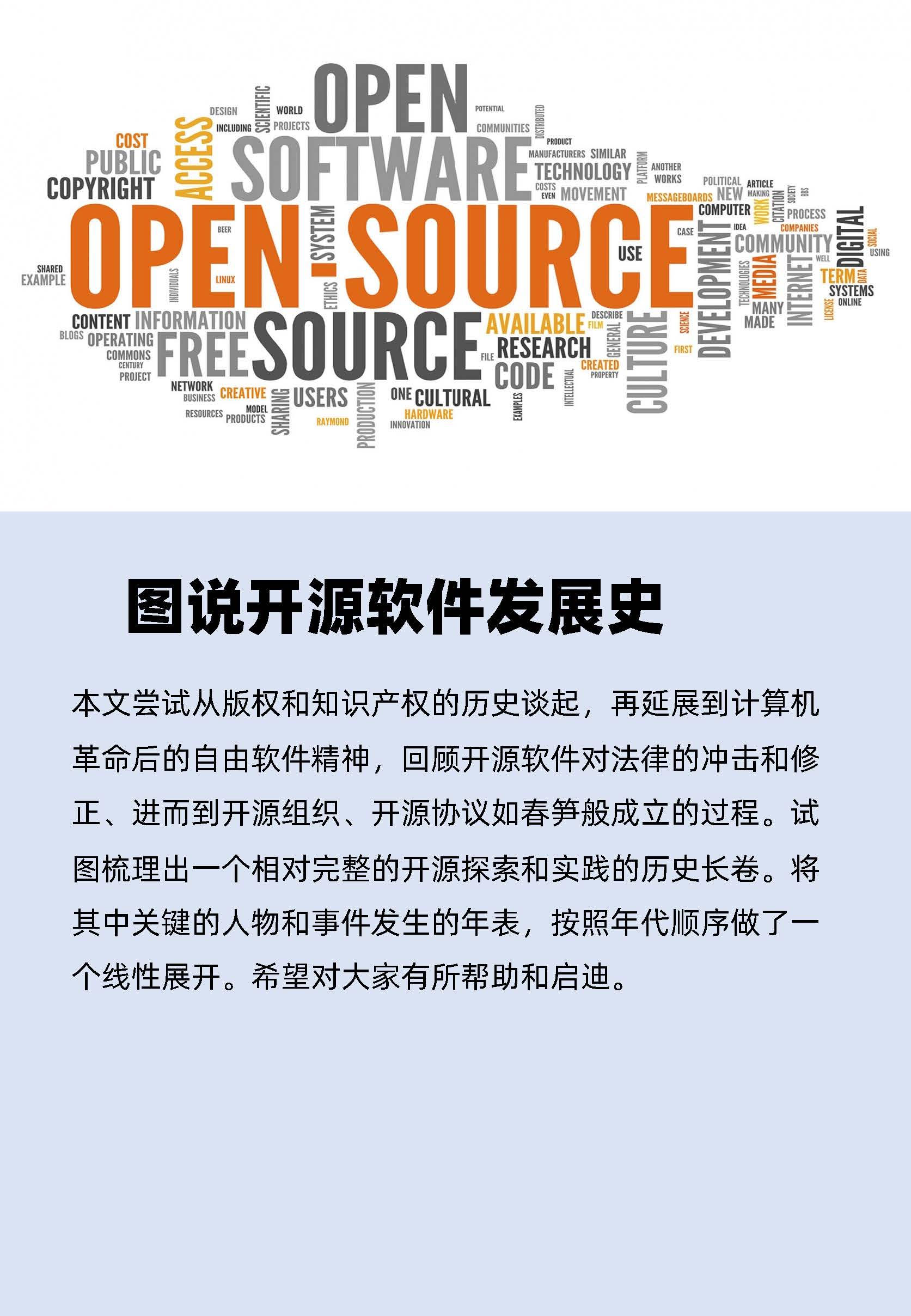
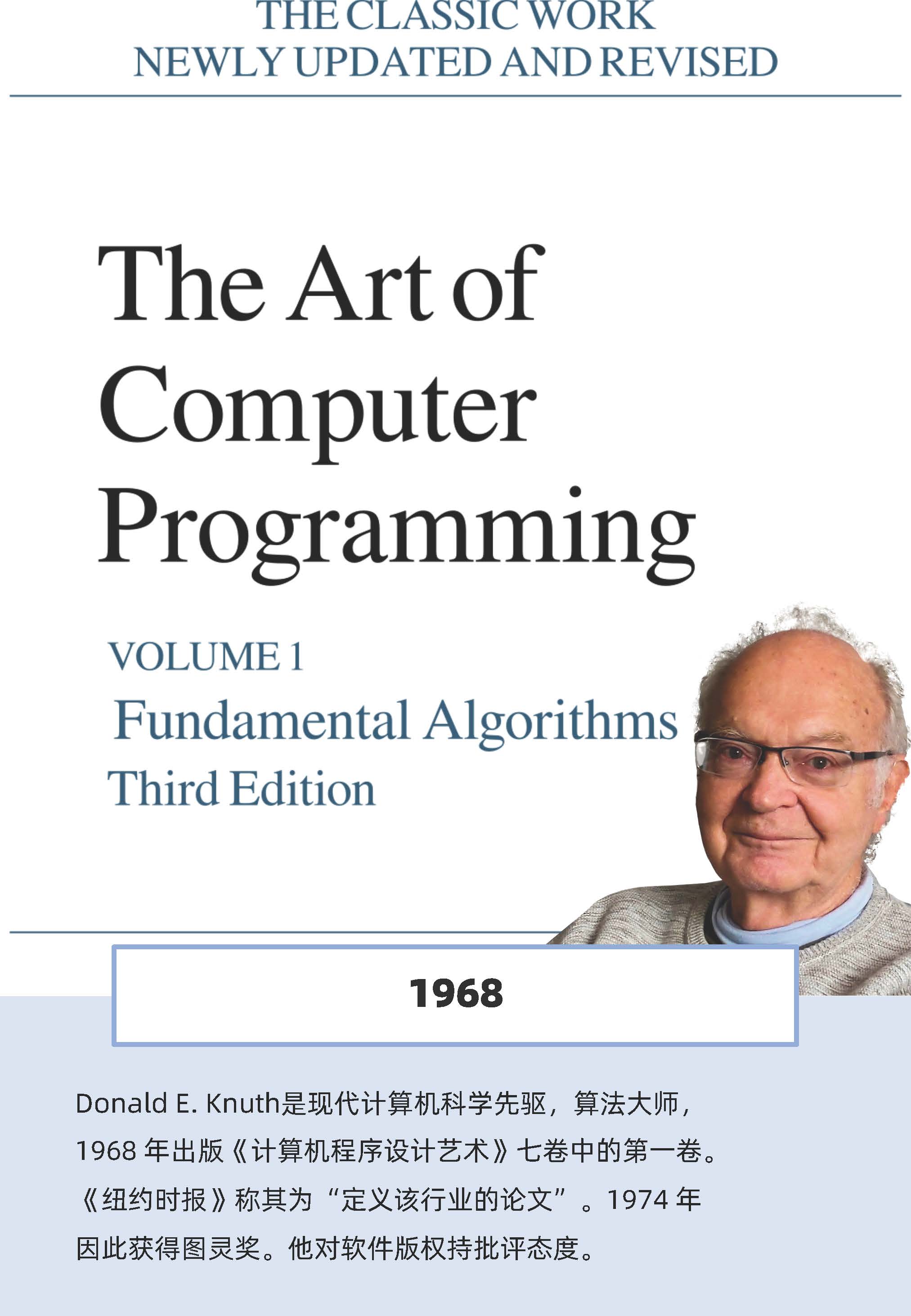
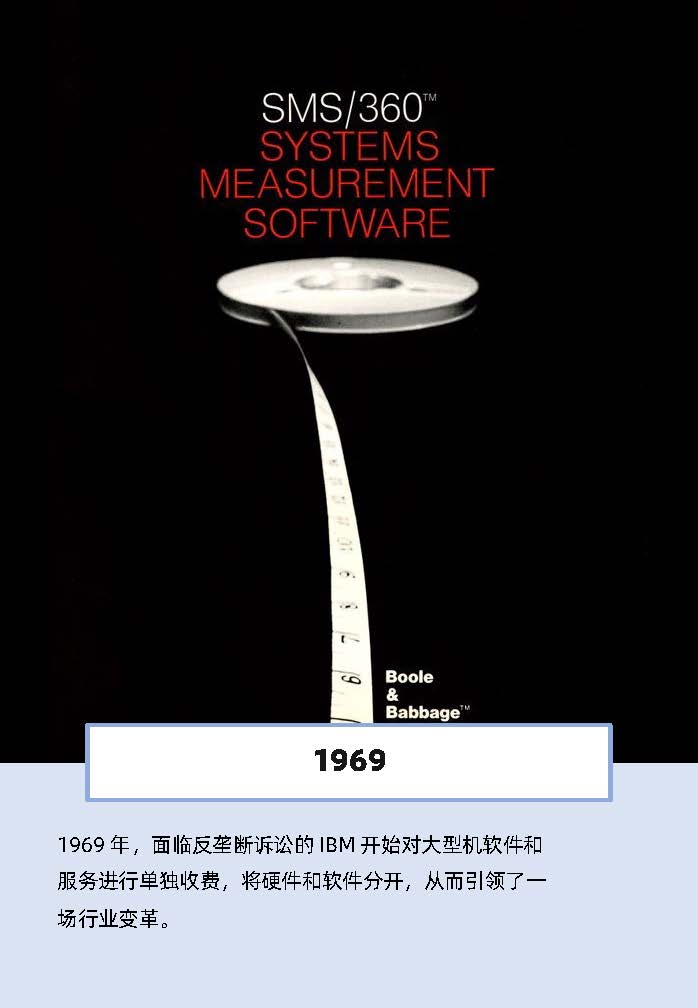
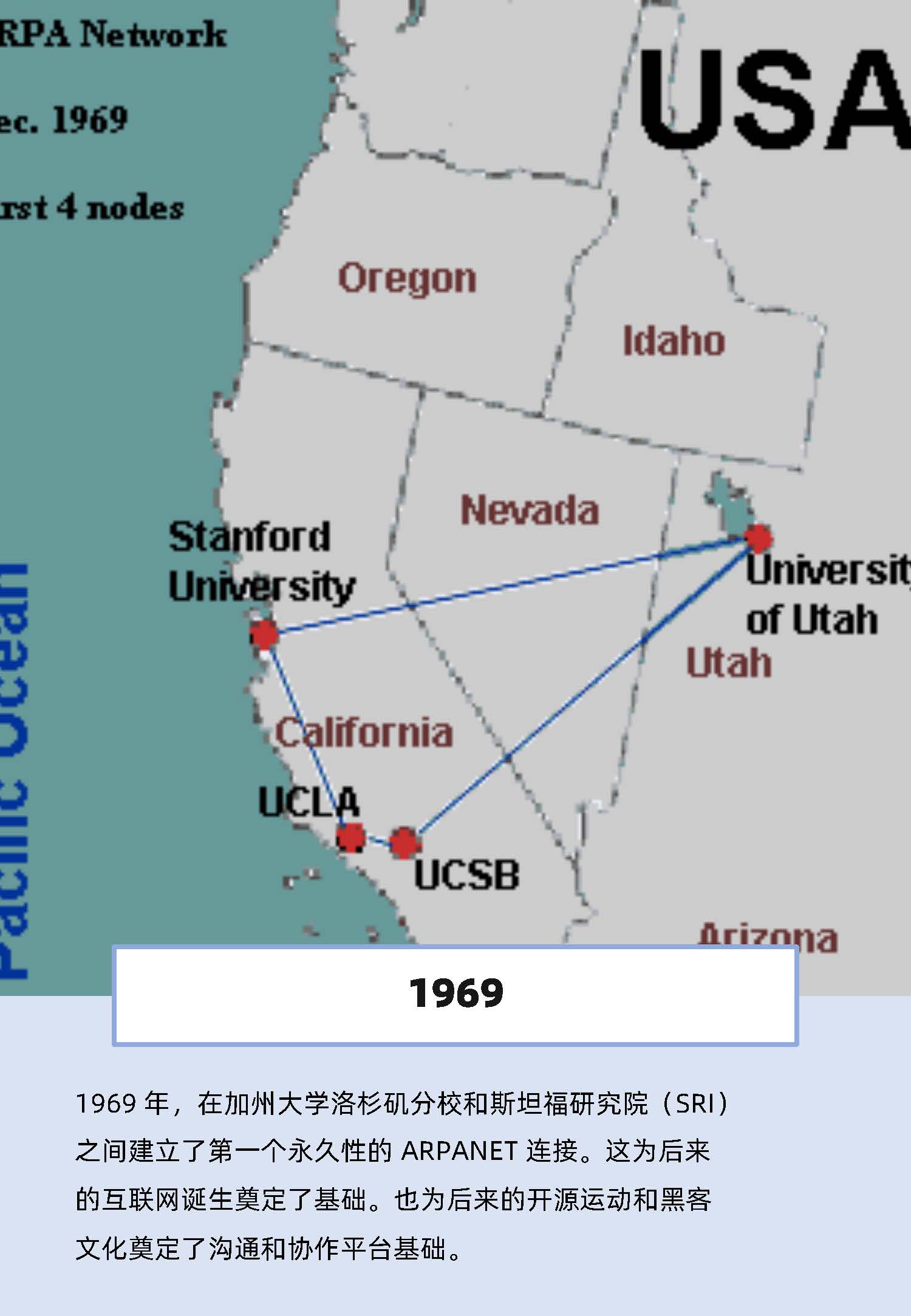
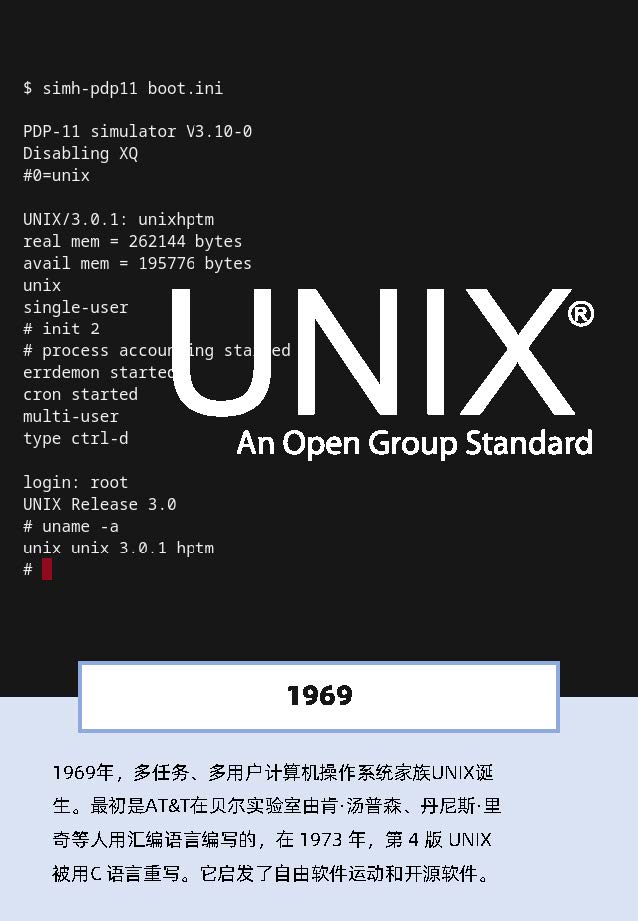
图说开源软件发展史







via:
-
The Open Source Movement
https://www.hartford.edu/faculty-staff/faculty/fcld/_files/open source.pdf- CNET: "A Mortal Microsoft" http://news.cnet.com/2009-1001-961354.html
- The Open Source Initiative: http://www.opensource.org/osd.html
-
The history of Open Source | OpenSource Science B.V.
https://os-sci.com/blog/our-blog-posts-1/the-history-of-open-source-132 -
A Brief History of Open Source
https://www.freecodecamp.org/news/brief-history-of-open-source/ -
全图说开源软件发展历史-V1.0 - 2023
https://www.comentropy.org/wp-content/uploads/2023/10/全图说开源软件发展历史-V1.0.pdf