Android 四种常用布局完全解析(附实战项目截图)
前言
在 Android 开发中,布局是构建界面的基础。不同的布局类型决定了控件的排列方式和交互逻辑。本文将结合 LinearLayout、RelativeLayout、TableLayout、FrameLayout(嵌套布局) 四个实战项目,详细介绍这四种最常用的 Android 布局,帮助你理解它们的特点、用法和适用场景。
一、LinearLayout(线性布局)
线性布局是 Android 中最基础的布局,它会将子控件按照 水平(horizontal) 或 垂直(vertical) 方向依次排列。
核心特点
- 方向单一:只能在水平或垂直一个方向上排列控件,无法同时在两个方向上分布。
- 权重分配 :通过
android:layout_weight属性,可以按比例分配剩余空间,实现自适应布局。 - 嵌套灵活:可以嵌套多个 LinearLayout,组合出更复杂的线性界面。
实战项目效果
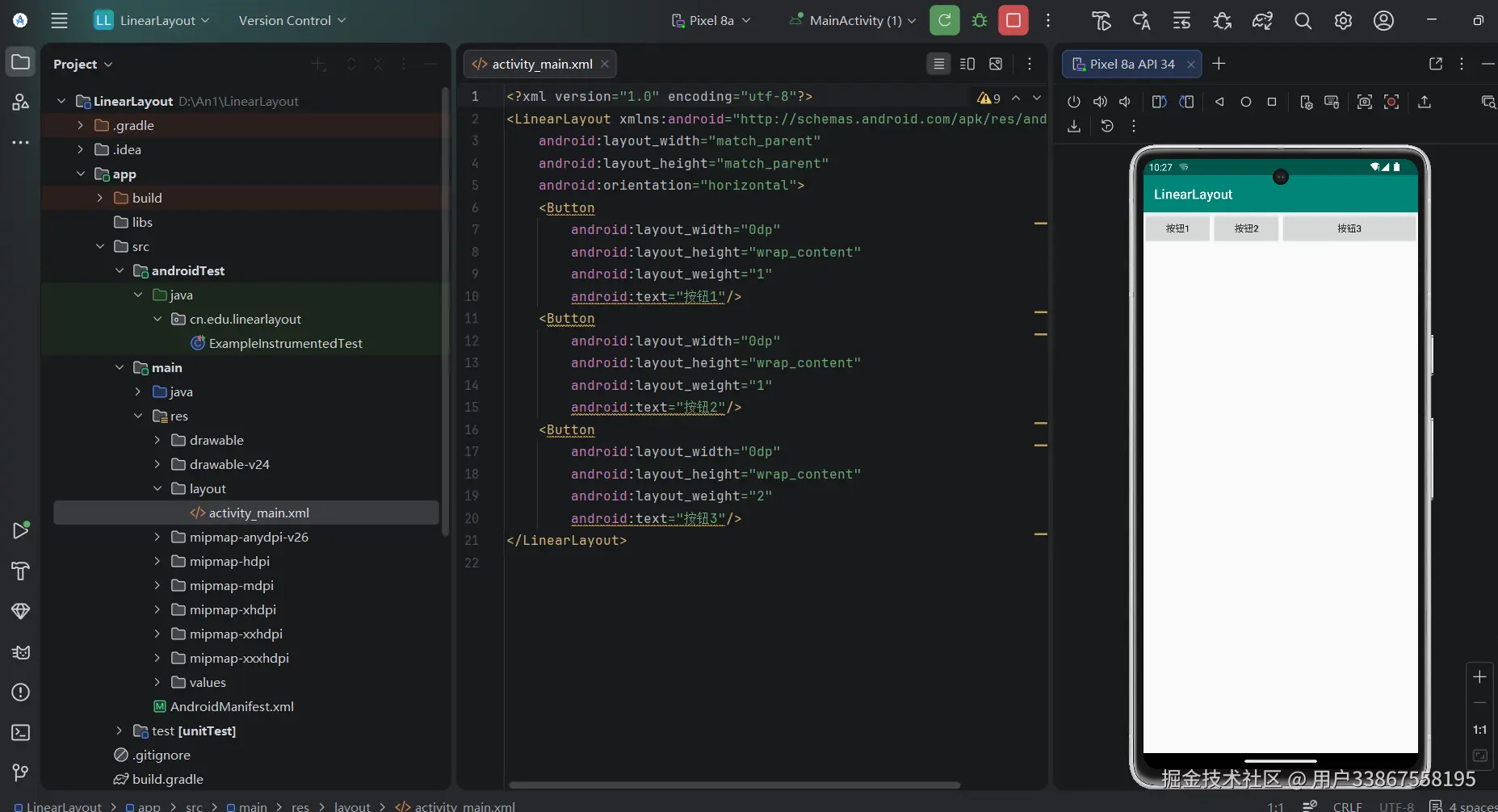
核心代码示例
ini
<?xml version="1.0" encoding="utf-8"?>
<LinearLayout xmlns:android="http://schemas.android.com/apk/res/android"
    android:layout_width="match_parent"
    android:layout_height="match_parent"
    android:orientation="horizontal">
    <Button
        android:layout_width="0dp"
        android:layout_height="wrap_content"
        android:layout_weight="1"
        android:text="按钮1"/>
    <Button
        android:layout_width="0dp"
        android:layout_height="wrap_content"
        android:layout_weight="1"
        android:text="按钮2"/>
    <Button
        android:layout_width="0dp"
        android:layout_height="wrap_content"
        android:layout_weight="2"
        android:text="按钮3"/>
</LinearLayout>
适用场景
- 简单的按钮组、列表项、表单行。
- 需要按比例分配空间的场景(如均分导航栏、自适应输入框)。
二、RelativeLayout(相对布局)
相对布局允许子控件相对于父容器 或相对于其他控件进行定位,自由度极高,是实现复杂界面的首选布局之一。
核心特点
-
相对定位:子控件可以通过属性锚定到父容器的边缘、中心,或其他控件的上下左右。
-
减少嵌套:相比 LinearLayout 多层嵌套,RelativeLayout 通常只需一层即可实现复杂布局,提升性能。
-
常用属性:
- 相对父容器:
layout_alignParentTop、layout_centerHorizontal、layout_alignParentBottom - 相对其他控件:
layout_toRightOf、layout_below、layout_alignBottom
- 相对父容器:
实战项目效果
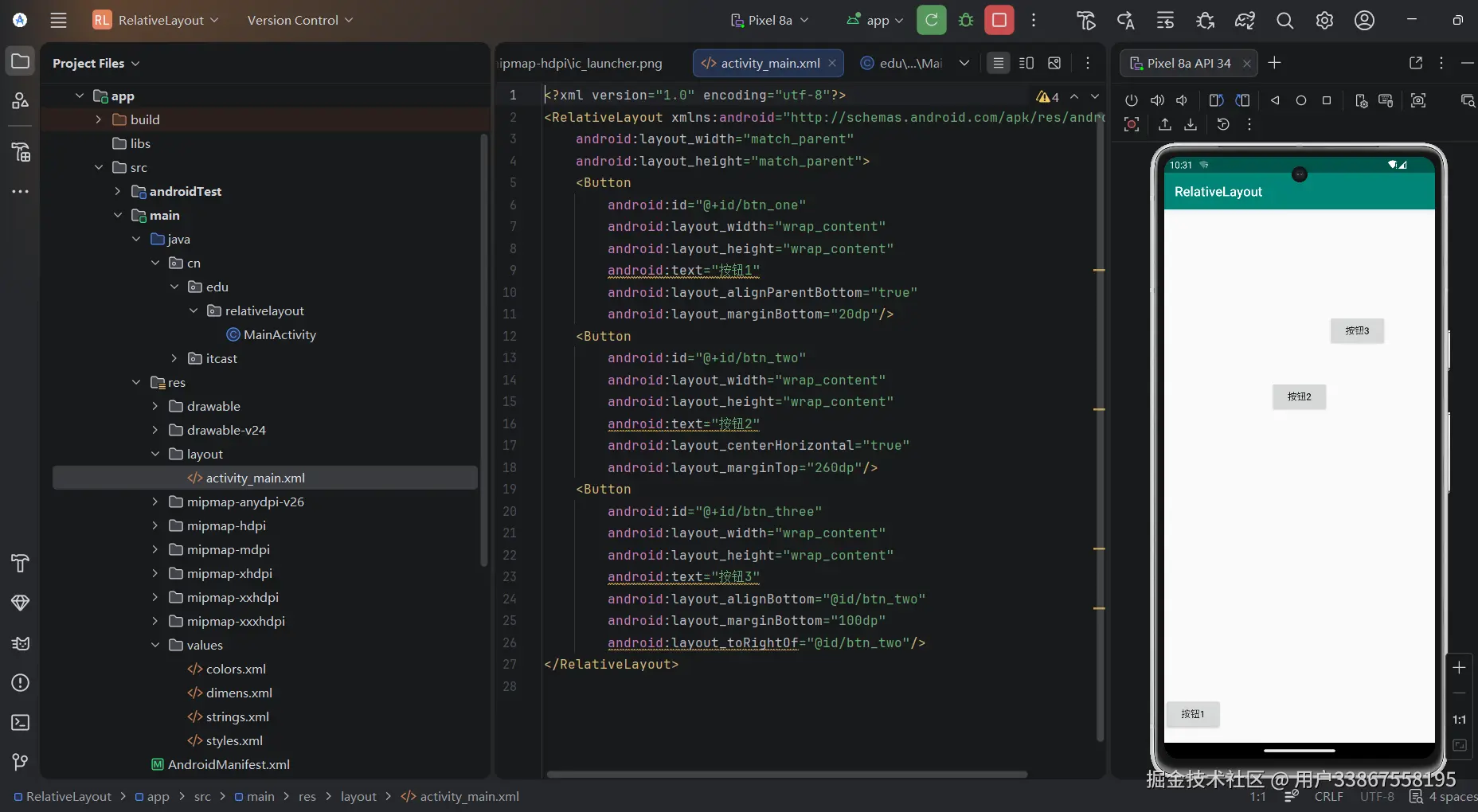
核心代码示例
ini
<?xml version="1.0" encoding="utf-8"?>
<RelativeLayout xmlns:android="http://schemas.android.com/apk/res/android"
    android:layout_width="match_parent"
    android:layout_height="match_parent">
    <Button
        android:id="@+id/btn_one"
        android:layout_width="wrap_content"
        android:layout_height="wrap_content"
        android:text="按钮1"
        android:layout_alignParentBottom="true"
        android:layout_marginBottom="20dp"/>
    <Button
        android:id="@+id/btn_two"
        android:layout_width="wrap_content"
        android:layout_height="wrap_content"
        android:text="按钮2"
        android:layout_centerHorizontal="true"
        android:layout_marginTop="260dp"/>
    <Button
        android:id="@+id/btn_three"
        android:layout_width="wrap_content"
        android:layout_height="wrap_content"
        android:text="按钮3"
        android:layout_alignBottom="@id/btn_two"
        android:layout_marginBottom="100dp"
        android:layout_toRightOf="@id/btn_two"/>
</RelativeLayout>
适用场景
- 复杂的界面布局(如登录页、商品详情页)。
- 需要控件之间相互对齐、依赖定位的场景。
三、TableLayout(表格布局)
表格布局以 行(TableRow) 和 列 的形式排列子控件,类似 HTML 中的表格,适合规整的网格布局。
核心特点
- 网格结构 :每一行由
TableRow包裹,列数由该行最多控件数决定。 - 自动拉伸 :通过
android:stretchColumns指定拉伸列,填充剩余空间,实现列宽自适应。 - 跨行跨列 :支持
android:layout_span属性,实现单元格合并。
实战项目效果
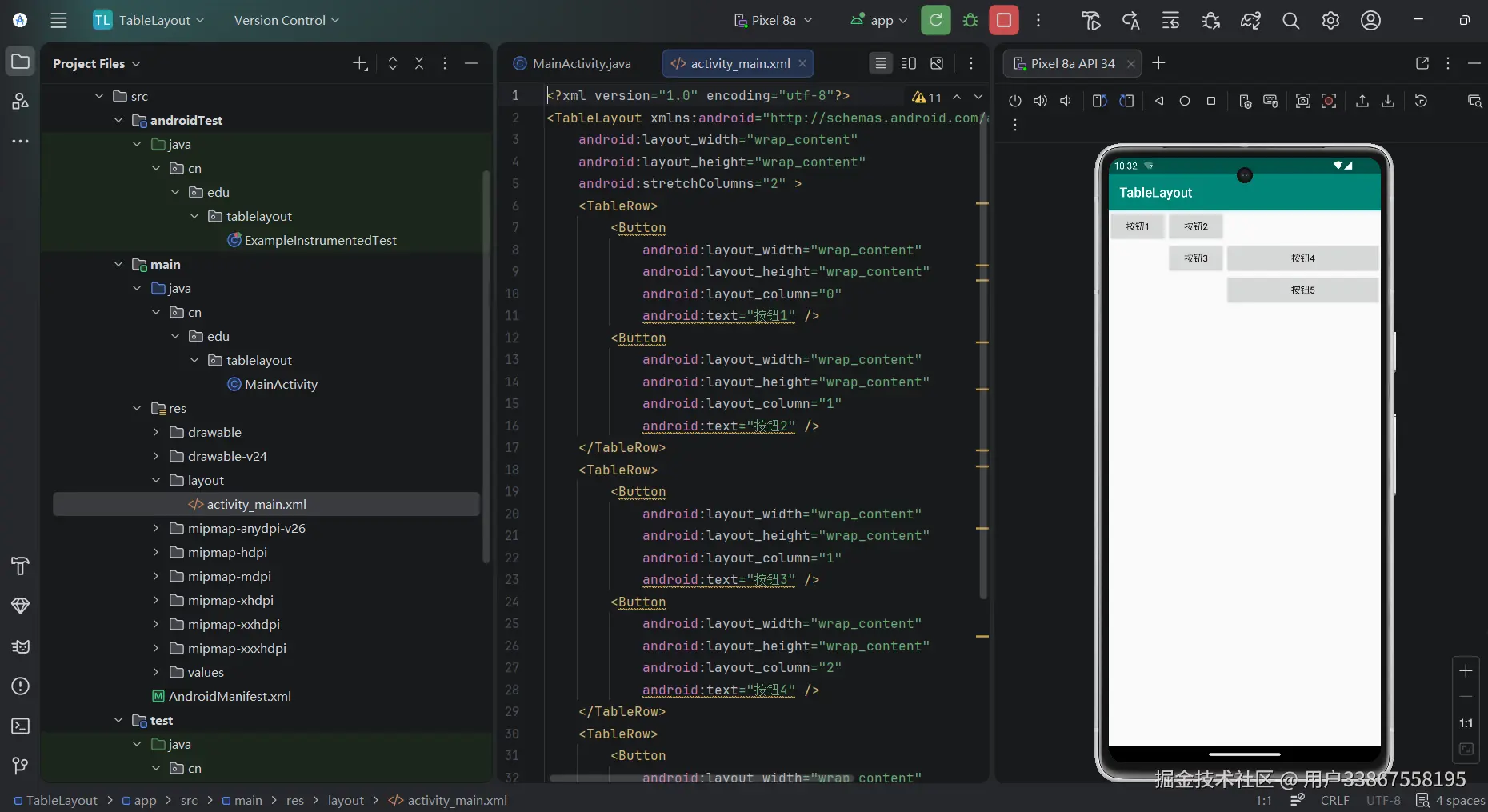
核心代码示例
ini
<?xml version="1.0" encoding="utf-8"?>
<TableLayout xmlns:android="http://schemas.android.com/apk/res/android"
    android:layout_width="wrap_content"
    android:layout_height="wrap_content"
    android:stretchColumns="2" >
    <TableRow>
        <Button
            android:layout_width="wrap_content"
            android:layout_height="wrap_content"
            android:layout_column="0"
            android:text="按钮1" />
        <Button
            android:layout_width="wrap_content"
            android:layout_height="wrap_content"
            android:layout_column="1"
            android:text="按钮2" />
    </TableRow>
    <TableRow>
        <Button
            android:layout_width="wrap_content"
            android:layout_height="wrap_content"
            android:layout_column="1"
            android:text="按钮3" />
        <Button
            android:layout_width="wrap_content"
            android:layout_height="wrap_content"
            android:layout_column="2"
            android:text="按钮4" />
    </TableRow>
    <TableRow>
        <Button
            android:layout_width="wrap_content"
            android:layout_height="wrap_content"
            android:layout_column="2"
            android:text="按钮5" />
    </TableRow>
</TableLayout>
适用场景
- 表单、日历、数据表格等需要规整网格的界面。
- 对齐要求严格的多行多列布局。
四、FrameLayout / 嵌套布局(以 NeonLamp 为例)
FrameLayout(帧布局)是最简单的布局之一,所有子控件默认叠加在左上角,后添加的控件会覆盖在前面的控件之上。常与 LinearLayout 嵌套使用,实现层叠、居中的视觉效果。
核心特点
- 层叠叠加:子控件默认重叠,适合实现悬浮、覆盖效果。
- 居中控制 :结合
android:layout_gravity="center",可轻松实现子控件在父容器中居中。 - 嵌套灵活:多层嵌套可实现复杂的组合控件或视觉特效。
实战项目效果
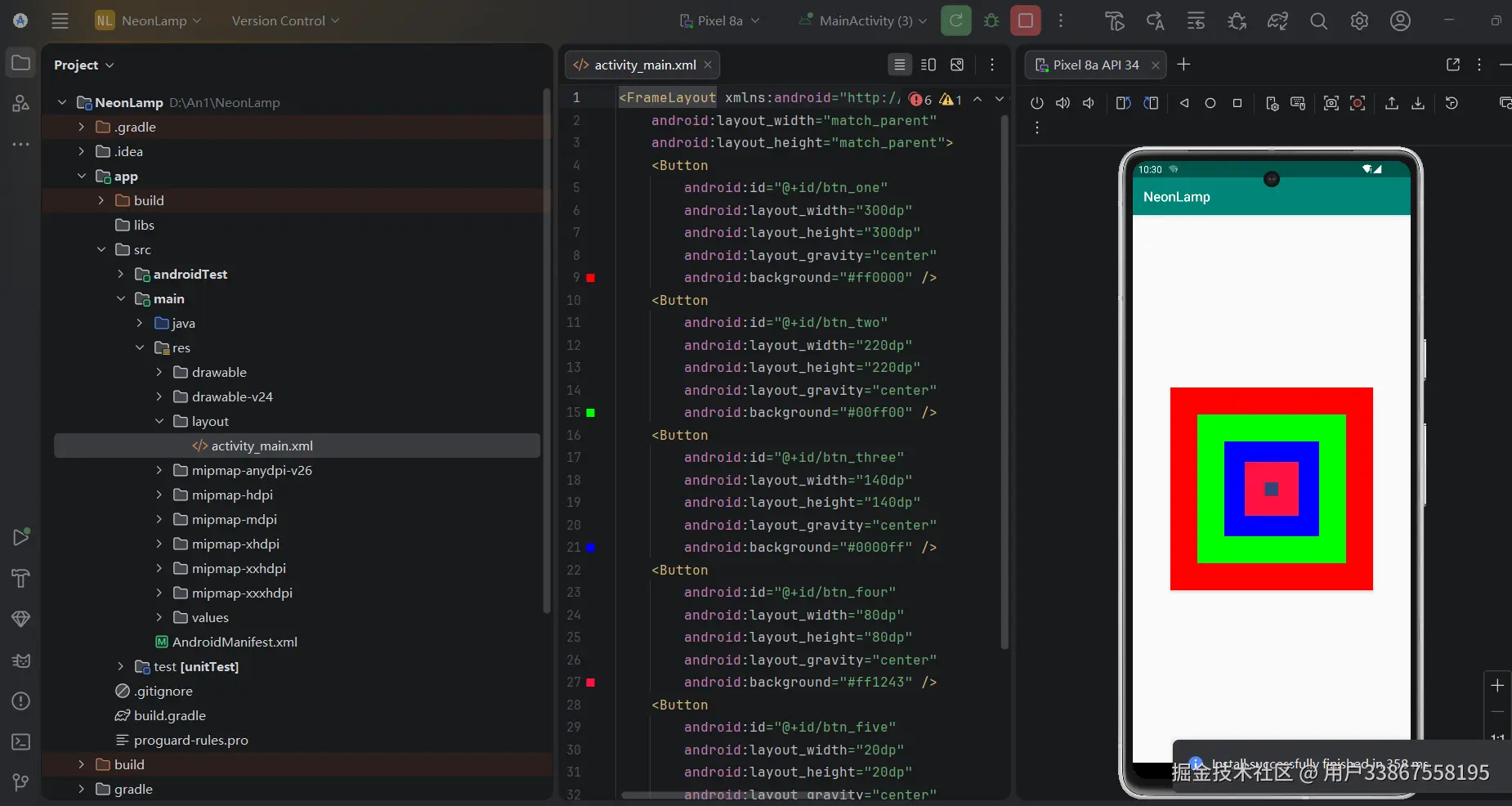
核心代码示例
ini
<FrameLayout xmlns:android="http://schemas.android.com/apk/res/android"
    android:layout_width="match_parent"
    android:layout_height="match_parent">
    <Button
        android:id="@+id/btn_one"
        android:layout_width="300dp"
        android:layout_height="300dp"
        android:layout_gravity="center"
        android:background="#ff0000" />
    <Button
        android:id="@+id/btn_two"
        android:layout_width="220dp"
        android:layout_height="220dp"
        android:layout_gravity="center"
        android:background="#00ff00" />
    <Button
        android:id="@+id/btn_three"
        android:layout_width="140dp"
        android:layout_height="140dp"
        android:layout_gravity="center"
        android:background="#0000ff" />
    <Button
        android:id="@+id/btn_four"
        android:layout_width="80dp"
        android:layout_height="80dp"
        android:layout_gravity="center"
        android:background="#ff1243" />
    <Button
        android:id="@+id/btn_five"
        android:layout_width="20dp"
        android:layout_height="20dp"
        android:layout_gravity="center"
        android:background="#324678" />
</FrameLayout>
适用场景
- 层叠效果(如指示灯、悬浮按钮、卡片叠加)。
- 自定义组合控件(如带图标的按钮、带角标的头像)。
- 简单的居中、填充布局。
五、四种布局对比总结
| 布局类型 | 核心特点 | 优点 | 缺点 | 典型场景 |
|---|---|---|---|---|
| LinearLayout | 水平 / 垂直线性排列 | 简单直观、权重分配灵活 | 复杂界面需多层嵌套,性能差 | 按钮组、列表、表单行 |
| RelativeLayout | 相对父容器 / 其他控件定位 | 自由度高、减少嵌套 | 属性繁多,学习成本稍高 | 登录页、详情页、复杂界面 |
| TableLayout | 表格行 / 列结构 | 规整对齐、支持跨列 | 灵活性不如 RelativeLayout | 数据表格、表单、日历 |
| FrameLayout / 嵌套 | 层叠 / 居中嵌套 | 实现重叠、居中效果方便 | 子控件叠加顺序需注意 | 指示灯、悬浮按钮、自定义控件 |
六、布局选择建议
- 简单线性排列 :优先使用 LinearLayout,实现快速、代码简洁。
- 复杂相对定位 :优先使用 RelativeLayout,减少布局层级,提升性能。
- 规整网格 :使用 TableLayout,保证对齐和结构清晰。
- 层叠 / 居中效果 :使用 FrameLayout 或嵌套布局,实现视觉特效。
通过这四个项目的实践,相信你已经能熟练掌握这四种布局的用法,在实际开发中根据需求灵活选择,构建出高效、美观的 Android 界面。