注:本文为 "@ 符号" 相关合辑。
英文引文,机翻未校。
中文引文,略作重排。
图片清晰度受引文原图所限。
如有内容异常,请看原文。
The Accidental History of the @ Symbol
@ 符号的发展史
Once a rarely used key on the typewriter, the graceful character has become the very symbol of modern electronic communication.
这个曾在打字机上极少被使用的雅致字符,如今已然成为现代电子通信的标识符号。
William F. Allman
威廉·F·奥尔曼
September 2012
2012 年 9 月
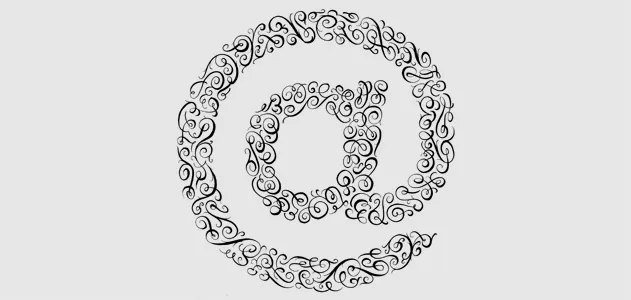
Although the first documented use of @ was in 1536, the symbol did not rise from modern obscurity until 1971.
Illustration by Erik Marinovich
尽管有文献记载的 @ 符号首次使用时间为 1536 年,但这一符号直到 1971 年才从现代社会的沉寂中走入大众视野。
插画:埃里克·马里诺维奇
Called the "snail" by Italians and the "monkey tail" by the Dutch, @ is the sine qua non of electronic communication, thanks to e-mail addresses and Twitter handles. @ has even been inducted into the permanent collection of the Museum of Modern Art, which cited its modern use as an example of "elegance, economy, intellectual transparency, and a sense of the possible future directions that are embedded in the arts of our time."
意大利人将 @ 称作"蜗牛",荷兰人则称其为"猴尾",依托电子邮箱地址与推特用户名,@ 成为电子通信不可或缺的标识。该符号甚至被纽约现代艺术博物馆纳入永久馆藏,馆方评价其现代应用兼具"雅致简约、表意凝练、逻辑直观的特质,也承载着当代艺术蕴含的未来发展趋向"。
The origin of the symbol itself, one of the most graceful characters on the keyboard, is something of a mystery. One theory is that medieval monks, looking for shortcuts while copying manuscripts, converted the Latin word for "toward"---ad ---to "a" with the back part of the "d" as a tail. Or it came from the French word for "at"---à ---and scribes, striving for efficiency, swept the nib of the pen around the top and side. Or the symbol evolved from an abbreviation of "each at"---the "a" being encased by an "e." The first documented use was in 1536, in a letter by Francesco Lapi, a Florentine merchant, who used @ to denote units of wine called amphorae, which were shipped in large clay jars.
作为键盘上造型别致的字符之一,@ 符号的起源始终笼罩着些许神秘色彩。有一种说法认为,中世纪修士手抄古籍时为简化书写,将拉丁语中表示"朝向"的单词 ad 简化,保留字母 a ,把字母 d 的后半部分化作尾部弧线。还有观点认为,它源自法语中表示"在"的单词 à ,抄写文士为提升书写效率,用笔尖绕写字母顶部与侧边形成该符号。另有推测指出,@ 由短语"each at"的缩写演变而来,字母 a 被字母 e 的轮廓包裹环绕。有文献可考的首次使用出现于 1536 年,佛罗伦萨商人弗朗切斯科·拉皮在信件中,用 @ 指代一种名为双耳陶罐的葡萄酒计量单位,这类葡萄酒以大型陶瓮装运外运。
The symbol later took on a historic role in commerce. Merchants have long used it to signify "at the rate of"---as in "12 widgets @ 1." (That the total is 12, not $1, speaks to the symbol's pivotal importance.) Still, the machine age was not so kind to @. The first typewriters, built in the mid-1800s, didn't include @. Likewise, @ was not among the symbolic array of the earliest punch-card tabulating systems (first used in collecting and processing the 1890 U.S. census), which were precursors to computer programming.
此后,这一符号在商业领域拥有了专属应用定位。长久以来,商人用它表示"按......单价计算",例如句式 "12 件商品 @ 1 美元"。(此式总价为 12 美元而非 1 美元,足以体现该符号的表意作用。)但机器时代的到来,并未给 @ 符号带来发展契机。19 世纪中期诞生的首批打字机,并未配置 @ 字符。同样,最早的穿孔卡片制表系统(首次应用于 1890 年美国人口普查的数据收集与处理,也是计算机编程的前身技术)的符号列表中,也没有收录 @。
The symbol's modern obscurity ended in 1971, when a computer scientist named Ray Tomlinson was facing a vexing problem: how to connect people who programmed computers with one another. At that time, each programmer was typically connected to a particular mainframe machine via a phone connection and a teletype machine---basically a keyboard with a built-in printer. But these computers weren't connected to one another, a shortcoming the U.S. government sought to overcome when it hired BBN Technologies, the Cambridge, Massachusetts, company Tomlinson worked for, to help develop a network called Arpanet, forerunner of the Internet.
@ 符号在现代社会的沉寂状态于 1971 年被打破,彼时计算机科学家雷·汤姆林森面临一个棘手难题:如何让编写计算机程序的人群实现相互联通。当时,每位程序员通常借助电话线与电传打字机接入指定大型主机,电传打字机可理解为自带打印功能的键盘设备。但各台主机彼此之间无法互联,为解决这一短板,美国政府聘请汤姆林森所在的马萨诸塞州剑桥市 BBN 科技公司,协助研发名为阿帕网的网络,该网络即为互联网的前身。
Tomlinson's challenge was how to address a message created by one person and sent through Arpanet to someone at a different computer. The address needed an individual's name, he reasoned, as well as the name of the computer, which might service many users. And the symbol separating those two address elements could not already be widely used in programs and operating systems, lest computers be confused.
汤姆林森需要解决的问题是,如何设定地址格式,让用户编辑的信息可通过阿帕网发送至其他主机的使用者。他推断,网络地址需要包含用户名与主机名,一台主机可同时为多名用户提供服务。用于分隔用户名与主机名的标识符号,不能在程序和操作系统中被大量占用,避免计算机出现识别错乱。
Tomlinson's eyes fell on @, poised above "P" on his Model 33 teletype. "I was mostly looking for a symbol that wasn't used much," he told Smithsonian. "And there weren't a lot of options---an exclamation point or a comma. I could have used an equal sign, but that wouldn't have made much sense." Tomlinson chose @---"probably saving it from going the way of the 'cent' sign on computer keyboards," he says. Using his naming system, he sent himself an e-mail, which traveled from one teletype in his room, through Arpanet, and back to a different teletype in his room.
汤姆林森将目光落在自己 33 型电传打字机上,位于字母 P 上方的 @ 符号。他向《史密森尼》杂志表示:"我当时主要想找一个使用率很低的符号,可选范围并不大,感叹号、逗号都在考虑范围内。我也可以选用等号,但表意并不合适。"汤姆林森最终选定了 @,他称这一选择"或许让 @ 免于走上计算机键盘上分币符号被淘汰的老路"。他依托自行设计的地址规则,给自己发送了一封电子邮件,邮件从房间内一台电传打字机发出,经由阿帕网传输,最终传回房间内另一台电传打字机。
Tomlinson, who still works at BBN, says he doesn't remember what he wrote in that first e-mail. But that is fitting if, as Marshall McLuhan argued, "The medium is the message." For with that message, the ancient @, once nearly obsolete, became the symbolic linchpin of a revolution in how humans connect.
如今仍任职于 BBN 科技公司的汤姆林森表示,他已记不清第一封邮件的具体内容。而这一情形恰好契合马歇尔·麦克卢汉的观点:"媒介即讯息。"正是借助这封邮件,近乎被时代淘汰的古老 @ 符号,成为人类通信方式变革中不可或缺的标识纽带。
@ 符号溯源:诞生早于计算机与互联网的通用标识
@ 符号是现代键盘辨识度极高的通用字符,主要用于电子通信场景下定向匹配特定使用主体。
20 世纪 90 年代互联网普及之后,@ 符号的应用场景突破电子邮件地址范畴。网络论坛、线上聊天室及各类社交媒体兴起后,该字符被用于精准定向对话用户,明确信息传达对象。
社交平台 Twitter(现 X 平台)于 2006 年正式上线,2007 年平台完成功能升级,依托 @ 符号搭建用户主页超链接入口,自动归集关联推文内容。后续各类社交平台相继复刻同类功能,@ 符号逐步成为网络社交互动的通用标识。
如今电子邮件地址、社交媒体账号体系中均普遍使用 @ 符号,但这一字符并非近现代才走入大众视野。
一、@ 符号的起源与早期应用
@ 符号的诞生时间远早于互联网、电子邮件与社交媒介。回溯 19 世纪打字机键盘布局可发现,键盘字符区域已设置独立的 @ 按键。彼时尚无电子邮件通讯与网络社交场景,该符号的早期实用价值另有渊源。
学界对 @ 符号的起源与早期释义存在多种考证说法,有文献明确记载的使用记录可追溯至 1536 年,亦有研究认为其雏形可溯源至公元 6~7 世纪。
中世纪拉丁文抄写员以手抄典籍为工作方式,为提升抄写效率,创制出大量简化速记符号,字符 & 便是典型代表。@ 符号的形成逻辑与之相近,由拉丁文单词 ad 简化演变而来,该单词释义包含「在、去往、朝向」,字形以字母 a 为基底,尾部笔画延展融合字母 d 的书写形态。
考古文献留存一处罕见记载:公元 1345 年希腊编年史的保加利亚语译本中,抄写员曾以 @ 符号替代宗教词汇阿门(Amen)的首字母 A。该用法仅出现单次记载,后续再无同类文献佐证,背后缘由已无从考证。
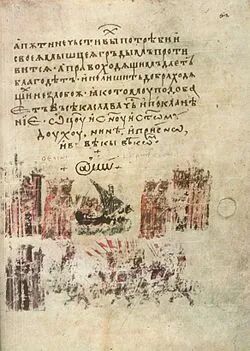
1345 年译本中用 @ 代表「阿门」(Amen)的字母 A(图片来源:Public Domain)
另有考据观点指出,法国古籍抄写员曾将 @ 作为法语词汇 à 的花体书写变体,语义同样对应「在」,与当下网络场景中 @ 的使用逻辑存在契合点,但该说法缺乏充足史料支撑。
2000 年,意大利罗马大学科学史教授乔治·斯塔比莱取得研究突破。他在一封 1536 年 5 月 4 日的佛罗伦萨商人书信中,发现了 @ 符号的早期商用用法,用于标注商品计价标准,例:一罐橄榄油 @ 对应交易金额。
这一发现佐证了 @ 符号在 19 世纪的使用场景:彼时会计从业者与商铺经营者,沿用其计价标注的功能,借助打字机录入账簿,记录商品价格与交易信息。
二、互联网时代:@ 符号的功能重塑
1971 年成为 @ 符号现代应用的分界节点。计算机科学家雷·汤姆林森依托 ARPANET(互联网前身,由美国国防部资助搭建网络),研发全球首款电子邮件程序。程序设计过程中,需要专用字符划分网络地址结构,选用标准为辨识度高、字形独特,且未被日常文字与计算机程序代码占用。

图片来源:pixabay
@ 符号契合上述选用条件。雷·汤姆林森 2012 年接受史密森尼学会采访时提及,选型阶段可供选择的特殊字符有限,逗号、感叹号等符号均不适配地址标识逻辑,等号也不符合设计规范,最终确定使用 @ 符号。
此次选型让沉寂已久的古老符号重新进入大众视野,逐步发展为信息时代具备代表性的标识符号。
三、全球语境下的 @ 符号称谓与输入差异
在不同国家语言体系中,@ 符号衍生出各类形象化别称。
Different Names for the @ Symbol Around the World
@ 符号在全球各地的别称
As a side note to end on, the @ sign goes by a wonderful and creative array of names in other languages around the world.
文末补充趣识:@ 符号在世界各语言中拥有大量形象且富有创意的别称。
This is where things get colorful. Around the world, the name for the @ symbol has been reimagined through food, animals and other playful imagery.
各地对 @ 符号的称呼颇具趣味,人们以食物、动物及各类生动意象为其赋予形象化称谓。
全球各地区 @ 符号别称对照表
-
Afrikaans:aapstert --- monkey's tail
南非语:aapstert --- 猴子尾巴
-
Denmark、Sweden:snabel-a / grisehale --- elephant's trunk / pig's tail
丹麦、瑞典:snabel-a / grisehale --- 象鼻 / 猪尾巴
-
France、Italy、South Korea:escargot / petit escargot --- snail / little snail
法国、意大利、韩国:escargot / petit escargot --- 蜗牛 / 小蜗牛
-
Hebrew、Israel:shtrudl / strudel
希伯来语、以色列:shtrudl --- 果仁卷点心
-
Russia:sobachka --- little dog
俄罗斯:sobachka --- 小狗
-
Thai:ai tua yiukyiu --- the wiggling worm-like character
泰语:ai tua yiukyiu --- 扭动的虫状符号
-
Germany、Poland、South Africa、Indonesia:monkey's tail
德国、波兰、南非、印度尼西亚:猴子尾巴
-
China:mouse
中国:鼠形符号
-
Czech Republic:rollmops --- rolled pickled herring
捷克共和国:rollmops --- 腌渍卷鲱鱼
-
Wales:little lamb's tail
威尔士:小羊尾巴
-
Spain、Portugal:arroba --- a historical unit of weight
西班牙、葡萄牙:arroba --- 古代重量计量单位
-
Kazakhstan:moon's ear
哈萨克斯坦:月亮之耳
-
Finland:curled-up cat(miukumauku literally means "sign of the meow")
芬兰:蜷曲猫咪(miukumauku 字面意为"喵呜符号")
-
Greece:little duck
希腊:小鸭子
-
Netherlands:curly A or monkey's tail
荷兰:卷曲字母 A 或 猴子尾巴
-
Hungary:worm
匈牙利:小虫
-
Norway:pig's tail
挪威:猪尾巴
-
Turkey:ear
土耳其:耳朵
受键盘区域语言布局影响,@ 符号的输入快捷键存在地域区别:
- 美式键盘:Shift + 2
- 德语键盘:Alt Gr + Q
- 法国 AZERTY 键盘:Alt Gr + 0
- 西班牙语键盘:Alt Gr + 2
地域键盘布局的差异,让 @ 符号的输入方式形成区分。
依托信息传递与社交联结的属性,@ 符号成为信息时代的标志性符号。2010 年,美国纽约现代艺术博物馆将 @ 符号纳入馆藏,确立其人文与历史价值。博物馆策展人葆拉·安东内利在馆藏声明中评价,@ 符号赋予大众标记生活、认同事物的表达自由,这一符号具备全民共享的属性,无专属归属主体。
reference
- The Accidental History of the @ Symbol
https://www.smithsonianmag.com/science-nature/the-accidental-history-of-the-symbol-18054936/ - 别再在网上乱 @ 人了,这个符号的历史其实比互联网和电脑还早
https://mp.weixin.qq.com/s/fZomkG37F4C-aNVuJ-KXLQ
环球科学 2026 年 5 月 3 日 20:55 北京
来源|IFLscience、britannica、Babbel
编译|冬鸢- What Was The Email @ Sign Used For Pre-Internet? | IFLScience
https://www.iflscience.com/the-sign-has-been-around-since-1536-so-what-was-it-used-for-pre-internet-83307 - At sign | Meaning, Symbol, History, Uses, & Facts | Britannica
https://www.britannica.com/topic/at-sign - All About The @ Symbol: Names, History And Global Quirks
https://www.babbel.com/en/magazine/what-other-countries-call-at-symbol
- What Was The Email @ Sign Used For Pre-Internet? | IFLScience