分布式存储系统设计:从一致性哈希到副本管理的 Rust 工程实现
一、单机存储的天花板:数据量、吞吐与可用性的三重瓶颈
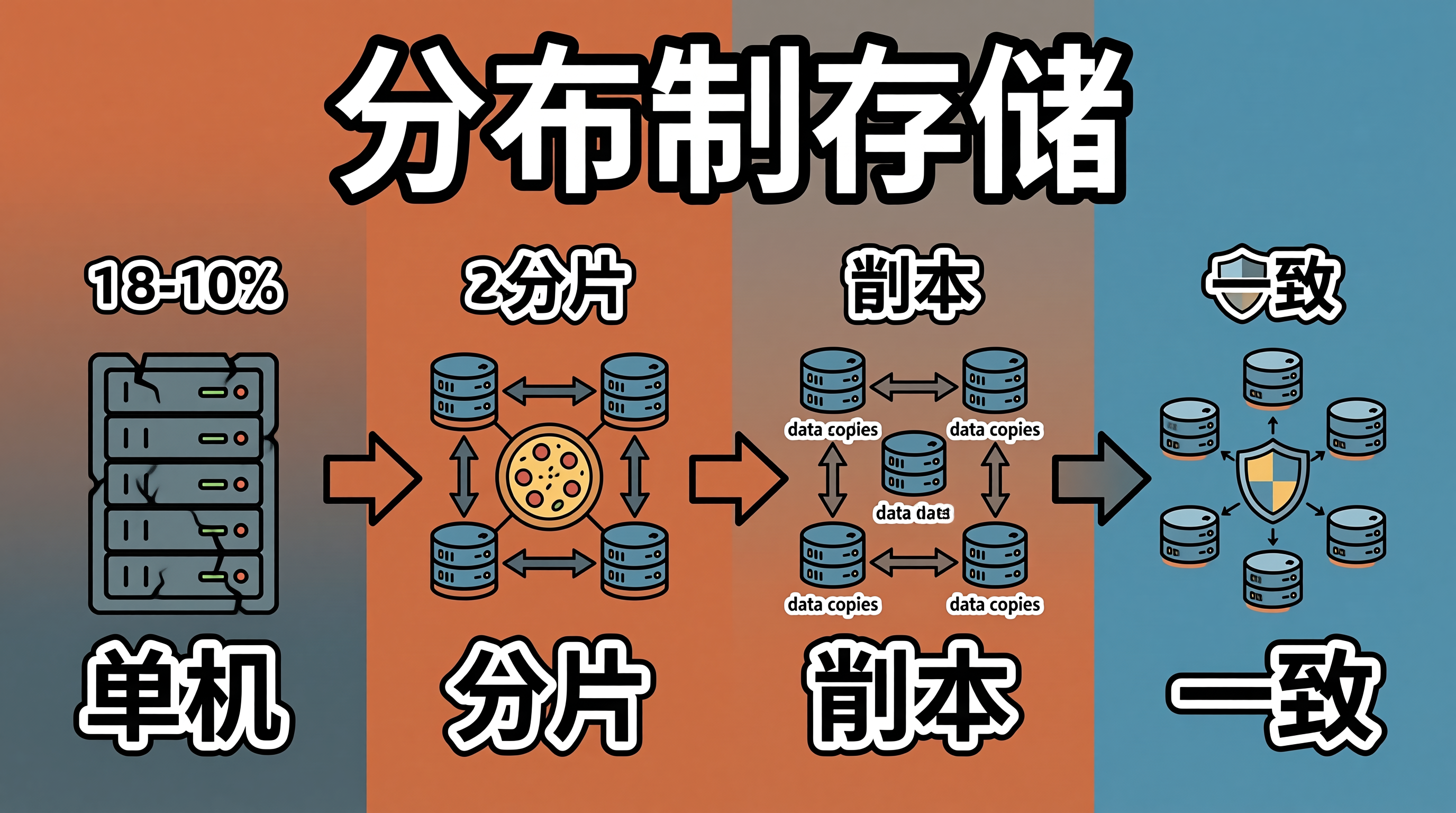
当数据量超过单机磁盘容量、QPS 超过单机网络带宽、或者单机宕机导致服务不可用时,单机存储就到了尽头。分布式存储系统的核心目标是:数据分片(Sharding)突破容量瓶颈、多副本(Replication)突破可用性瓶颈、一致性协议(Consensus)保证数据正确性。但这三个目标之间存在根本性矛盾------多副本提升可用性却引入一致性开销,强一致性保证正确性却牺牲延迟。
一致性哈希是分布式存储中数据分片的基础算法,解决了节点增减时最小化数据迁移的问题。但一致性哈希只是分片策略的一部分,完整的分布式存储还需要解决副本放置、故障检测、数据恢复和一致性保证等问题。
二、分布式存储的核心架构
关键设计决策:
- 分片策略:一致性哈希 + 虚拟节点,保证数据均匀分布
- 副本策略:主从复制(Primary-Replica),写请求由主副本处理并同步到从副本
- 一致性模型:写后读一致性(Read-After-Write Consistency),主副本写入确认后,从主副本读取保证一致
- 故障恢复:心跳检测 + 自动副本提升,从副本升级为主副本继续服务
三、生产级代码实现
3.1 一致性哈希环
rust
// consistent_hash.rs
// 一致性哈希环实现,支持虚拟节点
use std::collections::BTreeMap;
use sha2::{Sha256, Digest};

/// 一致性哈希环
pub struct ConsistentHashRing {
    /// 哈希值 → 节点 ID 的有序映射
    ring: BTreeMap<u64, String>,
    /// 每个物理节点的虚拟节点数
    virtual_nodes: usize,
}

impl ConsistentHashRing {
    pub fn new(virtual_nodes: usize) -> Self {
        Self {
            ring: BTreeMap::new(),
            virtual_nodes,
        }
    }

    /// 添加物理节点
    pub fn add_node(&mut self, node_id: &str) {
        for i in 0..self.virtual_nodes {
            let key = format!("{}:{}", node_id, i);
            let hash = Self::hash(&key);
            self.ring.insert(hash, node_id.to_string());
        }
    }

    /// 移除物理节点
    pub fn remove_node(&mut self, node_id: &str) {
        for i in 0..self.virtual_nodes {
            let key = format!("{}:{}", node_id, i);
            let hash = Self::hash(&key);
            self.ring.remove(&hash);
        }
    }

    /// 查找 key 所属的节点
    pub fn get_node(&self, key: &str) -> Option<&String> {
        if self.ring.is_empty() {
            return None;
        }
        let hash = Self::hash(key);
        // 找到第一个哈希值 >= key 哈希的节点
        // 如果没有,环绕到第一个节点
        match self.ring.range(hash..).next() {
            Some((_, node)) => Some(node),
            None => Some(self.ring.iter().next().unwrap().1),
        }
    }

    /// 获取 key 的所有副本节点(用于副本放置)
    pub fn get_replica_nodes(
        &self,
        key: &str,
        replica_count: usize,
    ) -> Vec<&String> {
        let mut nodes = Vec::new();
        let hash = Self::hash(key);

        // 从 key 的主节点开始,沿环顺时针遍历
        let mut seen = std::collections::HashSet::new();
        for (_, node) in self.ring.range(hash..).chain(self.ring.iter()) {
            if seen.insert(node.clone()) {
                nodes.push(node);
                if nodes.len() >= replica_count {
                    break;
                }
            }
        }
        nodes
    }

    /// SHA-256 哈希,取前 8 字节作为 u64
    fn hash(key: &str) -> u64 {
        let mut hasher = Sha256::new();
        hasher.update(key.as_bytes());
        let result = hasher.finalize();
        let bytes: [u8; 8] = result[..8].try_into().unwrap();
        u64::from_be_bytes(bytes)
    }
}
3.2 副本管理器
rust
// replica_manager.rs
// 主从副本管理器
use std::sync::Arc;
use tokio::sync::RwLock;
use std::collections::HashMap;

/// 副本角色
#[derive(Debug, Clone, PartialEq)]
pub enum ReplicaRole {
    Primary,
    Secondary,
}

/// 副本状态
#[derive(Debug, Clone)]
pub struct ReplicaInfo {
    pub node_id: String,
    pub role: ReplicaRole,
    pub last_heartbeat: std::time::Instant,
    pub lag: u64,  // 与主副本的复制延迟(字节数)
}

/// 分片信息
#[derive(Debug, Clone)]
pub struct ShardInfo {
    pub shard_id: u64,
    pub primary: String,
    pub secondaries: Vec<String>,
}

/// 副本管理器
pub struct ReplicaManager {
    /// 分片 → 副本信息
    shards: Arc<RwLock<HashMap<u64, ShardInfo>>>,
    /// 节点 → 副本列表
    node_replicas: Arc<RwLock<HashMap<String, Vec<ReplicaInfo>>>>,
    /// 心跳超时阈值
    heartbeat_timeout: std::time::Duration,
}

impl ReplicaManager {
    pub fn new(heartbeat_timeout_secs: u64) -> Self {
        Self {
            shards: Arc::new(RwLock::new(HashMap::new())),
            node_replicas: Arc::new(RwLock::new(HashMap::new())),
            heartbeat_timeout: std::time::Duration::from_secs(
                heartbeat_timeout_secs
            ),
        }
    }

    /// 注册分片的主从副本
    pub async fn register_shard(
        &self,
        shard_id: u64,
        primary: String,
        secondaries: Vec<String>,
    ) {
        let mut shards = self.shards.write().await;
        shards.insert(shard_id, ShardInfo {
            shard_id,
            primary: primary.clone(),
            secondaries: secondaries.clone(),
        });

        // 更新节点副本映射
        let mut node_replicas = self.node_replicas.write().await;
        node_replicas.entry(primary).or_default().push(ReplicaInfo {
            node_id: primary.clone(),
            role: ReplicaRole::Primary,
            last_heartbeat: std::time::Instant::now(),
            lag: 0,
        });
        for sec in secondaries {
            node_replicas.entry(sec.clone()).or_default().push(
                ReplicaInfo {
                    node_id: sec,
                    role: ReplicaRole::Secondary,
                    last_heartbeat: std::time::Instant::now(),
                    lag: 0,
                }
            );
        }
    }

    /// 处理心跳
    pub async fn handle_heartbeat(
        &self,
        node_id: &str,
        shard_id: u64,
        lag: u64,
    ) {
        let mut node_replicas = self.node_replicas.write().await;
        if let Some(replicas) = node_replicas.get_mut(node_id) {
            for replica in replicas.iter_mut() {
                replica.last_heartbeat = std::time::Instant::now();
                replica.lag = lag;
            }
        }
    }

    /// 检测故障节点并执行副本提升
    pub async fn check_failovers(&self) -> Vec<(u64, String, String)> {
        let now = std::time::Instant::now();
        let shards = self.shards.read().await;
        let node_replicas = self.node_replicas.read().await;
        let mut failovers = Vec::new();

        for (shard_id, shard) in shards.iter() {
            // 检查主副本是否超时
            if let Some(replicas) = node_replicas.get(&shard.primary) {
                if let Some(primary_replica) = replicas.first() {
                    if now.duration_since(primary_replica.last_heartbeat)
                        > self.heartbeat_timeout
                    {
                        // 主副本故障,选择延迟最小的从副本提升
                        if let Some(new_primary) = shard.secondaries.first()
                        {
                            failovers.push((
                                *shard_id,
                                shard.primary.clone(),
                                new_primary.clone(),
                            ));
                        }
                    }
                }
            }
        }

        failovers
    }
}
3.3 写入路径:主副本同步写入
rust
// write_path.rs
// 写入路径:主副本写入 + 从副本同步
use tokio::net::TcpStream;
use tokio::io::{AsyncWriteExt, AsyncReadExt};

/// 写入请求
#[derive(Debug)]
pub struct WriteRequest {
    pub key: Vec<u8>,
    pub value: Vec<u8>,
    pub consistency: WriteConsistency,
}

/// 写入一致性级别
#[derive(Debug)]
pub enum WriteConsistency {
    /// 主副本写入成功即返回
    One,
    /// 主副本 + 至少 1 个从副本确认
    Quorum,
    /// 所有副本确认
    All,
}

/// 写入结果
pub struct WriteResult {
    pub success: bool,
    pub ack_count: usize,
    pub error: Option<String>,
}

/// 执行写入
pub async fn execute_write(
    request: WriteRequest,
    primary_addr: &str,
    secondary_addrs: &[&str],
    timeout_ms: u64,
) -> WriteResult {
    let timeout = std::time::Duration::from_millis(timeout_ms);

    // Step 1: 写入主副本
    let primary_result = tokio::time::timeout(
        timeout,
        write_to_node(primary_addr, &request.key, &request.value),
    ).await;

    if primary_result.is_err() || !primary_result.unwrap() {
        return WriteResult {
            success: false,
            ack_count: 0,
            error: Some("主副本写入失败".to_string()),
        };
    }

    let mut ack_count = 1;

    // Step 2: 根据一致性级别同步从副本
    let required_acks = match request.consistency {
        WriteConsistency::One => 0,
        WriteConsistency::Quorum => 1,
        WriteConsistency::All => secondary_addrs.len(),
    };

    if required_acks > 0 {
        let mut sync_tasks = Vec::new();
        for addr in secondary_addrs {
            let key = request.key.clone();
            let value = request.value.clone();
            let addr = addr.to_string();
            sync_tasks.push(tokio::spawn(async move {
                tokio::time::timeout(
                    timeout,
                    write_to_node(&addr, &key, &value),
                ).await.unwrap_or(false)
            }));
        }

        for task in sync_tasks {
            if task.await.unwrap_or(false) {
                ack_count += 1;
            }
        }
    }

    WriteResult {
        success: ack_count >= 1 + required_acks,
        ack_count,
        error: if ack_count < 1 + required_acks {
            Some(format!(
                "确认数不足: 需要 {}, 实际 {}",
                1 + required_acks, ack_count
            ))
        } else {
            None
        },
    }
}

async fn write_to_node(
    addr: &str,
    key: &[u8],
    value: &[u8],
) -> bool {
    // 简化的网络写入:实际生产中需要协议编码
    match TcpStream::connect(addr).await {
        Ok(mut stream) => {
            // 协议: [key_len:u32][key][value_len:u32][value]
            let key_len = (key.len() as u32).to_be_bytes();
            let value_len = (value.len() as u32).to_be_bytes();
            let mut buf = Vec::new();
            buf.extend_from_slice(&key_len);
            buf.extend_from_slice(key);
            buf.extend_from_slice(&value_len);
            buf.extend_from_slice(value);

            stream.write_all(&buf).await.is_ok()
        }
        Err(_) => false,
    }
}
四、分布式存储的工程代价:一致性开销、脑裂风险与运维复杂度
分布式存储系统的设计充满了 Trade-offs,以下是需要提前评估的代价:
一致性开销。Quorum 写入需要等待多数副本确认,延迟取决于最慢的副本。如果某个从副本网络抖动,写入延迟会被拖高。生产环境中通常设置写入超时(如 200ms),超时后降级为 One 一致性,但这可能导致短暂的数据不一致。需要在一致性和可用性之间做业务级别的权衡。
脑裂(Split-Brain)风险。网络分区时,两个节点都认为自己是主副本,同时接受写入,导致数据冲突。解决方案是使用租约(Lease)机制------主副本持有时间有限的租约,租约过期后从副本才能提升。但租约机制依赖时钟同步,NTP 偏差超过阈值时仍可能出问题。生产环境中建议使用奇数节点的外部仲裁服务(如 etcd)做主副本选举。
运维复杂度。数据迁移、副本重建、节点扩缩容这些操作在分布式存储中都需要精心编排。新节点加入时,需要从现有副本迁移数据,迁移过程中不能影响在线服务。节点下线时,需要先将数据迁移到其他节点,再安全下线。这些操作需要自动化工具支持,否则运维成本会随集群规模线性增长。
Rust 的工程成本 。用 Rust 实现分布式存储系统,编译器的严格检查确实消除了大量内存安全问题,但异步代码的调试难度显著高于 Go。tokio 的异步运行时与同步代码的交互需要仔细处理,Send trait 约束可能导致编译错误难以理解。团队需要足够的 Rust 经验才能高效开发。
五、总结
分布式存储系统的核心不是某个算法的实现,而是在一致性、可用性和分区容错性之间做出明确的工程权衡。落地要点如下:
- 分片策略:一致性哈希 + 虚拟节点保证数据均匀分布,节点增减时最小化数据迁移
- 副本策略:主从复制 + Quorum 写入,在一致性和延迟之间取平衡
- 故障恢复:心跳检测 + 自动副本提升,主副本故障时从副本秒级接管
- 脑裂防护:租约机制 + 外部仲裁,避免网络分区导致双主写入冲突
- 运维自动化:数据迁移、副本重建、节点扩缩容必须有自动化工具支撑