一、线性表
线性表(linear list)是n个具有相同特性的数据元素的有限序列。 线性表是⼀种在实际中⼴泛使⽤的数据结构,常⻅的线性表:顺序表、链表、栈、队列、字符串...
线性表在逻辑上是线性结构,也就说是连续的⼀条直线。但是在物理结构上并不⼀定是连续的,线性表在物理上存储时,通常以数组和链式结构的形式存储。
二、顺序表
2.1 概念与结构
顺序表是用⼀段物理地址连续的存储单元依次存储数据元素的线性结构,⼀般情况下采用数组存储。
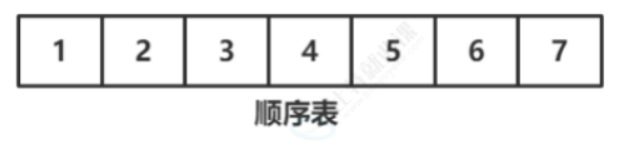
顺序表和数组的区别:顺序表的底层结构是数组,对数组的封装,实现了常用的增删改查等接口。

2.2 分类
2.2.1 静态顺序表
概念:使用定长数组存储元素
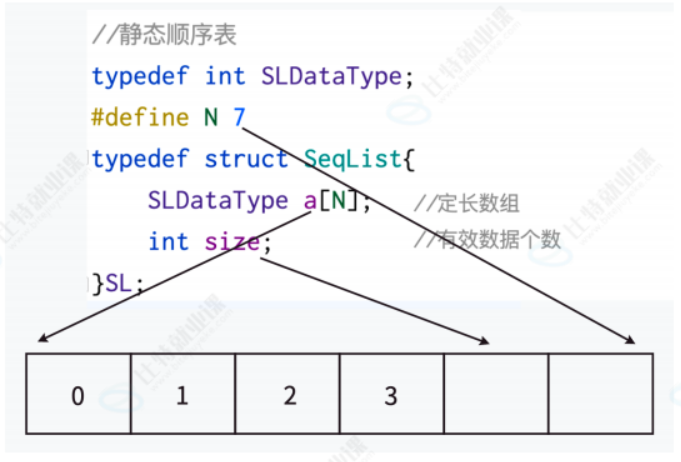
静态顺序表缺陷:空间少了不够用,空间多了浪费。
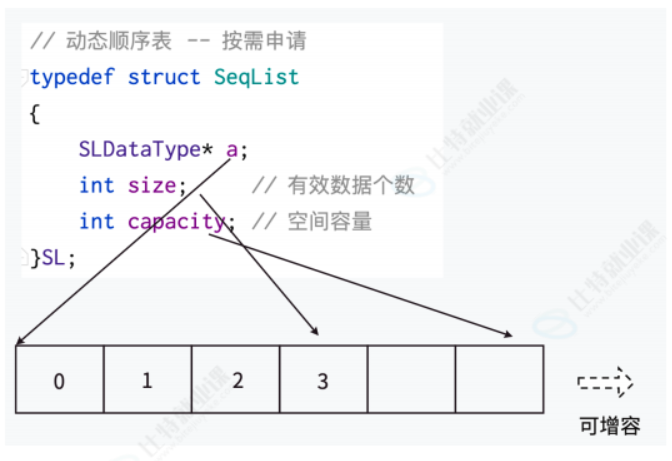
2.2.2 动态顺序表
三、顺序表的具体操作
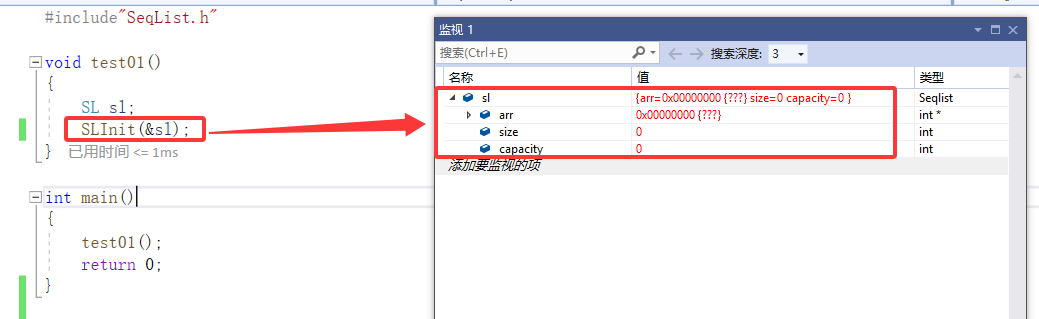
3.1 初始化
void SLInit(SL* ps);

void SLInit(SL* ps)
{
	ps->arr = NULL;
	ps->size = ps->capacity = 0;
}

void SLCheckCapacity(SL* ps)
{
	//判断空间是否足够
	if (ps->size == ps->capacity)
	{
		int newcapacity = ps->capacity == 0 ? 4 : 2 * ps->capacity;
		//增容
		SLDataType* tmp = (SLDataType*)realloc(ps->arr, newcapacity * sizeof(SLDataType));
		if (tmp == NULL)
		{
			perror("realloc fail!");
			exit(1);
		}
		ps->arr = tmp;
		ps->capacity = newcapacity;
	}
}
3.2 打印
void SLPrint(SL* ps);

void SLPrint(SL* ps)
{
	for (int i = 0; i < ps->size; i++)
	{
		printf("%d ", ps->arr[i]);
	}
	printf("\n");
}
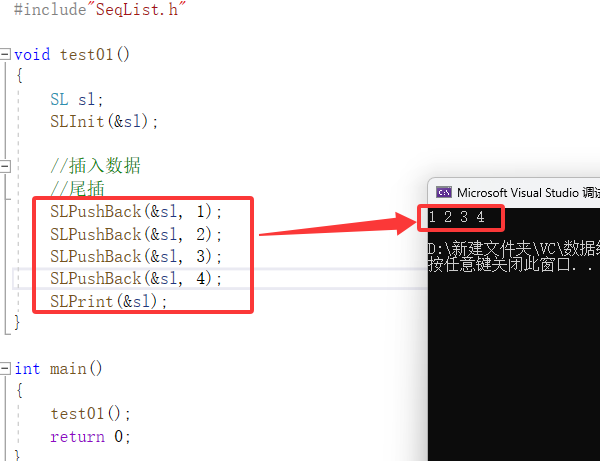
3.3 尾插
void SLPushBack(SL* ps, SLDataType x);

void SLPushBack(SL* ps, SLDataType x)
{
	//判断空间是否足够
	SLCheckCapacity(ps);
	//空间足够情况下
	ps->arr[ps->size++] = x;
}
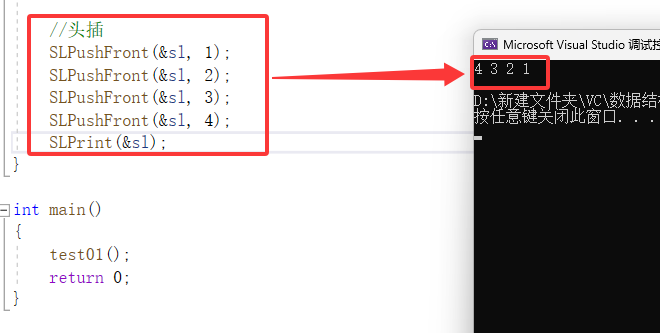
3.4 头插
void SLPushFront(SL* ps, SLDataType x);

void SLPushFront(SL* ps, SLDataType x)
{
	//if (ps == NULL)
	//{
	//	return;
	//}
	assert(ps);
	// 判断空间是否足够
	SLCheckCapacity(ps);
	//将顺序表中所有数据向后挪动一位
	for (int i = ps->size; i > 0; i--)
	{
		ps->arr[i] = ps->arr[i - 1];
	}
	ps->arr[0] = x;
	++ps->size;
}
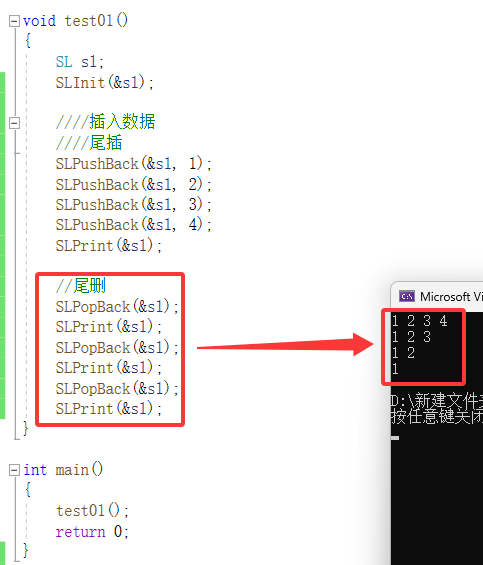
3.5 尾删
void SLPopBack(SL* ps);

void SLPopBack(SL* ps)
{
	assert(ps&&ps->size);
	--ps->size;
}
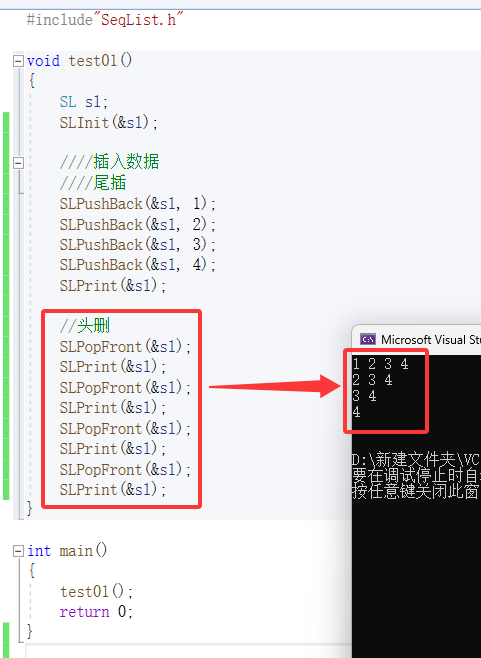
3.6 头删
void SLPopFront(SL* ps);

void SLPopFront(SL* ps)
{
	assert(ps && ps->size);
	for (int i = 0; i < ps->size - 1; i++)
	{
		ps->arr[i] = ps->arr[i + 1];
	}
	--ps->size;
}
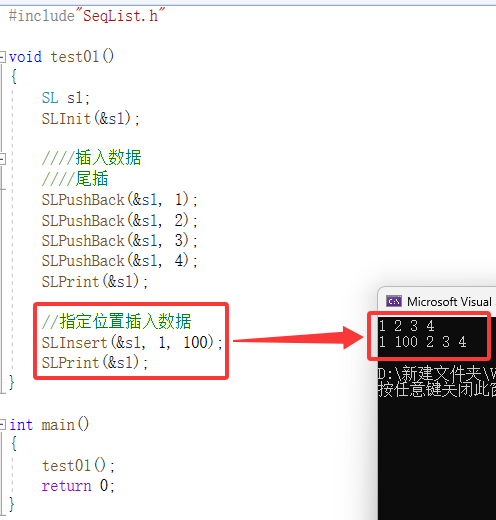
3.7 指定位置之前插入数据
void SLInsert(SL* ps, int pos, SLDataType x);

void SLInsert(SL* ps, int pos, SLDataType x)
{
	assert(ps);
	assert(pos >= 0 && pos <= ps->size);
	SLCheckCapacity(ps);
	//pos及之后的数据整体向后挪动一位
	for (int i = ps->size; i > pos; i--)
	{
		ps->arr[i] = ps->arr[i - 1];
	}
	ps->arr[pos] = x;
	++ps->size;
}
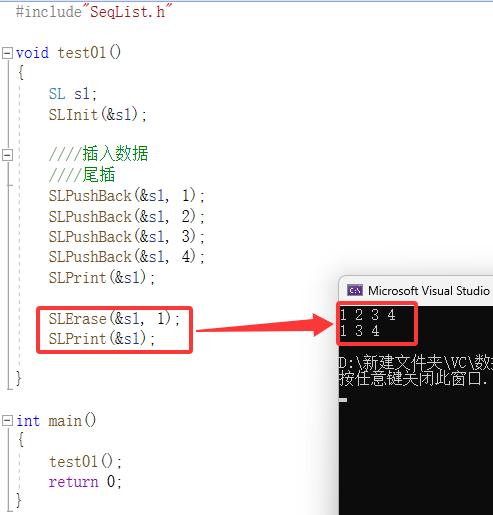
3.8 删除pos位置的数据
void SLErase(SL* ps, int pos);

void SLErase(SL* ps, int pos)
{
	assert(ps);
	assert(pos >= 0 && pos <= ps->size);
	for (int i = pos; i < ps->size-1; i++)
	{
		ps->arr[i] = ps->arr[i+1];
	}
	--ps->size;
}
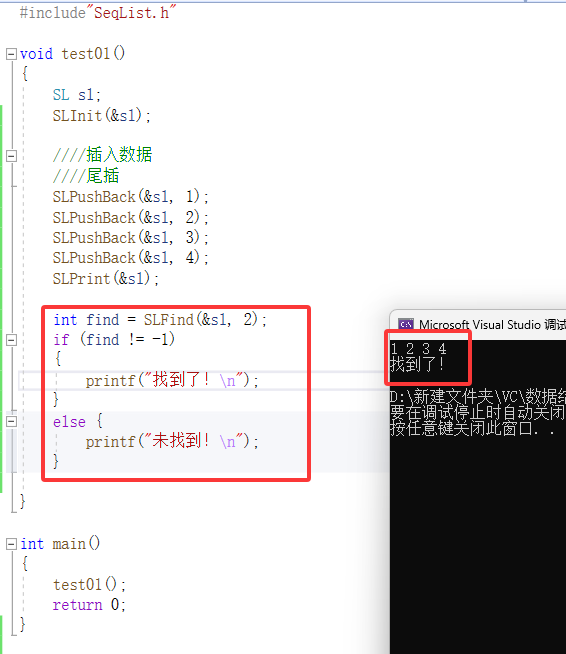
3.9 查找
int SLFind(SL* ps, SLDataType x);

int SLFind(SL* ps, SLDataType x)
{
	for (int i = 0; i < ps -> size; i++)
	{
		if (ps->arr[i] == x)
		{
			return i;
		}
	}
	return -1;
}
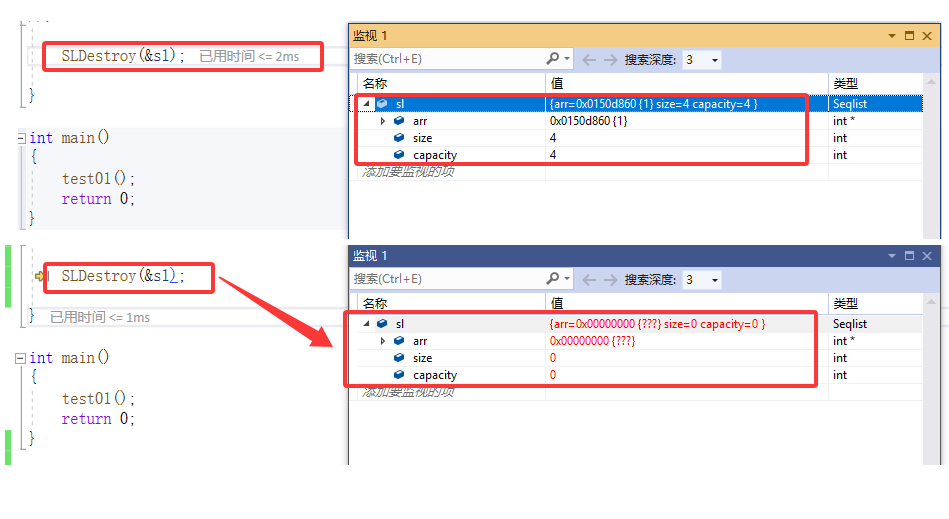
3.10 销毁
void SLDestroy(SL* ps);

void SLDestroy(SL* ps)
{
	assert(ps);
	if (ps->arr)
		free(ps->arr);
	ps->arr = NULL;
	ps->size = ps->capacity = 0;
}