数据锲约层:请求数据的解析/校验,响应数据的序列化/过滤,以及生成OpenAPI的文档,
一 序列化
序列化的本质解决三个问题:内存对象->可传输字节(网络)、可存储字节(磁盘/缓存)、跨语言交换(系统边界),不同场景对'体积/速度/可读性/兼容性'的权重完全不同。
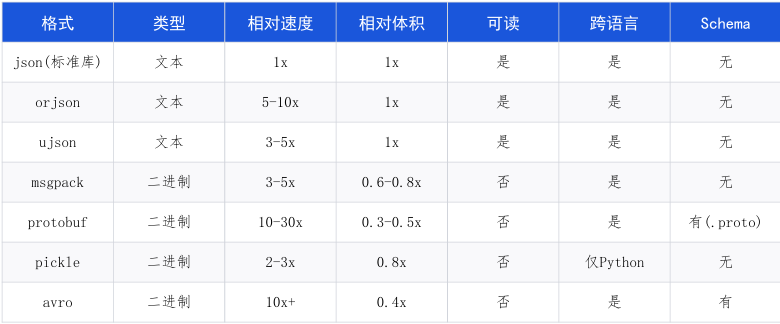
对比如浏览器/移动端/第三方的数据交互选择---json标准库,
API性能敏感:无损替换,FastAPI原生支持,
redis缓存值:msgpack(省内存),orjson(可调试),
微服务RPC:高性能---pickle(仅限可信数据),
大数据管道:avroparquet---(带schema演进),
二 FastAPI场景
官方推荐使用FastAPI+pydantic的场景,Pydantic会将数据序列直接转换成JSON,Pydantic底层是由Rust写的,因此很快。
FastAPI会自动读取请求体,校验字段类型,将字段转换为Item实例,在实际的开发中使用的场景主要有:
请求体解析与校验:这是最常用的场景,用Pydantic声明请求体结构,FastAPI自动完成JSON解析、类型转换和校验,
python
from fastapi import FastAPI
from pydantic import BaseModel, Field

app = FastAPI()

class Item(BaseModel):
    name: str = Field(..., min_length=1, max_length=100)
    price: float = Field(..., gt=0, description="价格必须大于0")
    tax: float | None = None

@app.post("/items/")
async def create_item(item: Item):
    total = item.price + (item.tax or 0)
    return {"name": item.name, "total": total}
**响应模型与数据脱敏:**用response_model声明输出结构,FastAPI会校验返回值并过滤未声明的字段
python
from fastapi import FastAPI
from pydantic import BaseModel, EmailStr

app = FastAPI()

class UserBase(BaseModel):
    username: str
    email: EmailStr
    full_name: str | None = None

class UserIn(UserBase):
    password: str

class UserOut(UserBase):
    pass

class UserInDB(UserBase):
    hashed_password: str

def fake_password_hasher(raw: str) -> str:
    return "supersecret" + raw

def fake_save_user(user_in: UserIn) -> UserInDB:
    hashed = fake_password_hasher(user_in.password)
    return UserInDB(**user_in.model_dump(), hashed_password=hashed)

@app.post("/user/", response_model=UserOut)
async def create_user(user_in: UserIn):
    return fake_save_user(user_in)
**嵌套模型与列表:**Pydantic支持任意深度的模型,FastAPI会自动校验外层或内层所有字段,在实际的开发中,很多业务场景给前端返回的数据是聚合的,前端送上来的业务数据也是复合的,此时需要一个数据model嵌套另一个数据model,这个很常用!
python
from fastapi import FastAPI
from pydantic import BaseModel, EmailStr

app = FastAPI()

class Address(BaseModel):
    street: str
    city: str
    zip_code: str

class Tag(BaseModel):
    name: str
    value: str

class User(BaseModel):
    username: str
    email: EmailStr
    address: Address
    tags: list[Tag] = []

@app.post("/users/")
async def create_user(user: User):
    return user
以及一些其它常用的场景:自定义验证器、ORM模式与数据库集成、依赖注入与Pydantic模型、配置管理---PydanticSettings
三 FastAPI序列化提速
FastAPI已经内置了对orjson的支持,可以通过两种方式启动:全局启动、指定路径启动
python
#全局启动
from fastapi import FastAPI
from fastapi.responses import ORJSONResponse

app = FastAPI(default_response_class=ORJSONResponse)

@app.get("/items/")
async def read_items():
    return [{"item_id": "Foo", "value": 42}]
python
#在装饰器中声明指定路径下,使用orjson
from fastapi import FastAPI
from fastapi.responses import ORJSONResponse

app = FastAPI()

@app.get("/items/", response_class=ORJSONResponse)
async def read_items():
    return [{"item_id": "Foo", "value": 42}]
四 一些优化思路
小结---按照ROI从高到低顺序优化,依次为:
字段裁剪,
消除n+1,
不要阻塞loop(提高并发能力),
orjson序列化能提高很多(上面有说FastAPI的使用),
数据传输切分后使用stream流,
gzip带宽降下来(有一点点提升,减小cpu用量)