(一)
那一天在食堂吃午饭 坐我身旁的老领导忽然问我:"黑仔,而家成日讲嗰啲AI......类似DeepSeek呢种问答嘅大模型,系点样测试同评估㗎?" 我随口回了句"老细犀利!一开口就问倒我测试盲区,我自己都几好奇,等收工之后了解下先"
午睡时,我辗转反侧 脑海里有个声音响了起来: "富贵之门已经打开,等你走进去" "难得有刘公公赏识,我们会有很多机会"
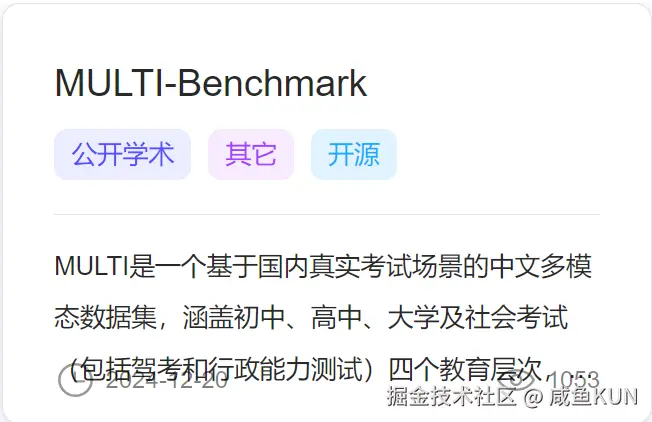
起床后, 我打开了千问 输入【要做语言大模型的AI测试,会用到什么工具? 以deepseek为例,带我入门】 顺着阿问的回复,我打开了agi-eval.cn/ 在AGI-Eval我找到了一个叫MULTI-Benchmark的AI评测框架
(二) 我以前在内部吹水时说过, 如何短时间熟悉陌生领域业务?
那就要迅速从 上情 下情 内情 外情 四个纬度全面梳理工作内涵和外延, 大集成地动态梳理相关工作的 历史沿革、发展现状、理论前沿、形式问题、对策思路 , 确保材料始终 站位高、视角广、思路新、措施实!
但实际操作中呢,我是不会这么干的 我还是喜欢【干中学】
在git clone github.com/OpenDFM/MUL... 前 我得先列几个前提,那就是点解我不好回答老领导的问题?
我之前走的测试,大多数问题无非就是True/False,走自动化能很方便的用assert的传统断言 但AI的评测带有复杂的需求
-
- 答案可能有多种正确形式,怎么区分?
-
- 需要部分正确的评分,怎么评?
-
- 要处理模糊匹配和相似度,怎么处理?
-
- 需要详细的错误分析,怎么分?
-
- 要支持不同的评分策略,怎么搞?
带着这些问题,我再去看这个框架咋用和咋实现的
(三)
一、大致了解
1. 分层架构设计
scss
MULTI-Benchmark框架架构
├── 用户接口层
│   ├── CLI命令行接口
│   ├── Web界面 (deploy.py)
│   └── API接口
├── 业务逻辑层
│   ├── 评测调度器 (eval.py)
│   ├── 数据准备器 (prepare.py)
│   ├── 提示词生成器 (prompts.py)
│   └── 结果分析器 (metrics.py)
├── 模型适配层
│   ├── 本地模型适配器 (models/*)
│   ├── API模型适配器 (models/*_api.py)
│   └── 统一评测接口
├── 数据处理层
│   ├── 题目数据处理
│   ├── 图像数据处理
│   └── 知识库处理
└── 基础设施层
    ├── 配置管理 (args.py)
    ├── 工具函数 (utils/)
    └── 资源管理
2. 测试数据文件概览
MULTI-Benchmark框架包含三个核心数据文件,支持选择性使用,不需要每次都全部加载:
| 文件名 | 大小 | 作用 | 使用场景 | 是否必需 |
|---|---|---|---|---|
problem_v1.3.1_20241210_release.json |
~500MB | 题目数据 | 所有测试 | 必需 |
knowledge_v1.2.2_20240212_release.json |
~200MB | 知识库数据 | 需要背景知识的题目 | 条件必需 |
captions_v1.3.1_20241210_blip.csv |
~50MB | 图像描述 | input_type=1时 |
条件必需 |
3. 评测流程设计
数据流转
javascript
原始题目 → 题目解析 → 提示词生成 → 模型推理 → 答案提取 → 评分计算 → 结果汇总
    ↓           ↓           ↓           ↓           ↓           ↓           ↓
  JSON格式   结构化数据   模型输入     模型输出     标准答案     分数矩阵     评测报告
二、MULTI 框架的解决方案
专门的评分函数系统:
python
# MULTI框架的"断言" - 连续评分
score, total_score = evaluation_function(prediction, expected_answer, args)
# 返回:(获得分数, 总分数)
断言函数体系
1. 评分函数注册表
python
# eval/metrics.py
EvaluateFuncDict = {
    "单选": SingleAnswerChoiceEval,      # 单选题断言
    "多选": MultipleAnswersChoiceEval,   # 多选题断言
    "填空": FillInTheBlankEval,          # 填空题断言
    "解答": OpenendQuestionEval          # 开放题断言
}
2. 断言函数接口规范
统一接口设计:
python
def CustomEvaluationFunction(prediction: str, label: str, args) -> tuple:
    """
    自定义评分函数接口

    Args:
        prediction: 模型预测答案
        label: 标准答案
        args: 配置参数

    Returns:
        tuple: (获得分数, 总分数)
    """
    # 实现具体的评分逻辑
    score = calculate_score(prediction, label)
    total_score = get_total_score()
    return score, total_score
具体实现分析
1. 单选题断言 (SingleAnswerChoiceEval)
功能描述:
- 从模型输出中提取英文字母作为答案
- 支持从开头或结尾提取
- 精确匹配标准答案
实现代码:
python
def SingleAnswerChoiceEval(pred, label, args):
    """
    单选题评分函数

    断言逻辑:
    1. 使用正则表达式提取英文字母
    2. 根据配置选择提取位置(开头/结尾)
    3. 与标准答案进行精确匹配
    """
    # 步骤1:提取所有英文字母
    matches = re.findall(r'[a-zA-Z]', pred)

    if matches:
        # 步骤2:根据配置选择提取位置
        if args.answer_position == "start":
            answer = matches[0].upper()  # 取第一个字母
        elif args.answer_position == "end":
            answer = matches[-1].upper()  # 取最后一个字母

        # 步骤3:断言逻辑 - 精确匹配
        score = 1 if answer == label else 0
    else:
        # 没有找到字母,直接0分
        score = 0

    return score, 1  # (获得分数, 总分数)
断言特点:
- 二元评分:完全正确得 1 分,否则 0 分
- 位置敏感:可配置从哪个位置提取答案
- 大小写不敏感:自动转换为大写比较
2. 多选题断言 (MultipleAnswersChoiceEval)
功能描述:
- 提取多个选项答案
- 每个正确选项得 1 分
- 有错误选项直接 0 分
实现代码:
python
def MultipleAnswersChoiceEval(pred, label, args):
    """
    多选题评分函数

    断言逻辑:
    1. 提取并清理答案选项
    2. 逐个验证每个选项
    3. 严格评分:有错误选项直接0分
    """
    # 步骤1:提取答案模式
    matches = re.findall(r'[a-zA-Z ,]*[a-zA-Z]+[a-zA-Z ,]*', pred)
    score = 0

    if matches:
        # 选择提取位置
        if args.answer_position == "start":
            answer = matches[0].upper()
        elif args.answer_position == "end":
            answer = matches[-1].upper()

        # 步骤2:清理答案格式
        answer = answer.replace(' ', '').replace(',', '').replace('、', '')
        answer = ''.join(sorted(set(answer), key=answer.index))  # 去重并保持顺序

        # 步骤3:断言逻辑 - 严格评分
        for choice in answer:
            if choice in label:
                score += 1  # 正确选项+1分
            else:
                score = 0   # 有错误选项直接0分
                break

    return score, len(label)  # (获得分数, 标准答案选项数)
断言特点:
- 严格评分:有任何错误选项直接 0 分
- 部分正确:只选择部分正确选项可以得部分分
- 格式容错:自动处理空格、逗号等分隔符
3. 填空题断言 (FillInTheBlankEval)
功能描述:
- 逐行比较填空答案
- 支持多个正确答案(用"或"分隔)
- 严格匹配或备选答案匹配
实现代码:
python
def FillInTheBlankEval(pred, label, args):
    """
    填空题评分函数

    断言逻辑:
    1. 预处理答案格式
    2. 逐个空格进行匹配
    3. 支持多个正确答案
    """
    score = 0

    # 步骤1:预处理答案格式
    pred = re.sub(r'\n\n+', '\n', pred)  # 合并多个换行
    pred = pred.replace("$","").replace(" ","").replace(";","\n").replace(";","\n").split('\n')
    label = label.replace("$","").replace(" ","").split('\n')

    # 步骤2:逐个填空进行断言
    for i in range(min(len(label), len(pred))):
        # 主要断言逻辑:精确匹配
        if pred[i].strip() == label[i].strip():
            score += 1
        else:
            # 备选断言逻辑:多答案匹配
            alternatives = label[i].split('或')
            alternatives = [alt.strip() for alt in alternatives]
            if len(alternatives) > 1:
                if pred[i].strip() in alternatives:
                    score += 1

    return score, len(label)  # (获得分数, 填空总数)
断言特点:
- 逐项评分:每个填空独立评分
- 多答案支持:支持"答案 1 或答案 2"的形式
- 格式容错:自动处理空格和特殊字符
4. 开放题断言 (OpenendQuestionEval)
功能描述:
- 使用 ROUGE 算法计算相似度
- 基于中文分词的语义匹配
- 连续评分而非二元判断
实现代码:
python
def OpenendQuestionEval(pred, label, args):
    """
    开放题评分函数

    断言逻辑:
    1. 中文分词预处理
    2. ROUGE相似度计算
    3. 连续评分
    """
    rouge = Rouge()

    # 步骤1:中文分词预处理
    pred_ = ' '.join(jieba.cut(pred))
    label_ = ' '.join(jieba.cut(label))

    # 步骤2:边界情况处理
    if label_ == '':
        return 0, 0  # 标准答案为空
    elif pred_ == '':
        return 0, 1  # 预测答案为空

    # 步骤3:断言逻辑 - ROUGE相似度评分
    rouge_score = rouge.get_scores(pred_, label_, avg=True)
    score = rouge_score['rouge-l']['f']  # 使用ROUGE-L的F1分数

    return score, 1  # (相似度分数, 总分1)
断言特点:
- 语义匹配:基于语义相似度而非精确匹配
- 连续评分:分数在 0-1 之间连续变化
- 中文优化:专门针对中文文本优化
执行流程详解
1. 主评分流程
核心评分函数:
python
def evaluate_every_problem(args):
    """
    主评分流程 - 这是整个断言系统的核心

    流程:
    1. 加载数据
    2. 遍历每道题
    3. 选择对应的断言函数
    4. 执行断言并记录结果
    """
    # 步骤1:加载预测结果和标准答案
    with open(args.prediction_file, 'r', encoding="utf-8") as f:
        pred_data = json.load(f)
    with open(args.label_file, 'r', encoding="utf-8") as f:
        label_data = json.load(f)

    score_data = {}

    # 步骤2:遍历每道题进行断言
    for item in pred_data.values():
        # 获取题目信息
        problem_id = item['question_id'].rsplit('_', 1)[0]
        sub_id = item['question_id'].rsplit('_', 1)[1]

        # 获取预测答案和标准答案
        prediction = item['prediction']
        type = label_data[problem_id]["problem_type_list"][int(sub_id)]
        label = label_data[problem_id]["problem_answer_list"][int(sub_id)]

        # 步骤3:选择并执行对应的断言函数
        if type in EvaluateFuncDict:
            score, total_score = EvaluateFuncDict[type](prediction, label, args)
        else:
            score, total_score = 0, 0  # 未知题型默认0分

        # 步骤4:记录断言结果
        score_data[item['question_id']] = {
            "question_id": item['question_id'],
            "score": score,
            "total_score": total_score
        }
2. 断言函数选择机制
动态函数选择:
python
# 根据题目类型动态选择断言函数
type_to_function_mapping = {
    "单选": SingleAnswerChoiceEval,
    "多选": MultipleAnswersChoiceEval,
    "填空": FillInTheBlankEval,
    "解答": OpenendQuestionEval
}

# 执行断言
if question_type in type_to_function_mapping:
    assertion_function = type_to_function_mapping[question_type]
    score, total = assertion_function(prediction, expected, config)
3. 结果汇总和统计
分数计算:
python
def calculate_score(args):
    """
    汇总所有断言结果

    计算:
    1. 绝对分数和总分
    2. 准确率百分比
    3. 改进空间分析
    """
    with open(args.score_file, 'r', encoding="utf-8") as f:
        target_score = json.load(f)

    absolute_score = 0
    total_absolute_score = 0

    # 汇总所有断言结果
    for item in target_score.values():
        absolute_score += item['score']
        total_absolute_score += item['total_score']

    # 计算最终指标
    accuracy = absolute_score / total_absolute_score * 100
    print(f"Absolute Score: {absolute_score:.2f}/{total_absolute_score}, {accuracy:.2f}%")

    return (absolute_score, total_absolute_score, accuracy)
高级特性
1. 拒绝检测断言
功能描述: 检测模型是否拒绝回答某些问题,并相应调整评分。
实现代码:
python
def check_rejection(pred):
    """
    拒绝回答检测断言

    断言逻辑:
    - 检测特定的拒绝关键词
    - 返回布尔值表示是否拒绝
    """
    rejection_keywords = [
        "缺少图片信息",
        "无法回答",
        "信息不足",
        "需要更多信息"
    ]

    for keyword in rejection_keywords:
        if keyword in pred:
            return True
    return False

# 在主评分流程中应用
if check_rejection(prediction):
    score = 0  # 拒绝回答直接0分
    # 统计拒绝次数
    image_num = item["question_image_number"]
    image_type = "NI" if image_num == 0 else "SI" if image_num == 1 else "MI"
    rejection_number[image_type] += total_score
2. 参考答案对比断言
功能描述: 与参考模型的答案进行对比,计算改进空间。
实现代码:
python
def reference_comparison_assertion(prediction, label, reference_answer, args):
    """
    参考答案对比断言

    断言逻辑:
    1. 评估当前预测
    2. 评估参考答案
    3. 计算改进空间
    """
    # 当前预测的断言结果
    current_score, total = EvaluateFuncDict[question_type](prediction, label, args)

    # 参考答案的断言结果
    ref_score, _ = EvaluateFuncDict[question_type](reference_answer, label, args)

    # 计算改进空间
    improvement_potential = max(0, ref_score - current_score)

    return current_score, total, improvement_potential
3. 位置敏感断言
功能描述: 根据配置从答案的不同位置提取关键信息。
实现代码:
python
def position_sensitive_extraction(text, position="end"):
    """
    位置敏感的答案提取

    支持的位置:
    - start: 从开头提取
    - end: 从结尾提取
    - middle: 从中间提取
    - all: 提取所有匹配项
    """
    matches = re.findall(r'[a-zA-Z]', text)

    if not matches:
        return None

    if position == "start":
        return matches[0].upper()
    elif position == "end":
        return matches[-1].upper()
    elif position == "middle":
        mid_index = len(matches) // 2
        return matches[mid_index].upper()
    elif position == "all":
        return [m.upper() for m in matches]
    else:
        return matches[-1].upper()  # 默认取最后一个
4. 多轮对话断言
功能描述: 处理多轮对话场景的答案验证。
实现代码:
python
def multi_turn_assertion(conversation_history, expected_responses, args):
    """
    多轮对话断言

    断言逻辑:
    1. 分别评估每轮对话
    2. 计算整体对话质量
    3. 考虑上下文一致性
    """
    total_score = 0
    max_score = 0

    for i, (response, expected) in enumerate(zip(conversation_history, expected_responses)):
        # 单轮断言
        turn_score, turn_max = single_turn_assertion(response, expected, args)

        # 上下文一致性检查
        if i > 0:
            consistency_bonus = check_consistency(conversation_history[:i+1])
            turn_score += consistency_bonus

        total_score += turn_score
        max_score += turn_max

    return total_score, max_score
实践应用
1. 如何添加新的断言函数
步骤 1:定义断言函数
python
def CustomQuestionTypeEval(pred, label, args):
    """
    自定义题型断言函数

    Args:
        pred: 模型预测答案
        label: 标准答案
        args: 配置参数

    Returns:
        tuple: (获得分数, 总分数)
    """
    # 实现你的断言逻辑
    score = 0
    total_score = 1

    # 示例:基于关键词匹配的断言
    keywords = label.split(',')
    matched_keywords = 0

    for keyword in keywords:
        if keyword.strip().lower() in pred.lower():
            matched_keywords += 1

    score = matched_keywords / len(keywords)

    return score, total_score
步骤 2:注册断言函数
python
# 在EvaluateFuncDict中注册新函数
EvaluateFuncDict["自定义题型"] = CustomQuestionTypeEval
步骤 3:配置参数支持
python
def CustomQuestionTypeEval(pred, label, args):
    # 支持配置参数
    threshold = getattr(args, 'custom_threshold', 0.5)
    case_sensitive = getattr(args, 'case_sensitive', False)

    # 使用配置参数
    if not case_sensitive:
        pred = pred.lower()
        label = label.lower()

    # 实现断言逻辑...
2. 配置不同的评分策略
配置文件示例:
yaml
# evaluation_config.yaml
evaluation_settings:
  answer_position: 'end' # 答案提取位置
  case_sensitive: false # 是否区分大小写
  fuzzy_threshold: 0.8 # 模糊匹配阈值
  partial_credit: true # 是否允许部分分数

single_choice:
  strict_mode: true # 严格模式
  allow_multiple: false # 是否允许多个答案

multiple_choice:
  penalty_wrong: true # 错误选项是否扣分
  min_correct_ratio: 0.6 # 最低正确率要求

fill_blank:
  alternative_separator: '或' # 备选答案分隔符
  ignore_punctuation: true # 是否忽略标点符号

open_ended:
  rouge_type: 'rouge-l' # ROUGE评分类型
  min_similarity: 0.3 # 最低相似度要求
使用配置的断言函数:
python
def ConfigurableEval(pred, label, args, config):
    """
    可配置的断言函数
    """
    # 从配置中读取参数
    case_sensitive = config.get('case_sensitive', False)
    fuzzy_threshold = config.get('fuzzy_threshold', 0.8)

    # 应用配置
    if not case_sensitive:
        pred = pred.lower()
        label = label.lower()

    # 实现断言逻辑...
3. 批量评测示例
完整的评测脚本:
python
def batch_evaluation_example():
    """
    批量评测示例
    """
    # 1. 准备数据
    predictions = load_predictions("model_outputs.json")
    ground_truth = load_ground_truth("answers.json")

    # 2. 初始化评分器
    evaluator = MultiAssertionEvaluator()

    # 3. 批量执行断言
    results = []
    for question_id, pred_data in predictions.items():
        if question_id in ground_truth:
            gt_data = ground_truth[question_id]

            # 执行对应的断言函数
            score, total = evaluator.evaluate(
                prediction=pred_data['answer'],
                label=gt_data['correct_answer'],
                question_type=gt_data['type'],
                config=evaluation_config
            )

            results.append({
                'question_id': question_id,
                'score': score,
                'total_score': total,
                'accuracy': score / total if total > 0 else 0
            })

    # 4. 生成报告
    generate_evaluation_report(results)
4. 错误分析和调试
调试断言函数:
python
def debug_assertion(pred, label, question_type, args):
    """
    调试断言函数
    """
    print(f"调试信息:")
    print(f"  题目类型: {question_type}")
    print(f"  预测答案: '{pred}'")
    print(f"  标准答案: '{label}'")

    # 执行断言
    if question_type in EvaluateFuncDict:
        score, total = EvaluateFuncDict[question_type](pred, label, args)
        print(f"  断言结果: {score}/{total} = {score/total:.2%}")

        # 详细分析
        if score == 0:
            print(f"  失败原因分析:")
            analyze_failure(pred, label, question_type)
    else:
        print(f"  错误: 未知题目类型 '{question_type}'")

    return score, total

def analyze_failure(pred, label, question_type):
    """
    分析断言失败的原因
    """
    if question_type == "单选":
        matches = re.findall(r'[a-zA-Z]', pred)
        if not matches:
            print(f"    - 预测答案中没有找到英文字母")
        else:
            print(f"    - 找到的字母: {matches}")
            print(f"    - 期望的字母: {label}")

    elif question_type == "填空":
        pred_lines = pred.split('\n')
        label_lines = label.split('\n')
        print(f"    - 预测行数: {len(pred_lines)}")
        print(f"    - 期望行数: {len(label_lines)}")

        for i, (p, l) in enumerate(zip(pred_lines, label_lines)):
            if p.strip() != l.strip():
                print(f"    - 第{i+1}行不匹配: '{p.strip()}' vs '{l.strip()}'")
扩展开发
1. 自定义评分指标
实现新的评分指标:
python
class CustomMetrics:
    """
    自定义评分指标类
    """

    @staticmethod
    def semantic_similarity(pred, label):
        """
        语义相似度评分
        """
        # 使用预训练模型计算语义相似度
        from sentence_transformers import SentenceTransformer

        model = SentenceTransformer('paraphrase-multilingual-MiniLM-L12-v2')
        embeddings = model.encode([pred, label])

        # 计算余弦相似度
        from sklearn.metrics.pairwise import cosine_similarity
        similarity = cosine_similarity([embeddings[0]], [embeddings[1]])[0][0]

        return similarity, 1.0

    @staticmethod
    def factual_accuracy(pred, label):
        """
        事实准确性评分
        """
        # 提取关键事实
        pred_facts = extract_facts(pred)
        label_facts = extract_facts(label)

        # 计算事实匹配度
        matched_facts = len(set(pred_facts) & set(label_facts))
        total_facts = len(label_facts)

        return matched_facts / total_facts if total_facts > 0 else 0, 1.0

    @staticmethod
    def logical_consistency(pred, label):
        """
        逻辑一致性评分
        """
        # 检查逻辑推理的一致性
        pred_logic = parse_logical_structure(pred)
        label_logic = parse_logical_structure(label)

        consistency_score = compare_logical_structures(pred_logic, label_logic)

        return consistency_score, 1.0
2. 多模态断言扩展
图像-文本断言:
python
def image_text_assertion(pred_text, image_path, expected_description, args):
    """
    图像-文本多模态断言

    评估模型对图像的文本描述是否准确
    """
    # 1. 图像特征提取
    image_features = extract_image_features(image_path)

    # 2. 文本特征提取
    text_features = extract_text_features(pred_text)

    # 3. 多模态匹配评分
    multimodal_score = calculate_multimodal_similarity(
        image_features,
        text_features,
        expected_description
    )

    # 4. 传统文本匹配评分
    text_score = calculate_text_similarity(pred_text, expected_description)

    # 5. 综合评分
    final_score = 0.6 * multimodal_score + 0.4 * text_score

    return final_score, 1.0
3. 动态阈值调整
自适应阈值断言:
python
class AdaptiveThresholdAssertion:
    """
    自适应阈值断言类
    """

    def __init__(self):
        self.performance_history = []
        self.threshold_history = []

    def adaptive_threshold_eval(self, pred, label, question_type, args):
        """
        自适应阈值评分
        """
        # 1. 计算基础相似度
        base_similarity = calculate_similarity(pred, label)

        # 2. 根据历史表现调整阈值
        current_threshold = self.calculate_adaptive_threshold(question_type)

        # 3. 应用阈值进行断言
        if base_similarity >= current_threshold:
            score = base_similarity
        else:
            score = 0

        # 4. 更新历史记录
        self.update_performance_history(base_similarity, score > 0)

        return score, 1.0

    def calculate_adaptive_threshold(self, question_type):
        """
        计算自适应阈值
        """
        if len(self.performance_history) < 10:
            return 0.5  # 默认阈值

        # 基于最近的表现调整阈值
        recent_performance = self.performance_history[-10:]
        avg_performance = sum(recent_performance) / len(recent_performance)

        # 如果表现好,提高阈值;如果表现差,降低阈值
        if avg_performance > 0.8:
            return min(0.9, self.threshold_history[-1] + 0.05)
        elif avg_performance < 0.5:
            return max(0.3, self.threshold_history[-1] - 0.05)
        else:
            return self.threshold_history[-1] if self.threshold_history else 0.5
4. 集成外部评价工具
集成第三方评价库:
python
def integrated_evaluation(pred, label, question_type, args):
    """
    集成多种外部评价工具的断言函数
    """
    scores = {}

    # 1. BLEU评分
    if question_type in ["解答", "翻译"]:
        from nltk.translate.bleu_score import sentence_bleu
        bleu_score = sentence_bleu([label.split()], pred.split())
        scores['bleu'] = bleu_score

    # 2. ROUGE评分
    if question_type in ["解答", "摘要"]:
        from rouge import Rouge
        rouge = Rouge()
        rouge_scores = rouge.get_scores(pred, label, avg=True)
        scores['rouge'] = rouge_scores['rouge-l']['f']

    # 3. BERTScore评分
    if question_type in ["解答", "改写"]:
        from bert_score import score
        P, R, F1 = score([pred], [label], lang='zh', verbose=False)
        scores['bert_score'] = F1.item()

    # 4. 综合评分
    if scores:
        final_score = sum(scores.values()) / len(scores)
    else:
        # 回退到基础评分
        final_score = basic_similarity(pred, label)

    return final_score, 1.0
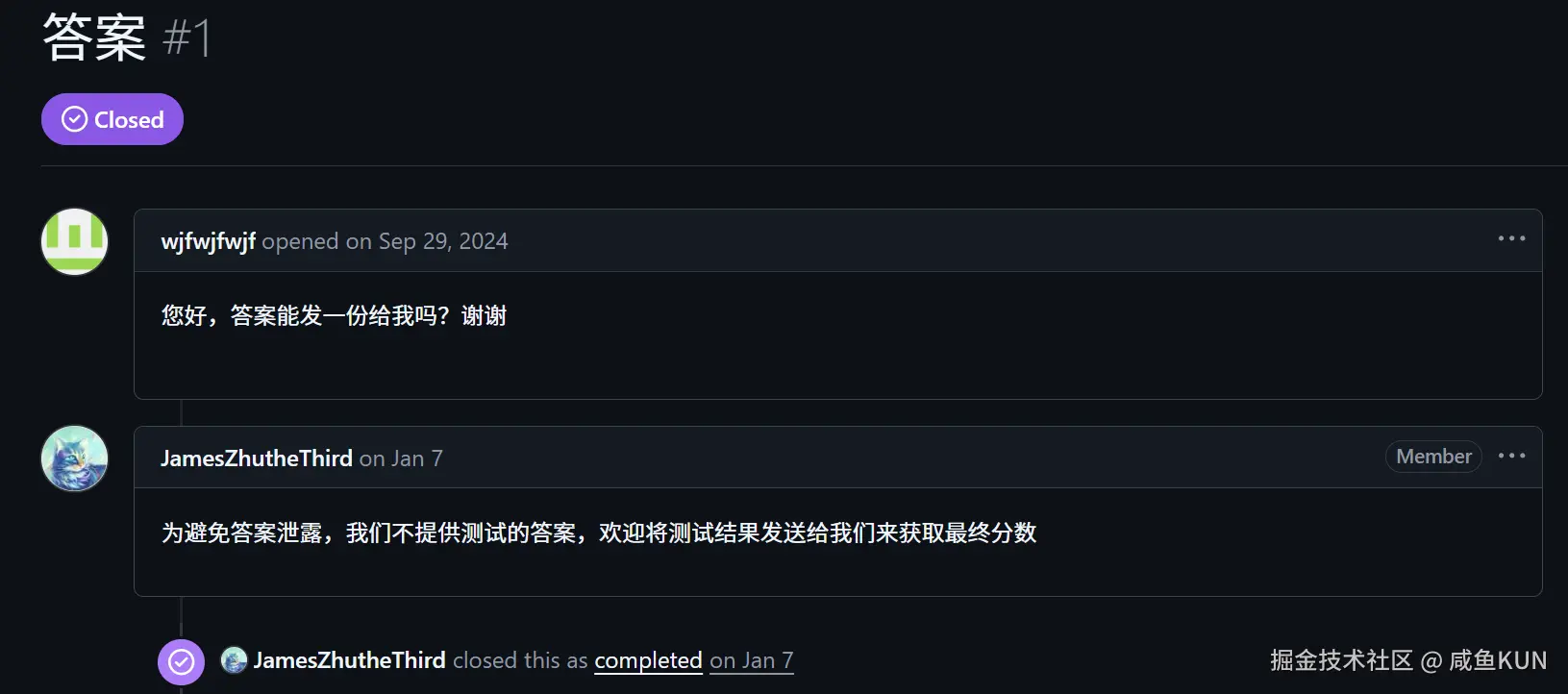
(四)坑 运行结果是无法自己评测
(五) 我整理了些资料准备发给老领导,让老领导批改指导下,
领导看后,说我的座位有点低,对颈椎和腰不太好 高度上是时候该往上提一提了