一、概述
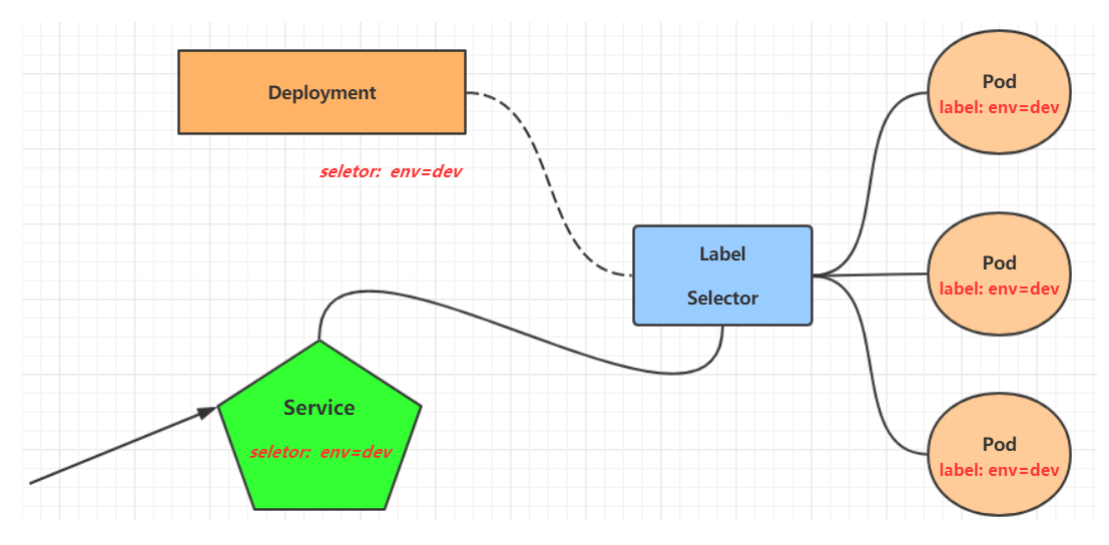
在kubernetes中,pod是应用程序的载体,我们可以通过pod的ip来访问应用程序,但是pod的ip地址不是固定的,这也就意味着不方便直接采用pod的ip对服务进行访问。
为了解决这个问题,kubernetes提供了Service资源,Service会对提供同一个服务 的多个pod进行聚合,并且提供一个统一的入口地址。通过访问Service的入口地址就能访问到后面的pod服务。 Service在很多情况下只是一个概念,真正起作用的其实是kube-proxy服务进程,每个Node节点上都运行着一个kube-proxy服务进程。当创建Service的时候会通过api-server向etcd写入创建的service的信息,而kube-proxy会基于监听的机制发现这种Service的变动,然后它会将最新的Service信息转换成对应的访问规则。

二、 Kube-proxy的三种模式
2.1 userspace 模式
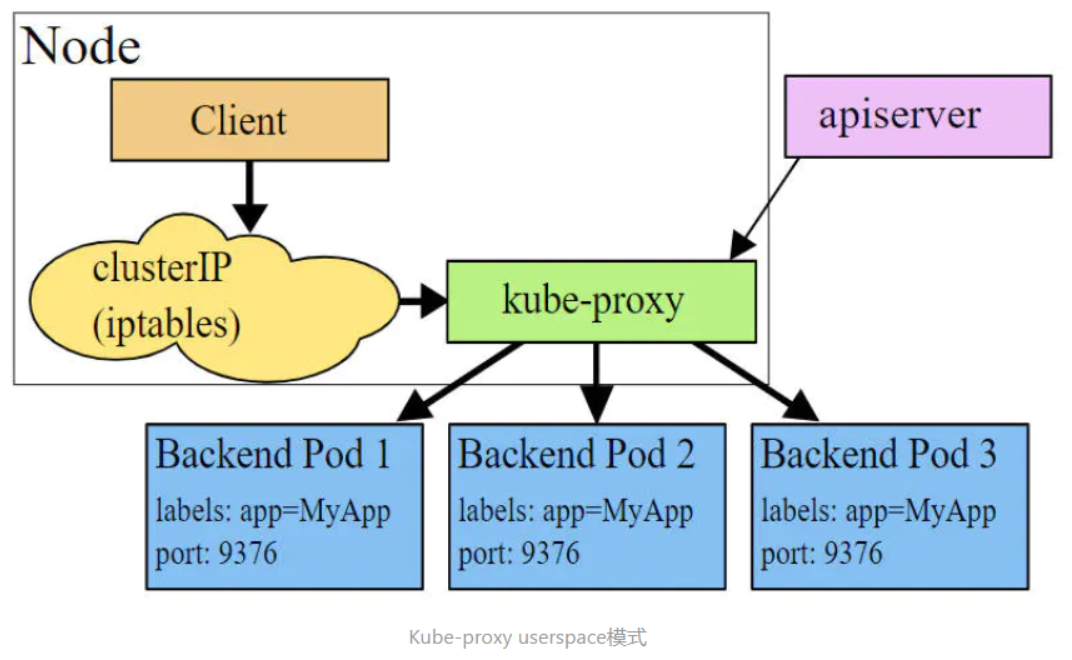
userspace模式下,kube-proxy会为每一个Service创建一个监听端口,发向Cluster IP的请求被Iptables规则重定向到kube-proxy监听的端口上,kube-proxy根据LB(LoadBalance,负载均衡)算法选择一个提供服务的Pod并和其建立链接,以将请求转发到Pod上。 **该模式下,kube-proxy充当了一个四层负载均衡器的角色。**由于kube-proxy运行在userspace中,在进行转发处理时会增加内核和用户空间之间的数据拷贝,虽然比较稳定,但是效率比较低。
2.2 iptables 模式
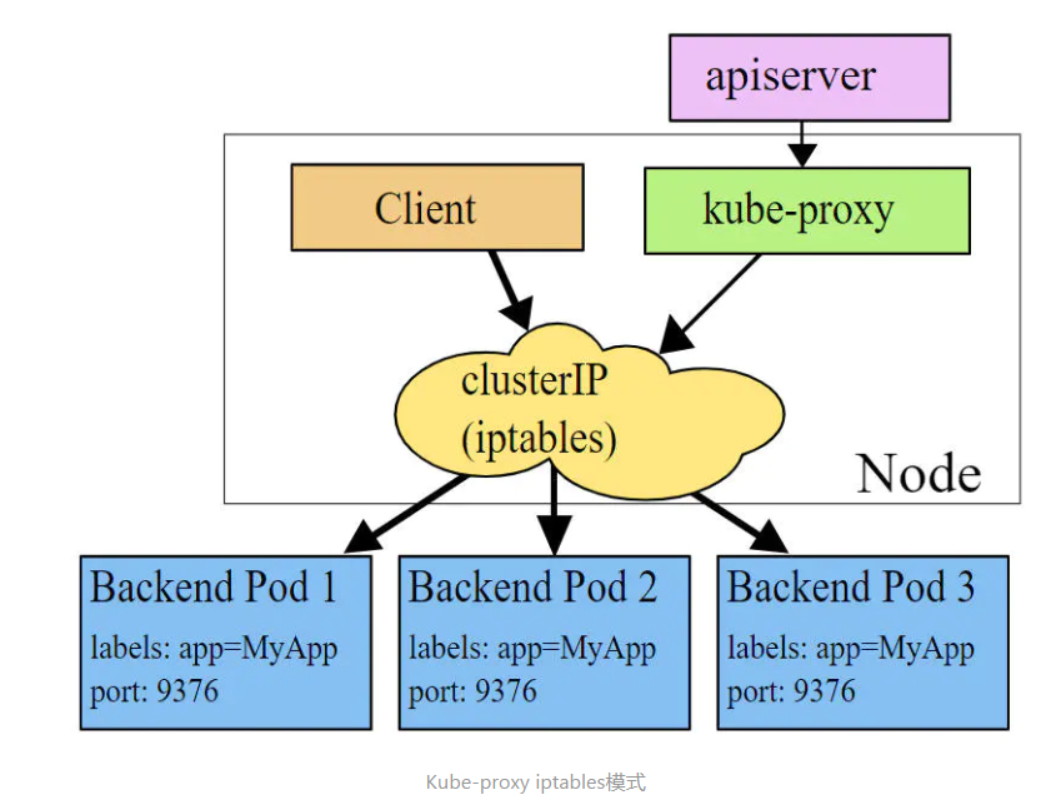
iptables模式下,kube-proxy为service后端的每个Pod创建对应的iptables规则,直接将发向Cluster IP的请求重定向到一个Pod IP。 该模式下kube-proxy不承担四层负载均衡器的角色,只负责创建iptables规则。该模式的优点是较userspace模式效率更高,但不能提供灵活的LB策略,当后端Pod不可用时也无法进行重试。
2.3 ipvs 模式
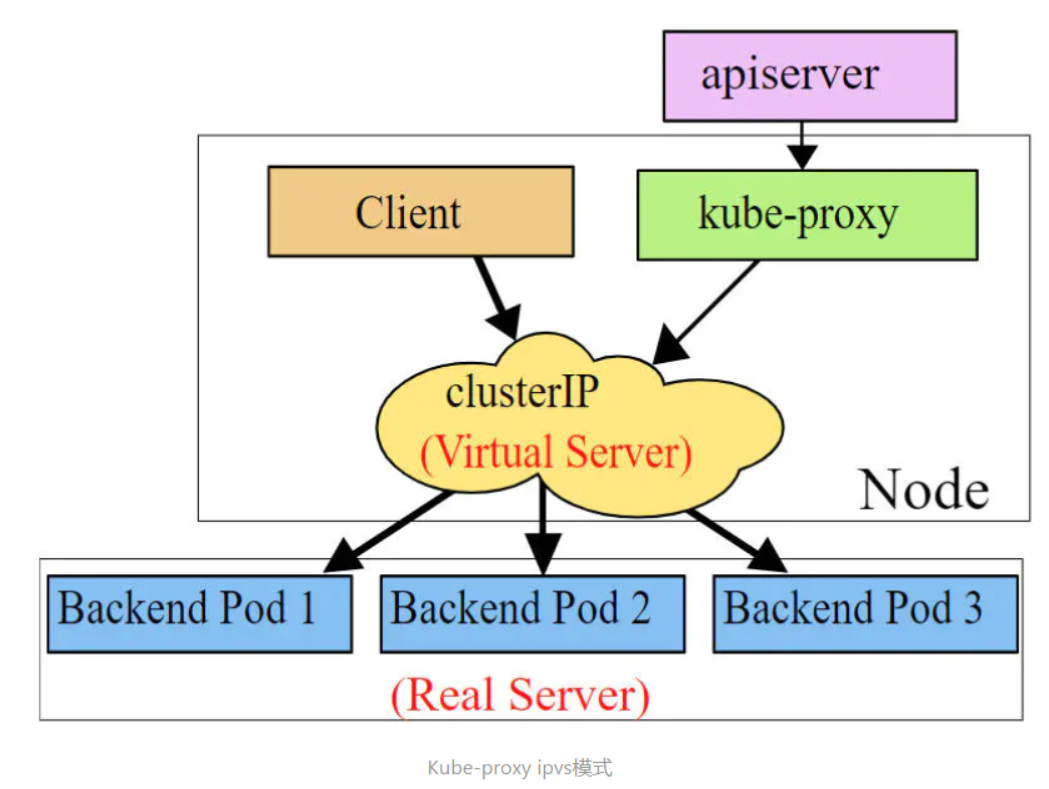
ipvs模式和iptables类似,kube-proxy监控Pod的变化并创建相应的ipvs规则。ipvs相对iptables转发效率更高。除此以外,ipvs支持更多的LB算法。
# 此模式必须安装ipvs内核模块(集群部署的时候已安装),否则会降级为iptables;modprobe ip_vs
# 开启ipvs,cm: configmap
[root@k8s-master01 ~]# modprobe ip_vs
[root@k8s-master01 ~]# yum install -y ipvsadm
[root@k8s-master01 ~]# kubectl edit cm kube-proxy -n kube-system
# 修改mode: "ipvs"
[root@k8s-master01 ~]# kubectl delete pod -l k8s-app=kube-proxy -n kube-system
[root@node1 ~]# ipvsadm -Ln
IP Virtual Server version 1.2.1 (size=4096)
Prot LocalAddress:Port Scheduler Flags
  -> RemoteAddress:Port           Forward Weight ActiveConn InActConn
TCP  172.16.32.128:30080 rr
  -> 172.16.79.79:80              Masq    1      0          0
TCP  172.16.32.128:32665 rr
  -> 172.16.79.82:8443            Masq    1      0          0
TCP  172.17.0.1:30080 rr
  -> 172.16.79.79:80              Masq    1      0          0
TCP  172.17.0.1:32665 rr
  -> 172.16.79.82:8443            Masq    1      0          0
TCP  192.168.115.161:30080 rr
  -> 172.16.79.79:80              Masq    1      0          0
TCP  192.168.115.161:32665 rr
  -> 172.16.79.82:8443            Masq    1      0          0
TCP  192.168.115.166:30080 rr
  -> 172.16.79.79:80              Masq    1      0          0
TCP  192.168.115.166:32665 rr
  -> 172.16.79.82:8443            Masq    1      0          0
TCP  10.10.0.1:443 rr
  -> 192.168.115.161:6443         Masq    1      0          0
  -> 192.168.115.162:6443         Masq    1      0          0
  -> 192.168.115.163:6443         Masq    1      1          0
TCP  10.10.0.10:53 rr
  -> 172.16.122.139:53            Masq    1      0          0
  -> 172.16.122.140:53            Masq    1      0          0
TCP  10.10.0.10:9153 rr
  -> 172.16.122.139:9153          Masq    1      0          0
  -> 172.16.122.140:9153          Masq    1      0          0
TCP  10.10.39.128:8000 rr
  -> 172.16.79.80:8000            Masq    1      0          0
TCP  10.10.128.23:443 rr
  -> 172.16.79.81:443             Masq    1      0          0
TCP  10.10.166.16:8000 rr
  -> 172.16.79.79:80              Masq    1      0          0
TCP  10.10.195.192:443 rr
  -> 172.16.79.82:8443            Masq    1      0          0
UDP  10.10.0.10:53 rr
  -> 172.16.122.139:53            Masq    1      0          0
  -> 172.16.122.140:53            Masq    1      0          0
三、Service资源类型
常见的Service资源清单
apiVersion: v1
kind: Service
matadata:                                #元数据
  name: string                           #service的名称
  namespace: string                      #命名空间
  labels:                                #自定义标签属性列表
    - name: string
  annotations:                           #自定义注解属性列表
    - name: string
spec:                                    #详细描述
  selector: []                           #label selector配置,将选择具有label标签的Pod作为管理范围
  type: string                           #service的类型,指定service的访问方式,默认为clusterIp
  clusterIP: string                      #虚拟服务地址
  sessionAffinity: string                #是否支持session
  ports:                                 #service需要暴露的端口列表
  - name: string                         #端口名称
    protocol: string                     #端口协议,支持TCP和UDP,默认TCP
    port: int                            #服务监听的service端口号
    targetPort: int                      #需要转发到后端Pod的端口号
    nodePort: int                        #当type = NodePort时,指定映射到物理机的端口号
  status:                                #当spce.type=LoadBalancer时,设置外部负载均衡器的地址
    loadBalancer:                        #外部负载均衡器
      ingress:                           #外部负载均衡器
        ip: string                       #外部负载均衡器的Ip地址值
        hostname: string                 #外部负载均衡器的主机名
资源清单案例
apiVersion: v1  # 资源版本
kind: Service  # 资源类型
metadata: # 元数据
  name: service # 资源名称
  namespace: dev # 命名空间
spec: # 描述
  selector: # 标签选择器,用于确定当前service代理哪些pod
    app: nginx
  type: # Service类型,指定service的访问方式
  clusterIP:  # 虚拟服务的ip地址
  sessionAffinity: # session亲和性,支持ClientIP、None两个选项
  ports: # 端口信息
    - protocol: TCP
      port: 3017  # service端口
      targetPort: 5003 # pod端口
      nodePort: 31122 # 主机端口
Service中的service.spec.type类型
| 类型 | 含义 |
|---|---|
| ClusterIP | 意味着服务仅在集群内部可用,只能通过集群IP访问。 |
| ExternalName | 意味着服务仅包含一个对外部域名称的引用,Kubedns或等价物将返回作为CNAME(别名)记录,不会涉及任何容器的暴露或代理。 |
| LoadBalancer | 意味着服务将通过外部负载均衡器(如果云提供商支持的话)进行暴露,除了NodePort类型之外。 |
| NodePort | 意味着服务将在每个节点的一个端口上进行暴露,除了ClusterIP类型之外。 |
Service中的三类IP地址
| IP类型 | 作用 |
|---|---|
| Node IP | 节点IP是Kubernetes集群中每个节点的唯一标识符。它代表了节点的网络接口,用于在集群内部进行通信。节点IP通常是一个私有IP地址范围,用于在集群内部进行通信。节点IP是Service在集群内部提供服务的唯一标识,用于路由流量到指定的Pod。 |
| Pod IP | Pod IP是Kubernetes中每个Pod的唯一标识符。它代表了Pod的网络接口,用于在集群内部进行通信。Pod IP通常是一个私有IP地址范围,用于在集群内部进行通信。Pod IP是Service在集群内部提供服务的唯一标识,用于路由流量到指定的Pod。 |
| Cluster IP | Cluster IP是Kubernetes集群中Service的IP地址。它代表了Service在集群内部提供的服务,用于在集群内部进行通信。Cluster IP通常是一个私有IP地址范围,用于在集群内部进行通信。Cluster IP是Service在集群内部提供服务的唯一标识,用于路由流量到指定的Pod。 |
综上所述,Kubernetes中的三类IP地址分别是Node IP、Pod IP和Cluster IP。这些IP地址用于在不同网络之间路由流量,以便外部和内部应用程序可以访问Kubernetes集群中的服务和Pod。
四、Service实战案例
实验环境准备
在使用service之前,首先利用Deployment创建出3个pod,注意要为pod设置app=nginx-pod的标签
创建deployment.yaml,内容如下:
apiVersion: apps/v1
kind: Deployment
metadata:
name: pc-deployment
namespace: dev
spec:
replicas: 3
selector:
matchLabels:
app: nginx-pod
template:
metadata:
labels:
app: nginx-pod
spec:
containers:
- name: nginx
image: nginx
ports:
- containerPort: 80
[root@k8s-master01 ~]# kubectl create -f deployment.yaml
deployment.apps/pc-deployment created
# 查看pod详情
[root@k8s-master01 ~]# kubectl get pods -n dev -o wide --show-labels
NAME READY STATUS RESTARTS AGE IP NODE NOMINATED NODE READINESS GATES LABELS
pc-deployment-59c564ffb7-8vzp5 1/1 Running 0 89s 172.16.79.83 k8s-worker01 <none> <none> app=nginx-pod,pod-template-hash=59c564ffb7
pc-deployment-59c564ffb7-fg2j8 1/1 Running 0 89s 172.16.69.206 k8s-worker02 <none> <none> app=nginx-pod,pod-template-hash=59c564ffb7
pc-deployment-59c564ffb7-sprp7 1/1 Running 0 89s 172.16.69.207 k8s-worker02 <none> <none> app=nginx-pod,pod-template-hash=59c564ffb7
# 为了方便后面的测试,修改下三台nginx的index.html页面(三台修改的IP地址不一致)
[root@k8s-master01 ~]# kubectl exec -it pc-deployment-59c564ffb7-8vzp5 -n dev -- /bin/sh
root@pc-deployment-59c564ffb7-8vzp5:/# echo "172.16.79.83" > /usr/share/nginx/html/index.html
[root@k8s-master01 ~]# kubectl -n dev exec -it pc-deployment-59c564ffb7-fg2j8 -- /bin/bash
root@pc-deployment-59c564ffb7-fg2j8:/# echo "172.16.69.206" > /usr/share/nginx/html/index.html
[root@k8s-master01 ~]# kubectl -n dev exec -it pc-deployment-59c564ffb7-sprp7 -- /bin/bash
root@pc-deployment-59c564ffb7-sprp7:/# echo "172.16.69.207" > /usr/share/nginx/html/index.html
#修改完毕之后,访问测试
[root@k8s-master01 ~]# curl 172.16.79.83
172.16.79.83
[root@k8s-master01 ~]# curl 172.16.69.206
172.16.69.206
[root@k8s-master01 ~]# curl 172.16.69.207
172.16.69.2074.1 ClusterIP类型的Service
创建service-clusterip.yaml文件
apiVersion: v1
kind: Service
metadata:
name: service-clusterip
namespace: dev
spec:
selector:
app: nginx-pod
clusterIP: 10.10.97.97 # service的ip地址,如果不写,默认会生成一个
type: ClusterIP
ports:
- port: 80 # Service端口
targetPort: 80 # pod端口
# 创建service
[root@k8s-master01 ~]# kubectl create -f service-clusterip.yaml
service/service-clusterip created
# 查看service
[root@k8s-master01 ~]# kubectl get svc -n dev
[root@k8s-master01 ~]# kubectl -n dev get svc
NAME TYPE CLUSTER-IP EXTERNAL-IP PORT(S) AGE
service-clusterip ClusterIP 10.10.97.97 <none> 8001/TCP 10s
# 查看service的详细信息
# 在这里有一个Endpoints列表,里面就是当前service可以负载到的服务入口
[root@k8s-master01 ~]# kubectl describe service -n dev
Name: service-clusterip
Namespace: dev
Labels: <none>
Annotations: <none>
Selector: app=nginx-pod
Type: ClusterIP
IP Family Policy: SingleStack
IP Families: IPv4
IP: 10.10.97.97
IPs: 10.10.97.97
Port: <unset> 8001/TCP
TargetPort: 80/TCP
Endpoints: 172.16.69.206:80,172.16.69.207:80,172.16.79.83:80
Session Affinity: None
Events: <none>
# 查看ipvs的映射规则
[root@k8s-master01 ~]# ipvsadm -Ln
TCP 10.97.97.97:80 rr
-> 10.10.1.39:80 Masq 1 0 0
-> 10.10.1.40:80 Masq 1 0 0
-> 10.10.2.33:80 Masq 1 0 0
# 访问10.10.97.97:8001观察效果
[root@k8s-master01 ~]# curl 10.10.97.97:8001
172.16.79.83
[root@k8s-master01 ~]# curl 10.10.97.97:8001
172.16.69.207
[root@k8s-master01 ~]# curl 10.10.97.97:8001
172.16.69.206Endpoint解析
-
Endpoint是kubernetes中的一个资源对象,存储在etcd中,用来记录一个service对应的所有pod的访问地址,它是根据service配置文件中selector描述产生的。
-
一个Service由一组Pod组成,这些Pod通过Endpoints暴露出来,Endpoints是实现实际服务的端点集合。换句话说,service和pod之间的联系是通过endpoints实现的。
负载分发策略
对Service的访问被分发到了后端的Pod上去,目前kubernetes提供了两种负载分发策略:
-
如果不定义,默认使用kube-proxy的策略,比如随机、轮询
-
基于客户端地址的会话保持模式,即来自同一个客户端发起的所有请求都会转发到固定的一个Pod上
查看ipvs的映射规则【rr 轮询】
[root@k8s-master01 ~]# ipvsadm -Ln
TCP 10.97.97.97:80 rr
-> 10.10.1.39:80 Masq 1 0 0
-> 10.10.1.40:80 Masq 1 0 0
-> 10.10.2.33:80 Masq 1 0 0
循环访问测试
[root@k8s-master01 ~]# while true;do curl 10.97.97.97:80; sleep 5; done;
10.10.1.40
10.10.1.39
10.10.2.33
10.10.1.40
10.10.1.39
10.10.2.33
修改分发策略----sessionAffinity:ClientIP
查看ipvs规则【persistent 代表持久】
[root@k8s-master01 ~]# ipvsadm -Ln
TCP 10.97.97.97:80 rr persistent 10800
-> 10.10.1.39:80 Masq 1 0 0
-> 10.10.1.40:80 Masq 1 0 0
-> 10.10.2.33:80 Masq 1 0 0
循环访问测试
[root@k8s-master01 ~]# while true;do curl 10.97.97.97; sleep 5; done;
10.10.2.33
10.10.2.33
10.10.2.33删除service
[root@k8s-master01 ~]# kubectl delete -f service-clusterip.yaml
service "service-clusterip" deleted
[root@k8s-master01 ~]# kubectl delete service service-clusterip -n dev
service "service-clusterip" deleted
4.2 HeadLiness类型的Service
在某些场景中,开发人员可能不想使用Service提供的负载均衡功能,而希望自己来控制负载均衡策略,针对这种情况,kubernetes提供了HeadLiness Service,这类Service不会分配Cluster IP,如果想要访问service,只能通过service的域名进行查询。
创建service-headliness.yaml
apiVersion: v1
kind: Service
metadata:
name: service-headliness
namespace: dev
spec:
selector:
app: nginx-pod
clusterIP: "None" # 将clusterIP设置为None,即可创建headliness Service
type: ClusterIP
ports:
- port: 80
targetPort: 80
# 创建service
[root@k8s-master01 ~]# kubectl apply -f deployment-nginx-headliness.yaml
service/service-headliness created
# 获取service, 发现CLUSTER-IP未分配
[root@k8s-master01 ~]# kubectl -n dev get svc
NAME TYPE CLUSTER-IP EXTERNAL-IP PORT(S) AGE
service-headliness ClusterIP None <none> 80/TCP 10s
# 查看service详情
[root@k8s-master01 ~]# kubectl describe svc -n dev
Name: service-headliness
Namespace: dev
Labels: <none>
Annotations: <none>
Selector: app=nginx-pod
Type: ClusterIP
IP Family Policy: SingleStack
IP Families: IPv4
IP: None
IPs: None
Port: <unset> 80/TCP
TargetPort: 80/TCP
Endpoints: 172.16.69.206:80,172.16.69.207:80,172.16.79.83:80
Session Affinity: None
Events: <none>
# 查看域名的解析情况
[root@k8s-master01 ~]# kubectl -n dev exec -it pc-deployment-59c564ffb7-8vzp5 -- /bin/bash
[root@k8s-master01 ~]# kubectl -n dev exec -it pc-deployment-59c564ffb7-8vzp5 -- /bin/bash
root@pc-deployment-59c564ffb7-8vzp5:/#
root@pc-deployment-59c564ffb7-8vzp5:/# cat /etc/resolv.conf
search dev.svc.cluster.local svc.cluster.local cluster.local
nameserver 10.10.0.10
options ndots:5
[root@k8s-master01 ~]# dig @10.96.0.10 service-headliness.dev.svc.cluster.local
service-headliness.dev.svc.cluster.local. 30 IN A 172.16.79.83
service-headliness.dev.svc.cluster.local. 30 IN A 172.16.69.206
service-headliness.dev.svc.cluster.local. 30 IN A 172.16.69.207
#删除service
[root@k8s-master01 ~]# kubectl delete -n dev svc service-headliness
service "service-headliness" deleted4.3 NodePort类型的Service
在之前的样例中,创建的Service的ip地址只有集群内部才可以访问,如果希望将Service暴露给集群外部使用,那么就要使用到另外一种类型的Service,称为NodePort类型。NodePort的工作原理其实就是将service的端口映射到Node的一个端口上,然后就可以通过NodeIp:NodePort来访问service了。
创建service-nodeport.yaml
apiVersion: v1
kind: Service
metadata:
name: service-nodeport
namespace: dev
spec:
selector:
app: nginx-pod
type: NodePort # service类型
ports:
- port: 80
nodePort: 30002 # 指定绑定的node的端口(默认的取值范围是:30000-32767), 如果不指定,会默认分配
targetPort: 80
# 创建service
[root@k8s-master01 ~]# kubectl apply -f deployment-nginx-nodeport.yaml
service/service-nodeport created
# 查看service
[root@k8s-master01 ~]# kubectl -n dev get svc -o wide
NAME TYPE CLUSTER-IP EXTERNAL-IP PORT(S) AGE SELECTOR
service-nodeport NodePort 10.10.25.194 <none> 80:30002/TCP 29s app=nginx-pod
# 接下来可以通过电脑主机的浏览器去访问集群中任意一个nodeip的30002端口,即可访问到pod
#删除service
[root@k8s-master01 ~]# kubectl delete -n dev svc service-nodeport
service "service-nodeport" deleted4.4 LoadBalancer类型的Service
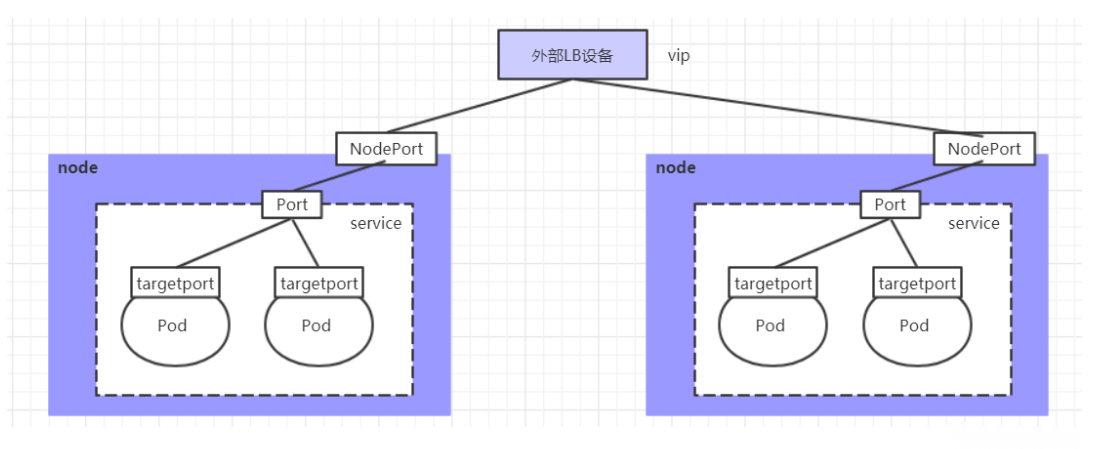
LoadBalancer和NodePort很相似,目的都是向外部暴露一个端口,区别在于LoadBalancer会在集群的外部再来做一个负载均衡设备,而这个设备需要外部环境支持的,外部服务发送到这个设备上的请求,会被设备负载之后转发到集群中。
4.5 ExternalName类型的Service
ExternalName类型的Service用于引入集群外部的服务,它通过externalName属性指定外部一个服务的地址,然后在集群内部访问此service就可以访问到外部的服务了。
创建service-externalname.yaml
apiVersion: v1
kind: Service
metadata:
name: service-externalname
spec:
type: ExternalName # service类型
externalName: www.baidu.com
# 创建service
[root@k8s-master01 ~]# kubectl apply -f deployment-nginx-externalname.yaml
service/service-externalname created
[root@k8s-master01 ~]# kubectl -n dev get svc -o wide
NAME TYPE CLUSTER-IP EXTERNAL-IP PORT(S) AGE SELECTOR
service-externalname ExternalName <none> www.baidu.com <none> 7s <none>
[root@k8s-master01 ~]# kubectl describe -n dev svc
Name: service-externalname
Namespace: dev
Labels: <none>
Annotations: <none>
Selector: <none>
Type: ExternalName
IP Families: <none>
IP:
IPs: <none>
External Name: www.baidu.com
Session Affinity: None
Events: <none>
# 域名解析
[root@k8s-master01 ~]# dig @10.10.0.10 service-externalname.dev.svc.cluster.local
; <<>> DiG 9.11.4-P2-RedHat-9.11.4-26.P2.el7_9.15 <<>> @10.10.0.10 service-externalname.dev.svc.cluster.local
; (1 server found)
;; global options: +cmd
;; Got answer:
;; WARNING: .local is reserved for Multicast DNS
;; You are currently testing what happens when an mDNS query is leaked to DNS
;; ->>HEADER<<- opcode: QUERY, status: NOERROR, id: 33580
;; flags: qr aa rd; QUERY: 1, ANSWER: 4, AUTHORITY: 0, ADDITIONAL: 1
;; WARNING: recursion requested but not available
;; OPT PSEUDOSECTION:
; EDNS: version: 0, flags:; udp: 4096
;; QUESTION SECTION:
;service-externalname.dev.svc.cluster.local. IN A
;; ANSWER SECTION:
service-externalname.dev.svc.cluster.local. 5 IN CNAME www.baidu.com.
www.baidu.com. 5 IN CNAME www.a.shifen.com.
www.a.shifen.com. 5 IN A 39.156.66.18
www.a.shifen.com. 5 IN A 39.156.66.14
;; Query time: 127 msec
;; SERVER: 10.10.0.10#53(10.10.0.10)
;; WHEN: 四 1月 25 15:04:37 CST 2024
;; MSG SIZE rcvd: 247