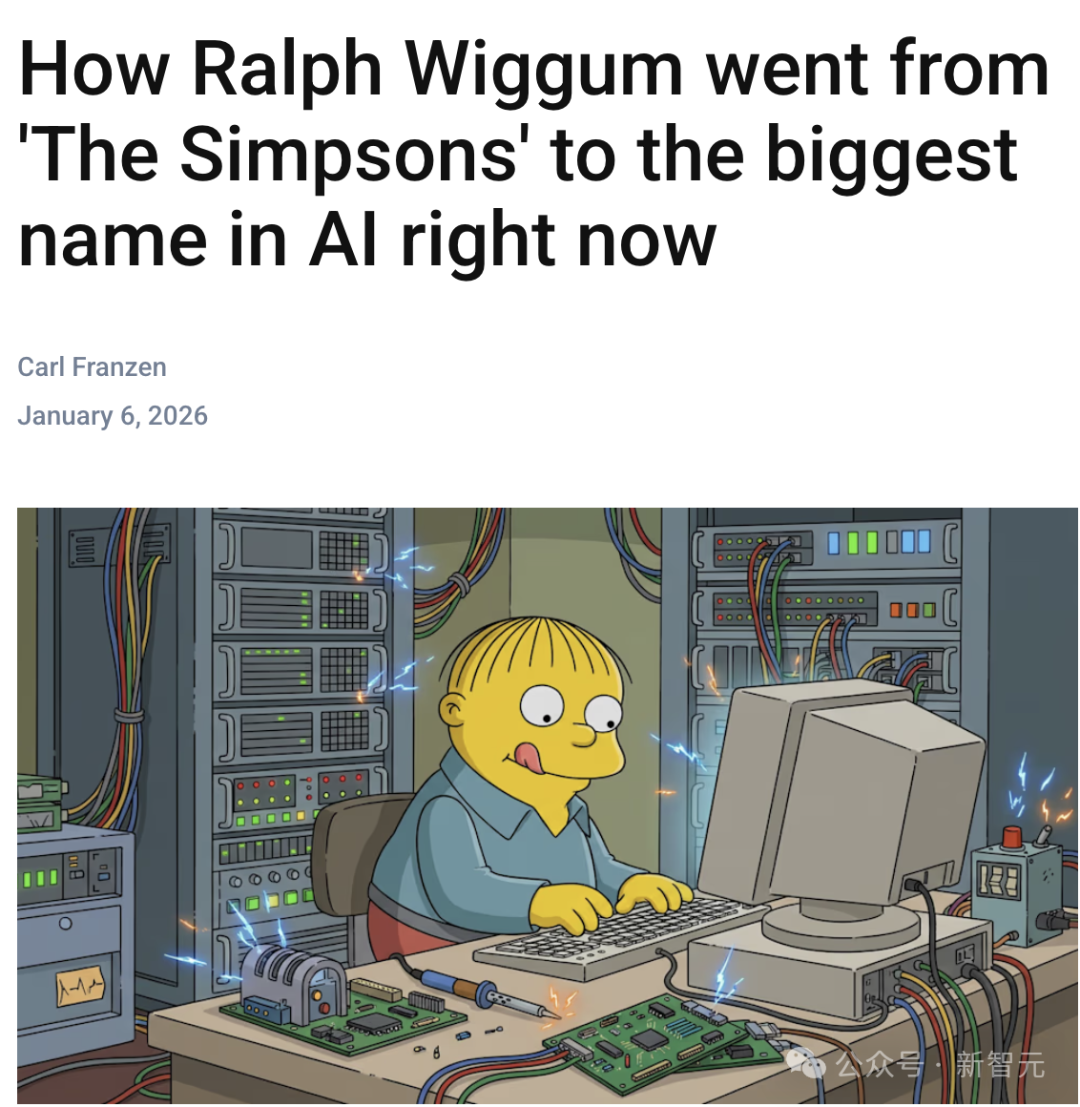
How Ralph Wiggum went from 'The Simpsons' to the biggest name in AI right now
拉尔夫·威格姆:从《辛普森一家》走向人工智能领域顶流之路
Carl Franzen January 6, 2026
In the fast-moving world of AI development, it is rare for a tool to be described as both "a meme" and AGI, artificial generalized intelligence, the "holy grail" of a model or system that can reliably outperform humans on economically valuable work.
Named after the infamously high-pitched, hapless yet persistent character on The Simpsons , this newish tool (released in summer 2025) --- and the philosophy behind it --- has set the developer community on X (formerly Twitter) into a tizzy of excitement over the last few weeks.
这款于 2025 年夏季发布的新型工具,其命名源自《辛普森一家》中那个嗓音尖利、运气不佳却执着坚韧的知名角色。过去几周,该工具及其背后的技术理念,已经让 X 平台(原推特)上的开发者社区陷入狂热的讨论氛围。
For power users of Anthropic's hit agentic, quasi-autonomous coding platform Claude Code, Wiggum represents a shift from "chatting" with AI to managing autonomous "night shifts."
对于人工智能公司 Anthropic 旗下热门智能体化、准自主式编程平台 Claude Code 的资深用户而言,拉尔夫·威格姆插件标志着一种模式转变:从与人工智能的「对话协作」,转向对人工智能自主「夜间工作流」的管理。
It is a crude but effective step toward agentic coding, transforming the AI from a pair programmer into a relentless worker that doesn't stop until the job is done.
To understand the "Ralph" tool is to understand a new approach toward improving autonomous AI coding performance --- one that relies on brute force, failure, and repetition as much as it does on raw intelligence and reasoning.
Because Ralph Wiggum is not merely a Simpsons character anymore; it is a methodology born on a goat farm and refined in a San Francisco research lab, a divergence best documented in the conversations between its creator and the broader developer community.
Huntley's solution was elegantly brutish. He wrote a 5-line Bash script that he jokingly named after Ralph Wiggum, the dim-witted but relentlessly optimistic and undeterred character from The Simpsons .
As Huntley explained in his initial release blog post "Ralph Wiggum as a 'software engineer,'" the idea relied on Context Engineering.
亨特利在其首发博文《身为「软件工程师」的拉尔夫·威格姆》中解释道,这个创意的核心在于语境工程。
By piping the model's entire output---failures, stack traces, and hallucinations---back into its own input stream for the next iteration, Huntley created a "contextual pressure cooker."
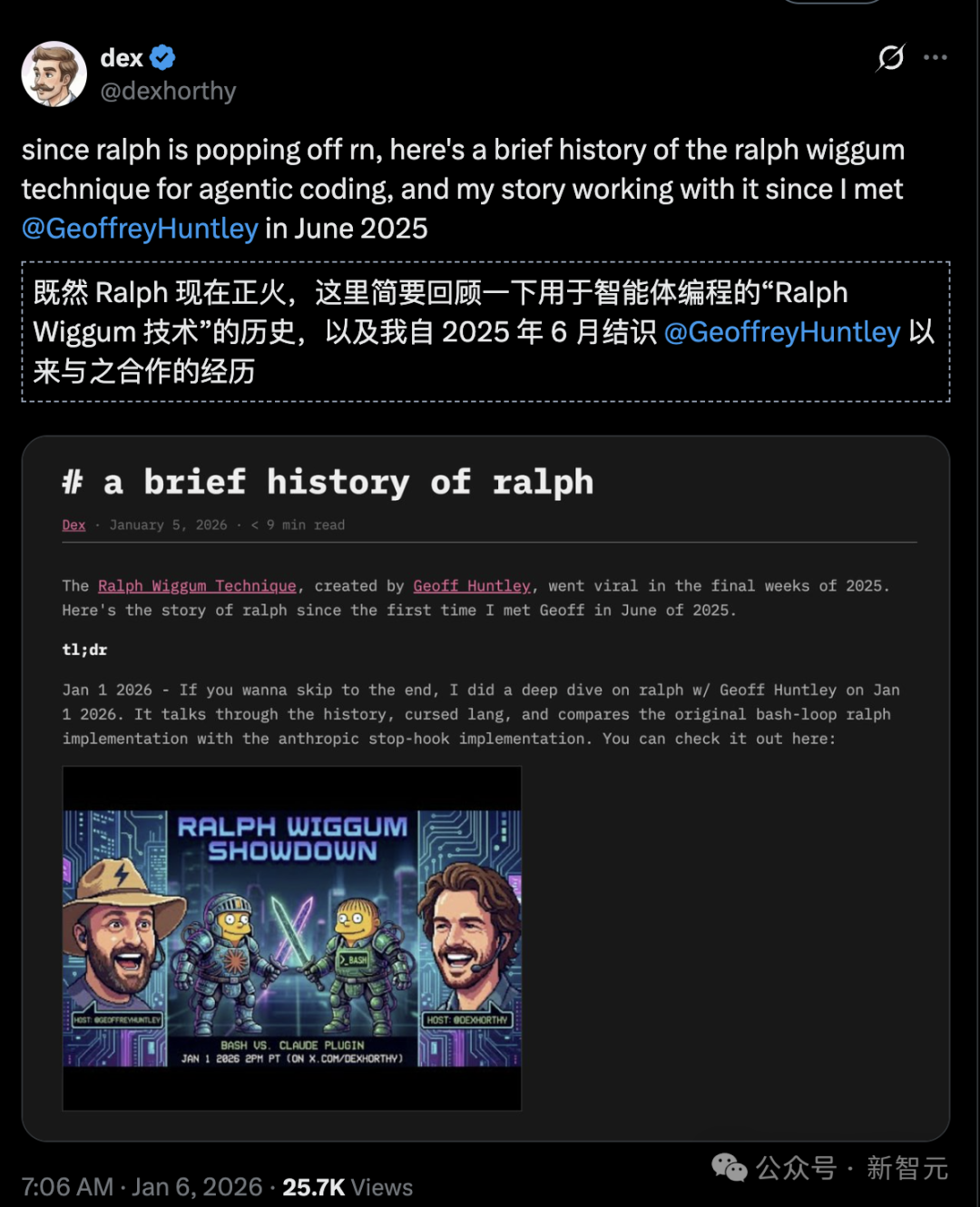
This philosophy was further dissected in a recent conversation with Dexter Horthy, co-founder and CEO of the enterprise AI engineering firm HumanLayer, posted on YouTube.
Horthy and Huntley argue that the power of the original Ralph wasn't just in the looping, but in its "naive persistence" --- the unsanitized feedback, in which the LLM isn't protected from its own mess; it is forced to confront it.
It embodies the philosophy that if you press the model hard enough against its own failures without a safety net, it will eventually "dream" a correct solution just to escape the loop.
By late 2025, Boris Cherny, Anthropic's Head of Claude Code* formalized the hack into the official ralph-wiggum plugin.
到 2025 年末,Anthropic 公司 Claude Code 负责人鲍里斯·切尔尼将这个创意改造为官方的拉尔夫·威格姆插件。
However, as noted by critics in the Horthy/Huntley discussion, the official release marked a shift in philosophy---a "sterilization" of the original chaotic concept.
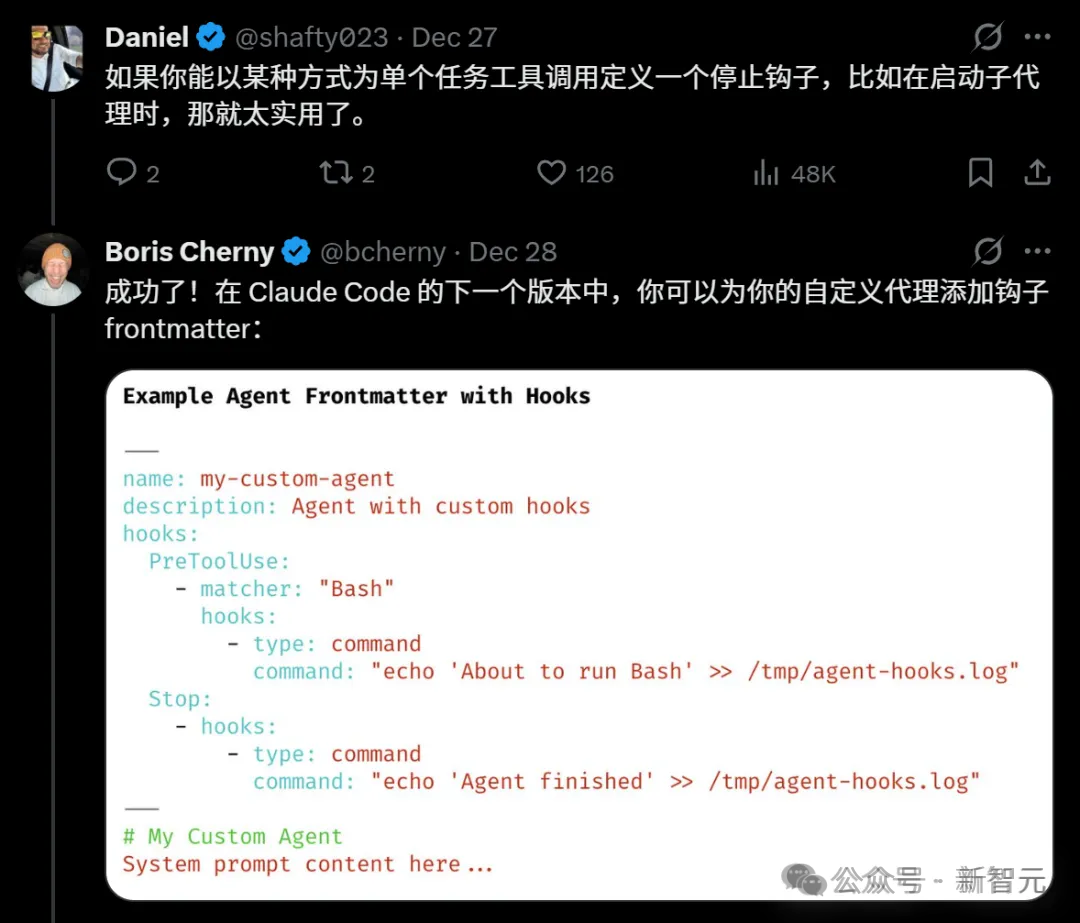
In the official documentation, the distinction is clear. The Anthropic implementation utilizes a specialized "Stop Hook"---a mechanism that intercepts the AI's attempt to exit the CLI.
Intercept the Exit: When Claude thinks it is done, the plugin pauses execution. 拦截退出操作:当 Claude 认为任务已完成时,插件会暂停程序执行。
Verify Promise: It checks for a specific "Completion Promise" (e.g., "All tests passed"). 验证完成承诺:插件会检查是否出现特定的「完成承诺」语句(例如「所有测试通过」)。
Feedback Injection: If the promise isn't met, the failure is formatted as a structured data object. 注入反馈信息:若未检测到完成承诺语句,插件会将失败信息格式化为结构化数据对象。
The "Tale of Two Ralphs" offers a critical choice for modern power users:
「两个拉尔夫的版本」为当代资深用户提供了一个关键选择:
The "Huntley Ralph" (Bash Script/Community Forks): Best for chaotic, creative exploration where you want the AI to solve problems through sheer, unbridled persistence.
The "Official Ralph" (Anthropic Plugin): The standard for enterprise workflows, strictly bound by token limits and safety hooks, designed to fix broken builds reliably without the risk of an infinite hallucination loop.
But for the "boring stuff," the efficiency gains are becoming the stuff of legend. According to the official plugin documentation on GitHub, the technique has already logged some eye-watering wins.
In one case, a developer reportedly completed a 50,000 contract for just 297 in API costs---essentially arbitraging the difference between an expensive human lawyer/coder and a relentless AI loop.
有案例显示,一名开发者仅花费 297 美元的 API 调用费用,就完成了一个价值 50000 美元的合同项目,这实质上是利用了高价人力(律师/程序员)与不知疲倦的人工智能循环之间的成本差异进行套利。
The repository also highlights a Y Combinator hackathon stress test where the tool "successfully generated 6 repositories overnight," effectively allowing a single developer to output a small team's worth of boilerplate while asleep.
该代码仓库还记录了 Y Combinator 黑客马拉松的一次压力测试:这款工具「一夜之间成功生成了 6 个代码仓库」,让一名开发者在睡眠期间,就能完成相当于一个小型团队的样板代码编写工作量。
Meanwhile, on X, community members like ynkzlk have shared screenshots of Ralph handling the kind of maintenance work engineers dread, such as a 14-hour autonomous session that upgraded a stale codebase from React v16 to v19 entirely without human input.
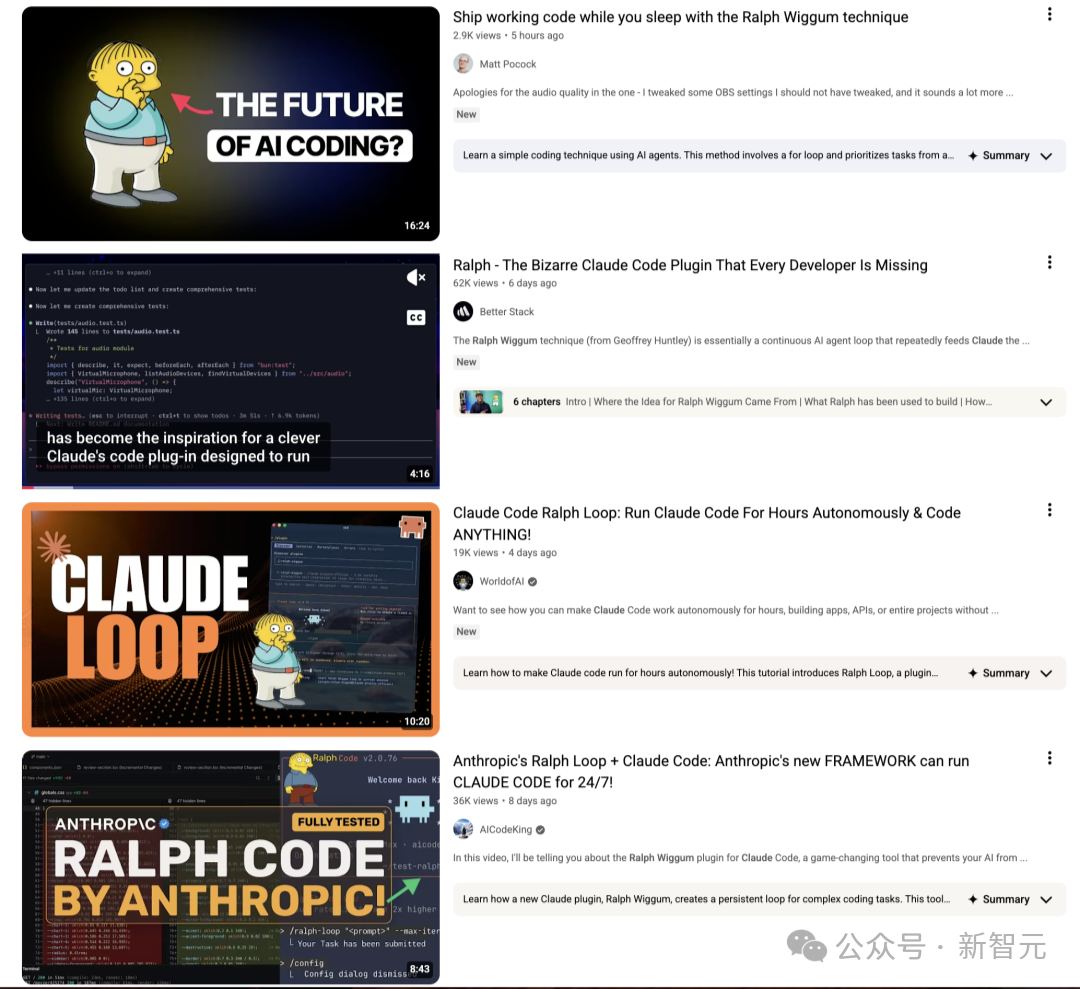
To make this work safely, power users rely on a specific architecture. Matt Pocock, a prominent developer and educator who posted a recentYouTube video overview of why Ralph Wiggum is so powerful.
As he states: "One of the dreams of coding agents is that you can wake up in the morning to working code, that your coding agent has worked through your backlog and has just spit out a whole bunch of code for you to review and it works."
In Pocock's view, Wiggum (the plugin) is about as close as you can come to this dream. It's "a vast improvement over any other AI coding orchestration setup I've ever tried and allows you to actually ship working stuff with longrunning coding agents," he states.
At its heart, the Ralph Wiggum technique is deceptively simple. As Huntley put it: "Ralph is a Bash loop."
拉尔夫·威格姆技术的核心原理看似简单。正如亨特利所言:「拉尔夫本质上就是一个 Bash 循环。」
However, the official plugin implements this in a clever, technically distinct way. Instead of just running a script on the outside, the plugin installs a "Stop Hook" inside your Claude session.
但官方插件采用了一种巧妙且技术路径截然不同的实现方式。它并非在外部运行脚本,而是在 Claude 的会话中内置了一个「停止钩子」。
You give Claude a task and a "completion promise" (e.g., <promise>COMPLETE</promise>).
向 Claude 下达任务,并设定一个「完成承诺」语句(例如 <promise>COMPLETE</promise>)。
Claude works on the task and tries to exit when it thinks it's done.
Claude 开始执行任务,当它认为任务完成时,会尝试退出会话。
The hook blocks the exit if the promise isn't found, feeding the same prompt back into the system.
若未检测到完成承诺语句,钩子机制会拦截退出操作,并将相同的提示词重新输入系统。
This forces a "self-referential feedback loop" where Claude sees its previous work, reads the error logs or git history, and tries again.
这会形成一个「自指反馈循环」, Claude 将查看上一轮的工作成果、读取错误日志或 Git 提交记录,然后重新尝试执行任务。
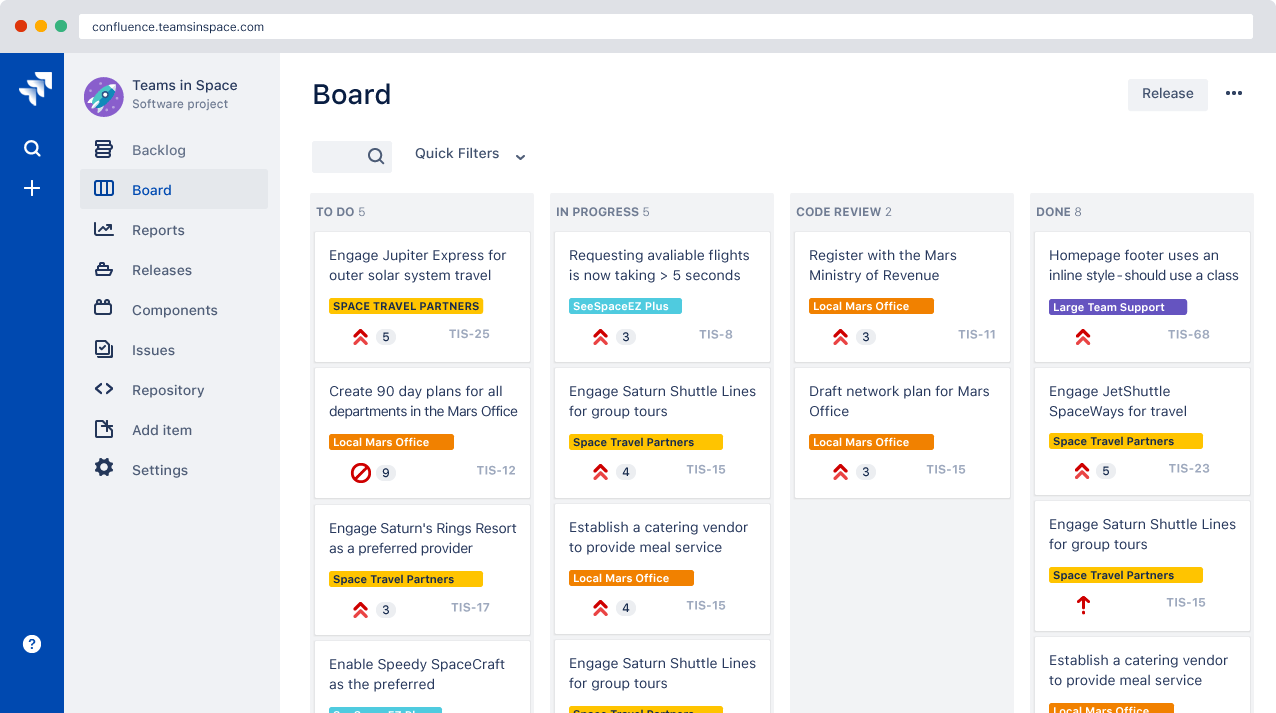
Pocock describes this as a shift from "Waterfall" planning to true "Agile" for AI. Instead of forcing the AI to follow a brittle, multi-step plan, Ralph allows the agent to simply "grab a ticket off the board," finish it, and look for the next one.
The reception among the AI builder and developer community on social media has been effusive.
这款工具在社交媒体上的人工智能开发者社区中收获了热烈反响。
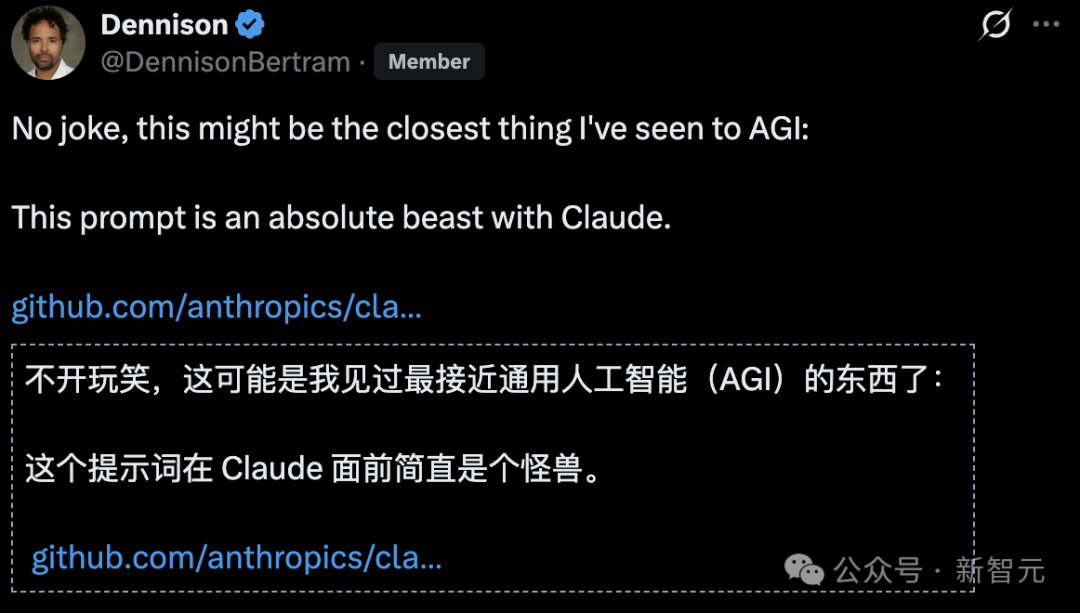
Dennison Bertram, CEO and founder of custom cryptocurrency and blockchain token creation platform Tally, posted on X on December 15:
定制加密货币与区块链代币发行平台 Tally 的首席执行官兼创始人丹尼森·伯特伦于 12 月 15 日在 X 平台 发文称:
"No joke, this might be the closest thing I've seen to AGI: This prompt is an absolute beast with Claude."
「说真的,这可能是我见过最接近通用人工智能的东西:搭配 Claude 使用时,这个提示词方案简直强大到离谱。」
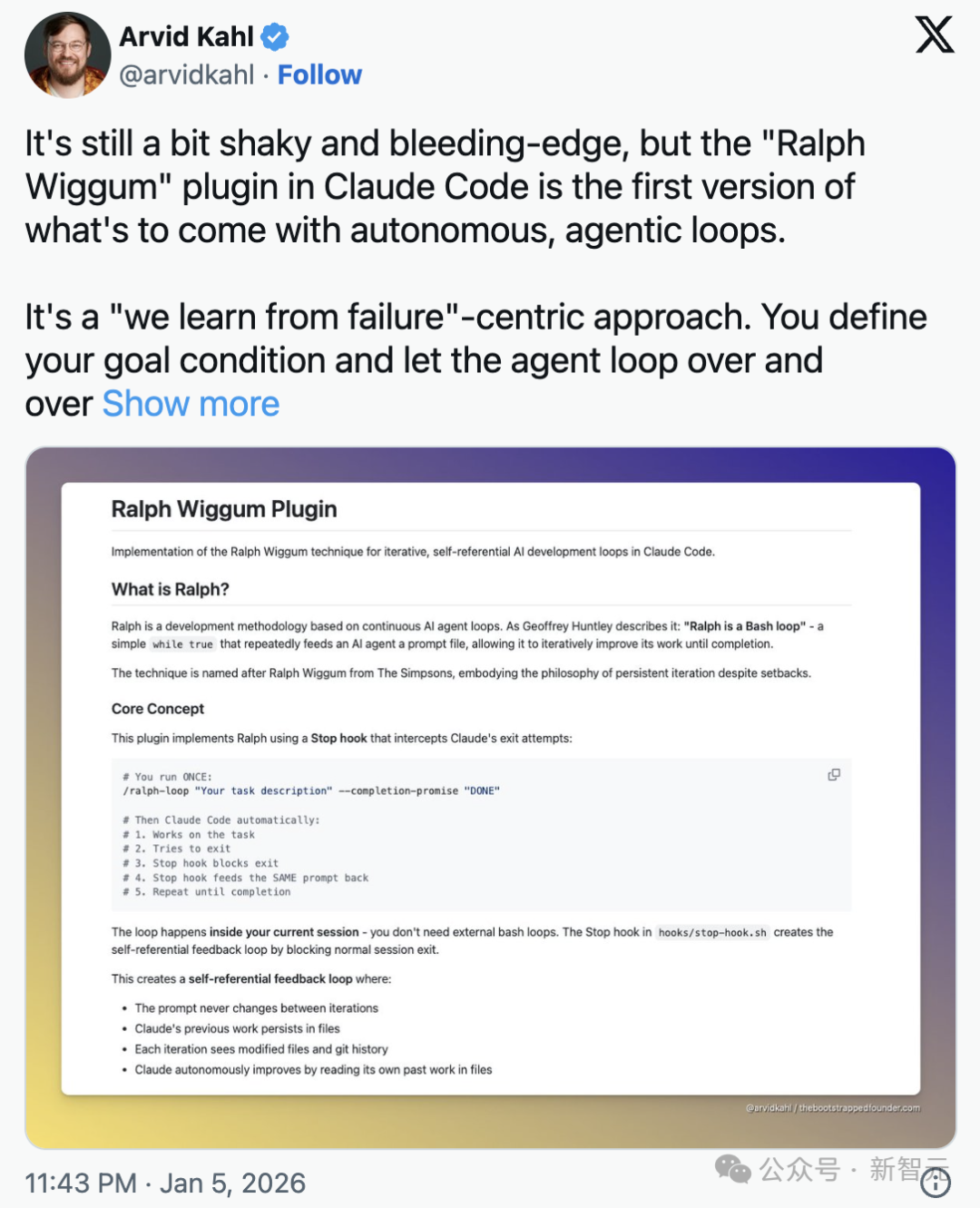
Arvid Kahl, founder and CEO of automated podcast business intelligence extraction and brand detection tool Podscan, persuasively covered the benefits of Ralph's persistent approach in his own X post yesterday:
播客商业智能自动化提取与品牌检测工具 Podscan 的创始人兼首席执行官 阿维德·卡尔 昨日也在 X 平台发文,有力地阐述了拉尔夫插件这种执着迭代模式的优势:
And earlier this week, someone --- not Huntley, he says--- launched a new $RALPH cryptocurrency token on the Solana blockchain to capitalize on the hype surrounding the plugin.
Security experts strictly advise running Ralph sessions in sandboxed environments (like disposable cloud VMs) to prevent the AI from accidentally deleting local files.
安全专家强烈建议在沙箱环境(例如一次性云虚拟机)中运行拉尔夫会话,防止人工智能意外删除本地文件。
Availability
获取方式
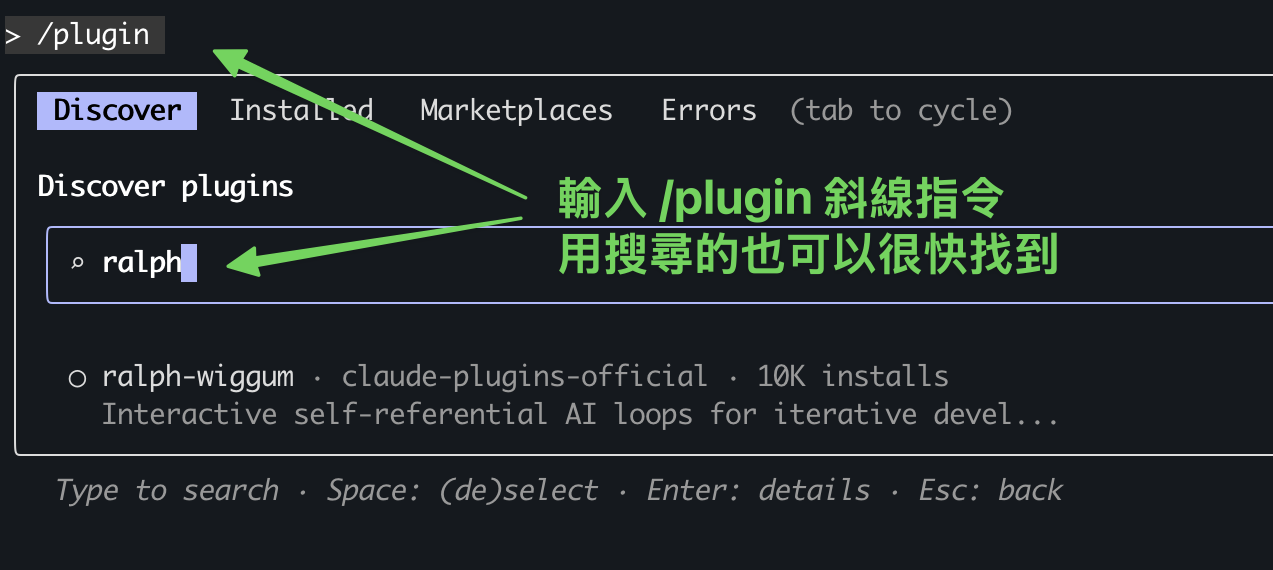
The Ralph Wiggum technique is available now for Claude Code users:
Claude Code 用户目前可通过以下方式获取拉尔夫·威格姆相关技术:
Official Plugin: Accessible inside Claude Code via /plugin ralph. 官方插件 :在 Claude Code 中输入 /plugin ralph 命令即可调用。
Original Method: The "OG" bash scripts and community forks are available on GitHub. 原始方案:初代 Bash 脚本及 社区分支版本 可在 GitHub 平台获取。
As 2026 begins, Ralph Wiggum has evolved from a Simpsons joke into a defining archetype for software development: Iteration > Perfection.
Correction: This article mistakenly characterized Boris Cherney's title. The article has since been updated and corrected, and we regret the error.* 勘误声明: 本文此前错误表述了鲍里斯·切尔尼的职位信息,现已更正。我们对由此造成的失误深表歉意。
Ralph Wiggum as a "software engineer"
身为"软件工程师"的拉尔夫·威格姆
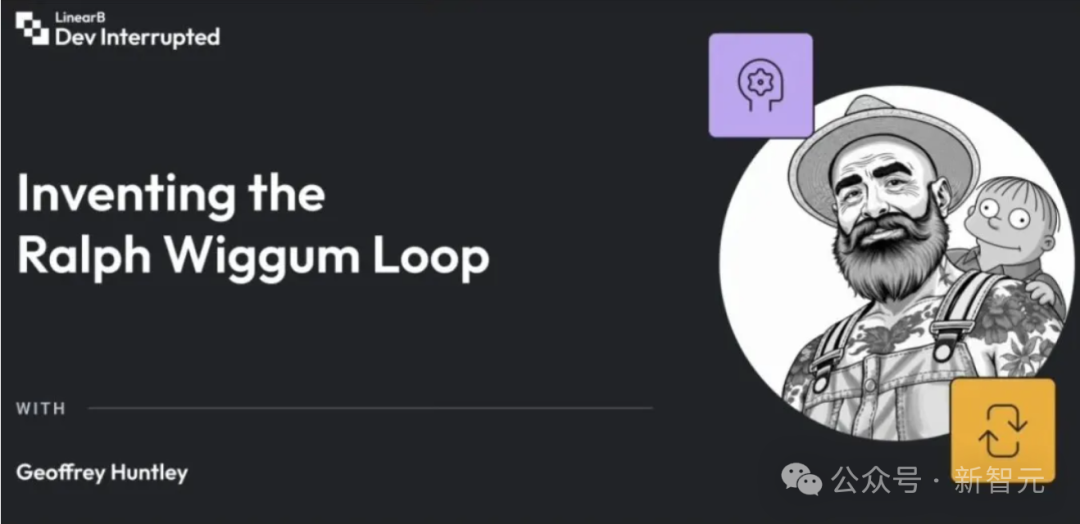
BY GEOFFREY HUNTLEY IN AI --- 14 JUL 2025
How Ralph Wiggum went from 'The Simpsons' to the biggest name in AI right now - Venture Beat
拉尔夫·威格姆如何从《辛普森一家》走进现实,成为当下人工智能领域的顶流------《风险投资》杂志
Here's a cool little field report from a Y Combinator hackathon event where they put Ralph Wiggum to the test.
下文是一份来自 Y Combinator 黑客马拉松活动的精彩简短实地报告,该活动中,研发人员对拉尔夫·威格姆展开了测试。
*"We Put a Coding Agent in a While Loop and It Shipped 6 Repos Overnight"* *《我们将一个代码智能体置于 While 循环中,它在一夜之间交付了 6 个代码仓库》*
If you've seen my socials lately, you might have seen me talking about Ralph and wondering what Ralph is. Ralph is a technique. In its purest form, Ralph is a Bash loop.
Ralph can replace the majority of outsourcing at most companies for greenfield projects. It has defects, but these are identifiable and resolvable through various styles of prompts.
That's the beauty of Ralph - the technique is deterministically bad in an undeterministic world. 这正是拉尔夫的精妙之处------在这个充满不确定性的世界里,这项技术的缺陷是可确定的。
Ralph can be done with any tool that does not cap tool calls and usage.
只要工具不对调用次数与使用时长设置上限,均可用于实现拉尔夫技术。
Ralph is currently building a brand new programming language. We are on the final leg before a brand new production-grade esoteric programming language is released. What's kind of wild to me is that Ralph has been able to build this language and is also able to program in this language without that language being in the LLM's training data set.
Building software with Ralph requires a great deal of faith and a belief in eventual consistency. Ralph will test you. Every time Ralph has taken a wrong direction in making CURSED, I haven't blamed the tools; instead, I've looked inside. Each time Ralph does something bad, Ralph gets tuned - like a guitar.
Something I've been wondering about for a really long time is, essentially, why do people say AI doesn't work for them? What do they mean when they say that?
From which identity are they coming from? Are they coming from the perspective of an engineer with a job title and sharing their experiences in a particular company, in that particular codebase? Or are they coming from the perspective that they've tried at home and it hasn't worked for them there?
Now, this distinction is crucial because there are companies out there with ancient code bases, and they've extensive proprietary patterns that AI simply doesn't have the training data for. That experience is entirely understandable.
However, I do worry about engineers whose only experience with AI is using it in a large, proprietary codebase. Have they tried AI at home? Are they putting in deliberate, intentional practice? Have they discovered the beauty of AI?
You see, there is a beauty in AI. And the way I like to describe it these days, they are kind of like a musical instrument.
要知道,人工智能技术有着其独特的精妙之处。我近来喜欢这样形容它:人工智能技术就如同一件乐器。
the tb303 was a commercial failure upon launch but many years later someone started playing: twisting knobs in strange and wonderful ways that resulted in new genres of music being created.
Let's take a guitar as an example. Everyone knows what a guitar is, and everyone knows that if you put deliberate, intentional practice into it, you can become good at the guitar. Still, it takes time, effort and experimentation.
In the circles around me, the people who are getting the most out of AI have put in deliberate, intentional practice. They don't just pick up a guitar, experience failure, and then go, "Well, it got the answer wildly wrong," and then move on and assume that that will be their repeated experience.
Something I've been wondering about for a really long time is, essentially, why do people say AI doesn't work for them? What do they mean when they say that? From which identity are they coming from? Are they coming from the perspective of an engineer with a job title and
This is a follow-up from my previous blog post: "deliberate intentional practice". I didn't want to get into the distinction between skilled and unskilled because people take offence to it, but AI is a matter of skill. Someone can be highly experienced as a software engineer in 2024, but that
It begins with no playground, and Ralph is given instructions to construct one.
项目初始阶段并未搭建任何实验环境,研发人员向拉尔夫下达指令,要求其自主构建一个实验环境。
Ralph is very good at making playgrounds, but he comes home bruised because he fell off the slide, so one then tunes Ralph by adding a sign next to the slide saying "SLIDE DOWN, DON'T JUMP, LOOK AROUND," and Ralph is more likely to look and see the sign.
When I was in SFO, I taught a few smart people about Ralph. One incredibly talented engineer listened and used Ralph on their next contract, walking away with the wildest ROI. These days, all they think about is Ralph.
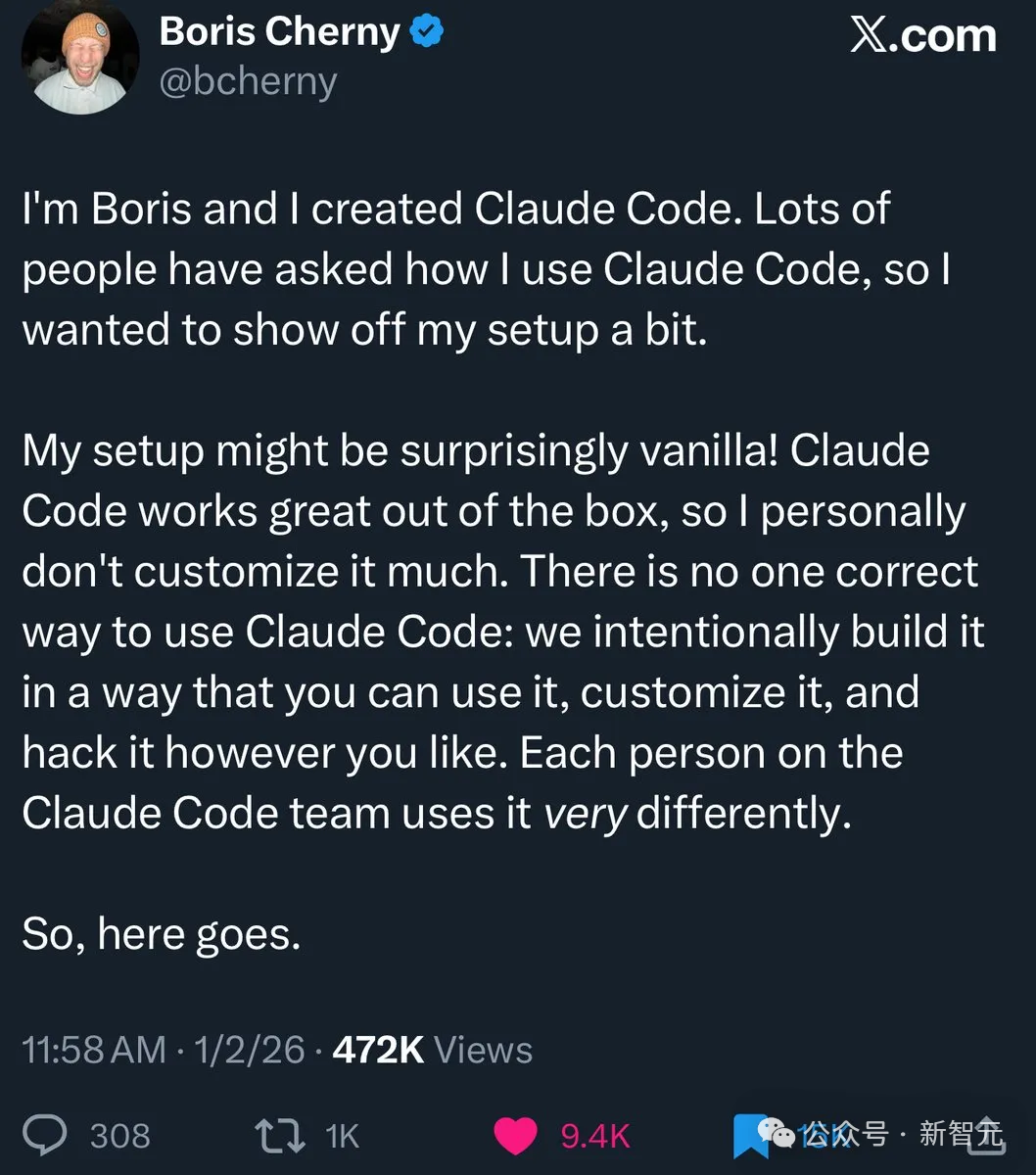
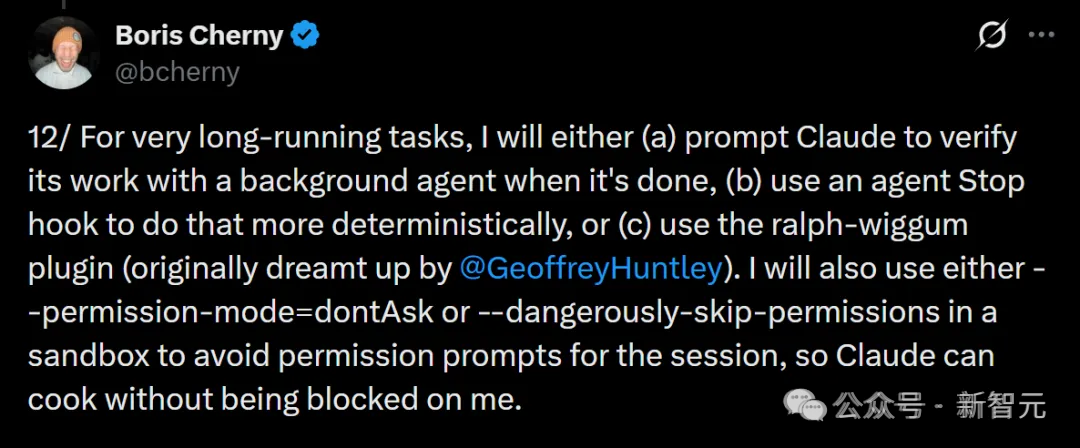
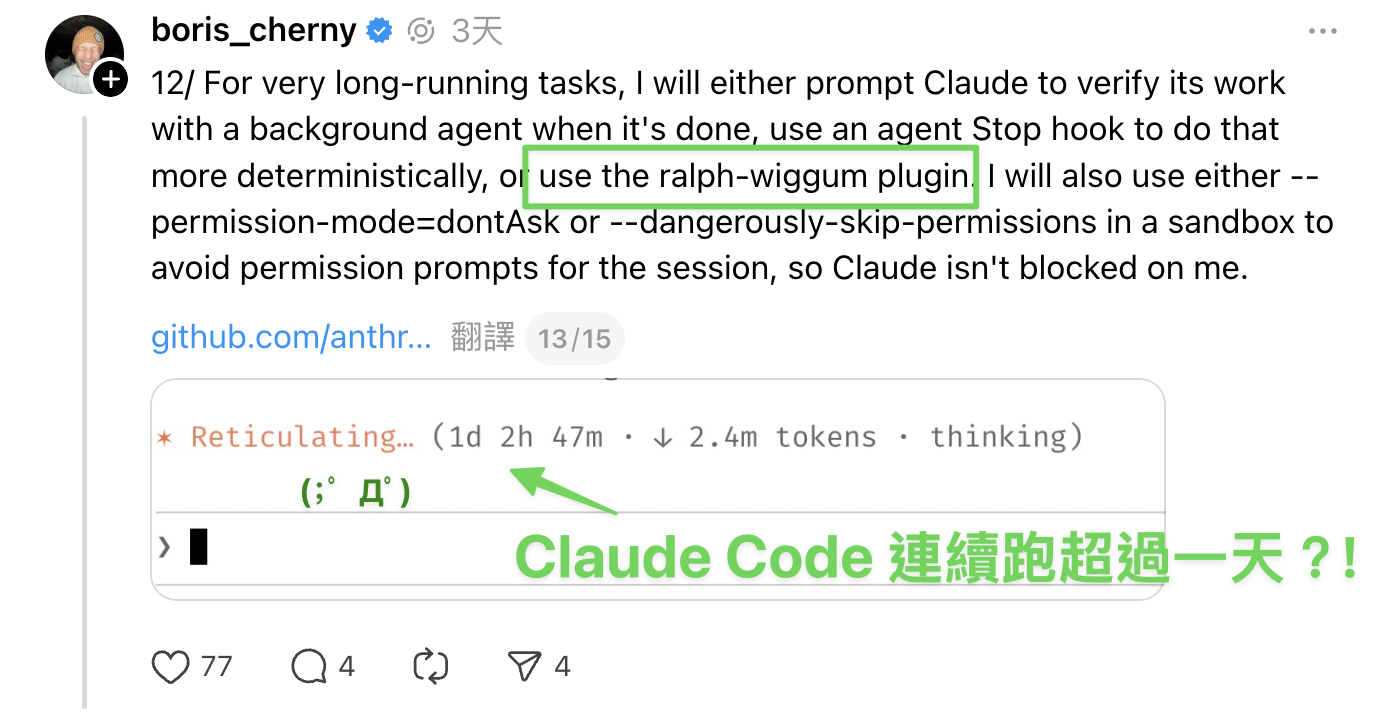
Boris 在 Threads 上分享的 Claude Code 使用技巧中,明确提及使用 Ralph Wiggum 外挂执行长耗时任务。
(截图:Boris 的 Threads 贴文)
他同时分享实战案例:在 Y Combinator 黑客松活动中,Ralph Wiggum 外挂在一夜之间产出 6 个可直接使用的程序库;另有案例显示,一名工程师在掌握 Ralph Wiggum 技术后,以此承接外包项目,仅投入 297 美元的 API 成本,便完成价值 50,000 美元的合约任务。
Ralph Wiggum Loop 的创始者并非 Claude Code 团队。
该方法由 Geoffrey Huntley 提出,初衷是解决 AI Agent 常见的「偷懒」问题。AI 在处理复杂任务(例如建构后端或除错)时,可能仅编写少量程序码或忽略部分错误,便宣告任务完成并提前退出对话流程。
Huntley 的工作哲学可概括为「迭代进步优于完美」。他提出,AI 开发过程中的失败经验均可作为训练数据,具有确定性特征的错误(非随机错误)属于高价值资讯,可引导开发者参照乐器调音的方式,持续优化提示词。他同时强调,开发者需具备坚定信念,认同「最终一致性」理念,即透过 AI 不间断的自我修正循环,最终可达成预期目标状态。
Huntley 在开发 CURSED 语言的过程中提到:
「建造软体需要坚定的信念与对最终一致性的认可。Ralph 会考验使用者的耐心。每当 Ralph 在开发 CURSED 语言的过程中偏离方向,我不会归咎于工具本身;相反,我会从自身角度寻找问题。每当 Ralph 产生不符合预期的结果,我便会对其进行调整,这一过程与吉他调音的逻辑相似。」
下文将从技术需求角度出发,阐述 Ralph Wiggum 的技术原理。
Ralph Wiggum Loop 的技术需求背景
现存问题:AI 代理的「偷懒」现象
多数 AI 辅助开发工具的应用模式,类似于聘请一名存在「偷懒」倾向的实习生,使用者需持续追踪任务进度、指出相关错误,反而增加管理成本。常见问题包括以下三类:
此前在技术领域得到广泛应用的 Claude Code,以及现阶段快速发展的 Claude Cowork,均与该段 5 行代码构建的技术逻辑存在深度的技术关联。有行业工程师作出预判:2026 年,硅谷的 AI 编程领域将大范围落地基于 Ralph Wiggum 逻辑的技术方案。
一、5 行代码的技术内核
该段代码构建的逻辑可归纳为:向 AI 模型下达持续性的任务指令,在任务测试未通过的前提下,模型将持续执行代码编写与验证操作;模型可自主读取编译报错信息、完成代码迭代编写与重试流程,迭代次数无明确限制,直至代码编译无报错、任务达成预设标准为止。
该指令的关键是构建无限循环的自主迭代机制,让 AI 模型脱离人工干预即可完成全流程的代码编写与调优,这一特性也是该技术方案的价值所在。Geoffrey Huntley 将该循环机制命名为 Ralph Wiggum,命名源自《辛普森一家》中具备持续尝试特质的角色形象。
区别于传统 AI 编程「单次生成达标代码」的设计思路,Ralph Loop 的设计逻辑为:默认模型首次生成的代码无法达成预设标准。当代码编译触发编译器报错、测试环节出现执行失败时,对应的报错信息将成为关键的优化依据------该类信息可精准定位代码的错误位置与问题类型,为 AI 模型的代码迭代提供明确方向,最终实现代码的精准优化与功能达标。
现阶段,Ralph Wiggum 已从影视角色名称,演变为 AI 编程领域具备高影响力的技术概念,基于该逻辑构建的技术方案,让现阶段的 AI 大模型在能力维度上,实现了对通用人工智能(AGI)的高度趋近。
二、Claude Code 研发人员的技术认可:人工编码的需求大幅降低
(一)Ralph-Wiggum 循环的技术奠基价值
Ralph-Wiggum 循环之所以成为 Claude Code 与 Claude Cowork 的技术支撑,其技术脉络可追溯至 2025 年末:Anthropic 团队的 Claude Code 负责人 Boris Cherny 发现该 5 行代码的技术价值后,将 Geoffrey Huntley 编写的 Bash 脚本进行标准化重构,推出官方版 Ralph-Wiggum 插件,该插件的落地直接推动 Claude Code 的能力实现质的提升。
在 Claude Code 中,仅需下达如下指令,即可触发完整的自主迭代编程流程:
bash复制代码
/ralph-loop "Build a REST API for todos. Requirements: CRUD operations, input validation, tests. Output <promise>COMPLETE</promise> when done." --completion-promise "COMPLETE" --max-iterations 50
该指令可驱动 Claude 模型实现四项能力:
持续迭代能力:模型将对代码进行反复编写与验证,不因单次执行失败终止流程;
自参考学习能力:基于测试结果与上一轮生成的代码,完成针对性的优化迭代;
目标导向执行能力:循环流程将持续运行,直至达成所有预设的任务要求;
完成标识输出能力:任务达成标准后,将输出预设的完成标志符。
(二)技术落地的实际成效
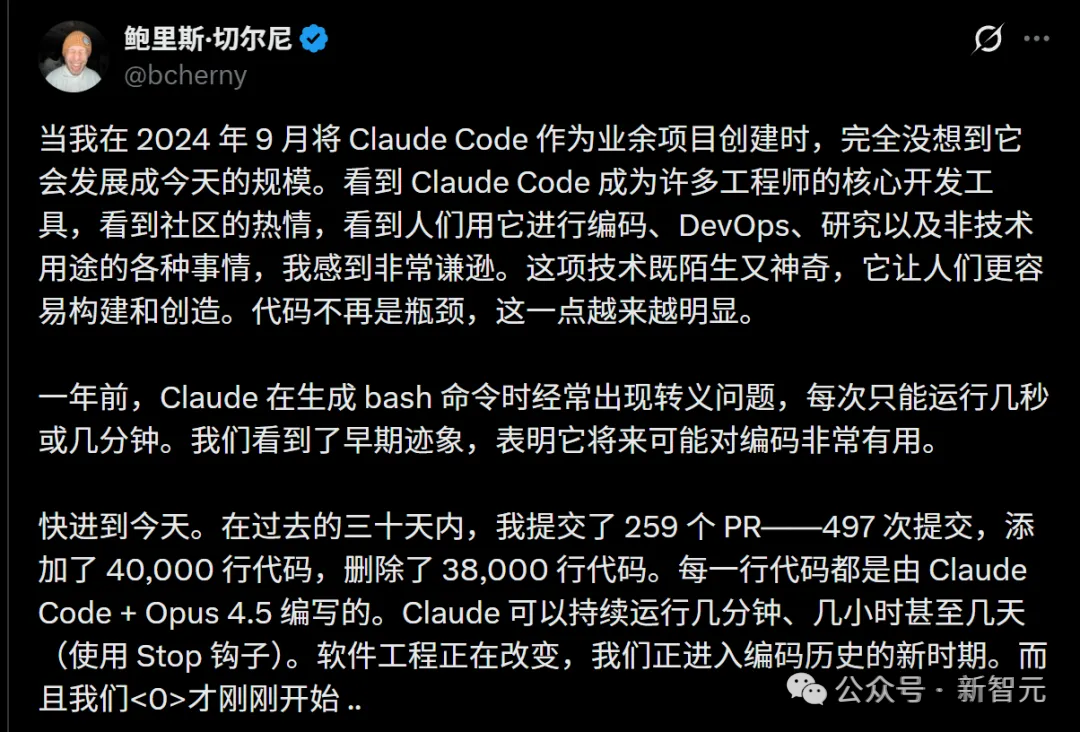
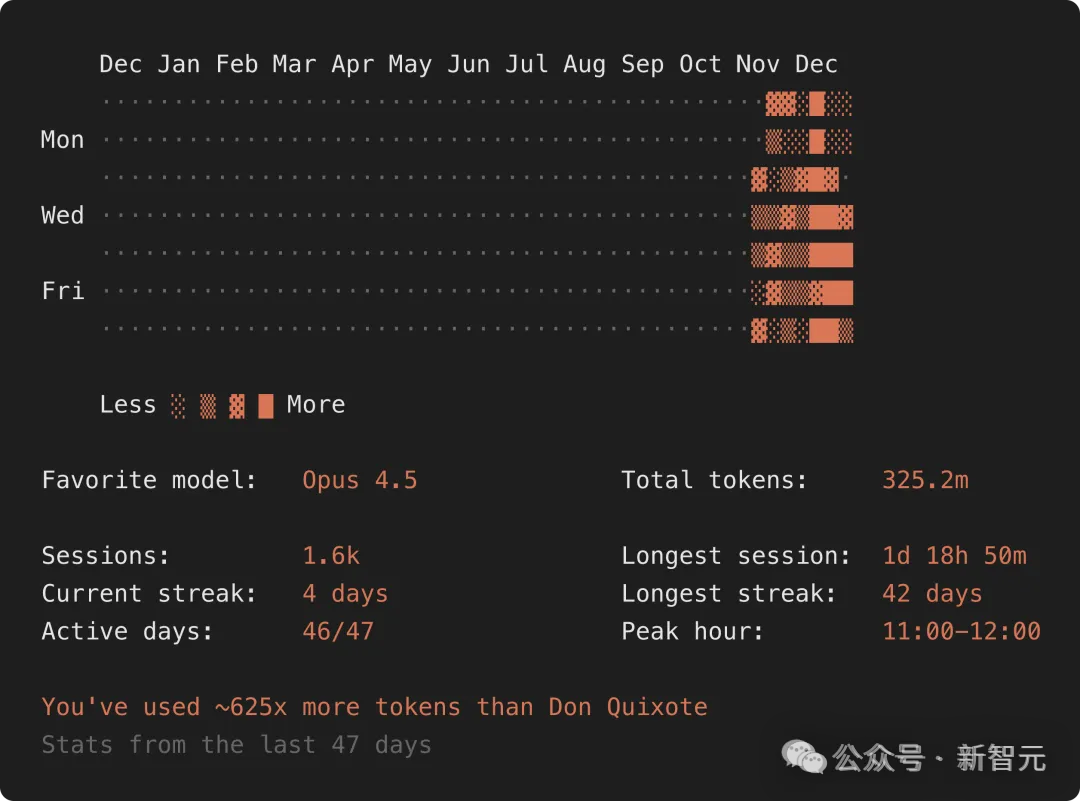
2025 年末,Boris Cherny 发布的技术分享内容,在全球开发者社群引发重大反响。其公开表示:在为期 30 天的周期内,其针对 Claude Code 项目的全部开发贡献,均由 Claude Code 模型自主完成,无任何人工编码环节。
据 Boris Cherny 披露的技术数据:该 30 天周期内,其完成 259 个 Pull Request 提交,累计执行 497 次代码提交操作,新增代码量 40,000 行,删减代码量 38,000 行;上述所有代码内容,均由 Claude Code 与 Opus 4.5 模型协同生成。
 (截图:Boris 的 Threads 贴文)