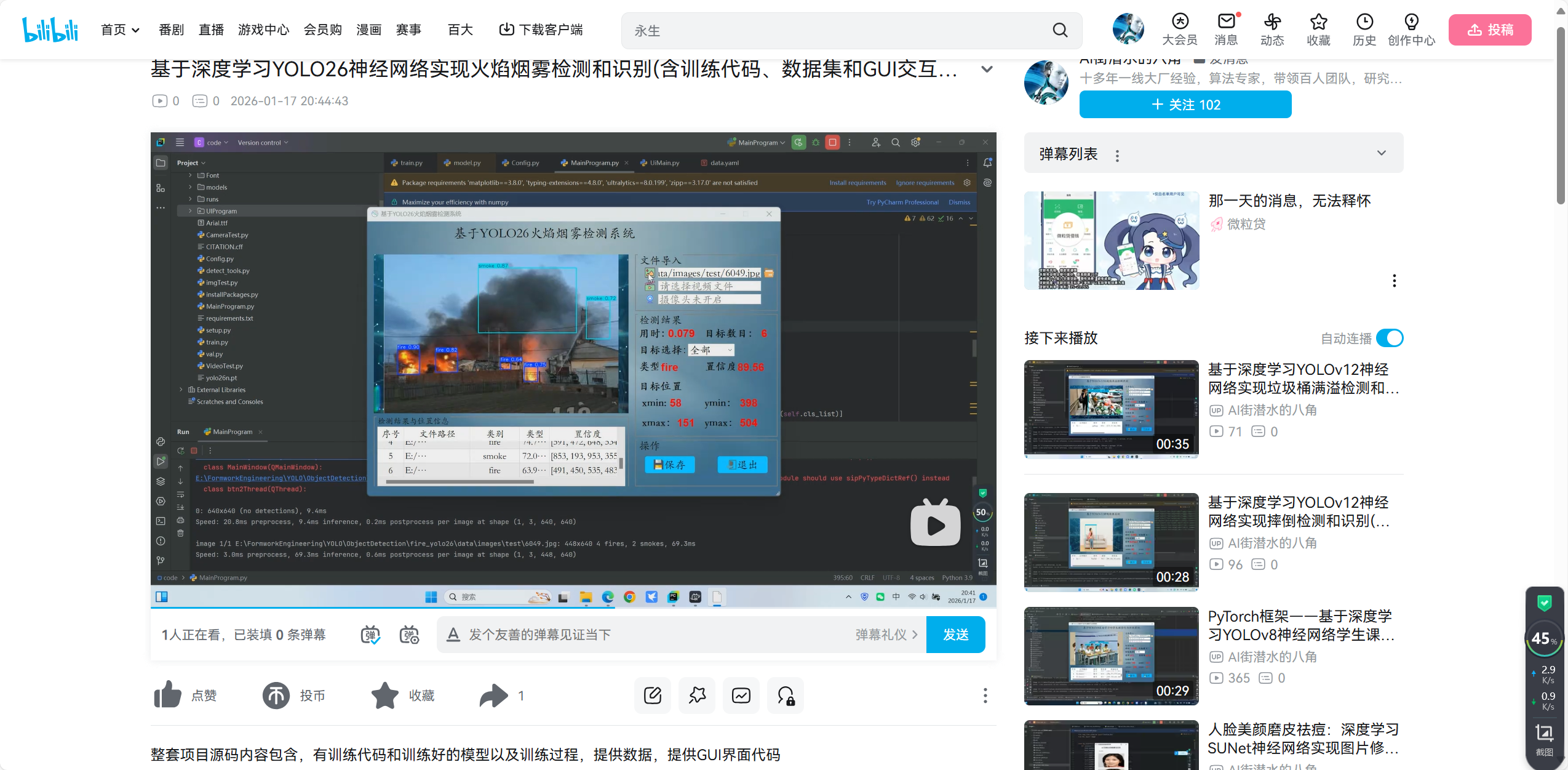
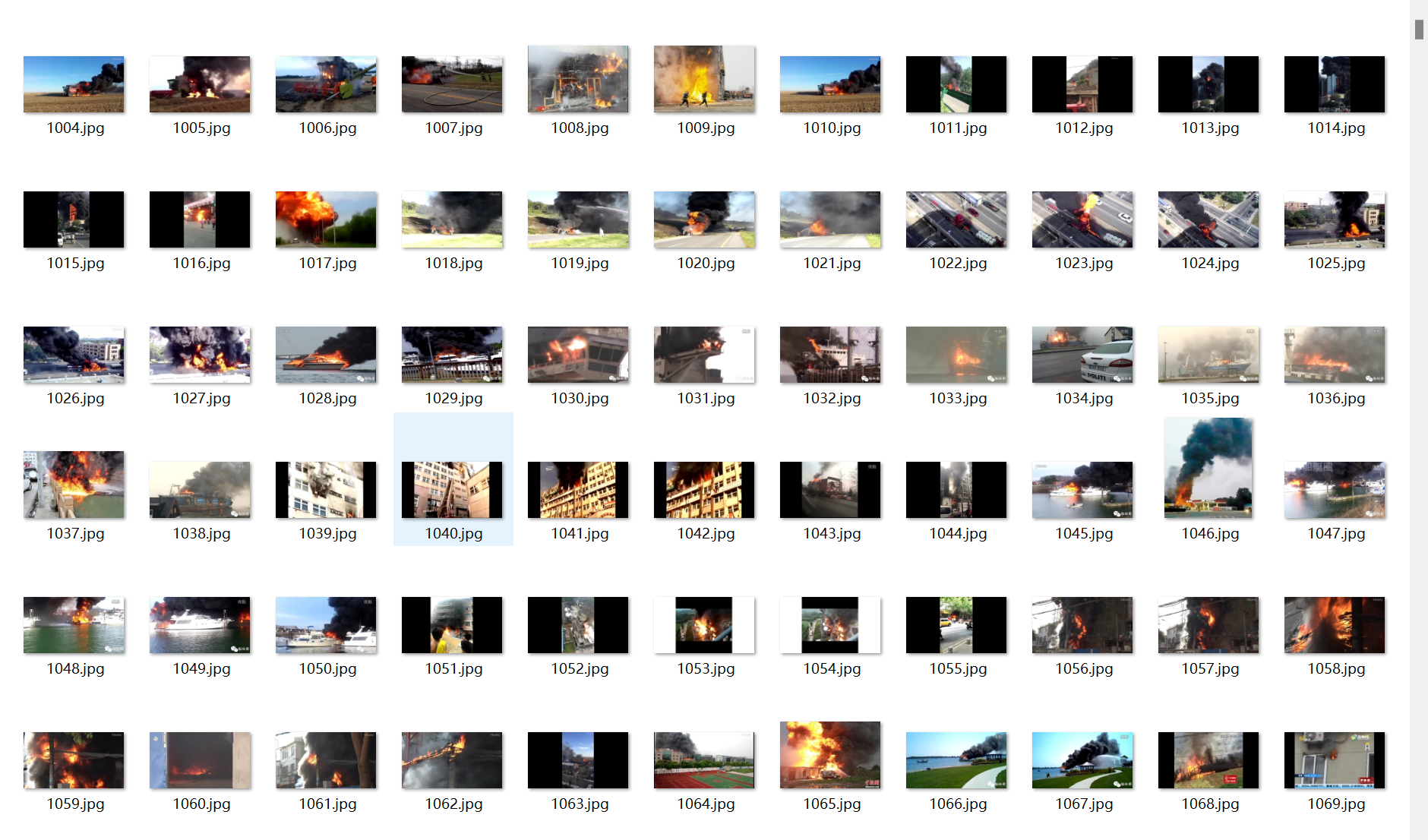
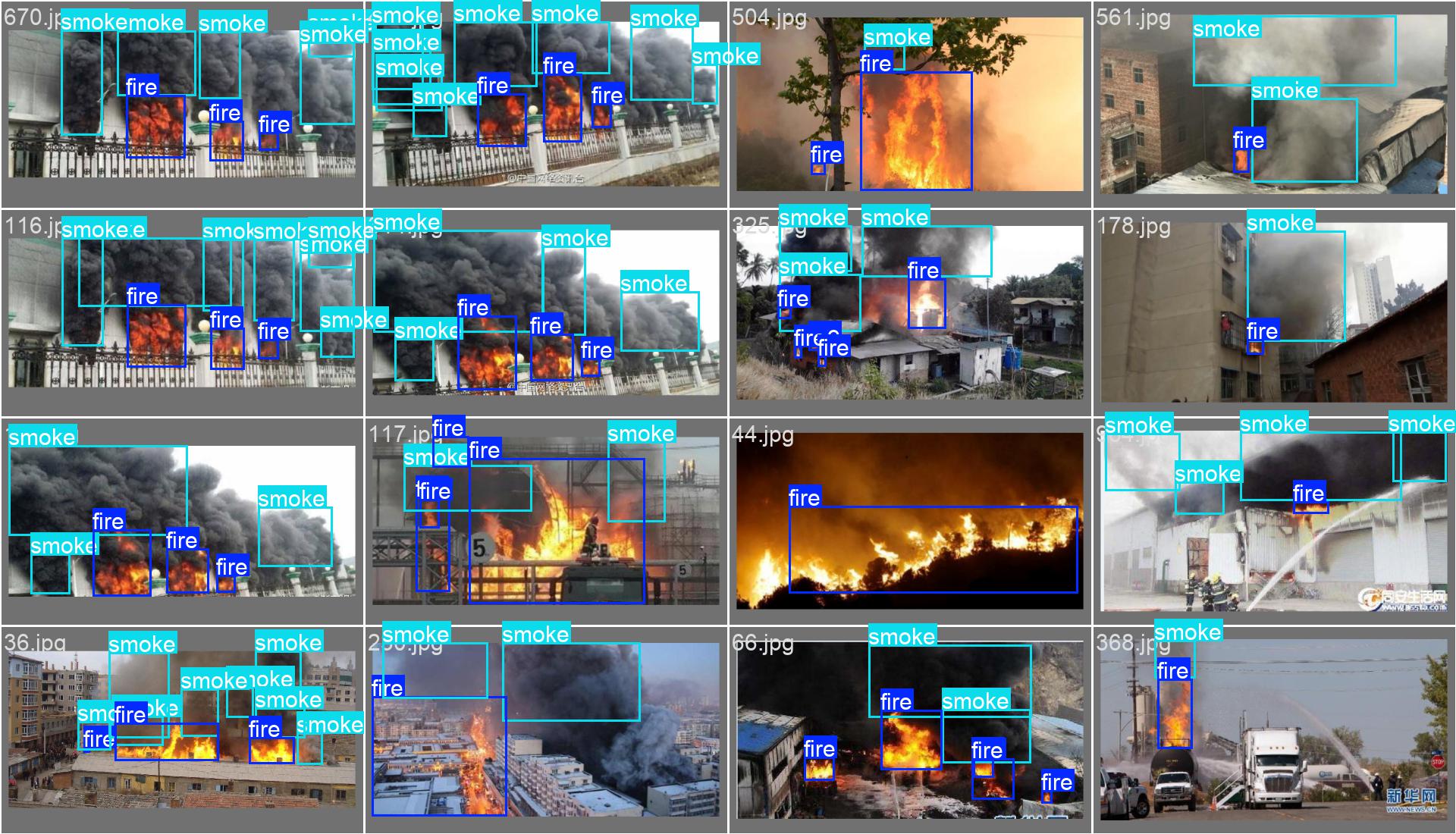
基于深度学习YOLO26神经网络实现火焰烟雾检测和识别,其能识别检测出2种火焰烟雾检测:names: 'fire','smoke'
具体图片见如下:
第一步:YOLO26介绍
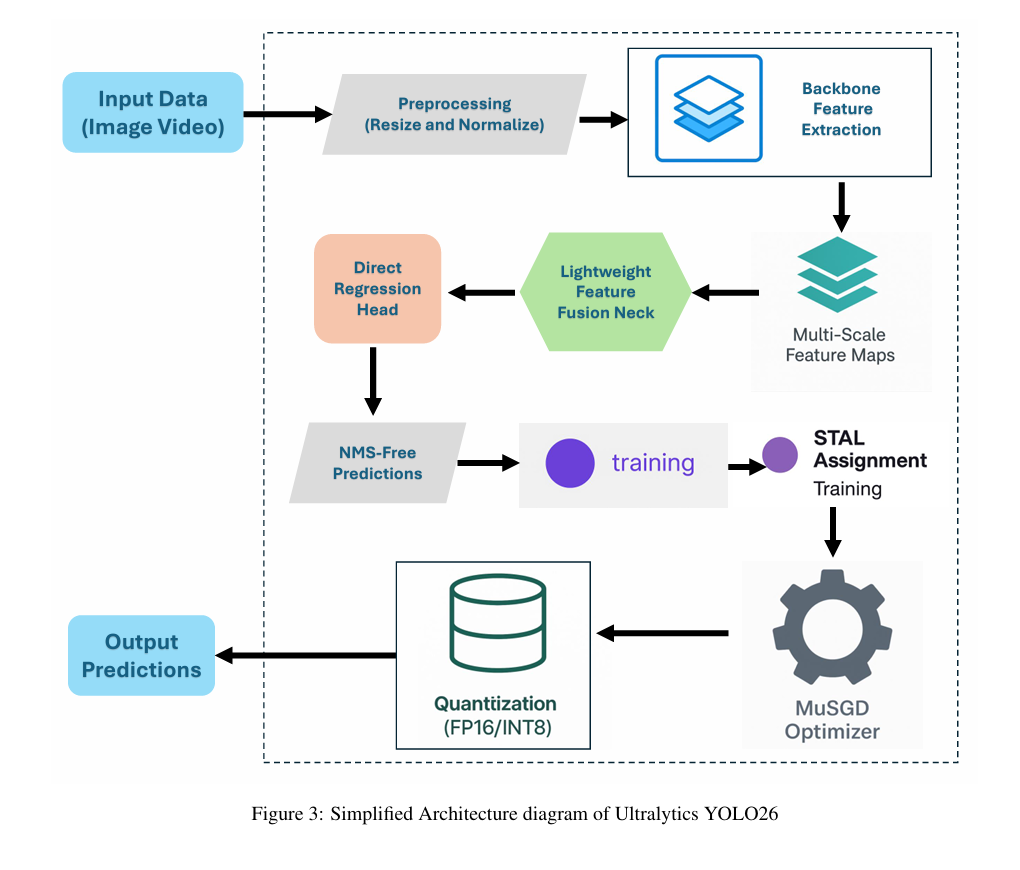
YOLO26采用了端到端无NMS推理,直接生成预测结果,无需非极大值抑制(NMS)后处理。这种设计减少了延迟,简化了集成,并提高了部署效率。此外,YOLO26移除了分布焦点损失(DFL),从而增强了硬件兼容性,特别是在边缘设备上的表现。
模型还引入了ProgLoss 和小目标感知标签分配(STAL) ,显著提升了小目标检测的精度。这对于物联网、机器人技术和航空影像等应用至关重要。同时,YOLO26采用了全新的MuSGD优化器,结合了SGD和Muon优化技术,提供更稳定的训练和更快的收敛速度。
第二步:YOLO26网络结构
第三步:代码展示
# Ultralytics YOLO 🚀, AGPL-3.0 license

from pathlib import Path

from ultralytics.engine.model import Model
from ultralytics.models import yolo
from ultralytics.nn.tasks import ClassificationModel, DetectionModel, OBBModel, PoseModel, SegmentationModel, WorldModel
from ultralytics.utils import ROOT, yaml_load


class YOLO(Model):
    """YOLO (You Only Look Once) object detection model."""

    def __init__(self, model="yolo11n.pt", task=None, verbose=False):
        """Initialize YOLO model, switching to YOLOWorld if model filename contains '-world'."""
        path = Path(model)
        if "-world" in path.stem and path.suffix in {".pt", ".yaml", ".yml"}:  # if YOLOWorld PyTorch model
            new_instance = YOLOWorld(path, verbose=verbose)
            self.__class__ = type(new_instance)
            self.__dict__ = new_instance.__dict__
        else:
            # Continue with default YOLO initialization
            super().__init__(model=model, task=task, verbose=verbose)

    @property
    def task_map(self):
        """Map head to model, trainer, validator, and predictor classes."""
        return {
            "classify": {
                "model": ClassificationModel,
                "trainer": yolo.classify.ClassificationTrainer,
                "validator": yolo.classify.ClassificationValidator,
                "predictor": yolo.classify.ClassificationPredictor,
            },
            "detect": {
                "model": DetectionModel,
                "trainer": yolo.detect.DetectionTrainer,
                "validator": yolo.detect.DetectionValidator,
                "predictor": yolo.detect.DetectionPredictor,
            },
            "segment": {
                "model": SegmentationModel,
                "trainer": yolo.segment.SegmentationTrainer,
                "validator": yolo.segment.SegmentationValidator,
                "predictor": yolo.segment.SegmentationPredictor,
            },
            "pose": {
                "model": PoseModel,
                "trainer": yolo.pose.PoseTrainer,
                "validator": yolo.pose.PoseValidator,
                "predictor": yolo.pose.PosePredictor,
            },
            "obb": {
                "model": OBBModel,
                "trainer": yolo.obb.OBBTrainer,
                "validator": yolo.obb.OBBValidator,
                "predictor": yolo.obb.OBBPredictor,
            },
        }


class YOLOWorld(Model):
    """YOLO-World object detection model."""

    def __init__(self, model="yolov8s-world.pt", verbose=False) -> None:
        """
        Initialize YOLOv8-World model with a pre-trained model file.

        Loads a YOLOv8-World model for object detection. If no custom class names are provided, it assigns default
        COCO class names.

        Args:
            model (str | Path): Path to the pre-trained model file. Supports *.pt and *.yaml formats.
            verbose (bool): If True, prints additional information during initialization.
        """
        super().__init__(model=model, task="detect", verbose=verbose)

        # Assign default COCO class names when there are no custom names
        if not hasattr(self.model, "names"):
            self.model.names = yaml_load(ROOT / "cfg/datasets/coco8.yaml").get("names")

    @property
    def task_map(self):
        """Map head to model, validator, and predictor classes."""
        return {
            "detect": {
                "model": WorldModel,
                "validator": yolo.detect.DetectionValidator,
                "predictor": yolo.detect.DetectionPredictor,
                "trainer": yolo.world.WorldTrainer,
            }
        }

    def set_classes(self, classes):
        """
        Set classes.

        Args:
            classes (List(str)): A list of categories i.e. ["person"].
        """
        self.model.set_classes(classes)
        # Remove background if it's given
        background = " "
        if background in classes:
            classes.remove(background)
        self.model.names = classes

        # Reset method class names
        # self.predictor = None  # reset predictor otherwise old names remain
        if self.predictor:
            self.predictor.model.names = classes
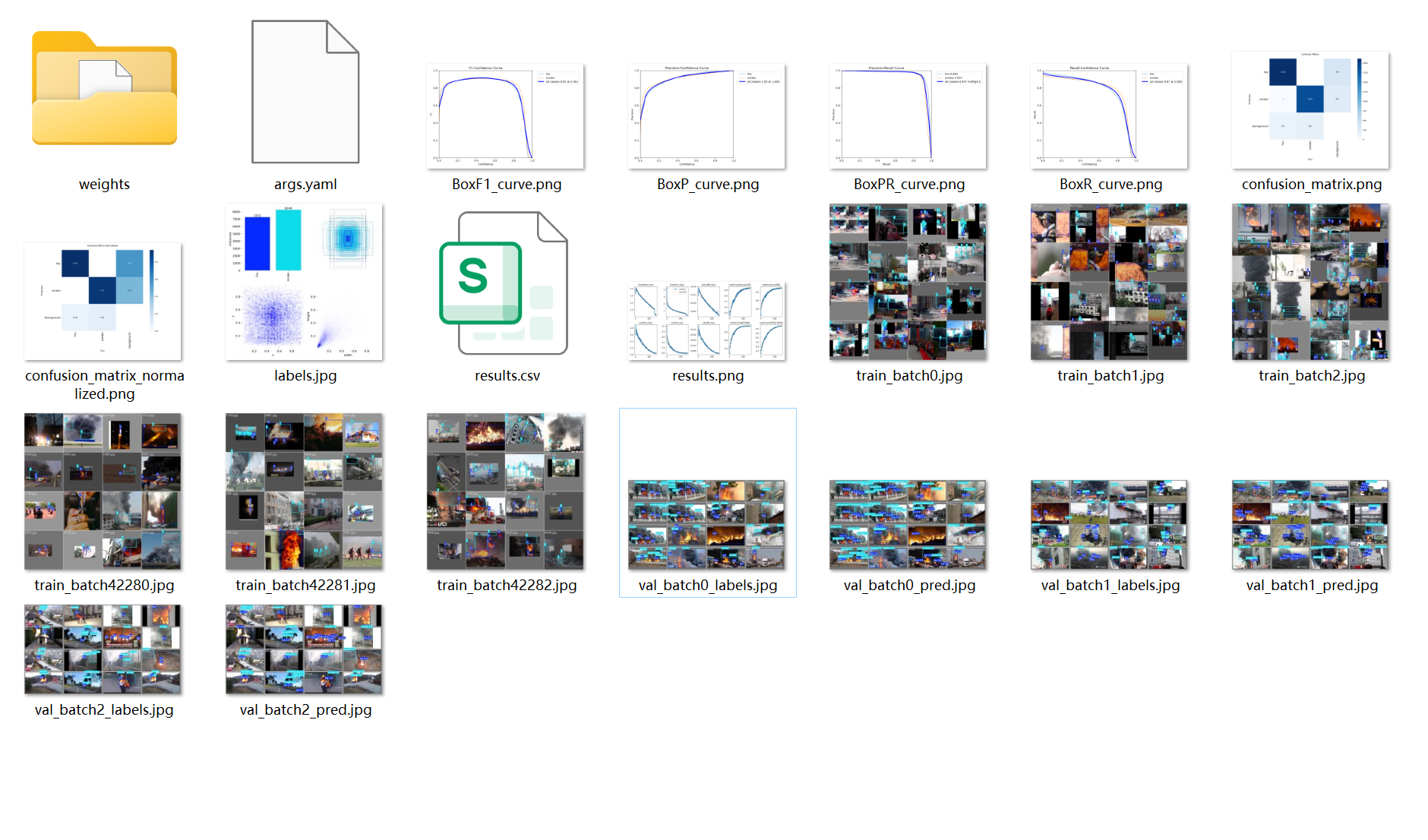
第四步:统计训练过程的一些指标,相关指标都有
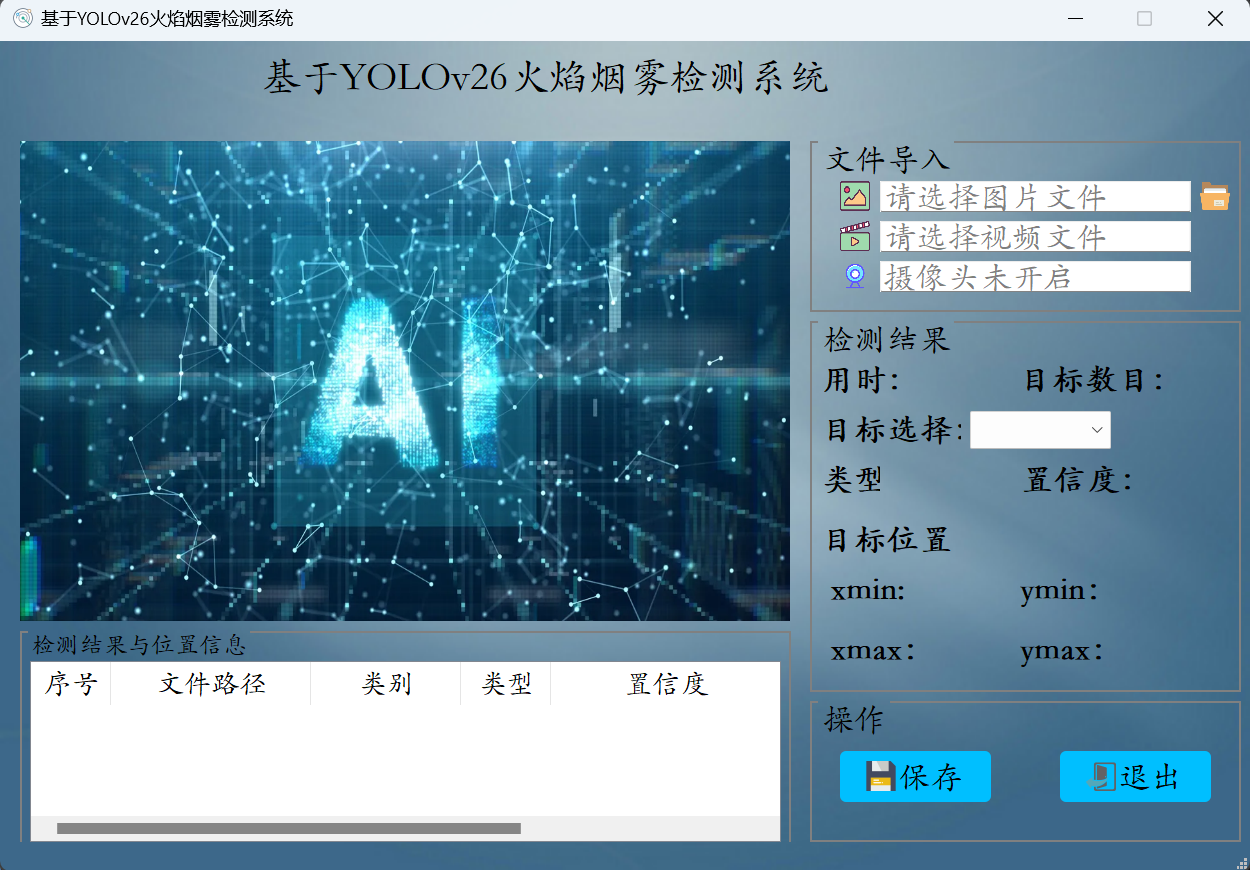
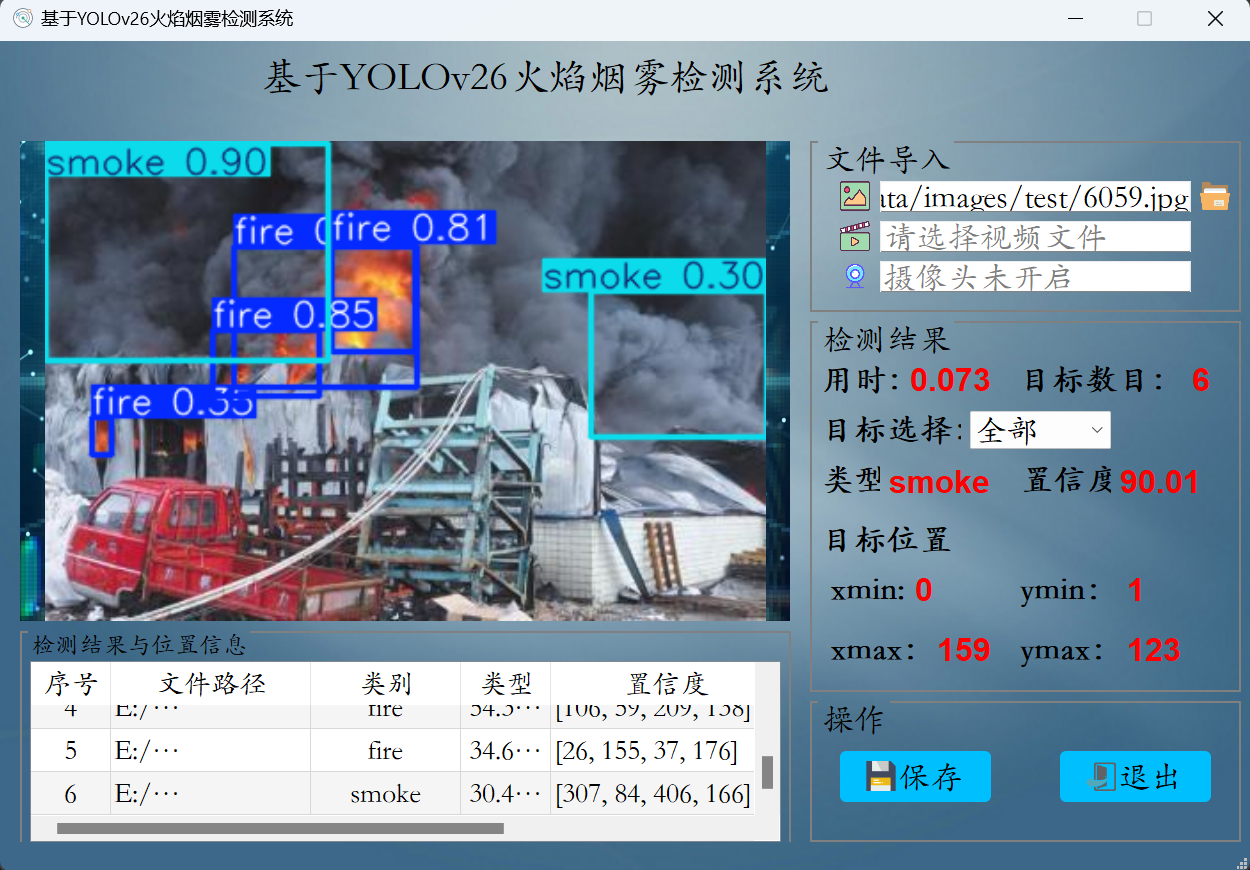
第五步:运行(支持图片、文件夹、摄像头和视频功能)
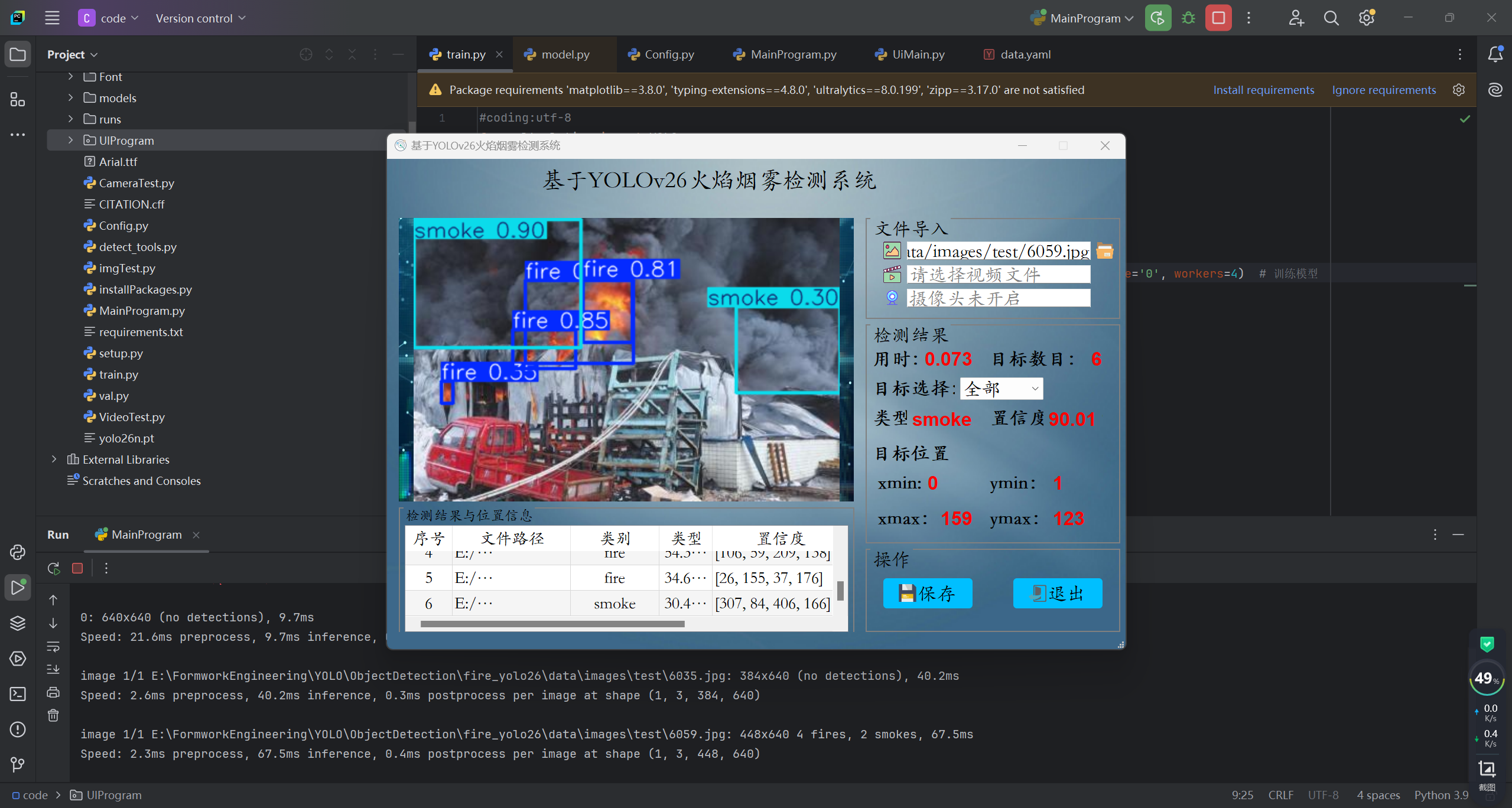
第六步:整个工程的内容
有训练代码和训练好的模型以及训练过程,提供数据,提供GUI界面代码
项目完整文件下载请见演示与介绍视频的简介处给出:➷➷➷
https://www.bilibili.com/video/BV1U9rQBaEYd/