150. 逆波兰表达式求值
题目链接150. 逆波兰表达式求值 - 力扣(LeetCode)
说实话,我示例没看懂,我不懂他那个计算顺序,哪两个数字计算是怎么判断的
思路
什么是逆波兰表达式?
逆波兰表达式(Reverse Polish Notation, RPN)是一种数学表达式的书写方式,也称为后缀表达式。其特点是将运算符置于操作数之后,无需括号即可明确运算顺序。例如,表达式 3 4 + 等价于中缀表达式 3 + 4。
特点
-
无括号优先级:运算顺序由操作符的位置决定,无需依赖括号。
-
从左到右解析:表达式按顺序读取,遇到运算符时对前两个操作数进行计算。
-
栈结构适用:适合用栈数据结构高效处理运算过程。
示例
- 中缀表达式
(5 + 3) * 2转换为逆波兰表达式为5 3 + 2 *。 - 中缀表达式
9 - (2 + 3)转换为逆波兰表达式为9 2 3 + -。
计算步骤
-
初始化空栈:用于存储操作数。
-
遍历表达式:逐个读取表达式中的元素。
-
遇到操作数时压入栈。
-
遇到运算符时,弹出栈顶两个操作数进行计算,并将结果压回栈中。
-
-
返回结果:最终栈中剩余的唯一元素即为计算结果。
示例计算 5 3 + 2 *:
-
压入
5和3,遇到+时计算5 + 3 = 8,压入8。 -
压入
2,遇到*时计算8 * 2 = 16。结果为16。
有点理解了:
就是从左到右,先把数放到栈里,遇到计算符号,
把计算符号的前两个数字用这个符号计算
得到结果再放入栈中,循环这个过程,直到算完。
写题
错误
通过了18/22个测试用例
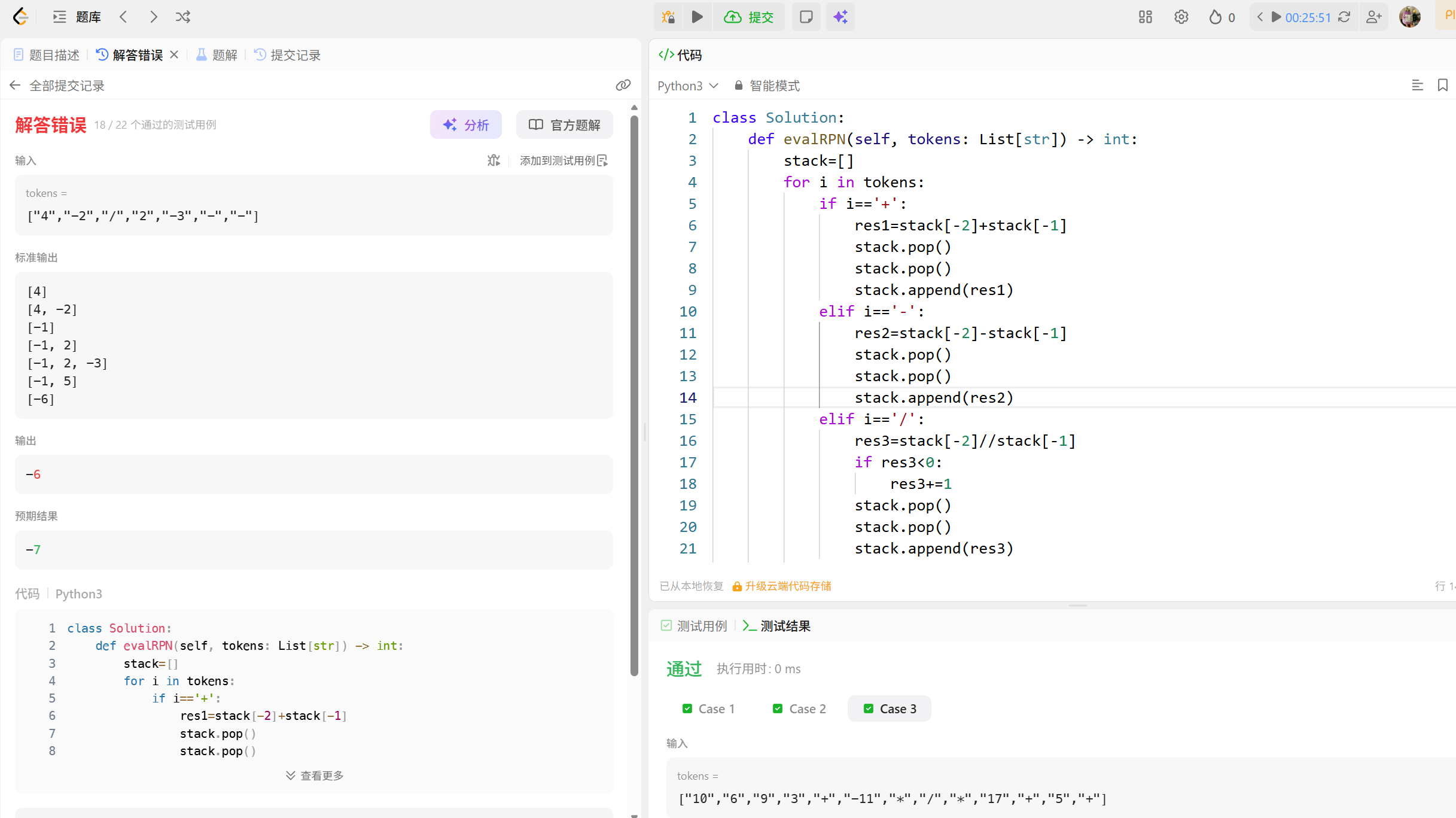
python
class Solution:
    def evalRPN(self, tokens: List[str]) -> int:
        stack=[]
        for i in tokens:
            if i=='+':
                res1=stack[-2]+stack[-1]
                stack.pop()
                stack.pop()
                stack.append(res1)
            elif i=='-':
                res2=stack[-2]-stack[-1]
                stack.pop()
                stack.pop()
                stack.append(res2)
            elif i=='/':
                res3=stack[-2]//stack[-1]
                if res3<0:
                    res3+=1
                stack.pop()
                stack.pop()
                stack.append(res3)
            elif i=='*':
                res4=stack[-2]*stack[-1]
                stack.pop()
                stack.pop()
                stack.append(res4)
            else:
                stack.append(int(i))
            print(stack)
        return stack[0]
他这个除法这里我写不好,到底是除/但是示例结果又没有小数点
整除//?但是他6//-132=-1?好像是向下取整,所以我之前在这里加了判断,但是如果刚好整除,那这个处理就不对。
python
                if res3<0:
                    res3+=1
关键修复说明
-
除法用
int(a / b)而不是a // b-
a / b得到浮点数 -
int()强制向零取整,完全符合题目要求
-
提交
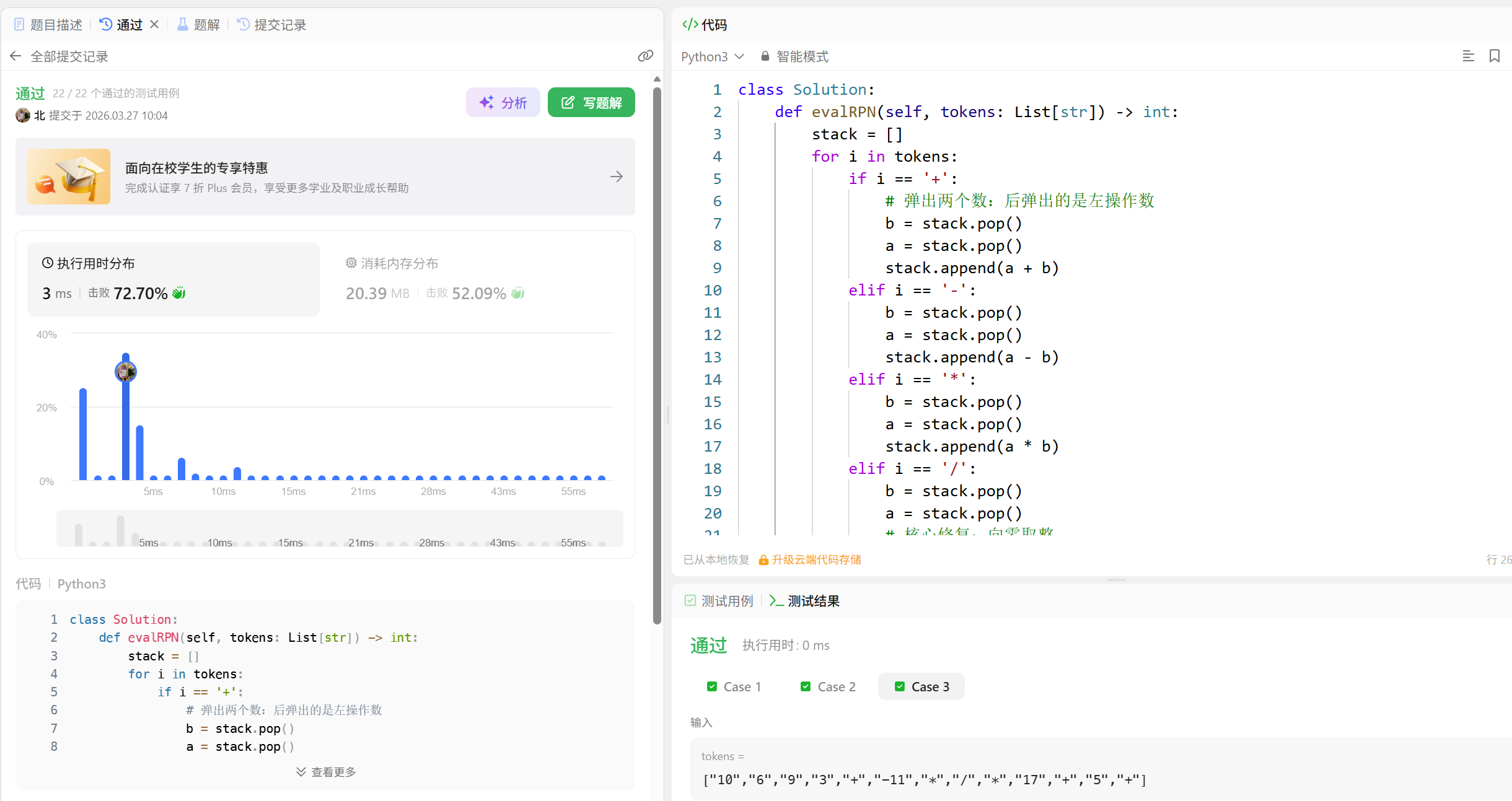
python
class Solution:
    def evalRPN(self, tokens: List[str]) -> int:
        stack = []
        for i in tokens:
            if i == '+':
                # 弹出两个数:后弹出的是左操作数
                b = stack.pop()
                a = stack.pop()
                stack.append(a + b)
            elif i == '-':
                b = stack.pop()
                a = stack.pop()
                stack.append(a - b)
            elif i == '*':
                b = stack.pop()
                a = stack.pop()
                stack.append(a * b)
            elif i == '/':
                b = stack.pop()
                a = stack.pop()
                # 核心修复:向零取整
                stack.append(int(a / b))
            else:
                # 数字直接入栈
                stack.append(int(i))
        return stack[0]
对于冗余的代码进行了优化,在弹出元素的同时,取出元素。
在append后面进行计算,简化变量的使用
239. 滑动窗口最大值
题目链接239. 滑动窗口最大值 - 力扣(LeetCode)
这几天做到的第一道力扣标注困难的题目
有一种错觉是我感觉我能写,先写一下试试看。
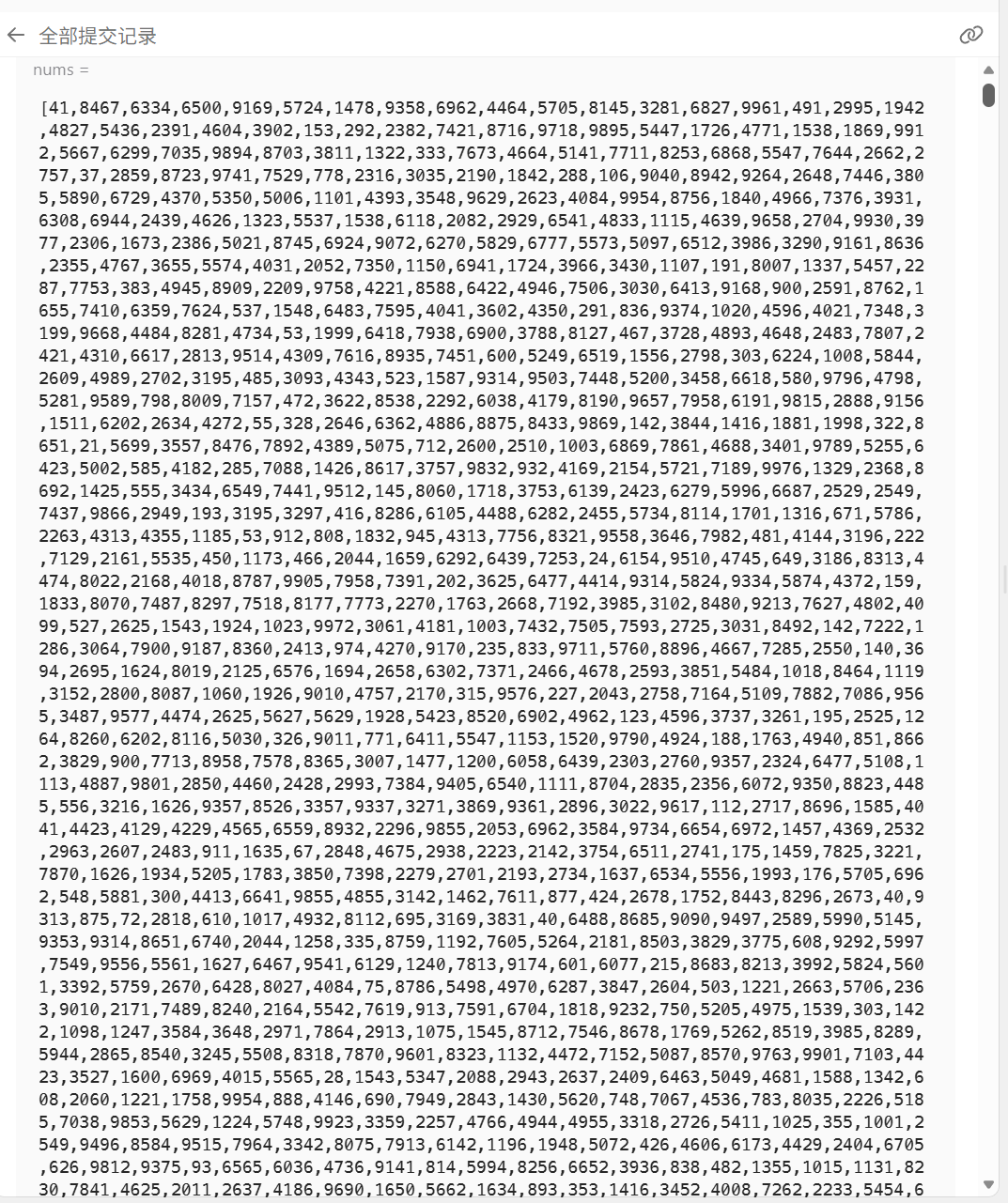
我直接用列表切片的方法做,但是提交38/52,有些是超过了时间限制。
不是他数据这么多怎么能怪我超时,自己不知道把测试数据弄少一点
python
class Solution:
    def maxSlidingWindow(self, nums: List[int], k: int) -> List[int]:
        res=[]
        for i in range(len(nums)-k+1):
            window=nums[i:i+k]
            res.append(max(window))
        return res
思路
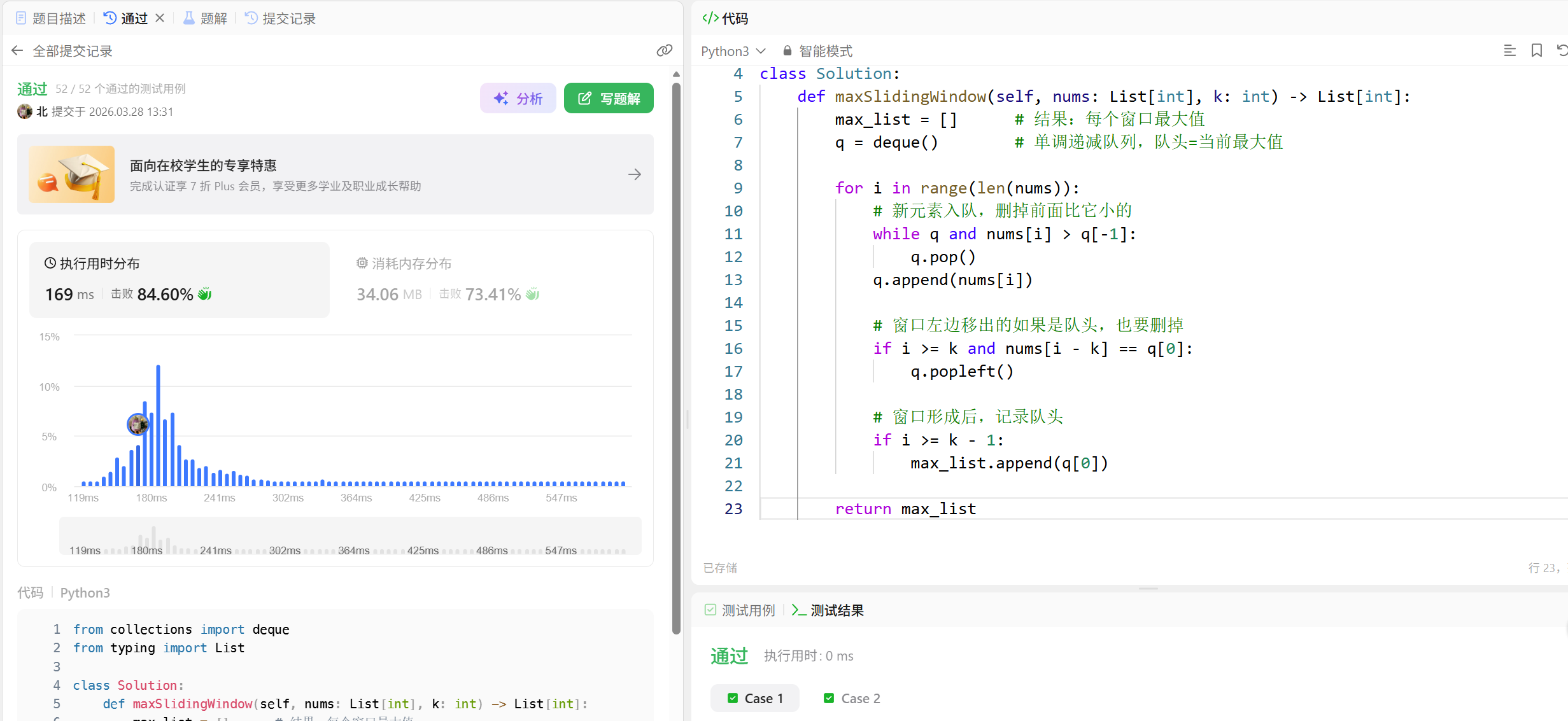
是之前切片再求最大值的时间复杂度太高,用单调队列进行优化
维护单调的队列,加入一个元素,如果前面元素没有加入的元素大,把前面的元素弹出。
这样第一个就是队列里面最大的元素,我们可以直接得到最大的值
写题
python
from collections import deque
from typing import List

class Solution:
    def maxSlidingWindow(self, nums: List[int], k: int) -> List[int]:
        max_list = []      # 结果:每个窗口最大值
        q = deque()        # 单调递减队列,队头=当前最大值

        for i in range(len(nums)):
            # 新元素入队,删掉前面比它小的
            while q and nums[i] > q[-1]:
                q.pop()
            q.append(nums[i])

            # 窗口左边移出的如果是队头,也要删掉
            if i >= k and nums[i - k] == q[0]:
                q.popleft()

            # 窗口形成后,记录队头
            if i >= k - 1:
                max_list.append(q[0])

        return max_list
347.前 K 个高频元素
题目链接 347. 前 K 个高频元素 - 力扣(LeetCode)
思路
-
遍历统计 → 字典
-
字典转列表 → 方便排序
-
列表按次数降序排序
-
切片取前 k 个数字
写题
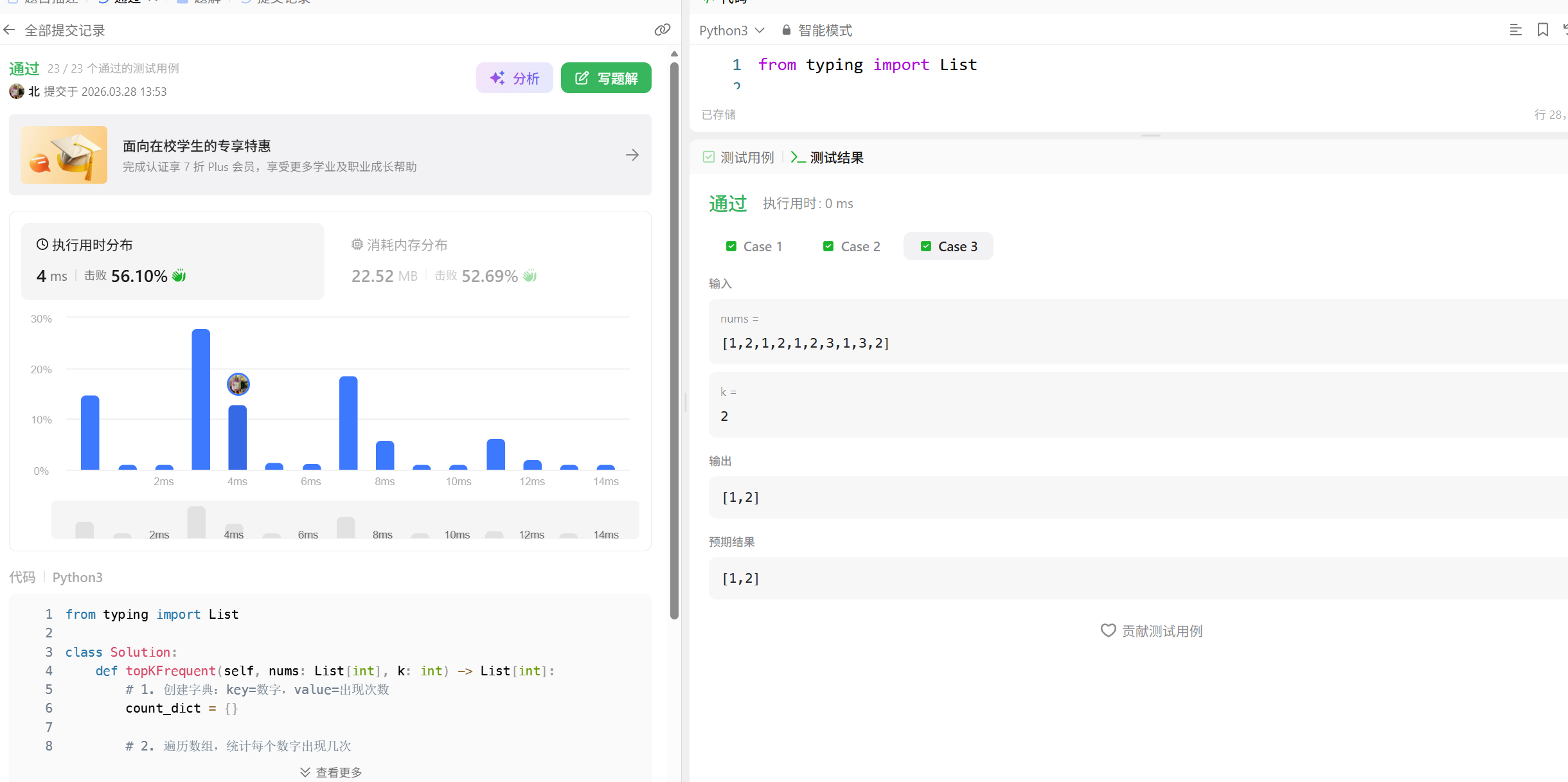
python
from typing import List

class Solution:
    def topKFrequent(self, nums: List[int], k: int) -> List[int]:
        # 1. 创建字典:key=数字,value=出现次数
        count_dict = {}

        # 2. 遍历数组,统计每个数字出现几次
        for num in nums:
            if num in count_dict:
                # 已经存在,次数+1
                count_dict[num] += 1
            else:
                # 第一次出现,次数=1
                count_dict[num] = 1

        # 3. 把字典转成列表:[[数字, 次数], [数字, 次数]...]
        count_list = []
        for key, value in count_dict.items():
            count_list.append([key, value])

        # 4. 简化排序:按次数从大到小排
        count_list.sort(key=lambda x: x[1], reverse=True)

        # 5. 切片直接取前k个数字(一行搞定)
        result = [item[0] for item in count_list[:k]]

        return result