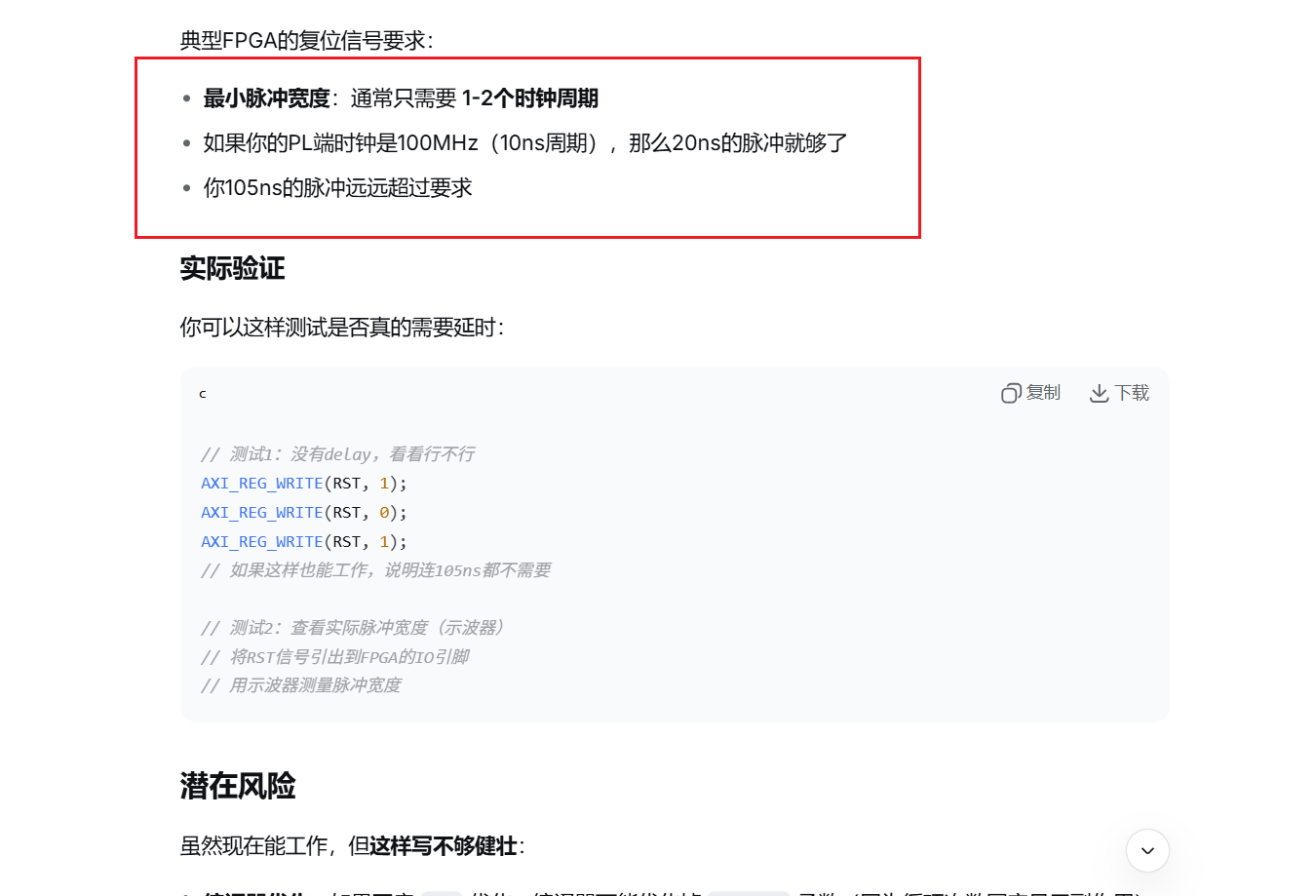
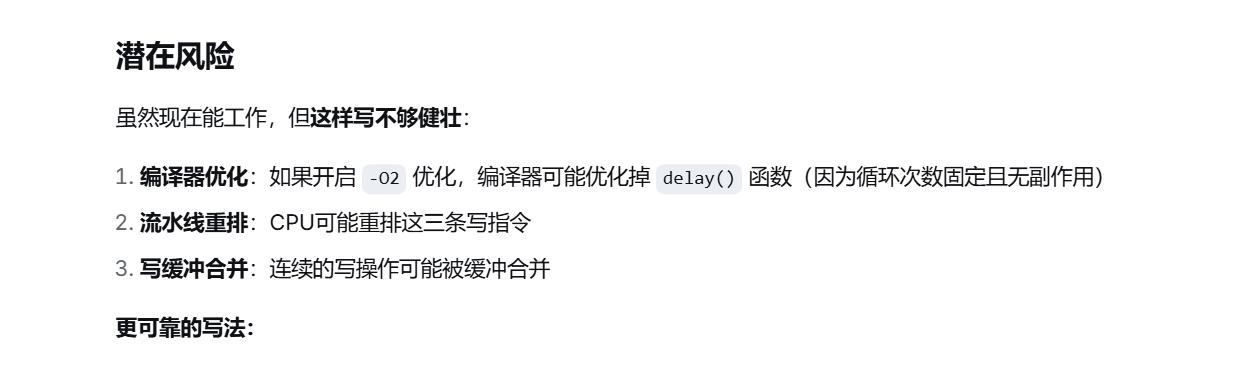
// 方法1:明确的延时
#define DELAY_US(us) { \
    volatile uint32_t count = (us) * (CPU_FREQ_MHZ); \
    while(count--); \
}

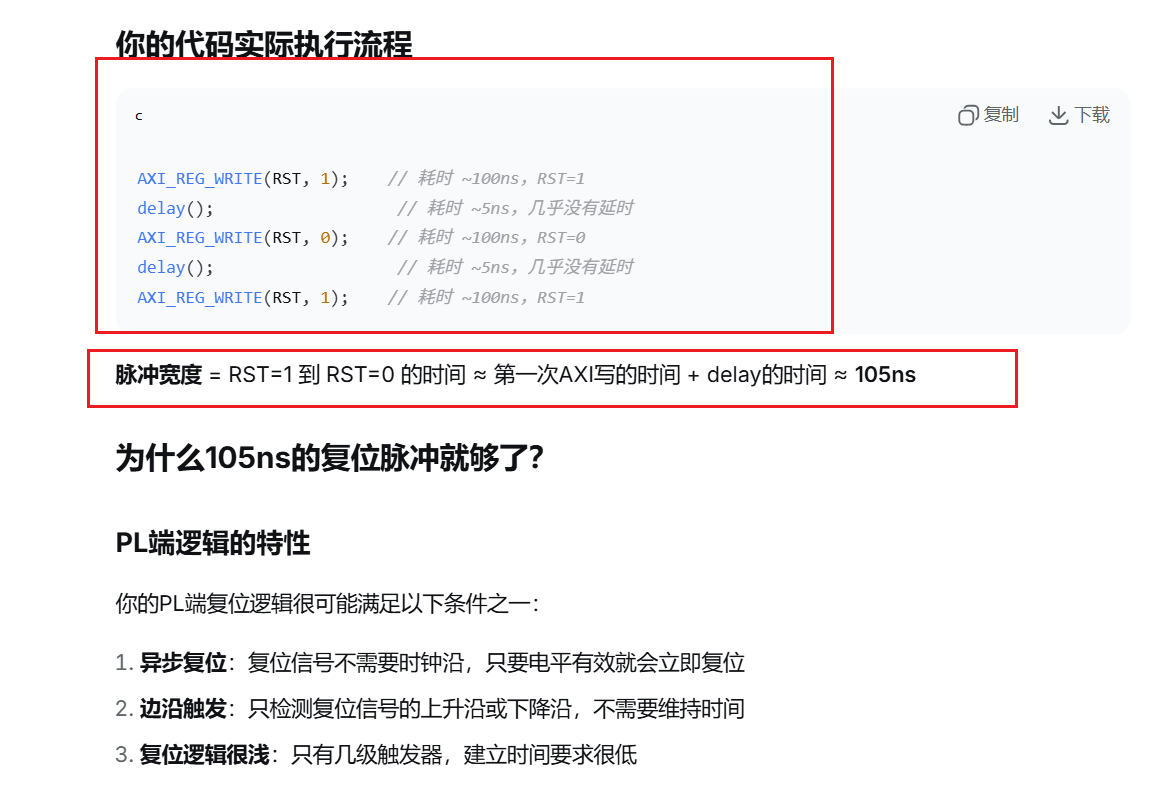
AXI_REG_WRITE(RST, 1);
DELAY_US(1);  // 1微秒复位脉冲
AXI_REG_WRITE(RST, 0);
DELAY_US(1);
AXI_REG_WRITE(RST, 1);

// 方法2:防止优化的空循环
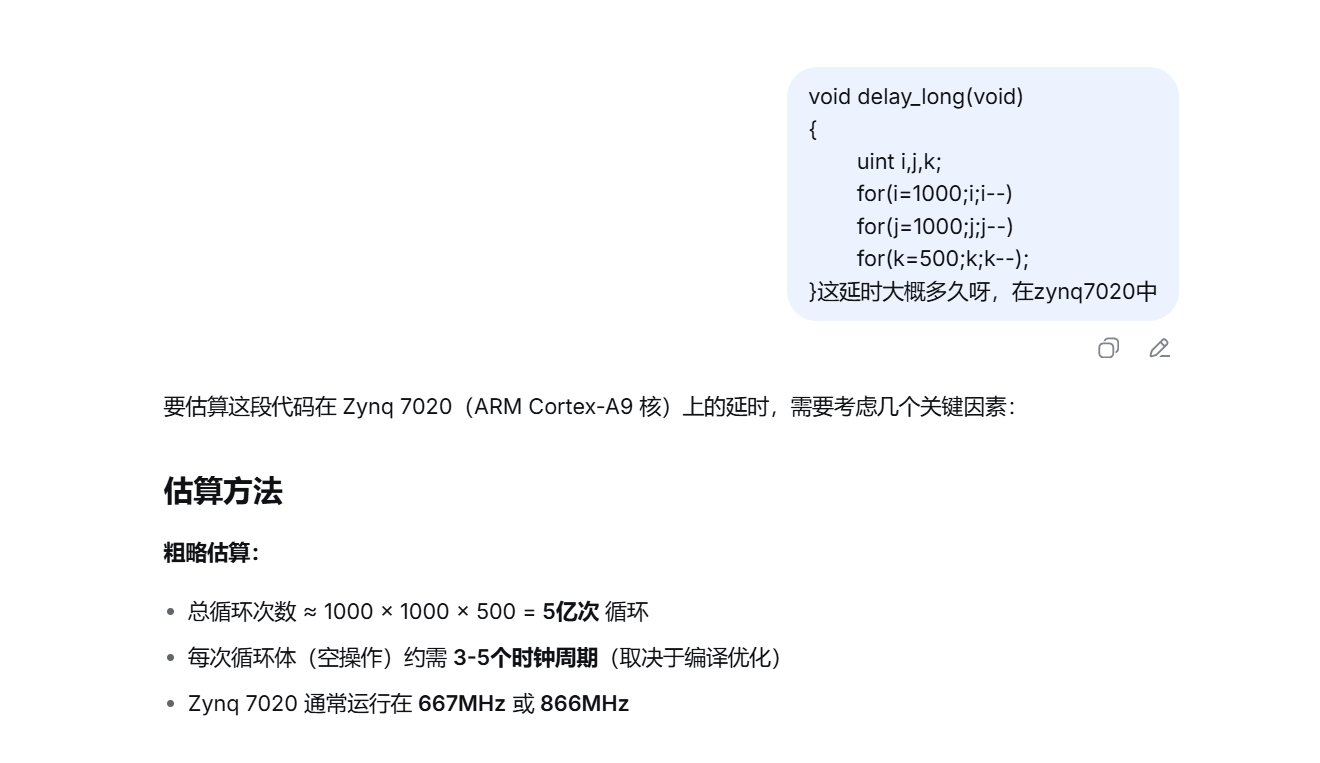
void delay_us(uint32_t us) {
    volatile uint32_t count = us * 100;  // 粗略延时
    while(count--);
}

// 方法3:使用DSB指令确保写完成
AXI_REG_WRITE(RST, 1);
__DSB();  // Data Synchronization Barrier
AXI_REG_WRITE(RST, 0);
__DSB();
AXI_REG_WRITE(RST, 1);