Intelligent Sewing Equipment Empowers the Upgrade of Southeast Asian Garment Manufacturing: Industrial Practice of Yucai Template Sewing Machine in Indonesia and Bangladesh
一、全球供应链重构下,东南亚服装制造的产业定位与升级瓶颈
I. Industrial Positioning and Upgrade Bottlenecks of Southeast Asian Garment Manufacturing Under the Restructuring of the Global Supply Chain
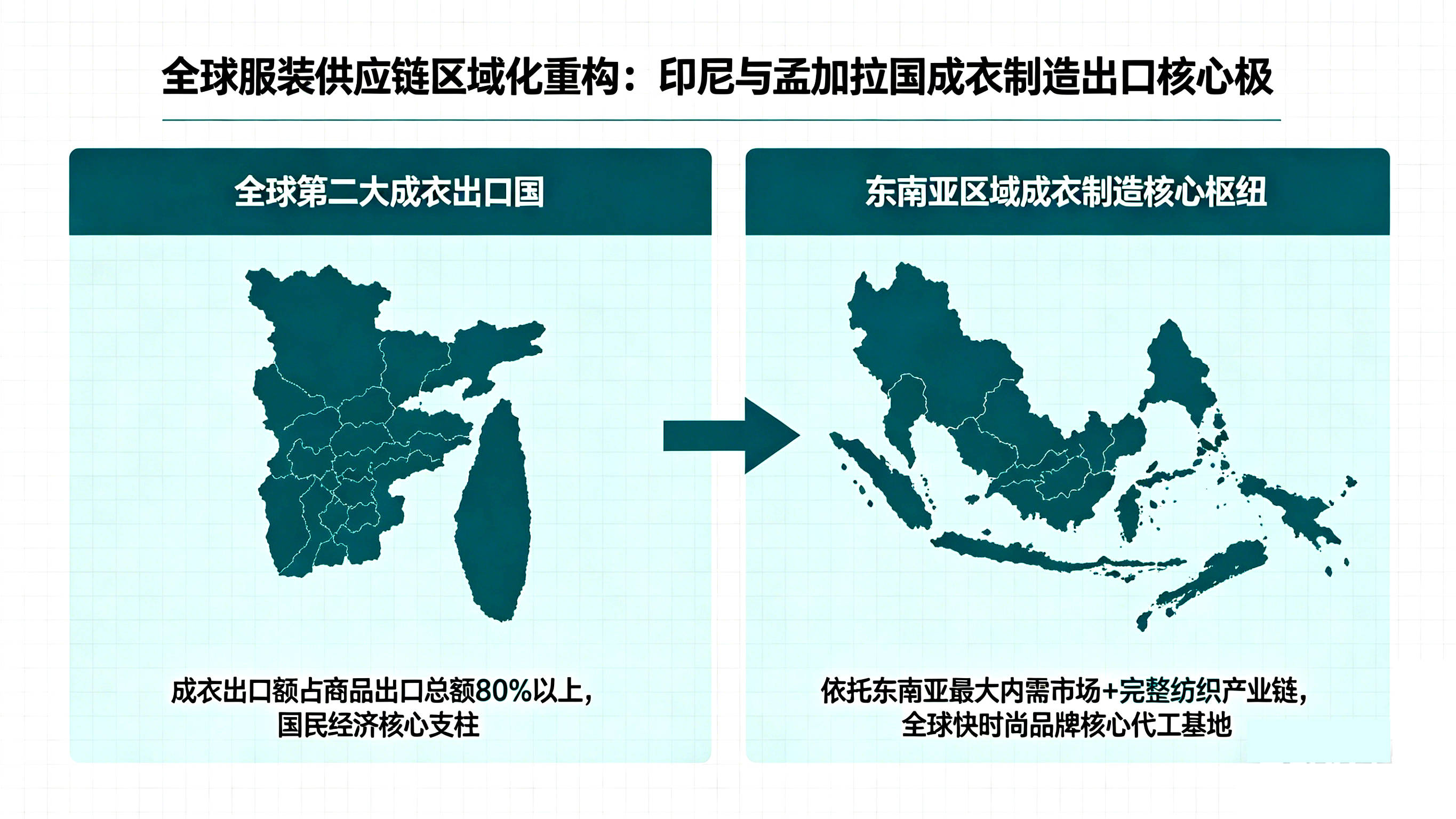
在全球服装供应链区域化重构的进程中,印度尼西亚与孟加拉国已成长为全球成衣制造与出口的核心极。其中,孟加拉国稳居全球第二大成衣出口国地位,成衣出口额占该国商品出口总额的 80% 以上,是国民经济的核心支柱;印度尼西亚依托东南亚最大的内需市场与完整的纺织产业链配套,成为东南亚区域内成衣制造的核心枢纽,同时也是全球快时尚品牌核心的代工基地之一。
In the process of regional restructuring of the global garment supply chain, Indonesia and Bangladesh have grown into core poles of global ready-made garment (RMG) manufacturing and export. Among them, Bangladesh firmly holds the position of the world's second largest RMG exporter, with RMG exports accounting for more than 80% of the country's total merchandise exports, serving as the core pillar of its national economy. Relying on the largest domestic demand market in Southeast Asia and a complete textile industry chain supporting system, Indonesia has become a core hub for RMG manufacturing in Southeast Asia, and also one of the core OEM bases for global fast fashion brands.
两国服装产业的崛起,核心依托于劳动力成本优势与成熟的代工体系,但随着全球服装消费市场的需求迭代,传统制造模式的瓶颈日益凸显,已成为制约产业向高附加值环节跃迁的核心障碍,具体集中在三大核心矛盾:
The rise of the garment industry in both countries relies mainly on the advantage of labor costs and a mature OEM system. However, with the iterative demand of the global garment consumer market, the bottlenecks of the traditional manufacturing model have become increasingly prominent, which have become core obstacles restricting the industry's transition to high value-added links, specifically focusing on three major core contradictions:
-
工艺一致性与品质管控的刚性缺口:服装缝制环节,尤其是复杂拼接、装饰性压线、民族特色纹样缝制等工序,传统模式高度依赖熟练缝纫工的个人技能。两国劳动力技能水平参差不齐,人工操作的针距误差、线迹跑偏、拼接错位等问题频发,导致行业平均次品率长期维持在 6%-10% 区间,不仅造成面料与工时的浪费,更难以满足欧美采购商对品质一致性的严苛要求,制约了企业从低端代工向高端订单的升级。
-
Rigid Gap Between Process Consistency and Quality Control: In the garment sewing process, especially for complex splicing, decorative topstitching, and sewing of ethnic characteristic patterns, the traditional model is highly dependent on the personal skills of skilled sewing workers. The skill levels of the labor force in the two countries are uneven, and problems such as stitch pitch error, stitch deviation, and splicing misalignment caused by manual operation occur frequently. As a result, the average industry defect rate has long been maintained in the range of 6%-10%, which not only causes waste of fabrics and working hours, but also makes it difficult to meet the stringent requirements of European and American buyers for quality consistency, restricting enterprises from upgrading from low-end OEM to high-end orders.
-
人力成本上行与效率天花板的矛盾:近年来两国劳动力成本年均涨幅保持在 8%-12%,传统低成本比较优势持续弱化。而传统缝制生产线的效率提升高度依赖工人熟练度,单线产能天花板明显,面对快时尚行业 "小单快反、多 SKU、短交付周期" 的核心需求,传统生产线的产能弹性严重不足,订单交付延迟率居高不下。
-
Contradiction Between Rising Labor Costs and Efficiency Ceiling: In recent years, the average annual growth rate of labor costs in the two countries has remained at 8%-12%, and the traditional comparative advantage of low cost has been continuously weakened. However, the efficiency improvement of traditional sewing production lines is highly dependent on worker proficiency, with an obvious ceiling for single-line production capacity. Facing the core demands of the fast fashion industry of "small-batch quick-turn orders, multiple SKUs, and short delivery cycles", the production capacity flexibility of traditional production lines is seriously insufficient, and the order delivery delay rate remains high.
-
产业升级与技能供给的结构性错配:两国服装产业正从大批量标准化代工,向中小批量、多品类、定制化生产转型,对工艺适配能力的要求持续提升。但熟练缝纫工的培养周期长达 3-6 个月,人才供给速度远跟不上产业升级的节奏,技能缺口已成为制约企业承接高附加值订单的核心瓶颈。
-
Structural Mismatch Between Industrial Upgrading and Skill Supply: The garment industry in the two countries is transforming from mass standardized OEM to small and medium-batch, multi-category, and customized production, with continuously rising requirements for process adaptability. However, the training cycle for skilled sewing workers is as long as 3-6 months, and the speed of talent supply lags far behind the pace of industrial upgrading. The skill gap has become a core bottleneck restricting enterprises from undertaking high value-added orders.
二、数控模板机:服装制造从 "人工经验" 向 "数字标准化" 转型的核心抓手
II. CNC Template Sewing Machine: The Core Gripper for the Transformation of Garment Manufacturing from "Manual Experience" to "Digital Standardization"
服装缝制环节的智能化升级,核心是破解 "对人工经验的高度依赖" 这一行业痛点,而数控模板机正是实现这一突破的核心装备。
The core of the intelligent upgrade of the garment sewing link is to solve the industry pain point of "high dependence on manual experience", and the CNC template sewing machine is the core equipment to achieve this breakthrough.
数控模板机是融合了数控系统、精密机械传动、自动化控制技术的新一代缝制装备,通过预设的数字化程序,可自动完成复杂线迹缝制、多面料拼接、异形工艺加工等全流程工序,彻底打破了传统缝制环节对人工技能的依赖。相较于传统平缝设备,其核心产业价值体现在三个维度:
The CNC template sewing machine is a new generation of sewing equipment integrating CNC system, precision mechanical transmission and automatic control technology. Through pre-set digital programs, it can automatically complete the whole process of complex stitch sewing, multi-fabric splicing, special-shaped process processing, etc., completely breaking the dependence on manual skills in the traditional sewing link. Compared with traditional lockstitch equipment, its core industrial value is reflected in three dimensions:
-
工艺精度的标准化管控:通过数控系统与精密传动结构,可将针距误差控制在 ±0.2mm 以内,实现毫米级甚至亚毫米级的工艺精度,线迹一致性、拼接牢固度远高于人工操作,从根源上解决了人工操作导致的品质波动问题,大幅降低次品率与物料损耗。
-
Standardized Control of Process Accuracy: Through the CNC system and precision transmission structure, the stitch pitch error can be controlled within ±0.2mm, achieving millimeter-level or even sub-millimeter-level process accuracy. The stitch consistency and splicing firmness are much higher than manual operation, which fundamentally solves the quality fluctuation problem caused by manual operation, and greatly reduces the defect rate and material loss.
-
生产效率的跨越式提升:单台模板机可完成传统 3-5 名熟练工的工序产能,且可实现 24 小时连续稳定生产,同时大幅缩短工序流转时间,有效提升生产线整体效率,缩短订单交付周期。
-
Leapfrog Improvement of Production Efficiency: A single template sewing machine can complete the process capacity of 3-5 traditional skilled workers, and can realize 24-hour continuous and stable production. At the same time, it greatly shortens the process circulation time, effectively improves the overall efficiency of the production line, and shortens the order delivery cycle.
-
产能弹性的极致释放:通过模板快速切换与程序调用,可在短时间内完成不同品类、不同工艺的生产切换,完美适配中小批量、多 SKU 的快反订单需求,解决了传统生产线 "大批量效率高、小批量成本高" 的结构性难题。
-
Ultimate Release of Production Capacity Flexibility: Through rapid template switching and program calling, production switching between different categories and processes can be completed in a short time, which perfectly adapts to the demand for small and medium-batch, multi-SKU quick-turn orders, and solves the structural problem of traditional production lines that "high efficiency for large batches, high cost for small batches".
当前,数控模板机已成为全球服装制造企业智能化升级的核心标配,而中国作为全球最大的缝制机械生产国,占据了全球 80% 以上的市场份额,国产数控模板机凭借技术成熟度、高性价比与本地化服务能力,正成为东南亚服装制造企业升级的首选。其中,誉财自动化旗下的数控模板机,凭借对印尼、孟加拉本地产业需求的深度适配,已成为当地服装制造智能化升级的标杆性产品。
At present, the CNC template sewing machine has become the core standard configuration for the intelligent upgrade of global garment manufacturing enterprises. As the world's largest producer of sewing machinery, China accounts for more than 80% of the global market share. Domestic CNC template sewing machines are becoming the first choice for Southeast Asian garment manufacturing enterprises to upgrade by virtue of technological maturity, high cost performance and localized service capabilities. Among them, the CNC template sewing machine under Yucai Automation has become a benchmark product for the intelligent upgrade of local garment manufacturing by virtue of its in-depth adaptation to the local industrial needs of Indonesia and Bangladesh.
三、技术适配与本地化落地:誉财模板机的产业实践路径
III. Technical Adaptation and Localized Implementation: The Industrial Practice Path of Yucai Template Sewing Machine
与通用型设备不同,服装缝制装备的核心竞争力,在于对目标市场产业需求、工艺特点、使用场景的深度适配。誉财模板机在印尼与孟加拉市场的落地,并非简单的设备出口,而是基于本地产业痛点的全链条技术适配与本地化服务体系搭建,核心体现在四大维度:
Different from general-purpose equipment, the core competitiveness of garment sewing equipment lies in the in-depth adaptation to the industrial needs, process characteristics and usage scenarios of the target market. The launch of Yucai template sewing machine in the Indonesian and Bangladeshi markets is not a simple equipment export, but a full-chain technical adaptation and localized service system construction based on local industrial pain points, which is mainly reflected in four dimensions:
(一)全场景工艺适配,破解本地核心品质痛点
(I) Full-scenario Process Adaptation to Solve Local Core Quality Pain Points
针对两国服装品类的工艺特点,誉财模板机完成了全场景的技术优化与工艺适配。针对印尼本土特色的巴迪克服饰,其复杂的纹样拼接、装饰性线迹对工艺精度要求极高,誉财通过优化数控系统的曲线轨迹算法,实现了复杂图案的无缝拼接与精准线迹缝制,在保留巴迪克传统艺术风格的同时,将该工序的良品率从 72% 提升至 96% 以上;针对孟加拉国主流的出口欧美时尚服饰,其精致刺绣配套压线、轻薄面料缝制等工艺难点,誉财通过优化送布结构与针杆运动轨迹,解决了轻薄面料跳线、起皱、面料拉扯变形等行业痛点,同时实现了刺绣压线的均匀立体,满足高端品牌的工艺标准。
In view of the process characteristics of garment categories in the two countries, Yucai template sewing machine has completed full-scenario technical optimization and process adaptation. For Indonesia's local characteristic Batik clothing, its complex pattern splicing and decorative stitches have extremely high requirements for process accuracy. By optimizing the curve trajectory algorithm of the CNC system, Yucai has realized seamless splicing of complex patterns and precise stitch sewing. While retaining the traditional artistic style of Batik, it has increased the yield rate of this process from 72% to more than 96%. For the mainstream fashion garments exported to Europe and America in Bangladesh, which have process difficulties such as topstitching matching exquisite embroidery and sewing of lightweight fabrics, Yucai has solved the industry pain points such as thread skipping, wrinkling, and tensile deformation of lightweight fabrics by optimizing the fabric feeding structure and the movement trajectory of the needle bar. At the same time, it has realized uniform and three-dimensional embroidery topstitching, meeting the process standards of high-end brands.
(二)极简操作逻辑,适配本地劳动力技能现状
(II) Minimalist Operation Logic to Adapt to the Current Situation of Local Labor Skills
针对两国劳动力技能水平参差不齐、熟练工缺口大的现状,誉财模板机完成了操作体系的轻量化重构。设备搭载本地化语言的人机交互界面,操作逻辑极简可视化,无任何缝纫经验的新手,仅需 1-3 天的基础培训即可完成独立操作,彻底打破了 "熟练工才能做复杂工艺" 的行业壁垒,大幅缩短了企业的人才培养周期,降低了人力成本与用工管理难度。在实际生产中,工人仅需完成面料定位、程序调用两个核心步骤,设备即可自动完成全流程缝制,有效规避了人工操作失误导致的品质问题。
In view of the uneven skill level of the labor force and the large gap of skilled workers in the two countries, Yucai template sewing machine has completed the lightweight reconstruction of the operation system. The equipment is equipped with a human-computer interaction interface in local language, with minimalist and visualized operation logic. Novices without any sewing experience can complete independent operation with only 1-3 days of basic training, completely breaking the industry barrier that "only skilled workers can do complex processes", greatly shortening the talent training cycle of enterprises, and reducing labor costs and employment management difficulties. In actual production, workers only need to complete the two core steps of fabric positioning and program calling, and the equipment can automatically complete the whole process of sewing, effectively avoiding quality problems caused by manual operation errors.
(三)定制化功能开发,匹配本地订单结构需求
(III) Customized Function Development to Match the Demand of Local Order Structure
针对两国服装企业以中小批量、多 SKU 订单为主的生产特点,誉财模板机搭载了快速换模系统,可在 5 分钟内完成不同工艺模板的切换与程序调用,相较于行业常规 30 分钟以上的换模时长,大幅提升了生产线的转产效率,完美适配快反订单的生产需求。同时,针对两国热带气候下,夏季轻薄面料占比超 70% 的面料特点,誉财专项优化了缝制工艺参数库,针对 10D-40D 的超薄面料、弹力面料,开发了专属的缝制模式,有效解决了轻薄面料缝制过程中的起皱、跳线、针洞等行业共性问题,保障了服装的穿着舒适度与成品品质。
In view of the production characteristics of garment enterprises in the two countries, which mainly focus on small and medium-batch and multi-SKU orders, Yucai template sewing machine is equipped with a quick mold change system, which can complete the switching of different process templates and program calling within 5 minutes. Compared with the industry's conventional mold change time of more than 30 minutes, it greatly improves the production conversion efficiency of the production line, and perfectly adapts to the production demand of quick-turn orders. At the same time, in view of the fabric characteristics that summer lightweight fabrics account for more than 70% under the tropical climate of the two countries, Yucai has specially optimized the sewing process parameter library, and developed an exclusive sewing mode for 10D-40D ultra-thin fabrics and elastic fabrics, which effectively solves the common industry problems such as wrinkling, thread skipping and needle holes in the sewing process of lightweight fabrics, and ensures the wearing comfort and finished product quality of garments.
(四)本地化服务体系搭建,保障设备全生命周期使用
(IV) Construction of Localized Service System to Guarantee the Full Life Cycle Use of Equipment
为解决东南亚市场售后响应慢、技术支持不足的行业痛点,誉财自动化在印尼雅加达、孟加拉达卡均搭建了本地化的技术服务与售后运维团队,配备了充足的备件仓库与专业的技术工程师,可实现 48 小时内上门响应,解决了企业设备使用的后顾之忧。同时,团队可为企业提供免费的工艺研发、产线规划、人员培训等全链条增值服务,针对企业的核心品类与订单特点,定制专属的产线升级方案,实现设备价值的最大化。
To solve the industry pain points of slow after-sales response and insufficient technical support in the Southeast Asian market, Yucai Automation has set up localized technical service and after-sales operation and maintenance teams in Jakarta, Indonesia and Dhaka, Bangladesh, equipped with sufficient spare parts warehouses and professional technical engineers, which can achieve on-site response within 48 hours, solving the worries of enterprises in equipment use. At the same time, the team can provide enterprises with full-chain value-added services such as free process research and development, production line planning, and personnel training. According to the core categories and order characteristics of enterprises, it can customize exclusive production line upgrade plans to maximize the value of equipment.
四、产业价值实证:从设备升级到全链路效益提升
IV. Empirical Evidence of Industrial Value: From Equipment Upgrade to Full-Link Benefit Improvement
誉财模板机的落地应用,为印尼与孟加拉的服装制造企业带来了可量化的全链路效益提升,已有超百家当地企业完成产线升级改造,核心效益集中在品质、效率、成本三大维度:
The implementation and application of Yucai template sewing machine has brought quantifiable full-link benefit improvement to garment manufacturing enterprises in Indonesia and Bangladesh. More than 100 local enterprises have completed production line upgrading and transformation, and the core benefits are concentrated in three dimensions: quality, efficiency and cost.
在印尼市场,某头部休闲服饰制造企业,此前主要承接东南亚本土与澳洲的休闲服饰订单,原有生产线依赖熟练缝纫工,复杂拼接工序的次品率长期维持在 8.2%,订单平均交付周期 12 天,单线月产能仅 1.2 万件。引入 12 台誉财数控模板机完成产线升级后,该企业同工序次品率降至 1.5% 以内,面料损耗率下降 65%,订单交付周期缩短至 7 天,单线月产能提升至 1.7 万件,生产效率提升 42%,人力成本占比下降 28%,凭借稳定的品质与快速交付能力,成功进入优衣库东南亚区域的核心供应商体系,年订单量同比增长 52%。
In the Indonesian market, a leading casual wear manufacturing enterprise previously mainly undertook casual wear orders from Southeast Asia and Australia. Its original production line relied on skilled sewing workers. The defect rate of complex splicing processes was maintained at 8.2% for a long time, the average order delivery cycle was 12 days, and the monthly capacity of a single line was only 12,000 pieces. After introducing 12 sets of Yucai CNC template sewing machines to complete the production line upgrade, the defect rate of the same process of the enterprise dropped to less than 1.5%, the fabric loss rate decreased by 65%, the order delivery cycle was shortened to 7 days, the monthly capacity of a single line increased to 17,000 pieces, the production efficiency increased by 42%, and the proportion of labor costs decreased by 28%. With stable quality and fast delivery capability, it successfully entered the core supplier system of Uniqlo Southeast Asia, and its annual order volume increased by 52% year-on-year.
在孟加拉市场,某主营欧美高端时尚服饰的出口企业,此前因复杂工艺加工能力不足,高端订单的刺绣、压线等核心工序需外发加工,不仅交付周期不可控,成品良品率仅 76%,始终无法突破欧美高端品牌的供应商准入门槛。引入誉财模板机后,该企业实现了复杂工艺的全流程自产,成品良品率提升至 95% 以上,顺利通过了 ZARA、H&M 等快时尚品牌的高端线供应商认证,高端订单占比从 18% 提升至 67%,年出口额同比增长 110%,实现了从低端代工向高端制造的跨越式升级。
In the Bangladeshi market, an export enterprise mainly engaged in high-end fashion clothing for Europe and America previously had insufficient processing capacity for complex processes, and the core processes such as embroidery and topstitching of high-end orders needed to be outsourced. Not only was the delivery cycle uncontrollable, but the finished product yield rate was only 76%, and it was unable to break through the supplier access threshold of high-end European and American brands. After the introduction of Yucai template sewing machine, the enterprise realized the full-process in-house production of complex processes, and the finished product yield rate increased to more than 95%. It successfully passed the supplier certification of high-end lines of fast fashion brands such as ZARA and H&M. The proportion of high-end orders increased from 18% to 67%, and the annual export volume increased by 110% year-on-year, achieving a leapfrog upgrade from low-end OEM to high-end manufacturing.
五、东南亚服装智造的未来趋势与装备厂商的核心使命
V. Future Trends of Intelligent Garment Manufacturing in Southeast Asia and the Core Mission of Equipment Manufacturers
随着全球服装供应链的持续迭代,印尼与孟加拉的服装产业,正处于从 "低成本规模扩张" 向 "高附加值智造升级" 的关键窗口期。未来,两国服装产业的升级,将围绕三大核心方向推进:一是生产模式的数字化转型,实现从单设备自动化到全产线数字化的升级;二是供应链的快反化改造,适配全球消费市场多品类、小批量、短周期的核心需求;三是生产体系的绿色化升级,通过智能化管控降低物料与能源损耗,满足全球市场的可持续发展要求。
With the continuous iteration of the global garment supply chain, the garment industry in Indonesia and Bangladesh is in a critical window period from "low-cost scale expansion" to "high-value-added intelligent manufacturing upgrade". In the future, the upgrading of the garment industry in the two countries will be promoted around three core directions: first, the digital transformation of the production mode, realizing the upgrade from single equipment automation to full production line digitalization; second, the quick-turn transformation of the supply chain, adapting to the core demands of the global consumer market for multi-category, small-batch and short-cycle; third, the green upgrade of the production system, reducing material and energy consumption through intelligent management and control, and meeting the sustainable development requirements of the global market.
对于装备厂商而言,其核心使命已不再是单一的设备销售,而是成为服装制造企业产业升级的全链路合作伙伴。以誉财自动化为代表的中国缝制机械企业,其在东南亚市场的实践,本质上是通过技术的本地化适配、服务的本地化落地,为当地服装制造企业提供了低成本、高适配、可落地的智能化升级路径,不仅推动了当地服装产业的品质升级与效率提升,也为中国高端装备制造出海,提供了 "技术适配 + 本地化服务" 的标杆范式。
For equipment manufacturers, their core mission is no longer just equipment sales, but to become a full-chain partner for the industrial upgrading of garment manufacturing enterprises. The practice of Chinese sewing machinery enterprises represented by Yucai Automation in the Southeast Asian market is essentially to provide local garment manufacturing enterprises with a low-cost, highly adaptable and implementable intelligent upgrade path through localized adaptation of technology and localized implementation of services. It not only promotes the quality upgrade and efficiency improvement of the local garment industry, but also provides a benchmark paradigm of "technical adaptation + localized service" for the overseas expansion of China's high-end equipment manufacturing.
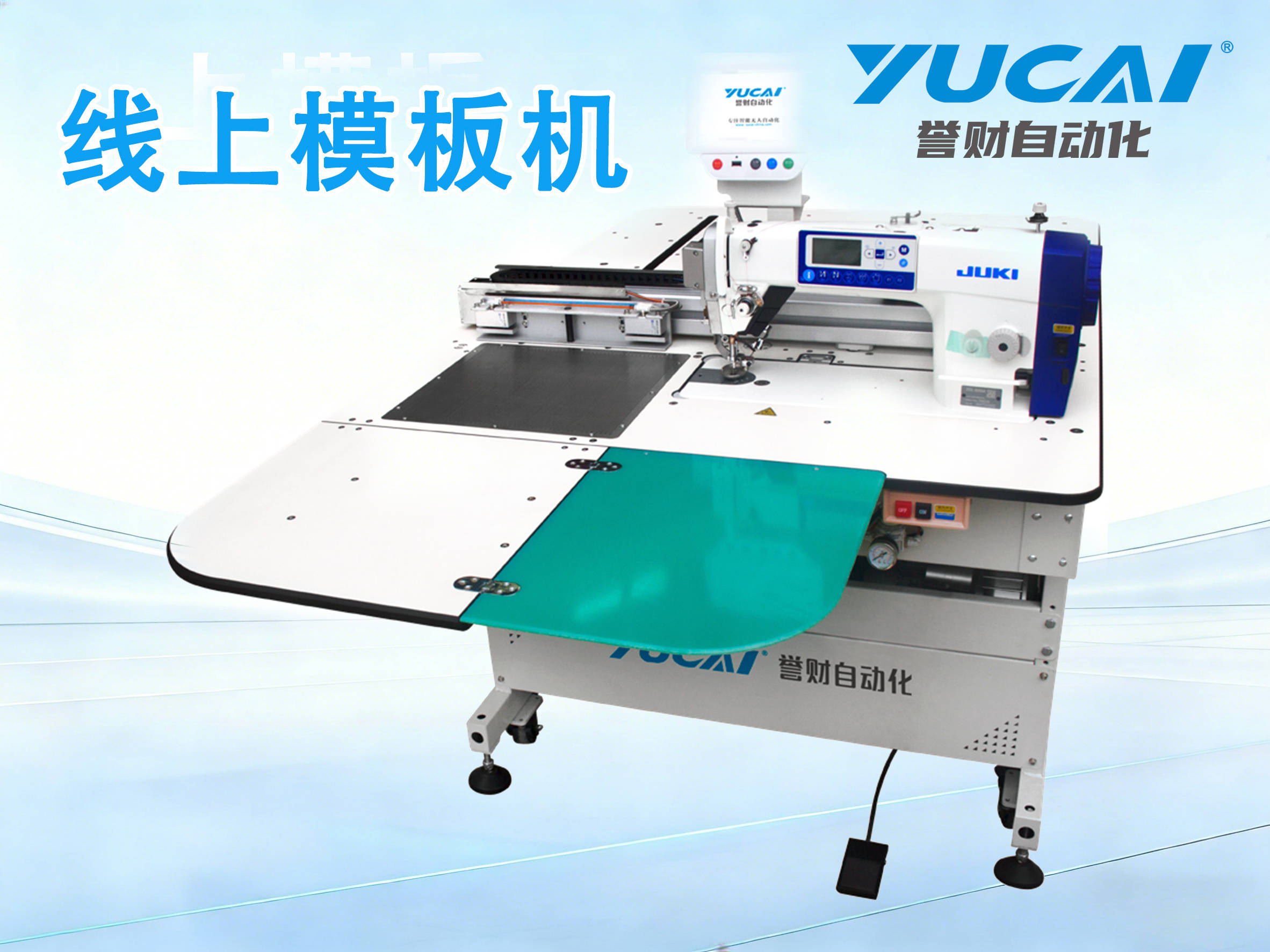
线上模板机
未来,随着数控化、智能化装备的持续普及,印尼与孟加拉的服装制造产业,将逐步摆脱对低成本劳动力的依赖,完成从 "全球代工工厂" 向 "区域智造中心" 的转型,而中国缝制机械企业,也将凭借技术创新与本地化服务能力,持续成为这一进程的核心赋能者。
In the future, with the continuous popularization of CNC and intelligent equipment, the garment manufacturing industry in Indonesia and Bangladesh will gradually get rid of the dependence on low-cost labor and complete the transformation from "global OEM factory" to "regional intelligent manufacturing center". Chinese sewing machinery enterprises will also continue to be the core enablers of this process by virtue of technological innovation and localized service capabilities.