理解思路
- 第一:类比StandardServer, 抓住StandardService整体类依赖结构来理解
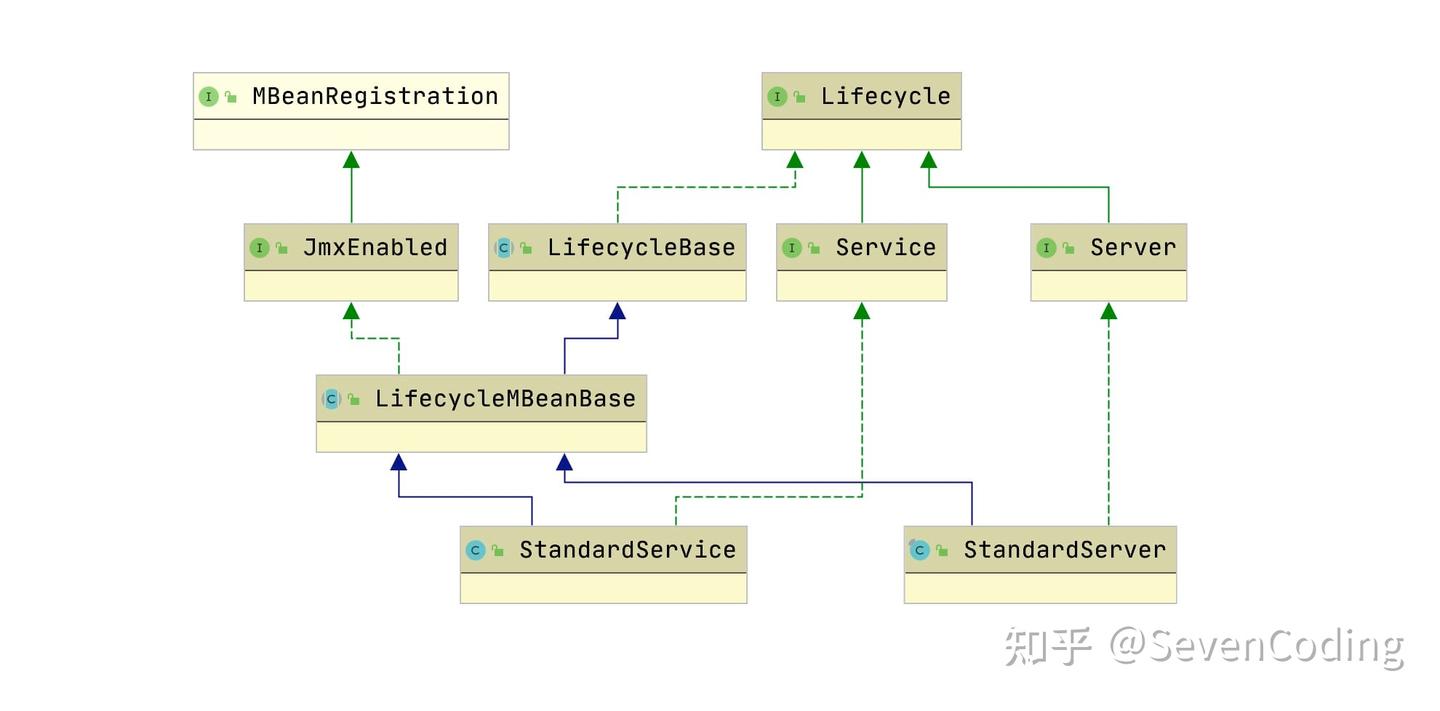
- 第二:结合server.xml中service配置来理解
见下文具体阐述。
- 第三:结合Service Config官方配置文档
http://tomcat.apache.org/tomcat-9.0-doc/config/service.html
Service结构设计
我们需要从高一点的维度去理解service的结构设计,而不是多少方法多少代码;这里的理解一定是要结合Server.xml中service配置部分对应理解。
server.xml
-
首先要看下server.xml中Service的配置,这样你便知道了需要了解的4个部分
  <!--2. 一个或多个excecutors -->
  <!--
  <https://zhida.zhihu.com/search?content_id=273756666&content_type=Article&match_order=1&q=Executor&zhida_source=entity name="tomcatThreadPool" namePrefix="catalina-exec-"
      maxThreads="150" minSpareThreads="4"/>
  -->

  <!--
3.Connector元素:
 由Connector接口定义.<Connector>元素代表与客户程序实际交互的组件,它负责接收客户请求,以及向客户返回响应结果.
  -->
  <Connector port="80" maxHttpHeaderSize="8192"
             maxThreads="150" minSpareThreads="25" maxSpareThreads="75"
             enableLookups="false" redirectPort="8443" acceptCount="100"
             connectionTimeout="20000" disableUploadTimeout="true" />
  <!-- 属性说明
port:服务器连接器的端口号,该连接器将在指定端口侦听来自客户端的请求。
enableLookups:如果为true,则可以通过调用request.getRemoteHost()进行DNS查询来得到远程客户端的实际主机名;
   若为false则不进行DNS查询,而是返回其ip地址。
redirectPort:服务器正在处理http请求时收到了一个SSL传输请求后重定向的端口号。
acceptCount:当所有可以使用的处理请求的线程都被用光时,可以放到处理队列中的请求数,超过这个数的请求将不予处理,而返回Connection refused错误。
connectionTimeout:等待超时的时间数(以毫秒为单位)。
maxThreads:设定在监听端口的线程的最大数目,这个值也决定了服务器可以同时响应客户请求的最大数目.默认值为200。
protocol:必须设定为AJP/1.3协议。
address:如果服务器有两个以上IP地址,该属性可以设定端口监听的IP地址,默认情况下,端口会监听服务器上所有IP地址。
minProcessors:服务器启动时创建的处理请求的线程数,每个请求由一个线程负责。
maxProcessors:最多可以创建的处理请求的线程数。
minSpareThreads:最小备用线程 。
maxSpareThreads:最大备用线程。
debug:日志等级。
disableUploadTimeout:禁用上传超时,主要用于大数据上传时。
  -->


  <Connector port="8009" enableLookups="false" redirectPort="8443" protocol="AJP/1.3" />
  <!-- 负责和其他HTTP服务器建立连接。在把Tomcat与其他HTTP服务器集成时就需要用到这个连接器。 -->

  <!--
4. Engine
  -->
  <Engine name="Catalina" defaultHost="localhost">

  </Engine>
</Service>
Service中的接口设计
-
公共属性, name等
/**
* @return the name of this Service.
*/
public String getName();/**
* Set the name of this Service.
*
* @param name The new service name
*/
public void setName(String name); -
父Server相关
/**
* @return theServerwith which we are associated (if any).
*/
public Server getServer();/**
* Set theServerwith which we are associated (if any).
*
* @param server The server that owns this Service
*/
public void setServer(Server server);/**
* @return the parent class loader for this component. If not set, return
* {@link #getServer()} {@link Server#getParentClassLoader()}. If no server
* has been set, return the system class loader.
*/
public ClassLoader getParentClassLoader();/**
* Set the parent class loader for this service.
*
* @param parent The new parent class loader
*/
public void setParentClassLoader(ClassLoader parent);/**
* @return the domain under which this container will be / has been
* registered.
*/
public String getDomain(); -
Connector相关
/**
* Add a new Connector to the set of defined Connectors, and associate it
* with this Service's Container.
*
* @param connector The Connector to be added
*/
public void addConnector(Connector connector);/**
* Find and return the set of Connectors associated with this Service.
*
* @return the set of associated Connectors
*/
public Connector[] findConnectors();/**
* Remove the specified Connector from the set associated from this
* Service. The removed Connector will also be disassociated from our
* Container.
*
* @param connector The Connector to be removed
*/
public void removeConnector(Connector connector); -
Engine
/**
* @return theEnginethat handles requests for all
*Connectorsassociated with this Service.
*/
public Engine getContainer();/**
* Set theEnginethat handles requests for all
*Connectorsassociated with this Service.
*
* @param engine The new Engine
*/
public void setContainer(Engine engine); -
Excutor相关
/**
* Adds a named executor to the service
* @param ex Executor
*/
public void addExecutor(Executor ex);/**
* Retrieves all executors
* @return Executor[]
*/
public Executor[] findExecutors();/**
* Retrieves executor by name, null if not found
* @param name String
* @return Executor
*/
public Executor getExecutor(String name);/**
* Removes an executor from the service
* @param ex Executor
*/
public void removeExecutor(Executor ex);
StandardService的实现
属性和父Server相关比较简单,这里主要看下其它的方法:
Engine相关
private Engine engine = null;

@Override
public Engine getContainer() {
    return engine;
}

@Override
public void setContainer(Engine engine) {
    Engine oldEngine = this.engine;
    if (oldEngine != null) {
        oldEngine.setService(null);
    }
    this.engine = engine;
    if (this.engine != null) {
        this.engine.setService(this);
    }
    if (getState().isAvailable()) {
        if (this.engine != null) {
            try {
                this.engine.start(); // 启动Engine
            } catch (https://zhida.zhihu.com/search?content_id=273756666&content_type=Article&match_order=1&q=LifecycleException&zhida_source=entity e) {
                log.error(sm.getString("standardService.engine.startFailed"), e);
            }
        }
        // 重启Mapper - Restart MapperListener to pick up new engine.
        try {
            mapperListener.stop();
        } catch (LifecycleException e) {
            log.error(sm.getString("standardService.mapperListener.stopFailed"), e);
        }
        try {
            mapperListener.start();
        } catch (LifecycleException e) {
            log.error(sm.getString("standardService.mapperListener.startFailed"), e);
        }
        if (oldEngine != null) {
            try {
                oldEngine.stop();
            } catch (LifecycleException e) {
                log.error(sm.getString("standardService.engine.stopFailed"), e);
            }
        }
    }

    // 触发container属性变更事件
    support.firePropertyChange("container", oldEngine, this.engine);
}
Connectors相关
/**
  * The set of Connectors associated with this Service.
  */
protected Connector connectors[] = new Connector[0];
private final Object connectorsLock = new Object();

/**
  * Add a new Connector to the set of defined Connectors, and associate it
  * with this Service's Container.
  *
  * @param connector The Connector to be added
  */
@Override
public void addConnector(Connector connector) {

    synchronized (connectorsLock) {
        connector.setService(this);
        Connector results[] = new Connector[connectors.length + 1];
        System.arraycopy(connectors, 0, results, 0, connectors.length);
        results[connectors.length] = connector;
        connectors = results;
    }

    try {
        if (getState().isAvailable()) {
            connector.start();
        }
    } catch (LifecycleException e) {
        throw new IllegalArgumentException(
                sm.getString("standardService.connector.startFailed", connector), e);
    }

    // Report this property change to interested listeners
    support.firePropertyChange("connector", null, connector);
}


public ObjectName[] getConnectorNames() {
    ObjectName results[] = new ObjectName[connectors.length];
    for (int i=0; i<results.length; i++) {
        results[i] = connectors[i].getObjectName();
    }
    return results;
}

/**
  * 当前Service相关的所有Connectors.
  */
@Override
public Connector[] findConnectors() {
    return connectors;
}

/**
  * 删除connector
  *
  * @param connector The Connector to be removed
  */
@Override
public void removeConnector(Connector connector) {

    synchronized (connectorsLock) {
        // 找到conector位置
        int j = -1;
        for (int i = 0; i < connectors.length; i++) {
            if (connector == connectors[i]) {
                j = i;
                break;
            }
        }
        if (j < 0)
            return;
        if (connectors[j].getState().isAvailable()) {
            try {
                connectors[j].stop(); // 停止
            } catch (LifecycleException e) {
                log.error(sm.getString(
                        "standardService.connector.stopFailed",
                        connectors[j]), e);
            }
        }
        connector.setService(null); // 去除父service绑定
        int k = 0;
        Connector results[] = new Connector[connectors.length - 1];
        for (int i = 0; i < connectors.length; i++) {
            if (i != j)
                results[k++] = connectors[i]; // 后续connector向前移位
        }
        connectors = results;

        // 触发connector属性变更事件
        support.firePropertyChange("connector", connector, null);
    }
}
Executor相关
CRUD方法,代码比较简单
/**
  * Adds a named executor to the service
  * @param ex Executor
  */
@Override
public void addExecutor(Executor ex) {
    synchronized (executors) {
        if (!executors.contains(ex)) {
            executors.add(ex);
            if (getState().isAvailable()) {
                try {
                    ex.start(); // 启动
                } catch (LifecycleException x) {
                    log.error(sm.getString("standardService.executor.start"), x);
                }
            }
        }
    }
}

/**
  * Retrieves all executors
  * @return Executor[]
  */
@Override
public Executor[] findExecutors() {
    synchronized (executors) {
        Executor[] arr = new Executor[executors.size()];
        executors.toArray(arr);
        return arr;
    }
}


/**
  * Retrieves executor by name, null if not found
  * @param executorName String
  * @return Executor
  */
@Override
public Executor getExecutor(String executorName) {
    synchronized (executors) {
        for (Executor executor: executors) {
            if (executorName.equals(executor.getName()))
                return executor;
        }
    }
    return null;
}

/**
  * Removes an executor from the service
  * @param ex Executor
  */
@Override
public void removeExecutor(Executor ex) {
    synchronized (executors) {
        if ( executors.remove(ex) && getState().isAvailable() ) {
            try {
                ex.stop(); // 停止
            } catch (LifecycleException e) {
                log.error(sm.getString("standardService.executor.stop"), e);
            }
        }
    }
}
Lifecycle相关模板方法
首先看 initInternal 方法
/**
 * Invoke a pre-startup initialization. This is used to allow connectors
 * to bind to restricted ports under Unix operating environments.
 */
@Override
protected void initInternal() throws LifecycleException {

    super.initInternal();

    if (engine != null) {
        engine.init();
    }

    // Initialize any Executors
    for (Executor executor : findExecutors()) {
        if (executor instanceof JmxEnabled) {
            ((JmxEnabled) executor).setDomain(getDomain());
        }
        executor.init();
    }

    // Initialize mapper listener
    mapperListener.init();

    // Initialize our defined Connectors
    synchronized (connectorsLock) {
        for (Connector connector : connectors) {
            connector.init();
        }
    }
}
initInternal 代码很短,思路也很清晰,就是依次调用了这个成员变量的 init 方法
engine.init()
executor.init
mapperListener.init()
connector.init()
startInternal 方法
/**
 * Start nested components ({@link Executor}s, {@link Connector}s and
 * {@link Container}s) and implement the requirements of
 * {@link org.apache.catalina.util.LifecycleBase#startInternal()}.
 *
 * @exception LifecycleException if this component detects a fatal error
 *  that prevents this component from being used
 */
@Override
protected void startInternal() throws LifecycleException {

    if(log.isInfoEnabled())
        log.info(sm.getString("standardService.start.name", this.name));
    setState(LifecycleState.STARTING);

    // Start our defined Container first
    if (engine != null) {
        synchronized (engine) {
            engine.start();
        }
    }

    synchronized (executors) {
        for (Executor executor: executors) {
            executor.start();
        }
    }

    mapperListener.start();

    // Start our defined Connectors second
    synchronized (connectorsLock) {
        for (Connector connector: connectors) {
            // If it has already failed, don't try and start it
            if (connector.getState() != LifecycleState.FAILED) {
                connector.start();
            }
        }
    }
}
startInternal 跟 initInternal 方法一样,也是依次调用
engine.start();
executor.start();
mapperListener.start();
connector.start();
补充下MapperListener
mapperListener 的作用是在 start 的时候将容器类对象注册到 Mapper 对象中。
/**
 * Create mapper listener.
 *
 * @param service The service this listener is associated with
 */
public MapperListener(Service service) {
    this.service = service;
    this.mapper = service.getMapper();
}
service.getMapper() 返回的是 StandardService 对象的 mapper 成员变量。

/**
 * Mapper.
 */
protected final Mapper mapper = new Mapper();
Mapper是 Tomcat 处理 Http 请求时非常重要的组件。Tomcat 使用 Mapper 来处理一个 Request 到 Host、Context 的映射关系,从而决定使用哪个 Service 来处理请求。
MapperListener 也是继承自 LifecycleMBeanBase,不过没有重载 initInternal 方法。
-
startInternal 方法
@Override
public void startInternal() throws LifecycleException {setState(LifecycleState.STARTING); Engine engine = service.getContainer(); if (engine == null) { return; } findDefaultHost(); addListeners(engine); Container[] conHosts = engine.findChildren(); for (Container conHost : conHosts) { Host host = (Host) conHost; if (!LifecycleState.NEW.equals(host.getState())) { // Registering the host will register the context and wrappers registerHost(host); } }}
-
findDefaultHost() 方法
首先看 findDefaultHost() 方法
private void findDefaultHost() {

    Engine engine = service.getContainer();
    String defaultHost = engine.getDefaultHost();

    boolean found = false;

    if (defaultHost != null && defaultHost.length() > 0) {
        Container[] containers = engine.findChildren();

        for (Container container : containers) {
            Host host = (Host) container;
            if (defaultHost.equalsIgnoreCase(host.getName())) {
                found = true;
                break;
            }

            String[] aliases = host.findAliases();
            for (String alias : aliases) {
                if (defaultHost.equalsIgnoreCase(alias)) {
                    found = true;
                    break;
                }
            }
        }
    }

    if (found) {
        mapper.setDefaultHostName(defaultHost);
    } else {
        log.error(sm.getString("mapperListener.unknownDefaultHost", defaultHost, service));
    }
}
findDefaultHost() 是主要是找出 defaultHost ,并调用 mapper.setDefaultHostName(defaultHost); 这个 defaultHost 是 server.xml 的 <Engine> 标签的属性,一般都是 "localHost"。
从上面代码 for 代码块里可以看出,Host 是 Engine 的子 Container。for 语句就是找出一个名字跟 defaultHost 指定的名字相同的 Host 对象。
-
addListeners(engine) 方法
/**
- Add this mapper to the container and all child containers
- @param container
*/
private void addListeners(Container container) {
container.addContainerListener(this);
container.addLifecycleListener(this);
for (Container child : container.findChildren()) {
addListeners(child);
}
}
这个方法的作用是,将 MapperListener 这个监听器添加到 Engine 及其子容器中
-
registerHost 调用 registerHost方法来注册 Engine 的字容器 Host。
/**
-
Register host.
*/
private void registerHost(Host host) {String[] aliases = host.findAliases();
mapper.addHost(host.getName(), aliases, host);for (Container container : host.findChildren()) {
if (container.getState().isAvailable()) {
registerContext((Context) container);
}
}// Default host may have changed
findDefaultHost();if(log.isDebugEnabled()) {
log.debug(sm.getString("mapperListener.registerHost",
host.getName(), domain, service));
}
}
-
registerHost 方法先调用 mapper.addHost,然后调用 registerContext 方法注册 Host 的子容器 Context。 mapper.addHost 方法是将 Host 加入的 Mapper 类的的成员变量MappedHost\[\] hosts 中。
接着看 registerContext 方法
/**
 * Register context.
 */
private void registerContext(Context context) {

    String contextPath = context.getPath();
    if ("/".equals(contextPath)) {
        contextPath = "";
    }
    Host host = (Host)context.getParent();

    WebResourceRoot resources = context.getResources();
    String[] welcomeFiles = context.findWelcomeFiles();
    List<WrapperMappingInfo> wrappers = new ArrayList<>();

    for (Container container : context.findChildren()) {
        prepareWrapperMappingInfo(context, (Wrapper) container, wrappers);

        if(log.isDebugEnabled()) {
            log.debug(sm.getString("mapperListener.registerWrapper",
                    container.getName(), contextPath, service));
        }
    }

    mapper.addContextVersion(host.getName(), host, contextPath,
            context.getWebappVersion(), context, welcomeFiles, resources,
            wrappers);

    if(log.isDebugEnabled()) {
        log.debug(sm.getString("mapperListener.registerContext",
                contextPath, service));
    }
}
registerContext 里先获取一些对象,比如 WebResourceRoot 对象、WrapperMappingInfo 对象,然后调用 mapper.addContextVersion。
Mapper#addContextVersion 方法比较琐细,就不细讲了。
其主要逻辑是将 Context 对象,以及 Context 的子容器 Wrapper 对象,每一个都分别构建一个对应的 MappedContext 和 MappedWrapper 对象,
然后把 MappedContext 和 MappedWrapper 塞进 ContextVersion 对象中,
最后把 Context 和 ContextVersion 的对应关系放在 Mapper 对象的一个 Map 里。
这里的 MappedContext 和 MappedWrapper 在 Tomcat 处理 Http 请求的时候是比较关键的。
registerHost 最后再更新了一下可能发生改变里的的 defaultHost。