红黑树封装 STL set/map 超详细解析
一、STL 为什么用红黑树封装 set/map?
满足 set/map 的核心需求:
- key 必须有序(红黑树是二叉搜索树,中序遍历有序)
- key 必须唯一(set 元素唯一,map 键唯一)
- 高效增删改查(O(logN))
- 迭代器不失效(除删除节点外,其他迭代器永久有效)
STL 设计思想:红黑树作为通用底层结构,set 和 map 只是它的 "适配器",就像栈 / 队列适配 deque 一样。
二、红黑树封装 set/map 核心原理(最关键)
1. 底层共用一棵红黑树
C++ STL 中:
set:存储唯一有序的 keymap:存储唯一有序的 key + 对应 value它们底层共用同一个红黑树模板,只通过存储数据类型区分:
- set 红黑树节点:存储
Key- map 红黑树节点:存储
pair<const Key, Value>2. 封装核心:萃取器(key_of_value)
红黑树只需要key 进行排序和比较,但 map 存的是键值对,因此需要一个 "萃取器" 告诉红黑树:
- 给我你的数据,我从中提取出 key 用于排序。
这是 set 和 map 唯一的本质区别!
容器 存储类型 key 提取方式 set Key 直接返回自身 map pair<const Key, T> 返回 pair.first 三、set /map/multiset /multimap 封装区别
容器 底层红黑树 key 唯一性 存储结构 set 红黑树 唯一 Key map 红黑树 唯一 pair<const Key, T> multiset 红黑树 可重复 Key multimap 红黑树 可重复 pair<const Key, T> 唯一区别:插入时是否检查 key 重复,其他逻辑完全一致。
四、STL 底层源码结构
1. 红黑树模板(通用底层)
cpp// 简化版 STL 红黑树 template <class Key, // 键类型 class Value, // 存储值类型(set=Key, map=pair<Key,T>) class KeyOfValue, // key 萃取器:从 Value 中提取 Key class Compare> // 比较函数(默认 less<Key>) class rb_tree { public: // 核心接口(set/map 直接调用) iterator insert(const Value& val); // 插入 iterator find(const Key& key); // 查找 void erase(iterator pos); // 删除 // ... 其他接口 };2. set 封装(适配器)
cpptemplate <class Key, class Compare = less<Key>> class set { public: // 定义萃取器:Value 就是 Key,直接返回 struct KeyOfValue { const Key& operator()(const Key& k) { return k; } }; private: // 底层红黑树 using RepType = rb_tree<Key, Key, KeyOfValue, Compare>; RepType tree; // 聚合实现,不是继承! public: // 接口直接转发给红黑树 pair<iterator, bool> insert(const Key& k) { return tree.insert(k); } iterator find(const Key& k) { return tree.find(k); } // ... 其他接口 };3. map 封装(适配器)
cpptemplate <class Key, class T, class Compare = less<Key>> class map { public: using ValueType = pair<const Key, T>; // 萃取器:从 pair 中提取 first 作为 key struct KeyOfValue { const Key& operator()(const ValueType& v) { return v.first; } }; private: using RepType = rb_tree<Key, ValueType, KeyOfValue, Compare>; RepType tree; public: // 转发接口 pair<iterator, bool> insert(const ValueType& v) { return tree.insert(v); } // [] 运算符重载:map 独有 T& operator[](const Key& k) { return (*insert({k, T()}).first).second; } // ... };
五、set 和 map 的关键差异总结(面试必问)
- 存储结构不同
- set:只存 key
- map:存
pair<const key, value>- key 萃取方式不同
- set: 数据本身就是 key
- map:从 pair 中取 first 作为 key
- 接口不同
- map 支持
[]运算符,set 不支持- 底层完全相同
- 都是红黑树适配,性能完全一致
六、红黑树封装的优势
- 代码复用:一套红黑树实现 4 个容器(set/map/multiset/multimap)
- 稳定性能:O (logN) 所有操作,不会退化
- 有序性:中序遍历天然有序,支持范围查找
- 迭代器稳定:插入不失效,删除仅当前节点失效
七、常见面试题
- set 和 map 底层是什么?红黑树。
- 为什么不用哈希表? 红黑树有序,哈希表无序;红黑树稳定 O (logN),哈希表有哈希冲突。
- set 可以修改元素吗?不可以,会破坏红黑树结构,元素是 const 的。
- map 的 key 为什么是 const?防止修改 key 破坏红黑树排序规则。
- multiset 和 set 区别?插入时不检查 key 重复。
八、代码实现
RBTree.h
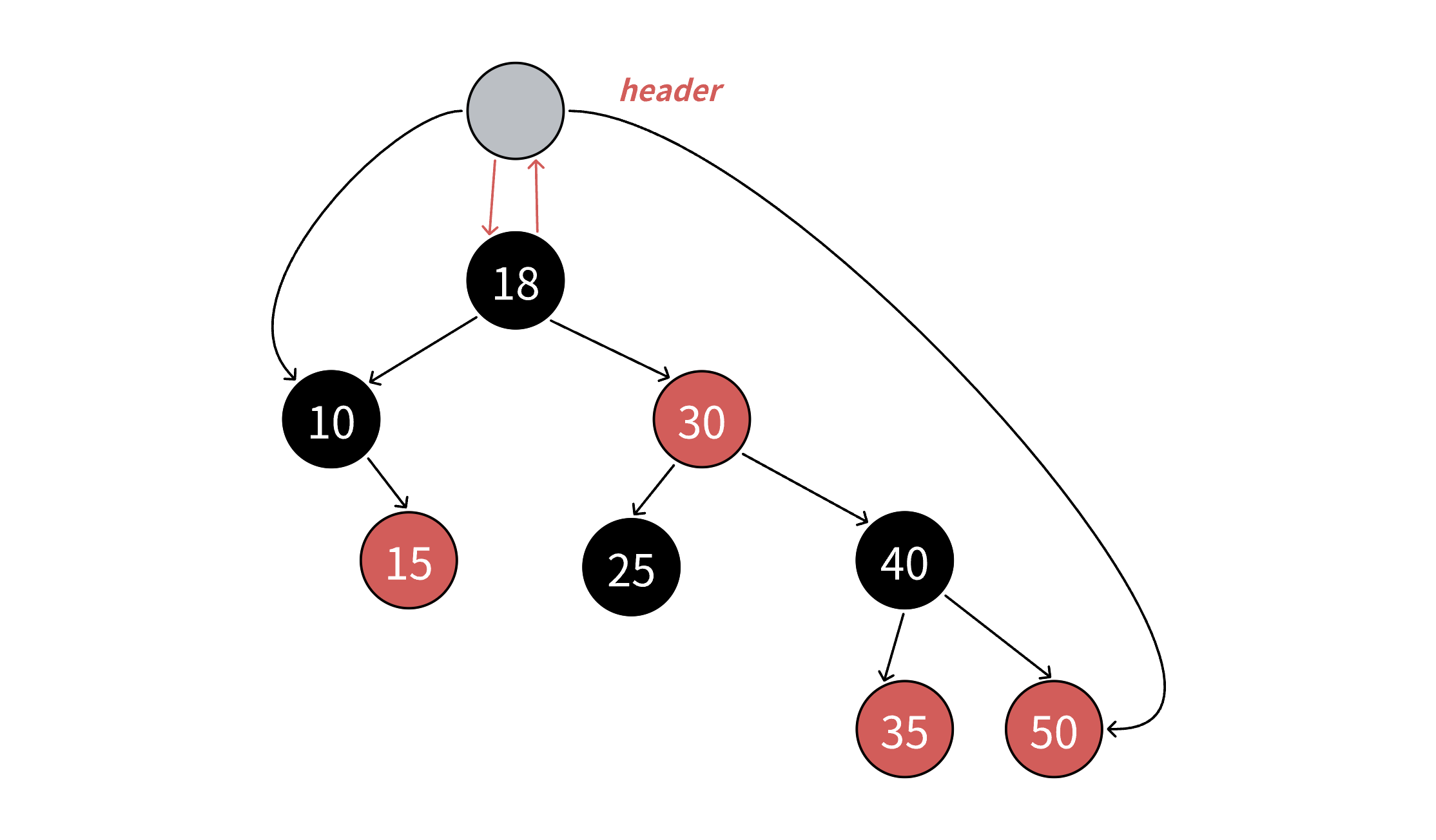
cppenum Colour { RED, BLACK }; template<class T> struct RBTreeNode { T _data; RBTreeNode<T>* _left; RBTreeNode<T>* _right; RBTreeNode<T>* _parent; Colour _col; RBTreeNode(const T& data) :_data(data) , _left(nullptr) , _right(nullptr) , _parent(nullptr) {} }; // 实现步骤: // 1、实现红⿊树 // 2、封装map和set框架,解决KeyOfT // 3、iterator // 4、const_iterator // 5、key不⽀持修改的问题 // 6、operator[] template<class T, class Ref, class Ptr> struct TreeIterator { typedef RBTreeNode<T> Node; typedef TreeIterator<T, Ref, Ptr> Self; Node* _node; private: Node* _root = nullptr; public: TreeIterator(Node* node) :_node(node) {} Ref operator*() { return _node->_data; } Ptr operator->() { return &_node->_data; } bool operator != (const Self& s) const { return _node != s._node; } bool operator == (const Self& s) const { return _node == s._node; } Self& operator--() { if (_node == nullptr)//如果当前节点为空,⾛到中序最后⼀个结点,整棵树的最右结点 { Node* max = _root; while (max && max->_right) { max = max->_right; } _node = max; } else if (_node->_left)// 左⼦树不为空,中序左⼦树最后⼀个 { Node* max = _node->_left; while (max->_right) { max = max->_right; } _node = max; } else { Node* cur = _node; Node* parent = cur->_parent; while (parent && cur == parent->_left) { cur = parent; parent = parent->_parent; } _node = parent; } return *this; } Self& operator++() { // 当前节点右不为空,下一个就是右子树的中序第一个(最左节点) if (_node->_right) { Node* min = _node->_right; while (min->_left) { min = min->_left; } _node = min; } else// 当前节点右为空,下一个孩子是父亲左的那个祖先节点 { Node* cur = _node; Node* parent = cur->_parent; while (parent && cur == parent->_right) { cur = parent; parent = parent->_parent; } _node = parent; } return *this; } }; template<class K,class T,class KeyOfT> class RBTree { typedef RBTreeNode<T> Node; public: typedef TreeIterator<T, T&, T*> Iterator; typedef TreeIterator<T, const T&, const T*> ConstIterator; private: Node* _root = nullptr; public: Iterator Begin() { Node* min = _root; while (min && min->_left) { min = min->_left; } return Iterator(min); } Iterator End() { return Iterator(nullptr); } pair<Iterator, bool> Insert(const T& data) { if (_root == nullptr) { _root = new Node(data); _root->_col = BLACK; return { Iterator(_root), true }; } KeyOfT kot; Node* parent = nullptr; Node* cur = _root; while (cur) { if (kot(cur->_data)< kot(data)) { parent = cur; cur = cur->_right; } else if (kot(cur->_data) > kot(data)) { parent = cur; cur = cur->_left; } else { return { Iterator(cur), false }; } } cur = new Node(data); Node* newnode = cur; cur->_col = RED; if (kot(parent->_data)< kot(data)) { parent->_right = cur; } else { parent->_left = cur; } cur->_parent = parent; while (parent && parent->_col == RED) { Node* grandfather = parent->_parent; if (grandfather->_left == parent) { Node* uncle = grandfather->_right; // 叔叔存在且为红->变色 if (uncle && uncle->_col == RED)//情况1:变? c为红,p为红,g为?,u存在且为红 { // g // p u parent->_col = BLACK; uncle->_col = BLACK; grandfather->_col = RED; // 继续往上处理 cur = grandfather; parent = cur->_parent; } else { if (cur == parent->_left) // 情况2:单旋+变? c为红,p为红,g为?,u不存在或者u存在且为? { // g // p u //c // 右单旋 RotateR(grandfather); parent->_col = BLACK; grandfather->_col = RED; } else //情况3:双旋+变? c为红,p为红,g为?,u不存在或者u存在且为?,u不存在, { // g // p u // c // 左右单旋 RotateL(parent); RotateR(grandfather); cur->_col = BLACK; grandfather->_col = RED; } break; } } else // grandfather->_right == parent { // g // u p Node* uncle = grandfather->_left; // 叔叔存在且为红,-》变色即可 if (uncle && uncle->_col == RED) //情况1:变? c为红,p为红,g为?,u存在且为红 { parent->_col = BLACK; uncle->_col = BLACK; grandfather->_col = RED; // 继续往上处理 cur = grandfather; parent = cur->_parent; } else // 情况2:单旋+变? c为红,p为红,g为?,u不存在或者u存在且为? { // 情况二:叔叔不存在或者存在且为黑 // 旋转+变色 if (cur == parent->_right) { // g // u p // c RotateL(grandfather); parent->_col = BLACK; grandfather->_col = RED; } //情况3:双旋+变? c为红,p为红,g为?,u不存在或者u存在且为?,u不存在, else { // g // u p // c RotateR(parent); RotateL(grandfather); cur->_col = BLACK; grandfather->_col = RED; } break; } } } _root->_col = BLACK; return {Iterator(newnode), true}; } private: Node* Find(const K& key) { KeyOfT kot; Node* cur = _root; while (cur) { if (kot(cur->_data) < key) { cur = cur->_right; } else if (kot(cur->_data) > key) { cur = cur->_left; } else { return cur; } } return nullptr; } void RotateR(Node* parent) { Node* subL = parent->_left; Node* subLR = subL->_right; parent->_left = subLR; if (subLR) subLR->_parent = parent; Node* parentParent = parent->_parent; subL->_right = parent; parent->_parent = subL; if (parent == _root) { _root = subL; subL->_parent = nullptr; } else { if (parentParent->_left == parent) { parentParent->_left = subL; } else { parentParent->_right = subL; } subL->_parent = parentParent; } } void RotateL(Node* parent) { Node* subR = parent->_right; Node* subRL = subR->_left; parent->_right = subRL; if (subRL) subRL->_parent = parent; Node* parentParent = parent->_parent; subR->_left = parent; parent->_parent = subR; if (parent == _root) { _root = subR; subR->_parent = nullptr; } else { if (parentParent->_left == parent) { parentParent->_left = subR; } else { parentParent->_right = subR; } subR->_parent = parentParent; } } };补充:STL 红黑树真正实现:用 哨兵节点 (header) 当 end ()
两种 end () 实现对比(最清晰)
实现方式 end () 表示 ++ 最后走到 --end() 你的简单版 nullptr nullptr 必须特殊处理 STL 官方版 哨兵 header 节点 header 节点 直接取 header->right Set和Map封装
cpp#include"RBTree.h" namespace bit { template<class K> class set { struct SetKeyOfT { const K& operator()(const K& key) { return key; } }; public: typedef typename RBTree<K, const K, SetKeyOfT>::Iterator iterator; iterator begin() { return _t.Begin(); } iterator end() { return _t.End(); } pair<iterator, bool> insert(const K& k) { return _t.Insert(k); } private: RBTree<K, const K, SetKeyOfT> _t; }; };
cppnamespace bit { template<class K, class V> class map { struct MapKeyOfT { const K& operator()(const pair<K, V>& kv) { return kv.first; } }; public: typedef typename RBTree<K, pair<const K, V>, MapKeyOfT>::Iterator iterator; iterator begin() { return _t.Begin(); } iterator end() { return _t.End(); } pair<iterator, bool> insert(const pair<K, V>& kv) { return _t.Insert(kv); } V& operator[](const K& key) { pair<iterator, bool> ret = insert({ key, V() }); return ret.first->second; } private: RBTree<K, pair<const K, V>, MapKeyOfT> _t; }; };