1.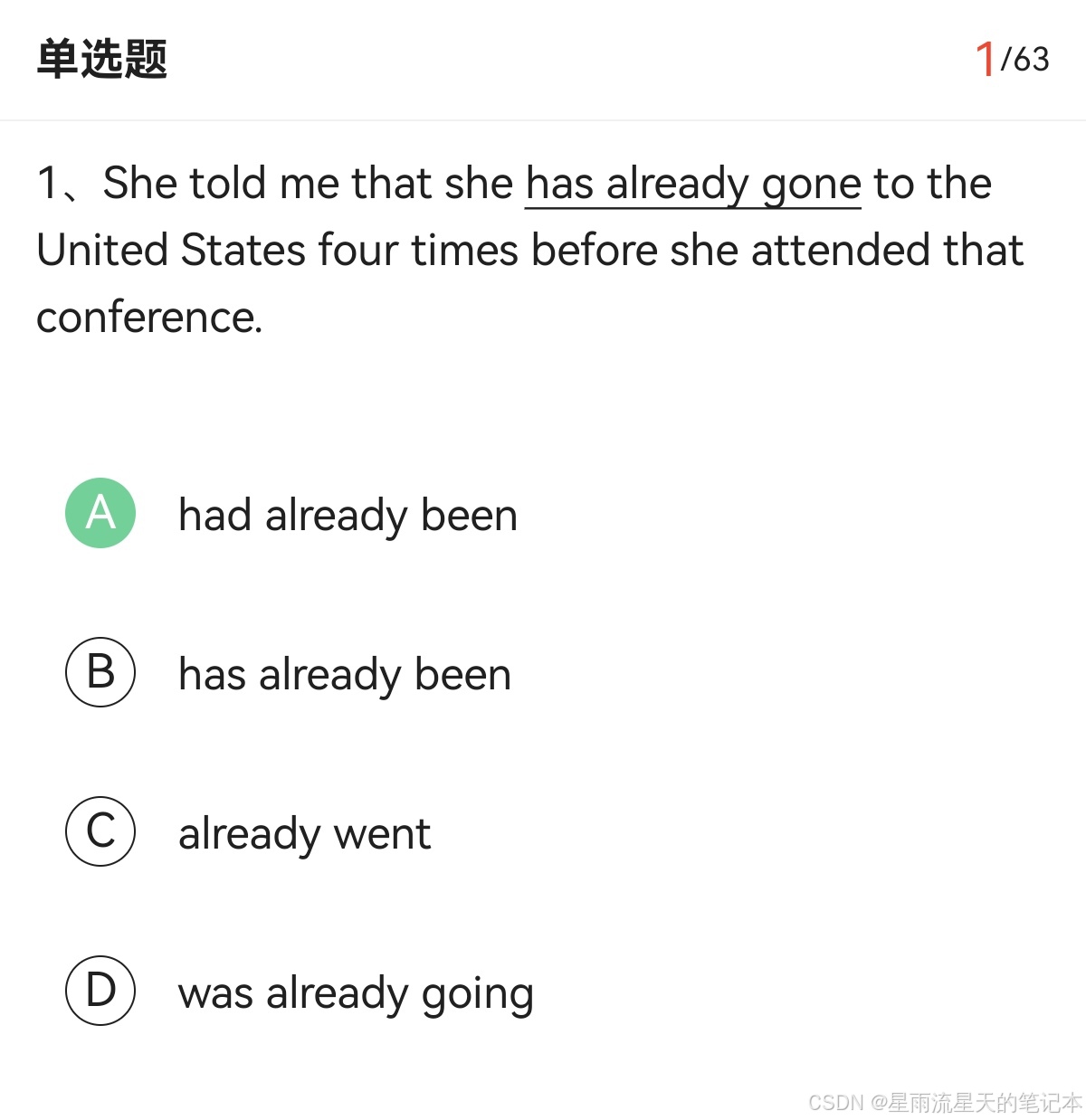
1、先分清三组核心短语
① have been to + 地点(本题正确用法)
去过某地、现在已经回来了,可搭配次数(four times)
She has been to US four times. 她去过美国四次(人在本土)
过去时态:had been to(题目选A)
② have gone to + 地点
去了某地、人还在当地没回来,不在现场,不能加次数
- He has gone to America. 他去美国了(人在美国)
③ have got to = have to(= must,不得不、必须,和去哪无关!)
got to 表"必须",不表示出行,和去某地没有关系
- I have got to go. 我得走了。
= I have to go.
一句话总结
-
表示去过(往返)多少次:have been to
-
表示人去了没回来:have gone to
-
表示必须、不得不:have got to(= have to)
补充:have got to 绝不接地点表去过,只表客观需要
例:
I've got to go to the US. 我得动身去美国(强调要出发,不是去过)
2.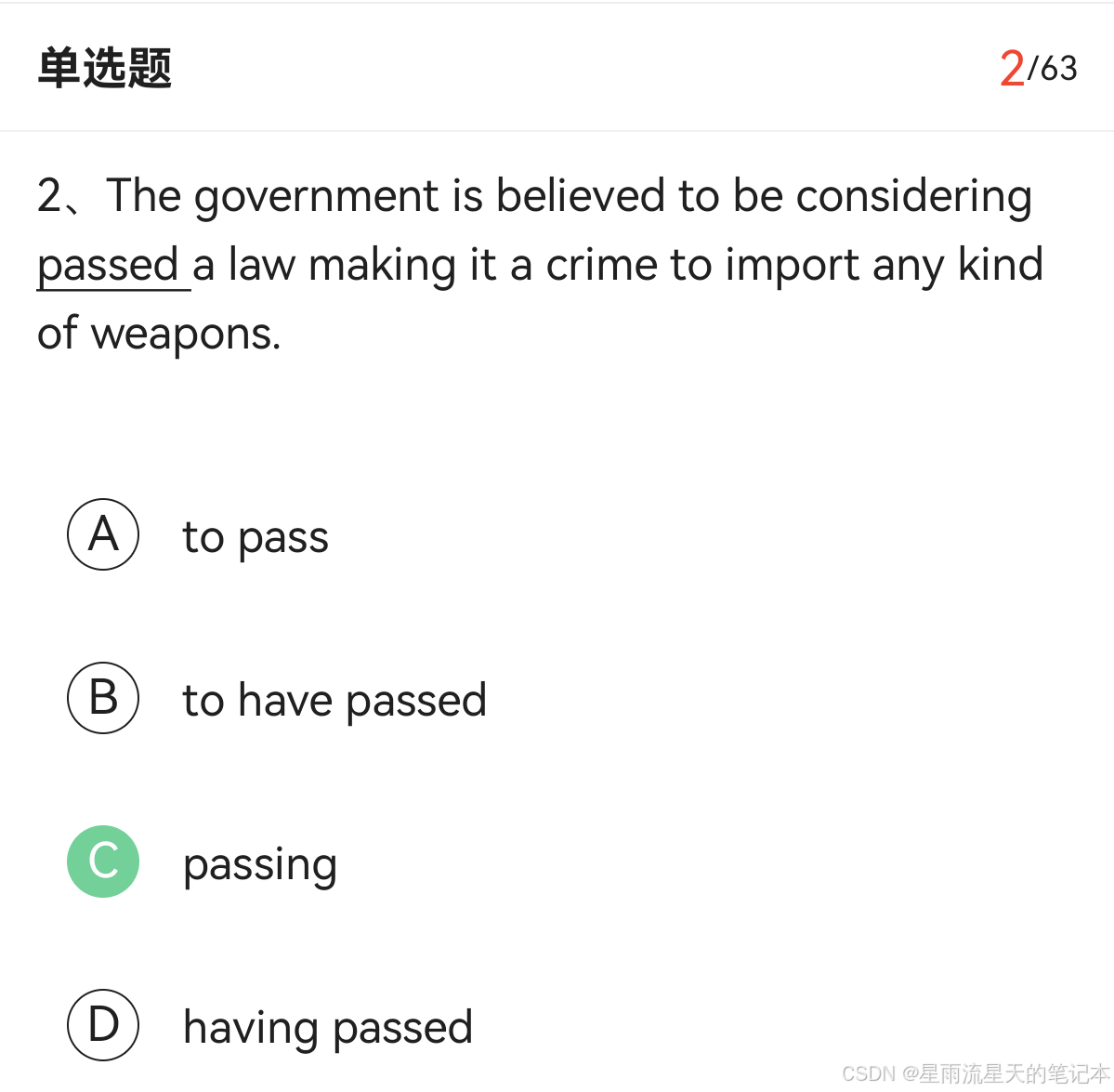
- consider + 宾语 + to do(to be)=认为(to不能直接跟在consider后面)
结构:consider + 人/物 + to be...
We consider him to be clever.
我们认为他很聪明。
⚠️ 不能写:❌ We consider to be clever.(缺少宾语,错误)
- consider + 疑问词(how/where/when)+to do=考虑(唯一能让to do紧跟consider的情况)
I consider how to go to America.
我考虑怎么去美国。
- 单纯"考虑做某事":consider + doing(不加to)
I consider going to America. 我考虑去美国。
最简总结
-
表认为:consider + 宾语 + to be(to不在consider后)
-
表考虑:①consider doing ②consider+疑问词+to do
3.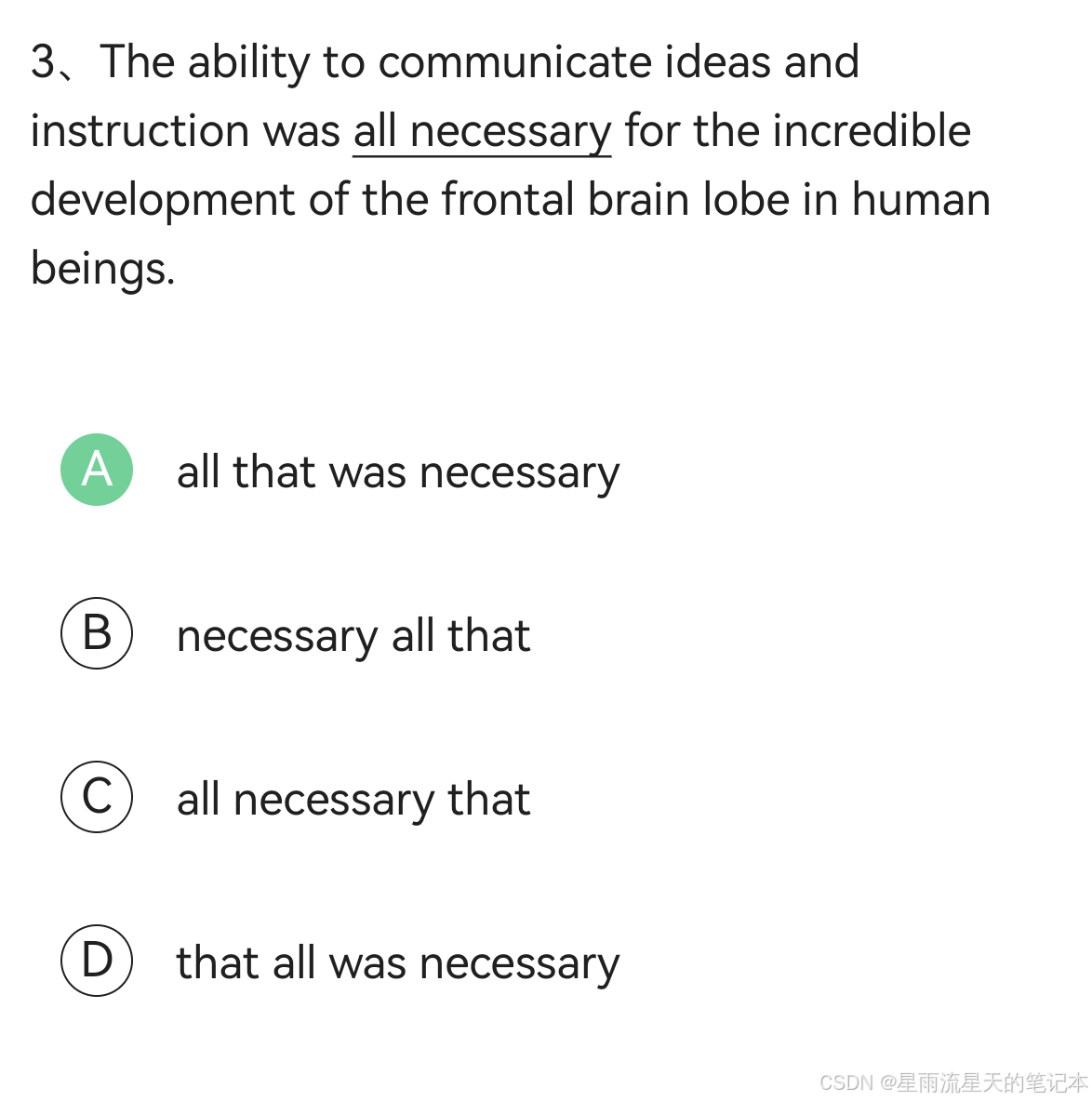
考点:all 作先行词 + that 定语从句
- 原句错误:all necessary
正确:all that was necessary(A选项)
语法拆解
-
all = 名词,一切、全部事物(本句作表语)
-
all 是先行词,定语从句必须用关系代词that引导,不能省略that
结构:all + that(从句主语)+谓语+表语
→ all that was necessary = 所必需的全部条件
句子还原
主语:The ability...
系动词:was
表语:all that was necessary
译文:传递思想与指令的能力,是人类大脑前额叶实现惊人进化的全部必要条件。
关键固定考点(必背)
-
先行词为all / everything / nothing / something等不定代词,定语从句只用that,不用which
-
句式:all that = what
all that was necessary = what was necessary(所必需之物)
例:All that you need is time.=What you need is time.
不冲突!两个was各司其职,分属两套主谓
原句主干:
The ability ... was 【all that was necessary】
- 第一个was(主句谓语)
主语:The ability(单数:能力)
主句:The ability was + 表语(all that...)
→ 这个能力「是......全部必要条件」
- 第二个was(定语从句谓语)
先行词:all
定语从句:that was necessary(that指代all,单数)
all that was necessary = 所有必需之物(整体作全句表语)
拆分句式
(The ability ...) was all (that was necessary).
-
外层:主 + 系 + 表
-
内层:定语从句that was necessary 修饰all
类比例句(一模一样结构)
This book is all that I need.
这本书就是我需要的全部。
(is:主句谓语;need:从句谓语,两套动词互不矛盾)
4.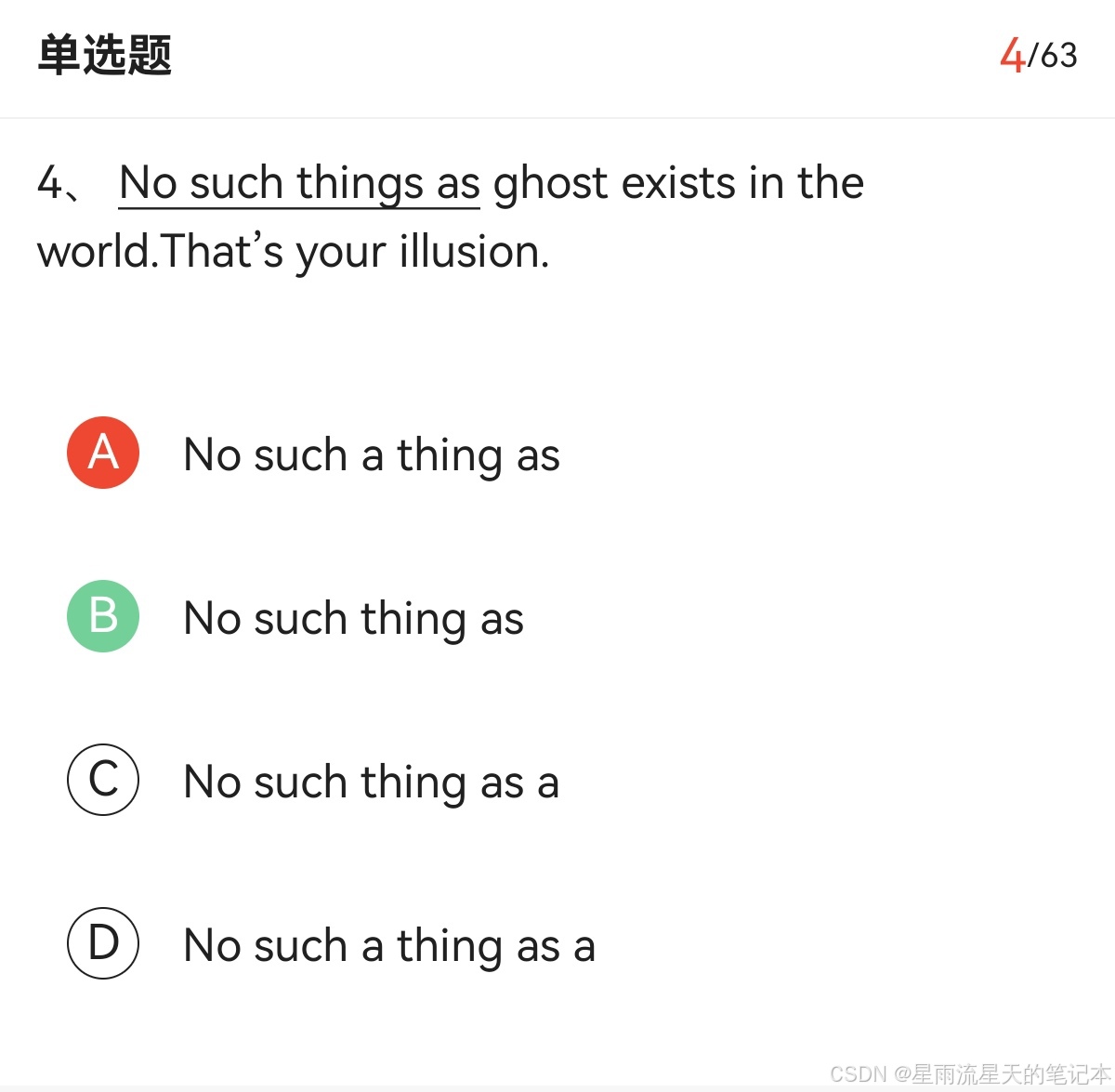
本题两大考点:such冠词搭配 + no用法 + as后名词单复数
- 核心规则:no = not a / not any,no后面不加a/an!
❌ no such a thing(A错!no和a不能共存)
✅ no such thing(B正确)
- no such + 单数名词 = not such a + 单数名词
= Not such a thing as ghost exists.
口诀:
有no无a,有a无no
no such book ✔;no such a book ❌
not such a book ✔
- ghost这里是抽象泛指(鬼魂这类事物,不可数)
as ghost :泛指"鬼"这个概念,不用a ghost
- C:as a、D:as a → 多加a,错误
- 谓语提示:原句exists(三单)→ 主语必须单数
原No such things(复数)+ exists(单数)主谓不一致,改成no such thing(单数),匹配exists。
整句正确:
No such thing as ghost exists in the world.
世上不存在鬼这种事物。
拓展两个固定句式
-
No such + 可数单:No such person 没有这样的人
-
Not such a + 可数单:Not such a person
-
No such + 不可数:No such water
为什么A错:
no已经包含a的含义(no=not a),no和a不能同时出现,所以no such a thing 语法冲突。
5.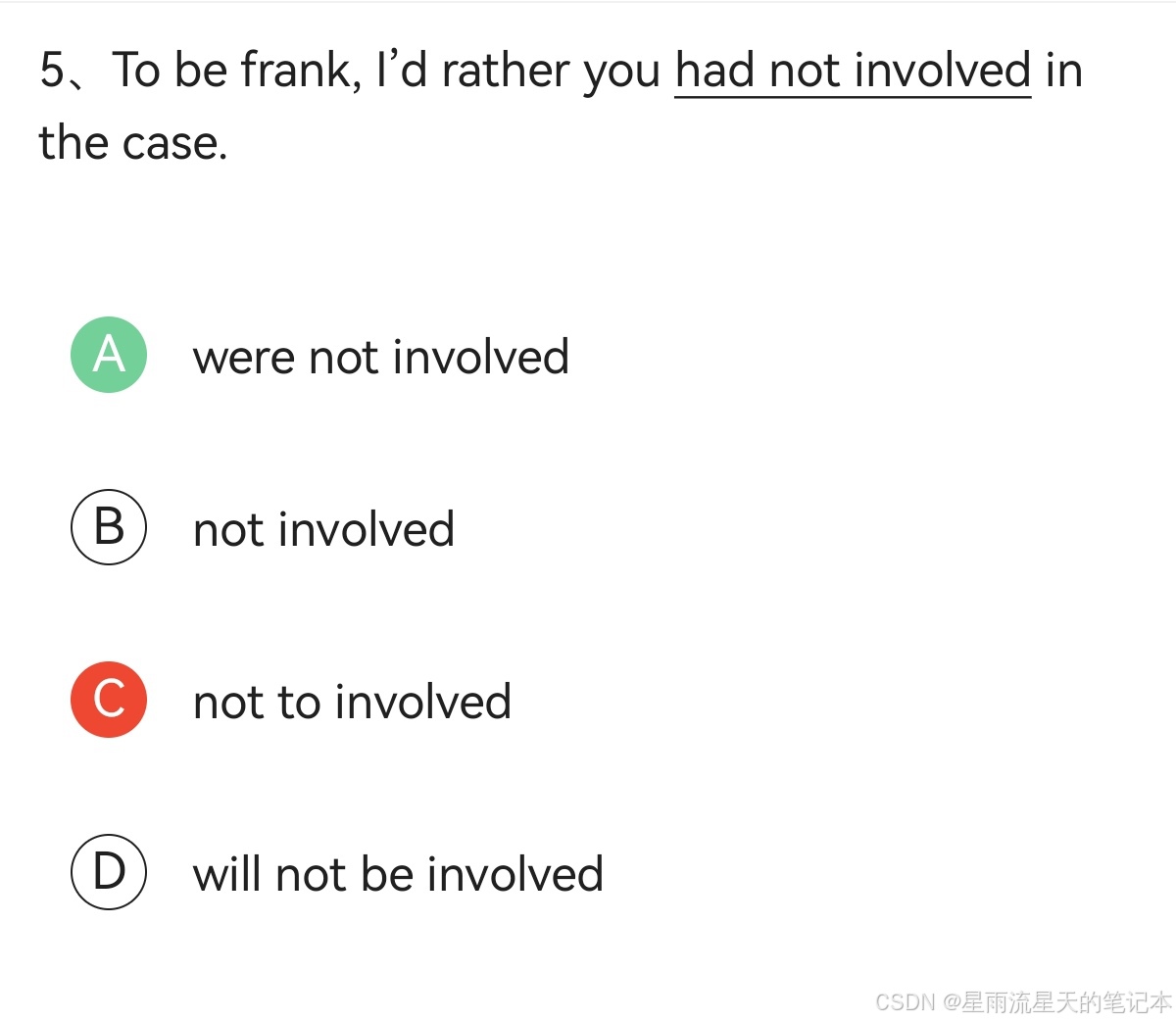
一、两个关键点:would rather虚拟 + involve被动
- would rather + 从句(主语不同:I / you)
-
对现在/将来虚拟:从句用一般过去时
-
对过去已发生的事虚拟:从句用had done
本句句意:坦白说,我宁愿你现在/将来没卷入案子(当下没卷入,并非已经卷进去了)→ 用过去式虚拟,不用had done。
- involve 固定搭配:be involved in 卷入......(被动)
人是"被卷入案件",必须带be动词:
- be involved in = 卷入
逐项拆解
- ✅A. were not involved
were是are的过去式(虚拟现在),be involved被动,完全匹配:
I'd rather you were not involved... 我宁愿你现在没有卷入。
-
❌B. not involved:缺be动词,不能直接形容词作谓语
-
❌C. not to involved:would rather从句不能加to不定式,would rather后从句不用to do结构
-
❌D. will not be involved:would rather虚拟从句不能用将来时will
补充
如果改成过去已经卷入了,才用:I'd rather you hadn't been involved(had been done),原题没有"过去已经卷入"语境,所以不用had not involved。
6.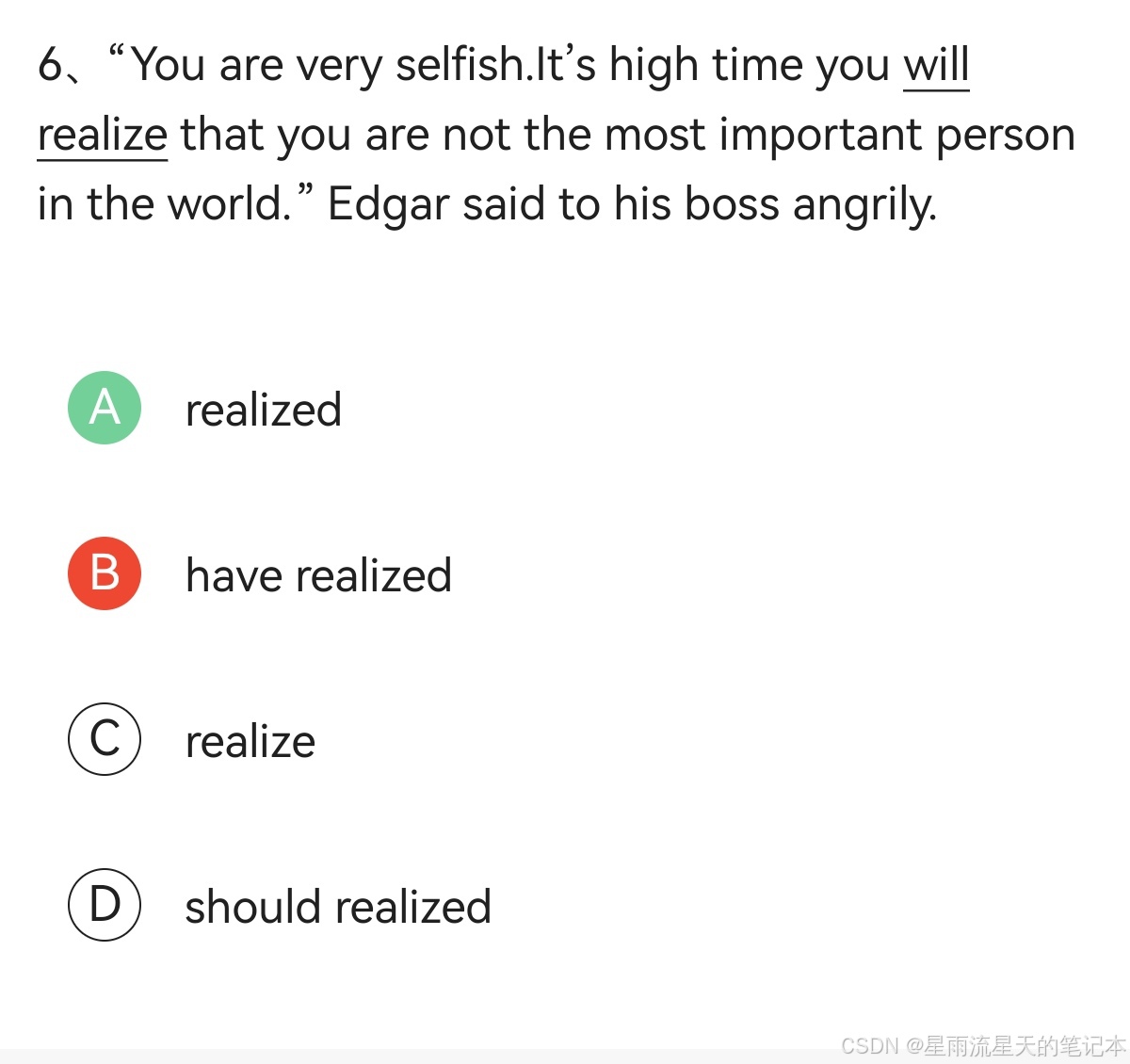
It's high time + 从句从句虚拟只有两种写法:
- 过去式(did / were,be动词统一用were)
It's high time that were careful.
It's high time that he left
- should + 动词原形(should绝不省,不用过去式)
It's high time you should leave.
⚠️ 这个句型永远不用 had done 因为It's high time that 表示"早就该..." "为时已晚" 立足于现在时刻,不涉及过去发生的事情
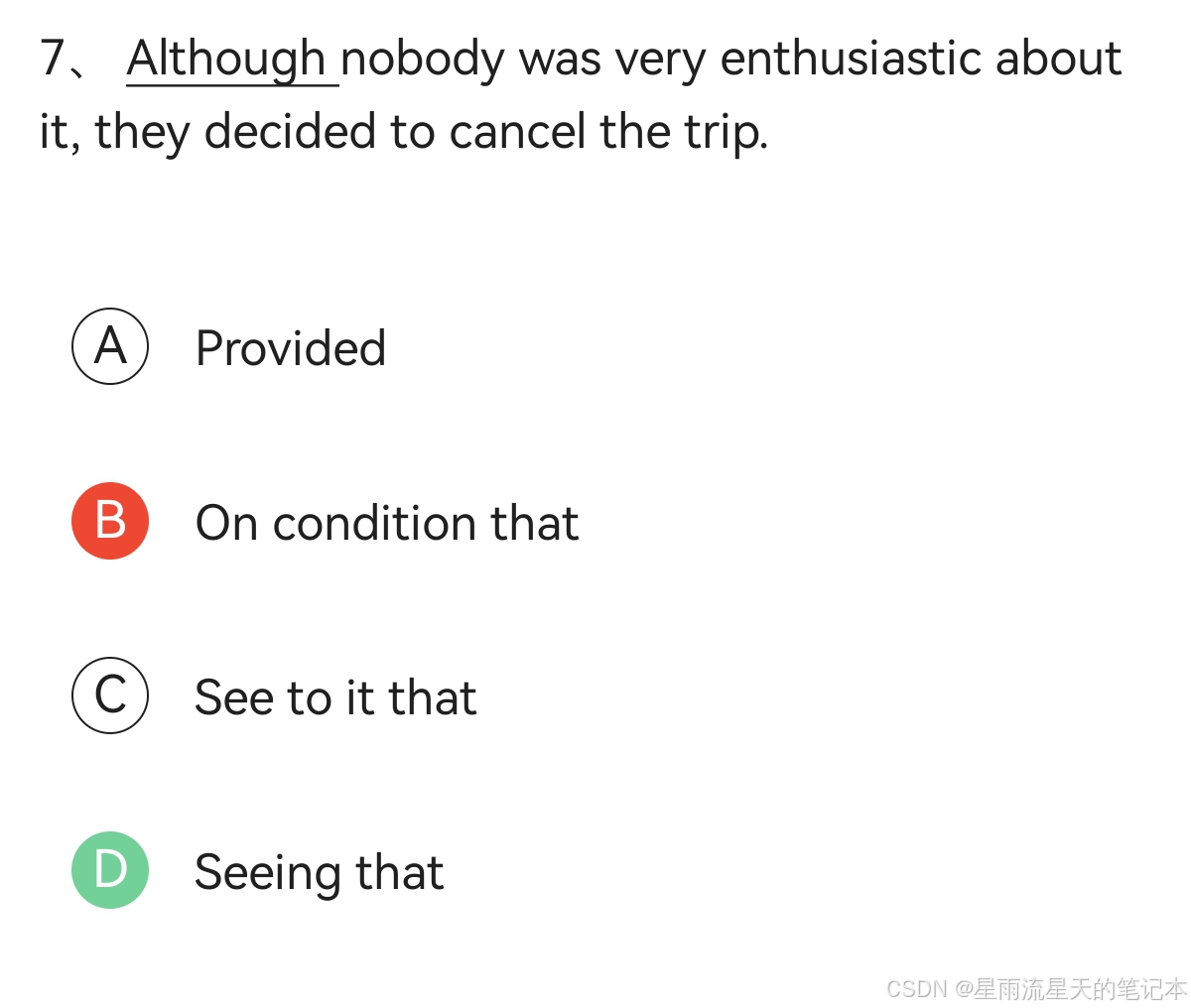
答案:D Seeing that ✅
一、句意翻译
Seeing that nobody was very enthusiastic about it, they decided to cancel the trip.
由于没人对这次出行抱有热情,他们决定取消行程。
二、选项辨析
-
D Seeing that:连词,意为"鉴于、由于",引导原因状语从句,替换原词although(虽然),逻辑从让步改为因果,符合句子逻辑。
-
A Provided = B On condition that:引导条件状语从句,含义"倘若、在......条件下",表假设条件,逻辑不通。
-
C See to it that:动词短语,含义"务必、保证",不能直接引导从句,语法结构错误。
补充区分
-
Although(虽然)→ 让步关系:虽然大家没热情,但还是去了(和原句后半句"取消行程"矛盾,所以替换)
-
Seeing that(由于)→ 原因关系:因为没热情,所以取消,逻辑通顺。
8.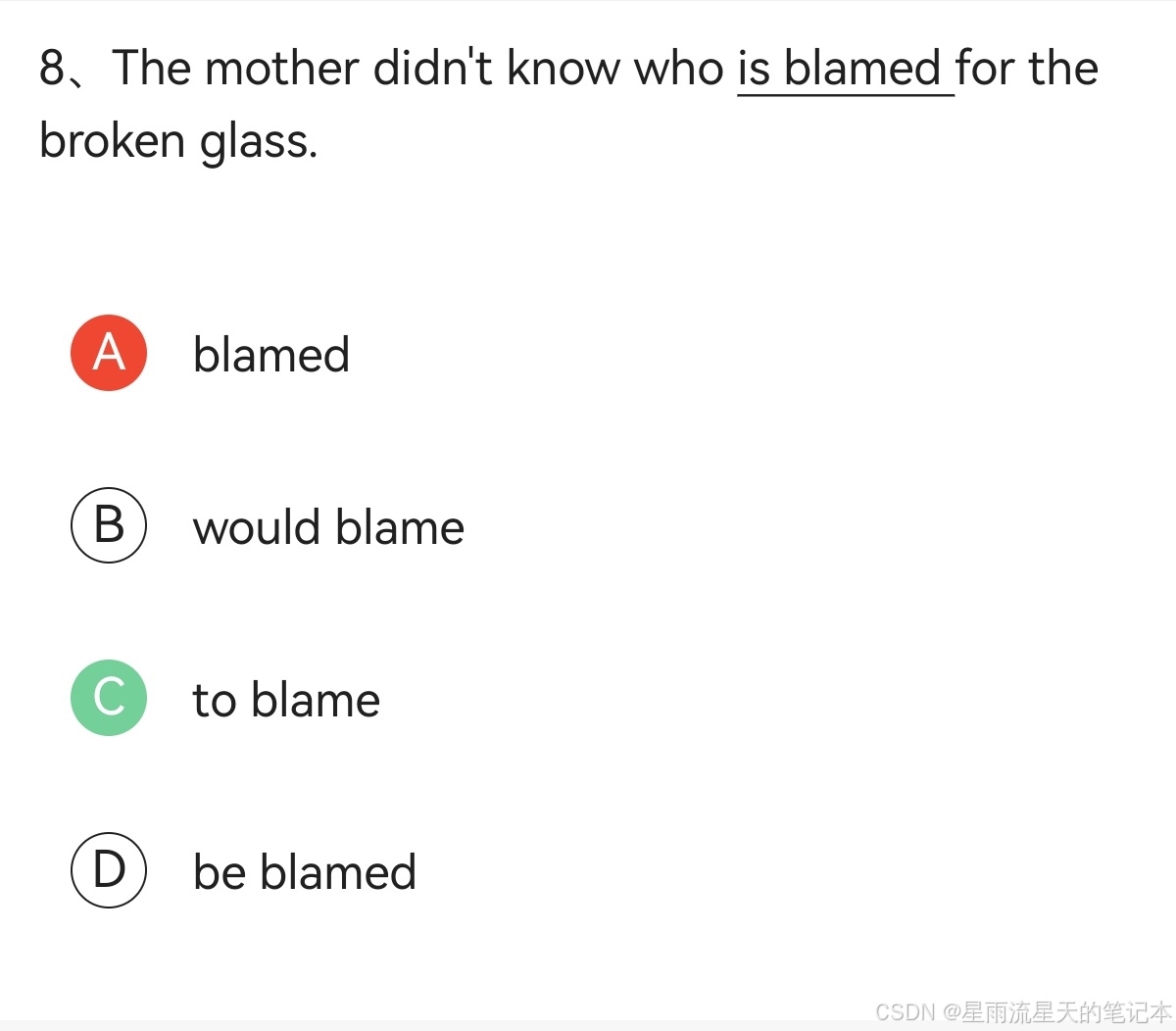
答案:C(to blame)✅
核心考点:to blame 主动表被动固定用法
- 固定短语:sb be to blame (for sth)
-
形式:主动不定式 to blame,含义却是「某人该受责备、负有责任」(不用 to be blamed)
-
等价 = sb should be blamed
句子结构: know + 疑问词+不定式(whom/who to blame) ,who to blame = who should be blamed
原句:The mother didn't know who to blame for the broken glass.
翻译:妈妈不知道打碎玻璃该怪谁。
- 逐项排除
-
A blamed:who blamed 表示"谁责怪(别人)",逻辑错误(不是谁去责怪,是谁被责怪)
-
B would blame:将来主动语态,句意不通
-
D be blamed:语法错, who 后不能直接接动词原形be;且固定搭配不用be blamed
💡补充例句
He is to blame for the accident.
= He should be blamed for the accident.
这场事故责任在他。
高频「主动形式表被动含义」分类汇总💡
一、不定式固定:be to blame / be to let(你刚考的考点)
- sb be to blame (for sth) 某人该受责备(≠to be blamed)
He is to blame. 他活该受罚。
- be to let(房屋)待出租
The house is to let. 房子出租。
二、感官/系动词:look/sound/smell/taste/feel + adj(无被动)
主语是物,用主动表"被......起来"
-
The cloth feels soft. 这块布摸起来很软。
-
The soup tastes delicious. 汤尝着很香。
三、need/want/require + doing = to be done(需要被...)
doing主动=被动含义
- The room needs cleaning = needs to be cleaned. 房间需要打扫。
四、sell/wash/write/cook/drive/lock等,表物品本身属性、好/难......
状语常带well/easily/badly
-
The pen writes smoothly. 这支笔好写(被写起来顺畅)。
-
The cloth washes easily. 这布料好洗。
-
The car drives well. 这车好开。
⚠️ 表具体某次实际动作要用被动:The car was driven yesterday.(昨天这车被开过)
五、worth doing(固定,主动表被动)
- The book is worth reading. = worthy to be read
这本书值得一读。
六、happen/occur/come out/run out 不及物动词无被动
-
His money has run out.(钱被用完了,不用is run out)
-
The book came out last week. 书上周出版了。
七、under + 名词 = being done(介词短语主动名词表被动)
under repair = being repaired 在被维修
under discussion = being discussed 在被讨论
9.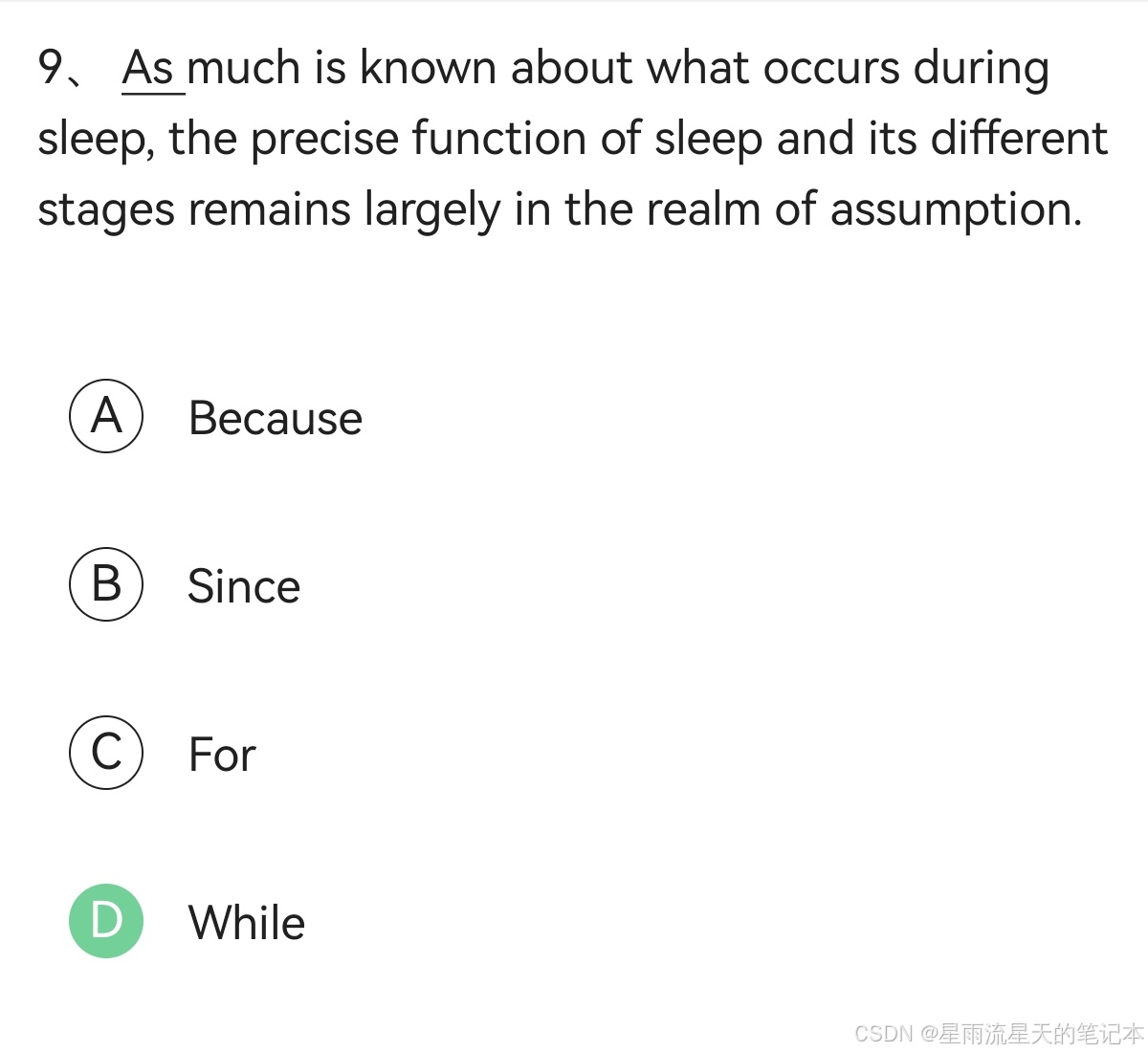
答案:D While ✅
一、逻辑分析
前半句:很多人已经清楚睡眠中发生的变化
后半句:睡眠确切作用大多仍停留在猜想阶段
前后是让步转折(虽然...但是...),只有 while 可引导让步状语从句,译为「尽管」。
二、四个选项区分
- D While
- 用法①:引导时间,当......时;②:引导让步 = although(尽管),本题用法。
-
A Because / B Since:引导原因状语从句(因为),逻辑因果,和本句转折矛盾。
-
C For:并列连词,只能放主句后,补充说明原因,不能放句首引导从句。
三、原句翻译
尽管人们对睡眠期间发生的事情已经了解不少,但睡眠及其不同阶段的确切功能在很大程度上仍处于猜想范畴。
💡拓展:while 表让步常放句首,= although
例:While he is young, he knows a lot. 尽管年纪小,他懂得很多。
10.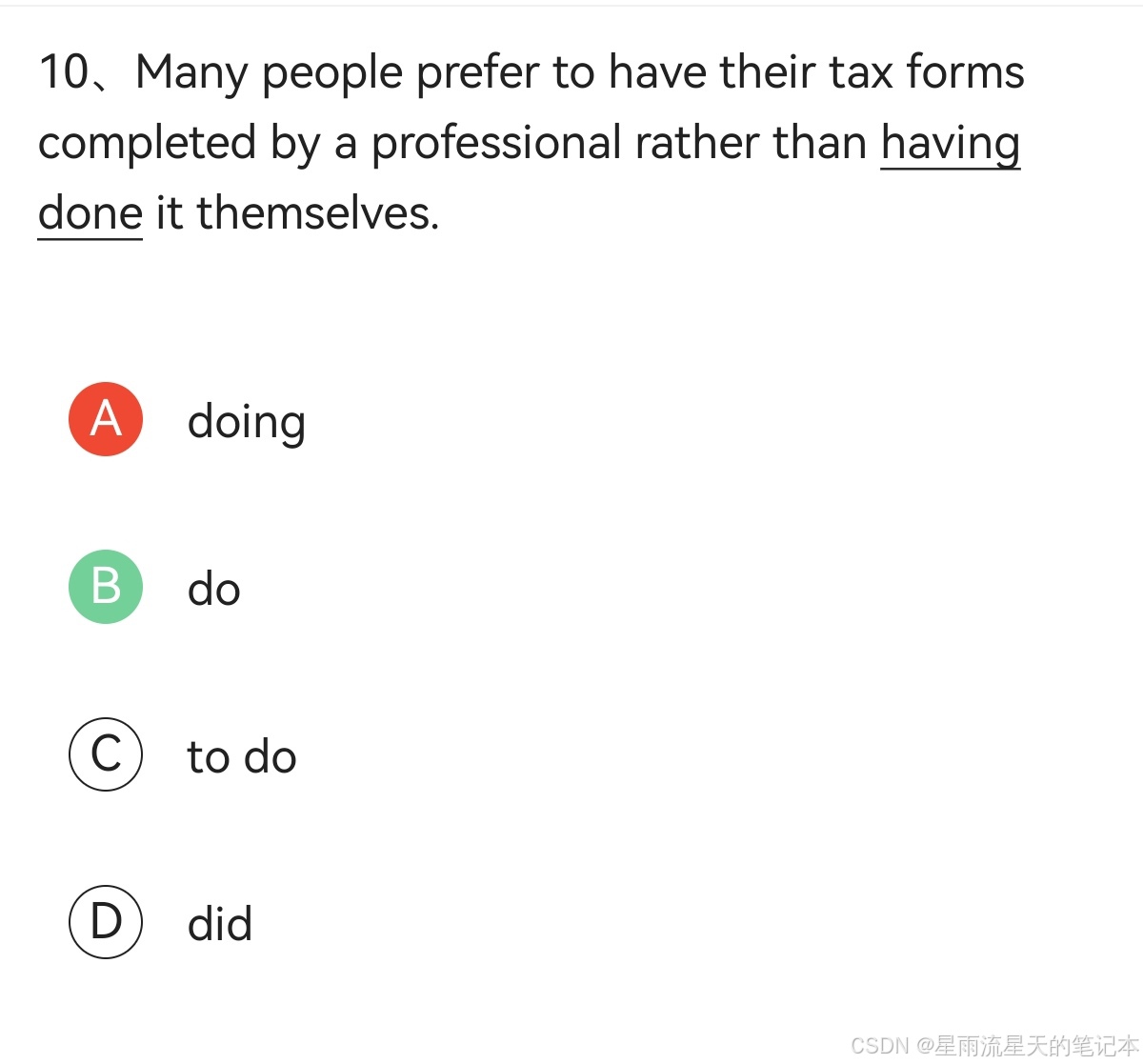
纠正:正确答案 B do ✅
核心语法:prefer to do ... rather than do(必考固定)
- 规则:rather than 后不定式习惯省略to,只用动词原形 do
公式:prefer to do A, rather than do B
-
前半:prefer to have ...
-
rather than 后:省略to,直接用 do(B选项)
- 选项辨析
-
B do:rather than 固定省to,原形,标准答案;
-
C to do:极少用,考试常规考点一律省to,不选;
-
A doing:动名词不匹配to have结构;D did时态错误。
例句
I prefer to walk rather than drive.(√ drive,不用to drive)
我宁愿走路不愿开车。
本句翻译
人们宁愿找专业人士代办报税单,也不愿自己动手填写。