引言
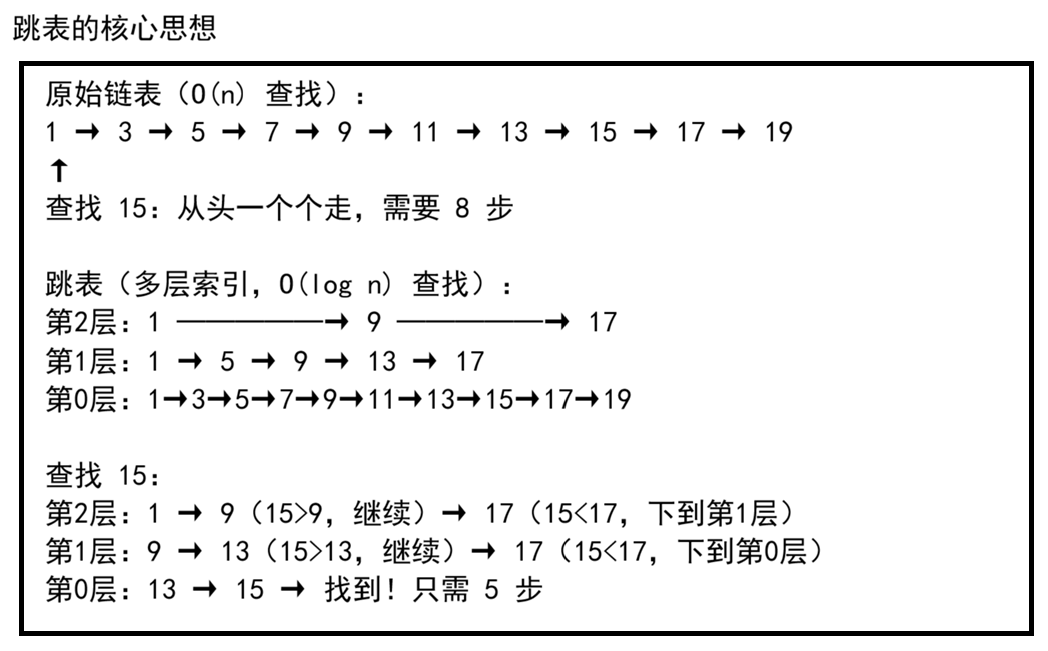
在前面数据结构系列中,我们学过二分查找------在有序数组中查找一个数,时间复杂度 O(log n),非常快。但如果数据存储在链表中呢?链表不支持随机访问,只能从头一个个找,查找退化到 O(n)。
有没有办法让链表也能"二分查找"?跳表(Skip List)就是答案。它在原始链表之上建立多层索引,高层索引跳过大量节点,底层索引精确定位,从而实现 O(log n) 的查找效率。
跳表由 William Pugh 于 1990 年提出,论文标题就是"Skip Lists: A Probabilistic Alternative to Balanced Trees"------它是平衡树的概率替代方案。相比红黑树,跳表实现简单得多,但性能相当,因此被 Redis ZSet、LevelDB、Kafka 等众多系统采用。
第一部分:跳表的核心原理
一、多层索引 = "空间换时间"
想象一本书的目录:要找到第 7 章,你不会从第 1 页开始翻。你会先看大目录(章标题),定位到第 7 章大概在书的中间位置,然后再翻到那一页。
跳表就是这样:原始链表是"书的正文",每一层索引就是一个"目录"。层数越高,索引越稀疏,"跳"得越远。
二、节点层数如何确定
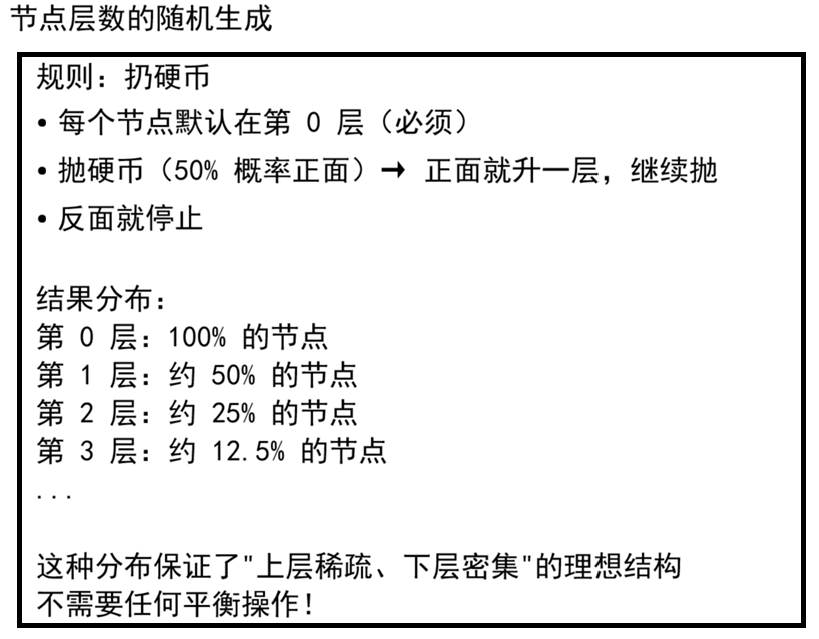
跳表的关键问题:一个节点应该建几层索引?
答案:随机决定。这正是跳表最巧妙的地方------不需要复杂的平衡算法,用概率保证整体效率。
cpp
#define MAX_LEVEL 16  // 最大层数

// 随机生成层数(抛硬币)
int randomLevel() {
    int level = 0;
    while (rand() % 2 == 0 && level < MAX_LEVEL) {
        level++;
    }
    return level;
}
第二部分:跳表的操作
一、数据结构定义
cpp
#include <stdio.h>
#include <stdlib.h>
#include <stdbool.h>
#include <limits.h>

#define MAX_LEVEL 16

typedef struct SkipNode {
    int key;                            // 键值
    int value;                          // 值
    struct SkipNode* forward[MAX_LEVEL + 1];  // 各层的后继指针
} SkipNode;

typedef struct {
    SkipNode* header;                   // 头节点(哨兵)
    int level;                          // 当前跳表的最大层数
} SkipList;
forward 数组 :forward[i] 表示该节点在第 i 层的下一个节点。forward[0] 就是原始链表的下一个节点。
二、初始化
cpp
SkipList* createSkipList() {
    SkipList* list = (SkipList*)malloc(sizeof(SkipList));
    list->level = 0;

    // 创建头节点,所有层的 forward 初始为 NULL
    list->header = (SkipNode*)malloc(sizeof(SkipNode));
    list->header->key = INT_MIN;  // 哨兵,最小键值
    for (int i = 0; i <= MAX_LEVEL; i++) {
        list->header->forward[i] = NULL;
    }

    return list;
}
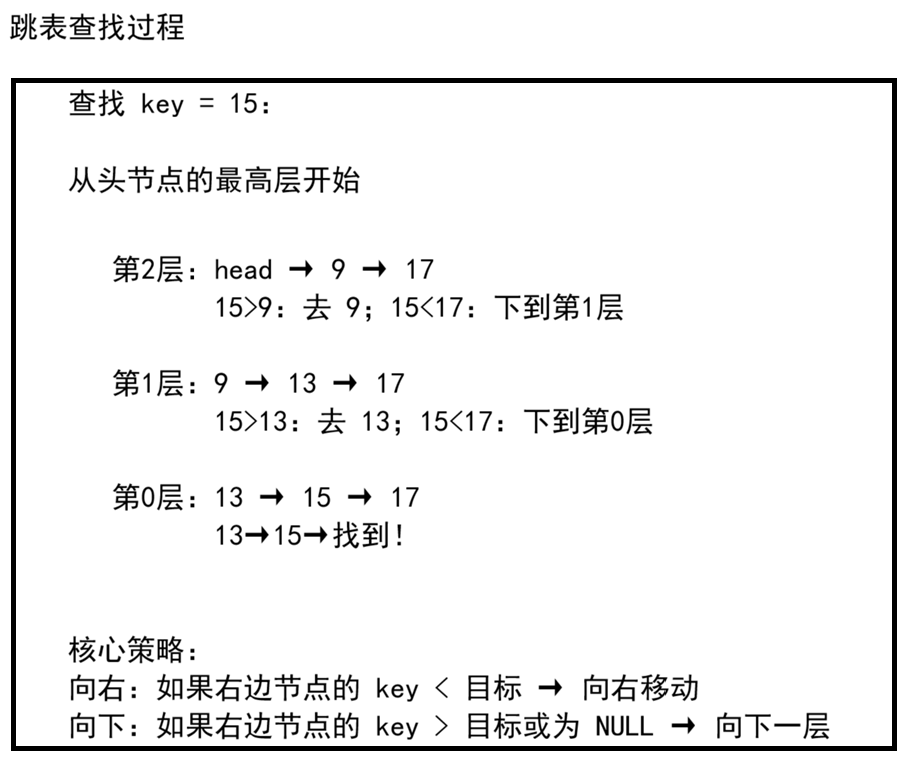
三、查找
cpp
// 查找,返回 key 对应的 value,未找到返回 -1
int search(SkipList* list, int key) {
    SkipNode* cur = list->header;

    // 从最高层开始
    for (int i = list->level; i >= 0; i--) {
        // 在这一层一直向右,直到碰到比 key 大的节点
        while (cur->forward[i] != NULL && cur->forward[i]->key < key) {
            cur = cur->forward[i];
        }
        // 如果这一层不能再向右了,下一层
    }

    // 此时 cur 在第 0 层的下一个节点,要么是目标,要么不存在
    cur = cur->forward[0];
    if (cur != NULL && cur->key == key) {
        return cur->value;
    }
    return -1;
}
四、插入
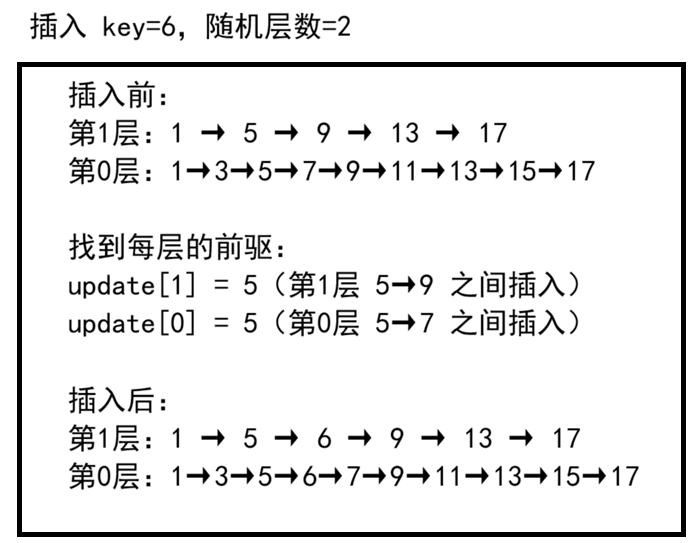
插入需要做两件事:随机生成新节点的层数 ,然后在每一层找到插入位置并插入。
cpp
// 插入(如果 key 已存在则更新 value)
void insert(SkipList* list, int key, int value) {
    // update[i] = 在第 i 层插入新节点时,新节点的前驱是谁
    SkipNode* update[MAX_LEVEL + 1];
    SkipNode* cur = list->header;

    // 1. 从最高层开始,找到每层的插入位置(前驱节点)
    for (int i = list->level; i >= 0; i--) {
        while (cur->forward[i] != NULL && cur->forward[i]->key < key) {
            cur = cur->forward[i];
        }
        update[i] = cur;  // 记录这一层的前驱
    }

    cur = cur->forward[0];

    // 2. key 已存在 → 更新 value
    if (cur != NULL && cur->key == key) {
        cur->value = value;
        return;
    }

    // 3. 随机生成新节点的层数
    int newLevel = randomLevel();
    if (newLevel > list->level) {
        // 新节点层数超过当前最大层数 → 更新头节点的 forward
        for (int i = list->level + 1; i <= newLevel; i++) {
            update[i] = list->header;
        }
        list->level = newLevel;
    }

    // 4. 创建新节点
    SkipNode* newNode = (SkipNode*)malloc(sizeof(SkipNode));
    newNode->key = key;
    newNode->value = value;

    // 5. 在每一层插入(和链表插入一样:新节点指向前驱的后继,前驱指向新节点)
    for (int i = 0; i <= newLevel; i++) {
        newNode->forward[i] = update[i]->forward[i];
        update[i]->forward[i] = newNode;
    }
}插入过程图解:
五、删除
cpp
// 删除
void delete(SkipList* list, int key) {
    SkipNode* update[MAX_LEVEL + 1];
    SkipNode* cur = list->header;

    // 找到每层的前驱
    for (int i = list->level; i >= 0; i--) {
        while (cur->forward[i] != NULL && cur->forward[i]->key < key) {
            cur = cur->forward[i];
        }
        update[i] = cur;
    }

    cur = cur->forward[0];

    // 如果找到了,在每一层删除
    if (cur != NULL && cur->key == key) {
        for (int i = 0; i <= list->level; i++) {
            if (update[i]->forward[i] == cur) {
                update[i]->forward[i] = cur->forward[i];
            } else {
                break;  // 这一层没有了,上面层也不会有了
            }
        }
        free(cur);

        // 如果最高层变空了,降低跳表层级
        while (list->level > 0 && list->header->forward[list->level] == NULL) {
            list->level--;
        }
    }
}
第三部分:完整代码与测试
cpp
#include <stdio.h>
#include <stdlib.h>
#include <stdbool.h>
#include <limits.h>
#include <time.h>

#define MAX_LEVEL 16

typedef struct SkipNode {
    int key;
    int value;
    struct SkipNode* forward[MAX_LEVEL + 1];
} SkipNode;

typedef struct {
    SkipNode* header;
    int level;
} SkipList;

int randomLevel() {
    int level = 0;
    while (rand() % 2 == 0 && level < MAX_LEVEL) {
        level++;
    }
    return level;
}

SkipList* createSkipList() {
    SkipList* list = (SkipList*)malloc(sizeof(SkipList));
    list->level = 0;
    list->header = (SkipNode*)malloc(sizeof(SkipNode));
    list->header->key = INT_MIN;
    for (int i = 0; i <= MAX_LEVEL; i++) {
        list->header->forward[i] = NULL;
    }
    return list;
}

int search(SkipList* list, int key) {
    SkipNode* cur = list->header;
    for (int i = list->level; i >= 0; i--) {
        while (cur->forward[i] != NULL && cur->forward[i]->key < key) {
            cur = cur->forward[i];
        }
    }
    cur = cur->forward[0];
    if (cur != NULL && cur->key == key) return cur->value;
    return -1;
}

void insert(SkipList* list, int key, int value) {
    SkipNode* update[MAX_LEVEL + 1];
    SkipNode* cur = list->header;

    for (int i = list->level; i >= 0; i--) {
        while (cur->forward[i] != NULL && cur->forward[i]->key < key) {
            cur = cur->forward[i];
        }
        update[i] = cur;
    }

    cur = cur->forward[0];
    if (cur != NULL && cur->key == key) {
        cur->value = value;
        return;
    }

    int newLevel = randomLevel();
    if (newLevel > list->level) {
        for (int i = list->level + 1; i <= newLevel; i++) {
            update[i] = list->header;
        }
        list->level = newLevel;
    }

    SkipNode* newNode = (SkipNode*)malloc(sizeof(SkipNode));
    newNode->key = key;
    newNode->value = value;
    for (int i = 0; i <= newLevel; i++) {
        newNode->forward[i] = update[i]->forward[i];
        update[i]->forward[i] = newNode;
    }
}

void delete(SkipList* list, int key) {
    SkipNode* update[MAX_LEVEL + 1];
    SkipNode* cur = list->header;

    for (int i = list->level; i >= 0; i--) {
        while (cur->forward[i] != NULL && cur->forward[i]->key < key) {
            cur = cur->forward[i];
        }
        update[i] = cur;
    }

    cur = cur->forward[0];
    if (cur != NULL && cur->key == key) {
        for (int i = 0; i <= list->level; i++) {
            if (update[i]->forward[i] == cur) {
                update[i]->forward[i] = cur->forward[i];
            } else break;
        }
        free(cur);
        while (list->level > 0 && list->header->forward[list->level] == NULL) {
            list->level--;
        }
    }
}

void printSkipList(SkipList* list) {
    printf("跳表(最大层数=%d):\n", list->level);
    for (int i = list->level; i >= 0; i--) {
        SkipNode* cur = list->header->forward[i];
        printf("第%d层:", i);
        while (cur != NULL) {
            printf("%d -> ", cur->key);
            cur = cur->forward[i];
        }
        printf("NULL\n");
    }
    printf("\n");
}

void freeSkipList(SkipList* list) {
    SkipNode* cur = list->header->forward[0];
    while (cur != NULL) {
        SkipNode* tmp = cur;
        cur = cur->forward[0];
        free(tmp);
    }
    free(list->header);
    free(list);
}

int main() {
    srand(time(NULL));
    SkipList* list = createSkipList();

    printf("===== 插入 1~10 =====\n");
    for (int i = 1; i <= 10; i++) {
        insert(list, i, i * 10);
    }
    printSkipList(list);

    printf("===== 查找测试 =====\n");
    printf("查找 5:%d\n", search(list, 5));
    printf("查找 15:%d\n", search(list, 15));

    printf("\n===== 删除 5 =====\n");
    delete(list, 5);
    printSkipList(list);

    printf("===== 更新 3 =====\n");
    insert(list, 3, 999);
    printf("查找 3:%d\n", search(list, 3));

    freeSkipList(list);
    return 0;
}
第四部分:复杂度分析
| 操作 | 平均 | 最坏 | 说明 |
|---|---|---|---|
| 查找 | O(log n) | O(n) | 最坏发生在所有节点都在同一层 |
| 插入 | O(log n) | O(n) | 找位置 O(log n),插入 O(层级) |
| 删除 | O(log n) | O(n) | 找位置 O(log n),删除 O(层级) |
| 空间 | O(n) | O(n log n) | 每层约 n/(2^level) 个节点 |
第五部分:跳表 vs 平衡树
| 对比项 | 跳表 | 红黑树 |
|---|---|---|
| 查找 | O(log n) | O(log n) |
| 实现难度 | 简单(核心 100 行) | 复杂(核心 300+ 行) |
| 插入/删除 | 概率平衡,无需旋转 | 需要旋转和变色 |
| 范围查询 | 高效(第 0 层链表直接遍历) | 需要中序遍历 |
| 并发友好 | 容易加锁(每层独立) | 需要锁整棵树 |
| 内存占用 | 稍多(索引指针) | 较少 |
第六部分:实际应用
| 系统 | 用途 |
|---|---|
| Redis ZSet | 有序集合的底层实现之一(元素少时用压缩列表,元素多时用跳表) |
| LevelDB | MemTable 使用跳表 |
| Kafka | 索引文件使用跳表 |
| HBase | 内存索引结构 |
| ConcurrentSkipListMap | Java 并发容器 |
总结
一、核心要点
| 要点 | 内容 |
|---|---|
| 核心思想 | 多层索引,空间换时间 |
| 层数生成 | 随机抛硬币,期望分布,无需平衡操作 |
| 查找 | 从高层开始,向右+向下,O(log n) |
| 插入 | 找到每层前驱,在每层插入新节点 |
| 删除 | 找到每层前驱,在每层移除节点 |
| 最大优势 | 实现简单,适合并发,范围查询友好 |
二、代码框架记忆
查找:for(i=level; i>=0; i--)
while(右边<key) 向右
判断下一个是否==key
插入:找到每层前驱 updatei
随机层数 newLevel
在 0~newLevel 各层插入
删除:找到每层前驱 updatei
在 0~level 各层删除
更新最大层数
三、一句话记忆
跳表在有序链表上建多层索引,用"抛硬币"随机决定节点层数,实现概率平衡。从高层向右向下查找,期望 O(log n)。比红黑树实现简单得多,但性能相当,是 Redis ZSet 和 LevelDB 的底层结构。