In 2026, AI agents are transforming how we build software. The shift goes beyond chatbots and copilots---autonomous agents now handle multi-step tasks, orchestrate complex workflows, and make decisions with minimal human intervention. This isn't a feature trend; it's a fundamental change in how software is conceived, built, and operated.
The key insight is that hot spots don't matter, workflow changes do. Reading about RAG, function calling, or multi-agent orchestration means nothing if you can't translate those patterns into your own projects. True understanding comes from reusable abstractions that survive contact with production reality.
This article breaks down the dominant Agent development trends, explains the underlying mechanisms, and identifies the boundaries where these patterns succeed or fail. Whether you're evaluating Agent frameworks for your stack or building production systems today, the goal is actionable depth---not another surface-level survey.

AI Agent 在软件开发中的角色演变
The agent landscape in 2026 centers on three core capabilities: planning and reasoning , tool use and integration , and multi-agent collaboration. Each capability builds on the previous, creating a stack where higher-level autonomy emerges from lower-level competencies. Understanding this hierarchy is essential for anyone making architectural decisions.
What separates successful Agent implementations from failed experiments is often not the AI capability itself, but the surrounding engineering discipline: how tools are defined, how state is managed, and how failures are handled. The next sections dive into these engineering realities---because understanding the workflow is what makes patterns actually reusable in your projects.
The shift goes beyond chatbots and copilots---autonomous agents now handle multi-step tasks, orchestrate complex workflows, and make decisions with minimal human intervention. This isn't a feature trend; it's a fundamental change in how software is conceived, built, and operated.
The key insight is that hot spots don't matter, workflow changes do. Reading about RAG, function calling, or multi-agent orchestration means nothing if you can't map them to problems your team actually faces.
2. Core Architecture Patterns
2.1 Agent Loop Mechanism
Agent 系统的核心是 感知-决策-执行 循环。这个循环由四个关键组件构成:
- Model: 处理输入、生成输出的语言模型
- Tools: Agent 可调用的外部能力(API、函数、检索)
- Memory: 跨轮次保存上下文的状态存储
- Orchestrator: 协调上述三者交互的调度逻辑
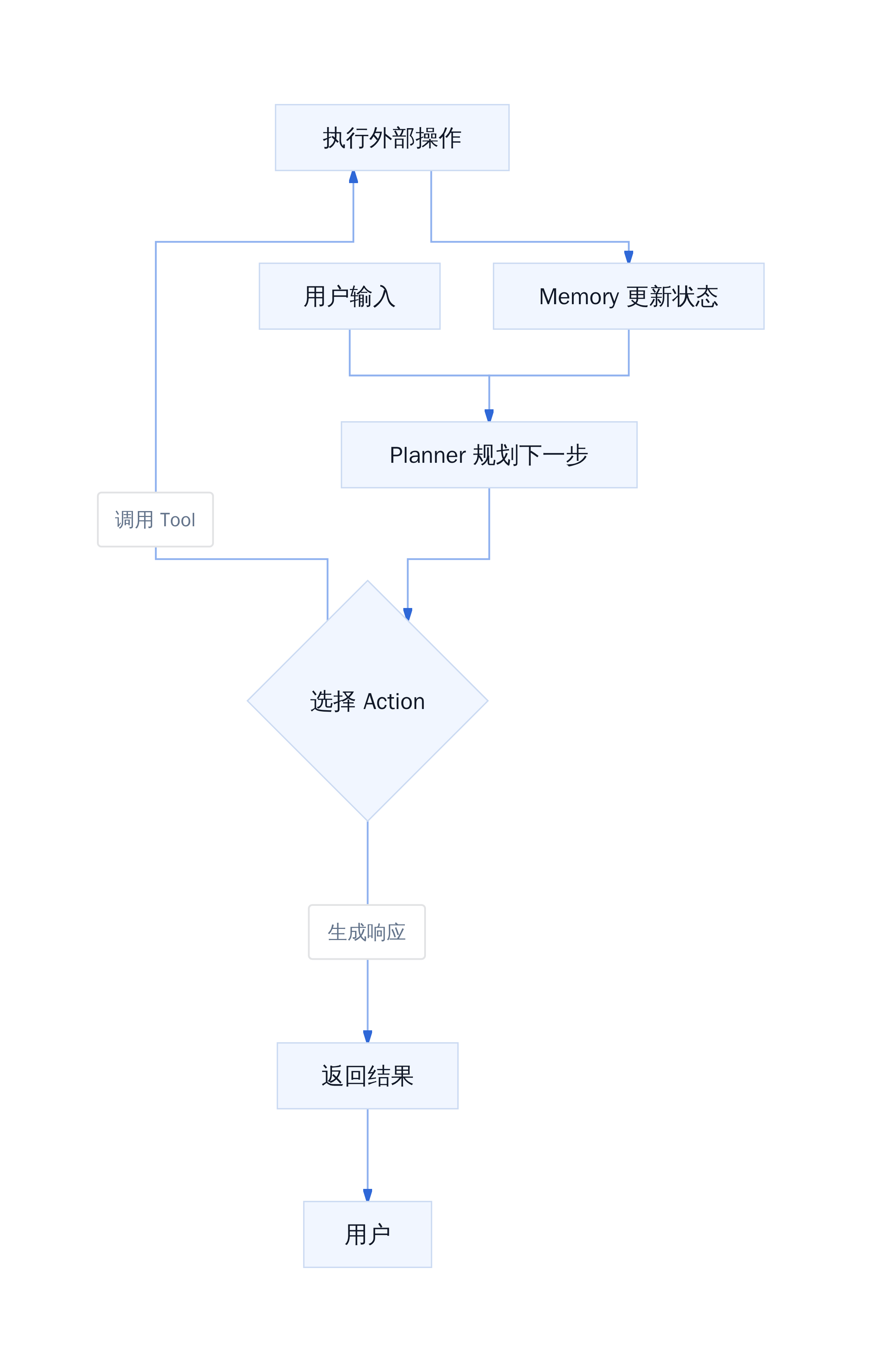
Agent 核心循环机制
这一循环的关键工程挑战在于 何时终止。没有终止条件的 Agent 会陷入无限循环------调用工具、再调用、再调用。成熟的 Agent 系统通常设置 max iterations、early stopping rules 或 budget constraints 来约束循环边界。
2.2 Memory and State Management
短视的 Agent 只能在单轮对话中工作。真正的工程价值来自 跨会话状态持久化。主流实现方式包括:
| 类型 | 适用场景 | 典型工具 |
|---|---|---|
| 短期记忆 | 当前会话上下文 | messages history |
| 长期记忆 | 跨会话知识积累 | vector store + retrieval |
| 程序化状态 | 结构化业务数据 | 数据库、KV store |
实战中常见误区是把向量数据库当万能药。RAG 能解决知识检索问题,但不解决业务状态问题------订单状态、用户偏好、会话阶段这些必须用结构化存储管理。
这一段,面试官开始看你工程感了
3. Technology Stack and Frameworks
2026 年的 Agent 开发栈已趋成熟,分层清晰:
模型层 :Claude 3.5、GPT-4o、Gemini 2.0 构成第一梯队,支持 function calling、structured output、extended context window。模型选择的核心判断依据不是 benchmark 分数,而是 function calling 能力 和 上下文窗口成本效益比。
框架层:主流选择包括 LangChain、AutoGen、CrewAI、LlamaIndex。框架选型标准:
- 是否支持你需要的 orchestrator 模式(sequential、hierarchical、collaborative)
- 与现有工程体系的集成成本
- 调试和可观测性工具是否完备
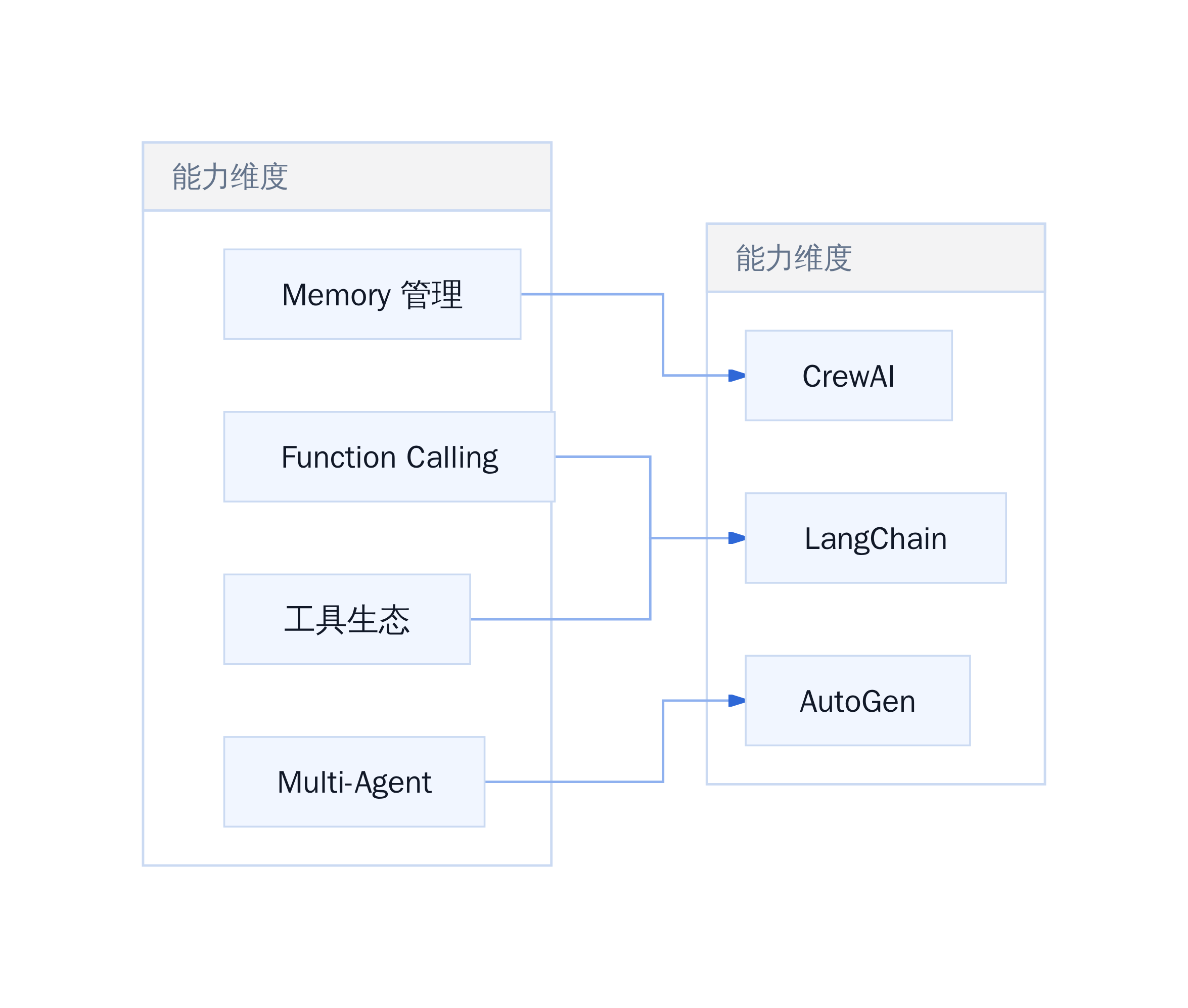
Agent 框架能力矩阵
部署层:Agent-as-a-Service 架构兴起。Agent 不再是独立应用,而是可被其他服务调用的 API 端点。这意味着你需要考虑并发控制、限流、熔断------传统后端工程的课题在 Agent 场景下重新变得重要。

背定义到这里就不够了
4. Engineering Practices
4.1 Testing Strategy for Agents
Agent 系统的测试策略必须重构。传统的单元测试假设确定性输出,但 Agent 输出具有概率性。推荐实践:
端到端测试(E2E Testing) 是 Agent 验证的核心方法。E2E testing 从用户视角验证完整工作流,确保 Agent 在真实场景下的行为符合预期
这一段,面试官开始看你工程感了
。E2E 测试模拟用户从开始到结束的完整路径,验证所有集成组件能否在真实环境中协同工作------这正是 Agent 系统最需要的验证方式
能复用到项目里,才算真正看懂
。
根据研究,E2E 测试的关键价值在于捕捉集成层面的问题:单元测试验证单个函数,整合测试验证模块间接口,而 E2E 测试验证端到端的用户体验路径。对于 Agent 系统,这意味着要测试完整的 perception→planning→execution→memory 循环,而不仅仅是拆解后的单个组件。
4.2 Observability and Debugging
Agent 执行的不透明性是工程化最大障碍。需要构建:
- Trace 日志:记录每轮 loop 的输入、tool calls、输出
- Decision audit:可回溯的决策链,解释为什么 Agent 选择了某个 action
- Cost tracking:token 消耗、API 调用次数、服务延迟
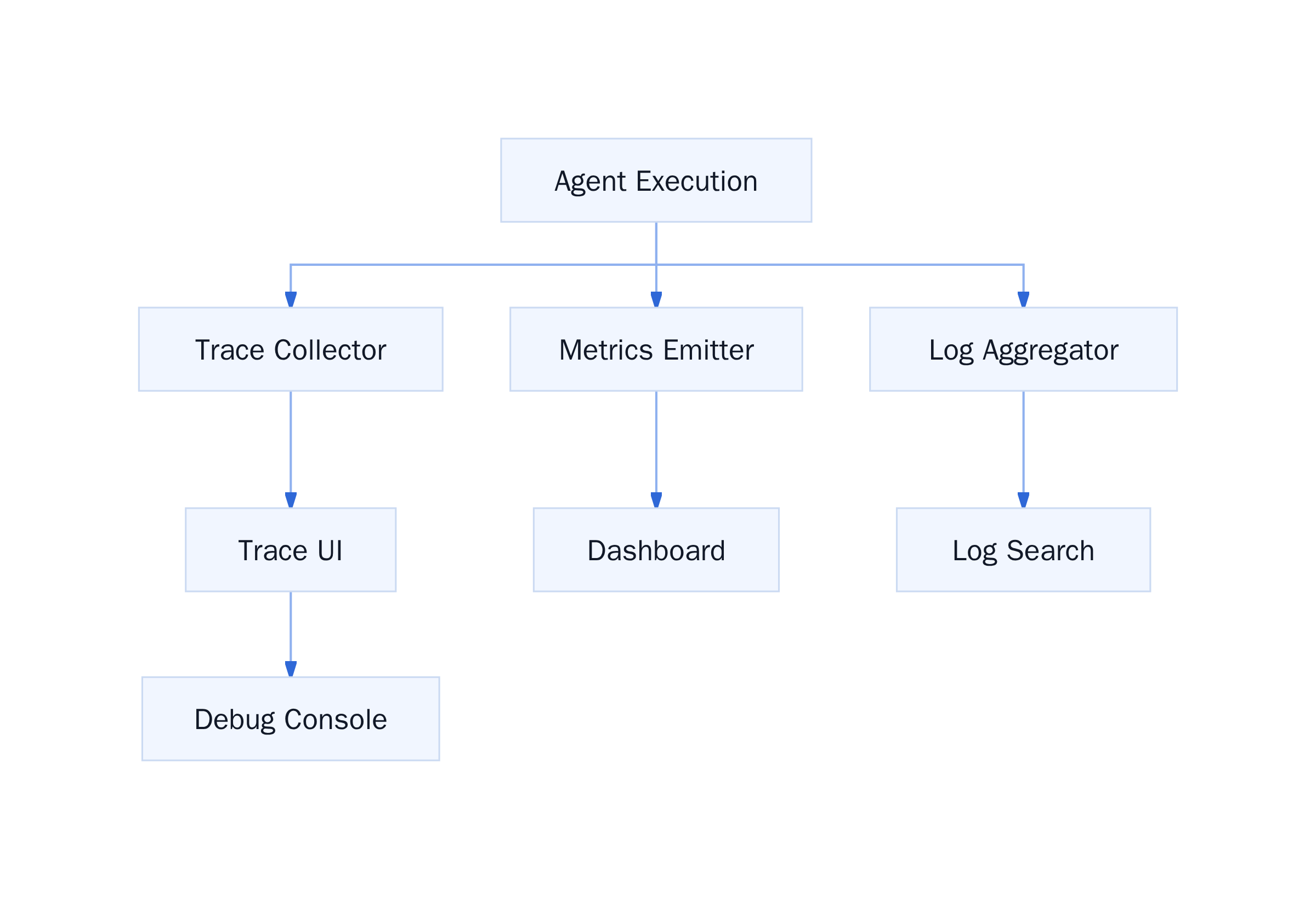
Agent 可观测性架构
4.3 Failure Modes and Boundaries
Agent 系统有几种典型失败模式:
| 失败类型 | 表现 | 应对策略 |
|---|---|---|
| 幻觉 | 自信地生成错误信息 | 引入工具校验、事实核查层 |
| 循环 | 反复调用同一组工具 | 设置 iteration budget、状态回退 |
| 越界 | 执行了未预期的 action | 权限沙箱、操作审批流 |
| 降级 | 模型 API 不可用 | fallback 模型、降级响应模板 |
识别这些边界是工程化的前提------你无法修复一个没有定义的失败。

这个追问就是分水岭
2. Key Trends
2.1 Multi-Agent Orchestration Patterns
单一Agent的能力有上限,真正的价值在于多个Agent如何协作。2026年的主流编排模式分为三种:
层级式编排(Hierarchical Orchestration):一个主控Agent负责任务分解和调度,子Agent各司其职。GitHub Copilot的多Agent实验性架构便采用此模式,主控层理解用户意图后路由至专门的处理节点。
去中心化协作(Decentralized Collaboration):多个对等Agent通过共享上下文和消息队列协作,典型场景是软件开发的自动化流水线------一个Agent负责代码生成,一个负责审查,一个负责测试用例生成,通过共享Memory实现信息同步。
流水线式处理(Pipeline Processing):数据流经一系列专用Agent,每个Agent只做一个特定转换。这种模式适合RAG场景:检索Agent → 理解Agent → 生成Agent → 验证Agent。
选择编排模式的核心依据是任务耦合度:高内聚任务用层级式,松耦合任务用去中心化,数据预处理用流水线。
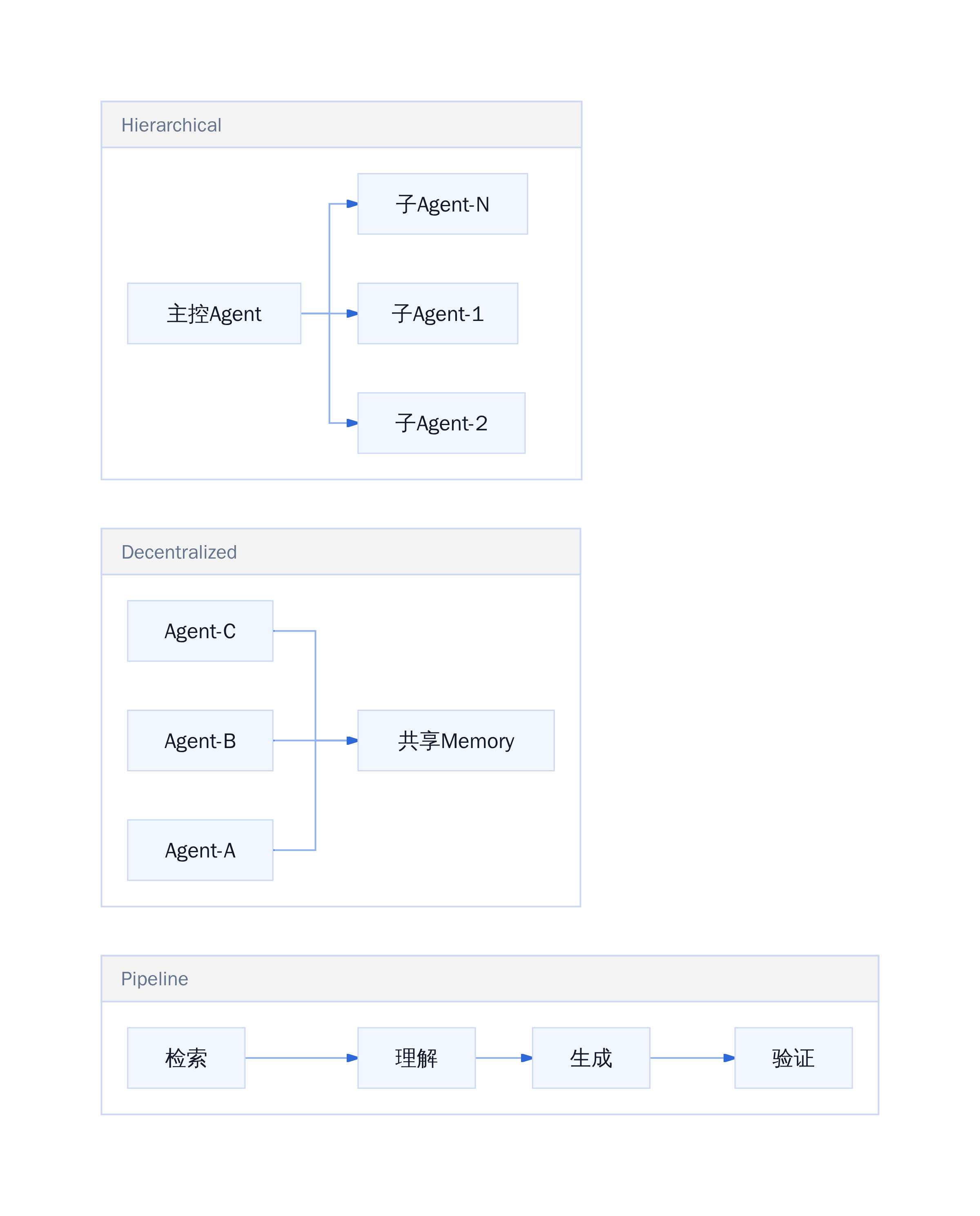
Multi-Agent 编排模式对比
2.2 Tool Use and Function Calling
Function Calling是Agent与外部世界交互的基础协议。2026年的实践重点不在于"能用",而在于工具选择的策略和边界控制。
工具注册与发现机制:成熟项目采用中心化工具注册表,每个工具附带元数据(输入schema、输出类型、适用场景标签)。Agent在规划阶段查询注册表而非硬编码工具列表,这使得工具热插拔成为可能。
工具调用失败的处理 :传统做法是重试三次后放弃。更合理的策略是降级路径(Fallback Path):当日历API超时,切换至邮件API;当图像生成失败,回退至文字描述。这需要工具设计时预留降级接口。
工具调用的可观测性:每次Tool Call应生成结构化日志,包含调用耗时、返回token数、参数摘要(脱敏后)。这为后续的Cost Analysis和性能优化提供数据基础。
真正可复用的Function Calling实现,必须考虑:错误分类、幂等性保证、超时熔断这三个维度。没有这些工程保障的Demo,在生产环境必然崩溃。
能落到项目里,答案才算站住
3. Practical Implications
3.1 End-to-End Testing for Agents
Testing AI agents presents challenges that conventional approaches struggle to address. Unlike deterministic software, agent systems exhibit probabilistic behaviors, interact with external tools and APIs, and maintain state across extended conversations. These characteristics demand a fundamentally different testing strategy.
End-to-end testing becomes essential for validating agent behavior in realistic scenarios. Rather than testing components in isolation, E2E testing simulates complete user workflows from start to finish. This approach reveals integration failures that unit and integration tests miss---such as authentication edge cases, rate limiting responses, and context window exhaustion under load
E2E测试验证完整工作流
.
The testing pyramid for agent systems differs from traditional applications. While unit tests verify individual tool functions and prompt templates, integration tests validate agent-tool interactions, and E2E tests confirm that the complete system delivers expected outcomes across diverse user scenarios. According to IBM's testing methodology, E2E testing validates whether all integrated components can run under real-world conditions by simulating user actions from beginning to end.
Key testing considerations for agent systems include:
- Behavioral consistency: Verifying that agents respond appropriately across variations in user input
- Tool reliability: Confirming that all external integrations function correctly under various conditions
- State management: Testing memory and context handling across extended interactions
- Error recovery: Validating graceful degradation when tools fail or return unexpected responses
Popular E2E testing frameworks for agent systems include Playwright for web-based interactions, and custom solutions built on protocol buffers for API-level testing. The choice depends on whether agents interact primarily through user interfaces or programmatic interfaces.
3.2 Deployment Patterns
Deploying AI agents in production environments requires careful consideration of scaling, latency, and reliability. Agents typically involve multiple components: the language model, tool definitions, memory systems, and orchestration logic. Each component has different scaling characteristics and failure modes.
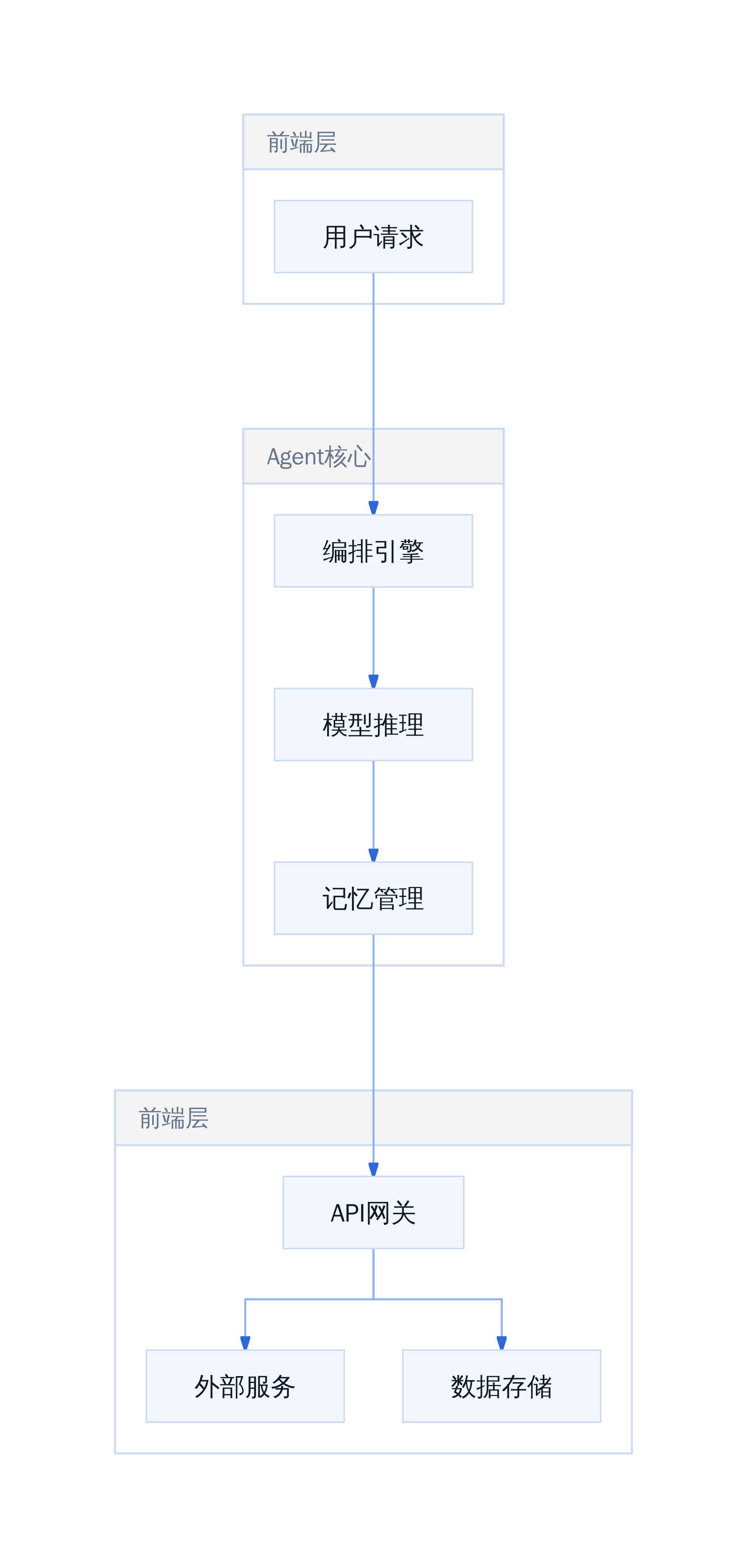
Agent生产部署架构
Stateless agent designs simplify deployment by externalizing all state to dedicated storage systems. This approach enables horizontal scaling but introduces latency from state retrieval and consistency challenges across distributed deployments. Stateful designs embed memory directly within the agent process, reducing latency but complicating scaling and failover. Hybrid approaches use caching layers to balance performance and scalability.
Critical deployment considerations include:
- Model serving infrastructure: GPU allocation, model batching, and inference optimization
- Tool API rate limits: Managing external service constraints and implementing retry logic
- Cost monitoring: Tracking token consumption and tool usage across agent executions
- Fallback strategies: Defining degraded service modes when components fail
3.3 Security and Compliance
Agent systems introduce unique security considerations beyond traditional software. The primary attack surface involves prompt injection---malicious inputs designed to manipulate agent behavior. Defenses include input validation, output filtering, and sandboxing of tool executions.
Data privacy requirements demand careful handling of context that may contain sensitive information. Techniques include selective context window usage, encryption of stored memories, and audit logging of all data access. According to Datadog's testing guide, E2E testing verifies the entire application by testing all components and integrations with other systems, services, data sources, and APIs---which directly applies to agent security validation.
Compliance considerations vary by domain but commonly include:
- Audit trails: Recording agent decisions and tool invocations for accountability
- Access controls: Limiting agent permissions to necessary tools and data
- Data residency: Ensuring data remains within required geographic boundaries
- Model transparency: Understanding and documenting agent decision-making logic
3.4 Cost Management
The computational cost of agent systems scales with conversation length, tool usage, and model complexity. Cost management strategies focus on optimizing each dimension
成本优化是生产落地的关键指标
.
Token optimization reduces context window usage through summarization, selective retention, and compression. Tool usage optimization minimizes expensive API calls through caching, batching, and fallback to simpler alternatives. Model selection balances capability against cost---smaller models handle routine tasks while larger models address complex reasoning. Routing mechanisms direct requests to appropriate model tiers based on query complexity.
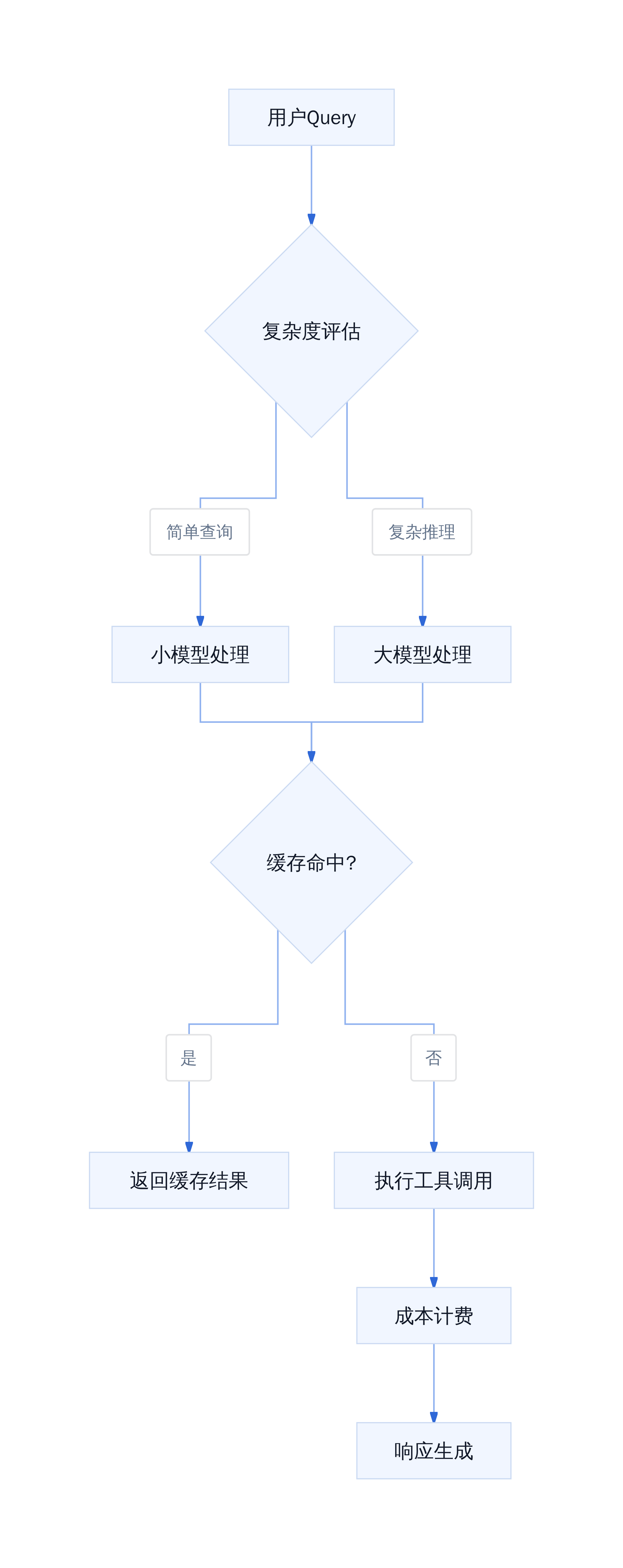
Agent成本优化路由
Monitoring dashboards track cost per conversation, tool usage frequency, and model distribution. Anomaly detection identifies unusual spending patterns that might indicate runaway loops or abuse. Organizations must establish budgeting frameworks that align agent usage with business value, implement governance policies that prevent cost overruns, and develop metrics that measure ROI rather than just consumption.
The practical implications extend beyond individual deployments. Teams that master E2E testing, deployment patterns, security hardening, and cost optimization position themselves to build agent systems that are not only technically capable but also production-ready and economically sustainable.
The shift goes beyond chatbots and copilots---autonomous agents now handle multi-step tasks, orchestrate complex workflows, and make decisions with minimal human intervention. This isn't a feature trend; it's a fundamental change in how software is conceived, built, and operated.
4.1 The Workflow-First Principle
回到本文开篇的核心追问:读了多少 RAG 架构、Function Calling 规范、多 Agent 编排论文,真的重要吗?答案是否定的。真正重要的是,这些技术如何在你的项目中落地为可执行的工作流。
回顾四个关键维度:
-
架构层面,Agent Loop 是最小执行单元,Memory 与 State Management 决定了 agent 的上下文感知能力,两者构成任何 agent 系统的底层基座。
-
编排层面,多 Agent 协作模式从简单路由演进为分层编排,工具调用从硬编码函数扩展为可插拔的能力生态,这意味着系统边界不再由代码决定,而由 agent 的任务拆解能力决定。
-
工程层面,E2E 测试、可观测性、成本控制构成 agent 系统的质量三角。没有可重复执行的端到端验证,agent 行为就是黑盒;没有可观测性基础设施,调试成本会指数级膨胀;没有成本感知,Token 消耗会在生产环境失控。
-
安全层面,Agent 的自主决策能力带来新的攻击面,输入验证、权限隔离、审计追踪必须从设计之初嵌入,而非事后补丁。
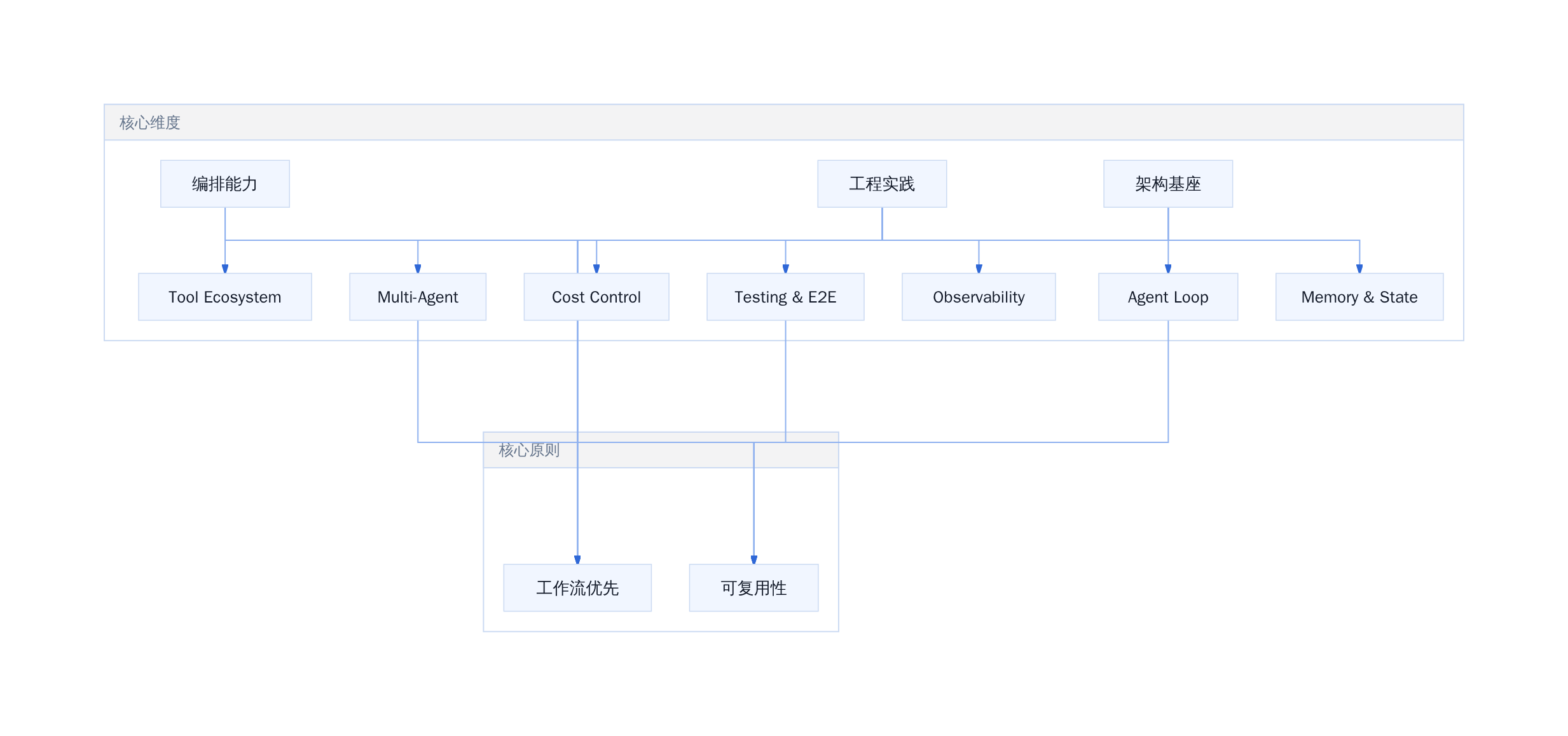
AI Agent 工程化核心要素
4.2 From Trend Awareness to Project Readiness
理解趋势是起点,将趋势转化为可执行的项目实践才是终点。本文的核心表达之一是:能复用到项目里,才算真正看懂。
这意味着工程团队需要完成三个跃迁:
从概念验证到生产就绪。Demo 级别的 agent 演示与生产环境运行之间存在巨大鸿沟。前者只需在受控环境中展示核心能力,后者必须处理网络抖动、服务降级、并发冲突、长期状态一致性等问题。
从单点突破到系统设计。当 agent 需要调用多个外部工具、与多个子系统交互时,架构设计决定系统的上限。清晰的 agent 边界、明确的状态流转、规范的错误恢复机制,是系统性工程能力的体现。
从手动运维到自动化运营。Agent 的可观测性不是调试工具,而是运营基础设施。日志、追踪、指标需要从 agent 的每个决策节点输出,形成完整的决策链路可视化,才能在生产环境中真正掌控 agent 行为。
4.3 Closing Thoughts
2026 年的 AI Agent 开发,本质上是将 LLM 的语言理解与生成能力,嵌入到软件工程的严谨实践中。这不是一次技术升级,而是一次工程范式的转变。
工作流变化才是真正的竞争壁垒。读懂这一层,才能在 agent 开发的浪潮中,不被表面的热点噪音干扰,专注于构建真正可落地、可持续、可复用的 agent 系统。

这里开始区分会用和会讲

这个坑,项目里迟早会遇到
讲到这一步,答案就有层次了
别急着背结论,先看工程约束
这一段,面试官开始看你工程感了

背定义到这里就不够了

这个追问就是分水岭
参考文献
- CircleCI - What is E2E? A guide to end-to-end testing: https://circleci.com/blog/what-is-end-to-end-testing
- Datadog - What is End-to-End (E2E) Testing?: https://www.datadoghq.com/knowledge-center/end-to-end-testing
- Harness - End-to-end testing should not be guesswork: https://www.harness.io/blog/end-to-end-testing-should-not-be-guesswork
- Microsoft - E2E Testing Engineering Fundamentals Playbook: https://microsoft.github.io/code-with-engineering-playbook/automated-testing/e2e-testing
- Leapwork - End-To-End Testing: 2026 Guide: https://leapwork.com/blog/end-to-end-testing
- Incredibuild - A Comprehensive Guide to E2E Testing: https://www.incredibuild.com/blog/a-comprehensive-guide-to-e2e-testing
- IBM - What is End-to-End Testing?: https://www.ibm.com/think/topics/end-to-end-testing
- DEV Community - The Ultimate Guide to End-to-End Testing: https://dev.to/michael_burry_00/the-ultimate-guide-to-end-to-end-testing-best-practices-tools-and-insights-2aa8
- Testim - End-To-End Testing: The One Guide To Rule Them All: https://www.testim.io/blog/end-to-end-testing-guide
- Bunnyshell - Best Practices for End-to-End Testing in 2026: https://www.bunnyshell.com/blog/best-practices-for-end-to-end-testing-in-2025