VSync(垂直同步)是 Android 渲染体系的核心时钟信号,决定了屏幕刷新节奏与渲染任务的调度时机。在 Android 12 中,时间戳输入完全依赖getPresentFence获取的 Present Fence 时间,而这一设计的底层逻辑恰是硬件显示的核心时序规律:一帧显示完成的时刻,就是下一帧 VSync 信号触发的时刻 。本文将从时序逻辑、代码链路、VSyncPredictor核心实现三个维度,完整解析这一机制。
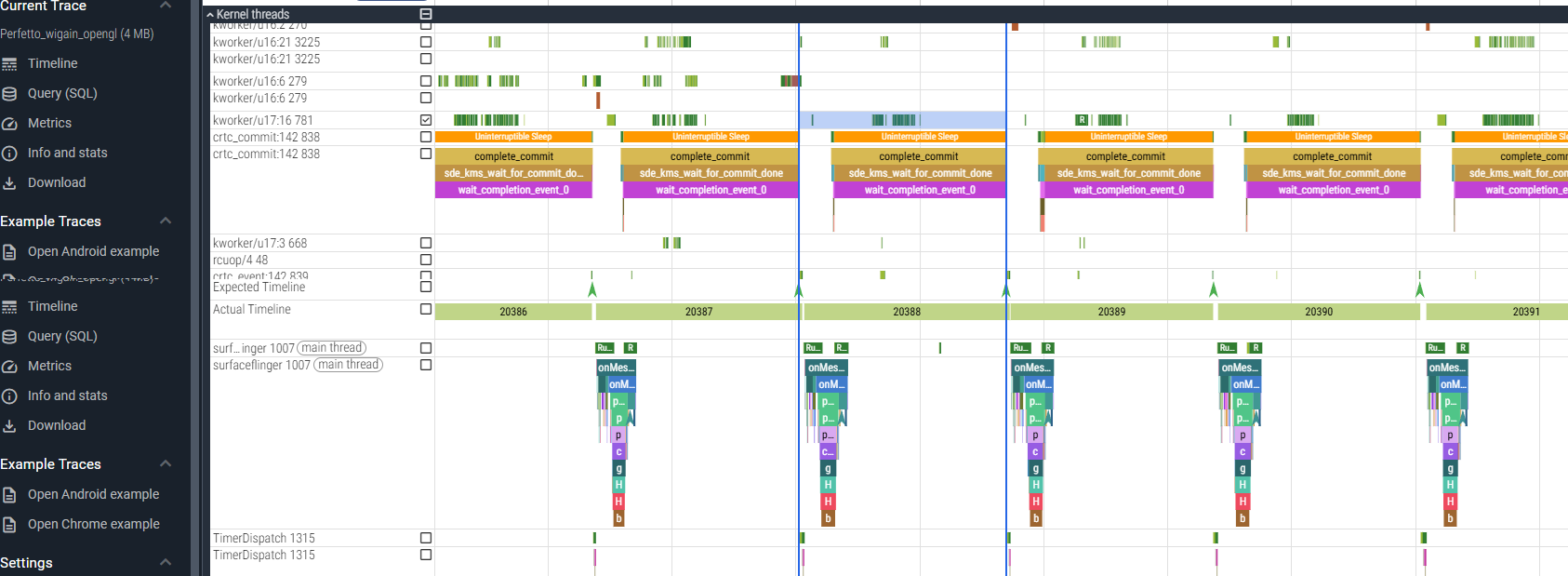
一、核心概念与时序基础
1. VSync:屏幕刷新的绝对时钟
VSync 是硬件层面周期性触发的中断信号(如 120Hz 屏幕每 8.33ms 触发一次),其触发时刻标志着新一帧屏幕刷新的开始。对 Android 渲染流水线而言,所有渲染任务(App 绘制、SF 合成)都需对齐 VSync 时序,才能保证帧准时显示、无撕裂。
2. Present Fence:帧显示完成的硬件信号
Present Fence 是 HWComposer(HWC)返回的硬件同步原语,代表 "某一帧数据被硬件扫描出到屏幕并完成显示" 的信号。其核心时序关联为:当一帧的 Present Fence 触发时,恰好是下一帧 VSync 信号开始的时刻------ 硬件完成当前帧显示后,立即触发下一帧的 VSync 中断,二者在时序上完全等价。
3. VSyncPredictor:VSync 时间的预测核心
VSyncPredictor的核心目标是基于历史 VSync 时间戳,通过线性回归拟合实际 VSync 周期,精准预测未来 VSync 的触发时间。
二、核心调用链路:Present Fence 到 VSyncPredictor
在 SF 的postComposition阶段,完成当前帧合成后,会通过getPresentFence获取上一帧的 Present Fence,并将其传入VSyncPredictor。完整链路如下,且每一步均贴合 "一帧显示完成 = 下一帧 VSync 开始" 的时序逻辑:
1. 核心代码链路
// SurfaceFlinger::postComposition() - 合成后收尾,获取上一帧Present Fence
mPreviousPresentFences[0].fence = getHwComposer().getPresentFence(display->getPhysicalId());
mPreviousPresentFences[0].fenceTime = std::make_shared<FenceTime>(mPreviousPresentFences[0].fence);
// 传递给Scheduler,最终转发至VSyncPredictor
mScheduler->addPresentFence(mPreviousPresentFences[0].fenceTime);

// Scheduler::addPresentFence() - 转发至VSyncReactor
bool VSyncReactor::addPresentFence(const std::shared_ptr<FenceTime>& fence) {
    nsecs_t const signalTime = fence->getCachedSignalTime(); // 提取Fence触发时间(上一帧显示完成=下一帧VSync开始)
    if (signalTime != Fence::SIGNAL_TIME_INVALID) {
        std::lock_guard lock(mMutex);
        // 将Present Fence时间传入VSyncPredictor
        timestampAccepted &= mTracker.addVsyncTimestamp(signalTime);
    }
    // ... 省略状态处理逻辑
}


//时间加入到VSyncPredictor的队列中
bool VSyncPredictor::addVsyncTimestamp(nsecs_t timestamp) {
    std::lock_guard lock(mMutex);

   //...
    if (mTimestamps.size() != kHistorySize) {
        mTimestamps.push_back(timestamp);
        mLastTimestampIndex = next(mLastTimestampIndex);
    } else {
        mLastTimestampIndex = next(mLastTimestampIndex);
        mTimestamps[mLastTimestampIndex] = timestamp;
    }
    //...
    return true;
}
2. 关键时序说明
getPresentFence返回的是上一帧 的 Present Fence:当 SF 处理当前帧 N 时,硬件刚完成上一帧 N-1 的显示(触发 Present Fence),同时触发帧 N 的 VSync 信号。因此,该 Fence 的触发时间戳,就是帧 N 的 VSync 开始时间 ------ 这一时间戳被直接传入VSyncPredictor,成为预测未来 VSync 的核心样本。
三、VSyncPredictor 核心代码深度分析
VSyncPredictor的核心逻辑分为三部分:时间戳验证、线性回归模型训练、未来 VSync 时间预测,所有逻辑均围绕 Present Fence 传入的时间戳展开。
1. 核心成员与模型定义
// 预测模型:slope=实际VSync周期,intercept=线性回归截距
struct Model {
    nsecs_t slope;    // 拟合后的实际VSync周期(如8330000ns,而非理想8333333ns)
    nsecs_t intercept;// 截距,修正时间戳与序数的偏差
};

// 核心成员
std::vector<nsecs_t> mTimestamps; // 环形缓冲区,存储历史Present Fence时间戳(VSync时间)
size_t mLastTimestampIndex;       // 环形缓冲区最后一个时间戳索引
std::map<nsecs_t, Model> mRateMap;// 理想周期→预测模型映射
std::mutex mMutex;                // 线程安全锁
size_t kMinimumSamplesForPrediction; // 最小预测样本数(需足够样本才启动线性回归)
uint32_t kOutlierTolerancePercent;   // 异常时间戳容忍百分比
2. 时间戳验证:过滤无效样本(validate)
addVsyncTimestamp首先调用validate过滤异常时间戳,确保输入的 Present Fence 时间戳有效:
bool VSyncPredictor::validate(nsecs_t timestamp) const {
    if (mLastTimestampIndex < 0 || mTimestamps.empty()) return true;

    // 1. 异常值检查:与历史时间戳的偏差超出容忍百分比则判定为异常
    auto const aValidTimestamp = mTimestamps[mLastTimestampIndex];
    auto const percent = (timestamp - aValidTimestamp) % mIdealPeriod * kMaxPercent / mIdealPeriod;
    if (percent >= kOutlierTolerancePercent &&
        percent <= (kMaxPercent - kOutlierTolerancePercent)) {
        return false;
    }

    // 2. 重复值检查:与历史最近时间戳距离过近则判定为重复
    const auto iter = std::min_element(mTimestamps.begin(), mTimestamps.end(),
                                       [timestamp](nsecs_t a, nsecs_t b) {
                                           return std::abs(timestamp - a) < std::abs(timestamp - b);
                                       });
    const auto distancePercent = std::abs(*iter - timestamp) * kMaxPercent / mIdealPeriod;
    if (distancePercent < kOutlierTolerancePercent) {
        return false; // 重复时间戳,拒绝接收
    }
    return true;
}作用:过滤硬件波动或系统延迟导致的异常 Present Fence 时间戳,避免污染预测模型。
3. 模型训练:线性回归拟合实际 VSync 周期(addVsyncTimestamp)
当时间戳验证通过后,VSyncPredictor将其存入环形缓冲区,并在样本数达标后启动线性回归,拟合实际 VSync 周期:
bool VSyncPredictor::addVsyncTimestamp(nsecs_t timestamp) {
    std::lock_guard lock(mMutex);
    if (!validate(timestamp)) { // 无效时间戳处理
        if (mTimestamps.size() < kMinimumSamplesForPrediction) {
            mTimestamps.push_back(timestamp);
            clearTimestamps(); // 样本不足时重置
        }
        return false;
    }

    // 1. 写入环形缓冲区
    if (mTimestamps.size() != kHistorySize) {
        mTimestamps.push_back(timestamp);
        mLastTimestampIndex = next(mLastTimestampIndex);
    } else {
        mLastTimestampIndex = next(mLastTimestampIndex);
        mTimestamps[mLastTimestampIndex] = timestamp;
    }

    // 2. 样本数不足时,沿用理想周期
    if (mTimestamps.size() < kMinimumSamplesForPrediction) {
        mRateMap[mIdealPeriod] = {mIdealPeriod, 0};
        return true;
    }

    // 3. 线性回归计算实际周期(slope)与截距(intercept)
    std::vector<nsecs_t> vsyncTS(mTimestamps.size());
    std::vector<nsecs_t> ordinals(mTimestamps.size());
    auto const oldest_ts = *std::min_element(mTimestamps.begin(), mTimestamps.end());
    auto const currentPeriod = mRateMap[mIdealPeriod].slope;
    static constexpr int64_t kScalingFactor = 1000; // 提升整数计算精度

    // 归一化时间戳与序数
    for (auto i = 0u; i < mTimestamps.size(); i++) {
        vsyncTS[i] = mTimestamps[i] - oldest_ts;
        ordinals[i] = ((vsyncTS[i] + (currentPeriod / 2)) / currentPeriod) * kScalingFactor;
    }

    // 计算均值与偏差
    auto meanTS = scheduler::calculate_mean(vsyncTS);
    auto meanOrdinal = scheduler::calculate_mean(ordinals);
    for (size_t i = 0; i < vsyncTS.size(); i++) {
        vsyncTS[i] -= meanTS;
        ordinals[i] -= meanOrdinal;
    }

    // 线性回归核心公式:slope = Σ((X-meanX)*(Y-meanY)) / Σ((X-meanX)²)
    auto top = 0ll, bottom = 0ll;
    for (size_t i = 0; i < vsyncTS.size(); i++) {
        top += vsyncTS[i] * ordinals[i];
        bottom += ordinals[i] * ordinals[i];
    }
    if (bottom == 0) { // 计算异常,重置模型
        mRateMap[mIdealPeriod] = {mIdealPeriod, 0};
        clearTimestamps();
        return false;
    }

    // 计算最终的周期与截距
    nsecs_t const anticipatedPeriod = top * kScalingFactor / bottom;
    nsecs_t const intercept = meanTS - (anticipatedPeriod * meanOrdinal / kScalingFactor);

    // 异常周期检查:超出容忍度则重置
    auto const percent = std::abs(anticipatedPeriod - mIdealPeriod) * kMaxPercent / mIdealPeriod;
    if (percent >= kOutlierTolerancePercent) {
        mRateMap[mIdealPeriod] = {mIdealPeriod, 0};
        clearTimestamps();
        return false;
    }

    // 更新模型:Present Fence时间戳最终转化为预测模型的slope和intercept
    mRateMap[mIdealPeriod] = {anticipatedPeriod, intercept};
    return true;
}核心逻辑:以 Present Fence 时间戳(VSync 时间)为样本,通过线性回归拟合出硬件实际的 VSync 周期(slope),而非依赖理想周期 ------ 这保证了预测结果贴合硬件实际行为。
4. 未来 VSync 时间预测(nextAnticipatedVSyncTimeFromLocked)
基于训练好的模型,VSyncPredictor可精准预测任意时间点之后的下一个 VSync 时间:
nsecs_t VSyncPredictor::nextAnticipatedVSyncTimeFromLocked(nsecs_t timePoint) const {
    auto const [slope, intercept] = getVSyncPredictionModelLocked();

    // 样本不足时,基于已知时间戳+理想周期预测
    if (mTimestamps.empty()) {
        auto const knownTimestamp = mKnownTimestamp ? *mKnownTimestamp : timePoint;
        auto const numPeriodsOut = ((timePoint - knownTimestamp) / mIdealPeriod) + 1;
        return knownTimestamp + numPeriodsOut * mIdealPeriod;
    }

    // 样本充足时,基于线性回归模型预测
    auto const oldest = *std::min_element(mTimestamps.begin(), mTimestamps.end());
    auto const zeroPoint = oldest + intercept; // 修正截距后的基准点
    auto const ordinalRequest = (timePoint - zeroPoint + slope) / slope; // 计算目标序数
    auto const prediction = (ordinalRequest * slope) + intercept + oldest; // 预测VSync时间

    // 断言:预测时间必须晚于请求时间(防止模型计算错误)
    LOG_ALWAYS_FATAL_IF(prediction < timePoint, "VSyncPredictor: model miscalculation");
    return prediction;
}关键公式解析:
zeroPoint = oldest + intercept:将归一化的时间戳还原为真实时间基准;ordinalRequest:计算 "请求时间点之后的第一个 VSync 序数";prediction:通过 "序数 × 实际周期 + 截距 + 基准时间",得到最终预测的 VSync 时间。
这一逻辑的核心,是将 Present Fence 输入的历史 VSync 时间戳,转化为可预测未来的数学模型,且所有计算均基于 "一帧显示完成 = 下一帧 VSync 开始" 的时序基础。
四、设计目标与核心价值
Android 12 将VSyncPredictor的输入绑定到 Present Fence,且围绕 "一帧显示完成 = 下一帧 VSync 开始" 的时序设计,核心价值体现在三点:
- 精准贴合硬件实际:Present Fence 是硬件实际显示完成的信号,以此为输入的预测模型,能精准反映用户实际看到的屏幕刷新节奏,而非理论上的 VSync 中断;
- 鲁棒性提升 :通过
validate过滤异常时间戳,线性回归拟合实际周期,避免理想周期与硬件实际周期的偏差导致预测错误; - 低延迟调度:精准的 VSync 预测让 SF 能提前调度渲染任务,保证 App 绘制、SF 合成在 VSync 触发前完成,减少帧延迟。
五、总结
Android 12 的VSyncPredictor实现了 "从理论周期到实际硬件时序" 的核心转变:以getPresentFence获取的 Present Fence 时间戳为输入(对应 "一帧显示完成 = 下一帧 VSync 开始" 的硬件时序),通过线性回归拟合实际 VSync 周期,最终精准预测未来 VSync 时间。这一设计既保证了预测模型的硬件贴合度,又通过严格的时间戳验证和数学拟合,实现了低延迟、高稳定的 VSync 预测 ------ 而这正是 Android 渲染体系追求 "精准调度、无感知延迟" 的核心基石。