大多数 Python 库都会有官方文档,里面包含了函数的详细说明、用法示例以及版本兼容性信息。
通常查询方式包含以下3种:
-
GitHub 仓库:https://github.com/SauceCat/PDPbox
-
PyPI 页面:https://pypi.org/project/PDPbox/
-
官方文档:https://pdpbox.readthedocs.io/en/latest/
import pandas as pd
from sklearn.datasets import load_iris
from sklearn.model_selection import train_test_split
from sklearn.ensemble import RandomForestClassifier加载鸢尾花数据集
iris = load_iris()
df = pd.DataFrame(iris.data, columns=iris.feature_names)
df['target'] = iris.target # 添加目标列(0-2类:山鸢尾、杂色鸢尾、维吉尼亚鸢尾)特征与目标变量
features = iris.feature_names # 4个特征:花萼长度、花萼宽度、花瓣长度、花瓣宽度
target = 'target' # 目标列名划分训练集与测试集
X_train, X_test, y_train, y_test = train_test_split(
df[features], df[target], test_size=0.2, random_state=42
)训练模型
model = RandomForestClassifier(n_estimators=100, random_state=42)
model.fit(X_train, y_train)
此时模型已经建模完毕,这是一个经典的三分类项目,之前在基础班的项目三提到过sklearn提供的示例数据集,不了解的同学自行百度了解下该数据。
现在我们开始对这个模型进行解释性分析
先进入官方文档 https://pdpbox.readthedocs.io/en/latest/
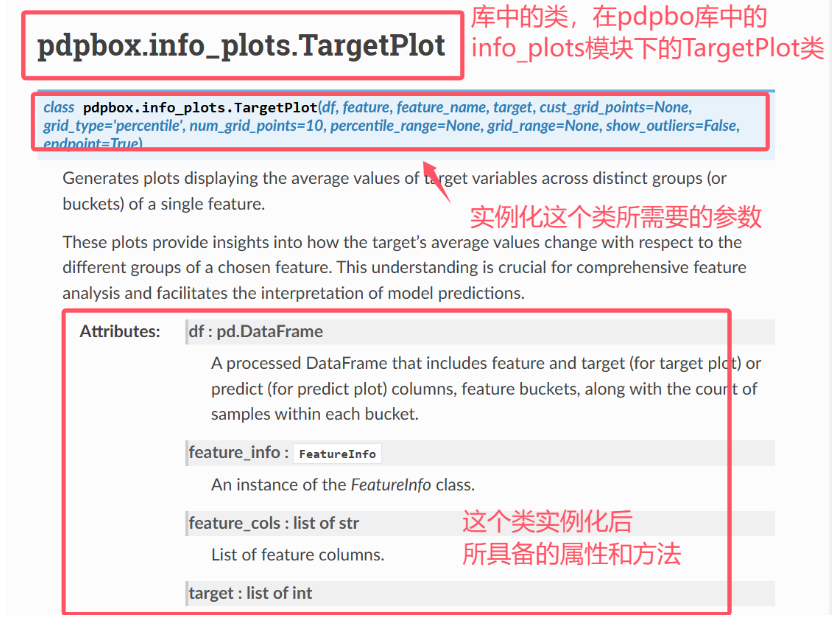
现在我们第一步是实例化这个类,TargetPlot类
-
先导入这个类(三种不同的导入和引用方法)
-
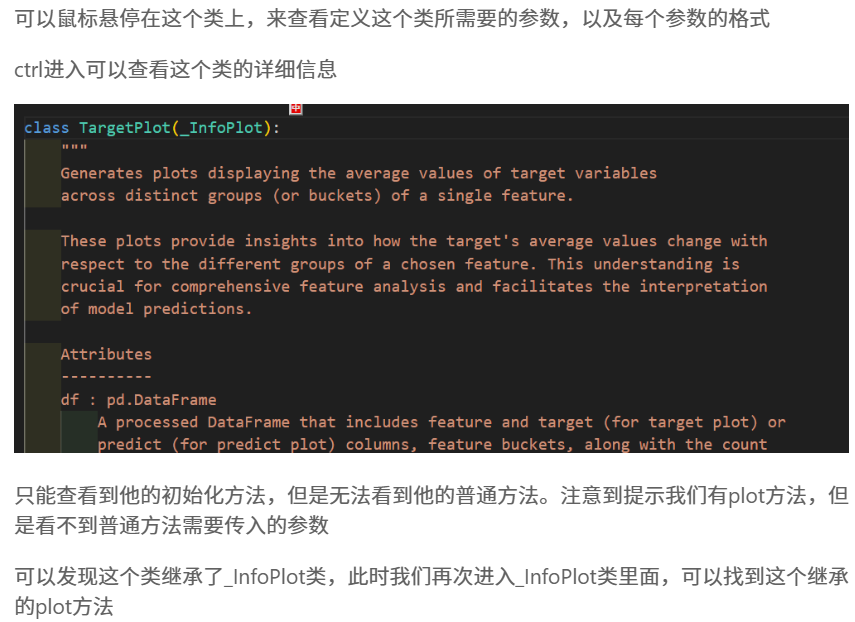
传入实例化参数
python
# 选择待分析的特征(如:petal length (cm))
feature = 'petal length (cm)'
feature_name = feature  # 特征显示名称

# 选择待分析的特征(如:petal length (cm))
feature = 'petal length (cm)'
feature_name = feature  # 特征显示名称

# 初始化TargetPlot对象(移除plot_type参数)
target_plot = TargetPlot(
    df=df,  # 原始数据(需包含特征和目标列)
    feature=feature,  # 目标特征列
    feature_name=feature_name,  # 特征名称(用于绘图标签)
    # target='target',  # 多分类目标索引(鸢尾花3个类别)
    target='target',  # 多分类目标索引(鸢尾花3个类别)
    grid_type='percentile',  # 分桶方式:百分位
    num_grid_points=10  # 划分为10个桶
)

# 调用plot方法绘制图形
target_plot.plot()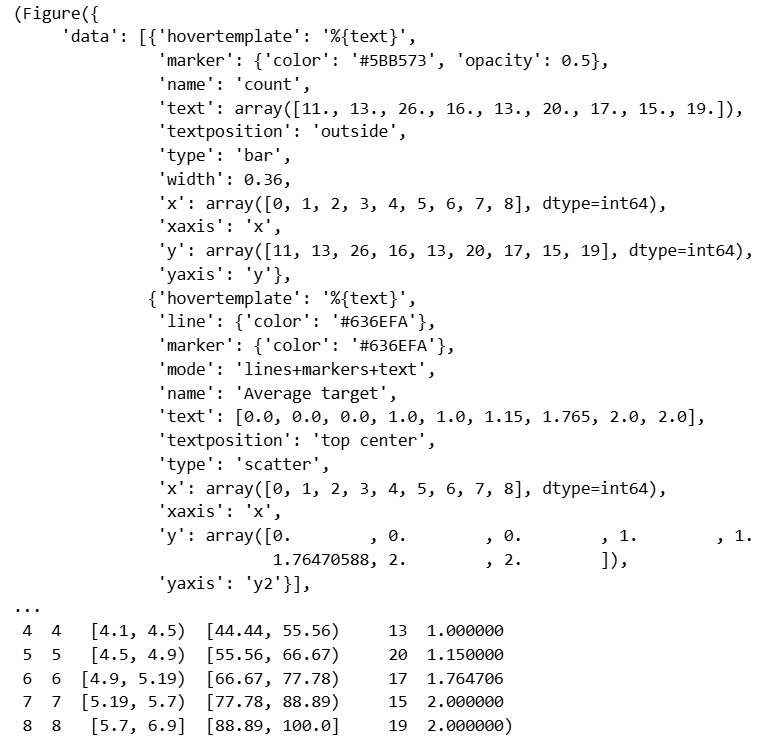
python
fig, axes, summary_df = target_plot.plot(
    which_classes=None,  # 绘制所有类别(0,1,2)
    show_percentile=True,  # 显示百分位线
    engine='plotly',
    template='plotly_white'
)

# 手动设置图表尺寸(单位:像素)
fig.update_layout(
    width=800,  # 宽度800像素
    height=500,  # 高度500像素
    title=dict(text=f'Target Plot: {feature_name}', x=0.5)  # 居中标题
)

fig.show()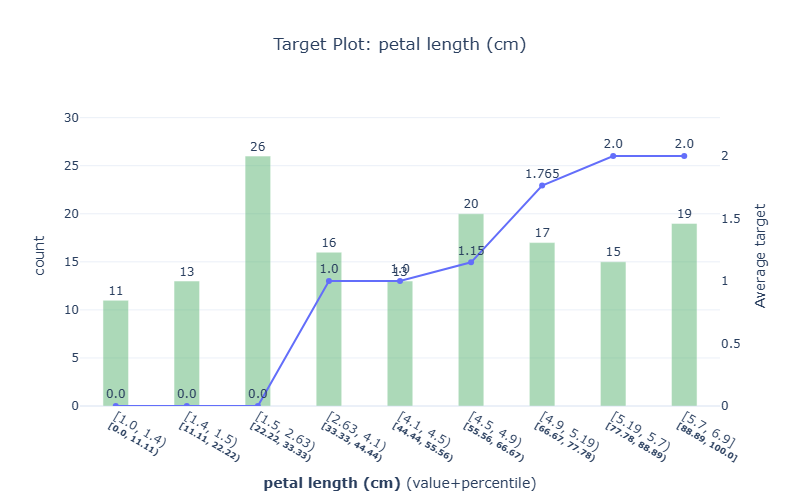
其中,fig.update_layout() 是对 Plotly 图表进行 二次修改 的核心方法。很多绘图工具都是调用的底层的绘图包,所以要想绘制出想要的图表,需要先了解底层绘图包的语法。