注:该文用于个人学习记录和知识交流,如有不足,欢迎指点。
连接池有很多种,这里介绍的是数据库连接池
一、连接池是什么?
- 维持管理一定数量连接的池式结构
- 维持:不断开连接
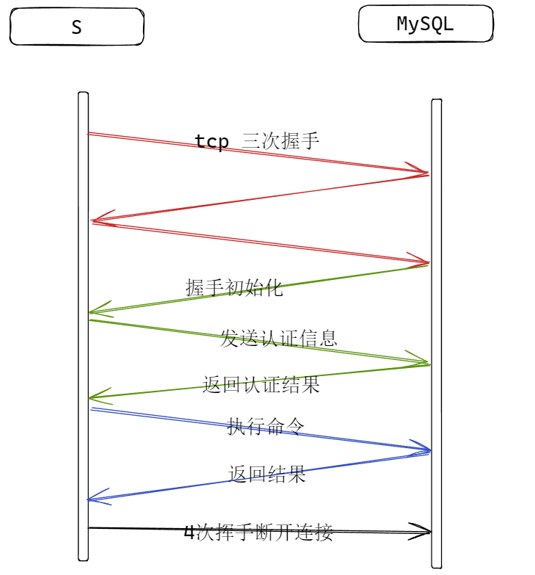
- 管理:定时发送PING包给Mysql,防止Mysql断开连接
连接的生命周期:
二、连接池解决了什么问题?
- 复用资源,提升并发处理sql的能力
- 多个连接在Mysql中对应多个连接处理线程:意思就是说,多个连接同时发送请求,mysql也能处理得过来 -> 提升了服务器处理sql的能力。
三、连接池的实现
同步连接池:
res = db->Query(SQLStr)
应用场景:服务器初始化时(从数据库获取必要的数据)。
- 会阻塞发起请求的线程:
- 一个连接对应一把锁。
- 发起请求时尝试获取锁,利用当前连接访问mysql,完毕后释放锁
异步连接池:
db->AsynQuery(SQLStr, callback) 通过callback回调函数接收数据库的返回值
应用场景:服务器的业务处理
- 不会阻塞发起请求的线程
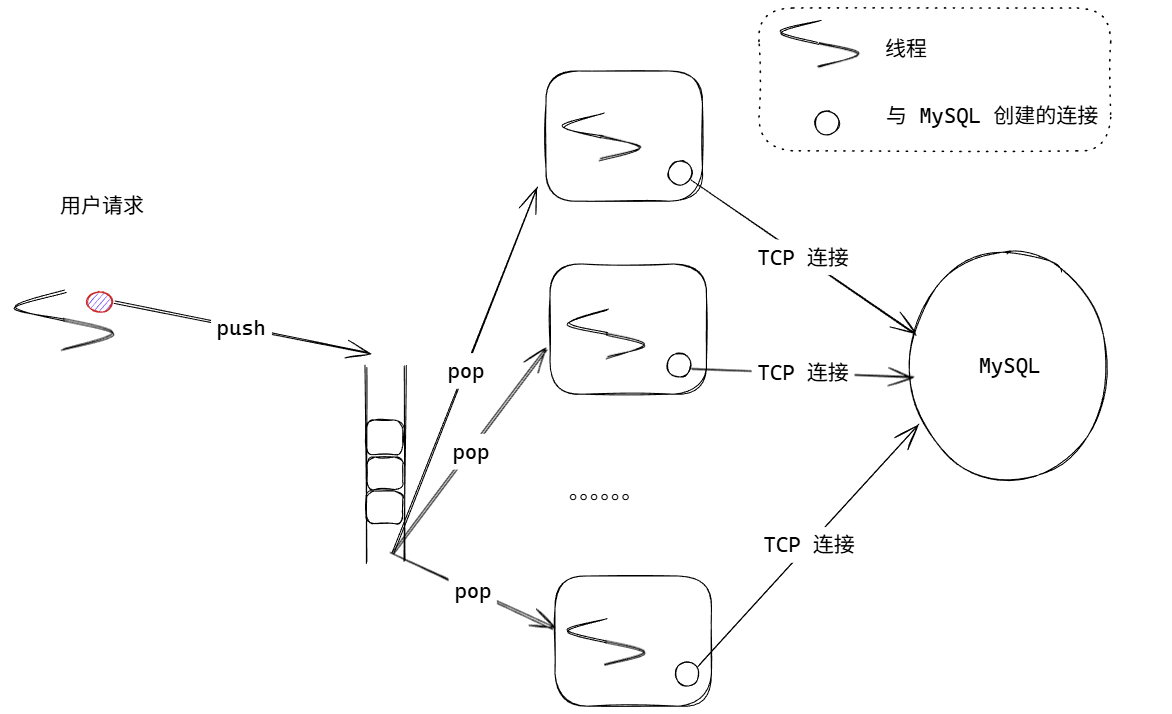
- 将请求插入消息队列
- n个连接对应n个线程 ( io密集型: 一般创建 2 * cpu 核心数的连接)
- n个线程从消息队列里面提取请求执行
四、Mysql c/c++ 的驱动(接口库)
驱动实现的内容:连接、发送、接收(基于mysql协议)
- libmysqlclient 纯 c 实现
- libmysqlcppconn c++ 实现(注意:内部使用了异常机制)
安装:sudo apt-get install libmysqlcppconn-dev- 阻塞 io
五、异步连接池的代码实现
知识点:
- 调用回调函数的时机:
future、promise实现
- 工作线程跟连接循环包含的解决:
头文件中:类定义内部含有别的类的时候不要用头文件,而是用声明
- 移动构造的使用
各种类的实现:
1. 连接池:MySQLConnPool
- 单例(相同数据库名)
- 连接数组
- 任务队列
cpp
#pragma once
#include <vector>
#include <memory>
#include <functional>
#include <cppconn/resultset.h>

#include <unordered_map>

#include "QueryCallback.h"

namespace sql {
    class ResultSet;
}

class MySQLConn;
template <typename T>
class BlockingQueue;


class SQLOperation;

class MySQLConnPool {
public:
    static MySQLConnPool *GetInstance(const std::string &db);

    void InitPool(const std::string &url, int pool_size);
    QueryCallback Query(const std::string &sql, std::function<void(std::unique_ptr<sql::ResultSet>)> &&cb);

private:
    MySQLConnPool(const std::string &db) : database_(db) {}
    ~MySQLConnPool();

    std::string database_;
    std::vector<MySQLConn *> pool_;
    static std::unordered_map<std::string, MySQLConnPool *> instances_; // 静态变量:确保所有对象都共用一个instances_
    BlockingQueue<SQLOperation *> *task_queue_;
};
cpp
#include "MySQLConnPool.h"
#include "MySQLConn.h"
#include "SQLOperation.h"
#include "QueryCallback.h"
#include <cppconn/resultset.h>
#include "BlockingQueue.h"

std::unordered_map<std::string, MySQLConnPool *> MySQLConnPool::instances_;

MySQLConnPool *MySQLConnPool::GetInstance(const std::string &db) {
    if (instances_.find(db) == instances_.end()) {
        instances_[db] = new MySQLConnPool(db);
    }
    return instances_[db];
}

void MySQLConnPool::InitPool(const std::string &url, int pool_size) {
    task_queue_ = new BlockingQueue<SQLOperation *>();
    for (int i = 0; i < pool_size; ++i) {
        MySQLConn *conn = new MySQLConn(url, database_, *task_queue_);
        conn->Open();
        pool_.push_back(conn);
    }
}

MySQLConnPool::~MySQLConnPool() {
    if (task_queue_)
        task_queue_->Cancel();
    for (auto conn : pool_) {
        delete conn;
    }
    if (task_queue_) {
        delete task_queue_;
        task_queue_ = nullptr;
    }
    pool_.clear();
}

QueryCallback MySQLConnPool::Query(const std::string &sql, std::function<void(std::unique_ptr<sql::ResultSet>)> &&cb) {
    SQLOperation *op = new SQLOperation(sql);
    auto future = op->GetFuture();
    task_queue_->Push(op);
    return QueryCallback(std::move(future), std::move(cb));
}
2. 连接项:MySQLConn
- 工作线程
- 连接的信息
cpp
#pragma once

#include "SQLOperation.h"
#include <string>

namespace sql
{
    class Driver;
    class Connection;
    class SQLException;
    class ResultSet;
}

class MySQLWorker;

template <typename T>
class BlockingQueue;

class SQLOperation;

struct MySQLConnInfo {
    explicit MySQLConnInfo(const std::string &info, const std::string &db);
    std::string user;
    std::string password;
    std::string database;
    std::string url;
};

class MySQLConn {
public:
    MySQLConn(const std::string &info, const std::string &db, BlockingQueue<SQLOperation *> &task_queue);
    ~MySQLConn();

    int Open();
    void Close();

    sql::ResultSet* Query(const std::string &sql);


private:
    void HandlerException(sql::SQLException &e);
    sql::Driver *driver_;
    sql::Connection *conn_;
    MySQLWorker *worker_;
    MySQLConnInfo info_;
};
cpp
#include "MySQLConn.h"
#include "QueryCallback.h"
#include "MySQLWorker.h"
#include "BlockingQueue.h"

#include <cppconn/driver.h>
#include <cppconn/connection.h>
#include <cppconn/exception.h>
#include <cppconn/statement.h>
#include <cppconn/resultset.h>

#include <vector>
#include <string>

// "tcp://127.0.0.1:3306;root;123456"
static std::vector<std::string_view>
Tokenize(std::string_view str, char sep, bool keepEmpty)
{
    std::vector<std::string_view> tokens;

    size_t start = 0;
    for (size_t end = str.find(sep); end != std::string_view::npos; end = str.find(sep, start))
    {
        if (keepEmpty || (start < end))
            tokens.push_back(str.substr(start, end - start));
        start = end + 1;
    }

    if (keepEmpty || (start < str.length()))
        tokens.push_back(str.substr(start));

    return tokens;
}

MySQLConnInfo::MySQLConnInfo(const std::string &info, const std::string &db)
{
    auto tokens = Tokenize(info, ';', false);
    if (tokens.size() != 3)
        return;

    url.assign(tokens[0]);
    user.assign(tokens[1]);
    password.assign(tokens[2]);
    database.assign(db);
}

MySQLConn::MySQLConn(const std::string &info, const std::string &db, BlockingQueue<SQLOperation *> &task_queue)
  : info_(info, db)
{
    worker_ = new MySQLWorker(this, task_queue);
    worker_->Start();
}

MySQLConn::~MySQLConn()
{
    if (worker_) {
        worker_->Stop();
        delete worker_;
        worker_ = nullptr;
    }

    if (conn_) {
        delete conn_;
    }
}

int MySQLConn::Open()
{
    int err = 0;
    try {
        driver_ = get_driver_instance();
        conn_ = driver_->connect(info_.url, info_.user, info_.password);
        if (!conn_) {
            return -1;
        }

        conn_->setSchema(info_.database);
    } catch (sql::SQLException &e) {
        HandlerException(e);
        err = e.getErrorCode();
    }
    return err;
}

void MySQLConn::Close()
{
    if (conn_) {
        conn_->close();
        delete conn_;
        conn_ = nullptr;
    }
}

sql::ResultSet* MySQLConn::Query(const std::string &sql)
{
    try {
        sql::Statement *stmt = conn_->createStatement();
        return stmt->executeQuery(sql);
    } catch (sql::SQLException &e) {
        HandlerException(e);
    }
    return nullptr;
}

void MySQLConn::HandlerException(sql::SQLException &e)
{
    if (e.getErrorCode() != 0)
    {
        std::cerr << "# ERR: SQLException in " << __FILE__;
        std::cerr << "(" << __FUNCTION__ << ") on line " << __LINE__ << std::endl;
        std::cerr << "# ERR: " << e.what();
        std::cerr << " (MySQL error code: " << e.getErrorCode();
        std::cerr << ", SQLState: " << e.getSQLState() << " )" << std::endl;
    }
}
3. 工作线程:MySQLWorker
- 连接项
- 任务队列
cpp
#pragma once


#include <thread>


class MySQLConn;

template <typename T>
class BlockingQueue;

class SQLOperation;

class MySQLWorker {
public:
    MySQLWorker(MySQLConn *conn, BlockingQueue<SQLOperation *> &task_queue);
    ~MySQLWorker();

    void Start();
    void Stop();

private:
    void Worker();

    MySQLConn *conn_;
    std::thread worker_;
    BlockingQueue<SQLOperation *> &task_queue_;
};
cpp
#include "MySQLWorker.h"

#include "BlockingQueue.h"
#include "SQLOperation.h"
#include "MySQLConn.h"

MySQLWorker::MySQLWorker(MySQLConn *conn, BlockingQueue<SQLOperation *> &task_queue)
    : conn_(conn), task_queue_(task_queue)
{
}

MySQLWorker::~MySQLWorker()
{
    Stop();
}

void MySQLWorker::Start()
{
    worker_ = std::thread(&MySQLWorker::Worker, this);
}

void MySQLWorker::Stop()
{
    if (worker_.joinable()) {
        worker_.join();
    }
}

void MySQLWorker::Worker() {
    while (true) {
        SQLOperation *op = nullptr;
        if (!task_queue_.Pop(op)) {
            break;
        }
        op->Execute(conn_);
        delete op;
    }
}
4 .请求项:SQLOperation
插入到任务队列
- 请求字符串
- promise: 存储请求结果,传给future
cpp
#pragma once

#include <string>
#include <future>
#include <memory>
#include <cppconn/resultset.h>
namespace sql
{
    class ResultSet;
}

class MySQLConn;

class SQLOperation {
public:
    explicit SQLOperation(const std::string &sql) : sql_(sql) {}
    void Execute(MySQLConn *conn);

    std::future<std::unique_ptr<sql::ResultSet>> GetFuture() {
        return promise_.get_future();
    }

private:
    std::string sql_;
    std::promise<std::unique_ptr<sql::ResultSet>> promise_;
};
cpp
#include "SQLOperation.h"

#include "MySQLConn.h"

void SQLOperation::Execute(MySQLConn *conn)
{
    auto result = conn->Query(sql_);
    promise_.set_value(std::unique_ptr<sql::ResultSet>(result));
}
5. 回调项:QueryCallback
- future:获得sql的执行结果
- 回调函数:当future有数据时,执行的函数
cpp
#pragma once

#include <future>
#include <functional>
#include <memory>
#include <cppconn/resultset.h>

namespace sql
{
    class ResultSet;
}

class QueryCallback {
public:
    QueryCallback(std::future<std::unique_ptr<sql::ResultSet>> &&future, std::function<void(std::unique_ptr<sql::ResultSet>)> &&cb)
        : future_(std::move(future)), cb_(std::move(cb))
    {
    }

    bool InvokeIfReady() {
        if (future_.wait_for(std::chrono::seconds(0)) == std::future_status::ready) {
            cb_(std::move(future_.get()));
            return true;
        }
        return false;
    }
private:
    std::future<std::unique_ptr<sql::ResultSet>> future_;
    std::function<void(std::unique_ptr<sql::ResultSet>)> cb_;
};
6. 统筹所有回调项的执行:AsyncProcessor
- 回调项数组
cpp
#pragma once

#include <vector>
#include <mutex>

class QueryCallback;
class AsyncProcessor
{
public:
    void AddQueryCallback(QueryCallback &&query_callback); // QueryCallback含有成员future、function两个成员。前者不可拷贝(深拷贝也不行),后者采用深拷贝(执行时间长)。综上这里采用移动拷贝
    /*
    移动构造的本质是「资源所有权转移」:
    仅修改指针 / 引用的指向(比如把 std::function 内部的可调用对象指针从传入的 query_callback 转移到容器的元素中);
    几乎无开销(O (1) 操作),远优于拷贝构造的 O (n) 深拷贝。
    */
    void InvokeIfReady();

private:
    std::vector<QueryCallback> pending_queries_;
};
cpp
#include "AsyncProcessor.h"
#include "QueryCallback.h"

void AsyncProcessor::AddQueryCallback(QueryCallback &&query_callback)
{
    pending_queries_.emplace_back(std::move(query_callback));
}

void AsyncProcessor::InvokeIfReady()
{
    for (auto it = pending_queries_.begin(); it != pending_queries_.end();)
    {
        if (it->InvokeIfReady())
            it = pending_queries_.erase(it);
        else
            ++it;
    }
}
总的运作流程:
- 创建连接池(传入要连接的数据库)
- 初始化连接池:任务队列创建,多条连接创建、工作线程启动
- 发起请求Query:创建请求项插入任务队列,基于promise得到future,然后创建并返回回调项
- 将回调项插入AsyncProcessor中,让其调度回调项中回调函数的执行时机
- 工作线程从任务队列中取出请求项执行,并将结果赋值给promise, pomise会通知future。
即futrue.wait_for()为ready --> 回调项调用回调函数。
测试用例:
cpp
#include "MySQLConnPool.h"
#include "AsyncProcessor.h"
#include <cppconn/resultset.h>
#include <iostream>
#include <thread>
#include <chrono>

/*
g++ AsyncProcessor.cpp main.cpp MySQLConn.cpp MySQLConnPool.cpp MySQLWorker.cpp SQLOperation.cpp -o main -lpthread -lmysqlcppconn -std=c++17 -g
*/

void HandleQueryResult(std::unique_ptr<sql::ResultSet> res)
{
    while (res->next())
    {
        std::cout << "U_ID: " << res->getInt("U_ID") << " U_NAME: " << res->getString("U_NAME") << std::endl;

    }
}

int main()
{
    MySQLConnPool *pool1 = MySQLConnPool::GetInstance("DCF_DB");

    pool1->InitPool("tcp://127.0.0.1:3306;root;123456", 10);
    AsyncProcessor response_handler;


    auto query_callback1 = pool1->Query("SELECT * FROM TBL_USER", HandleQueryResult);


    response_handler.AddQueryCallback(std::move(query_callback1));


    while (true)
    {
        response_handler.InvokeIfReady();
        std::this_thread::sleep_for(std::chrono::milliseconds(100));
    }

    return 0;
}