【前瞻创想】Kurator技术架构前瞻:分布式云原生的未来演进路径
摘要
随着云计算技术向分布式云原生时代演进,单一集群的管理模式已无法满足企业复杂业务需求。Kurator作为业界首个分布式云原生开源套件,通过深度整合Karmada、KubeEdge、Volcano、Istio等主流技术栈,正在重新定义云原生基础设施的管理范式。本文从技术架构前瞻视角,深入分析Kurator的当前架构优势、技术演进路径,以及对分布式云原生未来发展方向的前瞻思考。通过对比分析和技术创新预测,提出Kurator在智能调度、云边融合、AI原生等方向的发展建议,为企业和开发者把握云原生技术趋势提供参考。
关键词:Kurator、分布式云原生、技术架构、智能调度、云边融合、技术前瞻
一、分布式云原生的技术演进背景
1.1 技术发展历程回顾
云原生技术经历了三个重要的发展阶段:
第一阶段:容器化时代 (2013-2017)
┌─────────────────────────────────────────────────────────────┐
│ 核心技术:Docker + Kubernetes                               │
│ 主要特征:应用容器化、编排自动化                              │
│ 管理范围:单集群、单云环境                                   │
└─────────────────────────────────────────────────────────────┘

第二阶段:服务网格时代 (2017-2021)
┌─────────────────────────────────────────────────────────────┐
│ 核心技术:Istio + Service Mesh                              │
│ 主要特征:微服务治理、流量管理、可观测性                      │
│ 管理范围:单集群、多云环境                                   │
└─────────────────────────────────────────────────────────────┘

第三阶段:分布式云原生时代 (2021-至今)
┌─────────────────────────────────────────────────────────────┐
│ 核心技术:Kurator + Karmada + KubeEdge                      │
│ 主要特征:多集群统一、云边协同、智能调度                      │
│ 管理范围:多云、多集群、边缘计算一体化                       │
└─────────────────────────────────────────────────────────────┘
1.2 当前面临的技术挑战
分布式云原生在发展过程中面临五大核心挑战:
- 管理复杂性挑战:跨云、跨边、跨集群的管理复杂度呈指数级增长
- 数据一致性挑战:分布式环境下的数据同步和一致性保障
- 网络通信挑战:异构网络环境下的连接性和安全性问题
- 资源调度挑战:多维资源的智能调度和优化
- 安全合规挑战:统一安全策略和合规性管理
二、Kurator架构深度解析
2.1 当前架构优势分析
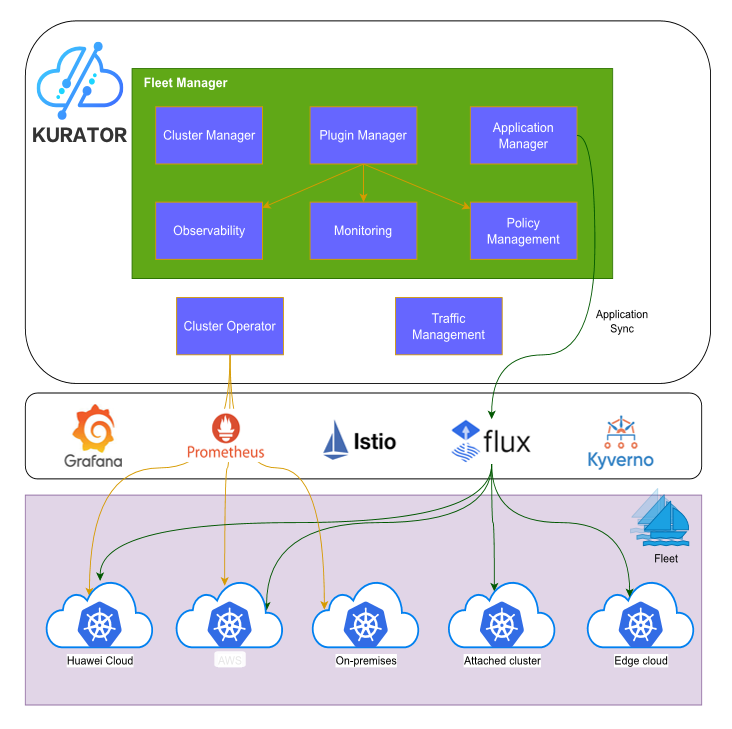
Kurator采用分层架构设计,在技术集成和抽象层面具有显著优势:
┌─────────────────────────────────────────────────────────────┐
│                   统一控制平面                                │
│  ┌─────────────┐ ┌─────────────┐ ┌─────────────┐            │
│  │ Fleet       │ │ Policy      │ │ Monitoring  │            │
│  │ Management  │ │ Engine      │ │ & Observability│         │
│  └─────────────┘ └─────────────┘ └─────────────┘            │
└─────────────────────────────────────────────────────────────┘
                                │
                                ▼
┌─────────────────────────────────────────────────────────────┐
│                   核心服务层                                  │
│  ┌─────────────┐ ┌─────────────┐ ┌─────────────┐            │
│  │ Karmada     │ │ Istio       │ │ Prometheus  │            │
│  │ (多集群调度) │ │ (服务网格)   │ │ (监控告警)   │            │
│  └─────────────┘ └─────────────┘ └─────────────┘            │
│  ┌─────────────┐ ┌─────────────┐ ┌─────────────┐            │
│  │ KubeEdge    │ │ Volcano     │ │ Kyverno     │            │
│  │ (边缘计算)   │ │ (批处理调度) │ │ (策略引擎)   │            │
│  └─────────────┘ └─────────────┘ └─────────────┘            │
└─────────────────────────────────────────────────────────────┘
                                │
                                ▼
┌─────────────────────────────────────────────────────────────┐
│                   基础设施层                                  │
│  ┌─────────────┬─────────────┬─────────────┬─────────────┐   │
│  │ 公有云       │ 私有云       │ 边缘节点     │ 混合云       │   │
│  │ (AWS/Azure) │ (OpenStack) │ (IoT设备)   │ (混合部署)   │   │
│  └─────────────┴─────────────┴─────────────┴─────────────┘   │
└─────────────────────────────────────────────────────────────┘
2.2 核心技术组件集成优势
Kurator通过深度集成主流开源项目,实现了"1+1>2"的协同效应:
| 组件 | 核心能力 | Kurator增强价值 |
|---|---|---|
| Karmada | 多集群资源调度 | 统一集群生命周期管理、舰队抽象 |
| KubeEdge | 边缘计算支持 | 云边协同、边缘AI推理能力 |
| Istio | 服务网格治理 | 跨集群流量治理、渐进式发布 |
| Volcano | 批处理调度 | AI训练任务优化、大算力调度 |
| Prometheus | 监控告警 | 多集群统一监控、全局可观测性 |
| Kyverno | 策略管理 | 舰队级策略分发、安全合规 |
2.3 舰队抽象的创新价值
Kurator引入的"舰队(Fleet)"概念是其架构创新的核心:
yaml
# 舰队抽象的价值体现
Fleet Abstraction Benefits:
  1. 逻辑统一性:
     - 将物理集群抽象为逻辑编组
     - 提供统一的管理视图和操作接口
     - 简化复杂度的认知负担

  2. 策略一致性:
     - 舰队级别的统一下发策略
     - 确保策略在所有成员集群中一致执行
     - 降低配置漂移风险

  3. 运维效率性:
     - 批量操作能力
     - 统一监控和告警
     - 自动化运维工作流

  4. 业务映射性:
     - 与业务组织结构对齐
     - 支持多租户隔离
     - 便于权限管理和责任划分
三、技术演进路径前瞻分析
3.1 智能调度演进方向
3.1.1 多维资源调度
未来的调度系统将超越简单的CPU/内存调度,实现真正的多维资源智能调度:
python
# 未来智能调度算法示例
class IntelligentScheduler:
    def __init__(self):
        self.cost_optimizer = CostOptimizer()
        self.performance_predictor = PerformancePredictor()
        self.carbon_calculator = CarbonFootprintCalculator()

    def schedule_workload(self, workload, constraints):
        """智能工作负载调度"""

        # 1. 性能预测
        performance_metrics = self.performance_predictor.predict(
            workload, candidate_clusters
        )

        # 2. 成本优化
        cost_analysis = self.cost_optimizer.analyze(
            workload, candidate_clusters, performance_metrics
        )

        # 3. 碳足迹计算
        carbon_impact = self.carbon_calculator.calculate(
            workload, candidate_clusters
        )

        # 4. 多目标优化
        optimal_cluster = self.multi_objective_optimization(
            performance_metrics,
            cost_analysis,
            carbon_impact,
            constraints
        )

        return optimal_cluster

    def multi_objective_optimization(self, *factors):
        """多目标优化算法"""
        # 实现基于Pareto前沿的多目标优化
        # 考虑性能、成本、环保等多个维度的平衡
        pass
3.1.2 自适应调度策略
yaml
# adaptive-scheduling-policy.yaml
apiVersion: scheduling.kurator.dev/v1alpha1
kind: AdaptivePolicy
metadata:
  name: production-workload-policy
  namespace: kurator-system
spec:
  workloadTypes:
  - name: web-service
    priority: high
    constraints:
      latency: "<100ms"
      availability: ">99.9%"
    adaptation:
      type: auto-scaling
      metrics:
      - name: response_time
        threshold: 200ms
        action: scale_up
      - name: cpu_usage
        threshold: 80%
        action: scale_out

  - name: batch-job
    priority: low
    constraints:
      cost: "minimal"
      deadline: "24h"
    adaptation:
      type: spot-instance
      strategy: preemptible
      fallback: on-demand
3.2 AI原生架构演进
3.2.1 AI工作负载原生支持
yaml
# ai-native-workload.yaml
apiVersion: ai.kurator.dev/v1alpha1
kind: AIWorkload
metadata:
  name: large-model-training
  namespace: ai-workloads
spec:
  type: training
  model:
    name: "gpt-style-large"
    parameters: 175B
  resources:
    accelerator:
      type: nvidia-a100
      count: 64
    memory: "1TB"
    storage: "10TB"
  scheduling:
    policy: "cost-optimized"
    preemptible: true
    multi-cluster: true
  optimization:
    mixed_precision: true
    gradient_checkpointing: true
    model_parallelism: true
3.2.2 智能运维(AIOps)集成
python
# aiops-integration.py
class KuratorAIOps:
    def __init__(self):
        self.anomaly_detector = AnomalyDetector()
        self.predictive_maintenance = PredictiveMaintenance()
        self.auto_healing = AutoHealingEngine()

    def monitor_system_health(self):
        """系统健康监控"""
        metrics = self.collect_metrics()

        # 异常检测
        anomalies = self.anomaly_detector.detect(metrics)

        if anomalies:
            # 预测性分析
            failure_prediction = self.predictive_maintenance.predict(
                anomalies, historical_data
            )

            # 自动修复
            if failure_prediction.confidence > 0.8:
                self.auto_healing.execute(
                    failure_prediction.affected_components,
                    failure_prediction.recommended_actions
                )

    def optimize_resource_allocation(self):
        """资源分配优化"""
        current_utilization = self.get_resource_utilization()
        predicted_workload = self.predict_workload_trend()

        optimization_plan = self.generate_optimization_plan(
            current_utilization,
            predicted_workload
        )

        return optimization_plan
3.3 云边深度融合演进
3.3.1 边缘智能架构
yaml
# edge-intelligent-architecture.yaml
apiVersion: edge.kurator.dev/v1alpha1
kind: EdgeIntelligentCluster
metadata:
  name: smart-factory-edge
  namespace: edge-clusters
spec:
  architecture:
    layers:
    - name: device-layer
      devices:
      - type: iot-sensors
        count: 1000
      - type: cameras
        count: 50
      - type: robots
        count: 20

    - name: edge-layer
      nodes:
      - type: micro-edge
        specs: "4C8G"
        count: 10
      - type: macro-edge
        specs: "16C32G + GPU"
        count: 2

    - name: cloud-layer
      capabilities:
      - model-training
      - global-coordination
      - long-term-storage

  ai-capabilities:
    edge-inference:
      models:
      - name: defect-detection
        framework: tensorrt
        precision: fp16
      - name: predictive-maintenance
        framework: onnx
        precision: int8

    federated-learning:
      enabled: true
      privacy-preserving: true
      aggregation-frequency: "1h"
3.3.2 5G/6G网络集成
yaml
# 5g-network-integration.yaml
apiVersion: networking.kurator.dev/v1alpha1
kind: NetworkSlice
metadata:
  name: low-latency-slice
  namespace: network-slices
spec:
  type: 5g-slice
  characteristics:
    latency: "<10ms"
    bandwidth: "1Gbps"
    reliability: "99.999%"
  applications:
  - name: ar-remote-assistance
    requirements:
      latency: "<5ms"
      bandwidth: "100Mbps"
  - name: real-time-control
    requirements:
      latency: "<1ms"
      reliability: "99.9999%"
  resource-allocation:
    dedicated: true
    priority: high
    qos-guarantee: strict
四、技术架构创新预测
4.1 分布式操作系统架构
Kurator可能演进为真正的分布式云原生操作系统:
Kurator as Distributed Cloud Native OS:
┌─────────────────────────────────────────────────────────────┐
│                    应用生态层                                  │
│  ┌─────────────┐ ┌─────────────┐ ┌─────────────┐            │
│  │ AI Apps     │ │ IoT Apps    │ │ Enterprise  │            │
│  │             │ │             │ │ Apps        │            │
│  └─────────────┘ └─────────────┘ └─────────────┘            │
└─────────────────────────────────────────────────────────────┘
                                │
                                ▼
┌─────────────────────────────────────────────────────────────┐
│                   分布式运行时层                                │
│  ┌─────────────┐ ┌─────────────┐ ┌─────────────┐            │
│  │ Distributed │ │ Service     │ │ Resource    │            │
│  │ Scheduler   │ │ Mesh        │ │ Manager     │            │
│  └─────────────┘ └─────────────┘ └─────────────┘            │
│  ┌─────────────┐ ┌─────────────┐ ┌─────────────┐            │
│  │ Storage     │ │ Network     │ │ Security    │            │
│  │ Fabric      │ │ Fabric      │ │ Fabric      │            │
│  └─────────────┘ └─────────────┘ └─────────────┘            │
└─────────────────────────────────────────────────────────────┘
                                │
                                ▼
┌─────────────────────────────────────────────────────────────┐
│                   硬件抽象层                                   │
│  ┌─────────────┬─────────────┬─────────────┬─────────────┐   │
│  │ Cloud       │ Edge        │ 5G/6G       │ Quantum     │   │
│  │ Resources   │ Resources   │ Network     │ Compute     │   │
│  └─────────────┴─────────────┴─────────────┴─────────────┘   │
└─────────────────────────────────────────────────────────────┘
4.2 量子计算集成前景
yaml
# quantum-computing-integration.yaml
apiVersion: quantum.kurator.dev/v1alpha1
kind: QuantumJob
metadata:
  name: quantum-optimization
  namespace: quantum-workloads
spec:
  algorithm:
    name: "QAOA"
    problem_type: "combinatorial_optimization"
    qubits: 128
    depth: 20

  hybrid_computing:
    classical_cluster: "high-performance-cluster"
    quantum_provider: "ionq"
    integration_pattern: "variational_quantum_algorithm"

  optimization:
    objective: "minimize_resource_allocation_cost"
    constraints:
    - "service_level_agreement"
    - "carbon_footprint_limit"
    - "budget_constraints"
4.3 区块链与可信计算
yaml
# trusted-computing-fabric.yaml
apiVersion: trust.kurator.dev/v1alpha1
kind: TrustFabric
metadata:
  name: enterprise-trust-network
  namespace: trust-fabric
spec:
  blockchain:
    consensus: "proof-of-stake"
    smart_contracts:
    - name: "sla_guarantee"
      template: "service_level_agreement"
    - name: "data_provenance"
      template: "immutable_audit_trail"

  zero_knowledge_proofs:
    enabled: true
    use_cases:
    - "privacy_preserving_analytics"
    - "secure_multi_party_computation"

  trusted_execution:
    tee_type: "sgx"
    attestation: "remote_attestation"
    confidentiality: "always_encrypted"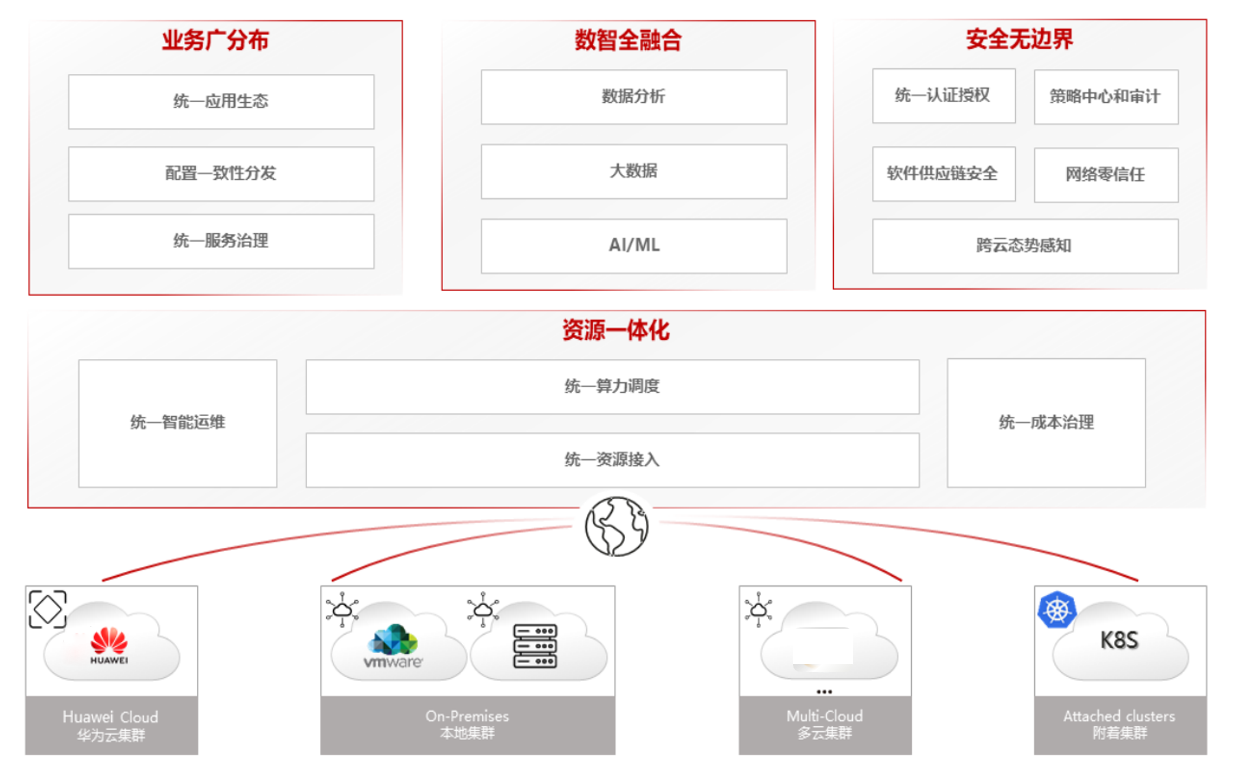
五、生态系统发展预测
5.1 技术标准演进
yaml
# future-standards.yaml
apiVersion: standards.kurator.dev/v1alpha1
kind: ConvergenceStandard
metadata:
  name: distributed-cloud-native-v2
spec:
  networking:
    standard: "SME-P2P"  # Service Mesh Enhanced Peer-to-Peer
    features:
    - "zero-config_service_discovery"
    - "auto_encrypted_communication"
    - "adaptive_load_balancing"

  scheduling:
    standard: "AI-DSS"  # AI-Driven Dynamic Scheduling
    features:
    - "predictive_resource_allocation"
    - "cost_optimization"
    - "carbon_awareness"

  security:
    standard: "ZTA-CC"  # Zero Trust Architecture for Cloud Computing
    features:
    - "continuous_authentication"
    - "micro_segmentation"
    - "behavioral_analysis"
5.2 开发者体验演进
typescript
// 未来Kurator开发者SDK示例
interface KuratorSDK {
  // 智能应用部署
  deployApp(config: SmartAppConfig): Promise<DeploymentResult>

  // 跨云资源编排
  orchestrateResources(plan: ResourcePlan): Promise<OrchestrationResult>

  // AI模型管理
  manageModels(operations: ModelOperations): Promise<ModelResult>

  // 实时监控
  monitor(metrics: MetricQuery): Observable<MetricData>

  // 自动化运维
  autoOps(scenarios: OpsScenario[]): Promise<OpsResult>
}

// 使用示例
const kurator = new KuratorSDK({
  region: "global",
  fleet: "production",
  aiEnabled: true,
  quantumEnabled: false
});

// 智能部署
const deployment = await kurator.deployApp({
  name: "smart-retail-app",
  type: "ai-enhanced",
  constraints: {
    latency: "<50ms",
    cost: "optimized",
    carbon: "minimal"
  },
  aiFeatures: {
    autoScaling: true,
    predictiveMaintenance: true,
    anomalyDetection: true
  }
});
六、技术挑战与解决方案
6.1 性能挑战与优化
python
# 性能优化策略示例
class PerformanceOptimizer:
    def __init__(self):
        self.cache_manager = DistributedCacheManager()
        self.compression_engine = DataCompressionEngine()
        self.network_optimizer = NetworkOptimizer()

    def optimize_cross_cluster_communication(self):
        """跨集群通信优化"""

        # 1. 数据压缩
        compressed_data = self.compression_engine.compress(
            data, algorithm="adaptive"
        )

        # 2. 智能缓存
        cached_result = self.cache_manager.get_or_compute(
            cache_key, compute_function
        )

        # 3. 网络路径优化
        optimal_path = self.network_optimizer.find_optimal_path(
            source_cluster, target_cluster, constraints
        )

        return optimized_transmission

    def optimize_resource_utilization(self):
        """资源利用率优化"""

        # 基于机器学习的资源预测
        predicted_workload = self.ml_predictor.predict_workload(
            time_horizon="24h"
        )

        # 动态资源调整
        resource_plan = self.generate_resource_plan(predicted_workload)

        # 实时资源调度
        return self.realtime_scheduler.execute(resource_plan)
6.2 安全挑战与防护
yaml
# advanced-security-measures.yaml
apiVersion: security.kurator.dev/v1alpha1
kind: AdvancedSecurityPolicy
metadata:
  name: zero-trust-policy
  namespace: security-policies
spec:
  identity_management:
    method: "decentralized_identity"
    verification: "multi_factor"
    lifetime: "short_lived_tokens"

  data_protection:
    encryption: "end_to_end"
    key_management: "distributed_key_generation"
    integrity_verification: "merkle_tree_based"

  threat_detection:
    ai_anomaly_detection: true
    behavioral_analysis: true
    threat_intelligence_integration: true

  compliance:
    frameworks: ["GDPR", "SOC2", "ISO27001", "HIPAA"]
    automated_audit: true
    real_time_reporting: true
七、发展建议与实施路径
7.1 技术发展路线图
Kurator技术发展路线图 (2024-2030):

2024-2025年:智能化增强
├── AI驱动的智能调度
├── 自动化运维能力
├── 成本优化算法
└── 性能监控增强

2025-2026年:云边融合
├── 5G网络深度集成
├── 边缘AI能力增强
├── 量子计算试点
└── 区块链可信计算

2026-2027年:生态扩展
├── 多云标准统一
├── 开发者体验优化
├── 企业级功能增强
└── 国际化支持

2027-2030年:下一代架构
├── 分布式操作系统
├── 量子-经典混合计算
├── 自进化系统
└── 可持续计算
7.2 实施建议
7.2.1 对企业的建议
- 渐进式采用:从非核心业务开始,逐步扩展到关键系统
- 团队能力建设:加强云原生技术培训,培养专业人才
- 标准制定参与:积极参与行业标准制定,掌握技术话语权
- 生态合作:与技术供应商、研究机构建立合作关系
7.2.2 对社区的建议
- 标准化推进:推动分布式云原生标准的统一
- 开源生态建设:构建健康可持续的开源生态系统
- 技术创新投入:加大在前沿技术领域的研发投入
- 国际化发展:推动技术和标准的国际化应用
八、总结与展望
Kurator作为分布式云原生领域的重要创新,正在重新定义云原生基础设施的管理范式。通过深度整合主流技术栈,引入舰队抽象,Kurator成功解决了多云、多集群环境下的管理复杂性问题。
8.1 核心价值总结
- 技术价值:实现了从单集群到分布式统一管理的技术突破
- 业务价值:为企业数字化转型提供了可靠的基础设施支撑
- 生态价值:推动了云原生技术的标准化和开源生态发展
8.2 未来展望
展望未来,Kurator有潜力演进为真正的分布式云原生操作系统:
- 智能化:AI驱动的自适应管理和优化
- 融合化:云边端一体化的无缝协同
- 可信化:基于区块链的安全可信计算
- 量子化:量子计算与经典计算的融合
Kurator的发展代表了云原生技术的重要演进方向,将为企业的数字化转型提供更强大的技术支撑。我们期待Kurator在未来的发展中,继续引领分布式云原生技术的创新,为构建更加智能、高效、安全的数字基础设施贡献力量。