学习链接
文章目录
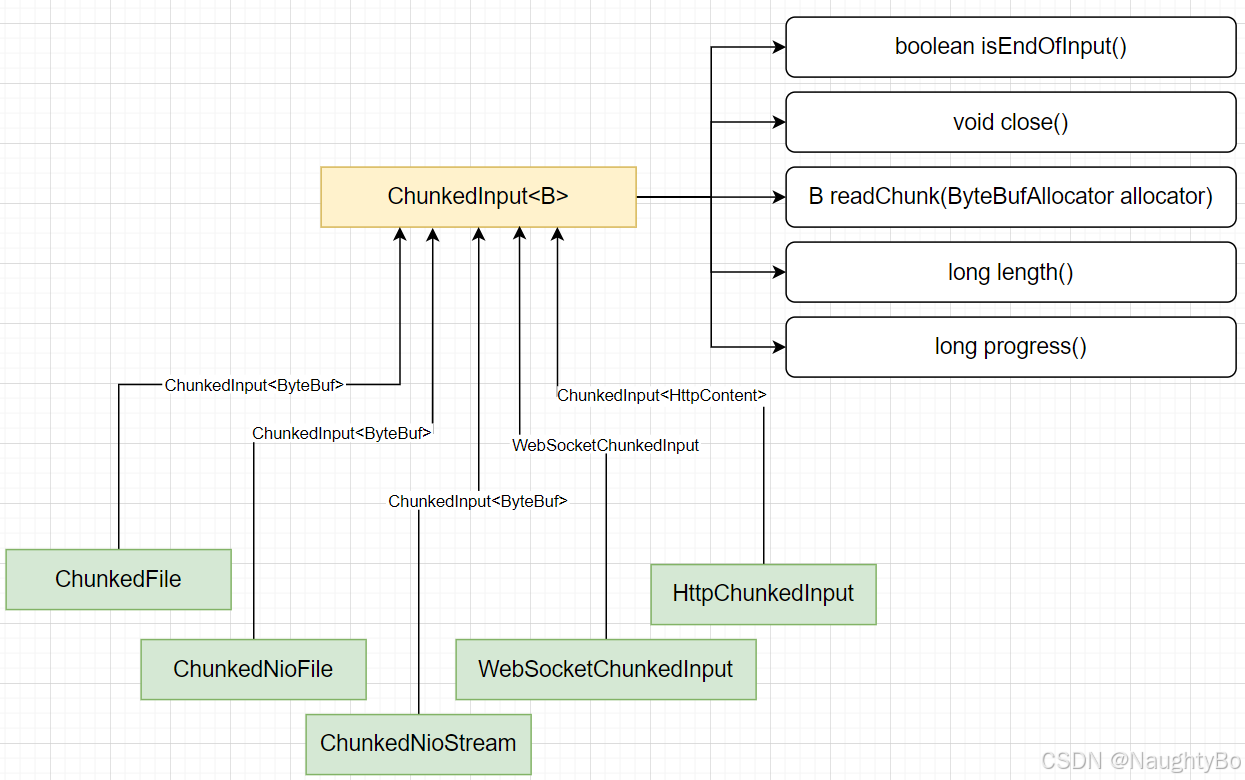
ChunkedInput<B>
先来看下分块读取的ChunkedInput接口
java
// 是否 流中已没有数据, 已经结束了
boolean isEndOfInput() throws Exception;

// 关闭并释放资源
void close() throws Exception;

// 从流中 获取分块数据。
// 一旦这个方法返回最后一块分块数据,就表示这个流已经到末尾了,后面调用isEndOfInput()将会返回true。
// 如果这个方法返回null,并不代表这个流已经到末尾了,在一些ChunkedInput的实现中,只是暂时获取不到分块
B readChunk(ByteBufAllocator allocator) throws Exception;

// 如果总长度已知的话,返回总长度;如果总长度未知的话,返回负数;
long length();

// 返回当前的传输进度
long progress();
ChunkedFile
ChunkedFile是ChunkedInput接口的一个实现,它内部使用随机IO读写RandomAccessFile
属性
java
// 支持随机IO读写
private final RandomAccessFile file;

// 起始索引
private final long startOffset

// 结束索引
private final long endOffset;

// 每次读取的块大小
private final int chunkSize;

// 偏移量
private long offset;
构造方法
java
public ChunkedFile(File file) throws IOException {
    // 默认分块大小是: 8092
    this(file, ChunkedStream.DEFAULT_CHUNK_SIZE);
}

public ChunkedFile(File file, int chunkSize) throws IOException {
    // 创建随机io读写RandomAccessFile
    this(new RandomAccessFile(file, "r"), chunkSize);
}

public ChunkedFile(RandomAccessFile file) throws IOException {
    // 默认分块大小是: 8092
    this(file, ChunkedStream.DEFAULT_CHUNK_SIZE);
}

public ChunkedFile(RandomAccessFile file, int chunkSize) throws IOException {
    // 从偏移量为0开始读,一共读取file.length()个字节, 每次分块读取chunkSize个字节
    this(file, 0, file.length(), chunkSize);
}

public ChunkedFile(RandomAccessFile file, long offset, long length, int chunkSize) throws IOException {

    ObjectUtil.checkNotNull(file, "file");
    ObjectUtil.checkPositiveOrZero(offset, "offset");
    ObjectUtil.checkPositiveOrZero(length, "length");
    ObjectUtil.checkPositive(chunkSize, "chunkSize");

    // 随机io读写 RandomAccessFile
    this.file = file;

    // 起始索引和当前索引 赋值
    this.offset = startOffset = offset;
    // 结束索引赋值
    this.endOffset = offset + length;
    // 每次分块读取的大小
    this.chunkSize = chunkSize;

    file.seek(offset);
}
isEndOfInput
java
@Override
public boolean isEndOfInput() throws Exception {
    // 如果当前的索引 小于 结束索引,并且当前file还是打开状态,就没结束
    return !(offset < endOffset && file.getChannel().isOpen());
}
close()
java
@Override
public void close() throws Exception {
    file.close();
}
readChunk
java
@Override
public ByteBuf readChunk(ByteBufAllocator allocator) throws Exception {

    // 获取当前的索引, 如果当前的索引已经 到了 结束索引的未知, 那么返回null
    long offset = this.offset;
    if (offset >= endOffset) {
        return null;
    }

    // 每次最多读取 chunkSize大小的字节数。最后读取 endoffset-offset 大小的字节数。
    int chunkSize = (int) Math.min(this.chunkSize, endOffset - offset);

    // 创建chunkSize大小的堆缓冲区
    ByteBuf buf = allocator.heapBuffer(chunkSize);

    // 如果下面读取发生异常, 则需要释放上面创建的堆缓冲区
    boolean release = true;

    try {

        // 一直到读够chunkSize个字节数据为止
        file.readFully(buf.array(), buf.arrayOffset(), chunkSize);

        // 写索引向前移动 chunkSize
        buf.writerIndex(chunkSize);

        // 当前索引往后移动 chunkSize
        this.offset = offset + chunkSize;

        // 读取数据成功, 不需要释放缓冲区
        release = false;

        // 读取数据的缓冲区
        return buf;

    } finally {
        // 如果读取发生异常, 则释放缓冲区
        if (release) {
            buf.release();
        }
    }
}
length()
java
public long length() {
    // 返回总长度
    return endOffset - startOffset;
}
progress()
java
@Override
public long progress() {
    // 返回已读取了多个字节
    return offset - startOffset;
}
HttpChunkedInput
java
public class HttpChunkedInput implements ChunkedInput<HttpContent> {

    // 实际操作的ChunkedInput
    private final ChunkedInput<ByteBuf> input;

    // 最后的内容
    private final LastHttpContent lastHttpContent;

    // 是否发送了最后的分块
    private boolean sentLastChunk;

    /* 构造方法, 需要传入实际的 ChunkedInput */
    public HttpChunkedInput(ChunkedInput<ByteBuf> input) {
        this.input = input;
        lastHttpContent = LastHttpContent.EMPTY_LAST_CONTENT;
    }

    public HttpChunkedInput(ChunkedInput<ByteBuf> input,
                            LastHttpContent lastHttpContent) {
        this.input = input;
        this.lastHttpContent = lastHttpContent;
    }

    @Override
    public boolean isEndOfInput() throws Exception {
        // 如果input都读完了,还需要看是否发完了最后1个分块
        if (input.isEndOfInput()) {
            return sentLastChunk;
        } else {
            return false;
        }
    }

    @Override
    public void close() throws Exception {
        input.close();
    }

    @Override
    public HttpContent readChunk(ByteBufAllocator allocator) throws Exception {
        // 如果 input结束了
        if (input.isEndOfInput()) {
            // 如果最后的分块发出去了,则返回null
            if (sentLastChunk) {
                return null;
            } else {
                // 如果最后的分块没有发出去, 则此时将sendLastChunk置为true, 并返回lastHttpContent
                sentLastChunk = true;
                return lastHttpContent;
            }
        } else {
            // 如果input未结束, 则调用input的读取分块的方法
            ByteBuf buf = input.readChunk(allocator);
            if (buf == null) {
                return null;
            }
            // 分块内容封装为 DefaultHttpContent
            return new DefaultHttpContent(buf);
        }
    }

    @Override
    public long length() {
        // 返回input的总长度
        return input.length();
    }

    @Override
    public long progress() {
        // 返回input读取的字节数
        return input.progress();
    }
}
PendingWrite
PendingWrite是ChunkedWriteHandler中的一个静态内部类
java
private static final class PendingWrite {

    // 待写入的消息内容对象
    final Object msg;

    // 写入结束后通过promise去通知
    final ChannelPromise promise;

    PendingWrite(Object msg, ChannelPromise promise) {
        this.msg = msg;
        this.promise = promise;
    }

    // 写入失败,通知写入失败
    void fail(Throwable cause) {
        // 释放msg
        ReferenceCountUtil.release(msg);
        // 通知失败
        promise.tryFailure(cause);
    }

    // 写入成功,通知成功
    void success(long total) {
        // 如果promise已经完成了,直接结束
        if (promise.isDone()) {
            return;
        }
        // 通知写入完成进度 100%
        progress(total, total);
        // 通知成功
        promise.trySuccess();
    }

    // 通知写入进度
    void progress(long progress, long total) {
        if (promise instanceof ChannelProgressivePromise) {
            ((ChannelProgressivePromise) promise).tryProgress(progress, total);
        }
    }
}
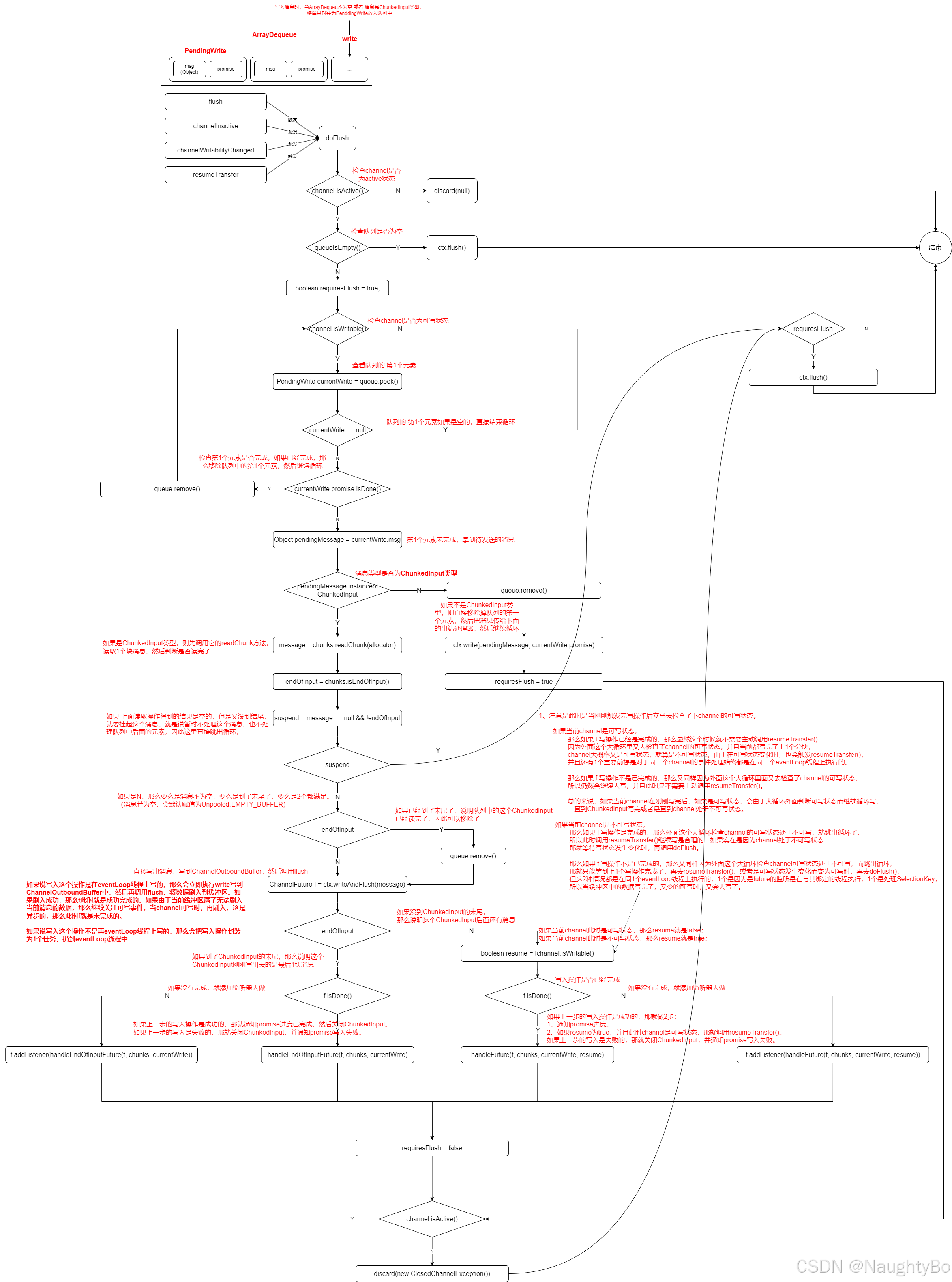
ChunkedWriteHandler的属性
java
// 基于数组实现的 双端队列
final Queue<PendingWrite> queue = new ArrayDeque<PendingWrite>();

// 当前handler添加到pipeline后的 上下文
volatile ChannelHandlerContext ctx;
ChunkedWriteHandler的方法
handlerAdded
java
@Override
public void handlerAdded(ChannelHandlerContext ctx) throws Exception {
    // 当handler添加到pipeline后,将ctx保存到当前handler中
    this.ctx = ctx;
}
resumeTransfer
java
public void resumeTransfer() {

    // 如果当前handler还没挂载到pipeline上,则直接返回
    final ChannelHandlerContext ctx = this.ctx;
    if (ctx == null) {
        return;
    }

    // 当前代码执行时所在的线程与 ctx的eventLoop线程是否是同一个线程
    if (ctx.executor().inEventLoop()) {
        // 如果是同一个线程, 则直接在当前线程上执行 恢复传输
        resumeTransfer0(ctx);
    } else {

        // 如果不是同一个线程, 则等待eventloop线程下一次循环时再执行 恢复传输
        ctx.executor().execute(new Runnable() {

            @Override
            public void run() {
                resumeTransfer0(ctx);
            }
        });
    }
}
resumeTransfer0
java
private void resumeTransfer0(ChannelHandlerContext ctx) {
    try {
        // 只是调用doFlush, 并忽略其中所发生的所有异常
        doFlush(ctx);
    } catch (Exception e) {
        logger.warn("Unexpected exception while sending chunks.", e);
    }
}
write
java
@Override
public void write(ChannelHandlerContext ctx,
                  Object msg,
                  ChannelPromise promise) throws Exception {
    // 将待写入的msg消息对象封装到PendingWrite中,添加到 queue双端队列 中
    queue.add(new PendingWrite(msg, promise));
}
flush
java
@Override
public void flush(ChannelHandlerContext ctx) throws Exception {
    // 调用doFlush
    doFlush(ctx);
}
channelInactive
当channel处于inactive状态时的回调
java
@Override
public void channelInactive(ChannelHandlerContext ctx) throws Exception {
    // 调用doFlush
    doFlush(ctx);
    // 向后面的入站处理器继续传播channelInactive事件
    ctx.fireChannelInactive();
}
channelWritabilityChanged
当channel的写状态(可写/不可写 切换)发生变化时
java
@Override
public void channelWritabilityChanged(ChannelHandlerContext ctx) throws Exception {
    // 当channel切换为可写状态时
    if (ctx.channel().isWritable()) {
        // 调用doFlush
        doFlush(ctx);
    }
    // 向后面的入站处理器继续传播fireChannelWritabilityChanged事件
    ctx.fireChannelWritabilityChanged();
}
doFlush
java
private void doFlush(final ChannelHandlerContext ctx) {

    //
    final Channel channel = ctx.channel();

    if (!channel.isActive()) {
        discard(null);
        return;
    }

    boolean requiresFlush = true;
    ByteBufAllocator allocator = ctx.alloc();
    while (channel.isWritable()) {
        final PendingWrite currentWrite = queue.peek();

        if (currentWrite == null) {
            break;
        }

        if (currentWrite.promise.isDone()) {
            // This might happen e.g. in the case when a write operation
            // failed, but there're still unconsumed chunks left.
            // Most chunked input sources would stop generating chunks
            // and report end of input, but this doesn't work with any
            // source wrapped in HttpChunkedInput.
            // Note, that we're not trying to release the message/chunks
            // as this had to be done already by someone who resolved the
            // promise (using ChunkedInput.close method).
            // See https://github.com/netty/netty/issues/8700.
            queue.remove();
            continue;
        }

        final Object pendingMessage = currentWrite.msg;

        if (pendingMessage instanceof ChunkedInput) {
            final ChunkedInput<?> chunks = (ChunkedInput<?>) pendingMessage;
            boolean endOfInput;
            boolean suspend;
            Object message = null;
            try {
                message = chunks.readChunk(allocator);
                endOfInput = chunks.isEndOfInput();

                if (message == null) {
                    // No need to suspend when reached at the end.
                    suspend = !endOfInput;
                } else {
                    suspend = false;
                }
            } catch (final Throwable t) {
                queue.remove();

                if (message != null) {
                    ReferenceCountUtil.release(message);
                }

                closeInput(chunks);
                currentWrite.fail(t);
                break;
            }

            if (suspend) {
                // ChunkedInput.nextChunk() returned null and it has
                // not reached at the end of input. Let's wait until
                // more chunks arrive. Nothing to write or notify.
                break;
            }

            if (message == null) {
                // If message is null write an empty ByteBuf.
                // See https://github.com/netty/netty/issues/1671
                message = Unpooled.EMPTY_BUFFER;
            }

            if (endOfInput) {
                // We need to remove the element from the queue before we call writeAndFlush() as this operation
                // may cause an action that also touches the queue.
                queue.remove();
            }
            // Flush each chunk to conserve memory
            ChannelFuture f = ctx.writeAndFlush(message);
            if (endOfInput) {
                if (f.isDone()) {
                    handleEndOfInputFuture(f, currentWrite);
                } else {
                    // Register a listener which will close the input once the write is complete.
                    // This is needed because the Chunk may have some resource bound that can not
                    // be closed before its not written.
                    //
                    // See https://github.com/netty/netty/issues/303
                    f.addListener(new ChannelFutureListener() {
                        @Override
                        public void operationComplete(ChannelFuture future) {
                            handleEndOfInputFuture(future, currentWrite);
                        }
                    });
                }
            } else {
                final boolean resume = !channel.isWritable();
                if (f.isDone()) {
                    handleFuture(f, currentWrite, resume);
                } else {
                    f.addListener(new ChannelFutureListener() {
                        @Override
                        public void operationComplete(ChannelFuture future) {
                            handleFuture(future, currentWrite, resume);
                        }
                    });
                }
            }
            requiresFlush = false;
        } else {
            queue.remove();
            ctx.write(pendingMessage, currentWrite.promise);
            requiresFlush = true;
        }

        if (!channel.isActive()) {
            discard(new ClosedChannelException());
            break;
        }
    }

    if (requiresFlush) {
        ctx.flush();
    }
}
java
private void resumeTransfer0(ChannelHandlerContext ctx) {
    try {
        // 只调用doFlush, 并忽略其中发生的所有的异常
        doFlush(ctx);
    } catch (Exception e) {
        logger.warn("Unexpected exception while sending chunks.", e);
    }
}
discard
java
private void discard(Throwable cause) {
    for (;;) {
        PendingWrite currentWrite = queue.poll();

        if (currentWrite == null) {
            break;
        }
        Object message = currentWrite.msg;
        if (message instanceof ChunkedInput) {
            ChunkedInput<?> in = (ChunkedInput<?>) message;
            boolean endOfInput;
            long inputLength;
            try {
                endOfInput = in.isEndOfInput();
                inputLength = in.length();
                closeInput(in);
            } catch (Exception e) {
                closeInput(in);
                currentWrite.fail(e);
                if (logger.isWarnEnabled()) {
                    logger.warn(ChunkedInput.class.getSimpleName() + " failed", e);
                }
                continue;
            }

            if (!endOfInput) {
                if (cause == null) {
                    cause = new ClosedChannelException();
                }
                currentWrite.fail(cause);
            } else {
                currentWrite.success(inputLength);
            }
        } else {
            if (cause == null) {
                cause = new ClosedChannelException();
            }
            currentWrite.fail(cause);
        }
    }
}
handleEndOfInputFuture
java
private static void handleEndOfInputFuture(ChannelFuture future, PendingWrite currentWrite) {
    ChunkedInput<?> input = (ChunkedInput<?>) currentWrite.msg;
    if (!future.isSuccess()) {
        closeInput(input);
        currentWrite.fail(future.cause());
    } else {
        // read state of the input in local variables before closing it
        long inputProgress = input.progress();
        long inputLength = input.length();
        closeInput(input);
        currentWrite.progress(inputProgress, inputLength);
        currentWrite.success(inputLength);
    }
}
handleFuture
java
private void handleFuture(ChannelFuture future,
                          PendingWrite currentWrite,
                          boolean resume) {

    ChunkedInput<?> input = (ChunkedInput<?>) currentWrite.msg;

    if (!future.isSuccess()) {

        closeInput(input);

        currentWrite.fail(future.cause());

    } else {

        currentWrite.progress(input.progress(), input.length());


        if (resume && future.channel().isWritable()) {
            resumeTransfer();
        }
    }
}