iluwatar 设计模式
- 行为
-
- acyclic-visitor
- context-object
- bytecode
- chain-of-responsibility
- client-session(平平无奇为每一个client创建session存数据)
- collecting-parameter(无用)
- converter
- [Curiously Recurring Template Pattern](#Curiously Recurring Template Pattern)
- Delegation
- [Dirty Flag(IO或Cache标记)](#Dirty Flag(IO或Cache标记))
- [Double Buffer](#Double Buffer)
- [Feature Toggle](#Feature Toggle)
- Filterer
- [Fluent Interface](#Fluent Interface)
- [Game Loop](#Game Loop)
- [Update Method (同上)](#Update Method (同上))
- [Health check](#Health check)
- [Identity Map](#Identity Map)
- Interpreter
- [Mute Idiom(try catch)](#Mute Idiom(try catch))
- Notification(代码跟图不适配,可在研究)
- [Null Object](#Null Object)
- [Parameter Object(说是结构但我更认为是行为)](#Parameter Object(说是结构但我更认为是行为))
- [Partial Response](#Partial Response)
- Pipeline
- [Poison Pill(说是并发,但更像行为)](#Poison Pill(说是并发,但更像行为))
- [Private Class Data(说是结构,但更像行为)](#Private Class Data(说是结构,但更像行为))
- [Value Object(说是结构,但更像行为)](#Value Object(说是结构,但更像行为))
- Property
- [Servant(结构->行为 卢哥的什么er)](#Servant(结构->行为 卢哥的什么er))
- Specification
- state
- Strategy
- [Template Method (同上)](#Template Method (同上))
- [Template View(同上)](#Template View(同上))
- [Subclass Sandbox](#Subclass Sandbox)
- [Unit of Work(数据->行为)](#Unit of Work(数据->行为))
- Visitor
- 创建
-
- builder(不用说了吧)
- abstract-factory
- dependency-Injection
- execute-around
- factory
- [Factory Kit](#Factory Kit)
- [Factory Method](#Factory Method)
- Multiton
- [Object Pool](#Object Pool)
- Prototype
- registry
- Singleton
- [Step Builder](#Step Builder)
- [Type Object](#Type Object)
- 结构
-
- bloc(类似状态机)
- business-delegate
- clean-architecture
- command-query-responsibility-segregation
- component
- composition
- composition-entity
- composition-view
- data-bus
- event-aggregator
- [Event-Driven Architecture](#Event-Driven Architecture)
- Decorator
- [Domain Model](#Domain Model)
- [Event Sourcing](#Event Sourcing)
- Facade
- [Session Facade](#Session Facade)
- Flux
- Flyweight
- [Front Controller](#Front Controller)
- [Gate Way(类似Front Controller)](#Gate Way(类似Front Controller))
- Hexagonal(六边形)
- [Intercepting Filter(过滤链)](#Intercepting Filter(过滤链))
- [Layered Architecture](#Layered Architecture)
- Model-View-Controller (MVC)
- Model-View-ViewModel
- Model-View-Intent (MVI)
- Model-View-Presenter (MVP)
- [Presentation Model(同上大差不差吧)](#Presentation Model(同上大差不差吧))
- [Page Controller](#Page Controller)
- [Service to Worker](#Service to Worker)
- Money(封装了一个钱的对象处理金额细节)
- Monolithic
- Observer
- Proxy
- Publish-Subscribe
- [Queue-Based Load Leveling](#Queue-Based Load Leveling)
- [Role Object](#Role Object)
- [Separated Interface](#Separated Interface)
- [Service Layer](#Service Layer)
- [Special Case](#Special Case)
- twin
- [Virtual Proxy](#Virtual Proxy)
- 线程
-
- active-object
- actor-model
- async-method-invocation(太旧了可以不用管)
- [backpressure(reactor中的背压 )](#backpressure(reactor中的背压 ))
- [balking(慢行 太旧了可以不用管)](#balking(慢行 太旧了可以不用管))
- [Double-Checked Locking](#Double-Checked Locking)
- [Event-Based Asynchronous](#Event-Based Asynchronous)
- [Event Queue](#Event Queue)
- Fan-Out/Fan-In
- [Guarded Suspension](#Guarded Suspension)
- Half-Sync/Half-Async
- Leader-Followers
- Lockable-object
- Monitor
- [Optimistic Offline Lock](#Optimistic Offline Lock)
- Producer-Consumer
- Promise
- Reactor
- [Thread-Pool Executor](#Thread-Pool Executor)
- [Version Number](#Version Number)
- 函数
-
- callback
- collection-pipeline
- combinator
- [command (跟callback一样)](#command (跟callback一样))
- currying
- [Function Composition(多思考函数的组合)](#Function Composition(多思考函数的组合))
- [Lazy Loading](#Lazy Loading)
- Monad(很漂亮检验方式)
- Trampoline
- 数据
-
- abstract-document
- data-access-object(dao)(跟data-mapper没多大区别)
- data-mapper(跟dao没多大区别)
- [Table Module](#Table Module)
- Repository
- [Resource Acquisition Is Initialization (RAII)](#Resource Acquisition Is Initialization (RAII))
- [Serialized Entity](#Serialized Entity)
- [Serialized LOB(Large Object)](#Serialized LOB(Large Object))
- Sharding
- [Table Inheritance Pattern](#Table Inheritance Pattern)
-
- [Single Table Inheritance](#Single Table Inheritance)
- [Table Inheritance](#Table Inheritance)
- [Transaction Script](#Transaction Script)
- 重构(游戏里面重构多数直接重写了)
-
- adapter
- anti-corruption-layer
- bridge
- [Extension Objects](#Extension Objects)
- Strangler
- 网络
-
- ambassador(在游戏中应该很少用到)
- [Server Session](#Server Session)
- 测试
-
- [arrange-act-asset(spock given-when-then)](#arrange-act-asset(spock given-when-then))
- [Object Mother](#Object Mother)
- [Page Object](#Page Object)
- [Service Stub(好像没什么用,测试假的类作用是?)](#Service Stub(好像没什么用,测试假的类作用是?))
- 缓存(在游戏开发里面,缓存依赖于玩家数据的设计)
- [熔断 (没到这个水平,不知道干嘛)](#熔断 (没到这个水平,不知道干嘛))
- 性能
-
- [Data Locality](#Data Locality)
- Throttling
- 分布式
-
- [Leader Election](#Leader Election)
- [Microservices Aggregator](#Microservices Aggregator)
- [Microservices API Gateway(同上)](#Microservices API Gateway(同上))
- [Microservices Client-Side UI Composition(同上但是是前端的)](#Microservices Client-Side UI Composition(同上但是是前端的))
- [Microservices Distributed Tracing(存疑)](#Microservices Distributed Tracing(存疑))
- [Microservices Idempotent Consumer(唯一id处理幂等性问题)](#Microservices Idempotent Consumer(唯一id处理幂等性问题))
- [Microservices Log Aggregation](#Microservices Log Aggregation)
- SAGA
- [Service Locator(结构 -> 分布式)](#Service Locator(结构 -> 分布式))
- 数据结构与算法
-
- [Spatial Partition](#Spatial Partition)
- 十字链表
- 理念
-
- [Tolerant Reader](#Tolerant Reader)
行为
acyclic-visitor
目前我常用多种调用, 某个实现类接口A,a.handle(Context ctx);
改变调用观念,创建不一样的行为h,创建不一样的上下文c, 正常观念 h.handle©跟上面一样,
但这个 c.accept(h) -> 细节 -》 h.handle©;中间多了一层。目前来看可以避免不必要的ctx透传,外加接口约束
context-object
bytecode
虚拟机解析字符串指令,switch-case + stack
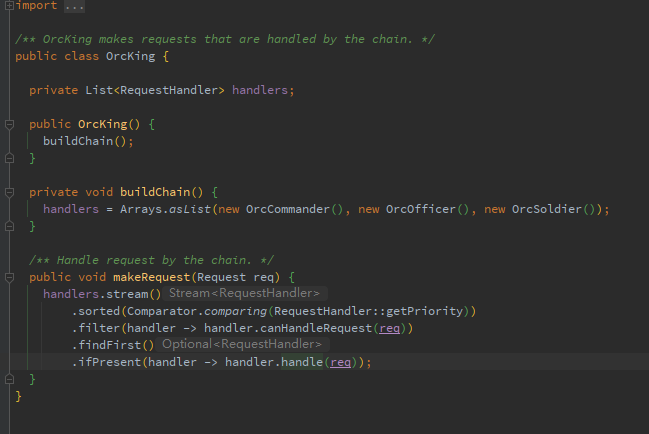
chain-of-responsibility
client-session(平平无奇为每一个client创建session存数据)
collecting-parameter(无用)
看到无用又回头看了看代码,真没用。别去想了
converter
不单单写几个转换方法,提升为一个接口

Curiously Recurring Template Pattern
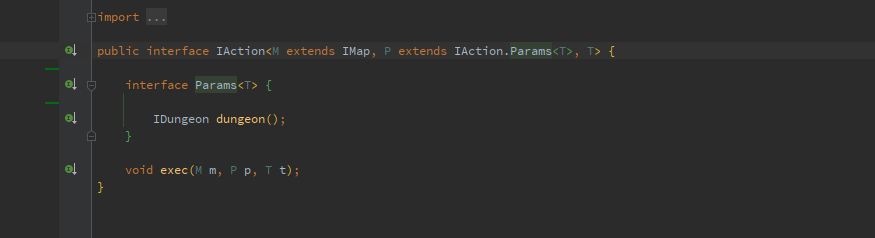
Delegation
不直接调用业务类
Dirty Flag(IO或Cache标记)
Double Buffer
旧垃圾回收 新生代
Feature Toggle
基于标量或则唯一标记。执行不一样的策略
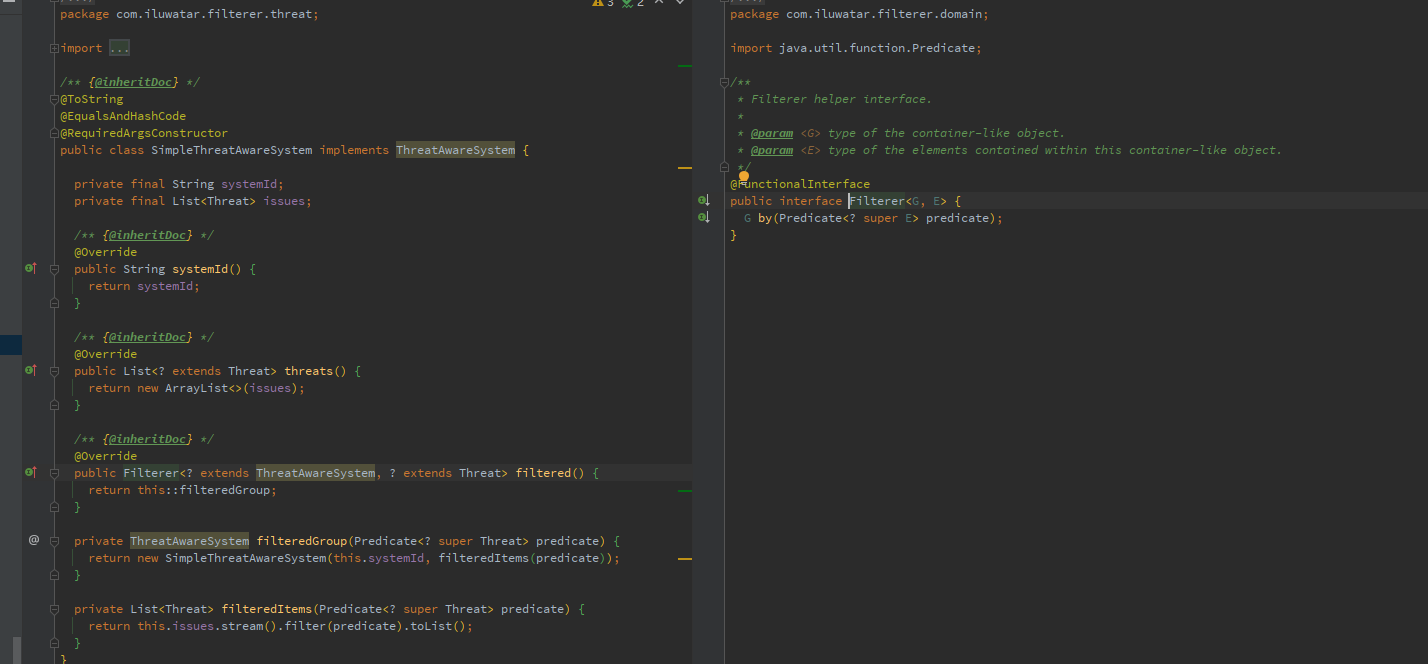
Filterer
stream的filter过于面向对象,如果filter后的数据需要有很复杂的业务逻辑。可以采取这种设计模式。用一个对象包装filter,filter完创建一个新的对象。
Fluent Interface
The Fluent Interface pattern is useful when you want to provide an easy readable, flowing API. Those interfaces tend to mimic domain specific languages, so they can nearly be read as human languages.
Game Loop
FrameBasedGameLoop(每tick一次执行一次)
VariableStepGameLoop(每tick一次执行一次带消耗时间)
FixedStepGameLoop(每tick一次执行一次带固定消耗时间)
Update Method (同上)
跟FrameBasedGameLoop一样 tick all entity,slg tick
Health check
Identity Map
The Identity Map design pattern in Java aims to ensure that each object gets loaded only once by keeping every loaded object in a map, enhancing database performance and memory management.
Interpreter
栈处理公式翻译
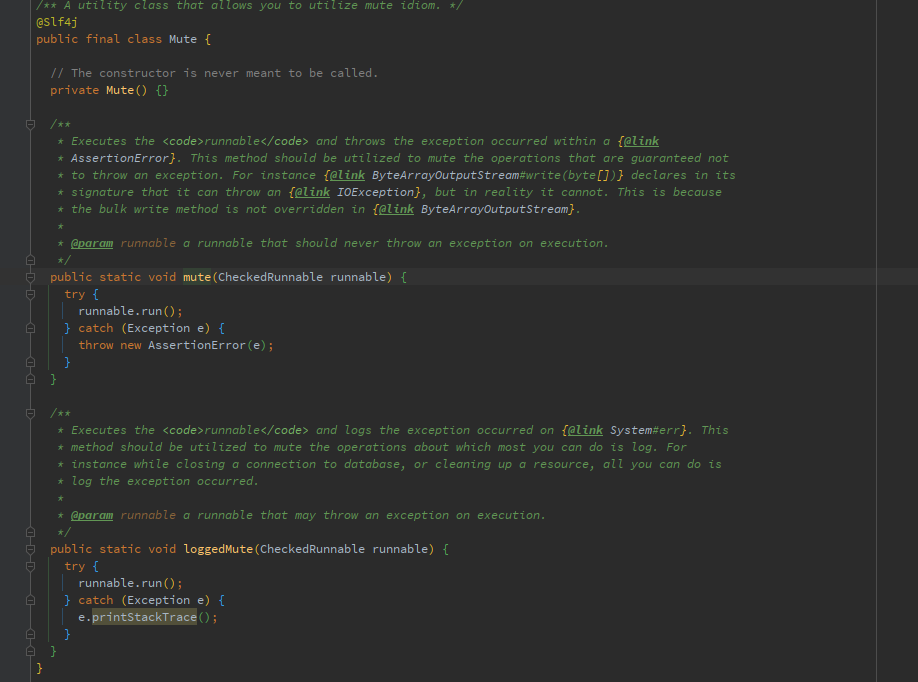
Mute Idiom(try catch)
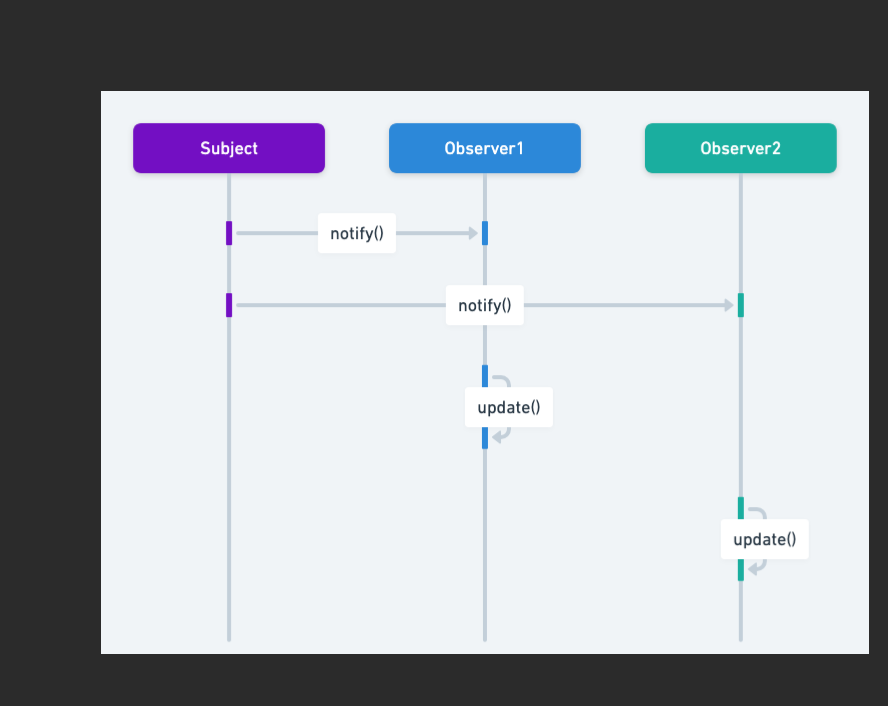
Notification(代码跟图不适配,可在研究)
Null Object
Parameter Object(说是结构但我更认为是行为)
一个有默认值的上下文。但是这个上下文会用到其他方法里面(这不好吧)
Partial Response
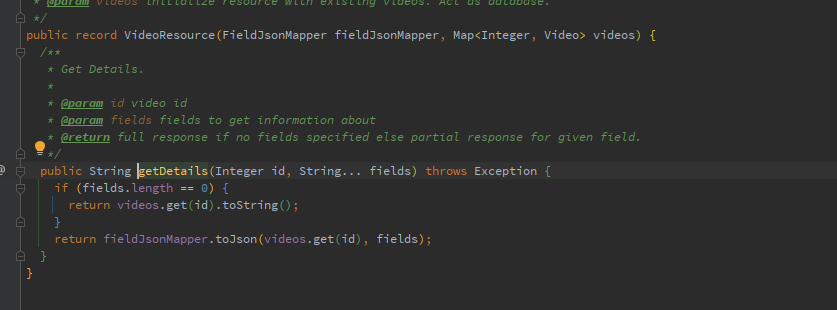
获取某个数据的局部数据,但是对我来说更多写多一条协议
Pipeline
Netty 专属
Poison Pill(说是并发,但更像行为)
The Poison Pill design pattern is used to gracefully shut down a service or a producer-consumer system by sending a special message (the "poison pill") to message queue which indicates that no more messages will be sent, allowing the consumers to terminate.
终结Event
Private Class Data(说是结构,但更像行为)
优先使用不可变类
Value Object(说是结构,但更像行为)
不可变类,lombok @Value
Property
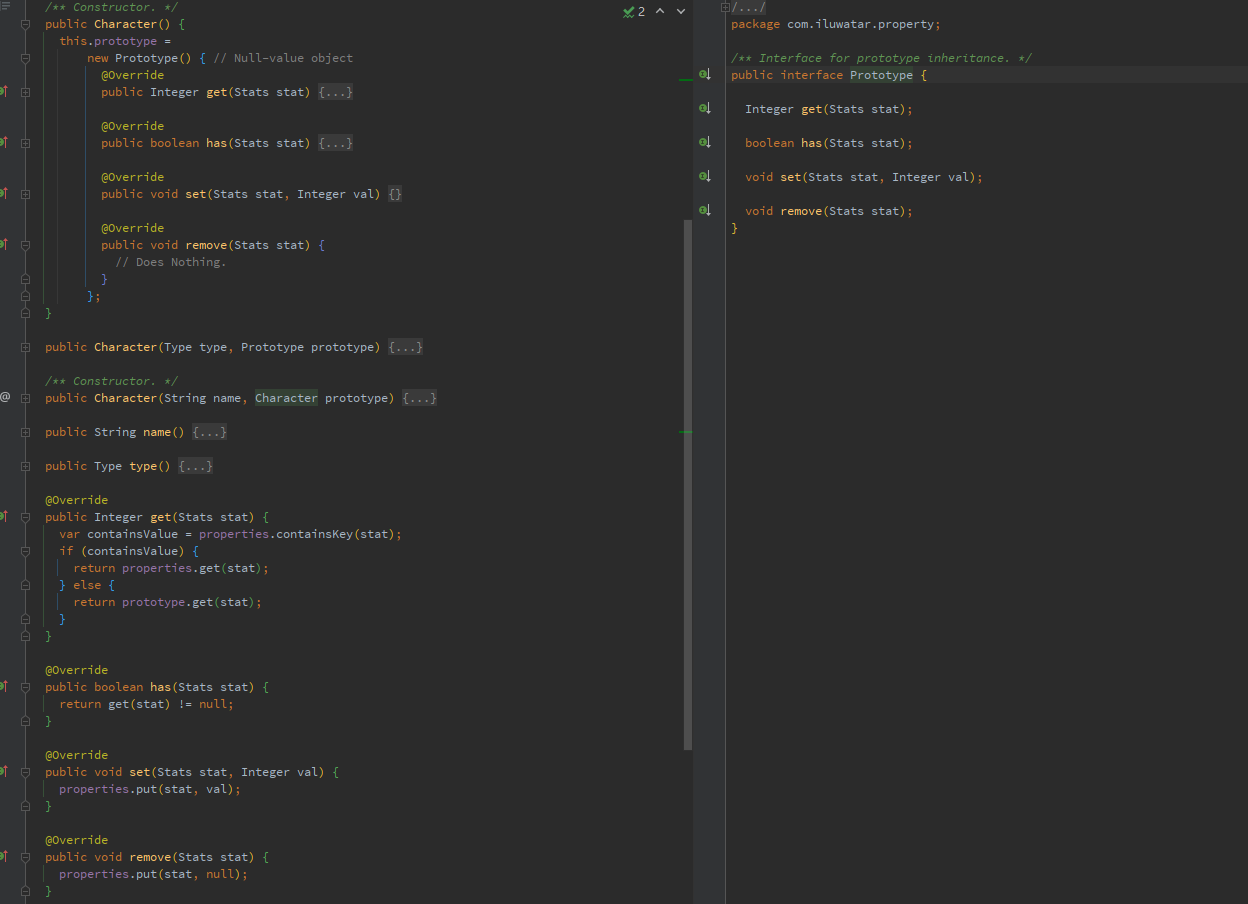
Map + Null Object
Servant(结构->行为 卢哥的什么er)
Servant offers some functionality to a group of classes without defining that functionality in each of them. A Servant is a class whose instance provides methods that take care of a desired service, while objects for which the servant does something, are taken as parameters.
Specification
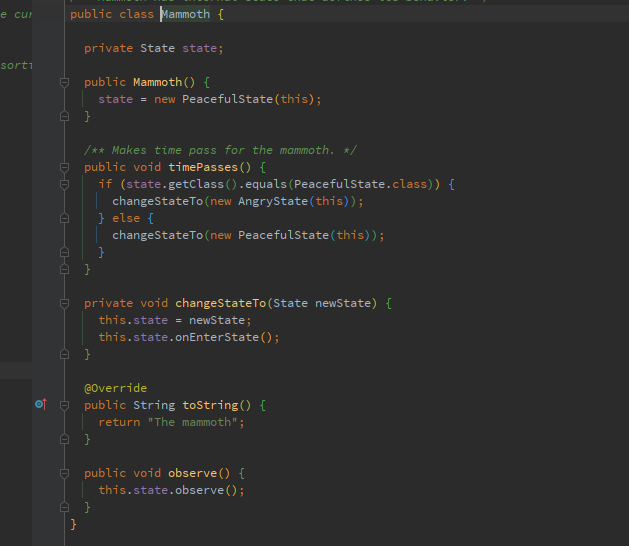
state
Strategy
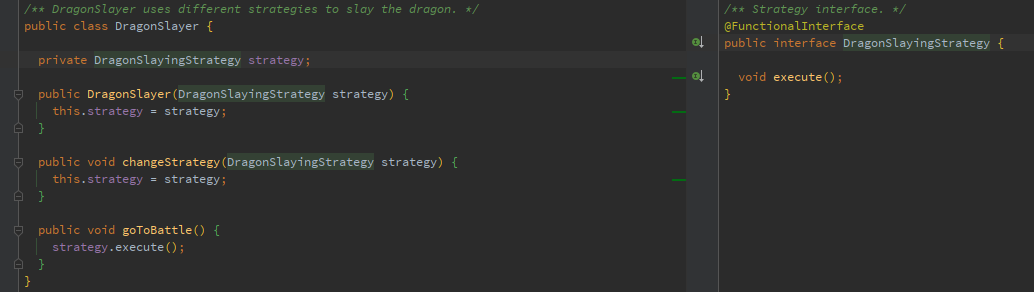
我一般不要左边的类,Map<Key,Strategy>
Template Method (同上)
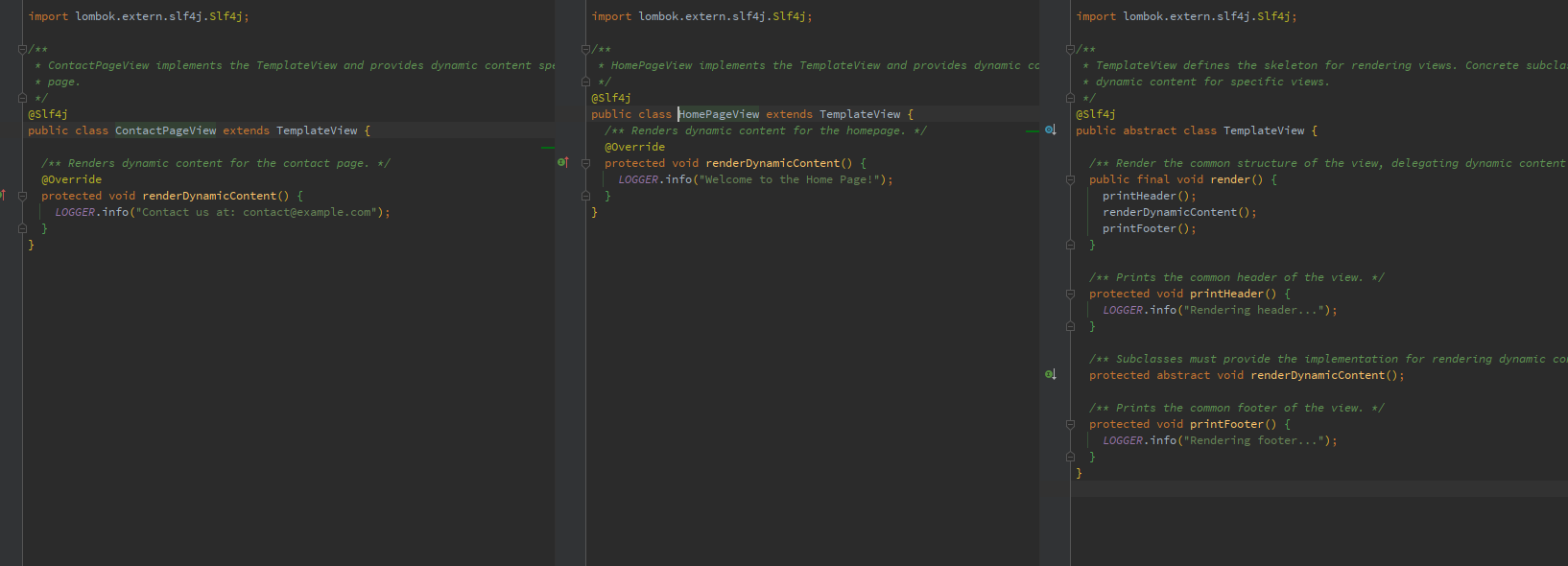
Define the skeleton of an algorithm in an operation, deferring some steps to subclasses. Template Method lets subclasses redefine certain steps of an algorithm without changing the algorithm's structure.
Template View(同上)
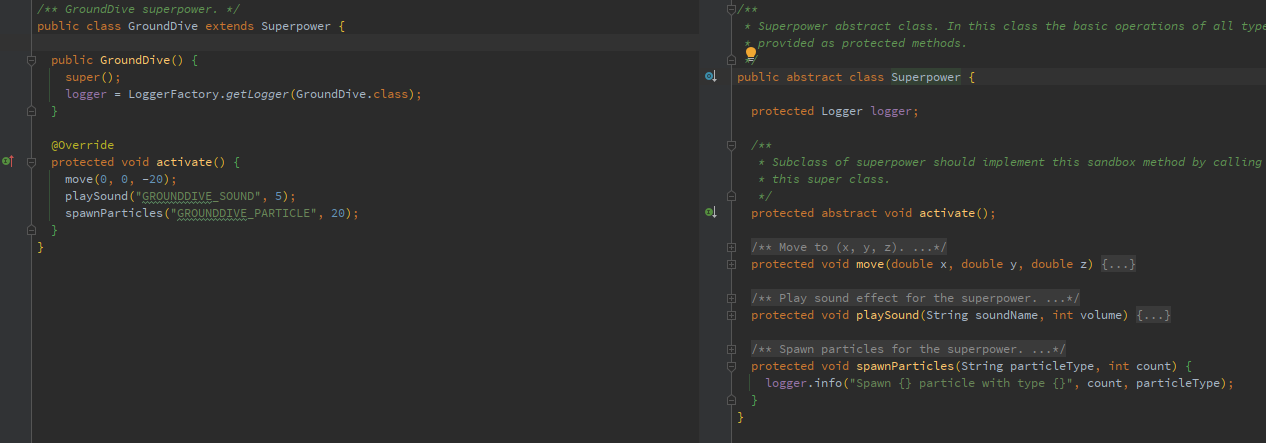
Subclass Sandbox
Unit of Work(数据->行为)
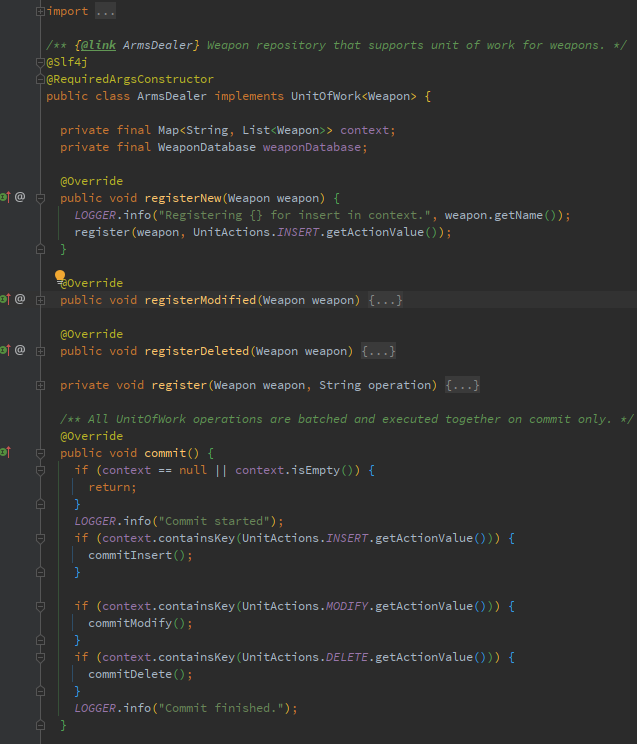
register把action添加队列,就是一个对于全部对象入库好的方式
Visitor
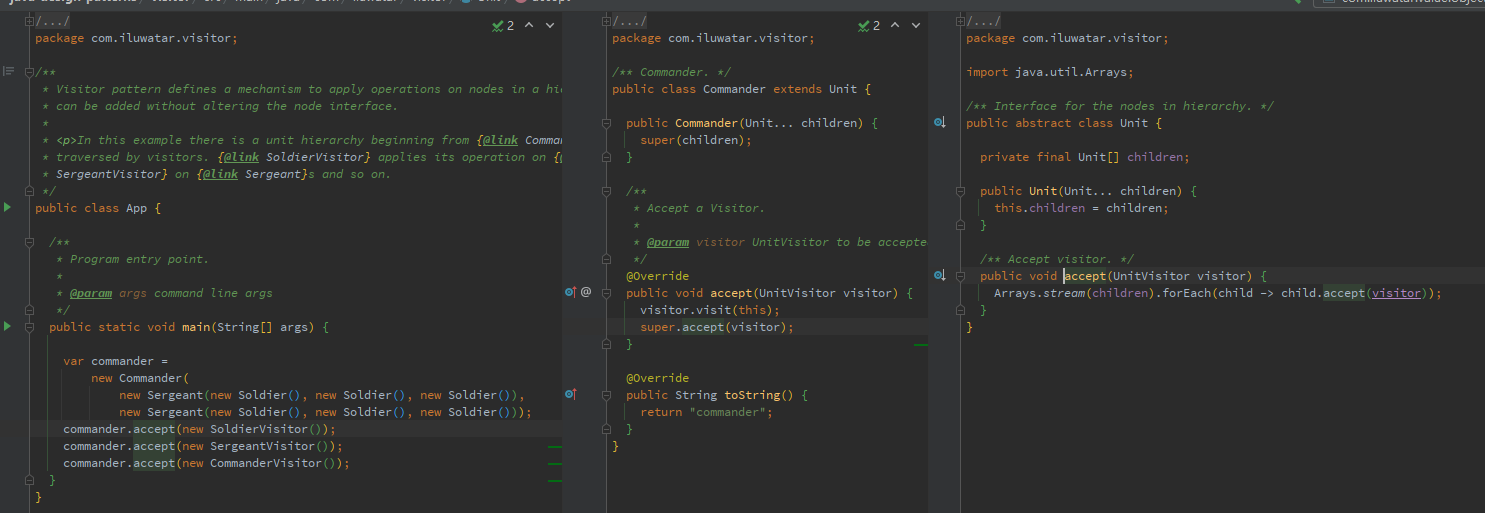
创建
builder(不用说了吧)
abstract-factory
Map<FactoryType, FactoryInterface>
dependency-Injection
execute-around

factory
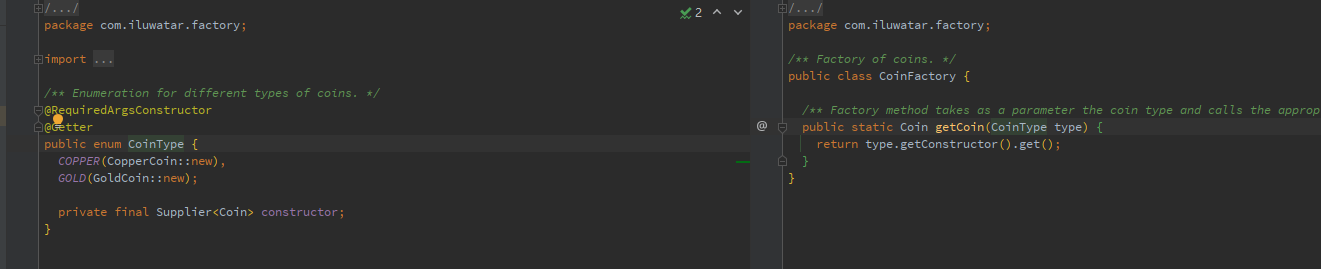
Factory Kit
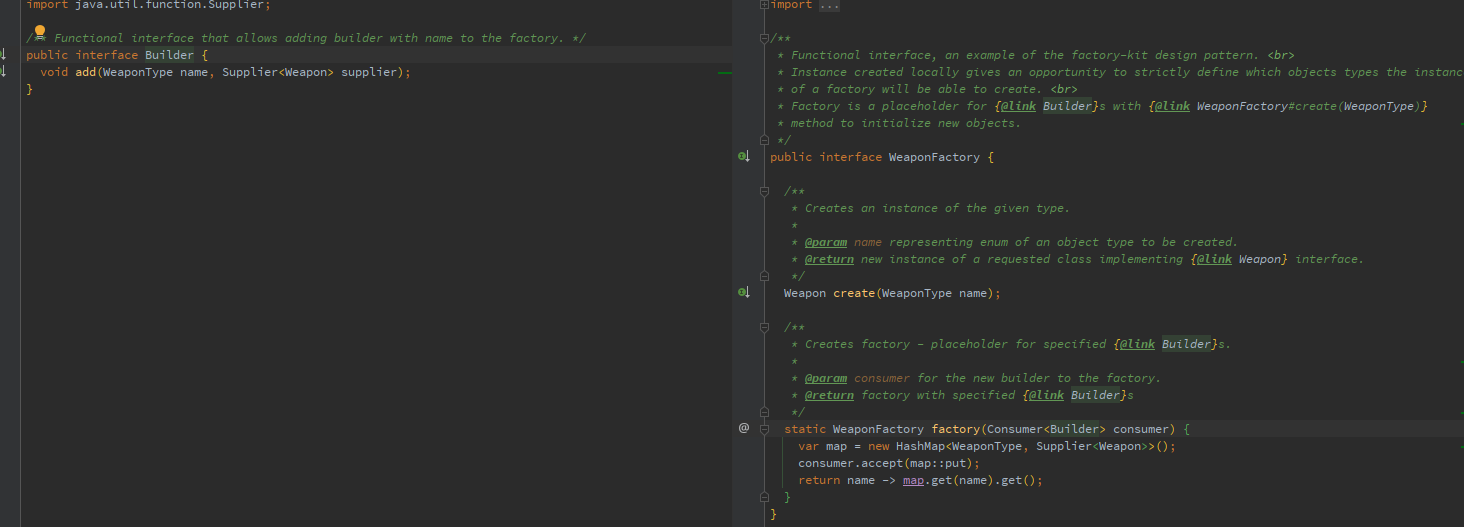
Factory Method
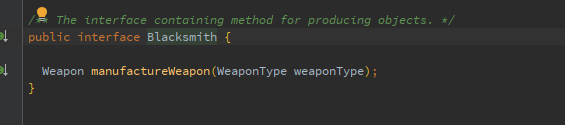
Multiton
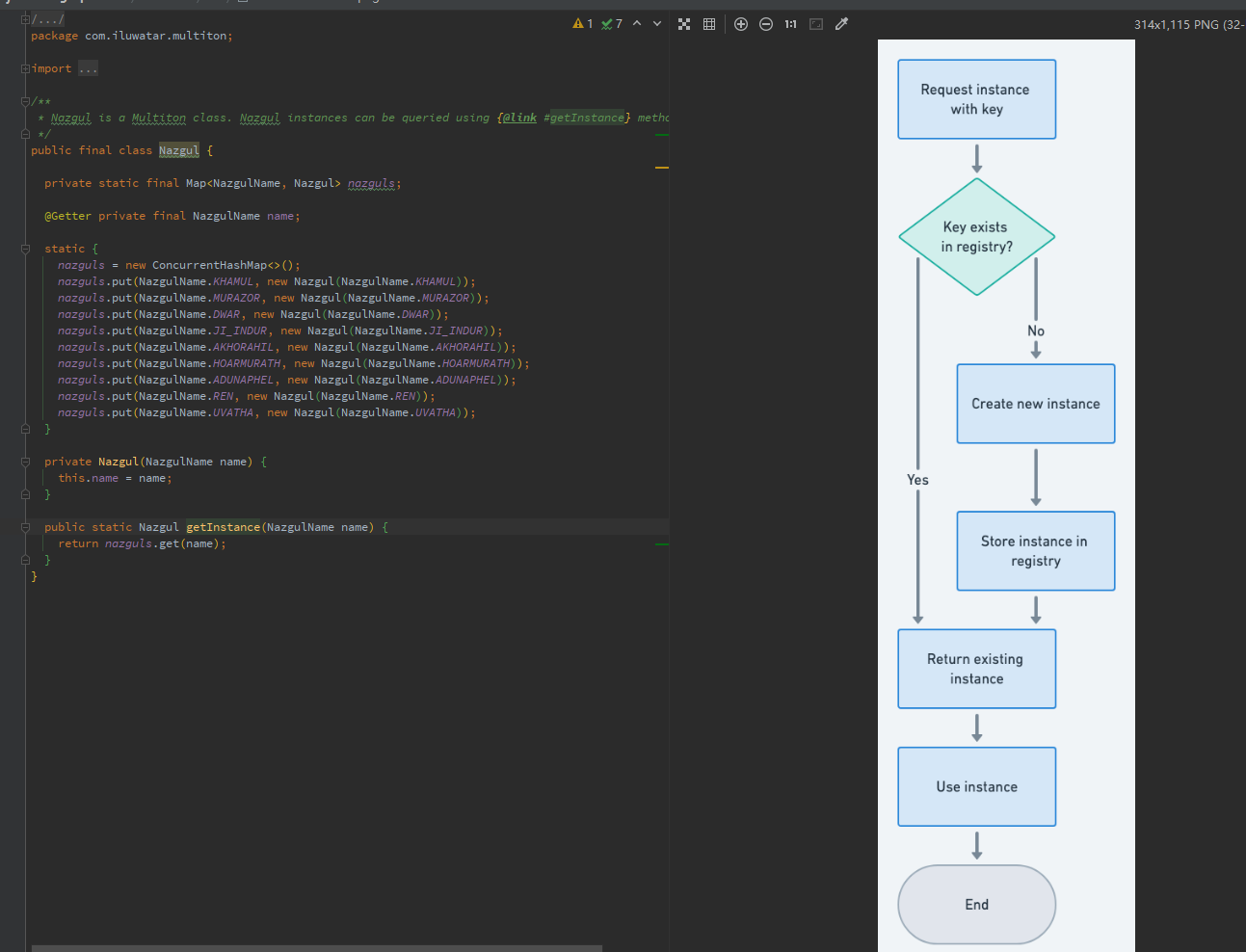
Object Pool

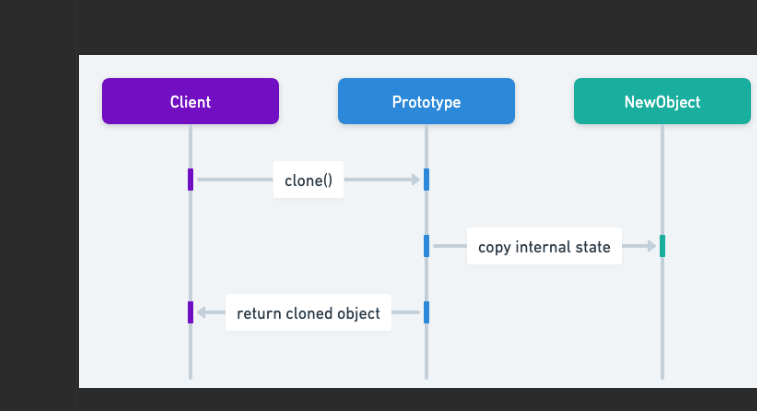
Prototype
The Prototype pattern is a creational design pattern in software development. It is used when the type of objects to create is determined by a prototypical instance, which is cloned to produce new objects. This pattern is used to: - avoid subclasses of an object creator in the client application, like the abstract factory pattern, does. - avoid the inherent cost of creating a new object in the standard way (e.g., using the 'new' keyword)
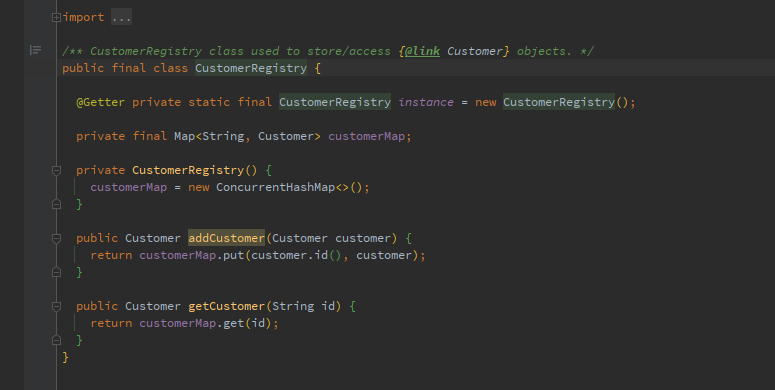
registry
Singleton
推荐枚举
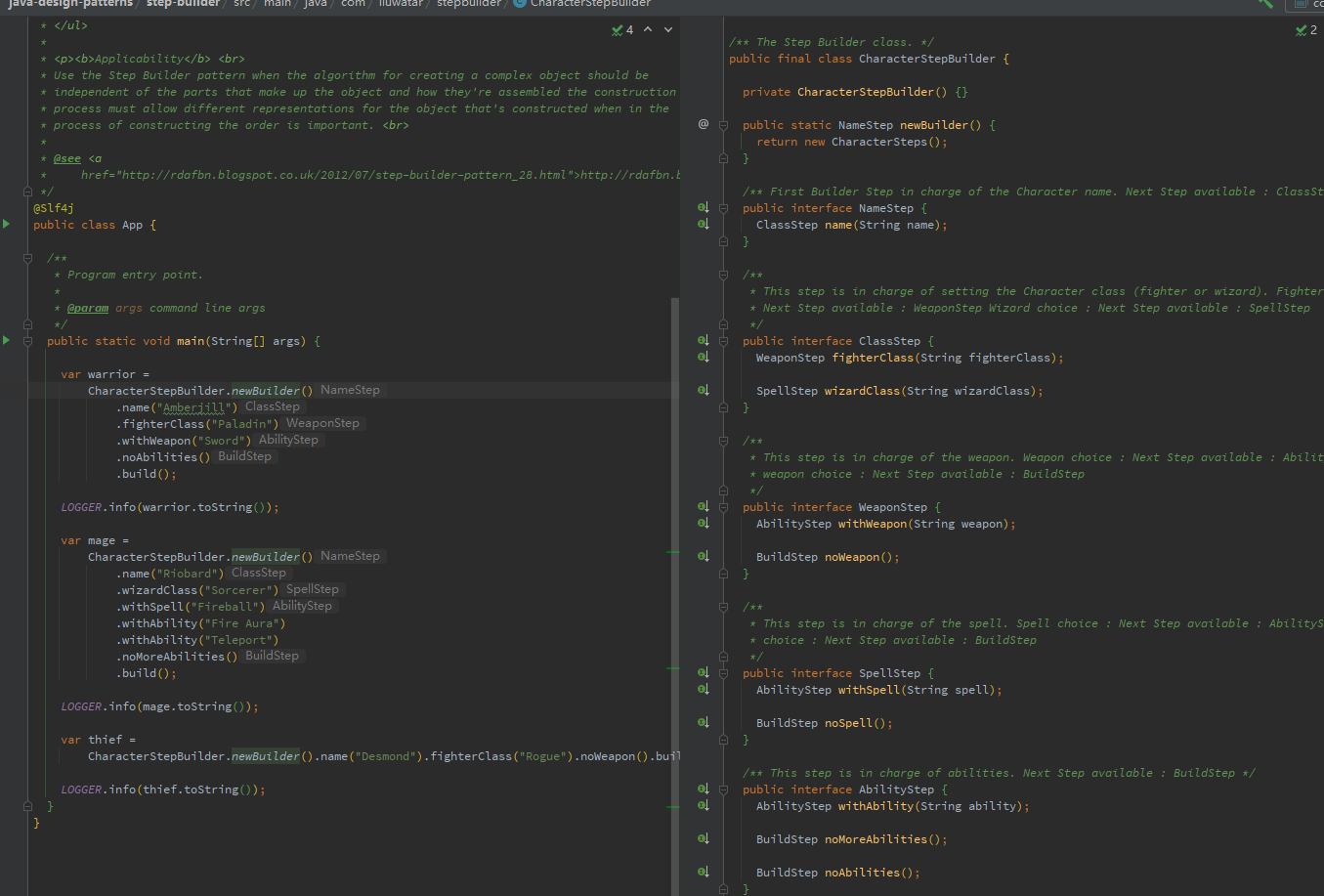
Step Builder
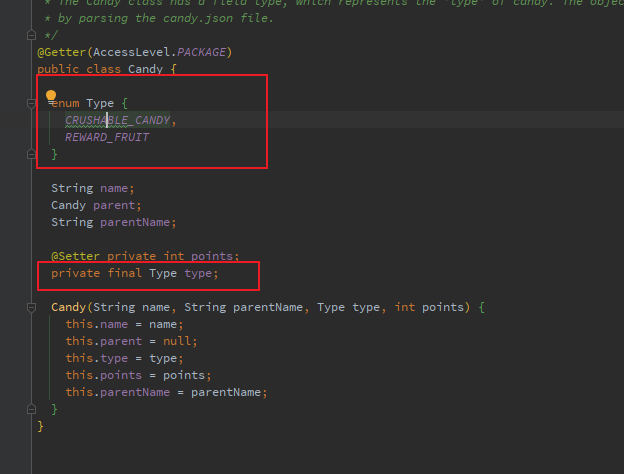
Type Object
结构
bloc(类似状态机)

business-delegate
像mvc结构,control -> service -> dao control不直接操作dao
clean-architecture
像mvc结构,control -> service -> dao control不直接操作dao,跟business-delegate不懂,这了的service包含多个dao,
command-query-responsibility-segregation
像mvc结构,control -> service -> dao control不直接操作dao,其中 control, service都是接口
component
组合大于继承
composition
description: "Explore the Composite Design Pattern in Java. Learn how to compose objects into tree structures to represent part-whole hierarchies, making it easier to treat individual objects and compositions uniformly. Ideal for graphical user interfaces, file systems, and organizational structures."
继承或实现同一个接口,然后嵌套组合起来调用
composition-entity
类似门面模式,将有关联的对象封装起来
composition-view
java web 暂时不管。
data-bus
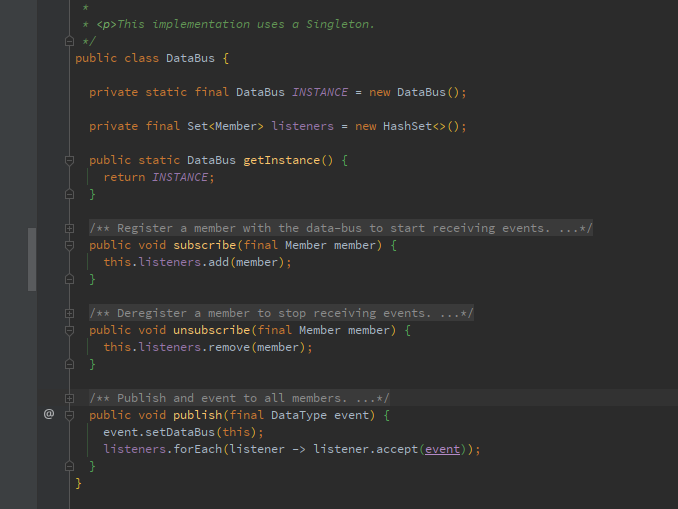
event-aggregator
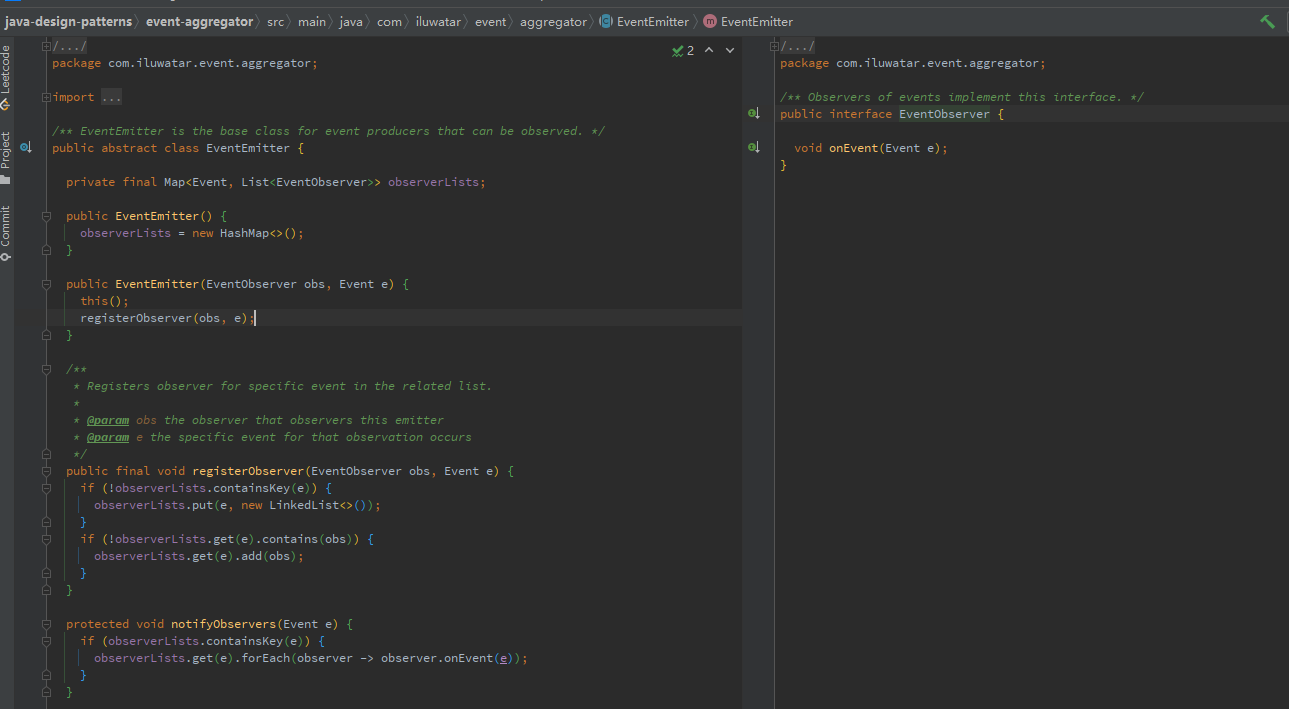
Event-Driven Architecture
event-bus
Decorator
A impl 接口, B impl 接口, 同时 A组成B
Domain Model
类包含了 业务逻辑 和 CRUD
Event Sourcing
感觉内部战斗可以使用这个方式记录战斗操作,玩家服对于资源也可以用上
Facade
对于复杂业务的一个封装
Session Facade
同上不过是Service层面上的,Facade是业务层面。不在同一层级,大差不差
Flux
链接: facebook flux
注册,回调
Flyweight
大量对象集合创建,统一分配。
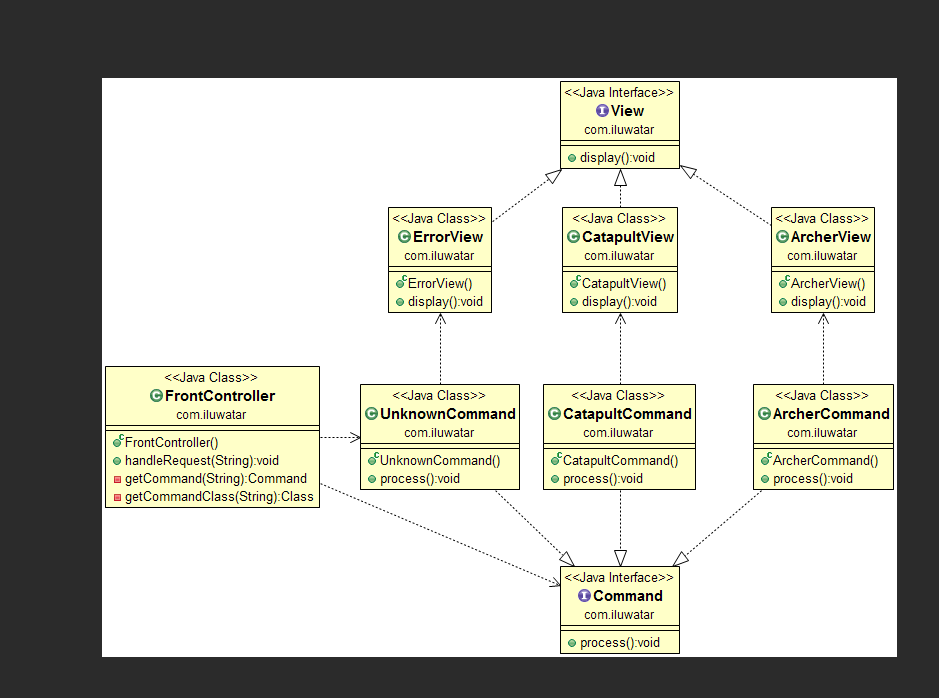
Front Controller
统一请求入口,然后分开请求后的业务细节
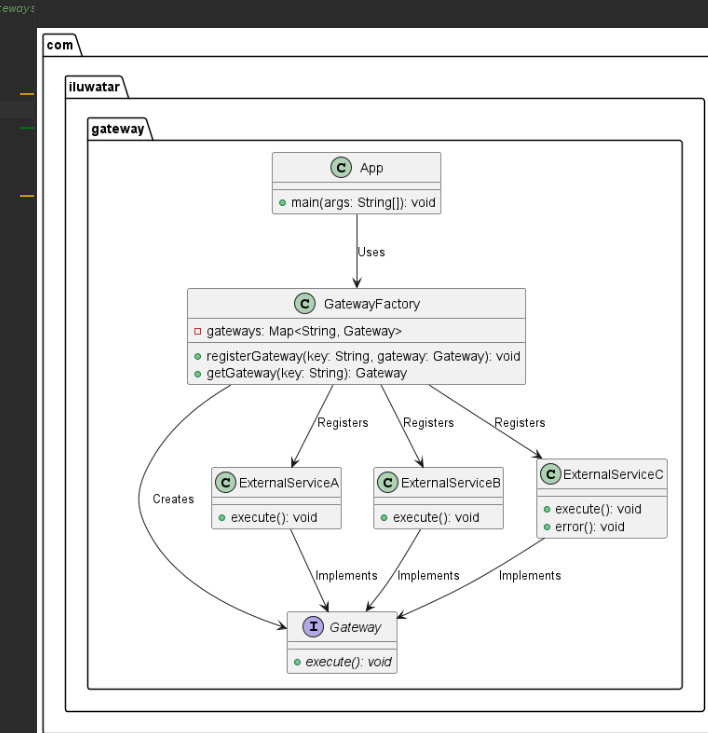
Gate Way(类似Front Controller)
Hexagonal(六边形)
永远有一层胶水层
Intercepting Filter(过滤链)
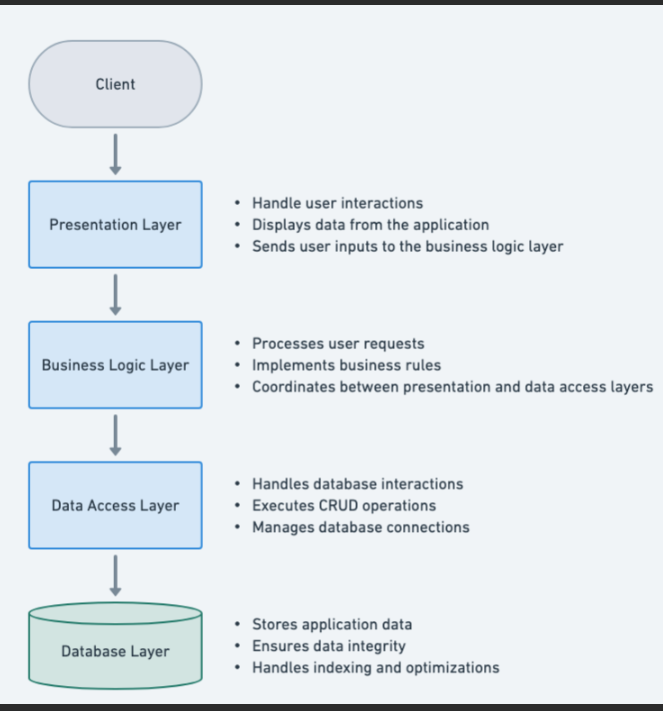
Layered Architecture
Model-View-Controller (MVC)
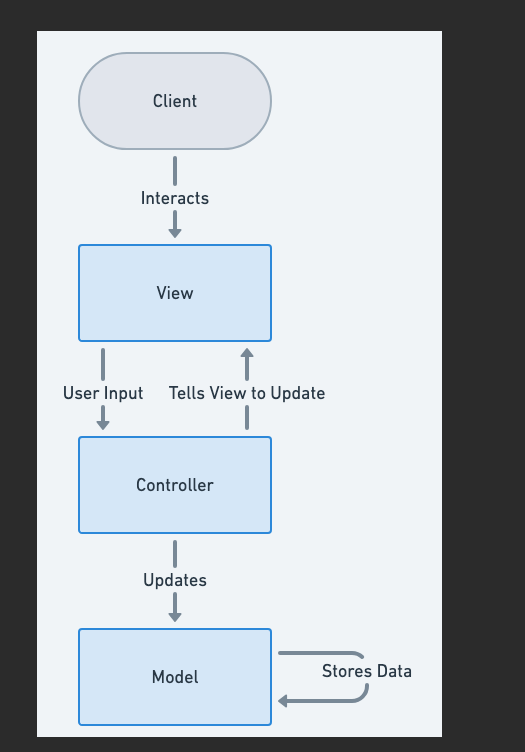
Controller包含model 和 view, model是数据, view是页面。维护控制双方
controller收到新的model渲染view
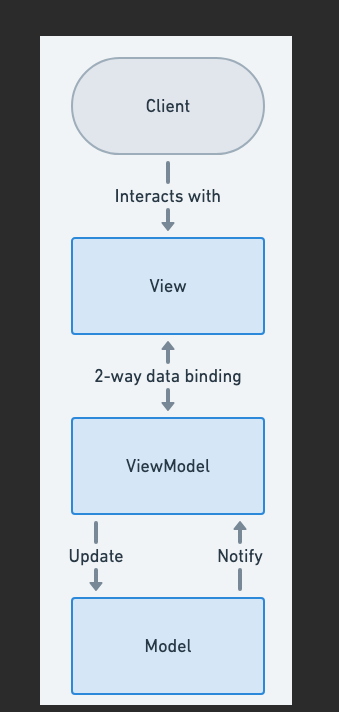
Model-View-ViewModel
相对于controller,viewmodel分离了 model 和 view耦合在controller的逻辑
Model-View-Intent (MVI)
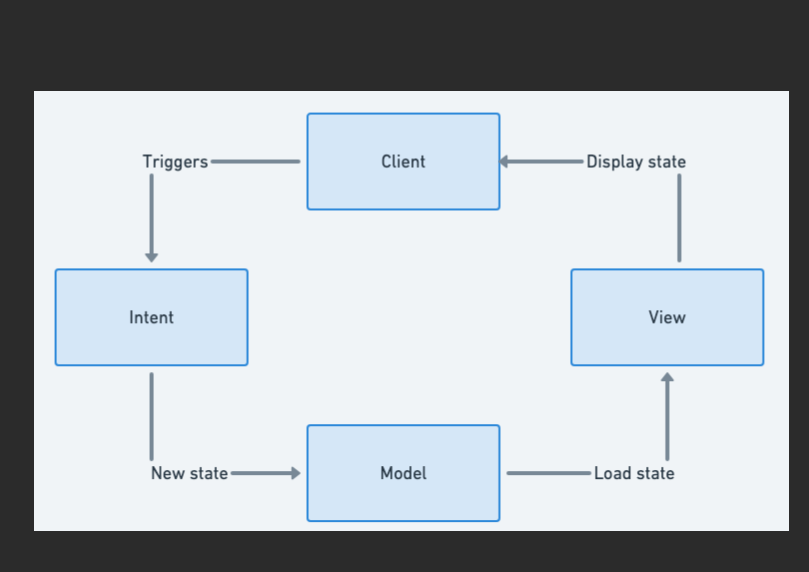
Model-View-Intent is a pattern for implementing user interfaces. Its main advantage over MVVM which it closely mirrors is a minimal public api with which user events can be exposed to the ViewModel. In case of the MVI every event is exposed by using a single method with 1 argument which implements UserEvent interface. Specific parameters can be expressed as its parameters.
Model-View-Presenter (MVP)
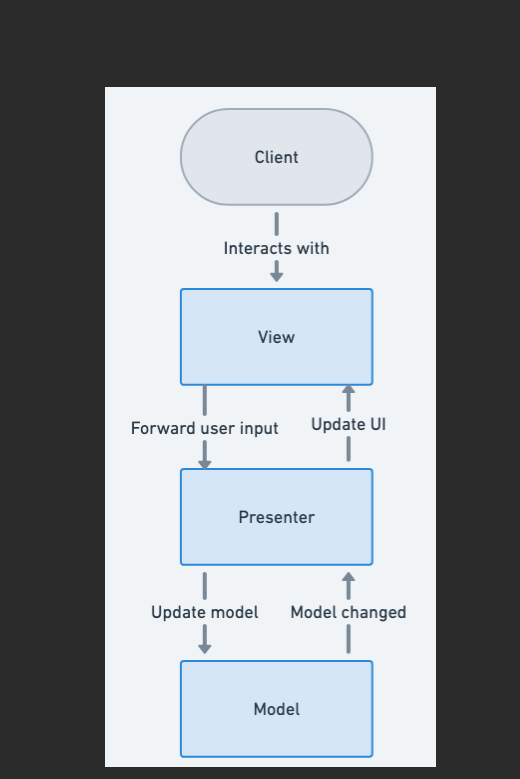
每一个view都有一个presenter来控制
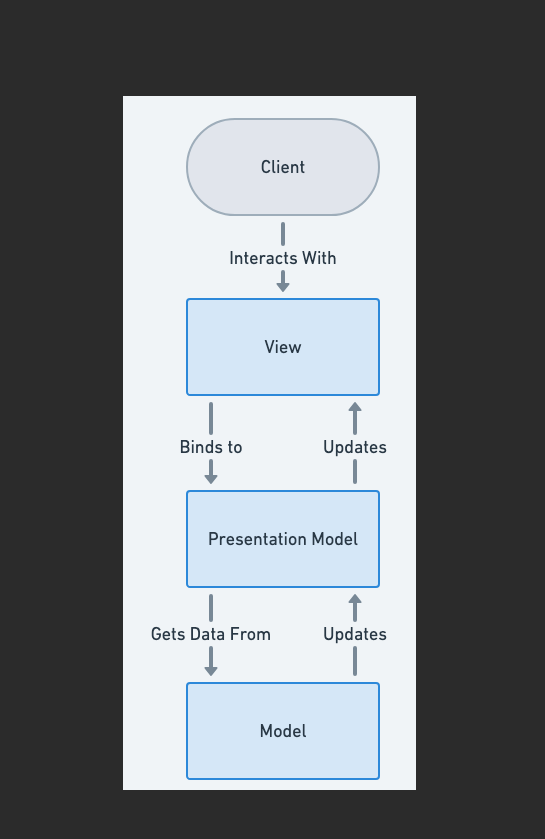
Presentation Model(同上大差不差吧)
Page Controller
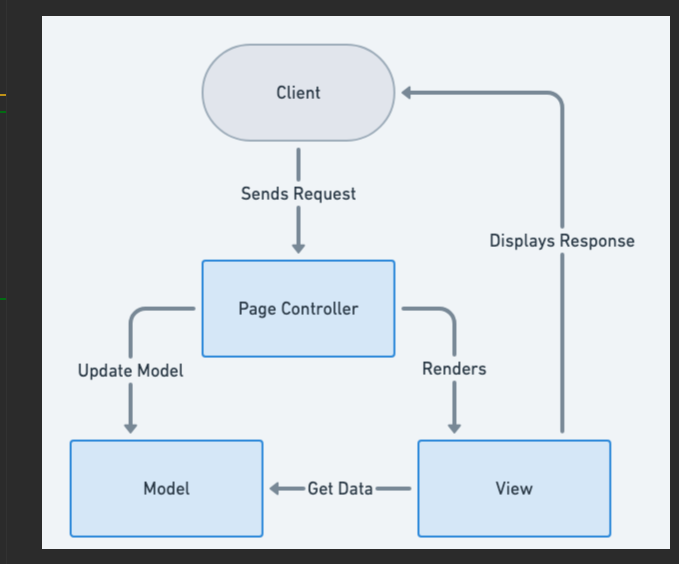
Service to Worker
虽说是页面的设计模式,细看想是卢哥的gameCmd。全部请求到一个地方,通过已经注册的gameCmd调用对应模块的业务。然后返回给客户端
Money(封装了一个钱的对象处理金额细节)
Monolithic

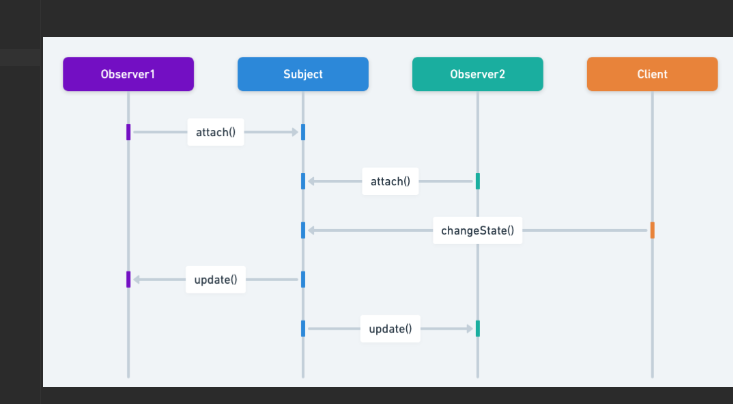
Observer
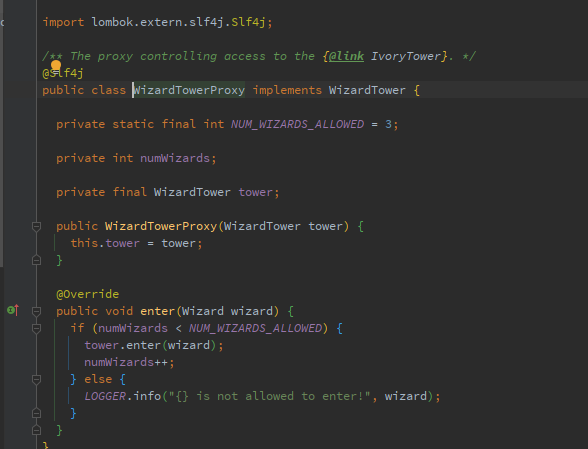
Proxy
Publish-Subscribe

Queue-Based Load Leveling
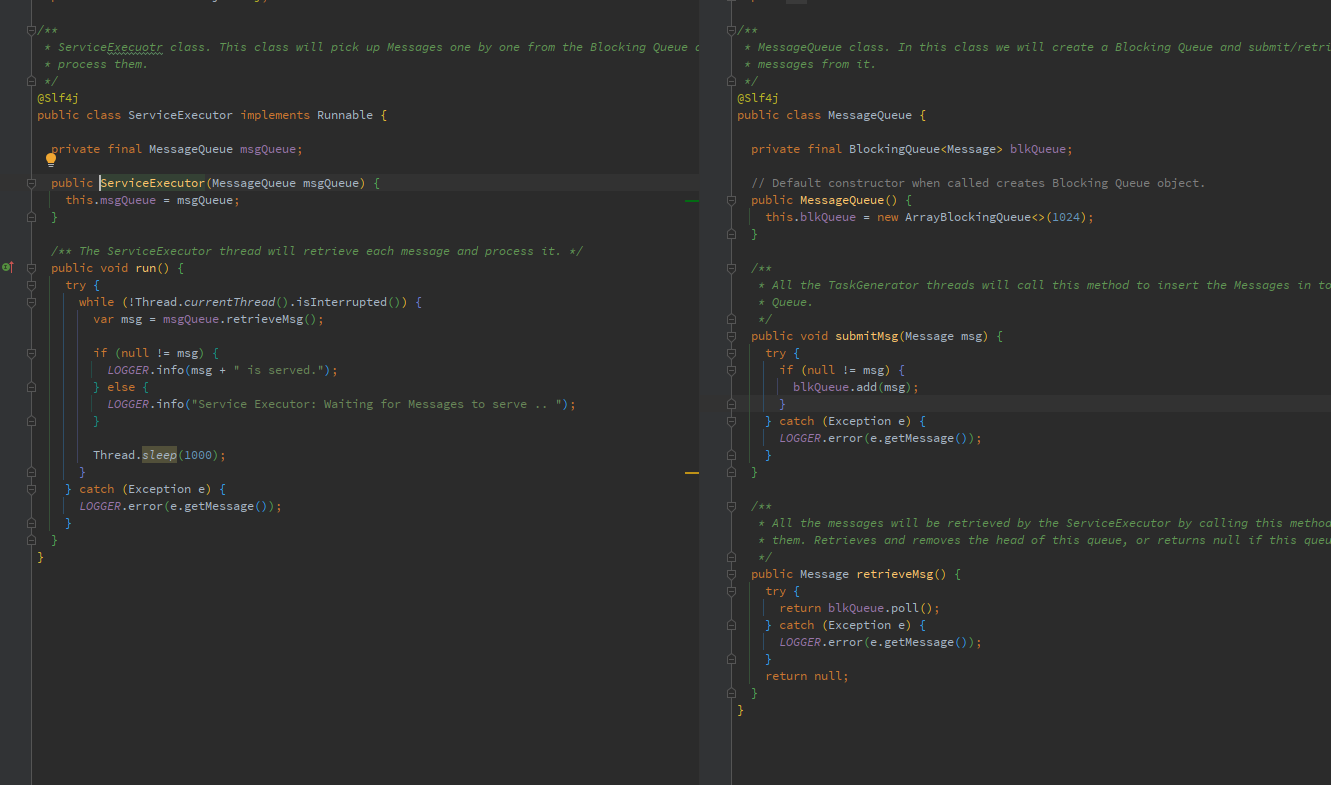
Role Object
Separated Interface
Service Layer
Special Case
业务处理的时候,一般检验不过直接return,不如在带有返回值的业务方法,使用该模式
不直接return null,return 一个对象,代表这次处理的结果。比return 更好
twin
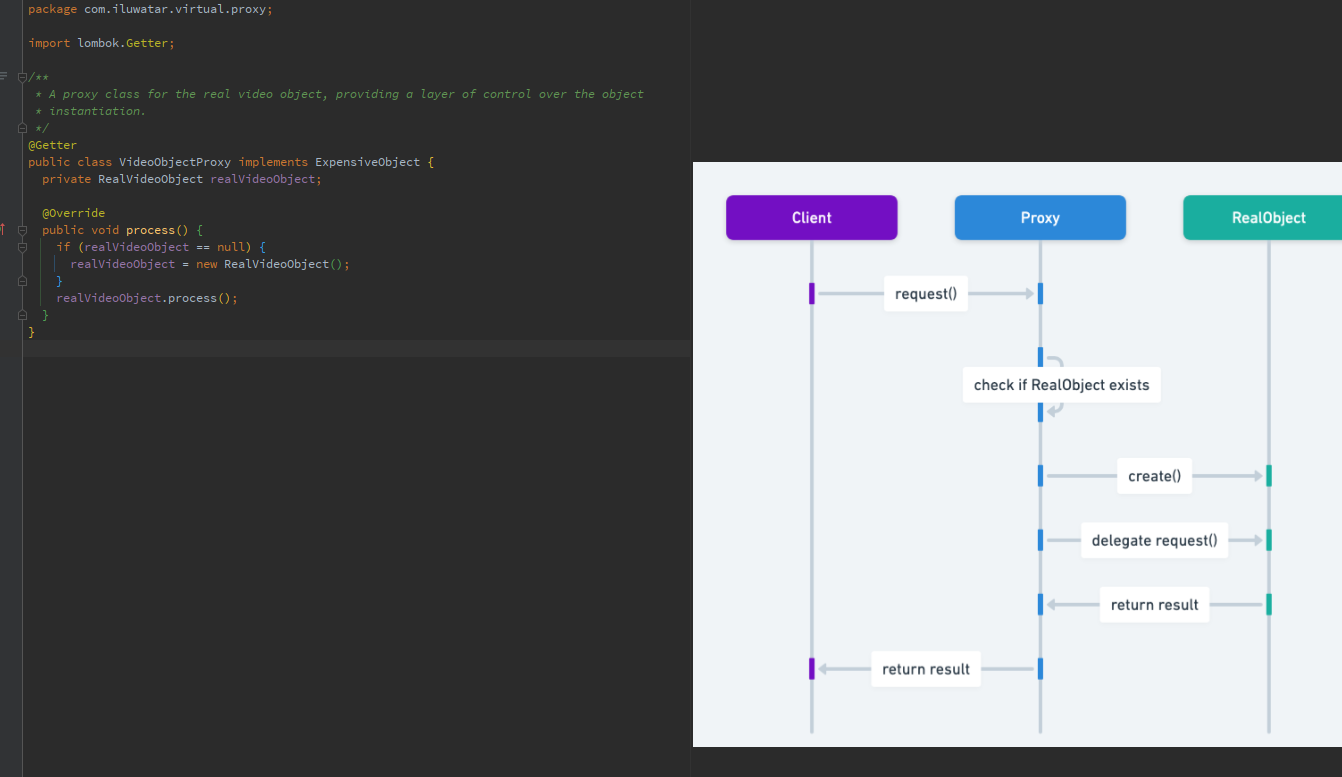
Virtual Proxy
线程
active-object
对象持有线程独立运行任务,遇到的项目大多都是玩家对象持有队列,归去其中一个线程执行
actor-model
actor -> sendMsg -> mailBox <- takeMsg <-otherActor
async-method-invocation(太旧了可以不用管)
每一个任务创建一个线程去处理,请求任务进度的时候 await
backpressure(reactor中的背压 )
背压是反应流中的一个重要概念,可以理解为,生产者可以感受到消费者反馈的消费压力,并根据压力进行动态调整生产速率
subscribe -》我能处理10个 -》 publisher -》按一定规则发送10个业务
balking(慢行 太旧了可以不用管)
多个线程操作一个对象,对象上锁+状态,状态不对不执行
Double-Checked Locking
Event-Based Asynchronous

线程有点粗暴了,可以采用线程池提供异步或则同步的解决方式。但是一般抛出事件异步一下或则立即执行就好了,暂时没想到延迟抛出的使用场景
Event Queue
有一个message数组,int tail, int head两个字段。分别由两个线程控制,生产线程控制head++,消耗线程控制tail++
Fan-Out/Fan-In
The Fan-Out/Fan-In design pattern in Java aims to improve concurrency and optimize processing time by dividing a task into multiple sub-tasks that can be processed in parallel (fan-out) and then combining the results of these sub-tasks into a single outcome (fan-in).
可以用在加载配表,基于不同玩家缓存策略也可以尝试采用。但是因为fan-in需要等待全部任务完成。可能只适用于启服的时候少量拉取活跃玩家的数据
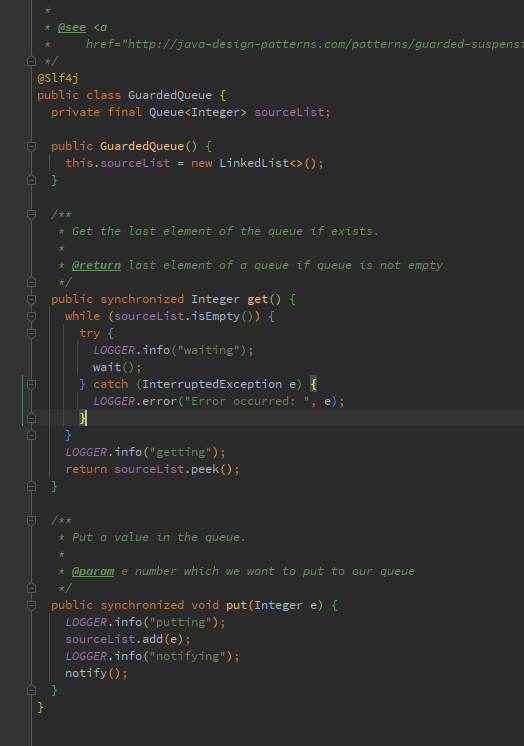
Guarded Suspension
Half-Sync/Half-Async
一个任务里面,可能存在不需要异步的操作,譬如检验。如果校验不过就不需要后续的异步操作。可以节省一些资源
Leader-Followers
一组Worker里面有一个leader,每当任务过来交给leader做,同时移除leader,当任务做完,先前的leader以worker身份重新加入回worker组
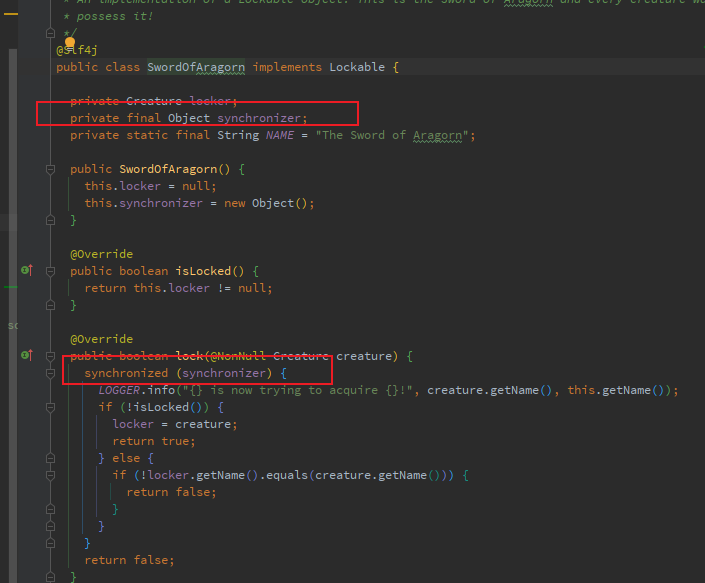
Lockable-object
Monitor
synchronize方法。底层就是 monitor in/out
Optimistic Offline Lock
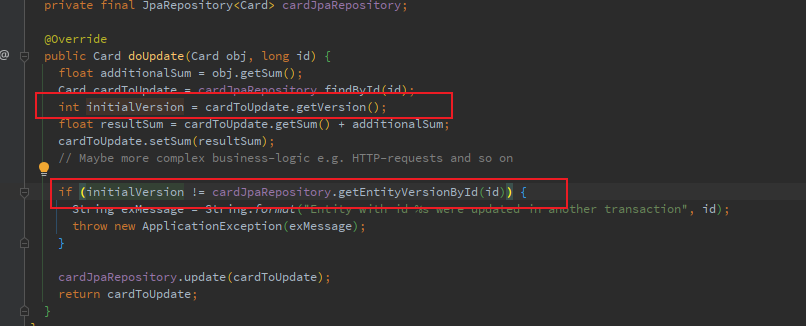
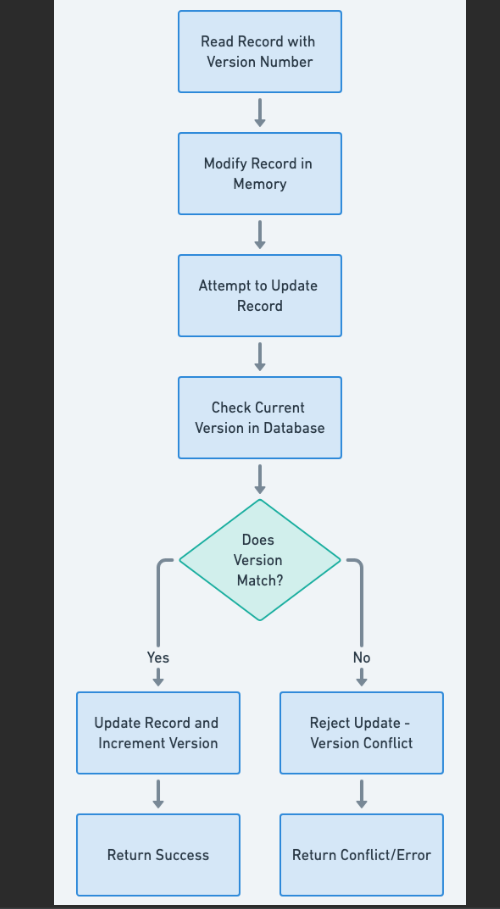
要确保version更新是一致的,不能两个线程同时get出来同一个versionId
Producer-Consumer
Promise
The Promise design pattern is used to handle asynchronous operations by providing a placeholder for a result that is initially unknown but will be resolved in the future.
Reactor
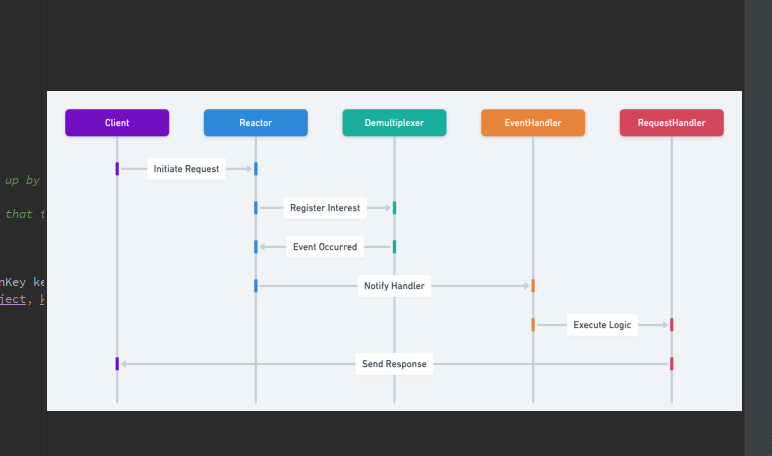
重点在于EventHandler可以采取不同的方式处理handler,但这不是reactor的重点。响应式变成,基于事件驱动。netty loop
Thread-Pool Executor
Version Number
CAS version 或 synchronize get version 。比较version是否合适更新
函数
callback
传个lambda过去回调
collection-pipeline
流式编程
combinator
command (跟callback一样)
currying
Function Composition(多思考函数的组合)
Lazy Loading
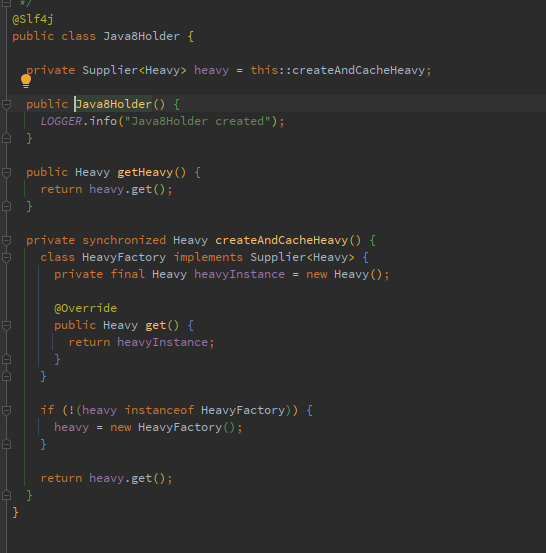
Monad(很漂亮检验方式)

Trampoline
使用Stream.iterate把递归变为迭代
数据
abstract-document
用map嵌套map存全部数据
data-access-object(dao)(跟data-mapper没多大区别)
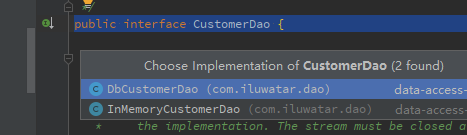
data-mapper(跟dao没多大区别)
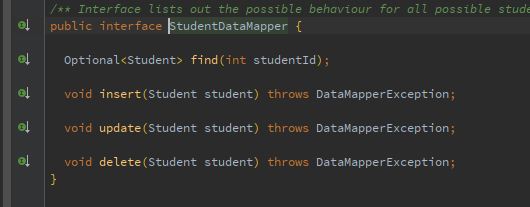
Table Module
一个类包含了一个数据对象的全部操作,业务逻辑,事务sql操作等等,mapper低级版本
Repository

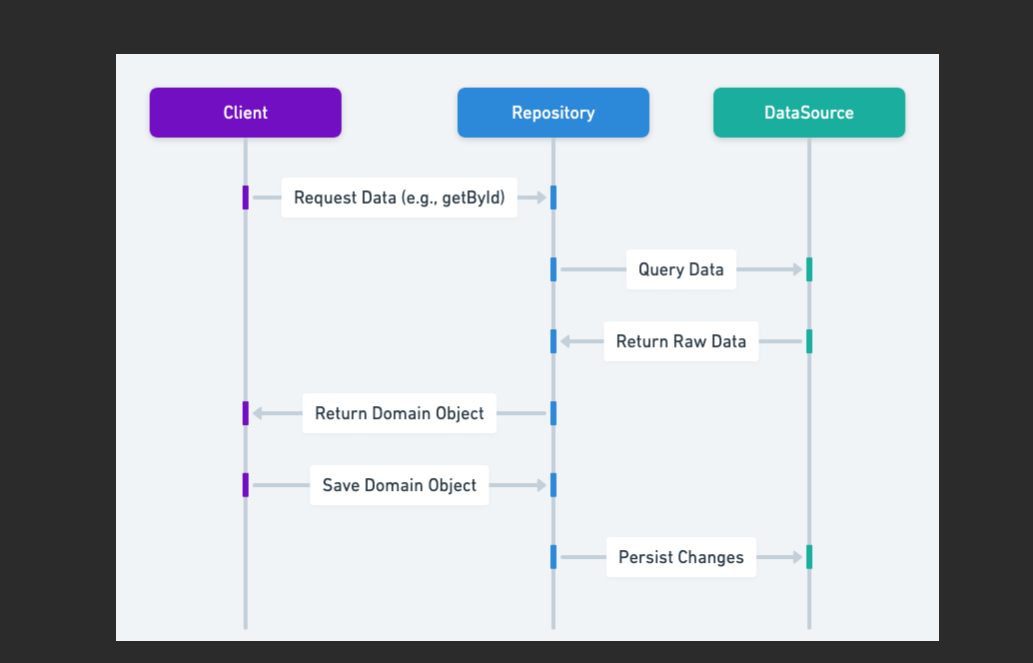
Resource Acquisition Is Initialization (RAII)
Serialized Entity
Serialized Entity Pattern allow us to easily persist Java objects to the database. It uses Serializable interface and DAO pattern. Serialized Entity Pattern will first use Serializable to convert a Java object into a set of bytes, then it will using DAO pattern to store this set of bytes as BLOB to database.
Serialized LOB(Large Object)
BlobSerializer
ClobSerializer
转换后在入库,出库时候解析
Sharding
一个map存储的数据大了,拆分多个小map
HashShard(hash 的分配)
LookupShard(随机分配唯)
RangeShard(类型分配)
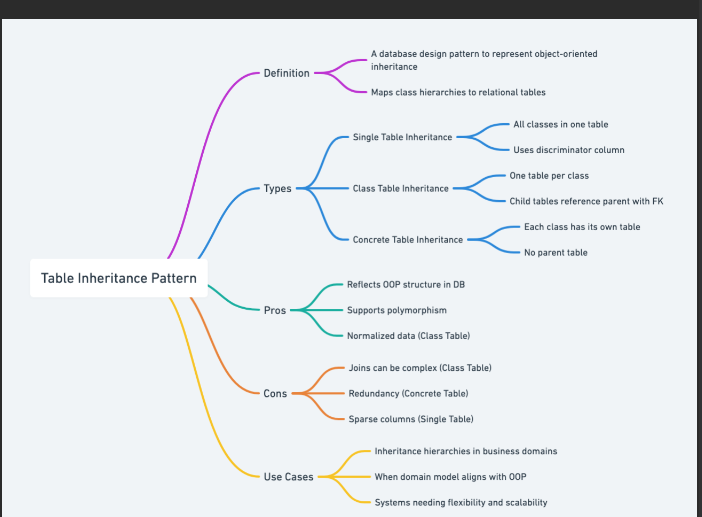
Table Inheritance Pattern
Single Table Inheritance
一个表存一个类的多态数据,car truck 两个类的数据都存在 Vehicle的表里面。
感觉没啥好处,car 和 truck又不能转换。数据量大了还要拆分出来
Table Inheritance
有一个总表存数据,字表存对应的关键key
Transaction Script
一个service完成 crud全部过程,包括事务,接口
重构(游戏里面重构多数直接重写了)
adapter
A -》new B(A a)-> b.run(){a.run}如果设计前就把A提升到接口,就没必要用这种方法了。不是接口这种改也会改到很多代码。不如字节增强
anti-corruption-layer
AntiCorruptionLayer(Old old)
New(AntiCorruptionLayer)-》if(!antiCorruptionLayer.handle){new.handle}
在新和旧中间隔了一层,当初改活动框架的时候是manager(New, Old)-> if(isNew) {} else
bridge
A -》new B(A a)-> b.walk(){a.run}A B两个是不同的接口,适用于在新的方案里面,包含旧的处理
Extension Objects

对已有的实现类或则抽象类重构可以用到。
Strangler
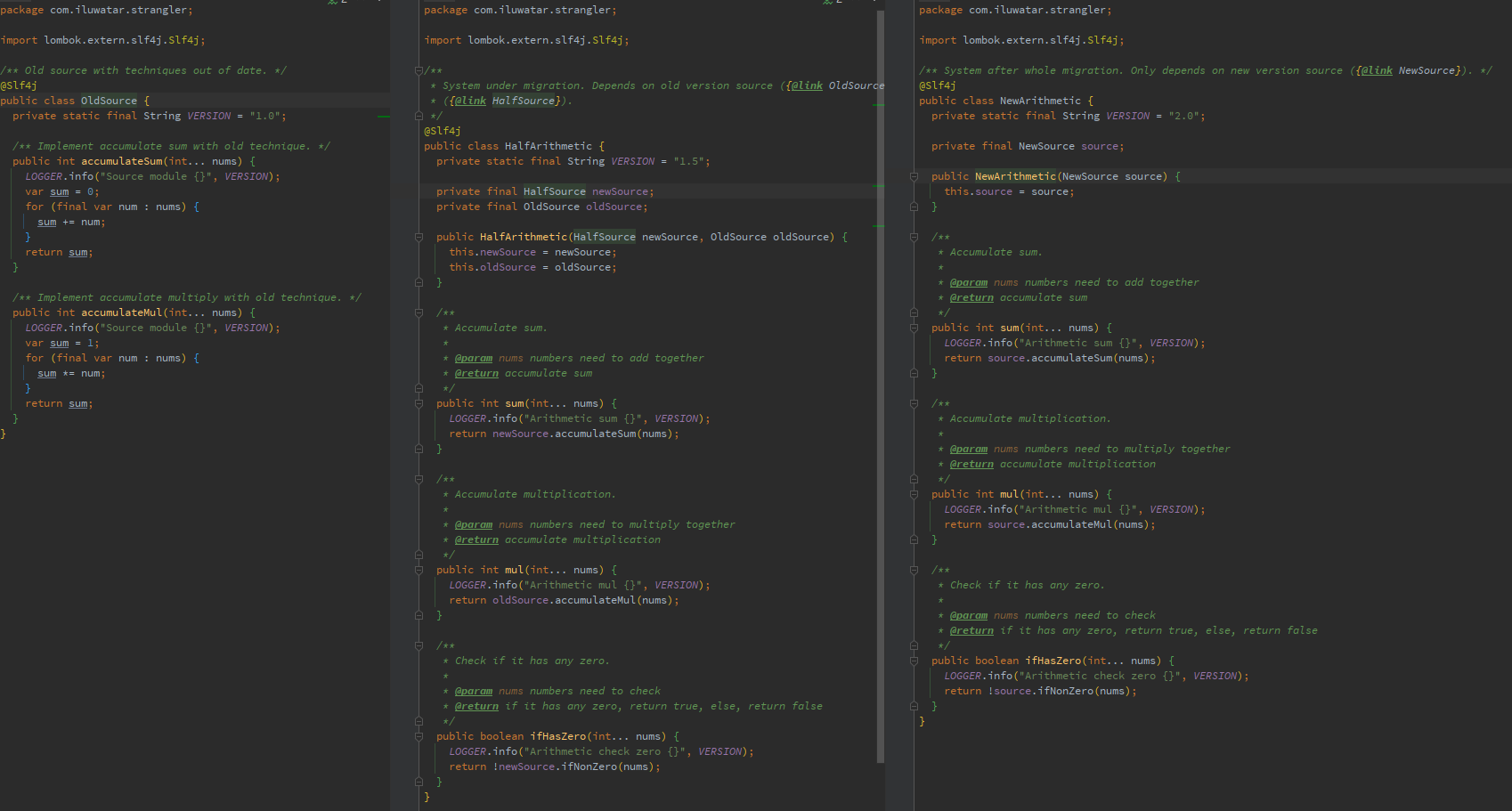
代码只是核心简单展示了一个过程,但是里面应该很多细节。如下图更合适
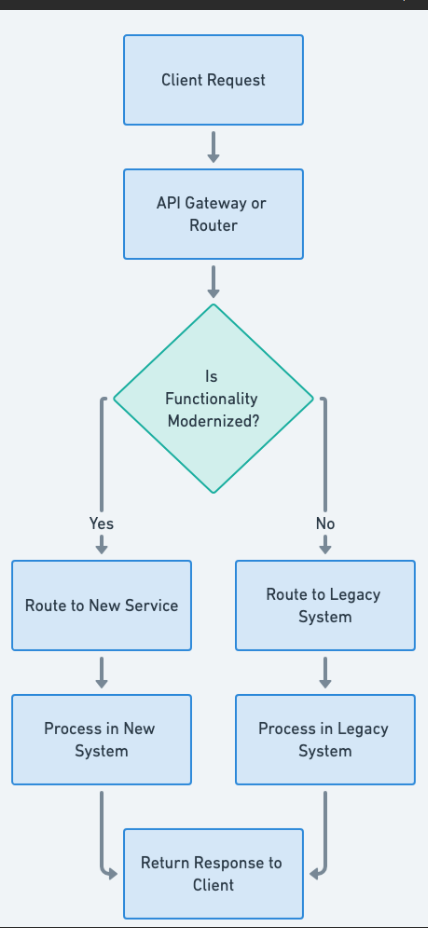
卢哥的当初slg项目,创建新的模块2, 抽了了一个新的项目,通过spring注入新的游戏cmd,if(!(new cmd can handle))old cmd handle
网络
ambassador(在游戏中应该很少用到)
每个 client 拥有独立的 ambassador,ambassador去全局寻找合适的服务器。
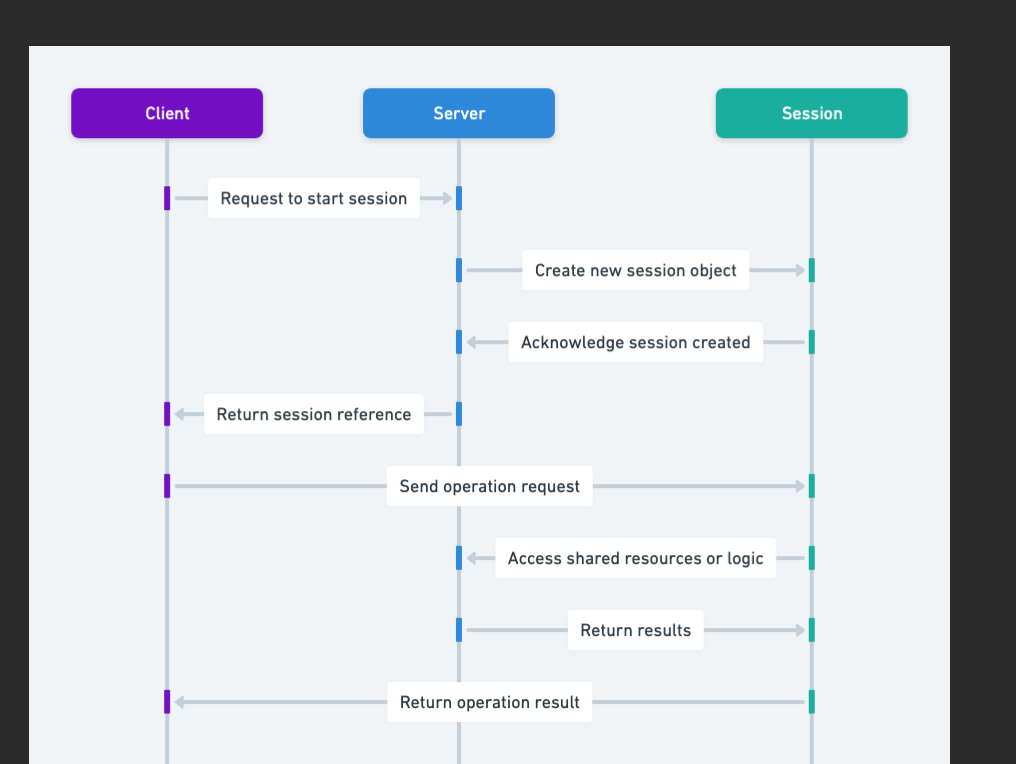
Server Session
测试
arrange-act-asset(spock given-when-then)
重点还是方法需要无副作用,void方法 只能存在与数据对象
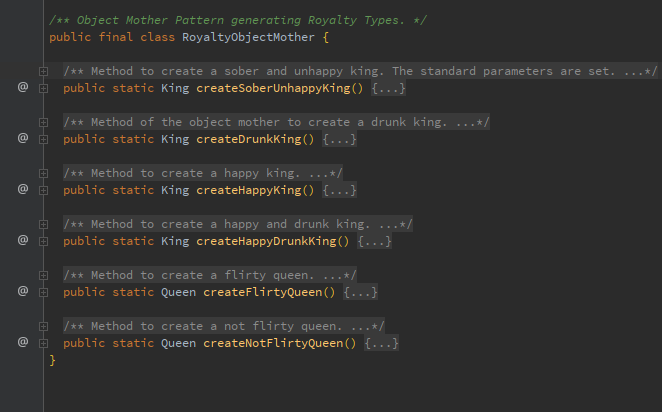
Object Mother
Page Object
org.htmlunit一个框架把页面变成一个对象有助于代码直接测试。
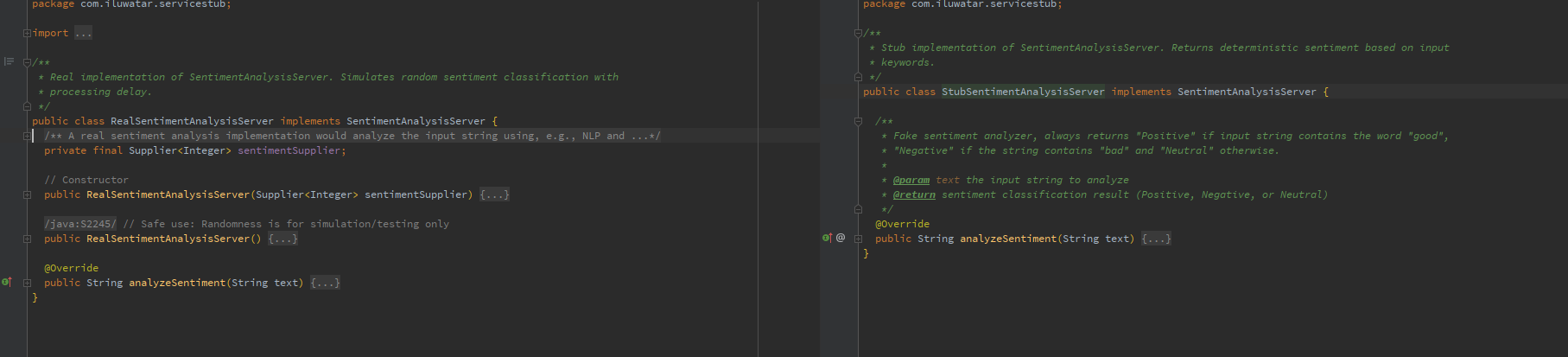
Service Stub(好像没什么用,测试假的类作用是?)
缓存(在游戏开发里面,缓存依赖于玩家数据的设计)
cache
各种内存跟数据库交互同步信息的策略
熔断 (没到这个水平,不知道干嘛)
circuit-breaker
在远程调用中间加一层 断路开关,当多次失败的时候打开断路开关,中断请求。其状态有 断路器开,半开,关。开的时候,中断全部请求。在等待一段时间后改为半开。尝试请求。成功变为关闭,失败变为开启
retry
当方法失败/异常的时候不放弃,sleep一会儿重试。暂未想到合适的业务
性能
Data Locality
高频,性能有瓶颈的地方写需要写最简单的代码
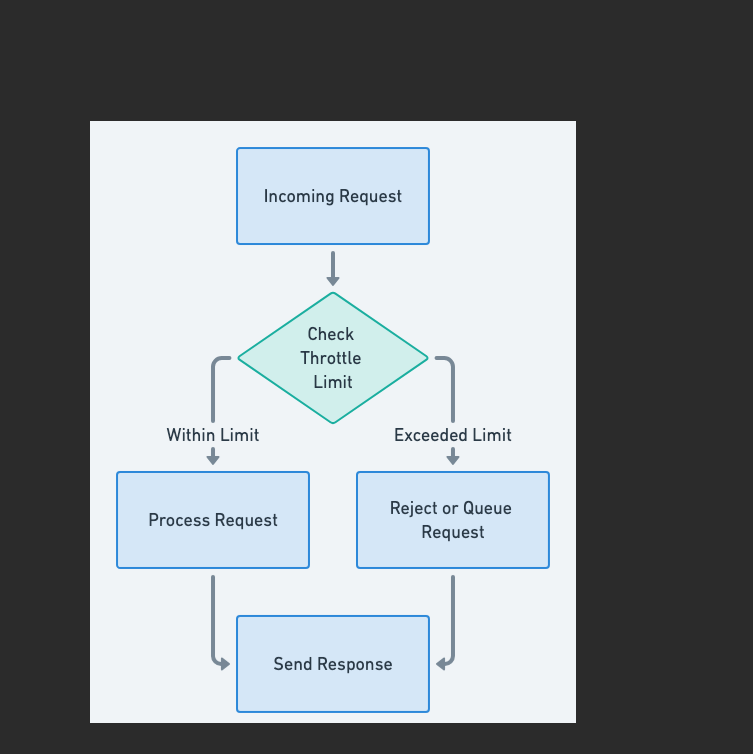
Throttling
分布式
Leader Election
bully(选最大或则最小的id)
ring(轮询)
Microservices Aggregator
全部请求打到一个服务器,让一个服务器分发到其他微服务中
Microservices API Gateway(同上)
Microservices Client-Side UI Composition(同上但是是前端的)
Microservices Distributed Tracing(存疑)
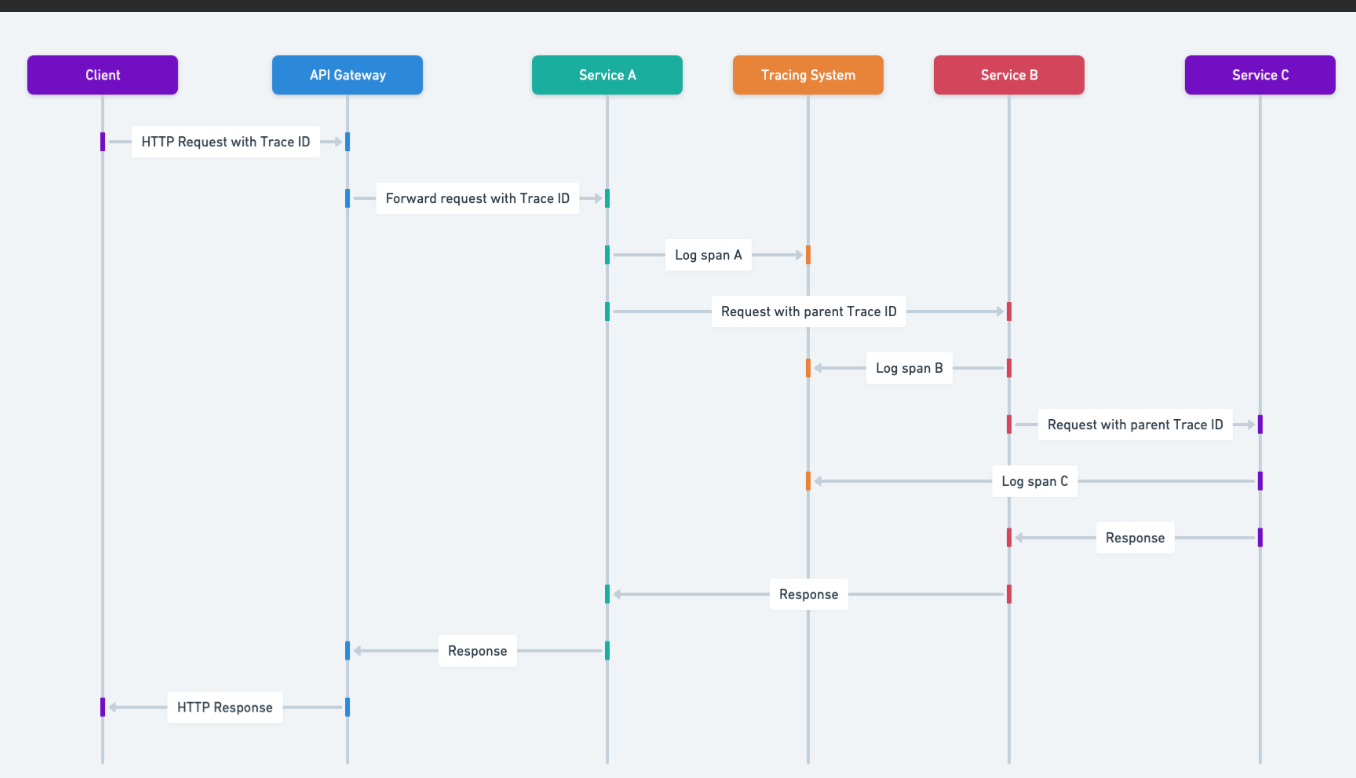
Microservices Idempotent Consumer(唯一id处理幂等性问题)
Microservices Log Aggregation
设计目的把分布式日志打到用一个地方 ELK
SAGA
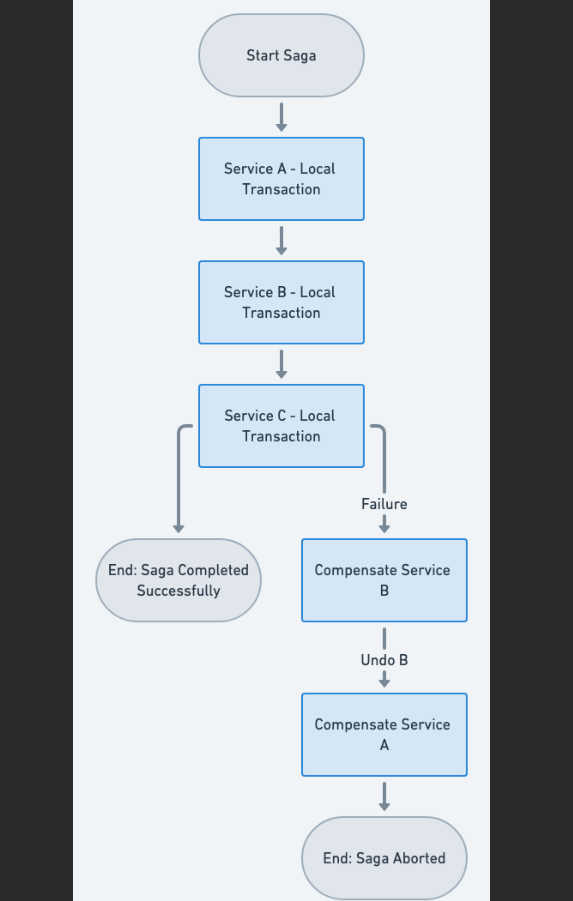
注意细节,Service A 和 事务异常后调用 Compensate Service 不是同一个类。
Service Locator(结构 -> 分布式)
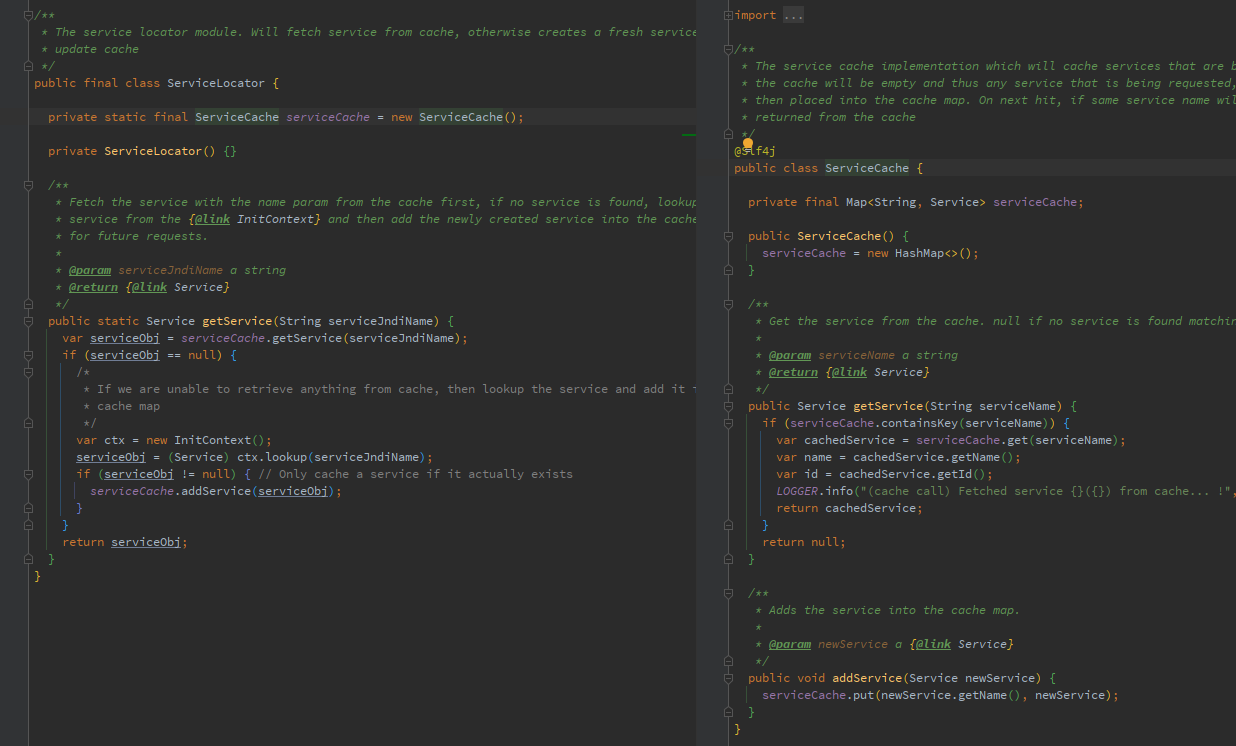
Service Locator还需要很多细节不同,譬如服务器健康问题,失败回调等等
数据结构与算法
Spatial Partition
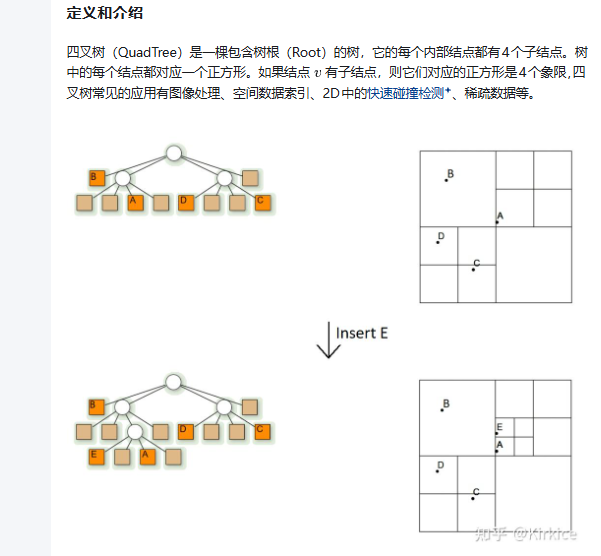
十字链表
理念
Tolerant Reader
尽可能的兼容客户端请求过来的业务,就算异常也要有一个明确的返回