目录
Thread类中的stop方法【不推荐】
查看源码
通过源码可以看到stop()方法会强制线程停止运行
java
package java.lang;

// ...

public
class Thread implements Runnable {
    // ...

    // Forces the thread to stop executing.
    @Deprecated
    public final void stop() {
        // ...

        stop0(new ThreadDeath());
    }

    // ...
}
测试
java
package concurrency;

public class ThreadStopTest {
    public static void main(String[] args) {
        Thread t = new Thread(() -> {
            while (true) {

            }
        });
        t.start();

        // 1秒后查看t线程是否为活跃状态
        sleepTime(1_000);
        System.out.println("t线程是否活跃:" + t.isAlive());

        // 3秒后强制t线程停止运行
        long beginTime = System.currentTimeMillis();
        sleepTime(3_000);
        t.stop();
        while (true) {
            if (!t.isAlive()) {
                long endTime = System.currentTimeMillis();
                System.out.println((endTime - beginTime) + "ms");
                break;
            }
        }
    }

    public static void sleepTime(long time) {
        if (time <= 0) return;
        try {
            Thread.sleep(time);
        } catch (InterruptedException e) {
            throw new RuntimeException(e);
        }
    }
}
不推荐使用的原因
- 方法已废弃,不建议使用
- 方法本身不安全
使用标志位的判断来结束线程的执行【不推荐】
实现案例
java
package concurrency;

public class FlagTest {
    private volatile static boolean flag = true;

    public static void main(String[] args) {
        new Thread(() -> {
            while (flag) {

            }
        }).start();

        // 3秒后,通过改变flag标识来停止线程t
        try {
            Thread.sleep(3_000);
        } catch (InterruptedException e) {
            throw new RuntimeException(e);
        }
        flag = false;
    }
}
不推荐使用的原因
- 在很多场景下并没有机会去判断标志位(如任务长时间阻塞等待)
通过对线程对象的封装来停止线程的执行【推荐】
实现思路
- 封装一个类,提供两个方法,分别为执行任务的方法和超时停止任务执行的方法
- 通过daemon和interrupt来实现
具体实现
java
package concurrency;

public class ThreadService {
    private Thread executeThread;

    private volatile boolean isFinish = false;

    /**
     * 执行任务
     */
    public void execute(Runnable task) {
        if (task == null) return;
        executeThread = new Thread(() -> {
            Thread t = new Thread(task);
            // 设置为守护线程
            t.setDaemon(true);
            t.start();
            try {
                // task执行完
                t.join();
                isFinish = true;
            } catch (InterruptedException e) {
                System.out.println("任务执行超时...");
            }
        });
        executeThread.start();
    }

    /**
     * 超时停止任务的执行
     */
    public void shutdown(long timeout) {
        if (timeout <= 0) return;
        long currentTime = System.currentTimeMillis();
        while (!isFinish) {
            // 超时,打断执行任务的线程,使其结束
            if (System.currentTimeMillis() - currentTime > timeout) {
                executeThread.interrupt();
                break;
            }

            // 减少空转次数
            try {
                Thread.sleep(1);
            } catch (InterruptedException e) {
            }
        }
    }
}
测试
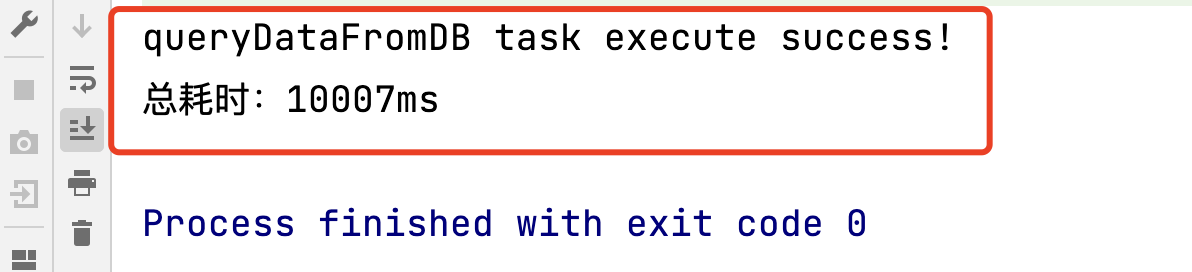
案例一:任务未超时
java
package concurrency;

public class ThreadServiceTest {
    public static void main(String[] args) {
        // 任务:从数据库中查询数据
        Runnable queryDataFromDB = () -> {
            try {
                // 这里该任务执行耗时10s
                Thread.sleep(10_000);
                System.out.println("queryDataFromDB task execute success!");
            } catch (InterruptedException e) {
                throw new RuntimeException(e);
            }
        };

        // 执行任务
        ThreadService threadService = new ThreadService();
        long beginTime = System.currentTimeMillis();
        threadService.execute(queryDataFromDB);
        // 最大忍耐限度为20s,任务没有超过20s就按照实际耗时执行成功
        threadService.shutdown(20_000);
        long endTime = System.currentTimeMillis();
        System.out.println("总耗时:" + (endTime - beginTime) + "ms");
    }
}
案例二:任务执行超时
java
package concurrency;

public class ThreadServiceTest {
    public static void main(String[] args) {
        // 任务:从数据库中查询数据
        Runnable queryDataFromDB = () -> {
            try {
                // 这里该任务执行耗时30s
                Thread.sleep(30_000);
                System.out.println("queryDataFromDB task execute success!");
            } catch (InterruptedException e) {
                throw new RuntimeException(e);
            }
        };

        // 执行任务
        ThreadService threadService = new ThreadService();
        long beginTime = System.currentTimeMillis();
        threadService.execute(queryDataFromDB);
        // 最大忍耐限度为20s,如果任务执行超过20s则认为任务失败,停止任务
        threadService.shutdown(20_000);
        long endTime = System.currentTimeMillis();
        System.out.println("总耗时:" + (endTime - beginTime) + "ms");
    }
}