介绍
HttpClient是Apache Jakarta Common 下的子项目,可以用来提供高效的、最新的、功能丰富的支持 HTTP 协议的客户端编程工具包,并且它支持HTTP协议最新的版本和建议。
作用:可以像前端一样对服务端发起请求
maven坐标
XML
<dependency>
  <groupId>org.apache.httpcomponents</groupId>
  <artifactId>httpclient</artifactId>
  <version>4.5.13</version>
</dependency>
如果引入了以下坐标,则已经传递依赖了上述坐标
XML
<dependency>
  <groupId>com.aliyun.oss</groupId>
  <artifactId>aliyun-sdk-oss</artifactId>
</dependency>
核心API
- HttpClient
- HttpClients
- CloseableHttpClient
- HttpGet
- HttpPost
发送请求步骤
- 创建HttpClient对象
- 创建Http请求对象
- 调用HttpClient的execute方法发送请求
入门案例
java
@SpringBootTest
public class HttpClientTest {
    /*
    * 测试通过httpclient发送GET方式的请求
    * */
    @Test
    public void testGET() throws IOException {
        // 创建httpclient对象
        CloseableHttpClient httpClient = HttpClients.createDefault();
        // 创建请求对象
        HttpGet httpGet = new HttpGet("http://localhost:8080/user/shop/status");
        // 发送请求,接收响应结果
        CloseableHttpResponse response = httpClient.execute(httpGet);
        // 获取服务端返回的状态码
        int statusCode = response.getStatusLine().getStatusCode();
        System.out.println("服务端返回的状态码为:"+statusCode);

        HttpEntity entity = response.getEntity();
        String body = EntityUtils.toString(entity);
        System.out.println("服务端返回的数据为:"+body);

        // 关闭资源
        response.close();
        httpClient.close();
    }

    /*
     * 测试通过httpclient发送POST方式的请求
     * */
    @Test
    public void testPOST() throws IOException {
        // 创建httpclient对象
        CloseableHttpClient httpClient = HttpClients.createDefault();
        // 创建请求对象
        HttpPost httpPost = new HttpPost("http://localhost:8080/admin/employee/login");

        JSONObject jsonObject = new JSONObject();
        jsonObject.put("username","admin");
        jsonObject.put("password","123456");

        StringEntity entity = new StringEntity(jsonObject.toString());

        // 指定请求编码方式
        entity.setContentEncoding("utf-8");
        // 指定数据格式
        entity.setContentType("application/json");

        httpPost.setEntity(entity);
        // 发送请求
        CloseableHttpResponse response = httpClient.execute(httpPost);
        // 解析返回结果
        int statusCode = response.getStatusLine().getStatusCode();
        System.out.println("服务端返回的状态码为:"+statusCode);
        HttpEntity entity1 = response.getEntity();
        String body = EntityUtils.toString(entity1);
        System.out.println("服务端返回的数据为:"+body);
        // 关闭资源
        response.close();
        httpClient.close();
    }
}
工具类
java
/**
 * Http工具类
 */
public class HttpClientUtil {

    static final  int TIMEOUT_MSEC = 5 * 1000;

    /**
     * 发送GET方式请求
     * @param url
     * @param paramMap
     * @return
     */
    public static String doGet(String url,Map<String,String> paramMap){
        // 创建Httpclient对象
        CloseableHttpClient httpClient = HttpClients.createDefault();

        String result = "";
        CloseableHttpResponse response = null;

        try{
            URIBuilder builder = new URIBuilder(url);
            if(paramMap != null){
                for (String key : paramMap.keySet()) {
                    builder.addParameter(key,paramMap.get(key));
                }
            }
            URI uri = builder.build();

            //创建GET请求
            HttpGet httpGet = new HttpGet(uri);

            //发送请求
            response = httpClient.execute(httpGet);

            //判断响应状态
            if(response.getStatusLine().getStatusCode() == 200){
                result = EntityUtils.toString(response.getEntity(),"UTF-8");
            }
        }catch (Exception e){
            e.printStackTrace();
        }finally {
            try {
                response.close();
                httpClient.close();
            } catch (IOException e) {
                e.printStackTrace();
            }
        }

        return result;
    }

    /**
     * 发送POST方式请求
     * @param url
     * @param paramMap
     * @return
     * @throws IOException
     */
    public static String doPost(String url, Map<String, String> paramMap) throws IOException {
        // 创建Httpclient对象
        CloseableHttpClient httpClient = HttpClients.createDefault();
        CloseableHttpResponse response = null;
        String resultString = "";

        try {
            // 创建Http Post请求
            HttpPost httpPost = new HttpPost(url);

            // 创建参数列表
            if (paramMap != null) {
                List<NameValuePair> paramList = new ArrayList();
                for (Map.Entry<String, String> param : paramMap.entrySet()) {
                    paramList.add(new BasicNameValuePair(param.getKey(), param.getValue()));
                }
                // 模拟表单
                UrlEncodedFormEntity entity = new UrlEncodedFormEntity(paramList);
                httpPost.setEntity(entity);
            }

            httpPost.setConfig(builderRequestConfig());

            // 执行http请求
            response = httpClient.execute(httpPost);

            resultString = EntityUtils.toString(response.getEntity(), "UTF-8");
        } catch (Exception e) {
            throw e;
        } finally {
            try {
                response.close();
            } catch (IOException e) {
                e.printStackTrace();
            }
        }

        return resultString;
    }

    /**
     * 发送POST方式请求
     * @param url
     * @param paramMap
     * @return
     * @throws IOException
     */
    public static String doPost4Json(String url, Map<String, String> paramMap) throws IOException {
        // 创建Httpclient对象
        CloseableHttpClient httpClient = HttpClients.createDefault();
        CloseableHttpResponse response = null;
        String resultString = "";

        try {
            // 创建Http Post请求
            HttpPost httpPost = new HttpPost(url);

            if (paramMap != null) {
                //构造json格式数据
                JSONObject jsonObject = new JSONObject();
                for (Map.Entry<String, String> param : paramMap.entrySet()) {
                    jsonObject.put(param.getKey(),param.getValue());
                }
                StringEntity entity = new StringEntity(jsonObject.toString(),"utf-8");
                //设置请求编码
                entity.setContentEncoding("utf-8");
                //设置数据类型
                entity.setContentType("application/json");
                httpPost.setEntity(entity);
            }

            httpPost.setConfig(builderRequestConfig());

            // 执行http请求
            response = httpClient.execute(httpPost);

            resultString = EntityUtils.toString(response.getEntity(), "UTF-8");
        } catch (Exception e) {
            throw e;
        } finally {
            try {
                response.close();
            } catch (IOException e) {
                e.printStackTrace();
            }
        }

        return resultString;
    }
    private static RequestConfig builderRequestConfig() {
        return RequestConfig.custom()
                .setConnectTimeout(TIMEOUT_MSEC)
                .setConnectionRequestTimeout(TIMEOUT_MSEC)
                .setSocketTimeout(TIMEOUT_MSEC).build();
    }

}
小程序微信登录
官方说明:开放能力 / 用户信息 / 小程序登录
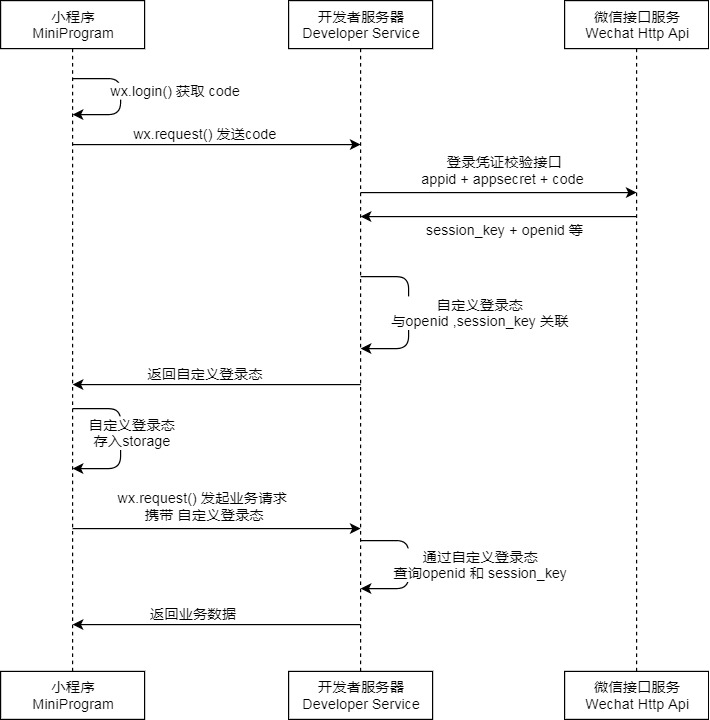
步骤1:配置好用户端生成令牌所需配置和调用 auth.code2Session 接口的所需参数的前两项(appid和secret)
sky:
  jwt:
    # 设置jwt签名加密时使用的秘钥
    user-secret-key: itcast
    # 设置jwt过期时间
    user-ttl: 7200000
    # 设置前端传递过来的请求体中的令牌名称
    user-token-name: authentication
  wechat:
    appid: ${sky.wechat.appid}
    secret: ${sky.wechat.secret}
注意:
user-secret-key 和 user-ttl 可以自定义
user-token-name 需要与前端沟通决定
wechat 中的配置需要改为自己的
步骤2:代码开发
Controller
java
@RestController
@RequestMapping("/user/user")
@Api(tags = "C端用户接口")
@Slf4j
public class UserController {

    @Autowired
    private UserService userService;

    @Autowired
    private JwtProperties jwtProperties;

    /**
     * 微信登录
     * @param userLoginDTO
     * @return
     */
    @PostMapping("/login")
    @ApiOperation("微信登录")
    public Result<UserLoginVO> login(@RequestBody UserLoginDTO userLoginDTO){
        log.info("微信登录:{}", userLoginDTO.getCode());
        // 调用service完成微信登录
        User user = userService.wxLogin(userLoginDTO);
        //为微信用户生成jwt令牌
        Map<String, Object> claims=new HashMap<>();
        claims.put(JwtClaimsConstant.USER_ID, user.getId());
        String token = JwtUtil.createJWT(jwtProperties.getUserSecretKey(), jwtProperties.getUserTtl(), claims);
        UserLoginVO userLoginVO = UserLoginVO.builder()
                .id(user.getId())
                .openid(user.getOpenid())
                .token(token)
                .build();
        return Result.success(userLoginVO);
    }

}
Service实现类
java
@Service
public class UserServiceImpl implements UserService {

    //微信服务接口地址
    public static final String WX_LOGIN_URL = "https://api.weixin.qq.com/sns/jscode2session";

    @Autowired
    private WeChatProperties weChatProperties;

    @Autowired
    private UserMapper userMapper;

    /**
     * 微信登录
     * @param userLoginDTO
     * @return
     */
    @Override
    public User wxLogin(UserLoginDTO userLoginDTO) {
        //调用微信接口服务,获取当前微信用户的openid
        String openid = getOpenid(userLoginDTO.getCode());

        //判断openid是否为空,如果为空表示登录失败,抛出业务异常
        if (openid == null)
            throw new LoginFailedException(MessageConstant.LOGIN_FAILED);

        //根据openid查询当前用户是否为新用户
        User user = userMapper.getByOpenid(openid);

        //如果是新用户,自动完成注册
        if (user == null) {
            user = User.builder()
                    .openid(openid)
                    .createTime(LocalDateTime.now())
                    .build();
            userMapper.insert(user);
        }

        //返回用户对象
        return user;
    }

    /**
     * 调用微信接口服务,获取当前微信用户的openid
     * @param code
     * @return
     */
    private String getOpenid(String code) {
        //调用微信接口服务,获取当前微信用户的openid
        Map<String, String> map=new HashMap<>();
        map.put("appid", weChatProperties.getAppid());
        map.put("secret", weChatProperties.getSecret());
        map.put("js_code", code);
        map.put("grant_type", "authorization_code");
        String json = HttpClientUtil.doGet(WX_LOGIN_URL, map);

        JSONObject jsonObject = JSON.parseObject(json);
        return jsonObject.getString("openid");
    }

}