智能行为通常不仅仅涉及对即时输入做出反应。它需要远见、将复杂任务分解为更小的可管理步骤,以及制 定实现期望结果的策略。这就是规划模式发挥作用的地方。规划的核心是 Agent 或 Agent 系统制定一系列行 动以从初始状态向目标状态移动的能力。
规划模式概述
在 AI 背景下,可将规划 Agent 视为处理复杂目标的专家。当您要求"组织团队外出活动"时,您只需定义"
目标"(内容及约束),而无需指定"方法"。Agent 的核心任务是自主规划实现目标的路径:先理解初始状态 (如预算、参与人数、期望日期)和目标状态(成功预订活动),再设计连接两者的最优行动序列。计划并非预先设定,而是根据请求动态生成。
此过程的核心在于适应性。初始计划仅是起点而非固定脚本,Agent 的真正价值在于整合新信息、规避障碍的能力。例如,当首选场地不可用或餐饮服务商满员时,高效 Agent 不会失败,而是记录新约束、重新评估 选项,并制定新计划(如推荐替代场地或日期)。
然而,认识到灵活性和可预测性之间的权衡至关重要。动态规划是一个特定的工具,而不是通用解决方案。 当问题的解决方案已经被充分理解且可重复时,将 Agent 限制为预定的固定工作流更有效。这种方法限制 Agent 的自主性以减少不确定性和不可预测行为的风险,保证可靠和一致的结果。因此,使用规划 Agent 与 简单任务执行 Agent 的决定取决于一个问题:是否需要发现"如何",还是已经知道?
实际应用与用例
规划模式是自主系统中的核心计算过程,使 Agent 能够综合一系列行动以实现指定目标,特别是在动态或复 杂环境中。这个过程将高级目标转换为由离散可执行步骤组成的结构化计划。
在过程任务自动化等领域,规划用于编排复杂的工作流。例如,像新员工入职这样的业务流程可以分解为定 向的子任务序列,例如创建系统帐户、分配培训模块和与不同部门协调。Agent 生成一个计划以逻辑顺序执 行这些步骤,调用必要的工具或与各种系统交互以管理依赖关系。
在机器人和自主导航中,规划对于状态空间遍历是基础性的。一个系统,无论是物理机器人还是虚拟实体, 都必须生成路径或行动序列以从初始状态转换到目标状态。这涉及优化时间或能源消耗等指标,同时遵守环 境约束,如避开障碍物或遵守交通规则。
此模式对于结构化信息综合也至关重要。当被要求生成像研究报告这样的复杂输出时,Agent 可以制定一个 包括信息收集、数据总结、内容结构化和迭代完善的不同阶段的计划。同样,在涉及多步问题解决的客户支持场景中,Agent 可以创建并遵循诊断、解决方案实施和升级的系统计划。
从本质上讲,规划模式允许 Agent 从简单的反应性行动转向目标导向的行为。它提供了解决需要一系列相互 依赖操作的问题所必需的逻辑框架。
概览
是什么:
复杂问题通常无法单步解决,需前瞻性规划实现目标。缺乏结构化方法时,Agent 系统难以处理多步骤、多依赖的复杂请求,导致高级目标无法分解为可执行子任务,进而产生策略缺陷及错误结果。
为什么:
规划模式通过让 Agent 系统首先创建一个连贯的计划来解决目标提供了标准化解决方案。它涉及将 高级目标分解为一系列更小的可操作步骤或子目标。这允许系统管理复杂的工作流、编排各种工具并以逻辑 顺序处理依赖关系。LLM 特别适合这一点,因为它们可以基于其庞大的训练数据生成合理且有效的计划。这 种结构化方法将简单的反应性 Agent 转变为战略执行者,可以主动朝着复杂目标工作,甚至在必要时调整其 计划。
经验法则:
当用户的请求太复杂而无法通过单个操作或工具处理时使用此模式。它非常适合自动化多步流 程,例如生成详细的研究报告、新员工入职或执行竞争分析。每当任务需要一系列相互依赖的操作以达到最 终的综合结果时,应用规划模式。
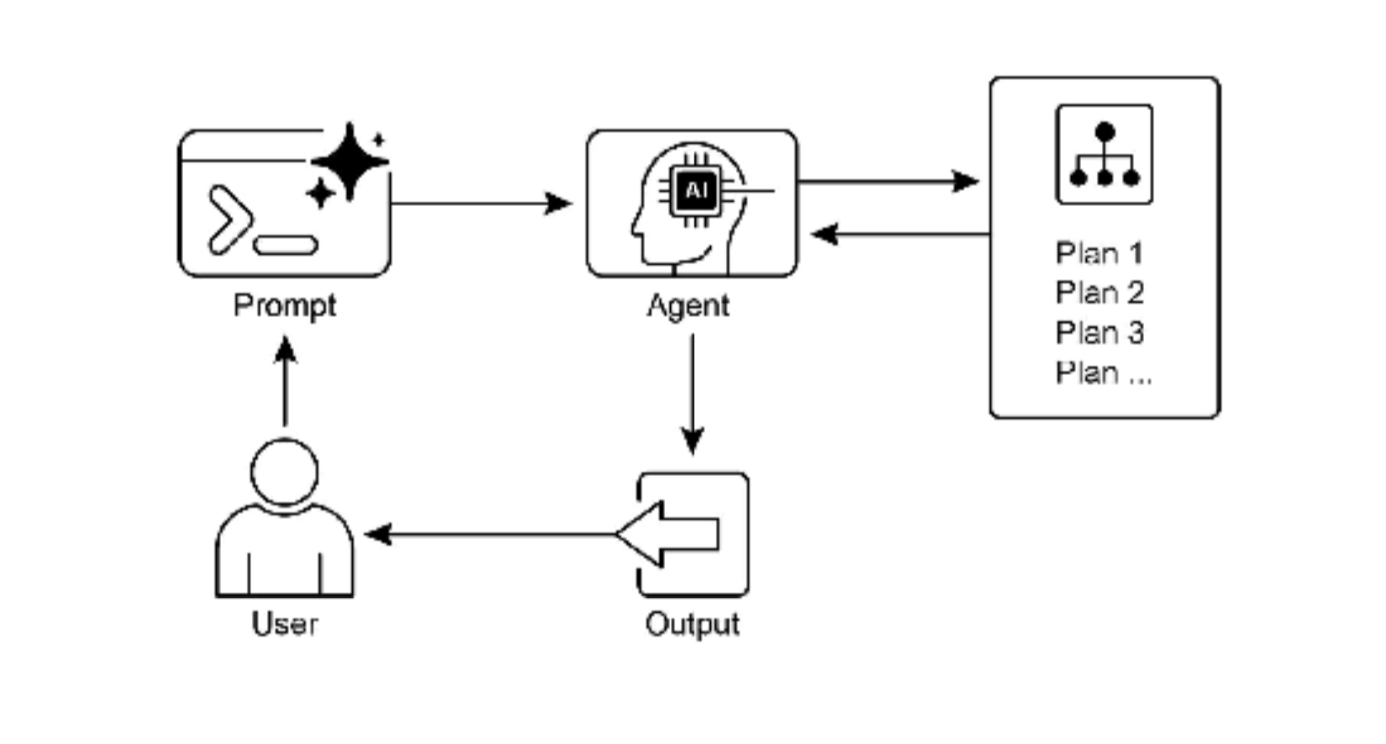
图 1:规划设计模式
关键要点
-
・ 规划使Agent能够将复杂目标分解为可操作的顺序步骤。
-
・ 它对于处理多步任务、工作流自动化和导航复杂环境至关重要。
-
・ LLM可以通过基于任务描述生成逐步方法来执行规划。
-
・ 明确提示或设计任务以要求规划步骤会在Agent框架中鼓励这种行为。
规划Agent代码实现示例
1. 基础规划Agent类
python
from typing import List, Dict, Any, Optional, Callable
from dataclasses import dataclass
from enum import Enum
import json
from datetime import datetime
import asyncio

class PlanStatus(Enum):
    """计划状态枚举"""
    PENDING = "pending"
    EXECUTING = "executing"
    SUCCESS = "success"
    FAILED = "failed"
    ADAPTING = "adapting"

@dataclass
class PlanStep:
    """计划步骤定义"""
    id: str
    action: str
    parameters: Dict[str, Any]
    preconditions: List[str]  # 前置条件
    postconditions: List[str]  # 后置条件
    status: PlanStatus = PlanStatus.PENDING
    result: Optional[Any] = None
    error: Optional[str] = None

@dataclass
class PlanningContext:
    """规划上下文"""
    goal: str
    constraints: Dict[str, Any]
    current_state: Dict[str, Any]
    history: List[Dict[str, Any]] = None

class BasePlanningAgent:
    """基础规划Agent"""

    def __init__(self, name: str, domain_knowledge: Dict[str, Any]):
        self.name = name
        self.domain_knowledge = domain_knowledge
        self.current_plan: List[PlanStep] = []
        self.context: Optional[PlanningContext] = None
        self.execution_history = []

    def analyze_goal(self, goal: str) -> PlanningContext:
        """分析目标并创建规划上下文"""
        # 这里可以集成NLP分析目标,提取约束条件
        constraints = self._extract_constraints(goal)
        current_state = self._assess_current_state()

        self.context = PlanningContext(
            goal=goal,
            constraints=constraints,
            current_state=current_state,
            history=[]
        )
        return self.context

    def generate_plan(self) -> List[PlanStep]:
        """生成初始计划 - 模板方法,由子类实现"""
        raise NotImplementedError

    async def execute_plan(self) -> Dict[str, Any]:
        """执行计划"""
        self.execution_history.append({
            "timestamp": datetime.now(),
            "action": "plan_execution_started"
        })

        for step in self.current_plan:
            try:
                # 检查前置条件
                if not self._check_preconditions(step):
                    await self._adapt_plan(step)
                    continue

                # 执行步骤
                step.status = PlanStatus.EXECUTING
                result = await self._execute_step(step)

                # 更新状态
                step.result = result
                step.status = PlanStatus.SUCCESS
                self._update_current_state(step)

                self.execution_history.append({
                    "timestamp": datetime.now(),
                    "step_id": step.id,
                    "action": step.action,
                    "result": result
                })

            except Exception as e:
                step.status = PlanStatus.FAILED
                step.error = str(e)
                await self._handle_failure(step, e)

        return {
            "status": "completed",
            "steps_executed": len(self.current_plan),
            "success_rate": self._calculate_success_rate()
        }

    async def _adapt_plan(self, failed_step: PlanStep) -> bool:
        """动态调整计划"""
        print(f"Adapting plan due to failure in step: {failed_step.id}")

        # 重新规划策略
        alternatives = self._generate_alternatives(failed_step)

        for alternative in alternatives:
            if await self._evaluate_alternative(alternative):
                # 替换失败的步骤并继续执行
                idx = self.current_plan.index(failed_step)
                self.current_plan = (
                    self.current_plan[:idx] +
                    alternative +
                    self.current_plan[idx+1:]
                )
                return True

        return False

    def _extract_constraints(self, goal: str) -> Dict[str, Any]:
        """从目标描述中提取约束(简化示例)"""
        constraints = {}

        # 示例:简单关键词提取
        if "budget" in goal.lower():
            constraints["budget_limit"] = self._extract_budget(goal)
        if "date" in goal.lower() or "day" in goal.lower():
            constraints["date_constraint"] = self._extract_dates(goal)

        return constraints

    # 以下方法为示例,实际实现需要具体化
    def _assess_current_state(self) -> Dict[str, Any]:
        return {}

    def _check_preconditions(self, step: PlanStep) -> bool:
        return True

    async def _execute_step(self, step: PlanStep) -> Any:
        return None

    def _update_current_state(self, step: PlanStep):
        pass

    async def _handle_failure(self, step: PlanStep, error: Exception):
        pass

    def _generate_alternatives(self, step: PlanStep) -> List[List[PlanStep]]:
        return []

    async def _evaluate_alternative(self, alternative: List[PlanStep]) -> bool:
        return True

    def _calculate_success_rate(self) -> float:
        success_count = sum(1 for s in self.current_plan
                          if s.status == PlanStatus.SUCCESS)
        return success_count / len(self.current_plan) if self.current_plan else 0.0
2. 团队活动规划Agent实现
python
class TeamEventPlanner(BasePlanningAgent):
    """团队活动规划Agent"""

    def __init__(self):
        domain_knowledge = {
            "venue_types": ["restaurant", "park", "museum", "bowling", "escape_room"],
            "budget_ranges": {
                "low": {"min": 0, "max": 1000},
                "medium": {"min": 1000, "max": 5000},
                "high": {"min": 5000, "max": 20000}
            },
            "cuisine_types": ["chinese", "western", "japanese", "vegetarian"],
            "activity_types": ["indoor", "outdoor", "adventure", "cultural"]
        }
        super().__init__("TeamEventPlanner", domain_knowledge)
        self.venue_api = VenueAPI()  # 假设的场地API
        self.weather_api = WeatherAPI()  # 天气API

    def generate_plan(self) -> List[PlanStep]:
        """生成团队活动规划"""
        if not self.context:
            raise ValueError("Context not initialized. Call analyze_goal first.")

        plan = [
            PlanStep(
                id="step1",
                action="collect_requirements",
                parameters={"context": self.context},
                preconditions=[],
                postconditions=["requirements_collected"]
            ),
            PlanStep(
                id="step2",
                action="search_venues",
                parameters={
                    "participants": self.context.constraints.get("participants", 10),
                    "budget": self.context.constraints.get("budget", 5000),
                    "preferred_date": self.context.constraints.get("date"),
                    "activity_type": self.context.constraints.get("activity_type")
                },
                preconditions=["requirements_collected"],
                postconditions=["venues_shortlisted"]
            ),
            PlanStep(
                id="step3",
                action="check_availability",
                parameters={},
                preconditions=["venues_shortlisted"],
                postconditions=["availability_confirmed"]
            ),
            PlanStep(
                id="step4",
                action="book_venue",
                parameters={},
                preconditions=["availability_confirmed"],
                postconditions=["venue_booked"]
            ),
            PlanStep(
                id="step5",
                action="arrange_transportation",
                parameters={
                    "participants": self.context.constraints.get("participants", 10),
                    "venue_location": None  # 将从步骤4的结果中获取
                },
                preconditions=["venue_booked"],
                postconditions=["transportation_arranged"]
            ),
            PlanStep(
                id="step6",
                action="send_invitations",
                parameters={
                    "event_details": None  # 将从之前步骤的结果中组合
                },
                preconditions=["venue_booked"],
                postconditions=["invitations_sent"]
            )
        ]

        self.current_plan = plan
        return plan

    async def _execute_step(self, step: PlanStep) -> Any:
        """执行具体步骤"""
        if step.action == "collect_requirements":
            return await self._collect_requirements(step.parameters)
        elif step.action == "search_venues":
            return await self._search_venues(step.parameters)
        elif step.action == "check_availability":
            return await self._check_availability(step.parameters)
        elif step.action == "book_venue":
            return await self._book_venue(step.parameters)
        elif step.action == "arrange_transportation":
            return await self._arrange_transportation(step.parameters)
        elif step.action == "send_invitations":
            return await self._send_invitations(step.parameters)
        else:
            raise ValueError(f"Unknown action: {step.action}")

    async def _collect_requirements(self, params: Dict) -> Dict:
        """收集详细需求"""
        print("Collecting detailed requirements...")

        # 这里可以与用户交互获取更多信息
        requirements = {
            "participants": params["context"].constraints.get("participants", 10),
            "budget": params["context"].constraints.get("budget", 5000),
            "preferred_dates": params["context"].constraints.get("date"),
            "dietary_restrictions": ["vegetarian", "gluten_free"],  # 示例
            "accessibility_needs": False
        }

        # 更新上下文
        self.context.constraints.update(requirements)

        return {
            "status": "success",
            "requirements": requirements
        }

    async def _search_venues(self, params: Dict) -> Dict:
        """搜索合适的场地"""
        print(f"Searching venues for {params['participants']} participants...")

        try:
            # 调用场地API
            venues = await self.venue_api.search(
                capacity=params["participants"],
                budget=params["budget"],
                date=params.get("preferred_date"),
                activity_type=params.get("activity_type")
            )

            # 根据天气调整户外场地推荐
            if params.get("activity_type") == "outdoor":
                weather = await self.weather_api.get_forecast(
                    params.get("preferred_date")
                )
                if weather.get("condition") == "rainy":
                    print("Weather warning: rain predicted. Filtering outdoor venues...")
                    venues = [v for v in venues if v.get("has_indoor_option")]

            # 排序和筛选
            sorted_venues = sorted(
                venues,
                key=lambda x: (
                    x.get("rating", 0),
                    -x.get("price_per_person", float('inf'))
                ),
                reverse=True
            )[:5]  # 取前5个

            return {
                "status": "success",
                "venues": sorted_venues,
                "count": len(sorted_venues)
            }

        except Exception as e:
            print(f"Venue search failed: {e}")
            return {
                "status": "partial",
                "venues": [],
                "fallback_options": self._get_fallback_venues(params)
            }

    async def _check_availability(self, params: Dict) -> Dict:
        """检查场地可用性"""
        # 获取上一步的结果
        previous_result = next(
            (s.result for s in self.current_plan
             if s.action == "search_venues" and s.status == PlanStatus.SUCCESS),
            None
        )

        if not previous_result or "venues" not in previous_result:
            raise ValueError("No venues to check availability for")

        available_venues = []
        for venue in previous_result["venues"]:
            try:
                is_available = await self.venue_api.check_availability(
                    venue_id=venue["id"],
                    date=self.context.constraints.get("preferred_date")
                )

                if is_available:
                    available_venues.append(venue)

            except Exception as e:
                print(f"Failed to check availability for venue {venue['id']}: {e}")

        if not available_venues:
            # 触发重新规划
            raise Exception("No venues available for the selected date")

        return {
            "status": "success",
            "available_venues": available_venues,
            "recommended": available_venues[0]  # 推荐第一个
        }

    async def _book_venue(self, params: Dict) -> Dict:
        """预订场地"""
        # 获取推荐场地
        availability_result = next(
            (s.result for s in self.current_plan
             if s.action == "check_availability" and s.status == PlanStatus.SUCCESS),
            None
        )

        if not availability_result:
            raise ValueError("No venue selected for booking")

        venue = availability_result["recommended"]

        try:
            booking_result = await self.venue_api.book(
                venue_id=venue["id"],
                date=self.context.constraints.get("preferred_date"),
                participants=self.context.constraints.get("participants")
            )

            # 记录预订信息到上下文
            self.context.current_state["booking"] = booking_result

            return {
                "status": "success",
                "booking_id": booking_result["booking_id"],
                "venue": venue["name"],
                "confirmation": booking_result["confirmation_code"]
            }

        except Exception as e:
            print(f"Booking failed: {e}")
            raise

    async def _arrange_transportation(self, params: Dict) -> Dict:
        """安排交通"""
        print("Arranging transportation...")

        # 获取预订信息
        booking_info = self.context.current_state.get("booking", {})

        # 模拟交通安排逻辑
        participants = params["participants"]
        if participants <= 10:
            # 小团队,建议拼车
            return {
                "status": "success",
                "transportation": "carpool",
                "instructions": "Please coordinate carpooling among participants"
            }
        elif participants <= 30:
            # 中型团队,预订小巴
            return {
                "status": "success",
                "transportation": "minibus",
                "provider": "Local Transport Co.",
                "cost": participants * 25
            }
        else:
            # 大型团队,需要大巴
            return {
                "status": "success",
                "transportation": "coach",
                "provider": "City Bus Services",
                "cost": participants * 20
            }

    async def _send_invitations(self, params: Dict) -> Dict:
        """发送邀请"""
        print("Sending invitations...")

        # 收集活动详情
        booking_result = next(
            (s.result for s in self.current_plan
             if s.action == "book_venue" and s.status == PlanStatus.SUCCESS),
            None
        )

        transportation_result = next(
            (s.result for s in self.current_plan
             if s.action == "arrange_transportation" and s.status == PlanStatus.SUCCESS),
            None
        )

        event_details = {
            "title": "Team Building Event",
            "venue": booking_result["venue"] if booking_result else "TBD",
            "date": self.context.constraints.get("preferred_date"),
            "transportation": transportation_result["transportation"] if transportation_result else "TBD",
            "meeting_point": "Office lobby at 9:00 AM"
        }

        # 模拟发送邀请(实际应集成邮件/消息API)
        print(f"Sending invitations with details: {event_details}")

        return {
            "status": "success",
            "invitations_sent": True,
            "recipients_count": self.context.constraints.get("participants", 10),
            "event_details": event_details
        }

    def _generate_alternatives(self, failed_step: PlanStep) -> List[List[PlanStep]]:
        """生成替代方案"""
        alternatives = []

        if failed_step.action == "check_availability" or failed_step.action == "book_venue":
            # 如果场地不可用,尝试替代方案
            alternatives.append([
                PlanStep(
                    id=f"alt_{failed_step.id}_1",
                    action="search_alternative_venues",
                    parameters={
                        "retry_count": 1,
                        "flexible_date": True
                    },
                    preconditions=failed_step.preconditions,
                    postconditions=["alternative_venues_found"]
                ),
                PlanStep(
                    id=f"alt_{failed_step.id}_2",
                    action="check_availability",
                    parameters={},
                    preconditions=["alternative_venues_found"],
                    postconditions=["availability_confirmed"]
                ),
                failed_step  # 重新尝试预订
            ])

        return alternatives
3. 模拟API类(用于演示)
python
class VenueAPI:
    """模拟场地API"""

    async def search(self, capacity: int, budget: float, date=None, activity_type=None):
        # 模拟API调用延迟
        await asyncio.sleep(0.5)

        # 模拟数据
        venues = [
            {
                "id": "v001",
                "name": "Green Park Restaurant",
                "type": "restaurant",
                "capacity": 50,
                "price_per_person": 120,
                "rating": 4.5,
                "has_indoor_option": True
            },
            {
                "id": "v002",
                "name": "Adventure Zone",
                "type": "outdoor",
                "capacity": 30,
                "price_per_person": 200,
                "rating": 4.8,
                "has_indoor_option": False
            },
            # 更多模拟数据...
        ]

        # 过滤
        filtered = [
            v for v in venues
            if v["capacity"] >= capacity and
            v["price_per_person"] * capacity <= budget
        ]

        if activity_type:
            filtered = [v for v in filtered if v["type"] == activity_type]

        return filtered

    async def check_availability(self, venue_id: str, date):
        await asyncio.sleep(0.3)

        # 模拟随机可用性(80%概率可用)
        import random
        return random.random() > 0.2

    async def book(self, venue_id: str, date, participants: int):
        await asyncio.sleep(0.5)

        return {
            "booking_id": f"BKG_{venue_id}_{datetime.now().strftime('%Y%m%d%H%M%S')}",
            "confirmation_code": "ABC123XYZ",
            "status": "confirmed"
        }

class WeatherAPI:
    """模拟天气API"""

    async def get_forecast(self, date):
        await asyncio.sleep(0.2)

        # 模拟数据
        conditions = ["sunny", "cloudy", "rainy", "windy"]
        import random
        return {
            "date": date,
            "condition": random.choice(conditions),
            "temperature": random.randint(15, 30)
        }
4. 使用示例
python
async def main():
    """主函数示例"""

    # 创建规划Agent
    planner = TeamEventPlanner()

    # 定义目标
    goal = "组织团队建设活动,预算5000元,20人参加,下周五,偏好户外活动"

    try:
        # 1. 分析目标
        print("步骤1: 分析目标...")
        context = planner.analyze_goal(goal)
        print(f"分析完成: {context.goal}")
        print(f"约束条件: {context.constraints}")

        # 2. 生成计划
        print("\n步骤2: 生成计划...")
        plan = planner.generate_plan()
        print(f"生成 {len(plan)} 个步骤:")
        for step in plan:
            print(f"  - {step.id}: {step.action}")

        # 3. 执行计划
        print("\n步骤3: 执行计划...")
        result = await planner.execute_plan()

        print(f"\n执行结果: {result['status']}")
        print(f"成功率: {result['success_rate']:.1%}")

        # 4. 显示执行历史
        print("\n执行历史:")
        for record in planner.execution_history[:5]:  # 显示前5条
            print(f"  {record['timestamp'].strftime('%H:%M:%S')} - {record.get('action', 'unknown')}")

        # 5. 显示最终状态
        print("\n最终状态:")
        successful_steps = [s for s in planner.current_plan if s.status == PlanStatus.SUCCESS]
        for step in successful_steps:
            print(f"  {step.id}: {step.action} - 成功")
            if step.result:
                print(f"    结果: {step.result.get('status', 'N/A')}")

    except Exception as e:
        print(f"规划过程出错: {e}")
        import traceback
        traceback.print_exc()

# 运行示例
if __name__ == "__main__":
    asyncio.run(main())
5. 高级功能扩展
python
class HierarchicalPlanningAgent(BasePlanningAgent):
    """分层规划Agent"""

    def __init__(self):
        super().__init__("HierarchicalPlanner", {})
        self.high_level_planner = HighLevelPlanner()
        self.low_level_planners = {
            "logistics": LogisticsPlanner(),
            "content": ContentPlanner(),
            "budget": BudgetPlanner()
        }

    async def generate_hierarchical_plan(self, goal: str):
        """生成分层计划"""
        # 高层规划:分解目标
        high_level_steps = await self.high_level_planner.decompose_goal(goal)

        master_plan = []

        for hl_step in high_level_steps:
            # 为每个高层步骤选择低层规划器
            planner_type = self._select_low_level_planner(hl_step)
            low_level_planner = self.low_level_planners[planner_type]

            # 生成详细步骤
            detailed_steps = await low_level_planner.generate_detailed_plan(hl_step)

            master_plan.extend(detailed_steps)

        return master_plan

class MultiAgentPlanningSystem:
    """多Agent规划系统"""

    def __init__(self):
        self.agents = []
        self.coordinator = CoordinationModule()

    async def coordinate_planning(self, goal: str):
        """协调多个Agent进行规划"""

        # 任务分配
        tasks = self._decompose_task(goal)

        # 并行规划
        agent_tasks = []
        for i, task in enumerate(tasks):
            agent = self._select_agent_for_task(task)
            agent_tasks.append(agent.generate_plan(task))

        # 等待所有Agent完成规划
        plans = await asyncio.gather(*agent_tasks)

        # 协调和整合计划
        integrated_plan = await self.coordinator.integrate_plans(plans)

        # 解决冲突
        resolved_plan = await self.coordinator.resolve_conflicts(integrated_plan)

        return resolved_plan
6. 测试用例
python
import pytest

class TestPlanningAgent:
    """规划Agent测试"""

    @pytest.fixture
    def planner(self):
        return TeamEventPlanner()

    @pytest.mark.asyncio
    async def test_goal_analysis(self, planner):
        """测试目标分析"""
        goal = "组织团队活动,预算3000元,15人"
        context = planner.analyze_goal(goal)

        assert context.goal == goal
        assert "budget" in context.constraints
        assert context.constraints.get("participants") == 15

    @pytest.mark.asyncio
    async def test_plan_generation(self, planner):
        """测试计划生成"""
        goal = "团队建设活动"
        planner.analyze_goal(goal)
        plan = planner.generate_plan()

        assert len(plan) > 0
        assert all(isinstance(step, PlanStep) for step in plan)

    @pytest.mark.asyncio
    async def test_plan_execution(self, planner):
        """测试计划执行"""
        goal = "测试活动"
        planner.analyze_goal(goal)
        planner.generate_plan()

        result = await planner.execute_plan()

        assert "status" in result
        assert 0 <= result.get("success_rate", 0) <= 1
总结
这个代码示例展示了:
-
基础架构:定义了规划Agent的核心类和数据结构
-
具体实现:实现了团队活动规划的具体逻辑
-
动态适应性:展示了如何在执行过程中调整计划
-
模拟环境:提供了API模拟类进行测试
-
高级功能:展示了分层规划和多Agent系统的扩展
实际应用中,需要根据具体业务场景:
-
集成真实的外部API(如预订系统、天气服务)
-
添加更复杂的约束处理和优化逻辑
-
实现更智能的重新规划策略
-
集成机器学习模型进行预测和优化
-
添加用户交互和反馈机制
-
这个框架可以作为构建实际规划系统的基础,根据具体需求进行扩展和优化。
总之,规划模式是将 Agent 系统从简单的反应性响应者提升为战略性、目标导向的执行者的基础组件。现代大型语言模型为此提供了核心能力,自主地将高级目标分解为连贯的可操作步骤。此模式从简单的顺序任务执行扩展到更复杂和动态的系统。最终,规划为复杂问题 的人类意图和自动化执行之间提供了必要的桥梁。通过构建问题解决方法,此模式使 Agent 能够管理复杂的 工作流并提供全面的综合结果。