欢迎来到第 11 篇!
上一节我们准备好了 Shader(着色器),那是管线的大脑。今天我们要配置管线的"躯干"------那些硬件固化的功能模块。
为了构建最终的 VkGraphicsPipelineCreateInfo,我们需要先定义这一堆零件:
-
Vertex Input: 数据怎么进?
-
Input Assembly: 点怎么连成线/面?
-
Viewport & Scissor: 画在屏幕哪里?
-
Rasterizer: 光栅化器怎么工作?
-
Multisampling: 要不要抗锯齿?
-
Depth & Stencil: 深度测试和模板测试。
-
Color Blending: 颜色怎么混合?
-
Pipeline Layout: 全局变量布局。
我们将继续在 createGraphicsPipeline 函数中编写这些代码(紧接在 Shader Module 加载之后)。
这是 Vulkan 图形管线配置中最繁琐、但也最能体现"显式控制"哲学的一章。
在 OpenGL 中,你只需要调用 glEnable(GL_DEPTH_TEST) 就能开启深度测试。但在 Vulkan 中,你需要填写一个结构体。
你想混合颜色?填结构体。
想改变线框模式?填结构体。
这一节,我们将一口气填写 7 个结构体 ,用来配置管线中那些不可编程但可配置的阶段(Fixed-Function Stages)。
准备好你的键盘,我们开始"填表"!
顶点输入 (Vertex Input)
通常我们需要告诉 Vulkan:"顶点数据的格式是 float3, float3,步长是 24 字节..."。
但在本教程的当前阶段,因为我们在 Vertex Shader 里硬编码了顶点数据(直接写死在数组里),所以我们不需要从 CPU 传任何数据进去。
cpp
VkPipelineVertexInputStateCreateInfo vertexInputInfo{};
vertexInputInfo.sType = VK_STRUCTURE_TYPE_PIPELINE_VERTEX_INPUT_STATE_CREATE_INFO;
// 目前没有顶点缓冲区,所以全填 0
vertexInputInfo.vertexBindingDescriptionCount = 0;
vertexInputInfo.pVertexBindingDescriptions = nullptr;
vertexInputInfo.vertexAttributeDescriptionCount = 0;
vertexInputInfo.pVertexAttributeDescriptions = nullptr;
输入装配 (Input Assembly)
这一步告诉 Vulkan 怎么把点连起来。
-
VK_PRIMITIVE_TOPOLOGY_TRIANGLE_LIST: 每 3 个点画一个独立的三角形(最常用)。 -
VK_PRIMITIVE_TOPOLOGY_TRIANGLE_STRIP: 顶点复用,像带子一样连着画。
cpp
VkPipelineInputAssemblyStateCreateInfo inputAssembly{};
inputAssembly.sType = VK_STRUCTURE_TYPE_PIPELINE_INPUT_ASSEMBLY_STATE_CREATE_INFO;
inputAssembly.topology = VK_PRIMITIVE_TOPOLOGY_TRIANGLE_LIST;
inputAssembly.primitiveRestartEnable = VK_FALSE; // 如果是用 Strip 模式才需要考虑这个
视口与裁剪 (Viewport & Scissor)
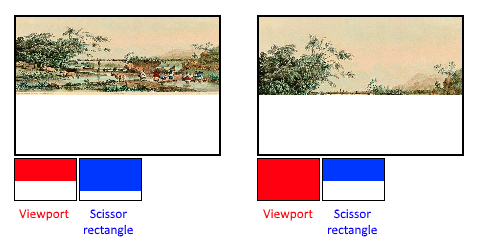
这两个概念很容易混淆,但很重要。
-
Viewport (视口): 定义了图像在帧缓冲区上的变换关系。比如把 (-1, 1) 的坐标映射到 (0, width)。这决定了图像是被拉伸还是压缩。
-
Scissor (裁剪矩形): 这是一个过滤器。在这个矩形之外的像素,会被直接丢弃(discard),根本不会运行片元着色器。
VkViewport viewport{};
viewport.x = 0.0f;
viewport.y = 0.0f;
viewport.width = (float)swapChainExtent.width;
viewport.height = (float)swapChainExtent.height;
viewport.minDepth = 0.0f;
viewport.maxDepth = 1.0f;VkRect2D scissor{};
scissor.offset = {0, 0};
scissor.extent = swapChainExtent; // 覆盖整个屏幕VkPipelineViewportStateCreateInfo viewportState{};
viewportState.sType = VK_STRUCTURE_TYPE_PIPELINE_VIEWPORT_STATE_CREATE_INFO;
viewportState.viewportCount = 1;
viewportState.pViewports = &viewport;
viewportState.scissorCount = 1;
viewportState.pScissors = &scissor;
注意: 在这里写死 Viewport 意味着如果你改变窗口大小,你需要重建整个管线!在更高级的教程中,我们会使用 Dynamic State 来避免这个问题。
光栅化器 (Rasterizer)
这是把几何图形变成像素的核心组件。它还负责剔除(Culling)和线框模式。
cpp
VkPipelineRasterizationStateCreateInfo rasterizer{};
rasterizer.sType = VK_STRUCTURE_TYPE_PIPELINE_RASTERIZATION_STATE_CREATE_INFO;
// 深度截断:如果开启,超出深度范围的片元会被截断而不是丢弃。通常用于阴影贴图。一般设为 False。
rasterizer.depthClampEnable = VK_FALSE;
// 如果设为 True,几何体会被光栅化器直接丢弃,不会有任何输出。
rasterizer.rasterizerDiscardEnable = VK_FALSE;

// 决定我们要怎么画:
// VK_POLYGON_MODE_FILL: 填满 (正常模式)
// VK_POLYGON_MODE_LINE: 线框模式 (需要开启 GPU 特性)
// VK_POLYGON_MODE_POINT: 点模式
rasterizer.polygonMode = VK_POLYGON_MODE_FILL;

rasterizer.lineWidth = 1.0f; // 线宽,大于 1.0 需要 GPU 特性支持

// 面剔除设置
rasterizer.cullMode = VK_CULL_MODE_BACK_BIT; // 剔除背面
rasterizer.frontFace = VK_FRONT_FACE_CLOCKWISE; // 指定顺时针为正面

// 深度偏移 (Depth Bias):用于解决 Z-fighting,这里暂时不需要
rasterizer.depthBiasEnable = VK_FALSE;
多重采样 (Multisampling)
这是主要用来抗锯齿(MSAA)的。现在我们要画简单三角形,暂时禁用。
cpp
VkPipelineMultisampleStateCreateInfo multisampling{};
multisampling.sType = VK_STRUCTURE_TYPE_PIPELINE_MULTISAMPLE_STATE_CREATE_INFO;
multisampling.sampleShadingEnable = VK_FALSE;
multisampling.rasterizationSamples = VK_SAMPLE_COUNT_1_BIT;
深度与模板测试 (Depth & Stencil)
我们需要 VkPipelineDepthStencilStateCreateInfo。
但是! 目前我们没有创建深度缓冲(Depth Buffer),画的也是 2D 三角形,所以我们暂时跳过这个结构体,传 nullptr 给管线即可。
颜色混合 (Color Blending)
片元着色器输出了颜色,屏幕上原本也有颜色,怎么处理?
Vulkan 提供了两级配置:
-
Attachment State: 针对每个 Framebuffer 的混合配置。
-
Global State: 全局混合常数。
我们目前只需要简单的"覆盖"操作(不混合)。
cpp
// 1. 针对每个附件的配置
VkPipelineColorBlendAttachmentState colorBlendAttachment{};
colorBlendAttachment.colorWriteMask = VK_COLOR_COMPONENT_R_BIT | VK_COLOR_COMPONENT_G_BIT | VK_COLOR_COMPONENT_B_BIT | VK_COLOR_COMPONENT_A_BIT;
colorBlendAttachment.blendEnable = VK_FALSE; // 关闭混合,直接用新颜色覆盖旧颜色

// 2. 全局配置
VkPipelineColorBlendStateCreateInfo colorBlending{};
colorBlending.sType = VK_STRUCTURE_TYPE_PIPELINE_COLOR_BLEND_STATE_CREATE_INFO;
colorBlending.logicOpEnable = VK_FALSE;
colorBlending.logicOp = VK_LOGIC_OP_COPY;
colorBlending.attachmentCount = 1;
colorBlending.pAttachments = &colorBlendAttachment;
colorBlending.blendConstants[0] = 0.0f;
colorBlending.blendConstants[1] = 0.0f;
colorBlending.blendConstants[2] = 0.0f;
colorBlending.blendConstants[3] = 0.0f;
管线布局 (Pipeline Layout)
这是本节最后一块拼图。
即使我们现在的 Shader 不需要任何 uniform 变量(因为坐标和颜色都硬编码了),我们依然必须 创建一个 VkPipelineLayout 对象。它是管线的蓝图,告诉管线未来会有什么类型的变量传进来。
重要: 这是一个 Vulkan 对象,需要作为类成员变量保存,并最后清理。
-
添加成员变量:
cppVkPipelineLayout pipelineLayout; -
创建布局对象 (在
createGraphicsPipeline中):cppVkPipelineLayoutCreateInfo pipelineLayoutInfo{}; pipelineLayoutInfo.sType = VK_STRUCTURE_TYPE_PIPELINE_LAYOUT_CREATE_INFO; pipelineLayoutInfo.setLayoutCount = 0; // 暂时没有 Descriptor Set pipelineLayoutInfo.pSetLayouts = nullptr; pipelineLayoutInfo.pushConstantRangeCount = 0; // 暂时没有 Push Constant pipelineLayoutInfo.pPushConstantRanges = nullptr; if (vkCreatePipelineLayout(device, &pipelineLayoutInfo, nullptr, &pipelineLayout) != VK_SUCCESS) { throw std::runtime_error("failed to create pipeline layout!"); } -
别忘了清理 (在
cleanup中):cppvkDestroyPipelineLayout(device, pipelineLayout, nullptr);
完整代码:
C++:
cpp
#define GLFW_INCLUDE_VULKAN
#include <GLFW/glfw3.h>

#include <iostream>
#include <fstream>
#include <stdexcept>
#include <algorithm>
#include <vector>
#include <cstring>
#include <cstdlib>
#include <cstdint>
#include <limits>
#include <optional>
#include <set>

const uint32_t WIDTH = 800;
const uint32_t HEIGHT = 600;

const std::vector<const char*> validationLayers = {
    "VK_LAYER_KHRONOS_validation"
};

const std::vector<const char*> deviceExtensions = {
    VK_KHR_SWAPCHAIN_EXTENSION_NAME
};

#ifdef NDEBUG
const bool enableValidationLayers = false;
#else
const bool enableValidationLayers = true;
#endif

VkResult CreateDebugUtilsMessengerEXT(VkInstance instance, const VkDebugUtilsMessengerCreateInfoEXT* pCreateInfo, const VkAllocationCallbacks* pAllocator, VkDebugUtilsMessengerEXT* pDebugMessenger) {
    auto func = (PFN_vkCreateDebugUtilsMessengerEXT) vkGetInstanceProcAddr(instance, "vkCreateDebugUtilsMessengerEXT");
    if (func != nullptr) {
        return func(instance, pCreateInfo, pAllocator, pDebugMessenger);
    } else {
        return VK_ERROR_EXTENSION_NOT_PRESENT;
    }
}

void DestroyDebugUtilsMessengerEXT(VkInstance instance, VkDebugUtilsMessengerEXT debugMessenger, const VkAllocationCallbacks* pAllocator) {
    auto func = (PFN_vkDestroyDebugUtilsMessengerEXT) vkGetInstanceProcAddr(instance, "vkDestroyDebugUtilsMessengerEXT");
    if (func != nullptr) {
        func(instance, debugMessenger, pAllocator);
    }
}

struct QueueFamilyIndices {
    std::optional<uint32_t> graphicsFamily;
    std::optional<uint32_t> presentFamily;

    bool isComplete() {
        return graphicsFamily.has_value() && presentFamily.has_value();
    }
};

struct SwapChainSupportDetails {
    VkSurfaceCapabilitiesKHR capabilities;
    std::vector<VkSurfaceFormatKHR> formats;
    std::vector<VkPresentModeKHR> presentModes;
};

class HelloTriangleApplication {
public:
    void run() {
        initWindow();
        initVulkan();
        mainLoop();
        cleanup();
    }

private:
    GLFWwindow* window;

    VkInstance instance;
    VkDebugUtilsMessengerEXT debugMessenger;
    VkSurfaceKHR surface;

    VkPhysicalDevice physicalDevice = VK_NULL_HANDLE;
    VkDevice device;

    VkQueue graphicsQueue;
    VkQueue presentQueue;

    VkSwapchainKHR swapChain;
    std::vector<VkImage> swapChainImages;
    VkFormat swapChainImageFormat;
    VkExtent2D swapChainExtent;
    std::vector<VkImageView> swapChainImageViews;

    VkPipelineLayout pipelineLayout;

    void initWindow() {
        glfwInit();

        glfwWindowHint(GLFW_CLIENT_API, GLFW_NO_API);
        glfwWindowHint(GLFW_RESIZABLE, GLFW_FALSE);

        window = glfwCreateWindow(WIDTH, HEIGHT, "Vulkan", nullptr, nullptr);
    }

    void initVulkan() {
        createInstance();
        setupDebugMessenger();
        createSurface();
        pickPhysicalDevice();
        createLogicalDevice();
        createSwapChain();
        createImageViews();
        createGraphicsPipeline();
    }

    void mainLoop() {
        while (!glfwWindowShouldClose(window)) {
            glfwPollEvents();
        }
    }

    void cleanup() {
        vkDestroyPipelineLayout(device, pipelineLayout, nullptr);

        for (auto imageView : swapChainImageViews) {
            vkDestroyImageView(device, imageView, nullptr);
        }

        vkDestroySwapchainKHR(device, swapChain, nullptr);
        vkDestroyDevice(device, nullptr);

        if (enableValidationLayers) {
            DestroyDebugUtilsMessengerEXT(instance, debugMessenger, nullptr);
        }

        vkDestroySurfaceKHR(instance, surface, nullptr);
        vkDestroyInstance(instance, nullptr);

        glfwDestroyWindow(window);

        glfwTerminate();
    }

    void createInstance() {
        if (enableValidationLayers && !checkValidationLayerSupport()) {
            throw std::runtime_error("validation layers requested, but not available!");
        }

        VkApplicationInfo appInfo{};
        appInfo.sType = VK_STRUCTURE_TYPE_APPLICATION_INFO;
        appInfo.pApplicationName = "Hello Triangle";
        appInfo.applicationVersion = VK_MAKE_VERSION(1, 0, 0);
        appInfo.pEngineName = "No Engine";
        appInfo.engineVersion = VK_MAKE_VERSION(1, 0, 0);
        appInfo.apiVersion = VK_API_VERSION_1_0;

        VkInstanceCreateInfo createInfo{};
        createInfo.sType = VK_STRUCTURE_TYPE_INSTANCE_CREATE_INFO;
        createInfo.pApplicationInfo = &appInfo;

        auto extensions = getRequiredExtensions();
        createInfo.enabledExtensionCount = static_cast<uint32_t>(extensions.size());
        createInfo.ppEnabledExtensionNames = extensions.data();

        VkDebugUtilsMessengerCreateInfoEXT debugCreateInfo{};
        if (enableValidationLayers) {
            createInfo.enabledLayerCount = static_cast<uint32_t>(validationLayers.size());
            createInfo.ppEnabledLayerNames = validationLayers.data();

            populateDebugMessengerCreateInfo(debugCreateInfo);
            createInfo.pNext = (VkDebugUtilsMessengerCreateInfoEXT*) &debugCreateInfo;
        } else {
            createInfo.enabledLayerCount = 0;

            createInfo.pNext = nullptr;
        }

        if (vkCreateInstance(&createInfo, nullptr, &instance) != VK_SUCCESS) {
            throw std::runtime_error("failed to create instance!");
        }
    }

    void populateDebugMessengerCreateInfo(VkDebugUtilsMessengerCreateInfoEXT& createInfo) {
        createInfo = {};
        createInfo.sType = VK_STRUCTURE_TYPE_DEBUG_UTILS_MESSENGER_CREATE_INFO_EXT;
        createInfo.messageSeverity = VK_DEBUG_UTILS_MESSAGE_SEVERITY_VERBOSE_BIT_EXT | VK_DEBUG_UTILS_MESSAGE_SEVERITY_WARNING_BIT_EXT | VK_DEBUG_UTILS_MESSAGE_SEVERITY_ERROR_BIT_EXT;
        createInfo.messageType = VK_DEBUG_UTILS_MESSAGE_TYPE_GENERAL_BIT_EXT | VK_DEBUG_UTILS_MESSAGE_TYPE_VALIDATION_BIT_EXT | VK_DEBUG_UTILS_MESSAGE_TYPE_PERFORMANCE_BIT_EXT;
        createInfo.pfnUserCallback = debugCallback;
    }

    void setupDebugMessenger() {
        if (!enableValidationLayers) return;

        VkDebugUtilsMessengerCreateInfoEXT createInfo;
        populateDebugMessengerCreateInfo(createInfo);

        if (CreateDebugUtilsMessengerEXT(instance, &createInfo, nullptr, &debugMessenger) != VK_SUCCESS) {
            throw std::runtime_error("failed to set up debug messenger!");
        }
    }

    void createSurface() {
        if (glfwCreateWindowSurface(instance, window, nullptr, &surface) != VK_SUCCESS) {
            throw std::runtime_error("failed to create window surface!");
        }
    }

    void pickPhysicalDevice() {
        uint32_t deviceCount = 0;
        vkEnumeratePhysicalDevices(instance, &deviceCount, nullptr);

        if (deviceCount == 0) {
            throw std::runtime_error("failed to find GPUs with Vulkan support!");
        }

        std::vector<VkPhysicalDevice> devices(deviceCount);
        vkEnumeratePhysicalDevices(instance, &deviceCount, devices.data());

        for (const auto& device : devices) {
            if (isDeviceSuitable(device)) {
                physicalDevice = device;
                break;
            }
        }

        if (physicalDevice == VK_NULL_HANDLE) {
            throw std::runtime_error("failed to find a suitable GPU!");
        }
    }

    void createLogicalDevice() {
        QueueFamilyIndices indices = findQueueFamilies(physicalDevice);

        std::vector<VkDeviceQueueCreateInfo> queueCreateInfos;
        std::set<uint32_t> uniqueQueueFamilies = {indices.graphicsFamily.value(), indices.presentFamily.value()};

        float queuePriority = 1.0f;
        for (uint32_t queueFamily : uniqueQueueFamilies) {
            VkDeviceQueueCreateInfo queueCreateInfo{};
            queueCreateInfo.sType = VK_STRUCTURE_TYPE_DEVICE_QUEUE_CREATE_INFO;
            queueCreateInfo.queueFamilyIndex = queueFamily;
            queueCreateInfo.queueCount = 1;
            queueCreateInfo.pQueuePriorities = &queuePriority;
            queueCreateInfos.push_back(queueCreateInfo);
        }

        VkPhysicalDeviceFeatures deviceFeatures{};

        VkDeviceCreateInfo createInfo{};
        createInfo.sType = VK_STRUCTURE_TYPE_DEVICE_CREATE_INFO;

        createInfo.queueCreateInfoCount = static_cast<uint32_t>(queueCreateInfos.size());
        createInfo.pQueueCreateInfos = queueCreateInfos.data();

        createInfo.pEnabledFeatures = &deviceFeatures;

        createInfo.enabledExtensionCount = static_cast<uint32_t>(deviceExtensions.size());
        createInfo.ppEnabledExtensionNames = deviceExtensions.data();

        if (enableValidationLayers) {
            createInfo.enabledLayerCount = static_cast<uint32_t>(validationLayers.size());
            createInfo.ppEnabledLayerNames = validationLayers.data();
        } else {
            createInfo.enabledLayerCount = 0;
        }

        if (vkCreateDevice(physicalDevice, &createInfo, nullptr, &device) != VK_SUCCESS) {
            throw std::runtime_error("failed to create logical device!");
        }

        vkGetDeviceQueue(device, indices.graphicsFamily.value(), 0, &graphicsQueue);
        vkGetDeviceQueue(device, indices.presentFamily.value(), 0, &presentQueue);
    }

    void createSwapChain() {
        SwapChainSupportDetails swapChainSupport = querySwapChainSupport(physicalDevice);

        VkSurfaceFormatKHR surfaceFormat = chooseSwapSurfaceFormat(swapChainSupport.formats);
        VkPresentModeKHR presentMode = chooseSwapPresentMode(swapChainSupport.presentModes);
        VkExtent2D extent = chooseSwapExtent(swapChainSupport.capabilities);

        uint32_t imageCount = swapChainSupport.capabilities.minImageCount + 1;
        if (swapChainSupport.capabilities.maxImageCount > 0 && imageCount > swapChainSupport.capabilities.maxImageCount) {
            imageCount = swapChainSupport.capabilities.maxImageCount;
        }

        VkSwapchainCreateInfoKHR createInfo{};
        createInfo.sType = VK_STRUCTURE_TYPE_SWAPCHAIN_CREATE_INFO_KHR;
        createInfo.surface = surface;

        createInfo.minImageCount = imageCount;
        createInfo.imageFormat = surfaceFormat.format;
        createInfo.imageColorSpace = surfaceFormat.colorSpace;
        createInfo.imageExtent = extent;
        createInfo.imageArrayLayers = 1;
        createInfo.imageUsage = VK_IMAGE_USAGE_COLOR_ATTACHMENT_BIT;

        QueueFamilyIndices indices = findQueueFamilies(physicalDevice);
        uint32_t queueFamilyIndices[] = {indices.graphicsFamily.value(), indices.presentFamily.value()};

        if (indices.graphicsFamily != indices.presentFamily) {
            createInfo.imageSharingMode = VK_SHARING_MODE_CONCURRENT;
            createInfo.queueFamilyIndexCount = 2;
            createInfo.pQueueFamilyIndices = queueFamilyIndices;
        } else {
            createInfo.imageSharingMode = VK_SHARING_MODE_EXCLUSIVE;
        }

        createInfo.preTransform = swapChainSupport.capabilities.currentTransform;
        createInfo.compositeAlpha = VK_COMPOSITE_ALPHA_OPAQUE_BIT_KHR;
        createInfo.presentMode = presentMode;
        createInfo.clipped = VK_TRUE;

        createInfo.oldSwapchain = VK_NULL_HANDLE;

        if (vkCreateSwapchainKHR(device, &createInfo, nullptr, &swapChain) != VK_SUCCESS) {
            throw std::runtime_error("failed to create swap chain!");
        }

        vkGetSwapchainImagesKHR(device, swapChain, &imageCount, nullptr);
        swapChainImages.resize(imageCount);
        vkGetSwapchainImagesKHR(device, swapChain, &imageCount, swapChainImages.data());

        swapChainImageFormat = surfaceFormat.format;
        swapChainExtent = extent;
    }

    void createImageViews() {
        swapChainImageViews.resize(swapChainImages.size());

        for (size_t i = 0; i < swapChainImages.size(); i++) {
            VkImageViewCreateInfo createInfo{};
            createInfo.sType = VK_STRUCTURE_TYPE_IMAGE_VIEW_CREATE_INFO;
            createInfo.image = swapChainImages[i];
            createInfo.viewType = VK_IMAGE_VIEW_TYPE_2D;
            createInfo.format = swapChainImageFormat;
            createInfo.components.r = VK_COMPONENT_SWIZZLE_IDENTITY;
            createInfo.components.g = VK_COMPONENT_SWIZZLE_IDENTITY;
            createInfo.components.b = VK_COMPONENT_SWIZZLE_IDENTITY;
            createInfo.components.a = VK_COMPONENT_SWIZZLE_IDENTITY;
            createInfo.subresourceRange.aspectMask = VK_IMAGE_ASPECT_COLOR_BIT;
            createInfo.subresourceRange.baseMipLevel = 0;
            createInfo.subresourceRange.levelCount = 1;
            createInfo.subresourceRange.baseArrayLayer = 0;
            createInfo.subresourceRange.layerCount = 1;

            if (vkCreateImageView(device, &createInfo, nullptr, &swapChainImageViews[i]) != VK_SUCCESS) {
                throw std::runtime_error("failed to create image views!");
            }
        }
    }

    void createGraphicsPipeline() {
        auto vertShaderCode = readFile("shaders/vert.spv");
        auto fragShaderCode = readFile("shaders/frag.spv");

        VkShaderModule vertShaderModule = createShaderModule(vertShaderCode);
        VkShaderModule fragShaderModule = createShaderModule(fragShaderCode);

        VkPipelineShaderStageCreateInfo vertShaderStageInfo{};
        vertShaderStageInfo.sType = VK_STRUCTURE_TYPE_PIPELINE_SHADER_STAGE_CREATE_INFO;
        vertShaderStageInfo.stage = VK_SHADER_STAGE_VERTEX_BIT;
        vertShaderStageInfo.module = vertShaderModule;
        vertShaderStageInfo.pName = "main";

        VkPipelineShaderStageCreateInfo fragShaderStageInfo{};
        fragShaderStageInfo.sType = VK_STRUCTURE_TYPE_PIPELINE_SHADER_STAGE_CREATE_INFO;
        fragShaderStageInfo.stage = VK_SHADER_STAGE_FRAGMENT_BIT;
        fragShaderStageInfo.module = fragShaderModule;
        fragShaderStageInfo.pName = "main";

        VkPipelineShaderStageCreateInfo shaderStages[] = {vertShaderStageInfo, fragShaderStageInfo};

        VkPipelineVertexInputStateCreateInfo vertexInputInfo{};
        vertexInputInfo.sType = VK_STRUCTURE_TYPE_PIPELINE_VERTEX_INPUT_STATE_CREATE_INFO;
        vertexInputInfo.vertexBindingDescriptionCount = 0;
        vertexInputInfo.vertexAttributeDescriptionCount = 0;

        VkPipelineInputAssemblyStateCreateInfo inputAssembly{};
        inputAssembly.sType = VK_STRUCTURE_TYPE_PIPELINE_INPUT_ASSEMBLY_STATE_CREATE_INFO;
        inputAssembly.topology = VK_PRIMITIVE_TOPOLOGY_TRIANGLE_LIST;
        inputAssembly.primitiveRestartEnable = VK_FALSE;

        VkPipelineViewportStateCreateInfo viewportState{};
        viewportState.sType = VK_STRUCTURE_TYPE_PIPELINE_VIEWPORT_STATE_CREATE_INFO;
        viewportState.viewportCount = 1;
        viewportState.scissorCount = 1;

        VkPipelineRasterizationStateCreateInfo rasterizer{};
        rasterizer.sType = VK_STRUCTURE_TYPE_PIPELINE_RASTERIZATION_STATE_CREATE_INFO;
        rasterizer.depthClampEnable = VK_FALSE;
        rasterizer.rasterizerDiscardEnable = VK_FALSE;
        rasterizer.polygonMode = VK_POLYGON_MODE_FILL;
        rasterizer.lineWidth = 1.0f;
        rasterizer.cullMode = VK_CULL_MODE_BACK_BIT;
        rasterizer.frontFace = VK_FRONT_FACE_CLOCKWISE;
        rasterizer.depthBiasEnable = VK_FALSE;

        VkPipelineMultisampleStateCreateInfo multisampling{};
        multisampling.sType = VK_STRUCTURE_TYPE_PIPELINE_MULTISAMPLE_STATE_CREATE_INFO;
        multisampling.sampleShadingEnable = VK_FALSE;
        multisampling.rasterizationSamples = VK_SAMPLE_COUNT_1_BIT;

        VkPipelineColorBlendAttachmentState colorBlendAttachment{};
        colorBlendAttachment.colorWriteMask = VK_COLOR_COMPONENT_R_BIT | VK_COLOR_COMPONENT_G_BIT | VK_COLOR_COMPONENT_B_BIT | VK_COLOR_COMPONENT_A_BIT;
        colorBlendAttachment.blendEnable = VK_FALSE;

        VkPipelineColorBlendStateCreateInfo colorBlending{};
        colorBlending.sType = VK_STRUCTURE_TYPE_PIPELINE_COLOR_BLEND_STATE_CREATE_INFO;
        colorBlending.logicOpEnable = VK_FALSE;
        colorBlending.logicOp = VK_LOGIC_OP_COPY;
        colorBlending.attachmentCount = 1;
        colorBlending.pAttachments = &colorBlendAttachment;
        colorBlending.blendConstants[0] = 0.0f;
        colorBlending.blendConstants[1] = 0.0f;
        colorBlending.blendConstants[2] = 0.0f;
        colorBlending.blendConstants[3] = 0.0f;

        std::vector<VkDynamicState> dynamicStates = {
            VK_DYNAMIC_STATE_VIEWPORT,
            VK_DYNAMIC_STATE_SCISSOR
        };
        VkPipelineDynamicStateCreateInfo dynamicState{};
        dynamicState.sType = VK_STRUCTURE_TYPE_PIPELINE_DYNAMIC_STATE_CREATE_INFO;
        dynamicState.dynamicStateCount = static_cast<uint32_t>(dynamicStates.size());
        dynamicState.pDynamicStates = dynamicStates.data();

        VkPipelineLayoutCreateInfo pipelineLayoutInfo{};
        pipelineLayoutInfo.sType = VK_STRUCTURE_TYPE_PIPELINE_LAYOUT_CREATE_INFO;
        pipelineLayoutInfo.setLayoutCount = 0;
        pipelineLayoutInfo.pushConstantRangeCount = 0;

        if (vkCreatePipelineLayout(device, &pipelineLayoutInfo, nullptr, &pipelineLayout) != VK_SUCCESS) {
            throw std::runtime_error("failed to create pipeline layout!");
        }

        vkDestroyShaderModule(device, fragShaderModule, nullptr);
        vkDestroyShaderModule(device, vertShaderModule, nullptr);
    }

    VkShaderModule createShaderModule(const std::vector<char>& code) {
        VkShaderModuleCreateInfo createInfo{};
        createInfo.sType = VK_STRUCTURE_TYPE_SHADER_MODULE_CREATE_INFO;
        createInfo.codeSize = code.size();
        createInfo.pCode = reinterpret_cast<const uint32_t*>(code.data());

        VkShaderModule shaderModule;
        if (vkCreateShaderModule(device, &createInfo, nullptr, &shaderModule) != VK_SUCCESS) {
            throw std::runtime_error("failed to create shader module!");
        }

        return shaderModule;
    }

    VkSurfaceFormatKHR chooseSwapSurfaceFormat(const std::vector<VkSurfaceFormatKHR>& availableFormats) {
        for (const auto& availableFormat : availableFormats) {
            if (availableFormat.format == VK_FORMAT_B8G8R8A8_SRGB && availableFormat.colorSpace == VK_COLOR_SPACE_SRGB_NONLINEAR_KHR) {
                return availableFormat;
            }
        }

        return availableFormats[0];
    }

    VkPresentModeKHR chooseSwapPresentMode(const std::vector<VkPresentModeKHR>& availablePresentModes) {
        for (const auto& availablePresentMode : availablePresentModes) {
            if (availablePresentMode == VK_PRESENT_MODE_MAILBOX_KHR) {
                return availablePresentMode;
            }
        }

        return VK_PRESENT_MODE_FIFO_KHR;
    }

    VkExtent2D chooseSwapExtent(const VkSurfaceCapabilitiesKHR& capabilities) {
        if (capabilities.currentExtent.width != std::numeric_limits<uint32_t>::max()) {
            return capabilities.currentExtent;
        } else {
            int width, height;
            glfwGetFramebufferSize(window, &width, &height);

            VkExtent2D actualExtent = {
                static_cast<uint32_t>(width),
                static_cast<uint32_t>(height)
            };

            actualExtent.width = std::clamp(actualExtent.width, capabilities.minImageExtent.width, capabilities.maxImageExtent.width);
            actualExtent.height = std::clamp(actualExtent.height, capabilities.minImageExtent.height, capabilities.maxImageExtent.height);

            return actualExtent;
        }
    }

    SwapChainSupportDetails querySwapChainSupport(VkPhysicalDevice device) {
        SwapChainSupportDetails details;

        vkGetPhysicalDeviceSurfaceCapabilitiesKHR(device, surface, &details.capabilities);

        uint32_t formatCount;
        vkGetPhysicalDeviceSurfaceFormatsKHR(device, surface, &formatCount, nullptr);

        if (formatCount != 0) {
            details.formats.resize(formatCount);
            vkGetPhysicalDeviceSurfaceFormatsKHR(device, surface, &formatCount, details.formats.data());
        }

        uint32_t presentModeCount;
        vkGetPhysicalDeviceSurfacePresentModesKHR(device, surface, &presentModeCount, nullptr);

        if (presentModeCount != 0) {
            details.presentModes.resize(presentModeCount);
            vkGetPhysicalDeviceSurfacePresentModesKHR(device, surface, &presentModeCount, details.presentModes.data());
        }

        return details;
    }

    bool isDeviceSuitable(VkPhysicalDevice device) {
        QueueFamilyIndices indices = findQueueFamilies(device);

        bool extensionsSupported = checkDeviceExtensionSupport(device);

        bool swapChainAdequate = false;
        if (extensionsSupported) {
            SwapChainSupportDetails swapChainSupport = querySwapChainSupport(device);
            swapChainAdequate = !swapChainSupport.formats.empty() && !swapChainSupport.presentModes.empty();
        }

        return indices.isComplete() && extensionsSupported && swapChainAdequate;
    }

    bool checkDeviceExtensionSupport(VkPhysicalDevice device) {
        uint32_t extensionCount;
        vkEnumerateDeviceExtensionProperties(device, nullptr, &extensionCount, nullptr);

        std::vector<VkExtensionProperties> availableExtensions(extensionCount);
        vkEnumerateDeviceExtensionProperties(device, nullptr, &extensionCount, availableExtensions.data());

        std::set<std::string> requiredExtensions(deviceExtensions.begin(), deviceExtensions.end());

        for (const auto& extension : availableExtensions) {
            requiredExtensions.erase(extension.extensionName);
        }

        return requiredExtensions.empty();
    }

    QueueFamilyIndices findQueueFamilies(VkPhysicalDevice device) {
        QueueFamilyIndices indices;

        uint32_t queueFamilyCount = 0;
        vkGetPhysicalDeviceQueueFamilyProperties(device, &queueFamilyCount, nullptr);

        std::vector<VkQueueFamilyProperties> queueFamilies(queueFamilyCount);
        vkGetPhysicalDeviceQueueFamilyProperties(device, &queueFamilyCount, queueFamilies.data());

        int i = 0;
        for (const auto& queueFamily : queueFamilies) {
            if (queueFamily.queueFlags & VK_QUEUE_GRAPHICS_BIT) {
                indices.graphicsFamily = i;
            }

            VkBool32 presentSupport = false;
            vkGetPhysicalDeviceSurfaceSupportKHR(device, i, surface, &presentSupport);

            if (presentSupport) {
                indices.presentFamily = i;
            }

            if (indices.isComplete()) {
                break;
            }

            i++;
        }

        return indices;
    }

    std::vector<const char*> getRequiredExtensions() {
        uint32_t glfwExtensionCount = 0;
        const char** glfwExtensions;
        glfwExtensions = glfwGetRequiredInstanceExtensions(&glfwExtensionCount);

        std::vector<const char*> extensions(glfwExtensions, glfwExtensions + glfwExtensionCount);

        if (enableValidationLayers) {
            extensions.push_back(VK_EXT_DEBUG_UTILS_EXTENSION_NAME);
        }

        return extensions;
    }

    bool checkValidationLayerSupport() {
        uint32_t layerCount;
        vkEnumerateInstanceLayerProperties(&layerCount, nullptr);

        std::vector<VkLayerProperties> availableLayers(layerCount);
        vkEnumerateInstanceLayerProperties(&layerCount, availableLayers.data());

        for (const char* layerName : validationLayers) {
            bool layerFound = false;

            for (const auto& layerProperties : availableLayers) {
                if (strcmp(layerName, layerProperties.layerName) == 0) {
                    layerFound = true;
                    break;
                }
            }

            if (!layerFound) {
                return false;
            }
        }

        return true;
    }

    static std::vector<char> readFile(const std::string& filename) {
        std::ifstream file(filename, std::ios::ate | std::ios::binary);

        if (!file.is_open()) {
            throw std::runtime_error("failed to open file!");
        }

        size_t fileSize = (size_t) file.tellg();
        std::vector<char> buffer(fileSize);

        file.seekg(0);
        file.read(buffer.data(), fileSize);

        file.close();

        return buffer;
    }

    static VKAPI_ATTR VkBool32 VKAPI_CALL debugCallback(VkDebugUtilsMessageSeverityFlagBitsEXT messageSeverity, VkDebugUtilsMessageTypeFlagsEXT messageType, const VkDebugUtilsMessengerCallbackDataEXT* pCallbackData, void* pUserData) {
        std::cerr << "validation layer: " << pCallbackData->pMessage << std::endl;

        return VK_FALSE;
    }
};

int main() {
    HelloTriangleApplication app;

    try {
        app.run();
    } catch (const std::exception& e) {
        std::cerr << e.what() << std::endl;
        return EXIT_FAILURE;
    }

    return EXIT_SUCCESS;
}
shader.vert:
cpp
#version 450

layout(location = 0) out vec3 fragColor;

vec2 positions[3] = vec2[](
    vec2(0.0, -0.5),
    vec2(0.5, 0.5),
    vec2(-0.5, 0.5)
);

vec3 colors[3] = vec3[](
    vec3(1.0, 0.0, 0.0),
    vec3(0.0, 1.0, 0.0),
    vec3(0.0, 0.0, 1.0)
);

void main() {
    gl_Position = vec4(positions[gl_VertexIndex], 0.0, 1.0);
    fragColor = colors[gl_VertexIndex];
}
shader.frag:
cpp
#version 450

layout(location = 0) in vec3 fragColor;

layout(location = 0) out vec4 outColor;

void main() {
    outColor = vec4(fragColor, 1.0);
}
总结
你现在应该已经写了近百行配置代码,但还是没看到 vkCreateGraphicsPipeline 的调用。
别急,我们已经完成了 90% 的工作。这些结构体(vertexInputInfo, inputAssembly, viewportState 等)现在都静静地躺在栈内存里,等待着被组装。
还差最后一步:Render Pass (渲染流程)。
管线还需要知道:我到底是画在什么东西上?是有深度的吗?画完之后要清空吗?
下一步预告
下一篇,我们将创建 Render Pass ,这是创建管线前的最后一个前置条件。然后,我们就能真正地把所有这些信息打包,生成那个不可变的 VkPipeline 对象了!