策略模式是一种行为设计模式,定义了很多可封装的算法,不同算法可以在运行时相互替换。特别适合在大量if-else分支判断的场景。
特点
1、封装变化:将经常变化的算法部分独立出来
2、面向接口编程:定义算法接口,不同实现类提供具体算法
3、组合优于继承:通过组合方式使用策略,而不是通过继承
结构
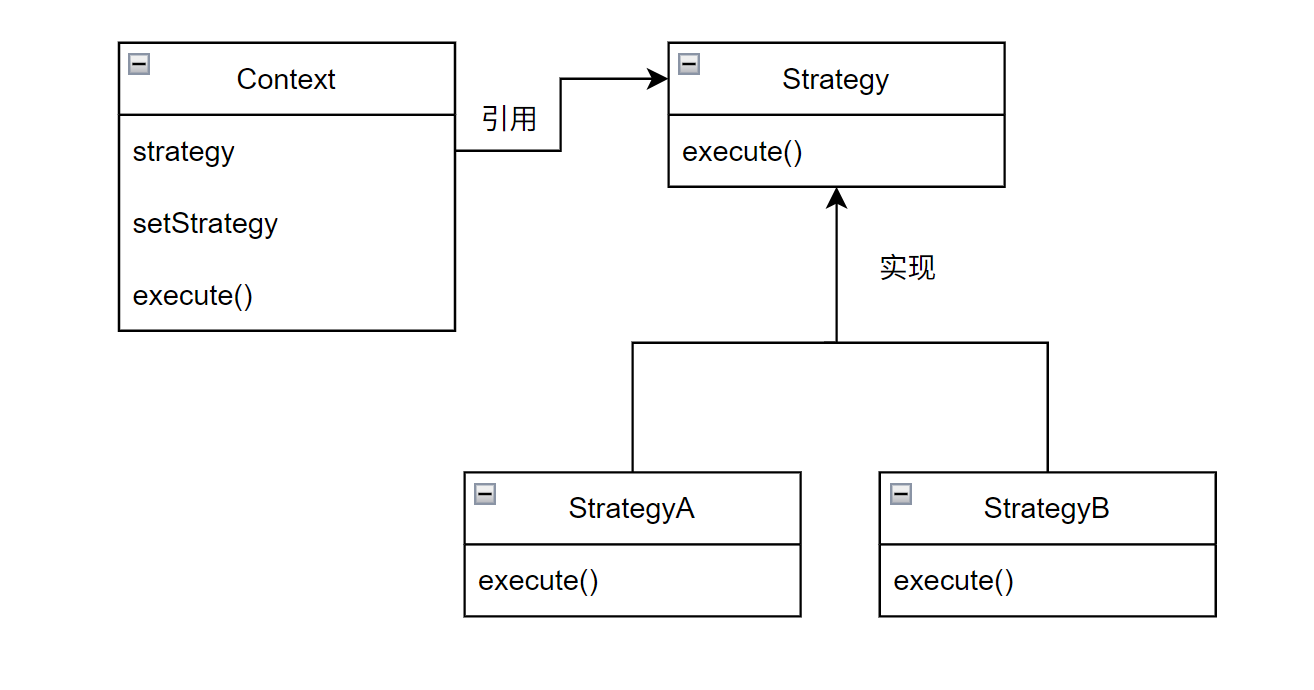
策略模式结构包括三个部分:
|----------------------------|--------------------------|
| Context(环境类) | 持有一个策略对象的引用,通过策略接口调用具体策略 |
| Strategy(策略接口) | 定义所有支持的算法的公共接口 |
| ConcreteStrategy(具体策略) | 实现策略接口的具体算法类 |
UML图如下:
代码示例
策略+工厂模式(使用工厂模式管理策略的创建) 实现消息发送渠道
java
import java.util.HashMap;
import java.util.Map;

// 策略工厂
class NotificationStrategyFactory {
    private static final Map<String, NotificationStrategy> strategies = new HashMap<>();

    static {
        strategies.put("EMAIL", new EmailNotification());
        strategies.put("SMS", new SmsNotification());
        strategies.put("PUSH", new PushNotification());
    }

    public static NotificationStrategy getStrategy(String type) {
        NotificationStrategy strategy = strategies.get(type.toUpperCase());
        if (strategy == null) {
            throw new IllegalArgumentException("不支持的通知类型: " + type);
        }
        return strategy;
    }

    public static void registerStrategy(String type, NotificationStrategy strategy) {
        strategies.put(type.toUpperCase(), strategy);
    }
}

// 策略接口
interface NotificationStrategy {
    void send(String message, String recipient);
}

// 具体策略类
class EmailNotification implements NotificationStrategy {
    @Override
    public void send(String message, String recipient) {
        System.out.printf("发送邮件到 %s: %s%n", recipient, message);
    }
}

class SmsNotification implements NotificationStrategy {
    @Override
    public void send(String message, String recipient) {
        System.out.printf("发送短信到 %s: %s%n", recipient, message);
    }
}

class PushNotification implements NotificationStrategy {
    @Override
    public void send(String message, String recipient) {
        System.out.printf("发送推送通知到设备 %s: %s%n", recipient, message);
    }
}

// 上下文类
class NotificationService {
    public void sendNotification(String type, String message, String recipient) {
        NotificationStrategy strategy = NotificationStrategyFactory.getStrategy(type);
        strategy.send(message, recipient);
    }
}

// 使用示例
public class StrategyWithFactoryDemo {
    public static void main(String[] args) {
        NotificationService service = new NotificationService();

        // 通过工厂获取策略
        service.sendNotification("EMAIL", "您的订单已发货", "user@example.com");
        service.sendNotification("SMS", "验证码: 123456", "13800138000");
        service.sendNotification("PUSH", "您有一条新消息", "device_token");

        // 动态注册新策略
        NotificationStrategyFactory.registerStrategy("WECHAT",
            (message, recipient) -> System.out.println("微信通知: " + message));

        service.sendNotification("WECHAT", "公众号更新", "wechat_user");
    }
}
适用场景
-
多种算法变体:系统需要在多种算法中选择一种
-
避免多重条件语句:减少复杂的if-else或switch-case语句
-
算法需要独立变化:算法的使用和实现需要解耦
-
客户端不需要知道具体实现:客户端只关心接口,不关心具体算法
优点
1、开闭原则 :无需修改上下文即可引入新策略;2、消除条件语句 :避免使用多重条件转移语句;3、提高可复用性 :算法可以独立于上下文重复使用;4、提高灵活性 :运行时可以动态切换算法;5**、职责分离**:算法实现和使用分离
缺点
1、策略类数量增加 :每个策略都需要一个单独的类;2、客户端必须了解策略 :客户端需要知道有哪些策略可用;3、通信开销 :策略和上下文之间可能需要传递数据;4、增加复杂度:简单场景使用可能显得过度设计
注:和状态模式对比
策略模式改变对象行为,状态模式改变对象状态。策略模式处理可选的算法实现,状态模式管理核心状态转换。
| 特性 | 策略模式 | 状态模式 |
|---|---|---|
| 主要目的 | 封装算法,让客户端选择 | 封装状态,管理状态转换 |
| 切换控制 | 由客户端主动控制 | 由上下文或状态对象自动控制 |
| 状态感知 | 策略之间通常不知道彼此 | 状态之间知道并触发转换 |
| 典型应用 | 可互换的算法实现 | 状态驱动的行为变化 |
| 设计重点 | 算法的可替换性 | 状态转换的逻辑封装 |