📝 引言
📌 场景/痛点
在面试或代码评审中,你一定见过这样的争论:
同事 A :"这里应该用
interface,因为这是面向对象的写法。"
同事 B :"不,这里应该用type,因为type更灵活,能写联合类型。"
作为新手,面对功能上极其相似的两者,往往陷入"选择困难症"。混用 interface 和 type 会让代码风格支离破碎,增加维护成本。在 TypeScript 的今天,我们其实已经有了非常明确的标准答案。
✨ 最终效果
读完本文,你将拥有一个清晰的"决策树",无论遇到什么场景,都能在 1 秒钟内决定是用 interface 还是 type。
📖 内容概览
我们将从以下维度彻底厘清两者的关系:
- 共同点:定义对象形状时几乎一样。
- 核心差异 :声明合并 (
interface独有) vs 灵活表达 (type独有)。 - 扩展能力:它们能否互相继承?
- 2026 开发标准:到底该听谁的?
🛠️ 正文
1. 环境准备
不需要任何特殊环境,直接在 src/ 下新建 definitions.ts 即可。这是一个纯"脑力体操"章节。
2. 共同点:定义对象形状
在 90% 的简单场景下,定义一个对象的结构,两者几乎没有区别。
typescript
// 写法 A:Interface
interface UserI {
    id: number;
    name: string;
}

// 写法 B:Type Alias
type UserT = {
    id: number;
    name: string;
};

const u1: UserI = { id: 1, name: "A" };
const u2: UserT = { id: 2, name: "B" };结论:单纯描述数据结构时,看你心情。
3. 核心差异一:声明合并
这是 interface 的"独门绝技"。如果你定义了两个同名 interface,它们会自动合并成一个。而 type 不允许重复定义。
typescript
// ✅ Interface 自动合并
interface Window {
    title: string;
}

interface Window {
    // 此时 Window 已经有了 title,现在添加 version
    version: string;
}

// 最终 Window 包含:title, version
const w: Window = { title: "TS", version: "5.9" };
typescript
// ❌ Type 报错:重复标识符 'Window'
type Window = {
    title: string;
};

type Window = { // Error: Duplicate identifier 'Window'.
    version: string;
};
为什么要合并?
这在扩展第三方库 时非常有用。例如你想给 Window 对象加一个自定义属性,或者给 axios 添加拦截器类型定义,用 interface 声明合并是最优雅的方案。
4. 核心差异二:灵活表达
这是 type 的"绝对统治区"。interface 只能定义对象结构,而 type 可以定义任何类型的别名。
typescript
// 1. 联合类型
type ID = string | number; // interface 无法实现

// 2. 元组类型
type Coord = [number, number]; // interface 无法实现

// 3. 映射类型
type ReadonlyUser = {
    readonly [K in keyof UserT]: UserT[K]
}; // interface 无法直接实现这种映射
结论 :只要涉及到非对象的复杂类型(联合、元组、函数签名、映射),必须用 type。
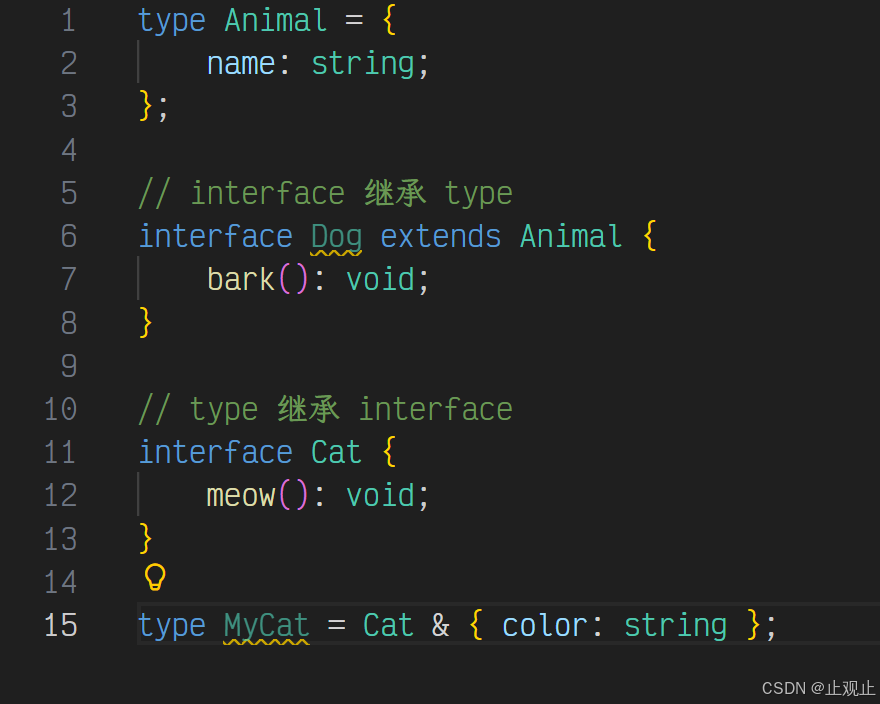
5. 互相继承:谁兼容谁?
好消息是,它们是可以混用的。
interface可以extendstype。type(交叉) 也可以extends(通过&或条件类型)interface。
typescript
type Animal = {
    name: string;
};

// interface 继承 type
interface Dog extends Animal {
    bark(): void;
}

// type 继承 interface
interface Cat {
    meow(): void;
}

type MyCat = Cat & { color: string };
❓ 常见问题
Q1: 听说 interface 编译后性能更好?
A: 在几年前的 TS 版本中,interface 的处理速度确实略快于 type 的处理速度,尤其是在处理数百万个类型的大项目中。但在 TypeScript 5.9 中,编译器经过了大量性能优化,两者的性能差异在绝大多数项目中已经可以忽略不计。不要为了微乎其微的性能差异牺牲代码的可读性和灵活性。
Q2: React 组件的 Props 用哪个?
A: 2026 年的标准答案:统一用 type。
typescript
// ✅ 推荐
type ButtonProps = {
    label: string;
    onClick: () => void;
    disabled?: boolean;
};

export const Button = ({ label, onClick }: ButtonProps) => { ... };
原因:React 组件的 Props 经常会出现联合类型(如 variant: "primary" | "secondary"),type 处理这个更自然。
Q3: 我到底该选哪个?给个准话!
A: 遵循 "Default to Type"(默认用 Type)原则。
- 95% 的情况 :使用
type。它更全能,更符合函数式编程的组合思想。 - 5% 的情况 :使用
interface。- 当你需要声明合并来扩展第三方库类型时。
- 当你定义一个类 (Class) 必须遵循的形状时(虽然 Class 也可以 implement Type,但 OOP 习惯上用 interface)。
🎯 总结
这场争论没有输赢,只有最适合的场景。本文我们确立了 2026 年的 TS 编码规范:
- 日常开发 :优先使用
type,它支持联合、交叉、映射,功能更强大。 - 库开发/扩展 :利用
interface的声明合并特性,对原有类型进行补丁式扩展。 - 风格统一 :不要在一个文件里混用
type和interface定义同一个概念,保持团队规范一致。
🚀 下期预告:
既然决定了用 type,那如何利用 type 打造更强大的工具?比如"把所有属性变成只读"或者"提取所有 Key"?
下一篇文章我们将深入 《映射类型与只读范式》,掌握代码生成的核心魔法。
💬 互动环节:
你现在团队里的代码规范是偏向 interface 还是 type?看完本文是不是打算重构一下了?
如果觉得文章帮你解决了困惑,请点赞👍、收藏⭐、关注👀,下期更精彩!