接前一篇文章:Linux网络驱动之Fixed-Link(17)
本文内容参考:
linux phy处理流程一:探测phy设备_phy link过程-CSDN博客
linux phy处理流程三:fixed-link处理-CSDN博客
ARM与交换芯片mac_to_mac固定模式总结_mac to mac-CSDN博客
rk3399 mac to mac 连接switch - tccxy - 博客园
特此致谢!
三、深入了解
前边用了几个回目的篇幅讲解了of_mdiobus_register和mdiobus_register函数的区别。本回要回归到当初引出这段讲解的地方,参见Linux网络驱动之Fixed-Link(13)-CSDN博客:
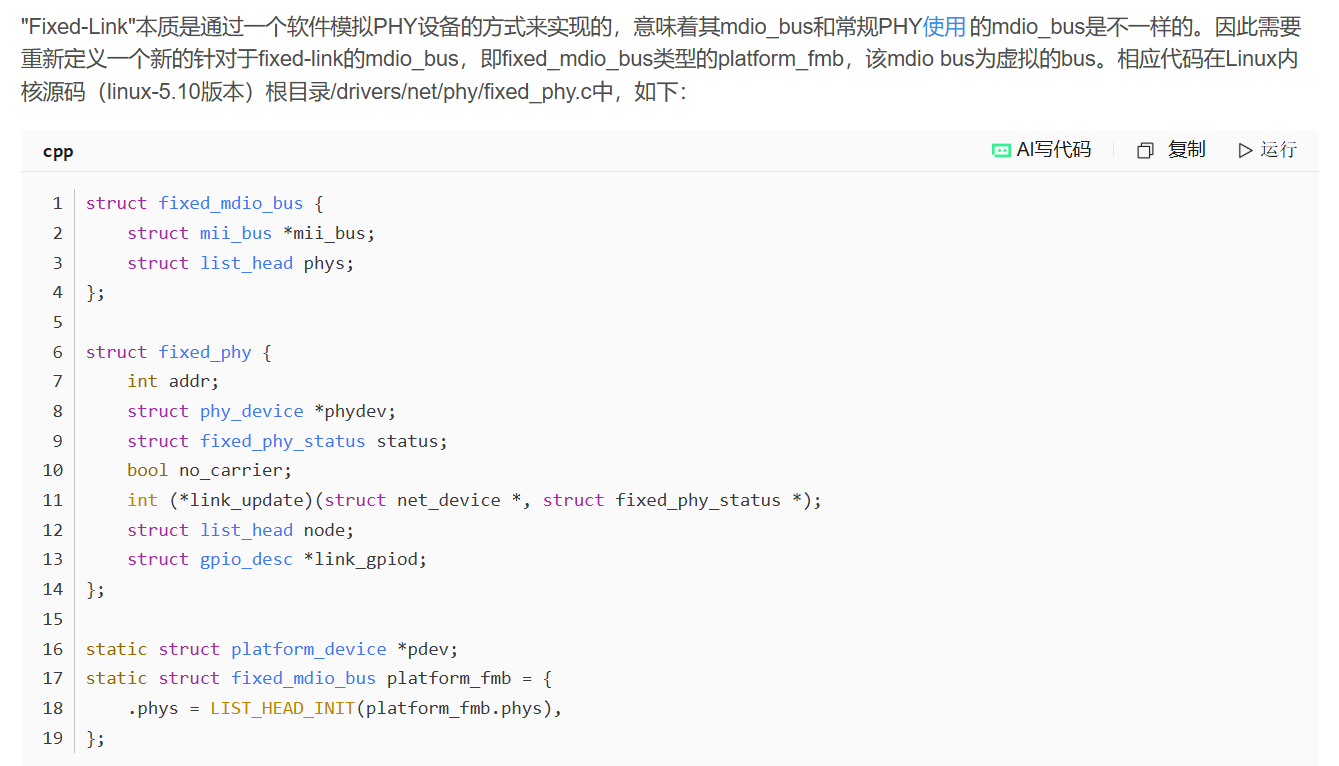
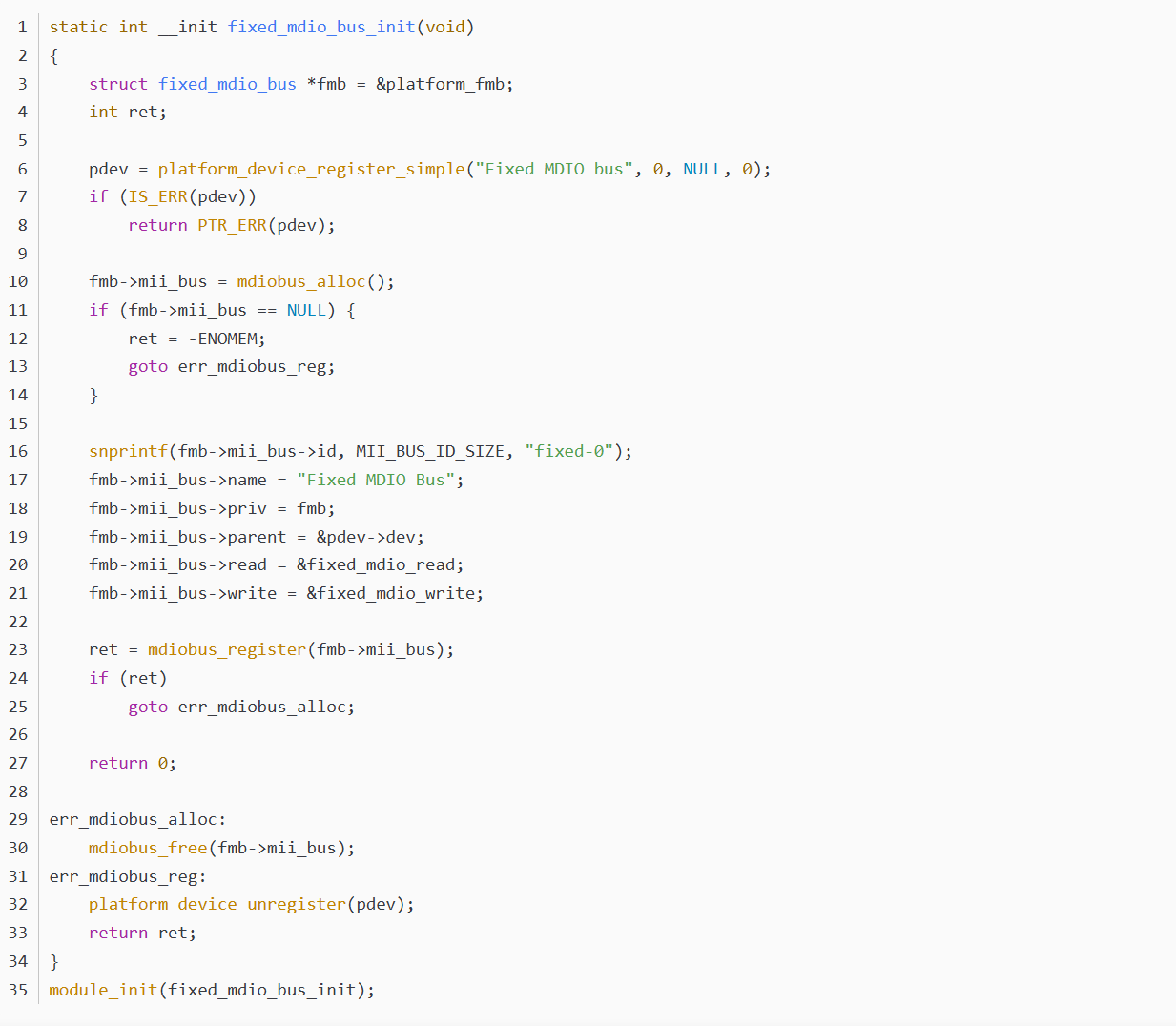
之前先围绕着第3个函数调用:
cpp
ret = mdiobus_register(fmb->mii_bus);进行了深入解析。现在要拉回来,讲解第1个函数调用:
cpp
    pdev = platform_device_register_simple("Fixed MDIO bus", 0, NULL, 0);
	if (IS_ERR(pdev))
		return PTR_ERR(pdev);
platform_device_register_simple函数是一个内联函数,在kernel/linux-5.10-origin/include/linux/platform_device.h中,代码如下:
cpp
/**
 * platform_device_register_simple - add a platform-level device and its resources
 * @name: base name of the device we're adding
 * @id: instance id
 * @res: set of resources that needs to be allocated for the device
 * @num: number of resources
 *
 * This function creates a simple platform device that requires minimal
 * resource and memory management. Canned release function freeing memory
 * allocated for the device allows drivers using such devices to be
 * unloaded without waiting for the last reference to the device to be
 * dropped.
 *
 * This interface is primarily intended for use with legacy drivers which
 * probe hardware directly.  Because such drivers create sysfs device nodes
 * themselves, rather than letting system infrastructure handle such device
 * enumeration tasks, they don't fully conform to the Linux driver model.
 * In particular, when such drivers are built as modules, they can't be
 * "hotplugged".
 *
 * Returns &struct platform_device pointer on success, or ERR_PTR() on error.
 */
static inline struct platform_device *platform_device_register_simple(
		const char *name, int id,
		const struct resource *res, unsigned int num)
{
	return platform_device_register_resndata(NULL, name, id,
			res, num, NULL, 0);
}
platform_device_register_simple函数说明如下:
函数原型
static inline struct platform_device *platform_device_register_simple(
const char *name, int id,
const struct resource *res, unsigned int num);
函数功能
添加平台级设备及其资源。
此函数创建了一个需要最少资源和内存管理的简单平台设备。释放为设备所分配内存的封装函数,允许使用此类设备的驱动程序被卸载,而无需等待删除对设备的最后一次引用。
此接口主要用于直接探测硬件的传统驱动程序。因为这样的驱动程序自己创建sysfs设备结点,而不是让系统基础设施处理这样的设备枚举任务,因此它们并不完全符合Linux驱动程序模型。特别地,当这些驱动程序被构建(编译)为模块时,它们不能被"热插拔"。
参数说明
- name:要添加的设备的基本名称
- id:实例id
- res:需要为设备分配的资源集
- num:资源的数量
返回值
成功返回指向struct platform_device的指针;失败返回ERR_PTR。
对照着上边实际调用进行理解:
cpp
    pdev = platform_device_register_simple("Fixed MDIO bus", 0, NULL, 0);
	if (IS_ERR(pdev))
		return PTR_ERR(pdev);
要添加的平台级设备名称为"Fixed MDIO bus";实例id为0;不需要分配资源(集);资源的数量为0。
真正完成工作的是platform_device_register_resndata函数。它也在include/linux/platform_device.h中(就在上边),代码如下:
cpp
/**
 * platform_device_register_resndata - add a platform-level device with
 * resources and platform-specific data
 *
 * @parent: parent device for the device we're adding
 * @name: base name of the device we're adding
 * @id: instance id
 * @res: set of resources that needs to be allocated for the device
 * @num: number of resources
 * @data: platform specific data for this platform device
 * @size: size of platform specific data
 *
 * Returns &struct platform_device pointer on success, or ERR_PTR() on error.
 */
static inline struct platform_device *platform_device_register_resndata(
		struct device *parent, const char *name, int id,
		const struct resource *res, unsigned int num,
		const void *data, size_t size) {

	struct platform_device_info pdevinfo = {
		.parent = parent,
		.name = name,
		.id = id,
		.res = res,
		.num_res = num,
		.data = data,
		.size_data = size,
		.dma_mask = 0,
	};

	return platform_device_register_full(&pdevinfo);
}
对于该函数的解析,请看下回。