-
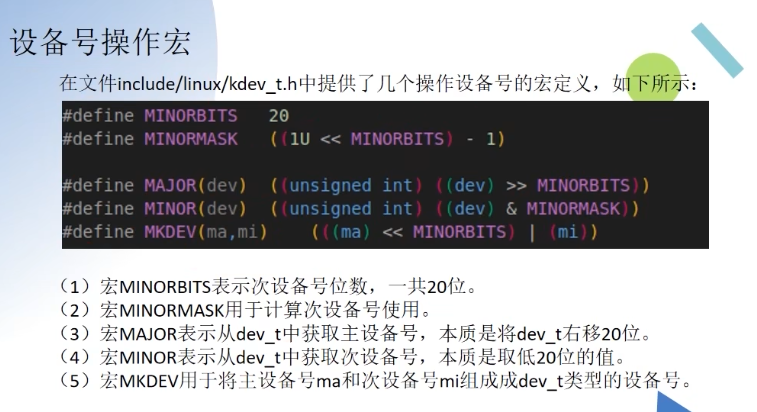
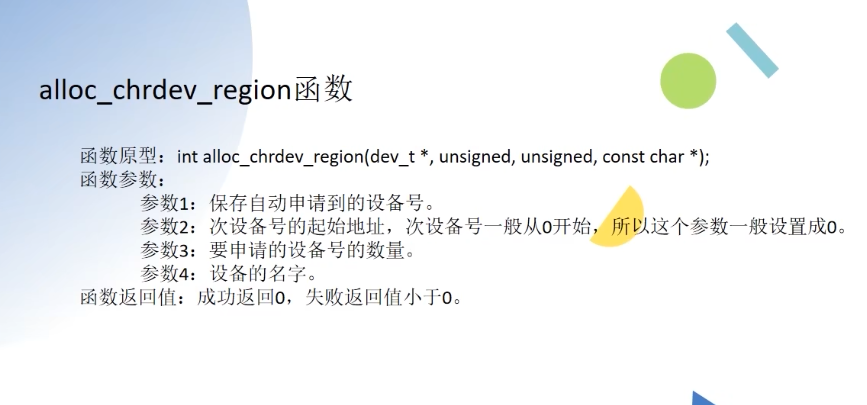
动态申请设备号
-
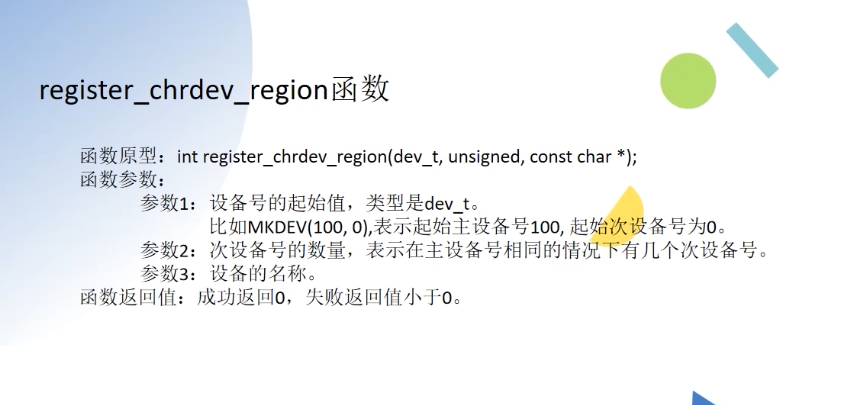
静态申请设备号
-
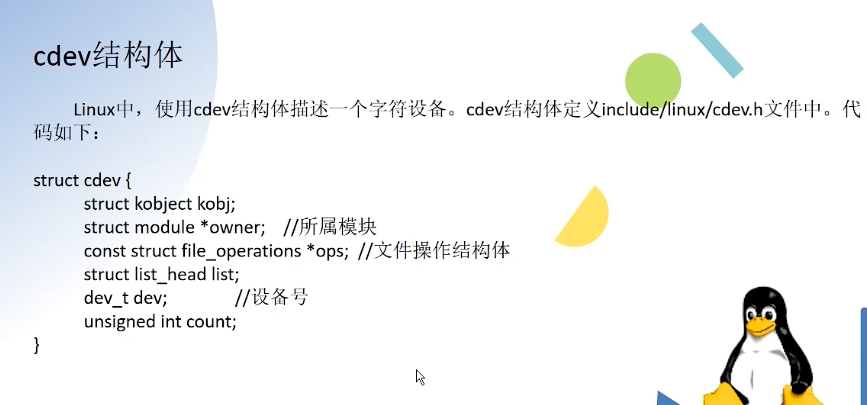
cdev的结构体介绍
-
cdev_init () 结构体介绍
有了设备号后用cdev_init 函数初始化结构体
c
/**
 * cdev_init() - initialize a cdev structure
 * @cdev: the structure to initialize
 * @fops: the file_operations for this device
 *
 * Initializes @cdev, remembering @fops, making it ready to add to the
 * system with cdev_add().
 */
void cdev_init(struct cdev *cdev, const struct file_operations *fops)
{
	memset(cdev, 0, sizeof *cdev);
	INIT_LIST_HEAD(&cdev->list);
	kobject_init(&cdev->kobj, &ktype_cdev_default);
	cdev->ops = fops;
}- step3 cdev_add 函数设置
向系统添加一个cdev结构体
- 参数1:添加cdev结构体
- 参数2:添加设备号
- 参数3:注册的设备个数
c
/**
 * cdev_add() - add a char device to the system
 * @p: the cdev structure for the device
 * @dev: the first device number for which this device is responsible
 * @count: the number of consecutive minor numbers corresponding to this
 *         device
 *
 * cdev_add() adds the device represented by @p to the system, making it
 * live immediately.  A negative error code is returned on failure.
 */
int cdev_add(struct cdev *p, dev_t dev, unsigned count)
{
	int error;

	p->dev = dev;
	p->count = count;

	if (WARN_ON(dev == WHITEOUT_DEV)) {
		error = -EBUSY;
		goto err;
	}

	error = kobj_map(cdev_map, dev, count, NULL,
			 exact_match, exact_lock, p);
	if (error)
		goto err;

	kobject_get(p->kobj.parent);

	return 0;

err:
	kfree_const(p->kobj.name);
	p->kobj.name = NULL;
	return error;
}
代码实现流程
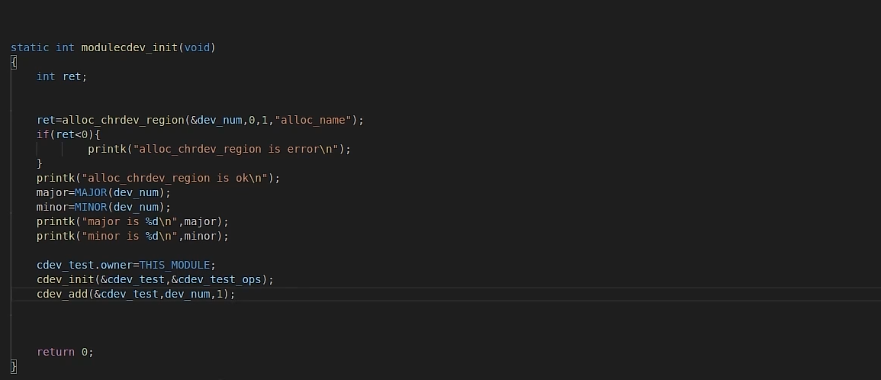
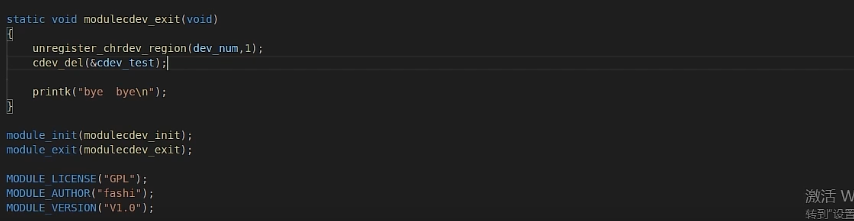
卸载字符设备 通过modulecdec_exit() 函数实现
- 先卸载设备号
- 再进行cdev结构体的删除
makefile
-
实现cdev设备的makefile
obj -m += cdev.o
KDIR :=/home/....(实际内核源码路径)
PWD?= (shell pwd) all: make -C (KDIR) M =$(PWD) modulesclean:
rm -r *.ko *.mod.o *mod.c *symvers *.order
makefile 代码