一.原理:
list容器的本质就是 对 链表结构的封装 , 对链表有疑问的读者可以 阅读一下这一篇文章:
从零开始的数据结构------2.链表 ---- 单链表实现-CSDN博客
我们就直接步入正题来讲讲list容器常见的api,具体的运用吧!!!
二.常见api
•构造函数:
list<T> list //list 采用模板类实现, 对象的默认构造形式
list(beg,end) //构造函数将(beg,end)区间中的元素拷贝给本身。
list(n,elem) //构造函数将n个elem来初始化元素
list(const list <) //纯粹的拷贝构造
list(beg,end)中的 beg 和 end 都指的是具体的迭代器,例如:begin()或者end()等等。
cpp
#include<iostream>
#include<list>
using namespace std;
void printList(const list<int> <){
for (list<int> :: const_iterator it = lt.begin(); it != lt.end(); it++){
cout << *it << " ";
}
cout << endl;
}
void test01(){
list<int> lt;
lt.push_back(10);
lt.push_back(20);
lt.push_back(30);
printList(lt);
//区间构造
list<int> m(lt.begin(),lt.end());
printList(m);
//初始化
list<int> j(5,100);
printList(j);
//纯粹的拷贝构造:
list<int> cc(j);
printList(cc);
}
int main(){
test01();
system("pause");
return 0;
}运行结果是:
10 20 30
10 20 30
100 100 100 100 100
100 100 100 100 100
请按任意键继续. . .
• 赋值和交换:
assign(beg,end) //将beg 和 end 中的数据拷贝赋值给本身
assign (n,elem) //将n个值赋值给几个元素
list& operator * (const list &list) //重载等号操作符
swap(list) //将元素互换
常见的是***= 赋值符 ,拷贝赋值***
++assign 用于解决初始化后,想要重新赋值的需求++
cpp
#include<iostream>
#include<list>
using namespace std;
void printList(const list<int> <){
for (list<int> :: const_iterator it = lt.begin(); it != lt.end(); it++){
cout << *it << " ";
}
cout << endl;
}
void test01(){
list<int> lt;
lt.push_back(10);
lt.push_back(20);
lt.push_back(30);
printList(lt);
list<int> lt2;
lt2 = lt;
printList(lt2);
list<int> lt3;
lt3.assign(lt2.begin(),lt2.end());
printList(lt3);
list<int> lt4;
lt4.assign(10,100);
printList(lt4);
swap(lt,lt4);
printList(lt4);
}
int main(){
test01();
system("pause");
return 0;
}运行结果:
10 20 30
10 20 30
10 20 30
100 100 100 100 100 100 100 100 100 100
10 20 30
请按任意键继续. . .
•大小操作:
size() //返回容器中实际存储的元素个数
empty() //判断容器是否为空
resize( n ) //重新指定元素实际存储个数为n(影响size())
resize( n ,elm ) // 重新指定容器实际储存个数为 n ,同时这些更改的元素值初始化为elm
• 插入和删除
push_back() // 在容器尾部加入一个元素
pop_back() //删除容器中的最后一个元素
push_front() //在容器开头插入一个元素
pop_front() //在容器开头移除第一个元素
insert(pos,elem) //在容器位置插入elem元素的拷贝,返回新的数据
insert(pos,n,elem) //在pos位置插入 n个 elem数据,无返回值
insert(pos,beg,end) //在pos位置插入【beg,end)区间的数据,无返回值
clear() //移除容器的所有数据
erase(beg,end) //删除(beg,end)区间的数据,返回下一个数的位置
erase(pos) //删除pos位置的数据,返回下一个数据
remove(elem) //移除容器中所有和elem匹配的元素
insert 和 erase 尤其好用,能够自动 插入/删除 节点.
原始人编程" 中,我们更改链表需要:
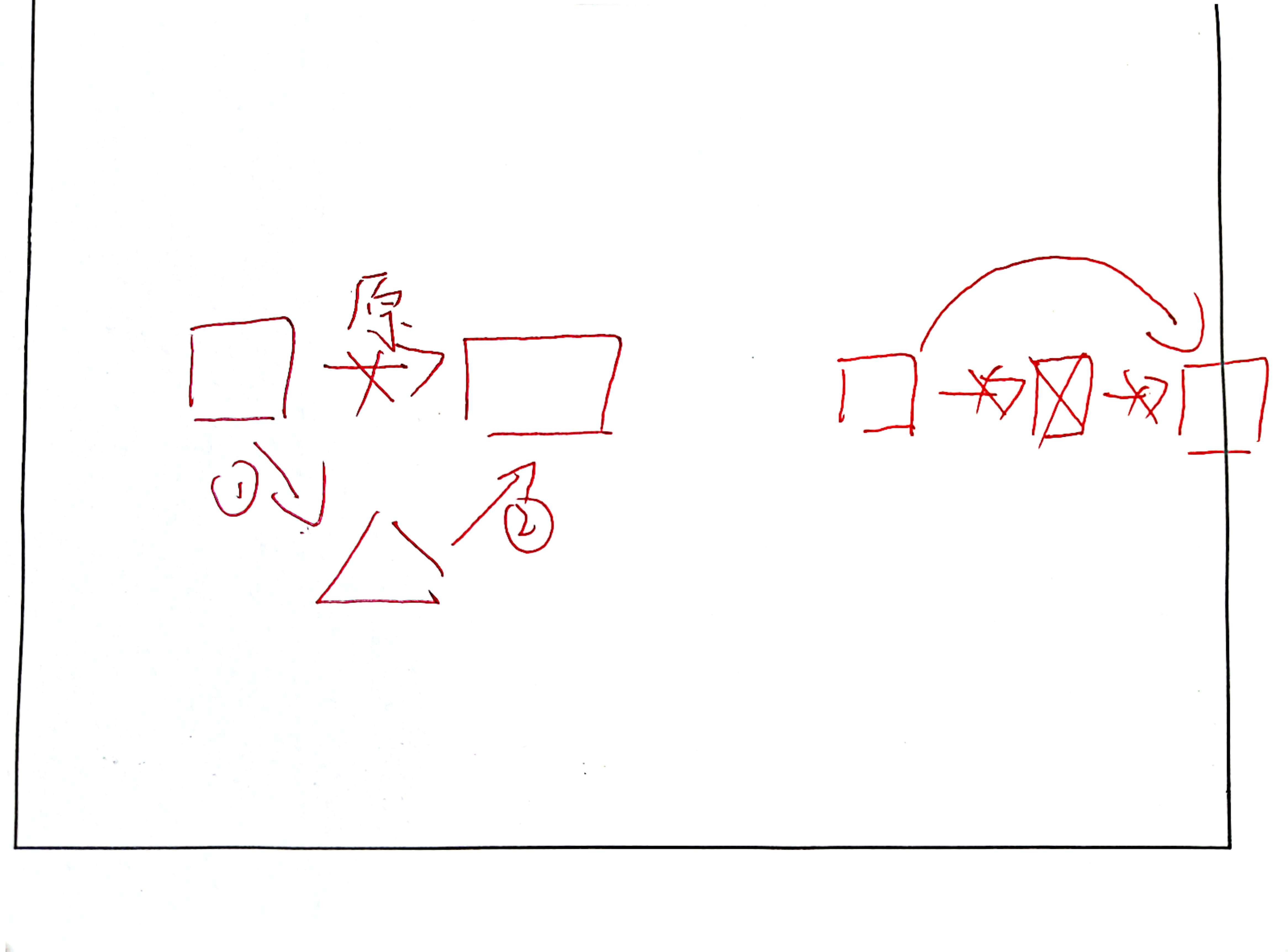
通过调用api 就可以自动帮我们实现这两个操作。
cpp
#include<iostream>
#include<list>
using namespace std;

void printList(const list<int> &L){
   for (list<int> :: const_iterator it = L.begin(); it != L.end(); it++){
          cout << *it << " ";
   }
   cout << endl;
}


void test(){
   list<int> L;

   //尾部插入:
   L.push_back(10);
   L.push_back(20);
   L.push_back(30);

   //头插法
   L.push_front(3);
   L.push_front(2);
   L.push_front(1);

   printList(L);

   //尾部删除
   L.pop_back();
   printList(L);

   //头部删除
   L.pop_front();
   printList(L);

   //insert插入
   list<int>:: iterator it = L.begin();
   it++;
   L.insert(it,100);
   printList(L);

   //删除
   it = L.end();
   it--;
   it--;
   L.erase(it);
   printList(L);

   //清空
   L.clear();
   printList(L);

}

int main(){
   test();
   system("pause");
   return 0;
}
运行结果:
1 2 3 10 20 30
1 2 3 10 20
2 3 10 20
2 100 3 10 20
2 100 3 20
请按任意键继续. . .
• 数据存取:
front() // 返回第一个数据
back() // 返回最后一个数据
由链表的底层逻辑影响,不能像数组那样,"跳跃式"地访问数据,只能从头或者从尾循环访问。
例如:
迭代器 list<T> :: iterator it = L.begin() --- L是list变量名
支持 it++ 或者 it-- ,能够逐个前后移动。
但是不支持 it = it + 3 这种跳跃式的访问
•链表的排序和反转
reverse() //链表的反准
sort() //链表排序
cpp
#include<iostream>
#include<list>
using namespace std;

void printLIst( const list<int> &L){
    for (list<int> :: const_iterator it = L.begin(); it != L.end(); it++){
          cout << *it << " ";
    }
    cout << endl;
}


void test(){
    list<int> L;

    //插入一些无序的数字
    L.push_back(20);
    L.push_back(10);
    L.push_back(30);
    cout << "反转前" << endl;
    printLIst(L);

    //反转
    cout << "反转后" << endl;
    L.reverse();
    printLIst(L);

    //排序
    L.sort();
    cout << "排序后" << endl;
    printLIst(L);
}

int main(){
    test();
    system("pause");
    return 0;
}