早上八点五十多已经有八九个在排队等待了... ...我买了两个菜包一共3块,在一旁等着...

装饰器模式
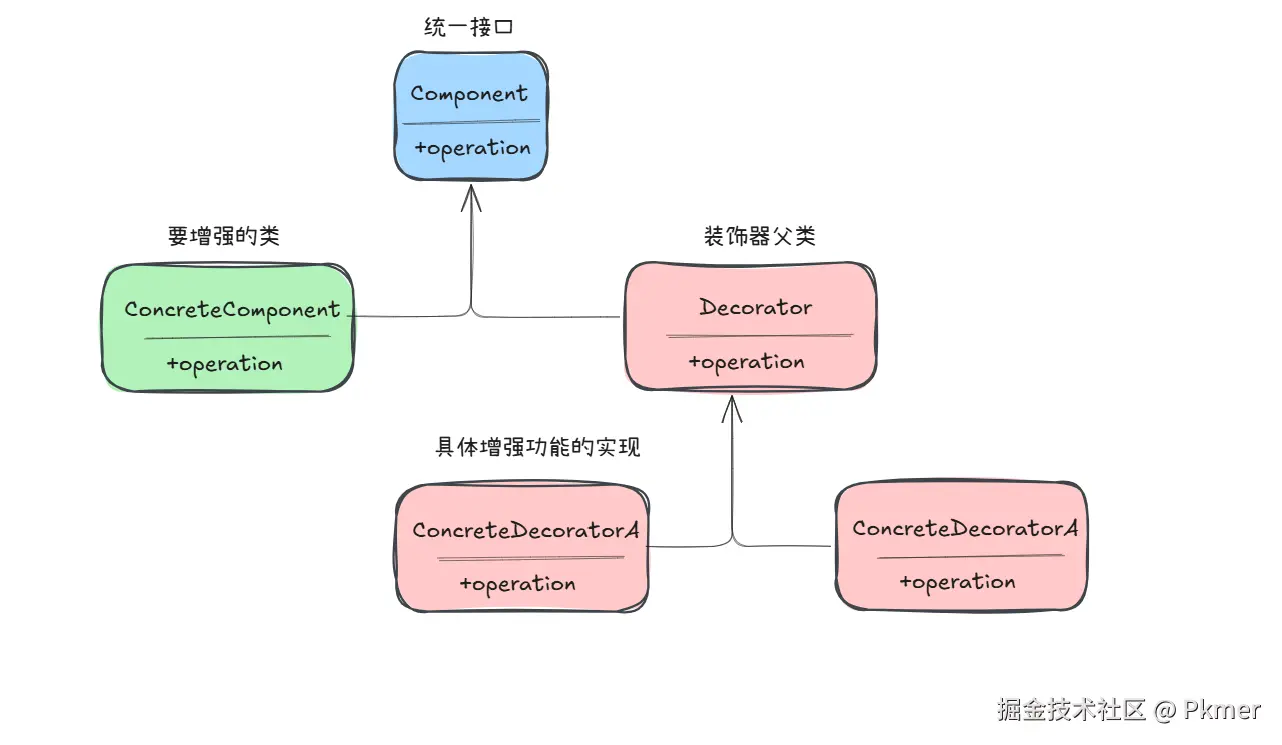
动态的给一个对象添加一些额外的职责。
小菜靓仔
Pkmer 今天要出门,需要给自己打扮一番。商店里有各种服装配饰:球鞋、垮裤、大T裰、皮鞋、领带、西装等。
Pkmer 不需要从零开始穿衣,而是在现有装扮的基础上,一件件套上新的衣服。每件衣服都能"展示"自己,同时把展示的机会留给里面已经穿好的衣服。
程序输出
diff
---------第一种装扮---------------
球鞋垮裤大T桖装扮的Pkmer
---------第二种装扮---------------
西装领带皮鞋装扮的Pkmer
模式结构
scss
┌─────────────────┐
│   ICharacter    │  ← 接口,定义 show() 方法
└────────┬────────┘
         │
    ┌────┴────┐
    │         │
┌───▼───┐ ┌───▼────────┐
│ Person│ │  Finery    │  ← 装饰器基类
└───────┘ └───┬────────┘
              │
    ┌─────────┼─────────┬─────────┐
    │         │         │         │
┌───▼───┐ ┌───▼──┐ ┌───▼───┐ ┌───▼────┐
│Sneakers│ │BigTrouser│TShirts│ │Suit... │  ← 具体装饰类
└───────┘ └──────┘ └───────┘ └────────┘
核心思想
- 组件接口 (
ICharacter):定义展示行为 - 具体组件 (
Person):被装饰的对象 - 装饰器基类 (
Finery):持有组件引用,调用被装饰者的展示方法 - 具体装饰类 (
TShirts、Suit等):在展示时,先输出自己的内容,再调用super.show()
这样装扮顺序是从外到内 输出,但实际穿衣是从内到外层层包裹。
组件接口
java
public interface ICharacter {
    void show();
}
具体组件
java
public class Person implements ICharacter {
    private String name;

    public Person(String name) {
        this.name = name;
    }

    @Override
    public void show() {
        System.out.println("装扮的" + name);
    }
}
装饰器基类
java
public class Finery implements ICharacter {
    private ICharacter component;

    public void decorator(ICharacter component) {
        this.component = component;
    }

    @Override
    public void show() {
        if (component != null) {
            component.show();
        }
    }
}
具体装饰类
java
public class TShirts extends Finery {
    @Override
    public void show() {
        System.out.print("大T桖");
        super.show();  // 先输出自己,再调用内部组件
    }
}
客户端使用
java
public class Main {
    public static void main(String[] args) {
        Person pkmer = new Person("Pkmer");
        TShirts tShirts = new TShirts();
        BigTrouser bigTrouser = new BigTrouser();
        Sneakers sneakers = new Sneakers();

        // 从内到外层层包装
        tShirts.decorator(pkmer);
        bigTrouser.decorator(tShirts);
        sneakers.decorator(bigTrouser);

        // 输出时从外到内
        sneakers.show();  // 输出:球鞋垮裤大T桖装扮的Pkmer
    }
}
相关代码
小结
当扩展其他装扮的时候,只需要新建一个装饰类,实现 show() 方法,调用 super.show() 即可。
商城收银程序
场景描述
商场收银系统需要支持多种收费方式:正常收费、打折、满减,以及它们的组合。用户可以选择不同的收费模式,系统自动计算最终的收费金额。
程序输出
makefile
***商品折扣模式如下:***
1.正常收费
2.打八折
3.打七折
4.满300送100
5.先打8折,再满300送100
6.先满200送50,再打7折

请输入商品折扣模式:
6
请输入商品单价:
300
请输入商品数量:
2

单价:300.0元 数量:2 合计:315.0元

总计:315.0元
模式结构
markdown
┌─────────────────┐
│     ISale       │  ← 组件接口
└────────┬────────┘
         │
    ┌────┴────┐
    │         │
┌───▼───┐ ┌───▼────────┐
│CashNormal│ │ CashSuper │  ← 装饰器基类
└───────┘ └───┬────────┘
              │
    ┌─────────┼─────────┐
    │         │         │
┌───▼───┐ ┌───▼──┐ ┌───▼───┐
│CashRebate│ │CashReturn│ │...    │  ← 具体装饰类
└───────┘ └──────┘ └───────┘
核心思想
- 组件接口 (
ISale):定义收费行为acceptCash(price, num) - 具体组件 (
CashNormal):原价收费 - 装饰器基类 (
CashSuper):持有组件引用,调用被装饰者的收费方法 - 具体装饰类 (
CashRebate、CashReturn等):在收费时,先计算自己的折扣,再调用super.acceptCash()
组件接口
java
public interface ISale {
    double acceptCash(double price, int num);
}
具体组件
java
public class CashNormal implements ISale {
    @Override
    public double acceptCash(double price, int num) {
        return price * num;  // 原价收费
    }
}
装饰器基类
java
public class CashSuper implements ISale {
    private ISale component;

    public void decorate(ISale component) {
        this.component = component;
    }

    @Override
    public double acceptCash(double price, int num) {
        double result = 0;
        if (component != null) {
            result = component.acceptCash(price, num);  // 调用内部组件计算
        }
        return result;
    }
}
打折装饰类
java
public class CashRebate extends CashSuper {
    private double rebate;

    public CashRebate(double rebate) {  // 比如 0.8 表示打8折
        if (rebate < 0 || rebate > 1) {
            throw new IllegalArgumentException("折扣率必须在0-1之间");
        }
        this.rebate = rebate;
    }

    @Override
    public double acceptCash(double price, int num) {
        double result = price * num * rebate;  // 先计算打折后的价格
        return super.acceptCash(result, 1);  // 传递给内部组件
    }
}
返利装饰类
java
public class CashReturn extends CashSuper {
    private double moneyCondition = 0.0d;  // 返利条件,如满300
    private double moneyReturn = 0.0d;    // 返利金额,如返100

    public CashReturn(double moneyCondition, double moneyReturn) {
        this.moneyCondition = moneyCondition;
        this.moneyReturn = moneyReturn;
    }

    @Override
    public double acceptCash(double price, int num) {
        double result = price * num;
        if (result >= moneyCondition) {
            result = result - Math.floor(result / moneyCondition) * moneyReturn;
        }
        return super.acceptCash(result, 1);
    }
}
上下文类
java
public class CashContext {
    private final ISale cs;

    public CashContext(int cashType) {
        cs = switch (cashType) {
            case 1 -> new CashNormal();  // 正常收费
            case 2 -> new CashRebate(0.8d);  // 打8折
            case 3 -> new CashRebate(0.7d);  // 打7折
            case 4 -> new CashReturn(300d, 100d);  // 满300返100
            case 5 -> {  // 先打8折,再满300返100
                CashNormal cn = new CashNormal();
                CashReturn cashReturn = new CashReturn(300d, 100d);
                CashRebate cashRebate = new CashRebate(0.8d);
                cashReturn.decorate(cn);
                cashRebate.decorate(cashReturn);
                yield cashRebate;
            }
            case 6 -> {  // 先满200返50,再打7折
                CashNormal cashNormal = new CashNormal();
                CashRebate cashRebate = new CashRebate(0.7d);
                CashReturn cashReturn = new CashReturn(200d, 50d);
                cashRebate.decorate(cashNormal);
                cashReturn.decorate(cashRebate);
                yield cashReturn;
            }
            default -> throw new IllegalArgumentException("不支持的现金类型: " + cashType);
        };
    }

    public double getResult(double price, int num) {
        return cs.acceptCash(price, num);
    }
}
客户端使用
java
public class Main {
    public static void main(String[] args) {
        try (Scanner sc = new Scanner(System.in)) {
            double total = 0d;
            while (true) {
                // ... 输入逻辑
                CashContext cashContext = new CashContext(type);
                totalPrices = cashContext.getResult(price, num);
                total += totalPrices;
            }
        }
    }
}
相关代码
- Main.java
- ISale.java
- CashSuper.java
- CashNormal.java
- CashRebate.java
- CashReturn.java
- CashContext.java
小结
利用基础CashNormal,CashRebate,CashReturn三种原子算法,通过装饰器各种有选择的,有顺序地组合,形成不同的策略。
总结
装饰器
把每个要装饰的功能,放在单独的类中,并让这些新类包装它所要装饰的对象。客户端使用时,可以根据需要,有选择地、有顺序地使用装饰功能包装对象了。
找到基础类,ConcreteComponent,也就是要扩充功能的对象。
- 扩展功能的时候,提供新的类即可
- 装饰器模式遵循开闭原则,易于扩展和维护
- 适用于需要动态添加功能的场景