Spring Boot 4.1 + JDK 25 DDD开源脚手架,面向 AI 编程
新一代 Java 企业级开发脚手架 - 基于新版 Spring Boot和 JDK,严格遵循 DDD 架构,开箱即用,打造 AI 编程最佳实践
为什么选择这个脚手架?
基于 Spring Boot 4.1 与 JDK 25,严格遵循 DDD 架构设计,内置多数据源支持,开箱即用。沉淀统一的工程规范与最佳实践,为 AI Coding 提供高质量上下文,实现更准确、更一致的代码生成。2026年,转型 AI 编程,从最新脚手架开始。这份代码不只是给你看的,更是给 AI 读的,用来指导 AI 按什么架构来写代码。
核心特性
-
最新技术栈 - Spring Boot 4.1 + JDK 25 LTS,享受最新特性和性能优化
-
DDD 架构 - 严格遵循领域驱动设计,四层架构清晰分离,让复杂变清晰
-
多数据源 - MySQL + PostgreSQL 双数据源,独立事务管理,你可以自由选择
-
事件驱动 - RocketMQ 支持领域事件发布,实现最终一致性
-
安全可靠 - 完整的鉴权机制和异常处理体系,实现系统可靠性
架构优雅
graph TB
subgraph 接口层 Interfaces
A[UserController] --> B[UserService]
C[OrderController] --> D[OrderService]
end
subgraph 应用层 Application
B --> E[UserRepository]
D --> F[OrderRepository]
B --> G[CacheService]
D --> H[DomainEventPublisher]
end
subgraph 领域层 Domain
E --> I[User 聚合根]
F --> J[Order 聚合根]
I --> K[UserUniquenessChecker]
J --> L[OrderDomainService]
end
subgraph 基础设施层 Infrastructure
E --> M[UserRepositoryImpl]
F --> N[OrderJdbcRepository]
M --> O[(MySQL)]
N --> P[(PostgreSQL)]
G --> Q[(Redis)]
H --> R[RocketMQ]
end
style A fill:#e3f2fd,stroke:#2196f3,stroke-width:2px
style B fill:#fff3e0,stroke:#ff9800,stroke-width:2px
style C fill:#e3f2fd,stroke:#2196f3,stroke-width:2px
style D fill:#fff3e0,stroke:#ff9800,stroke-width:2px
style E fill:#f3e5f5,stroke:#9c27b0,stroke-width:2px
style F fill:#f3e5f5,stroke:#9c27b0,stroke-width:2px
style G fill:#e8f5e9,stroke:#4caf50,stroke-width:2px
style H fill:#fce4ec,stroke:#e91e63,stroke-width:2px
style I fill:#ffe1f5,stroke:#e91e63,stroke-width:3px
style J fill:#ffe1f5,stroke:#e91e63,stroke-width:3px
style K fill:#e0f7fa,stroke:#00bcd4,stroke-width:2px
style L fill:#e0f7fa,stroke:#00bcd4,stroke-width:2px
style M fill:#e1ffe1,stroke:#4caf50,stroke-width:2px
style N fill:#e1ffe1,stroke:#4caf50,stroke-width:2px
style O fill:#ffcdd2,stroke:#f44336,stroke-width:3px
style P fill:#c8e6c9,stroke:#4caf50,stroke-width:3px
style Q fill:#fff9c4,stroke:#ffc107,stroke-width:3px
style R fill:#d1c4e9,stroke:#673ab7,stroke-width:3px
核心优势
| 特性 | 传统项目 | 本脚手架 | 收益 |
|---|---|---|---|
| 架构搭建 | 1-2周 | 10分钟 | ⚡ 90%+ 时间节省 |
| 代码规范 | 靠自觉 | 强制约束 | 📏 架构一致性 |
| 多数据源 | 手动配置 | 开箱即用 | 🔌 即插即用 |
| 领域建模 | 缺乏指导 | DDD 最佳实践 | 🎯 业务清晰 |
| 技术栈 | 版本老旧 | 最新稳定 | 🚀 技术领先 |
源码地址 :github.com/microwind/d...
技术栈与优势
核心技术架构
graph LR
A[JDK 25 LTS] --> B[Spring Boot 4.1]
B --> C[Spring Data JDBC]
B --> D[MyBatis Plus]
B --> E[JdbcClient]
C --> F[(MySQL 8.0)]
C --> G[(PostgreSQL 14)]
E --> F
D --> F
B --> H[RocketMQ 5.3]
B --> I[Redis 6.0]
style A fill:#ff6b6b,stroke:#e53935,stroke-width:3px
style B fill:#4ecdc4,stroke:#009688,stroke-width:3px
style C fill:#ffe66d,stroke:#ffc107,stroke-width:2px
style D fill:#95e1d3,stroke:#26a69a,stroke-width:2px
style E fill:#f38181,stroke:#ef5350,stroke-width:2px
style F fill:#aa96da,stroke:#7e57c2,stroke-width:3px
style G fill:#fcbad3,stroke:#ec407a,stroke-width:3px
style H fill:#a8d8ea,stroke:#039be5,stroke-width:2px
style I fill:#ff9a9e,stroke:#f44336,stroke-width:2px
数据库操作技术
| 技术 | 版本 | 用途 | 特点 |
|---|---|---|---|
| JdbcClient | - | 数据访问 | Spring最新JDBC方式,流畅API,类型安全,简化参数绑定 |
| Spring Data JDBC | - | ORM框架 | 轻量级,符合DDD理念,无JPA复杂性 |
| MyBatis Plus | 3.5.16 | SQL增强 | 强大的SQL增强,支持复杂查询,代码生成器提升效率 |
| 多数据源 | - | 数据源管理 | HikariCP连接池,独立事务管理,优雅降级机制 |
消息队列与缓存
| 技术 | 版本 | 用途 | 特点 |
|---|---|---|---|
| RocketMQ | 5.3+ | 消息队列 | 事件驱动架构,领域事件发布,优雅降级,主题隔离 |
| Redis | 6.0+ | 缓存 | 分布式缓存,性能优化,支持多种数据结构,集群模式 |
安全与鉴权
| 特性 | 说明 |
|---|---|
| API 签名验证 | 内置完整的接口安全认证机制,防止请求篡改 |
| 统一响应格式 | 标准化的API响应结构,便于前端处理 |
| 全局异常处理 | 优雅的错误捕获和响应,统一的错误码体系 |
| 参数校验 | 基于Jakarta Validation的数据验证,自动校验请求参数 |
DDD 架构设计
四层架构
graph TB
subgraph 接口层 - Interfaces
direction TB
A1[Controllers]
A2[VOs]
A3[DTOs 转换]
end
subgraph 应用层 - Application
direction TB
B1[Application Services]
B2[Commands]
B3[Ports & Adapters]
end
subgraph 领域层 - Domain
direction TB
C1[聚合根 Aggregates]
C2[领域服务 Domain Services]
C3[领域事件 Domain Events]
C4[仓储接口 Repository Interfaces]
end
subgraph 基础设施层 - Infrastructure
direction TB
D1[仓储实现 Repository Implementations]
D2[外部服务集成 External Services]
D3[持久化 Persistence]
end
A1 --> B1
B1 --> C4
C4 --> D1
D1 --> D3
style A1 fill:#e3f2fd,stroke:#2196f3,stroke-width:2px
style A2 fill:#bbdefb,stroke:#1976d2,stroke-width:1px
style A3 fill:#90caf9,stroke:#1565c0,stroke-width:1px
style B1 fill:#fff3e0,stroke:#ff9800,stroke-width:2px
style B2 fill:#ffe0b2,stroke:#f57c00,stroke-width:1px
style B3 fill:#ffcc80,stroke:#ef6c00,stroke-width:1px
style C1 fill:#f3e5f5,stroke:#9c27b0,stroke-width:3px
style C2 fill:#e1bee7,stroke:#8e24aa,stroke-width:2px
style C3 fill:#ce93d8,stroke:#7b1fa2,stroke-width:2px
style C4 fill:#ba68c8,stroke:#6a1b9a,stroke-width:2px,color:#fff
style D1 fill:#e8f5e9,stroke:#4caf50,stroke-width:2px
style D2 fill:#c8e6c9,stroke:#388e3c,stroke-width:1px
style D3 fill:#a5d6a7,stroke:#2e7d32,stroke-width:1px
领域模型示例
classDiagram
class User {
-Long id
-String name
-String email
-String phone
+register(checker, name, email, phone) User
+changeEmail(checker, newEmail) void
+changePhone(newPhone) void
}
class Order {
-Long id
-String orderNo
-Long userId
-BigDecimal totalAmount
-OrderStatus status
+create(userId, amount) Order
+pay() void
+cancel() void
+complete() void
}
class UserRepository {
<<interface>>
+save(user) User
+findById(id) Optional~User~
+findByName(name) Optional~User~
}
class OrderRepository {
<<interface>>
+save(order) Order
+findById(id) Optional~Order~
+findByUserId(userId) List~Order~
}
User --> UserRepository
Order --> OrderRepository
多数据源架构
数据源配置
graph TB
subgraph 应用启动
A[Application] --> B[DataSourceConfig]
end
subgraph 数据源配置
B --> C[userHikariConfig]
B --> D[orderHikariConfig]
C --> E[(MySQL DataSource)]
D --> F[(PostgreSQL DataSource)]
end
subgraph JDBC客户端
E --> G[userJdbcClient]
F --> H[orderJdbcClient]
E --> I[userTransactionManager]
F --> J[orderTransactionManager]
end
subgraph 仓储层
G --> K[UserRepositoryImpl]
H --> L[OrderJdbcRepository]
end
subgraph 数据存储
K --> M[(MySQL<br/>用户数据)]
L --> N[(PostgreSQL<br/>订单数据)]
end
style A fill:#e3f2fd,stroke:#2196f3,stroke-width:2px
style B fill:#fff3e0,stroke:#ff9800,stroke-width:2px
style C fill:#ffebee,stroke:#f44336,stroke-width:2px
style D fill:#e8f5e9,stroke:#4caf50,stroke-width:2px
style E fill:#ffcdd2,stroke:#e53935,stroke-width:3px
style F fill:#c8e6c9,stroke:#43a047,stroke-width:3px
style G fill:#bbdefb,stroke:#1976d2,stroke-width:2px
style H fill:#ffcc80,stroke:#f57c00,stroke-width:2px
style I fill:#90caf9,stroke:#1565c0,stroke-width:2px
style J fill:#ffb74d,stroke:#ef6c00,stroke-width:2px
style K fill:#64b5f6,stroke:#0d47a1,stroke-width:2px
style L fill:#ffab91,stroke:#e65100,stroke-width:2px
style M fill:#ef5350,stroke:#c62828,stroke-width:4px,color:#fff
style N fill:#66bb6a,stroke:#2e7d32,stroke-width:4px,color:#fff
事务管理策略
graph LR
A[UserService] -->|userTransactionManager| B[MySQL事务]
C[OrderService] -->|orderTransactionManager| D[PostgreSQL事务]
E[跨聚合操作] --> F[应用服务编排]
F --> G[最终一致性]
G --> H[领域事件]
H --> I[RocketMQ]
style A fill:#bbdefb,stroke:#1976d2,stroke-width:2px
style B fill:#ffcdd2,stroke:#d32f2f,stroke-width:3px
style C fill:#ffccbc,stroke:#e64a19,stroke-width:2px
style D fill:#c8e6c9,stroke:#388e3c,stroke-width:3px
style E fill:#fff9c4,stroke:#fbc02d,stroke-width:2px
style F fill:#ffe082,stroke:#f9a825,stroke-width:2px
style G fill:#ffd54f,stroke:#f57f17,stroke-width:2px
style H fill:#ffab91,stroke:#e64a19,stroke-width:2px
style I fill:#c5cae9,stroke:#5e35b1,stroke-width:3px
事件驱动架构
RocketMQ 消息架构
graph TB
subgraph 领域层 Domain
A[Order 聚合根] --> B[OrderCreatedEvent]
A --> C[OrderPaidEvent]
A --> D[OrderCancelledEvent]
A --> E[OrderCompletedEvent]
end
subgraph 基础设施层 Infrastructure
F[DomainEventPublisher] --> G[RocketMQTemplate]
G --> H[RocketMQConfig]
end
subgraph RocketMQ 消息队列
H --> I[order-events Topic]
I --> J[OrderCreatedEvent Tag]
I --> K[OrderPaidEvent Tag]
I --> L[OrderCancelledEvent Tag]
I --> M[OrderCompletedEvent Tag]
end
subgraph 消费者 Consumers
N[订单服务消费者] --> I
O[通知服务消费者] --> I
P[统计服务消费者] --> I
end
B --> F
C --> F
D --> F
E --> F
style A fill:#f3e5f5,stroke:#9c27b0,stroke-width:3px
style B fill:#e1f5fe,stroke:#039be5,stroke-width:2px
style C fill:#e1f5fe,stroke:#039be5,stroke-width:2px
style D fill:#e1f5fe,stroke:#039be5,stroke-width:2px
style E fill:#e1f5fe,stroke:#039be5,stroke-width:2px
style F fill:#fff3e0,stroke:#ff9800,stroke-width:2px
style G fill:#ffe0b2,stroke:#f57c00,stroke-width:2px
style H fill:#ffcc80,stroke:#ef6c00,stroke-width:2px
style I fill:#c5cae9,stroke:#673ab7,stroke-width:4px
style J fill:#ce93d8,stroke:#8e24aa,stroke-width:2px
style K fill:#ce93d8,stroke:#8e24aa,stroke-width:2px
style L fill:#ce93d8,stroke:#8e24aa,stroke-width:2px
style M fill:#ce93d8,stroke:#8e24aa,stroke-width:2px
style N fill:#a5d6a7,stroke:#43a047,stroke-width:2px
style O fill:#a5d6a7,stroke:#43a047,stroke-width:2px
style P fill:#a5d6a7,stroke:#43a047,stroke-width:2px
消息发布流程
sequenceDiagram
participant User as 用户
participant Order as Order聚合根
participant Publisher as 事件发布器
participant RocketMQ as RocketMQ
participant Consumer as 消费者
User->>Order: 创建订单
Order->>Order: pay()
Order->>Order: 记录领域事件
Order->>Publisher: 发布OrderPaidEvent
Publisher->>RocketMQ: 发送消息到order-events
RocketMQ->>Consumer: 推送消息
Consumer->>Consumer: 处理业务逻辑
Note over Order,RocketMQ: 事件驱动架构确保最终一致性
RocketMQ 配置特性
- 优雅降级: 当 RocketMQ 不可用时,系统仍能正常启动
- 主题隔离 : 订单事件使用独立的
order-events主题 - 标签分类: 不同事件类型使用不同标签便于过滤
- 配置验证: 启动时自动验证配置,失败记录警告
消息类型
| 事件类型 | 标签 | 说明 | 触发时机 |
|---|---|---|---|
| OrderCreatedEvent | OrderCreatedEvent | 订单创建事件 | 订单首次保存后 |
| OrderPaidEvent | OrderPaidEvent | 订单支付事件 | 订单支付成功 |
| OrderCancelledEvent | OrderCancelledEvent | 订单取消事件 | 订单取消操作 |
| OrderCompletedEvent | OrderCompletedEvent | 订单完成事件 | 订单完成操作 |
配置示例
yaml
rocketmq:
  name-server: localhost:9876
  producer:
    group: order-producer-group
  consumer:
    group: order-consumer-group
  fallback:
    enabled: true  # 启用优雅降级
项目结构
bash
springboot4ddd/
├── src/main/java/com/github/microwind/springboot4ddd/
│   ├── interfaces/              # 接口层
│   │   ├── controller/          # REST控制器
│   │   ├── vo/                  # 视图对象
│   │   └── annotation/          # 自定义注解
│   │
│   ├── application/            # 应用层
│   │   ├── service/            # 应用服务
│   │   ├── command/            # 命令对象
│   │   ├── dto/                # 数据传输对象
│   │   └── port/               # 端口接口
│   │
│   ├── domain/                 # 领域层
│   │   ├── model/              # 领域模型
│   │   ├── repository/         # 仓储接口
│   │   ├── service/            # 领域服务
│   │   └── event/              # 领域事件
│   │
│   └── infrastructure/         # 基础设施层
│       ├── repository/         # 仓储实现
│       ├── config/             # 配置类
│       ├── client/             # 外部服务客户端
│       └── messaging/          # 消息处理
│
├── src/main/resources/
│   ├── application.yml         # 主配置文件
│   ├── application-dev.yml     # 开发环境配置
│   └── application-prod.yml    # 生产环境配置
│
└── pom.xml                     # Maven配置
快速开始
1. 获取脚手架
方式一:克隆完整仓库
bash
git clone https://github.com/microwind/design-patterns.git
cd design-patterns/practice-projects/springboot4ddd
方式二:按需拉取(推荐)
bash
# 使用 sparse-checkout 只拉取 springboot4ddd 目录
git clone --no-checkout https://github.com/microwind/design-patterns.git
cd design-patterns
git sparse-checkout init --cone
git sparse-checkout set practice-projects/springboot4ddd
git checkout
cd practice-projects/springboot4ddd
2. 环境要求
- JDK 25+
- Maven 3.8+
- MySQL 8.0+
- PostgreSQL 14+
- Redis 6.0+ (可选)
- RocketMQ 5.3+ (可选)
3. 配置数据源
编辑 src/main/resources/application-dev.yml:
yaml
spring:
  user:
    datasource:
      jdbc-url: jdbc:mysql://localhost:3306/user_db
      username: root
      password: password
  order:
    datasource:
      jdbc-url: jdbc:postgresql://localhost:5432/order_db
      username: postgres
      password: password
4. 启动应用
bash
./mvnw spring-boot:run5. 访问API
bash
# 创建用户
curl -X POST http://localhost:8080/api/users \
  -H "Content-Type: application/json" \
  -d '{"name":"张三","email":"zhangsan@example.com","phone":"13800138000"}'

# 查询用户
curl http://localhost:8080/api/users/1

# 创建订单
curl -X POST http://localhost:8080/api/orders \
  -H "Content-Type: application/json" \
  -d '{"userId":1,"totalAmount":99.99}'
Agent CLI 编程指南
在 Agent CLI 模式下使用脚手架
bash
# 1. 进入新建项目目录
cd your-new-project

# 2. 启动 Agent CLI(如 Claude Code、Codex CLI、Cursor Agent 等)
claude-code

# 3. 指定 DDD 脚手架作为参考项目
请以 `springboot4ddd` 脚手架作为参考:
<脚手架项目实际路径>

重点参考以下内容:
- pom.xml(依赖与技术栈)
- src/main/java/com/github/microwind/springboot4ddd/infrastructure/config/DataSourceConfig.java(多数据源配置)
- src/main/java/com/github/microwind/springboot4ddd/infrastructure/repository/user/UserRepositoryImpl.java(仓储实现示例)
- src/main/java/com/github/microwind/springboot4ddd/domain/model/user/User.java(领域模型示例)

# 4. 以脚手架为蓝本生成代码
请参考该脚手架的工程结构、编码规范和最佳实践,在当前项目中生成代码,并遵循以下约束:

【架构分层】
- interfaces/:接口层,包含 Controller、DTO、VO
- application/:应用层,包含 Application Service、Command、Query
- domain/:领域层,包含领域模型、领域服务、仓储接口
- infrastructure/:基础设施层,包含仓储实现、配置、数据库访问

【技术规范】
- 使用 Spring Boot 4.1 + JDK 25
- 数据访问使用 JdbcClient
- 支持多数据源,通过 @Qualifier 指定数据源
- 使用 @Transactional 指定事务管理器
- 领域事件统一通过 DomainEventPublisher 发布
- 统一使用全局异常处理机制

【编码规范】
- 领域层保持纯净,不依赖 Spring
- Repository 接口位于 Domain 层,实现位于 Infrastructure 层
- 优先采用 Builder 模式创建复杂对象
- 遵循 DDD、SOLID 和单一职责原则
- 保持与参考脚手架一致的代码风格和目录结构

请以该脚手架为蓝本,在当前项目中实现:

【你的需求】
- xxx
Agent CLI 最佳实践
- 上下文预加载 - 在开始任务前,让 Agent 先阅读关键配置文件和现有实现
- 架构约束明确 - 在每个任务开始时,重申必须遵循的架构规范
- 分步执行 - 将复杂任务分解为多个步骤,逐步实现
- 代码审查 - 让 Agent 检查生成的代码是否符合 DDD 架构和项目规范
- 持续反馈 - 根据生成结果调整提示词,优化 Agent 的理解
常用 CLI 提示词模板
创建新聚合根:
markdown
请参考 User 聚合根的实现,在 domain/model/ 下创建一个新的 [聚合根名称] 聚合根:
1. 领域模型放在 domain/model/ 目录
2. 不依赖任何 Spring 注解
3. 使用静态工厂方法创建实例
4. 包含业务逻辑验证
5. 在 domain/repository/ 创建对应的仓储接口
实现仓储层:
markdown
请参考 UserRepositoryImpl 的实现,在 infrastructure/repository/ 下创建 [仓储名称]Impl:
1. 使用 JdbcClient 进行数据库操作
2. 通过 @Qualifier 注入对应的数据源
3. 实现领域层定义的仓储接口
4. 使用流畅的 JdbcClient API 风格
添加领域事件:
markdown
请参考现有的领域事件实现,为 [聚合根名称] 添加领域事件:
1. 在 domain/event/ 下创建事件类
2. 在聚合根中记录领域事件
3. 通过 DomainEventPublisher 发布事件
4. 在 infrastructure/messaging/ 下创建消息转换器
核心特性
1. JdbcClient 使用示例
java
// 传统 JdbcTemplate
String sql = "SELECT * FROM users WHERE id = ?";
User user = jdbcTemplate.queryForObject(sql, userRowMapper, id);

// 新版 JdbcClient (推荐)
User user = jdbcClient.sql("SELECT * FROM users WHERE id = ?")
    .param(id)
    .query((rs, rowNum) -> mapToUser(rs))
    .optional()
    .orElseThrow();
2. 多数据源事务
java
@Service
@Transactional(transactionManager = "userTransactionManager")
public class UserService {
    // 自动使用 MySQL 事务管理器
}

@Service
@Transactional(transactionManager = "orderTransactionManager")
public class OrderService {
    // 自动使用 PostgreSQL 事务管理器
}
3. 领域事件发布
java
public class Order {
    public void pay() {
        this.status = OrderStatus.PAID;
        recordEvent(new OrderPaidEvent(this.id, this.orderNo));
    }
}
4. 聚合根设计
java
// 纯领域模型,无框架依赖
public class User {
    // 私有构造函数,强制使用工厂方法
    private User(Long id, String name, String email) {
        this.id = id;
        this.name = name;
        this.email = email;
    }

    // 静态工厂方法
    public static User register(UserUniquenessChecker checker,
                               String name, String email) {
        if (checker.existsByName(name)) {
            throw new UniquenessViolationException("用户名已存在");
        }
        return new User(null, name, email);
    }
}
学习资源
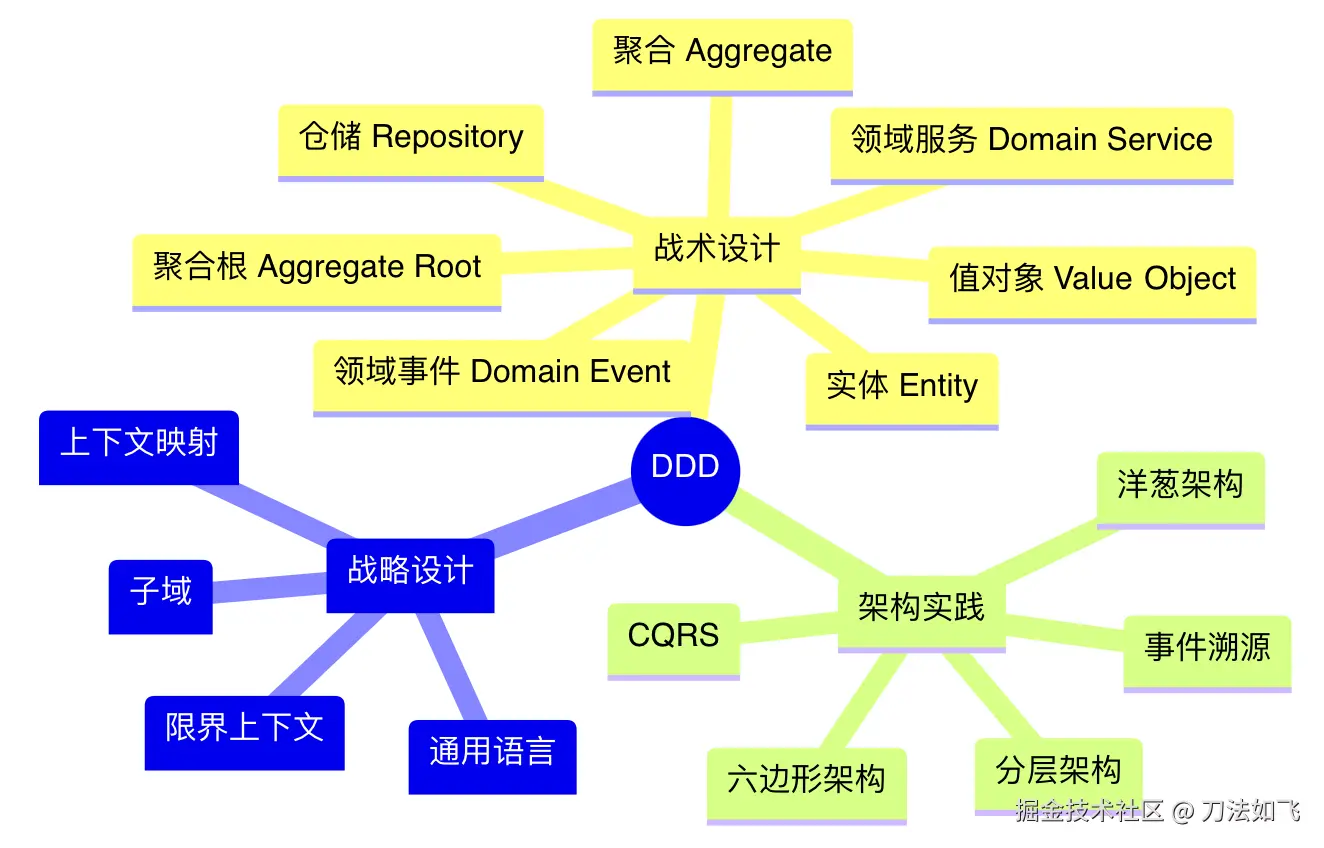
DDD 核心概念
适用场景
- ✅ 中大型企业应用
- ✅ 复杂业务逻辑系统
- ✅ 需要长期维护的项目
- ✅ 团队协作开发
- ✅ 领域模型清晰的业务
AI编程下的各种场景都适用,可以让你的代码结构更清晰,让AI不跑偏。
最佳实践
1. 领域层纯净
java
// ✅ 正确 - 领域层无框架依赖
package com.github.microwind.springboot4ddd.domain.model.user;

public class User {
    // 纯Java代码,无Spring注解
    private Long id;
    private String name;

    public static User register(String name, String email) {
        // 业务逻辑
        return new User(null, name, email);
    }
}

// ❌ 错误 - 领域层包含框架依赖
@Entity
public class User {
    @Id
    @GeneratedValue
    private Long id;

    @Autowired
    private UserRepository repository;
}
2. 仓储接口在领域层
java
// ✅ 正确 - 接口在领域层
package com.github.microwind.springboot4ddd.domain.repository;

public interface UserRepository {
    User save(User user);
    Optional<User> findById(Long id);
}

// 实现在基础设施层
package com.github.microwind.springboot4ddd.infrastructure.repository;

@Repository
public class UserRepositoryImpl implements UserRepository {
    private final JdbcClient jdbcClient;

    @Override
    public User save(User user) {
        // JdbcClient实现
    }
}
3. 应用服务编排
java
@Service
@RequiredArgsConstructor
public class OrderService {
    private final OrderRepository orderRepository;
    private final UserRepository userRepository;
    private final DomainEventPublisher eventPublisher;

    @Transactional
    public OrderDTO createOrder(CreateOrderCommand command) {
        // 1. 验证用户存在
        User user = userRepository.findById(command.getUserId())
            .orElseThrow(() -> new EntityNotFoundException("用户不存在"));

        // 2. 创建订单领域对象
        Order order = Order.create(user.getId(), command.getTotalAmount());

        // 3. 保存订单
        Order savedOrder = orderRepository.save(order);

        // 4. 发布领域事件
        eventPublisher.publishOrderCreated(savedOrder);

        return OrderDTO.from(savedOrder);
    }
}
适用人群
目标开发者:
适合所有转型AI编程的人
- 👨💻 Java后端工程师 - 希望学习DDD架构
- 🏗️ 架构师 - 需要参考企业级项目架构
- 🚀 技术负责人 - 寻找团队开发规范
- 📚 学习者 - 想要了解Spring Boot 4.1新特性
- 🔧 全栈开发者 - 需要快速搭建项目原型
技能提升
通过本项目可以学到:
- 🏛️ DDD架构设计思想
- 🔌 多数据源配置和管理
- 📡 事件驱动架构实现
- 🎯 领域建模最佳实践
- ⚡ Spring Boot 4.1新特性
相关资源
- 源码地址 : github.com/microwind/d...
- Spring Boot 4.1 文档 : docs.spring.io/spring-boot...
- JDK 25 新特性 : openjdk.org/projects/jd...
- DDD 参考 : github.com/microwind/d...
- AI编程核心知识库 :microwind.github.io/
开始你的 DDD 之旅
bash
git clone https://github.com/microwind/design-patterns.git
cd design-patterns/practice-projects/springboot4ddd
./mvnw spring-boot:run
几分钟后,你将拥有一个生产级的 DDD 应用! 🚀