1. 决策树的三部分
决策树学习算法包括3部分:特征选择、树的生成和树的剪枝。常用的算法有ID3、 C4.5和CART。
1.1特征选择
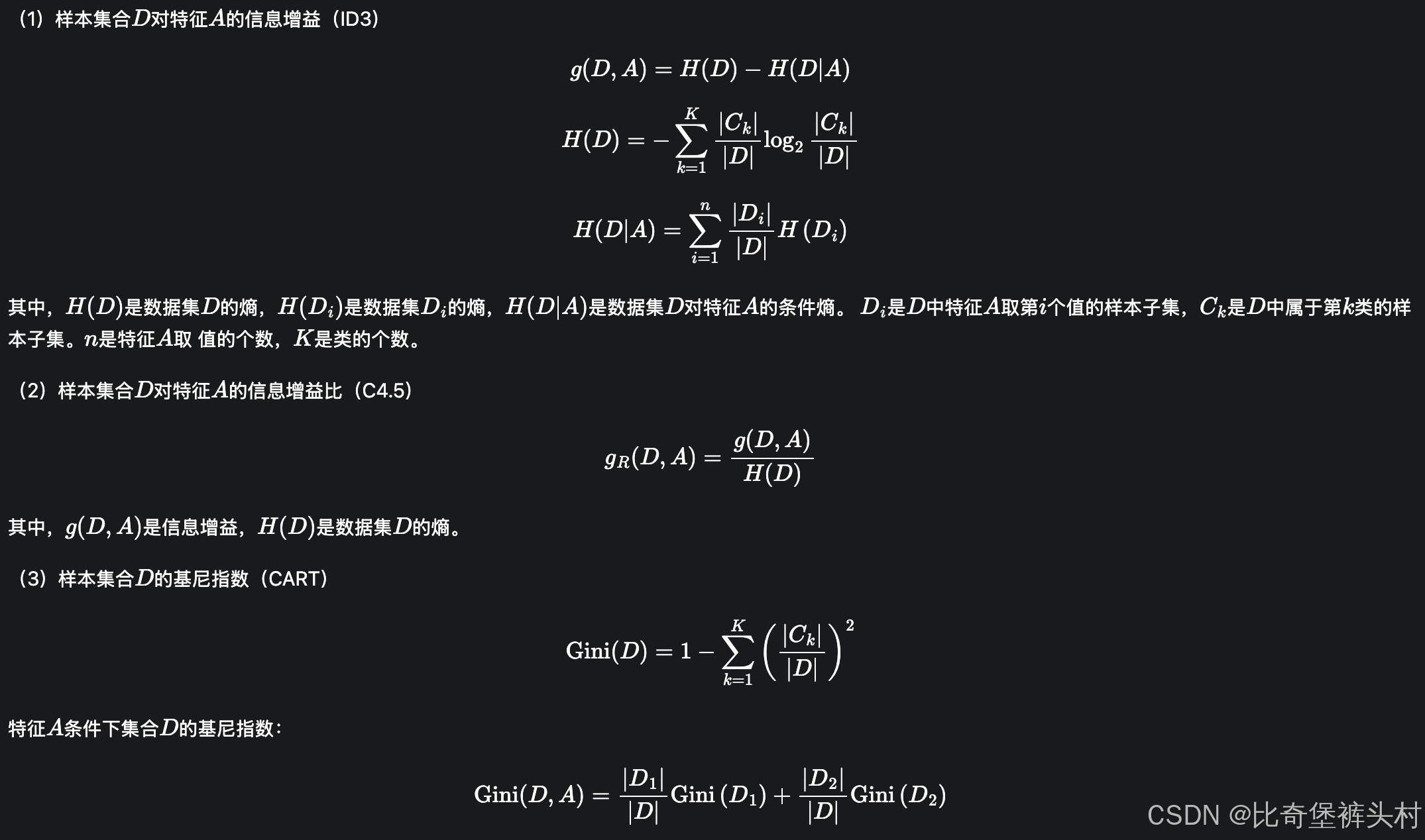
特征选择的目的在于选取对训练数据能够分类的特征。特征选择的关键是其准则。常用的准则如下:
1.2决策树的生成
决策树的生成。通常使用信息增益最大、信息增益比最大或基尼指数最小作为特征选择的准则。决策树的生成往往通过计算信息增益或其他指标,从根结点开始,递归地产生决策树。这相当于用信息增益或其他准则不断地选取局部最优的特征,或将训练集分割为能够基本正确分类的子集。
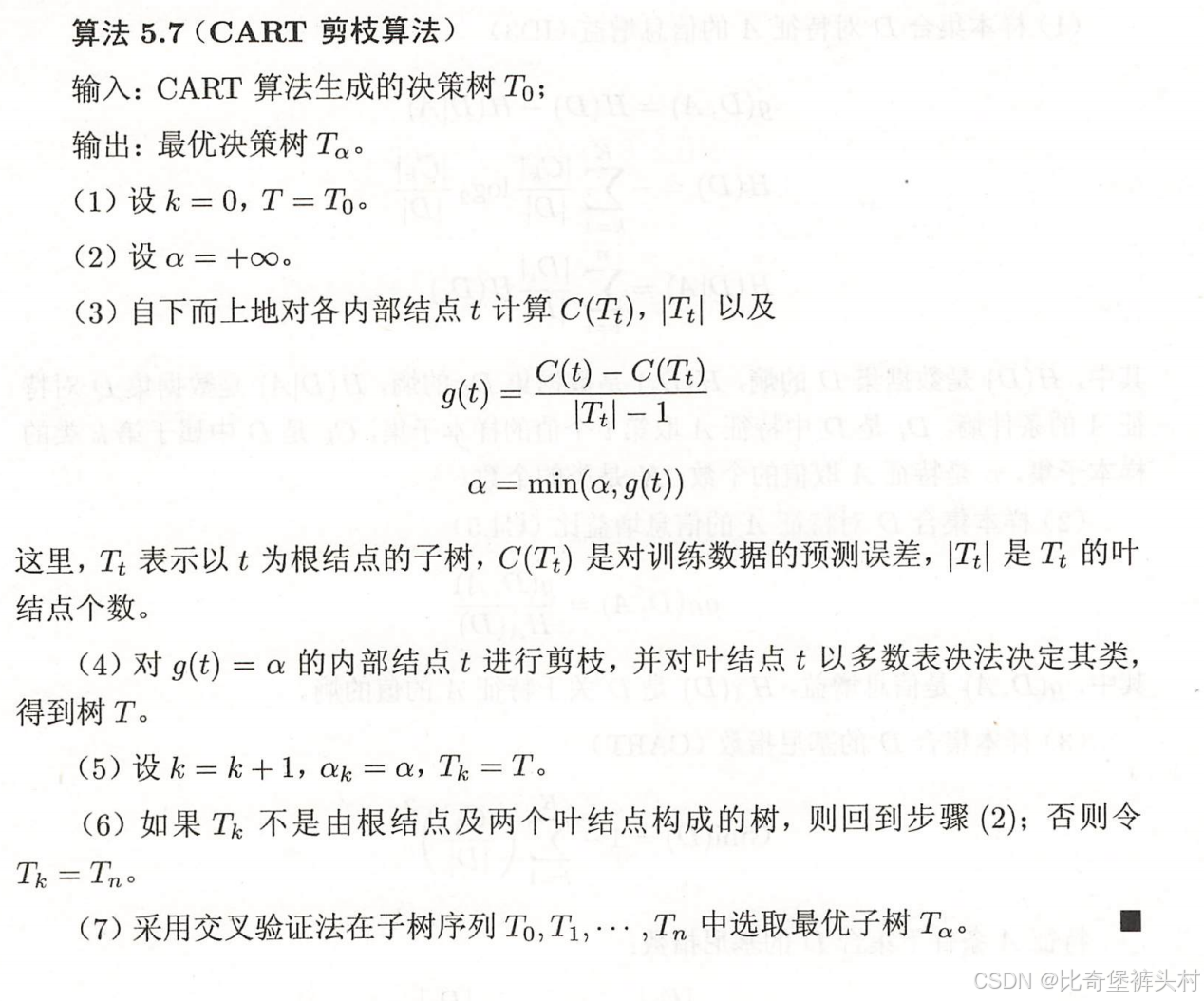
1.3决策树的剪枝
决策树的剪枝。由于生成的决策树存在过拟合问题,需要对它进行剪枝,以简化学到的决策树。决策树的剪枝,往往从已生成的树上剪掉一些叶结点或叶结点以上的子树,并将其父结点或根结点作为新的叶结点,从而简化生成的决策树。
2. ID3生成决策树代码实例
2.1计算信息增益
计算各个特征的信息增益选取决策树的根节点(ID3)
python
# 熵
def calc_ent(datasets):
    data_length = len(datasets)
    label_count = {}
    for i in range(data_length):
        label = datasets[i][-1]
        if label not in label_count:
            label_count[label] = 0
        label_count[label] += 1
    ent = -sum([(p / data_length) * log(p / data_length, 2)
                for p in label_count.values()])
    return ent
# def entropy(y):
#     """
#     Entropy of a label sequence
#     """
#     hist = np.bincount(y)
#     ps = hist / np.sum(hist)
#     return -np.sum([p * np.log2(p) for p in ps if p > 0])


# 经验条件熵
def cond_ent(datasets, axis=0):
    data_length = len(datasets)
    feature_sets = {}
    for i in range(data_length):
        feature = datasets[i][axis]
        if feature not in feature_sets:
            feature_sets[feature] = []
        feature_sets[feature].append(datasets[i])
    cond_ent = sum(
        [(len(p) / data_length) * calc_ent(p) for p in feature_sets.values()])
    return cond_ent


# 信息增益
def info_gain(ent, cond_ent):
    return ent - cond_ent


def info_gain_train(datasets):
    count = len(datasets[0]) - 1
    ent = calc_ent(datasets)
#     ent = entropy(datasets)
    best_feature = []
    for c in range(count):
        c_info_gain = info_gain(ent, cond_ent(datasets, axis=c))
        best_feature.append((c, c_info_gain))
        print('特征({}) - info_gain - {:.3f}'.format(labels[c], c_info_gain))
    # 比较大小
    best_ = max(best_feature, key=lambda x: x[-1])
    return '特征({})的信息增益最大,选择为根节点特征'.format(labels[best_[0]])
比较结果:
特征(年龄) - info_gain - 0.083
特征(有工作) - info_gain - 0.324
特征(有自己的房子) - info_gain - 0.420
特征(信贷情况) - info_gain - 0.363
'特征(有自己的房子)的信息增益最大,选择为根节点特征'
2.2利用ID3算法生成决策树
python
# 定义节点类 二叉树
class Node:
    def __init__(self, root=True, label=None, feature_name=None, feature=None):
        self.root = root
        self.label = label
        self.feature_name = feature_name
        self.feature = feature
        self.tree = {}
        self.result = {
            'label:': self.label,
            'feature': self.feature,
            'tree': self.tree
        }

    def __repr__(self):
        return '{}'.format(self.result)

    def add_node(self, val, node):
        self.tree[val] = node

    def predict(self, features):
        if self.root is True:
            return self.label
        return self.tree[features[self.feature]].predict(features)


class DTree:
    def __init__(self, epsilon=0.1):
        self.epsilon = epsilon
        self._tree = {}

    # 熵
    @staticmethod
    def calc_ent(datasets):
        data_length = len(datasets)
        label_count = {}
        for i in range(data_length):
            label = datasets[i][-1]
            if label not in label_count:
                label_count[label] = 0
            label_count[label] += 1
        ent = -sum([(p / data_length) * log(p / data_length, 2)
                    for p in label_count.values()])
        return ent

    # 经验条件熵
    def cond_ent(self, datasets, axis=0):
        data_length = len(datasets)
        feature_sets = {}
        for i in range(data_length):
            feature = datasets[i][axis]
            if feature not in feature_sets:
                feature_sets[feature] = []
            feature_sets[feature].append(datasets[i])
        cond_ent = sum([(len(p) / data_length) * self.calc_ent(p)
                        for p in feature_sets.values()])
        return cond_ent

    # 信息增益
    @staticmethod
    def info_gain(ent, cond_ent):
        return ent - cond_ent

    def info_gain_train(self, datasets):
        count = len(datasets[0]) - 1
        ent = self.calc_ent(datasets)
        best_feature = []
        for c in range(count):
            c_info_gain = self.info_gain(ent, self.cond_ent(datasets, axis=c))
            best_feature.append((c, c_info_gain))
        # 比较大小
        best_ = max(best_feature, key=lambda x: x[-1])
        return best_

    def train(self, train_data):
        """
        input:数据集D(DataFrame格式),特征集A,阈值eta
        output:决策树T
        """
        _, y_train, features = train_data.iloc[:, :
                                               -1], train_data.iloc[:,
                                                                    -1], train_data.columns[:
                                                                                            -1]
        # 1,若D中实例属于同一类Ck,则T为单节点树,并将类Ck作为结点的类标记,返回T
        if len(y_train.value_counts()) == 1:
            return Node(root=True, label=y_train.iloc[0])

        # 2, 若A为空,则T为单节点树,将D中实例树最大的类Ck作为该节点的类标记,返回T
        if len(features) == 0:
            return Node(
                root=True,
                label=y_train.value_counts().sort_values(
                    ascending=False).index[0])

        # 3,计算最大信息增益 同5.1,Ag为信息增益最大的特征
        max_feature, max_info_gain = self.info_gain_train(np.array(train_data))
        max_feature_name = features[max_feature]

        # 4,Ag的信息增益小于阈值eta,则置T为单节点树,并将D中是实例数最大的类Ck作为该节点的类标记,返回T
        if max_info_gain < self.epsilon:
            return Node(
                root=True,
                label=y_train.value_counts().sort_values(
                    ascending=False).index[0])

        # 5,构建Ag子集
        node_tree = Node(
            root=False, feature_name=max_feature_name, feature=max_feature)

        feature_list = train_data[max_feature_name].value_counts().index
        for f in feature_list:
            sub_train_df = train_data.loc[train_data[max_feature_name] ==
                                          f].drop([max_feature_name], axis=1)

            # 6, 递归生成树
            sub_tree = self.train(sub_train_df)
            node_tree.add_node(f, sub_tree)

        # pprint.pprint(node_tree.tree)
        return node_tree

    def fit(self, train_data):
        self._tree = self.train(train_data)
        return self._tree

    def predict(self, X_test):
        return self._tree.predict(X_test)
生成决策树:
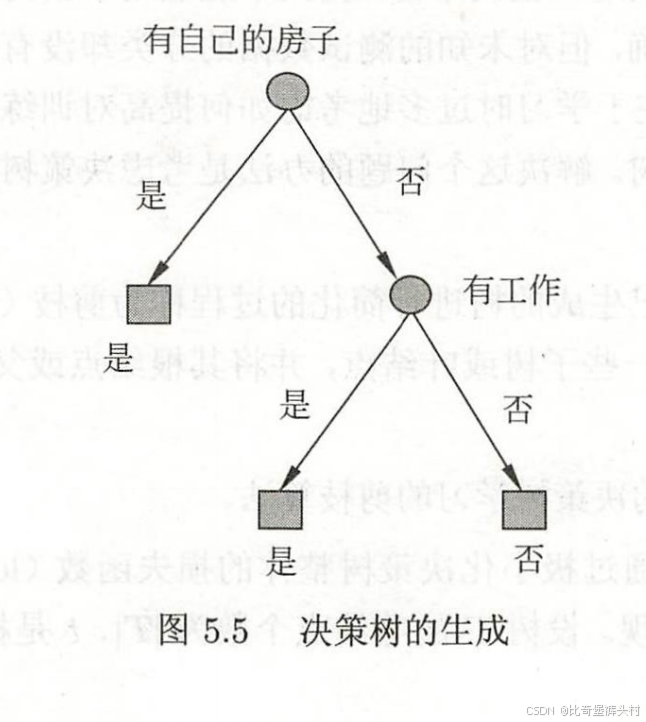
ID3算法产生的决策树容易产生过拟合现象
3 分类与回归树模型(CART)
3.1 CART算法
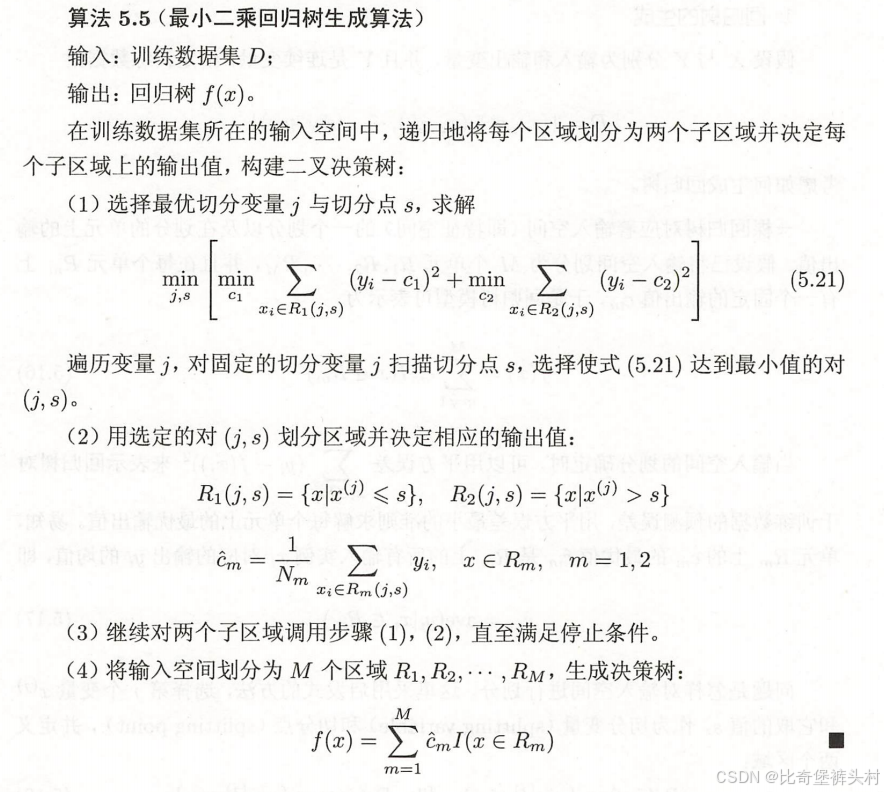
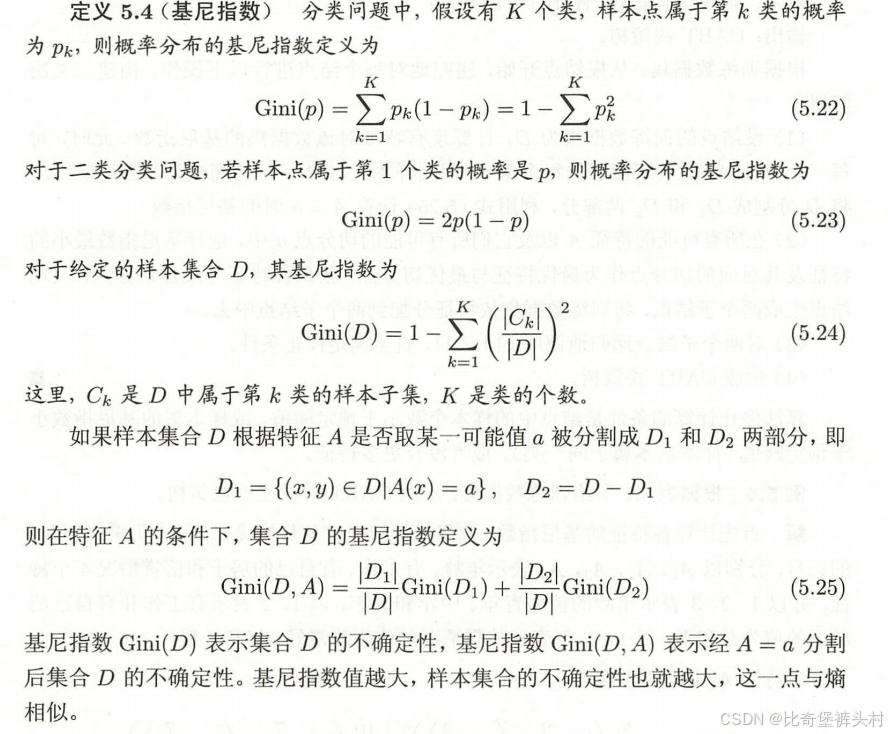
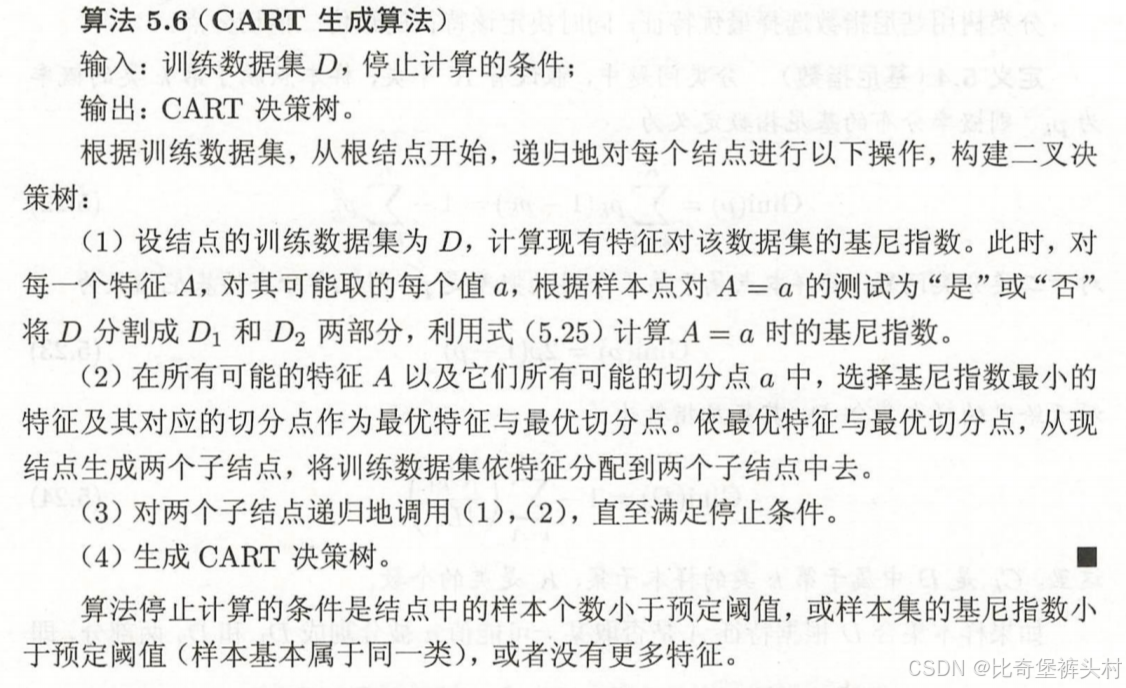
CATR算法假设决策树是二叉树,内部节点的取值特征为是或否。CART算法又两个部分组成:
(1)决策树的生成:基于训练集生成决策树,生成的决策树要尽可能的大
(2)决策树的剪枝:用验证数据集对生成的决策树进行剪枝并选择最优的子树,这时用损失函数最小最为剪枝的标准。
3.2 CART生成
3.2.1 回归树的生成
3.2.2 分类树的生成
3.3 CART算法生成决策树exp
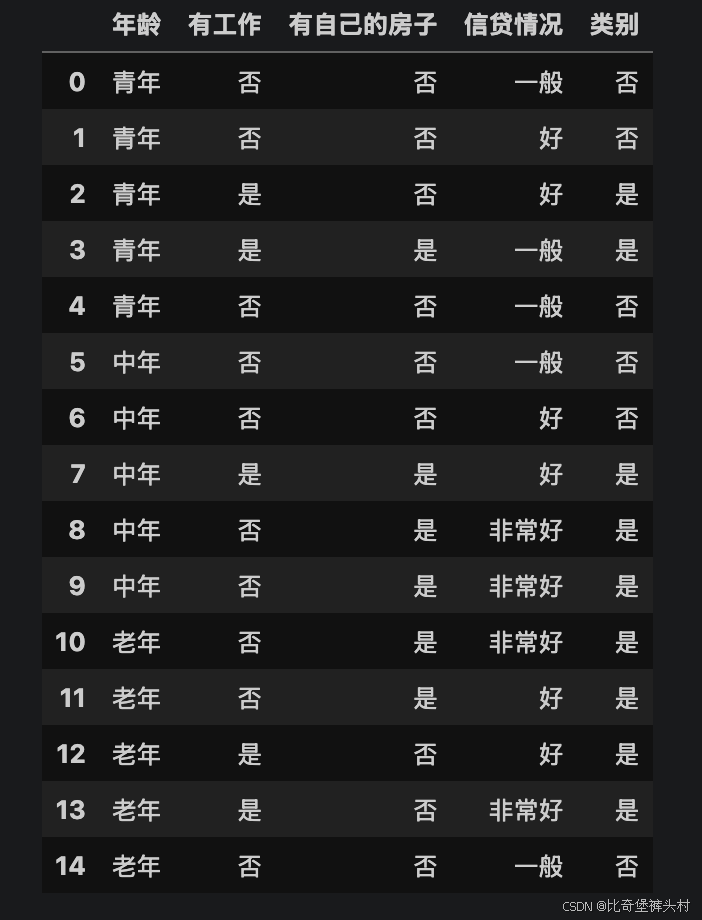
训练数据集:
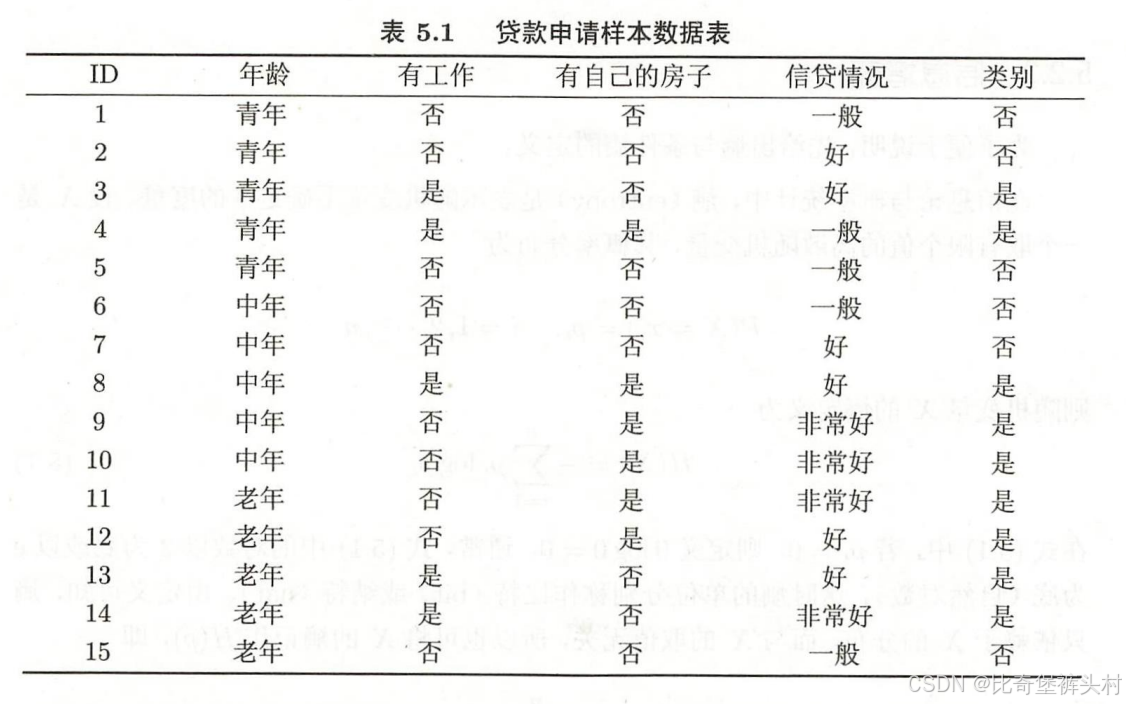
计算各个特征的基尼指数(A1:年龄 A2:有工作 A3:有房子 A4:信贷情况)

选择基尼指数小的为最优切分点
计算剩余特征的基尼系数,A3特征的基尼指数最小选为根节点,A3=1为最优切分点,在剩余特征中继续比较,最后得到决策树
3.4 CART剪枝算法