1240. Tiling a Rectangle with the Fewest Squares
Given a rectangle of size n x m, return the minimum number of integer-sided squares that tile the rectangle.
Example 1:
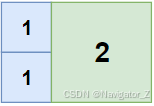
Input: n = 2, m = 3
Output: 3
Explanation: 3 squares are necessary to cover the rectangle.
2 (squares of 1x1)
1 (square of 2x2)
Example 2:
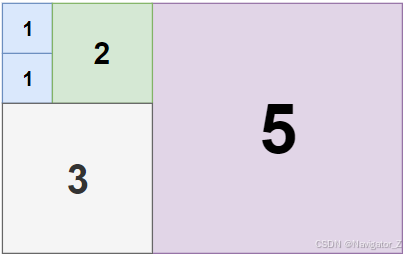
Input: n = 5, m = 8
Output: 5
Example 3:
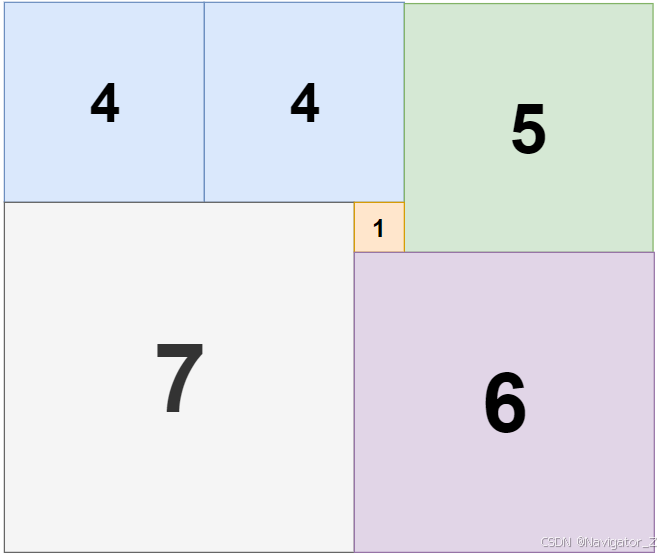
Input: n = 11, m = 13
Output: 6
Constraints:
- 1 <= n, m <= 13
From: LeetCode
Link: 1240. Tiling a Rectangle with the Fewest Squares
Solution:
Ideas:
use backtracking with a "height array". Always fill the lowest column first, try the biggest possible square first, and prune when already worse than answer.
Code:
c
int H, W;
int best;
int height[13];

void dfs(int used) {
    if (used >= best) return;

    int minH = H, pos = -1;

    for (int i = 0; i < W; i++) {
        if (height[i] < minH) {
            minH = height[i];
            pos = i;
        }
    }

    if (minH == H) {
        best = used;
        return;
    }

    int maxSize = H - minH;

    for (int i = pos; i < W && height[i] == minH; i++) {
        int width = i - pos + 1;
        if (width > maxSize) break;
    }

    int len = 0;
    while (pos + len < W && height[pos + len] == minH && len < maxSize) {
        len++;
    }

    for (int size = len; size >= 1; size--) {
        for (int i = pos; i < pos + size; i++) {
            height[i] += size;
        }

        dfs(used + 1);

        for (int i = pos; i < pos + size; i++) {
            height[i] -= size;
        }
    }
}

int tilingRectangle(int n, int m) {
    H = n;
    W = m;

    if (H < W) {
        int temp = H;
        H = W;
        W = temp;
    }

    best = H * W;

    for (int i = 0; i < W; i++) {
        height[i] = 0;
    }

    dfs(0);

    return best;
}