目录
[4.1 空值安全处理](#4.1 空值安全处理)
[4.2 多字段组合排序](#4.2 多字段组合排序)
[4.3. 逆序](#4.3. 逆序)
[5.1 并行流加速](#5.1 并行流加速)
[5.2 原地排序](#5.2 原地排序)
前言
Java中对于集合的排序操作,分别为list.sort()方法 ,Collections.sort()方法 ,和Stream流实现List排序的核心技巧。
更多集合和数组的可参考:深入探讨集合与数组转换方法-CSDN博客
1、list.sort()
**(Comparator) 方法(推荐)**这是 Java 8 引入的最推荐的排序方式,语法简洁、可读性强。
java
List<Entity> list = new ArrayList<>();
list.add(new Entity(3));
list.add(new Entity(1));
list.add(new Entity(2));

list.sort(Comparator.comparing(Entity::getId));
2、Collections.sort()
(list,Comparator)适用于 Java 8 之前的版本,或者习惯使用传统的排序方式。
java
Collections.sort(list, Comparator.comparing(Entity::getId));3、Stream.sorted()
(惰性排序):适用于需要链式处理或中间处理的场景,但不会修改原始列表。
java
List<Entity> sortedList = list.stream()
        .sorted(Comparator.comparing(Entity::getId))
        .collect(Collectors.toList());
1.自然序排序(正序)
java
    @Test
    public void test1() {
        List<Person> originalList = new ArrayList<>();
        originalList.add(new Person(3,"张三"));
        originalList.add(new Person(1,"李四"));
        originalList.add(new Person(2,"王武"));
        List<Person> sortedList = originalList.stream()
                .sorted(Comparator.comparing(Person::getId))
                .collect(Collectors.toList());
        sortedList.forEach(person -> System.out.println(person.getId()));
    }
java
输出示例:
李四::1
王武::2
张三::3
2.反向排序(倒序)
java
    @Test
    public void test1() {
        List<Person> originalList = new ArrayList<>();
        originalList.add(new Person(3,"张三"));
        originalList.add(new Person(1,"李四"));
        originalList.add(new Person(2,"王武"));
        List<Person> sortedList = originalList.stream()
                .sorted(Comparator.comparing(Person::getId).reversed())
                .collect(Collectors.toList());
        sortedList.forEach(person -> System.out.println(person.getName()+"::"+person.getId()));
    }
java
输出示例:
张三::3
王武::2
李四::1
4、进阶排序技巧
4.1 空值安全处理
java
// 处理可能为null的字段
Comparator<Person> nullSafeComparator = Comparator.comparing(
    Person::getId,
    Comparator.nullsFirst(Comparator.naturalOrder())
);

List<Person> sortedList = originalList.stream()
        .sorted(nullSafeComparator)
        .collect(Collectors.toList());
4.2 多字段组合排序
java
List<Person> sortedList = originalList.stream()
        .sorted(Comparator.comparing(Person::getName)
                .thenComparing(Person::getId))
        .collect(Collectors.toList());
4.3. 逆序
java
list.sort(Comparator.comparingInt(Entity::getId).reversed());5、性能优化建议
5.1 并行流加速
使用范围:适用于大数据量
java
List<Entity> sortedList = originalList.parallelStream()
        .sorted(Comparator.comparing(Person::getId))
        .collect(Collectors.toList());
5.2 原地排序
使用范围:修改原集合
java
originalList.sort(Comparator.comparing(Person::getId));6、最佳实践
1.类型明确化:
推荐指定具体集合类型
java
ArrayList<Entity> sortedList = originalList.stream()
        .sorted(Comparator.comparing(Person::getId))
.collect(Collectors.toCollection(ArrayList::new));2.防御性拷贝:
保持原集合不可变
java
List<Entity> sortedList = new ArrayList<>(originalList);
sortedList.sort(Comparator.comparing(Entity::getId));3.Lambda优化:
复杂场景使用Lambda表达式
java
List<Entity> sortedList = originalList.stream()
        .sorted((e1, e2) -> {
            // 自定义比较逻辑
            return e1.getId().compareTo(e2.getId());
        })
        .collect(Collectors.toList());
7、注意事项
- 不可变性 :
Collectors.toList()返回的List实现可能不支持修改 - 空指针防护 :推荐始终使用
Comparator.nullsFirst/nullsLast - 性能权衡:超过10万条数据时优先考虑传统排序方式
- 对象状态:Stream操作不会修改原始集合元素
举例:
java
public class SortingDemo {
    public static void main(String[] args) {
        List<Entity> entities = Arrays.asList(
            new Entity(2, "B"),
            new Entity(1, "A"),
            new Entity(3, "C")
        );

        // 多条件排序:先按名称倒序,再按ID正序
        List<Entity> sorted = entities.stream()
                .sorted(Comparator.comparing(Entity::getName)
                        .reversed()
                        .thenComparing(Entity::getId))
                .collect(Collectors.toList());

        sorted.forEach(System.out::println);
    }
}

class Entity {
    private int id;
    private String name;

    // 构造方法和getter省略
}
总结对比
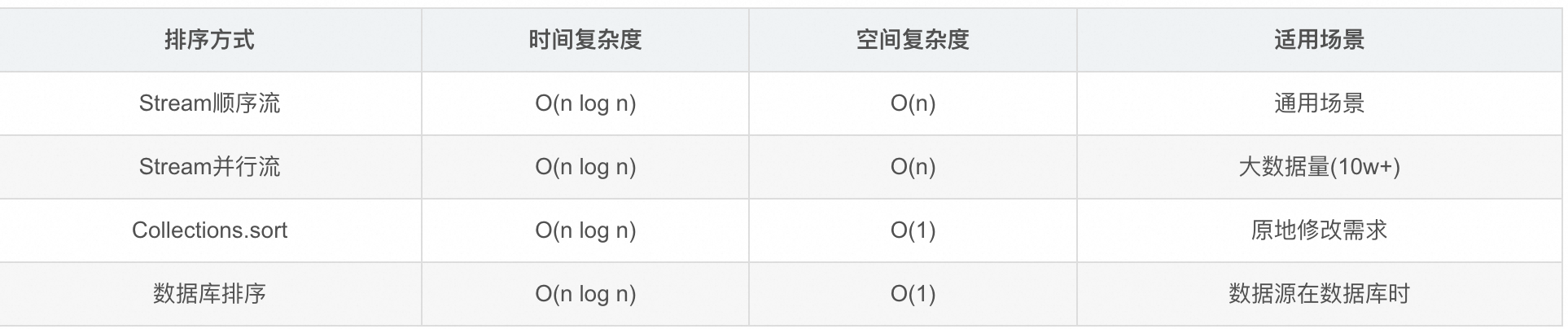
在 Java 中,对 List 集合进行排序是开发中非常常见的操作。
Java 提供了多种方式来实现排序功能,每种方法都有其适用场景和特点。可以灵活地对 Java 中的
List进行排序操作,根据具体需求选择最适合的方式。
参考文章: