内容:
1.Scala 中的模式匹配
(一)问题导入
我们今天接到一个开发任务,就是根据身份证号码,输出这个人的籍贯。例如:42表示湖北,33表示浙江,11表示北京,31表示上海。
(二)具体代码
scala
package matchcase

/**
   match case

   三大结构
     1. 顺序结构
     2. 选择结构
        (1) if, if else if else;
        (2) match case
               case_ 不能省略,否则,匹配失败会报错
               case_ 必需写在最后
     3. 循环结构:
        (1) for
        (2) while, do...while
* */

object case01 {
  def main(args: Array[String]): Unit = {
//    val code = "11"
//    var province = ""
//
//    if(code == "42"){
//      province = "湖北"
//    } else if(code == "11") {
//      province = "北京"
//    } else  {
//      province = "未知"
//    }

    val code = "11"
    val province = code match {
      case "42" => "湖北"
      case "11" => "北京"
      case _ => "未知"
    }

    println(s"${code} 对应的省份是:${province}")
  }
}
【运行结果】 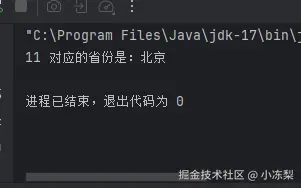
(三)match case的基本格式
格式如下:
scala
value match {

  case pattern1 => result1

  case pattern2 => result2

...

  case patternN => resultN

case _ => 其他

}
执行流程是:如果value匹配到了pattern1,就执行结果1,如果都没有匹配到,就执行 _ 对应的内容。
通过例子来巩固下:
输入一个1~5的数字,打印它对应的英语单词
scala
package matchcase

object case02 {
  def main(args: Array[String]): Unit = {
    // 输入一个1~5的数字,打印它对应的英语单词
    val num = 2
    val word = num match {
      case 1 => "One"
      case 2 => "Two"
      case 3 => "Three"
      case 4 => "Four"
      case 5 => "Five"
      case _ => "Other"
    }
    println(s"${num} 对应的英文是:${word}")
  }
}
【运行结果】 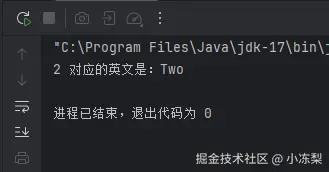
(四)高阶匹配之元组元素数量
前面的匹配都是精准匹配:变量和值是相等的。但是呢,scala中的模式匹配的规则是非常强大的,不一定是精准的匹配值,还可以根据元组的元素的个数来匹配。
scala
package matchcase

/*
*  match case 高阶匹配
*   1.匹配元组不同的元素的数量
*
*
* */
object case03 {
  def main(args: Array[String]): Unit = {
    // 元组
    val t1 = (2,3)

    t1 match {
      case (a,b) => println(s"有二个元素${a},${b}")
      case _ => println("未知")
    }

    val arr1 = Array(10,2)

    arr1 match {
      case Array(1,x,y) => println("数组,第一个元素是1,长度为3")
      case Array(10,x) => println("数组,第一个元素是10,长度为2")
      case _ => println("其他")
    }
  }
}
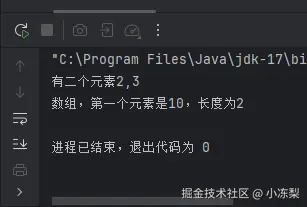
【运行结果】