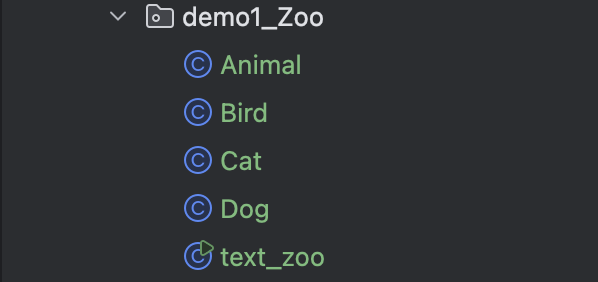
//父类
public class Animal {
    protected String name;
    protected int age;
    public Animal(String name, int age) {
        this.name = name;
        this.age = age;
    }

    public void eat(){
        System.out.println(this.name + "在吃东西...");
    }
}
接下来再定义三个子类:Dog、Bied、Cat
java复制代码
//Bird
public class Bird extends Animal{
    public Bird(String name , int age){
        super(name,age);
    }
    public void eat(){
        System.out.println(this.name + "在吃鸟粮");
    }
}
java复制代码
//Cat
public class Cat extends Animal{

    public Cat(String name, int age) {
        super(name, age);
    }

    public void eat(){
        System.out.println(this.name + "在吃猫粮");
    }
}
java复制代码
public class Dog extends Animal {

    public Dog(String name, int age) {
        super(name, age);
    }

    @Override
    public void eat(){
        System.out.println(this.name + "在吃狗粮");
    }
}
我们发现了,每个子类都有eat方法,但是全部都是独有的,因为每个动物的食物是不一样的.
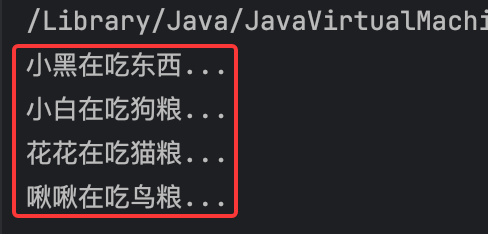
这个时候,我们定义一个测试类来看看调用eat()方法会出现什么情况:
java复制代码
public class text_zoo {
    public static void main(String[] args) {
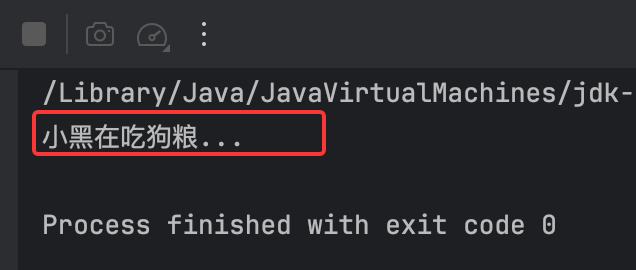
        Animal animal = new Animal("小黑",7);
        Dog dog = new Dog("小白",1);
        Cat cat = new Cat("花花",2);
        Bird bird = new Bird("啾啾",3);
        animal.eat();//调用父类的eat方法
        dog.eat();//调用子类Dog的eat方法
        cat.eat();//调用子类Cat的eat方法
        bird.eat();//调子父类Bird的eat方法
    }
}
//直接赋值
public class text_zoo {
    public static void main(String[] args) {
        Animal a1 = new Dog("小白", 1);
        Animal a2 = new Cat("花花", 2);

        a1.eat();
        a2.eat();
    }
}
变量 a1、a2 的编译时类型 是 Animal
但它实际指向的对象 是 Dog和Cat 类型
调用 a1.eat() 时,运行时 会执行 Dog 的 eat() 方法
3.2 参数传递
"父类引用指向子类对象"
java复制代码
    public static void fun(Animal a){
        a.eat();
    }
    public static void main2(String[] args) {
        Dog dog = new Dog("小白",1);
        Cat cat = new Cat("花花",2);
        Bird bird = new Bird("啾啾",3);
        fun(dog);
        fun(cat);
        fun(bird);
    }
3.3 返回值传递
我们先正常定义子类,也适合上面的例子一样
java复制代码
//子类Dog
public class Dog extends Animal {

    public Dog(String name,int age) {
        super(name, age);
    }

    @Override
    public void eat(){
        System.out.println(this.name + "在吃狗粮...");
    }
}

//子类Cat
public class Cat extends Animal{

    public Cat(String name,int age) {
        super(name, age);
    }

    public void eat(){
        System.out.println(this.name + "在吃猫粮...");
    }
}
//Cat
//注意!!!此时Cat是没有继承Animal的
public class Cat{
    public void eat(){
        System.out.println("在吃猫粮");
    }
}
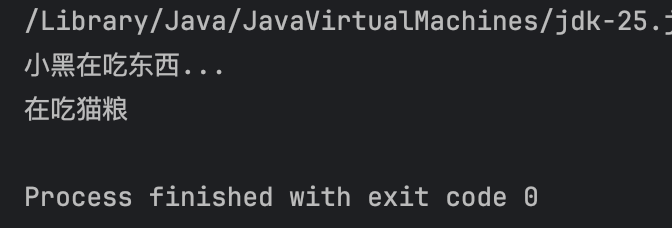
我们用测试类测试一下代码:
java复制代码
public class text_zoo {
    public static void main(String[] args) {
        Animal animal = new Animal("小黑",7);
        Cat cat = new Cat();
        animal.eat();//调用父类的eat方法
        cat.eat();//调用子类Cat的eat方法
    }
}
大家会发现,我们Cat的eat()方法并没有实现多态的效果
4.2子类必须重写父类方法
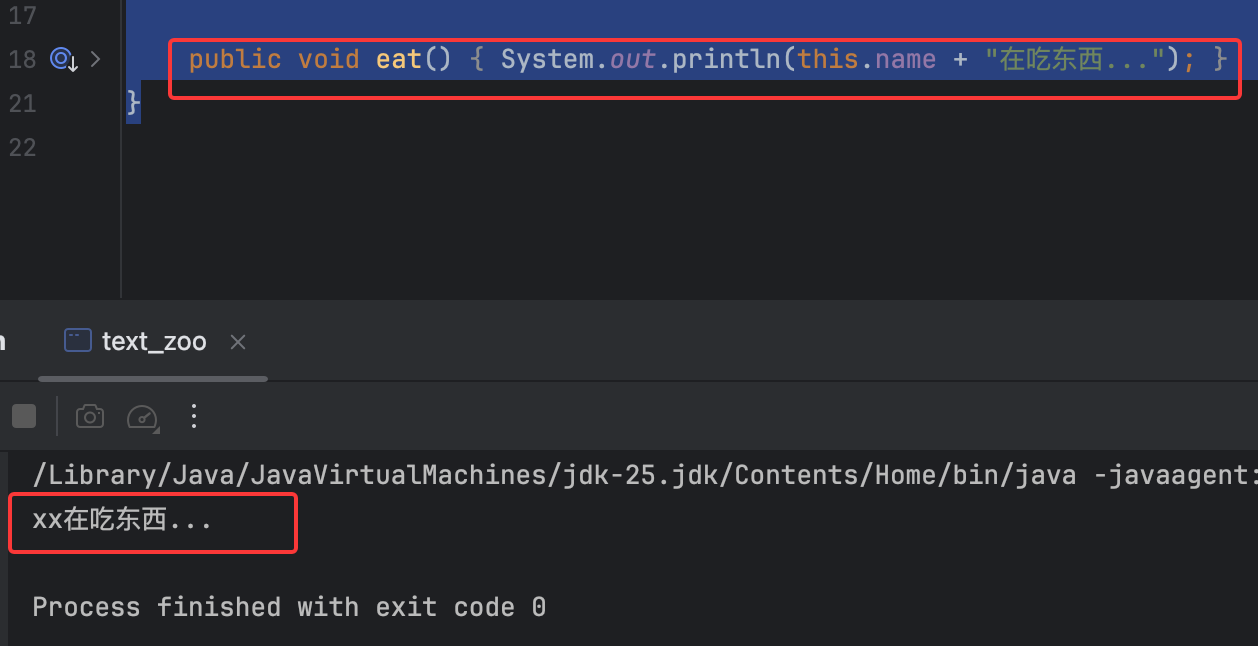
如果我们不进行重写的话,我们所调用的方法就一直都是父类的方法:
java复制代码
父类:Animal
public class Animal {
    public String name;
    public int age;
    public Animal(String name, int age) {
        this.name = name;
        this.age = age;
    }

    public void eat(){
        System.out.println(this.name + "在吃东西...");
    }
}


子类:Dog
public class Dog extends Animal {

    public Dog(String name,int age) {
        super(name, age);
    }
}
java复制代码
public class text_zoo{
    public static void main(String[] args) {

        Animal animal = new Dog("xx",2);
        animal.eat();
    }

}
4.3 父类引用指向子类对象(向上转型)
使用父类引用来应用子类对象:
java复制代码
Animal animal = new Dog("xx",4);
animal.eat();
五、向上转型和向下转型
5.1 向上转型
5.1.1 向上转型的语法
向上转型:父类引用 引用 子类对象
java复制代码
父类 变量 = new 子类();
我们还是看一下之前的例子:
java复制代码
父类:Animal
public class Animal {
    public String name;
    public int age;
    public Animal(String name, int age) {
        this.name = name;
        this.age = age;
    }

    public void eat(){
        System.out.println(this.name + "在吃东西...");
    }
}
java复制代码
子类:Dog
public class Dog extends Animal {

    public Dog(String name,int age) {
        super(name, age);
    }

    @Override
    public void eat(){
        System.out.println(this.name + "在吃狗粮...");
    }
}
我们现在测试一下会怎么样:
java复制代码
public calss text_zoo{
    public static void main(String[] args) {
        Animal animal = new Dog("小黑",2);//向上转型
        animal.eat();
    }
}
这个时候就会调用我们子类的重写方法
5.1.2向上转型的三种场景
直接赋值:
java复制代码
public class xxx{
   public static void main1(String[] args) {
       //直接赋值
        Animal animal = new Dog("小白",3);
        animal.eat();
    }
}
方法参数:
java复制代码
public class xxx{
    public static void feed(Animal animal){
        animal.eat();
    }
    public static void main(String[] args) {
        //方法参数
        feed(new Cat("小花",3));
    }
}
方法返回值
java复制代码
public class xxx{
   public static Animal getAnimal(String type) {
        if ("cat".equals(type)){
            return new Cat("喵喵",2);
        }else{
            return new Dog("汪汪",5);
        }
    }

    static void main(String[] args) {
        Animal animal = getAnimal("cat");//返回Dog,向上转型为Animal
    }
}
5.1.2 向上转型的优势和局限
向上转型的优势:
代码更通用,可扩展性强
降低耦合度(两个模块(这里是类)的相互依赖程度,耦合度越高,依赖性越强) 向上转型的局限:
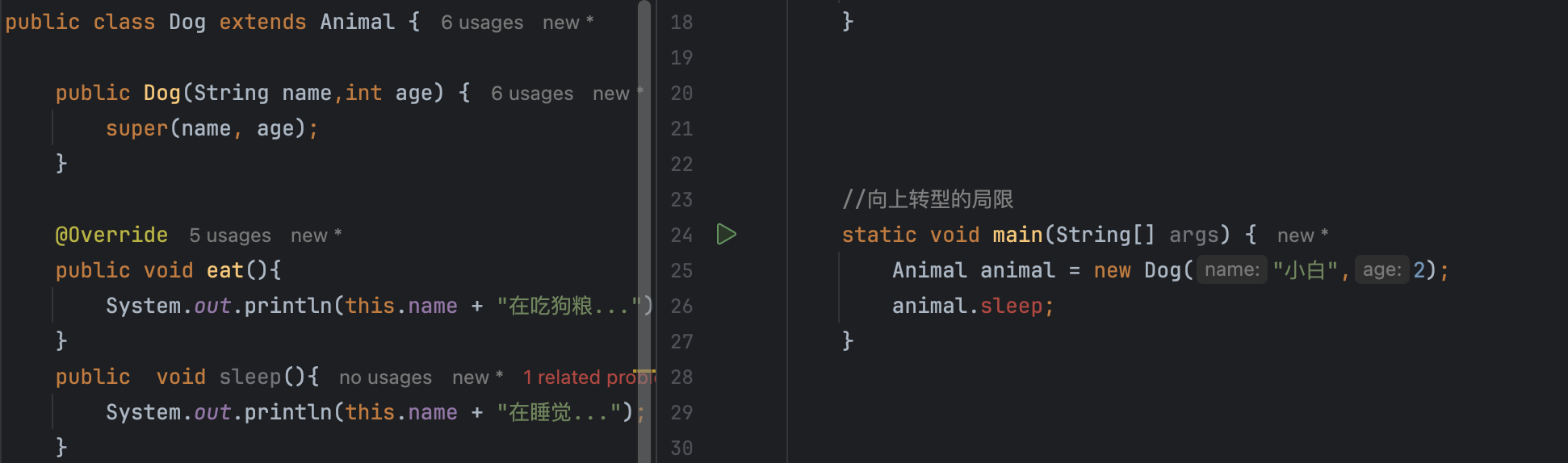
只能调用重写的方法无法调用子类独有的方法
对比一下下面这个代码就能看懂
5.2 向下转型
5.2.1 向下转型的语法
向下转型(Downcasting)是指:将一个父类类型的引用,强制转换为它实际所指向的子类类型。
java复制代码
子类名 变量 = (子类名) 父类引用;
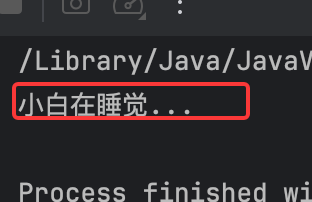
我们先回顾一下向上转型的限制:只能调用重写的方法无法调用子类独有的方法
那么我们有没有什么方法来解决这个限制呢???
那么我们就可以使用我们的向下转型:
java复制代码
publc class xxx{
    //向下转型
    public static void main(String[] args) {
        Animal animal = new Dog("小白",2);
        if (animal instanceof Dog){
            Dog dog = (Dog)animal;//强转成子类Dog,向下转型
            dog.sleep();
        }
    }
}