概念
二叉搜索树又称二叉排序树 或者是一个空树
特点
左子树所有节点的值都小于根节点的值,右子树所有节点的值都大于根节点的值
它的左右子树也分别为二叉搜索树
解决了数组插入删除数据时的效率问题,并且衍生出AVL树,红黑树,B树系列
时间复杂度O(n)
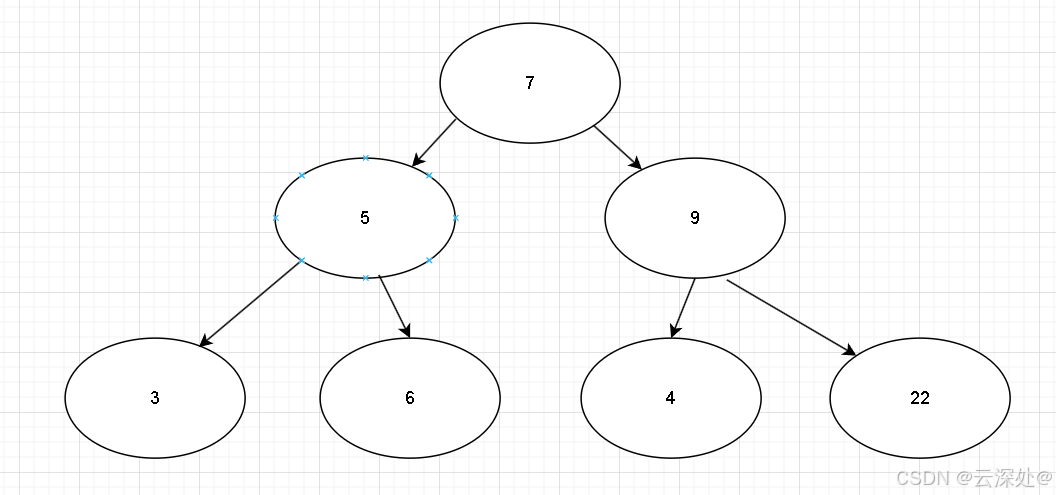
格式
二叉搜索树的查找
- 从根开始比较,查找,比根大向右边找,反之向左
- 最多查找高度次,若走到空,则值不存在
二叉查找树的插入
- 树为空,新增节点,赋值root
- 树不为空,查找+插入新节点
二叉查找树的删除
- 要删除的节点无子节点
- 要删除的节点只有左节点
- 该节点的parent指向待删节点的左节点,删除待删节点
- 要删除的节点只有右节点
- 该节点的parent指向待删节点的右节点,删除待删节点
- 要删除的节点有左右节点
- 在它的左子树中寻找最大的节点和它的parent,交换待删节点和这个最大节点,用parent删除该待删节点,并指向这个待删节点的左节点
非递归版:
cpp
template<class K, class V>
struct BSTreeNode
{
	BSTreeNode(const K& key, const V& val) :_left(nullptr), _right(nullptr), _key(key), _val(val) {}

	BSTreeNode<K, V>* _left;
	BSTreeNode<K, V>* _right;
	K _key;
	V _val;
};
template<class K, class V>
class BSTree
{
	typedef BSTreeNode<K, V> Node;
public:
	void InOrder()
	{
		_InOrder(_root);
		cout << endl;
	}
	void _InOrder(Node* root)
	{
		if (root == nullptr) return;
		_InOrder(root->_left);
		cout << root->_key << " " << root->_val;
		_InOrder(root->_right);
	}
	Node* Insert(const K& key, const V& value)
	{
		if (_root == nullptr)
		{
			_root = new Node(key, value);
			return _root;
		}
		Node* parent = nullptr;
		Node* cur = _root;
		while (cur)
		{
			if (key > cur->_key)
			{
				parent = cur;
				cur = cur->_right;
			}
			else if (key < cur->_key)
			{
				parent = cur;
				cur = cur->_left;
			}
			else
			{
				return nullptr;
			}
		}
		cur = new Node(key, value);
		if (key > parent->_key) parent->_right = cur;
		else if (key < parent->_key)
		{
			parent->_left = cur;
		}
		return _root;
	}
public:
	Node* Find(const K& key)
	{
		Node* cur = _root;
		while (cur)
		{
			if (key > cur->_key) cur = cur->_right;
			else if (key < cur->_key) cur = cur->_left;
			else return cur;
		}
		return nullptr;
	}
	bool Erase(const K& key)
	{
		Node* parent = nullptr;
		Node* cur = _root;

		while (cur)
		{
			if (key > cur->_key) parent = cur,cur = cur->_right;
			else if (key < cur->key) parent = cur,cur = cur->_left;
			else
			{
				if (cur->_left == nullptr)
				{
					if (cur == _root) _root = cur->_right;
					else
					{
						if (parent->_right == cur) parent->_right = cur->_right;
						else parent->_left = cur->_right;
					}
				}
				else if (cur->_right = nullptr)
				{
					if (cur == _root) _root = cur->left;
					else
					{
						if (parent->_right == cur) parent->_right = cur->left;
						else parent->_left = cur->_left;
					}
				}
				else
				{
					Node* parent = cur;
					Node* leftMax = cur->_left;
					while (leftMax->_right)
					{
						parent = leftMax;
						leftMax = leftMax->_right;
					}
					swap(cur->_key, leftMax->_key);
					if (parent->_left == leftMax)
					{
						parent->_left = leftMax->_left;
					}
					else parent->_right = leftMax->_left;
					cur = leftMax;
				}
				delete cur;
				return true;
			}
		}
		return false;
	}


private:
	Node* _root = nullptr;
};
递归版:
- 解析insert
cppbool InsertR(const K& key) { return _InsertR(_root, key); } bool _InsertR(Node*& root ,const K& key) { if (root == nullptr) { root = new Node(key); return true; } if (key > root->_key) return _InsertR(root->_right, key); else if (key < root->_key) return _InsertR(root->_left, key); else return false; }当传入根节点时,调用_InsertR开始向下找值
- Erase函数
cppbool EraseR(const K& key) { return _EraseR(_root, key); } bool _EraseR(Node*& root, const K& key) { if (root == nullptr) return false; if (key > root->_key) return _EraseR(root->_right, key); else if (key < root->_key) return _EraseR(root->_left, key); else { Node* del = root; //左为空 if (root->_left == nullptr) root = root->_right; //右为空 else if (root->_right == nullptr) root = root->_left; //左右都不为空 else { Node* leftMax = root; while (leftMax->_right) { leftMax = leftMax->_right; } swap(leftMax->_key, root->_key); return _EraseR(root->_left, key); } delete del; return true; } }
- destory
cppvoid Destory(Node*& root) { if (root == nullptr) return; Destory(root->_left); Destory(root->_right); delete root; root = nullptr; }
- Copy
cppNode* Copy(Node* root) { if (root == nullptr) return nullptr; Node* croot = new Node(root->_key); croot->_left = Copy(root->_left); croot->_right = Copy(root->_right); return croot; }
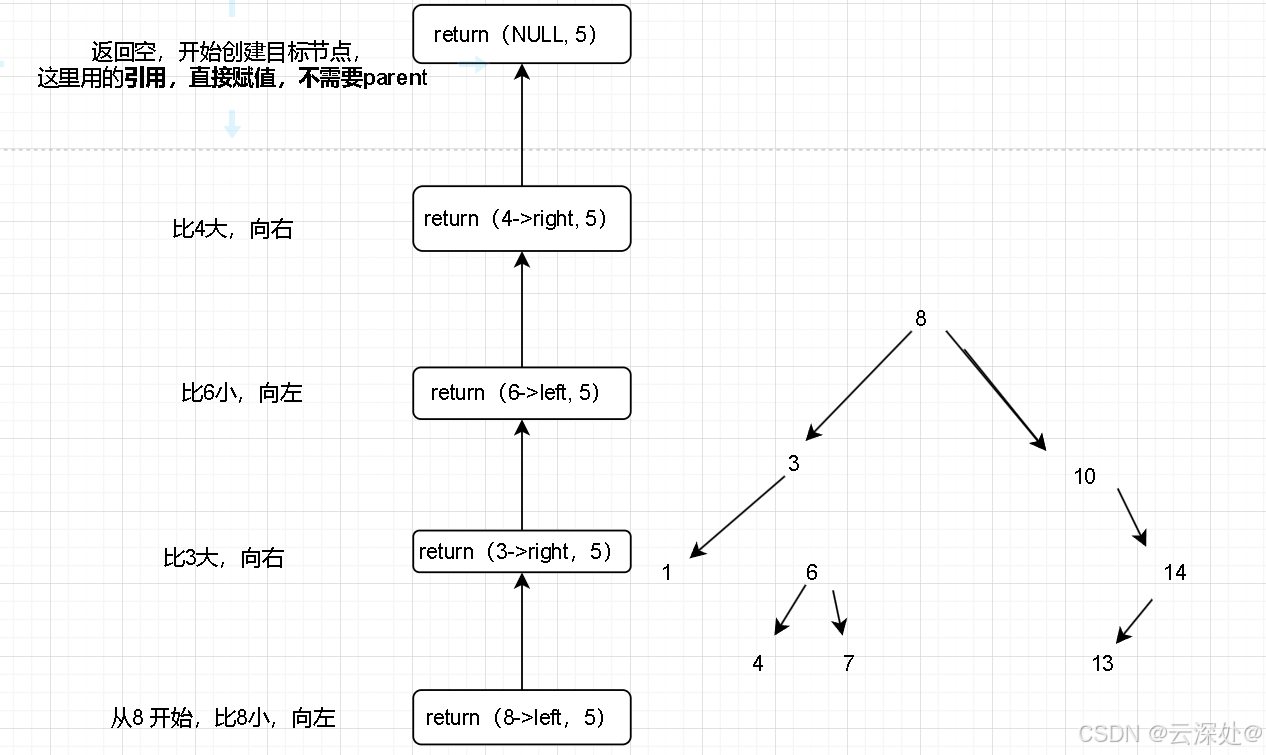
二叉搜索树的应用
K(搜索)模型:
- K模型即只有key作为关键词,结构中只需储存Key,关键码即为搜索的值
- 场景:快速判断在不在,门禁
KV(搜索)模型:
- 每一个关键码Key,与之对应的值Value,即<Key,Value>的键值对
- 例如统计单词出现的个数,通过一个值找另外一个值,