文章目录
- 引言
- 列表(List)
-
- [1. 拿生活类比](#1. 拿生活类比)
- [2. 创建列表的多种方式](#2. 创建列表的多种方式)
- [3. 访问列表元素](#3. 访问列表元素)
- [4. 列表的"增删改查"操作](#4. 列表的"增删改查"操作)
- [5. 切片与遍历](#5. 切片与遍历)
- [6. 动手练习](#6. 动手练习)
- 字典(Dictionary)
-
- [1. 从列表的局限到字典的诞生](#1. 从列表的局限到字典的诞生)
- [2. 拿生活类比](#2. 拿生活类比)
- [3. 创建字典的各种方法](#3. 创建字典的各种方法)
- [4. 访问字典](#4. 访问字典)
- [5. 字典的"增删改查"操作](#5. 字典的"增删改查"操作)
- [6. 字典的高级技巧](#6. 字典的高级技巧)
- [7. 字典 vs 列表:何时选择谁?](#7. 字典 vs 列表:何时选择谁?)
- [8. 动手练习](#8. 动手练习)
- for循环
-
- [1. 从重复劳动到自动化](#1. 从重复劳动到自动化)
- [2. for循环的基本语法](#2. for循环的基本语法)
- [3. for循环的"能量源":可迭代对象](#3. for循环的"能量源":可迭代对象)
- [4. for循环的进阶技巧](#4. for循环的进阶技巧)
- [5. 动手练习](#5. 动手练习)
- while循环
-
- [1. 引入:当你不确定需要循环多少次时](#1. 引入:当你不确定需要循环多少次时)
- [2. while循环的基本语法](#2. while循环的基本语法)
- [3. while循环的核心要素:条件控制](#3. while循环的核心要素:条件控制)
- [4. while循环的高级技巧](#4. while循环的高级技巧)
- [5. 无限循环与如何避免](#5. 无限循环与如何避免)
- [6. for循环与while循环的区别](#6. for循环与while循环的区别)
引言
想象一下,你要管理一个繁忙的快递站
-
列表(List) 就像那一排排整齐的货架,每个格子上放着一个包裹(元素),你有它们的顺序编号(索引)。你可以快速找到第5个货架上的东西,也可以轻松地在末尾新增一个包裹
-
字典(Dictionary) 则像是一个智能查询系统。每个包裹都有一个独一无二的单号(键),通过这个单号,你能瞬间查到它的所有详细信息(值)。找"QG211314"这个包裹?不需要知道它放在第几个,直接问系统就行
那么循环呢?
for循环 就像你沿着货架从头到尾 依次检查每一个包裹("遍历"),这是你知道要处理所有物品时的首选while循环 则像是一个"直到...才停止"的指令。比如,"直到 货架清空,才停止搬运"。你并不一开始就知道要循环多少次,而是由一个条件来决定的
在 Python 的世界里,几乎每一个有趣的项目,都离不开这四者的精妙配合。本文将带你深入这个"快递站",掌握让数据流转自如的核心法则
在开始之前先检查一下你的装备吧!!!
python环境不会装的看这里 :从安装到Hello World:Python环境搭建完整指南
python编辑器不会装的看这里 :零基础Python入门:手把手教你安装Python、新版PyCharm和VS Code
列表(List)
1. 拿生活类比
想象一下你去超市购物的情景。你推着一辆购物车,里面按顺序放着:牛奶、面包、鸡蛋、苹果
在Python中,这个购物车就是一个列表(List):
python
shopping_list = ['牛奶', '面包', '鸡蛋', '苹果']列表的本质 :一个有序 、可变的元素集合,像是给你的数据物品准备的一排编号货架
2. 创建列表的多种方式
-
方法1:直接创建(最常用)
pythonfruits = ['苹果', '香蕉', '橙子'] numbers = [1, 2, 3, 4, 5] mixed = [1, 'hello', 3.14, True] # 列表可以包含不同类型的元素 -
方法2:使用list() 函数
pythonchars = list('Python') # ['P', 'y', 't', 'h', 'o', 'n'] range_list = list(range(5)) # [0, 1, 2, 3, 4] -
方法3:空列表(准备往里面装东西)
3. 访问列表元素
列表使用索引(index) 来定位元素,索引从0开始!
python
colors = ['红', '橙', '黄', '绿', '青', '蓝', '紫']

# 正向索引(从前往后)
print(colors[0])   # '红' - 第一个元素
print(colors[3])   # '绿' - 第四个元素

# 负向索引(从后往前)
print(colors[-1])  # '紫' - 最后一个元素
print(colors[-2])  # '蓝' - 倒数第二个

# 注意:索引越界会报错!
# print(colors[7])  # ❌ IndexError: list index out of range
小技巧 :使用len()函数获取列表长度
python
length = len(colors)  # 7
last_index = length - 1  # 6
4. 列表的"增删改查"操作
增加元素:
python
todo_list = ['学习Python', '玩游戏']

# 在末尾添加
todo_list.append('运动')          # ['学习Python', '玩游戏', '运动']

# 在指定位置插入
todo_list.insert(1, '吃午饭')     # ['学习Python', '吃午饭', '玩游戏', '运动']

# 合并另一个列表
todo_list.extend(['阅读', '休息']) # 现在有6个任务了删除元素:
python
# 按值删除(删除第一个匹配项)
todo_list.remove('吃午饭')

# 按索引删除
del todo_list[0]               # 删除第一个
popped_item = todo_list.pop()  # 删除并返回最后一个
popped_item = todo_list.pop(1) # 删除并返回索引1的元素

# 清空列表
todo_list.clear() # 列表变空:[]修改元素:
python
colors = ['红', '橙', '黄']
colors[1] = '粉红'  # 直接赋值修改
# 现在colors是:['红', '粉红', '黄']查找元素:
python
colors = ['红', '橙', '黄', '绿', '蓝']

# 检查元素是否存在
if '绿' in colors:
    print("绿色在列表中!")

# 获取元素索引
index = colors.index('黄')  # 2
# colors.index('紫')  # ❌ 如果不存在会报错

# 统计出现次数
count = colors.count('红')  # 1
5. 切片与遍历
切片(Slicing) - 获取子列表:
python
numbers = [0, 1, 2, 3, 4, 5, 6, 7, 8, 9]

# 基本格式:list[start:end:step]
print(numbers[2:6])      # [2, 3, 4, 5]   # 包含2,不包含6
print(numbers[:5])       # [0, 1, 2, 3, 4] # 从头开始
print(numbers[5:])       # [5, 6, 7, 8, 9] # 到末尾结束
print(numbers[::2])      # [0, 2, 4, 6, 8] # 每隔一个取一个
print(numbers[::-1])     # 反转列表![9, 8, 7, ... , 0]

# 切片创建的是新列表,不影响原列表
first_five = numbers[:5] # 前五个元素的副本遍历列表:
python
# 方法1:直接遍历元素
fruits = ['苹果', '香蕉', '橙子']
for fruit in fruits:
    print(f"我喜欢吃{fruit}")

# 方法2:同时获取索引和元素
for index, fruit in enumerate(fruits):
    print(f"第{index}个水果是:{fruit}")
    # 输出:第0个水果是:苹果...
6. 动手练习
来尝试一下吧,试着完成下面的小挑战:
python
单词频率统计(为学习字典做准备)
text = "apple banana apple orange banana apple"
words = text.split()
# 统计每个单词出现的次数
字典(Dictionary)
1. 从列表的局限到字典的诞生
咱们刚刚学了列表,想象这样一个场景:你需要管理一个班级的学生信息。用列表可以这样写:
python
students = ['张三', 18, '男', '李四', 19, '女', '王五', 20, '男']问题来了 :你怎么快速找到"李四"的年龄?你得记住年龄在列表中的位置,然后通过students[4]来获取。如果数据再多一些,这种"位置记忆"就变得极其困难
字典就是为了解决这个问题而生的:
python
student = {'姓名': '张三', '年龄': 18, '性别': '男'}字典的本质 :一种键值对(key-value) 的映射结构,让你能通过一个有意义的关键词(键) 快速找到对应的数据(值)
2. 拿生活类比
现实世界的字典
就像查英语字典:
- 键(Key) = 要查的单词(如"apple")
- 值(Value) = 单词的解释(如"苹果")
快递取件系统
- 键(Key) = 快递单号(如"SF123456")
- 值(Value) = 快递信息(收货人、地址、包裹内容)
在Python中,字典就是这样一个高效的查询系统
3. 创建字典的各种方法
方法1:花括号直接创建(最常用)
python
student = {'姓名': '张三', '年龄': 18, '专业': '计算机'}
book = {'标题': 'Python编程', '价格': 89.9, '库存': True}方法2:dict()函数创建
python
empty_dict = dict()  # 空字典
person = dict(name='李四', age=25)  # 关键字参数方式
方法3:从列表的元组对创建
python
pairs = [('姓名', '王五'), ('年龄', 20)]
person = dict(pairs)  # {'姓名': '王五', '年龄': 20}
方法4:字典推导式(后面会详讲)
python
squares = {x: x**2 for x in range(5)} # {0:0, 1:1, 2:4, 3:9, 4:16}特殊:键的类型(必须是不可变类型)
python
valid_keys = {
    '字符串': 'value1',    # ✅ 字符串
    123: 'value2',        # ✅ 整数
    (1, 2, 3): 'value3',  # ✅ 元组(不可变)
    # ['列表']: 'value4'  # ❌ 列表不能作为键(可变)
}
4. 访问字典
基本访问方式:
python
student = {'姓名': '张三', '年龄': 18, '专业': '计算机'}

# 通过键访问值(最常用)
print(student['姓名'])  # '张三'
print(student['年龄'])  # 18

# ❌ 访问不存在的键会报错!
# print(student['地址']) # KeyError: '地址'最保险的访问方法:
方法1:get()方法
python
address = student.get('地址')  # 不存在返回None
address = student.get('地址', '未填写')  # 不存在返回默认值'未填写'
方法2:in关键字检查键是否存在
python
'地址' in student # 存在返回True,不存在返回False方法3:setdefault() - 获取值,如果不存在则设置默认值(非常实用!一行代码完成"如果不存在则初始化")
python
student.setdefault('成绩', [])  # 如果'成绩'不存在,则设为空列表[]
student['成绩'].append(95)  # 现在可以安全地添加成绩
5. 字典的"增删改查"操作
增加/修改元素
python
config = {'主题': '暗色', '语言': '中文'}

# 添加新键值对
config['字体大小'] = 14
# 现在config: {'主题': '暗色', '语言': '中文', '字体大小': 14}

# 修改现有键的值
config['主题'] = '亮色'
# 现在config: {'主题': '亮色', '语言': '中文', '字体大小': 14}

# 批量更新(合并字典)
config.update({'语言': '英文', '声音': True})
# 现在config包含了所有更新
删除元素
方法1 :del语句
python
del config['字体大小']方法2:pop() - 删除并返回值
python
language = config.pop('语言') # '英文'方法3:popitem() - 删除最后插入的键值对(Python 3.7+有序)
python
last_item = config.popitem() # 可能是('声音', True)方法4:clear() - 清空字典
python
config.clear() # {}获取字典信息
python
employee = {'姓名': '王五', '部门': '技术部', '工号': 1001}

# 获取所有键
keys = employee.keys()    # dict_keys(['姓名', '部门', '工号'])

# 获取所有值
values = employee.values() # dict_values(['王五', '技术部', 1001])

# 获取所有键值对
items = employee.items()  # dict_items([('姓名', '王五'), ...])

# 注意:这些返回的是视图对象,会随字典变化
# 如果需要列表,可以转换:
key_list = list(employee.keys())
6. 字典的高级技巧
字典推导式
python
# 创建一个数字到平方的映射
squares = {x: x**2 for x in range(1, 6)}
# {1:1, 2:4, 3:9, 4:16, 5:25}

# 过滤字典
scores = {'张三': 85, '李四': 92, '王五': 78, '赵六': 95}
high_scores = {name: score for name, score in scores.items() if score >= 90}
# {'李四': 92, '赵六': 95}

# 键值互换(注意值必须唯一)
inverted = {score: name for name, score in scores.items()}
字典合并(Python 3.9+)
python
# Python 3.9+ 的新语法
dict1 = {'a': 1, 'b': 2}
dict2 = {'b': 3, 'c': 4}

merged = dict1 | dict2  # {'a':1, 'b':3, 'c':4}
# 注意:相同键时,后面的值覆盖前面的
默认字典(defaultdict)
python
from collections import defaultdict

# 传统方式:统计单词频率
words = ['apple', 'banana', 'apple', 'orange', 'banana', 'apple']
word_count = {}
for word in words:
    if word in word_count:
        word_count[word] += 1
    else:
        word_count[word] = 1

# 使用defaultdict:自动初始化
word_count = defaultdict(int)  # int()默认返回0
for word in words:
    word_count[word] += 1  # 不需要检查key是否存在!
# defaultdict(<class 'int'>, {'apple':3, 'banana':2, 'orange':1})
7. 字典 vs 列表:何时选择谁?
| 特性 | 列表(List) | 字典(Dictionary) |
|---|---|---|
| 核心概念 | 有序集合 | 键值对映射 |
| 访问方式 | 数字索引(0,1,2...) | 任意不可变键 |
| 顺序 | 保持插入顺序(重要!) | Python 3.7+保持插入顺序 |
| 查找速度 | O(n)(线性搜索) | O(1)(平均,哈希表) |
| 内存占用 | 较小 | 较大(需要存储键和值) |
| 典型用途 | 有序数据序列 | 关联数据、快速查找 |
选择指南:
- 需要维护顺序 且通过位置访问 → 列表
- 需要通过特定标识符快速查找 → 字典
- 数据是同质的(同一类型) → 考虑列表
- 数据是异质的(不同类型) → 考虑字典
8. 动手练习
数据分析挑战
python
# 给定销售数据,计算:
sales = [
    {'product': 'A', 'amount': 100, 'month': 'Jan'},
    {'product': 'B', 'amount': 150, 'month': 'Jan'},
    {'product': 'A', 'amount': 200, 'month': 'Feb'},
    {'product': 'C', 'amount': 50, 'month': 'Feb'},
]

# 1. 每种产品的总销售额
# 2. 每个月的总销售额
# 3. 最畅销的产品
for循环
1. 从重复劳动到自动化
想象一下,你需要给公司100名员工发送生日祝福邮件。手动操作需要:
- 找到第一个员工的邮箱 → 写邮件 → 发送
- 找到第二个员工的邮箱 → 写邮件 → 发送
- ...(重复98次)
这种重复模式在编程中太常见了!幸运的是,Python为我们提供了 for循环------让计算机自动处理重复任务的完美工具
python
# 手动方式(不可行)
print("你好,员工1!")
print("你好,员工2!")
# ... 要写98行print

# for循环方式(自动化)
for 员工编号 in range(1, 101):
    print(f"你好,员工{员工编号}!")
for循环的本质 :一种确定性循环 ,用于遍历序列中的每个元素并执行相同的操作
2. for循环的基本语法
最简形式
python
for 变量 in 可迭代对象:
    # 缩进的代码块会被重复执行
    执行操作(变量)
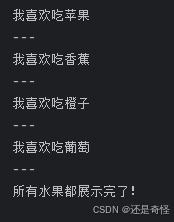
一个具体例子
python
# 遍历水果列表
fruits = ['苹果', '香蕉', '橙子', '葡萄']

for fruit in fruits:  # 每次循环,fruit依次取列表中的值
    print(f"我喜欢吃{fruit}")
    print("---")  # 注意缩进!这两行都属于循环体

print("所有水果都展示完了!")  # 这行在循环结束后执行
输出 :
3. for循环的"能量源":可迭代对象
for循环可以遍历任何"可迭代对象",主要包括:
1. 遍历列表(最常用)
python
# 计算总分
scores = [85, 92, 78, 90, 88]
total = 0

for score in scores:
    total += score  # 累加每个分数

print(f"总分:{total}")  # 433
print(f"平均分:{total / len(scores)}")  # 86.6
2. 遍历字符串
python
# 统计字符串中的元音字母
text = "Hello, Python!"
vowel_count = 0

for char in text:  # 遍历每个字符
    if char.lower() in 'aeiou':
        vowel_count += 1

print(f"元音字母个数:{vowel_count}")  # 4 (e, o, o)
3. 遍历字典
python
# 遍历字典有不同的方式
student = {'姓名': '张三', '年龄': 18, '专业': '计算机'}

# 方式1:遍历键
for key in student:
    print(f"键:{key}")

# 方式2:遍历值
for value in student.values():
    print(f"值:{value}")

# 方式3:同时遍历键和值(最常用!)
for key, value in student.items():
    print(f"{key}:{value}")
4. 遍历range()对象
python
# range(stop): 0到stop-1
for i in range(5):  # 0,1,2,3,4
    print(i)

# range(start, stop): start到stop-1
for i in range(2, 6):  # 2,3,4,5
    print(i)

# range(start, stop, step): 带步长
for i in range(0, 10, 2):  # 0,2,4,6,8
    print(i)

# 倒序
for i in range(5, 0, -1):  # 5,4,3,2,1
    print(i)
5. 遍历其他可迭代对象
python
# 遍历元组
colors = ('红', '绿', '蓝')
for color in colors:
    print(color)

# 遍历集合
unique_numbers = {1, 2, 3, 3, 2}  # {1, 2, 3}
for num in unique_numbers:
    print(num)

# 遍历文件行
with open('data.txt', 'r', encoding='utf-8') as file:
    for line in file:  # 逐行读取
        print(line.strip())  # 去除换行符
4. for循环的进阶技巧
1. enumerate():同时获取索引和值
python
fruits = ['苹果', '香蕉', '橙子']

# 传统方式(不推荐)
index = 0
for fruit in fruits:
    print(f"第{index}个水果:{fruit}")
    index += 1

# 使用enumerate()(推荐!)
for index, fruit in enumerate(fruits):
    print(f"第{index}个水果:{fruit}")

# 从1开始计数
for index, fruit in enumerate(fruits, start=1):
    print(f"第{index}个水果:{fruit}")
2. zip():并行遍历多个序列
python
names = ['张三', '李四', '王五']
scores = [85, 92, 78]
subjects = ['数学', '语文', '英语']

# 同时遍历多个列表
for name, score in zip(names, scores):
    print(f"{name}的成绩是{score}分")

# 遍历三个列表
for name, score, subject in zip(names, scores, subjects):
    print(f"{name}的{subject}成绩是{score}分")

# 注意:zip在最短序列结束时停止
list1 = [1, 2, 3]
list2 = ['a', 'b']
for num, char in zip(list1, list2):  # 只循环2次
    print(num, char)
3. 嵌套循环:循环中的循环
python
# 乘法表
print("乘法表:")
for i in range(1, 4):  # 外层循环
    for j in range(1, 4):  # 内层循环
        print(f"{i} × {j} = {i * j}", end="\t")
    print()  # 换行

# 输出:
# 乘法表:
# 1 × 1 = 1   1 × 2 = 2   1 × 3 = 3
# 2 × 1 = 2   2 × 2 = 4   2 × 3 = 6
# 3 × 1 = 3   3 × 2 = 6   3 × 3 = 9
4. 循环控制:break、continue、else
python
# break:提前结束整个循环
numbers = [1, 2, 3, 4, 5, 6, 7, 8, 9, 10]
for num in numbers:
    if num > 5:
        break  # 当num>5时,立即结束循环
    print(num)  # 只输出1,2,3,4,5

# continue:跳过当前迭代,继续下一次
for num in range(1, 11):
    if num % 2 == 0:  # 如果是偶数
        continue      # 跳过本次循环的剩余代码
    print(num)  # 只输出奇数:1,3,5,7,9

# else:循环正常结束后执行(没被break中断时)
for num in range(3):
    print(num)
else:
    print("循环正常结束!")  # 会执行

for num in range(3):
    if num == 1:
        break
    print(num)
else:
    print("循环正常结束!")  # 不会执行,因为被break中断了
5. 列表推导式:for循环的简洁写法
python
# 传统方式:创建平方数列表
squares = []
for i in range(1, 6):
    squares.append(i ** 2)

# 列表推导式:一行搞定
squares = [i ** 2 for i in range(1, 6)]

# 带条件的列表推导式
even_squares = [i ** 2 for i in range(1, 11) if i % 2 == 0]

# 字典推导式
squares_dict = {i: i ** 2 for i in range(1, 6)}

# 集合推导式
unique_lengths = {len(word) for word in ['apple', 'banana', 'apple', 'orange']}
5. 动手练习
文本分析器
python
# 分析一段文本的统计信息
text = """
Python是一种高级编程语言,由Guido van Rossum于1991年创建。
它以简洁、易读的语法而闻名,广泛应用于Web开发、数据科学、人工智能等领域。
"""

# 请计算:
# 1. 总字符数(不含空格和换行)
# 2. 总单词数
# 3. 每个单词出现的频率
# 4. 最长的单词
密码生成器
python
# 生成指定数量的随机密码
import random
import string

def generate_passwords(count, length=8):
    passwords = []
    # 你的代码写在这里
    # 提示:使用嵌套循环
    # 外层循环生成count个密码
    # 内层循环生成每个密码的字符
    return passwords

# 测试
print(generate_passwords(3, 10))
while循环
1. 引入:当你不确定需要循环多少次时
想象这样一个场景:你在开发一个猜数字游戏,程序随机生成一个1-100的数字,玩家不断猜测,直到猜中为止。你无法提前知道玩家需要猜多少次------可能1次就中,也可能要猜50次
python
import random

target_number = random.randint(1, 100)
guess_count = 0

# 我们不知道循环多少次,只知道继续的条件:没猜中
while True:  # 看起来像是无限循环,但实际上有break退出
    guess = int(input("请猜一个1-100的数字: "))
    guess_count += 1

    if guess < target_number:
        print("猜小了!")
    elif guess > target_number:
        print("猜大了!")
    else:
        print(f"恭喜!你猜了{guess_count}次就猜中了!")
        break  # 猜中后退出循环
while循环的本质 :一种条件控制循环 ,只要条件为真就不断重复执行。它适用于循环次数不确定,但知道继续条件的场景
2. while循环的基本语法
最简形式
python
while 条件表达式:
    # 条件为True时执行的代码块
    执行操作()

    # 通常需要在循环体内改变条件,否则可能无限循环!
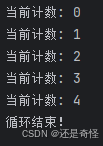
一个具体例子
python
# 计数器示例
count = 0
while count < 5:  # 条件:count小于5
    print(f"当前计数: {count}")
    count += 1  # 改变条件变量,这是避免无限循环的关键!
    # 当count变成5时,条件count<5变为False,循环结束

print("循环结束!")
输出 :
3. while循环的核心要素:条件控制
条件的三种常见形式
1. 计数器控制(知道最大循环次数)
python
# 模拟加载进度条
progress = 0
total = 100

while progress < total:
    progress += 10
    print(f"加载中... {progress}%")
    # 实际中这里可能会有time.sleep(0.5)模拟延迟

print("加载完成!")
2. 标志位控制(事件驱动)
python
# 用户输入验证系统
is_valid = False  # 标志位

while not is_valid:  # 当is_valid为False时继续循环
    age_input = input("请输入年龄(0-120): ")

    if age_input.isdigit():  # 检查是否为数字
        age = int(age_input)
        if 0 <= age <= 120:
            is_valid = True  # 改变标志位,退出循环
            print(f"年龄验证通过: {age}")
        else:
            print("年龄必须在0-120之间!")
    else:
        print("请输入有效的数字!")

print("继续处理其他逻辑...")
3. 哨兵值控制(特殊值结束)
python
# 收集学生成绩,直到输入-1结束
scores = []
print("请输入学生成绩(输入-1结束):")

while True:  # 看起来是无限循环
    score_input = input("成绩: ")

    if score_input == "-1":  # 哨兵值
        break  # 遇到哨兵值立即退出

    if score_input.isdigit():
        score = int(score_input)
        scores.append(score)
    else:
        print("请输入数字!")

print(f"共收集{len(scores)}个成绩,平均分: {sum(scores)/len(scores):.2f}")
4. while循环的高级技巧
1. while-else结构
python
# else在循环正常结束时执行(非break退出)
count = 0
while count < 3:
    print(f"尝试第{count+1}次")
    # 这里可以是一些可能失败的操作
    count += 1
else:
    print("所有尝试都完成了!")

# 与break结合:else不会执行
count = 0
while count < 5:
    if count == 3:
        print("提前结束!")
        break
    print(count)
    count += 1
else:
    print("这不会执行")  # 因为循环被break中断了
2. 多个条件的组合
python
# 复合条件控制
attempts = 0
max_attempts = 3
success = False

while not success and attempts < max_attempts:
    attempts += 1
    print(f"第{attempts}次尝试...")

    # 模拟操作,随机成功
    import random
    success = random.random() > 0.7  # 30%成功概率

    if success:
        print("操作成功!")
    elif attempts == max_attempts:
        print("已达最大尝试次数,操作失败!")
3. 在while循环中模拟for循环
python
# 用while循环实现for循环的功能
fruits = ['苹果', '香蕉', '橙子']

# for循环方式
for fruit in fruits:
    print(fruit)

# while循环方式
index = 0
while index < len(fruits):
    print(fruits[index])
    index += 1
4. 嵌套while循环
python
# 打印九九乘法表
print("九九乘法表:")
row = 1
while row <= 9:
    col = 1
    while col <= row:  # 每行列数不超过行数
        print(f"{col}×{row}={col*row:2d}", end=" ")  # :2d表示占2位右对齐
        col += 1
    print()  # 换行
    row += 1
5. 无限循环与如何避免
什么是无限循环?
python
# ❌ 危险的无限循环
count = 0
while count < 5:
    print(count)  # 忘记增加count,条件永远为True!
    # 程序会一直打印0,直到手动停止

# ⚠️ 可能导致无限循环的情况
# 1. 忘记更新条件变量
# 2. 条件永远为True (while True且没有break)
# 3. 逻辑错误导致条件无法变为False
如何安全地使用无限循环
python
# ✅ 安全模式1:明确退出条件
while True:
    user_input = input("输入'quit'退出: ")
    if user_input.lower() == 'quit':
        break  # 明确的退出点
    print(f"你输入了: {user_input}")

# ✅ 安全模式2:添加安全计数器
max_iterations = 1000  # 安全阀
iteration = 0

while iteration < max_iterations:
    # 正常的业务逻辑
    iteration += 1

    # 同时也有正常的退出条件
    if some_condition:
        break

if iteration == max_iterations:
    print("警告:达到最大循环次数!")
6. for循环与while循环的区别
| 特性 | for循环 | while循环 |
|---|---|---|
| 循环条件 | 遍历可迭代对象 | 满足条件时继续 |
| 循环次数 | 确定(由序列长度决定) | 不确定 |
| 适用场景 | 遍历已知集合 | 条件满足时重复 |
| 控制方式 | 自动迭代 | 需手动更新条件 |
| 死循环风险 | 较低 | 较高(需谨慎) |
选择指南:
- 知道要循环多少次或遍历什么 → for循环
- 不知道循环次数,但知道继续的条件 → while循环
python
# for循环:遍历已知集合
for student in students:
    process_student(student)

# while循环:条件控制
user_input = ""
while user_input.lower() != "quit":
    user_input = input("请输入命令:")
    process_command(user_input)