
文章目录
- [C++ STL list 容器详解:使用与模拟实现](#C++ STL list 容器详解:使用与模拟实现)
-
- [1. list 的介绍及使用](#1. list 的介绍及使用)
-
- [1.1 list 的介绍](#1.1 list 的介绍)
- [1.2 list 的使用](#1.2 list 的使用)
-
- [1.2.1 list 的构造](#1.2.1 list 的构造)
- [1.2.2 list 迭代器的使用](#1.2.2 list 迭代器的使用)
- [1.2.3 list capacity](#1.2.3 list capacity)
- [1.2.4 list element access](#1.2.4 list element access)
- [1.2.5 list modifiers](#1.2.5 list modifiers)
- [1.2.6 list 的迭代器失效](#1.2.6 list 的迭代器失效)
- [2. list 的模拟实现](#2. list 的模拟实现)
-
- [2.1 基本结构](#2.1 基本结构)
-
- [2.1.1 节点类 (list_node)](#2.1.1 节点类 (list_node))
- [2.1.2 迭代器类 (list_iterator)](#2.1.2 迭代器类 (list_iterator))
- [2.2 list 容器类](#2.2 list 容器类)
-
- [2.2.1 类型定义和迭代器](#2.2.1 类型定义和迭代器)
- [2.2.2 构造函数和初始化](#2.2.2 构造函数和初始化)
- [2.2.3 插入操作](#2.2.3 插入操作)
- [2.2.4 删除操作](#2.2.4 删除操作)
- [2.2.5 容量操作](#2.2.5 容量操作)
- [2.2.6 赋值操作](#2.2.6 赋值操作)
- [2.3 迭代器模板技巧](#2.3 迭代器模板技巧)
- [2.4 测试示例](#2.4 测试示例)
- [2.5 设计要点总结](#2.5 设计要点总结)
- [3. list 与 vector 的对比](#3. list 与 vector 的对比)
C++ STL list 容器详解:使用与模拟实现
1. list 的介绍及使用
1.1 list 的介绍
list 是 C++ STL 中的一个重要容器,它是一个带头结点的双向循环链表。与 vector 不同,list 在任意位置插入和删除元素的时间复杂度都是 O(1),但不支持随机访问(即不能通过下标直接访问元素)。
1.2 list 的使用
list 提供了丰富的接口,下面我们介绍其中一些常见且重要的接口。
1.2.1 list 的构造
| 构造函数 | 接口说明 |
|---|---|
list(size_type n, const value_type& val) |
构造包含 n 个值为 val 的元素的 list |
list() |
构造空的 list |
list(const list& x) |
拷贝构造函数 |
list(InputIterator first, InputIterator last) |
用区间 [first, last) 中的元素构造 list |
1.2.2 list 迭代器的使用
迭代器可以暂时理解为指向 list 中某个节点的指针。
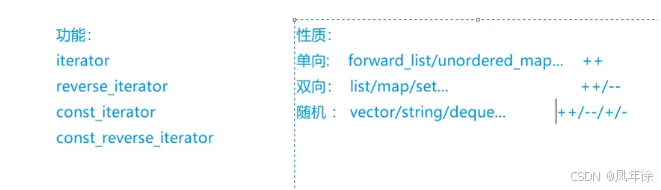
begin():返回指向第一个元素的迭代器end():返回指向最后一个元素下一个位置的迭代器rbegin():返回指向最后一个元素的反向迭代器(即end()位置)rend():返回指向第一个元素前一个位置的反向迭代器(即begin()位置)
注意:
-
begin和end是正向迭代器,++向后移动。 -
rbegin和rend是反向迭代器,++向前移动。迭代器分类
1.2.3 list capacity
| 函数声明 | 接口说明 |
|---|---|
empty() |
检测 list 是否为空 |
size() |
返回 list 中有效节点的个数 |
1.2.4 list element access
| 函数声明 | 接口说明 |
|---|---|
front() |
返回第一个节点中值的引用 |
back() |
返回最后一个节点中值的引用 |
1.2.5 list modifiers
| 函数声明 | 接口说明 |
|---|---|
push_front |
在 list 首元素前插入值为 val 的元素 |
pop_front |
删除 list 中第一个元素 |
push_back |
在 list 尾部插入值为 val 的元素 |
pop_back |
删除 list 中最后一个元素 |
insert |
在 position 位置插入值为 val 的元素 |
erase |
删除 position 位置的元素 |
swap |
交换两个 list 中的元素 |
clear |
清空 list 中的有效元素 |
1.2.6 list 的迭代器失效
由于 list 的底层是双向循环链表,插入操作不会导致迭代器失效。只有在删除元素时,指向被删除节点的迭代器才会失效,其他迭代器不受影响。
错误的删除写法:
c++
while (it != l.end()) {
    l.erase(it);  // it 失效
    ++it;         // 错误,it 已无效
}
2. list 的模拟实现
2.1 基本结构
2.1.1 节点类 (list_node)
c++
template<class T>
class list_node
{
public:
    T _data;
    list_node<T>* _next;
    list_node<T>* _prev;

    list_node(const T& data = T())
        :_data(data)
        ,_next(nullptr)
        ,_prev(nullptr)
    { }
};
这是 list 的基础节点结构,采用双向链表设计,每个节点包含:
_data: 存储实际数据_next: 指向下一个节点_prev: 指向上一个节点
2.1.2 迭代器类 (list_iterator)
c++
template<class T, class Ref, class Ptr>
struct list_iterator
{
    typedef list_node<T> Node;
    typedef list_iterator<T, Ref, Ptr> Self;
    Node* _node;

    list_iterator(Node* node)
        :_node(node)
    { }

    // 解引用操作符
    Ref operator*()
    {
        return _node->_data;
    }

    // 箭头操作符
    Ptr operator->()
    {
        return &_node->_data;
    }

    // 前置++
    Self& operator++()
    {
        _node = _node->_next;
        return *this;
    }

    // 后置++
    Self operator++(int)
    {
        Self tmp(*this);
        _node = _node->_next;
        return tmp;
    }

    // 前置--
    Self& operator--()
    {
        _node = _node->_prev;
        return *this;
    }

    // 后置--
    Self operator--(int)
    {
        Self tmp(*this);
        _node = _node->_prev;
        return tmp;
    }

    // 不等于操作符
    bool operator!=(const Self& s)
    {
        return _node != s._node;
    }
};关键特性:
- 通过模板参数
Ref和Ptr实现 const 和非 const 迭代器的统一 - 支持前后遍历操作
- 支持箭头操作符访问成员
2.2 list 容器类
2.2.1 类型定义和迭代器
c++
template<class T>
class list
{
    typedef list_node<T> Node;
public:
    // 迭代器定义
    typedef list_iterator<T, T&, T*> iterator;
    typedef list_iterator<T, const T&, const T*> const_iterator;

    // 获取迭代器
    iterator begin()
    {
        return _head->_next;  // 隐式类型转换
    }

    iterator end()
    {
        return _head;
    }

    const_iterator begin() const
    {
        return _head->_next;
    }

    const_iterator end() const
    {
        return _head;
}迭代器转换机制:
Node*可以隐式转换为iterator,因为list_iterator有单参数构造函数begin()返回第一个有效元素位置end()返回头节点位置,符合 STL 左闭右开原则
2.2.2 构造函数和初始化
c++
void empty_init()
{
    _head = new Node;
    _head->_next = _head;
    _head->_prev = _head;
    _size = 0;
}

list()
{
    empty_init();
}

// 拷贝构造
list(list<T>& lt)
{
    empty_init();
    for (auto& e : lt)
    {
        push_back(e);
    }
}

// 初始化列表构造
list(initializer_list<int> il)
{
    empty_init();
    for (auto& e : il)
    {
        push_back(e);
    }
}
2.2.3 插入操作
c++
iterator insert(iterator pos, const T& x)
{
    Node* cur = pos._node;
    Node* prev = cur->_prev;

    Node* newnode = new Node(x);

    prev->_next = newnode;
    newnode->_prev = prev;
    newnode->_next = cur;
    cur->_prev = newnode;

    ++_size;
    return newnode;  // 返回新插入节点的迭代器
}

void push_back(const T& x)
{
    insert(end(), x);  // 复用 insert
}

void push_front(const T& x)
{
    insert(begin(), x);  // 复用 insert
}
2.2.4 删除操作
c++
iterator erase(iterator pos)
{
    assert(pos != end());  // 不能删除头节点

    Node* prev = pos._node->_prev;
    Node* next = pos._node->_next;

    prev->_next = next;
    next->_prev = prev;
    delete pos._node;

    --_size;
    return next;  // 返回下一个有效位置的迭代器
}

void pop_back()
{
    erase(--end());
}

void pop_front()
{
    erase(begin());
}迭代器失效处理:
erase返回下一个有效位置的迭代器- 正确处理删除操作后的迭代器续接
2.2.5 容量操作
c++
size_t size() const
{
    return _size;
}

bool empty() const
{
    return _size == 0;
}

void clear()
{
    auto it = begin();
    while (it != end())
    {
        it = erase(it);  // erase 返回下一个地址
    }
}
2.2.6 赋值操作
c++
list<T>& operator=(list<T> lt)
{
    swap(lt);
    return *this;
}

void swap(list<T>& lt)
{
    std::swap(_head, lt._head);
    std::swap(_size, lt._size);
}
2.3 迭代器模板技巧
c++
// 使用模板参数实现 const 和非 const 迭代器的统一
typedef list_iterator<T, T&, T*> iterator;
typedef list_iterator<T, const T&, const T*> const_iterator;
这种设计避免了重复代码,只需要一个模板类就能同时支持普通迭代器和 const 迭代器。
2.4 测试示例
c++
// 测试基本功能
void test_list01()
{
    list<int> lt;
    lt.push_back(1);
    lt.push_back(2);
    lt.push_back(3);
    lt.push_back(4);

    // 遍历输出
    list<int>::iterator it = lt.begin();
    while (it != lt.end())
    {
        cout << *it << " ";
        ++it;
    }
    cout << endl;
}

// 测试迭代器失效
void test_list02()
{
    list<int> lt;
    lt.push_back(1);
    lt.push_back(2);
    lt.push_back(3);
    lt.push_back(4);

    // insert 不会导致迭代器失效
    list<int>::iterator it = lt.begin();
    lt.insert(it, 10);
    *it += 100;  // 仍有效

    // erase 会导致当前迭代器失效
    it = lt.begin();
    while (it != lt.end())
    {
        if (*it % 2 == 0)
        {
            it = lt.erase(it);  // 必须接收返回值
        }
        else {
            ++it;
        }
    }
}
源代码
c++
#pragma once
#include<assert.h>
namespace bit
{
	template<class T>
	class list_node
	{
	public:
		T _data;
		list_node<T>* _next;
		list_node<T>* _prev;

		list_node(const T& data = T())
			:_data(data)
			,_next(nullptr)
			,_prev(nullptr)
		{ }
	};

	template<class T,class Ref,class Ptr>
	struct list_iterator
	{
		typedef list_node<T> Node;
		typedef list_iterator<T,Ref,Ptr> Self;
		Node* _node;

		list_iterator(Node* node)
			:_node(node)
		{ }

		Ref operator*()
		{
			return _node->_data;
		}
		Ptr operator->()
		{
			return &_node->_data;
		}
		Self& operator++()
		{
			_node = _node->_next;
			return *this;
		}
		Self operator++(int)
		{
			Self tmp(*this);
			_node = _node->_next;

			return tmp;
		}
		Self operator--(int)
		{
			Self tmp(*this);
			_node = _node->_prev;

			return tmp;
		}
		Self& operator--()
		{
			_node = _node->_prev;
			return *this;
		}
		bool operator!=(const Self& s)
		{
			return _node != s._node;
		}
	};
	/*template<class T>
	struct list_const_iterator
	{
		typedef list_node<T> Node;
		typedef list_const_iterator<T> Self;
		Node* _node;

		list_const_iterator(Node* node)
			:_node(node)
		{
		}

		const T& operator*()
		{
			return _node->_data;
		}
		const T* operator->()
		{
			return &_node->_data;
		}
		Self& operator++()
		{
			_node = _node->_next;
			return *this;
		}
		Self operator++(int)
		{
			Self tmp(*this);
			_node = _node->_next;

			return tmp;
		}
		Self operator--(int)
		{
			Self tmp(*this);
			_node = _node->_prev;

			return tmp;
		}
		Self& operator--()
		{
			_node = _node->_prev;
			return *this;
		}
		bool operator!=(const Self& s)
		{
			return _node != s._node;
		}
	};*/

	template<class T>
	class list
	{
		typedef list_node<T> Node;
	public:
		/*typedef list_iterator<T> iterator;
		typedef list_const_iterator<T> const_iterator;*/
		typedef list_iterator<T,T&,T*> iterator;
		typedef list_iterator<T,const T&,const T*> const_iterator;

		iterator begin()
		{
			/*iterator it(_head->_next);
			return it;*/

			//return iterator(_head->_next);
			return _head->_next;//节点的指针可以隐式类型转换成iterator的
			//单参数构造函数可以隐式类型转换
		}
		iterator end()
		{
			return _head;
		}
		const_iterator begin() const
		{
			/*iterator it(_head->_next);
			return it;*/

			//return iterator(_head->_next);
			return _head->_next;//节点的指针可以隐式类型转换成iterator的
			//单参数构造函数可以隐式类型转换
		}
		const_iterator end() const
		{
			return _head;
		}
		void empty_init()
		{
			_head = new Node;
			_head->_next = _head;
			_head->_prev = _head;
			_size = 0;
		}
		list()
		{
			empty_init();
		}
		~list()
		{
			clear();
			delete _head;
			_head = nullptr;
		}

		void clear()
		{
			auto it = begin();
			while (it != end())
			{
				it = erase(it);//erase返回下一个地址
			}
		}
		list<T>& operator=(list<T> lt)
		{
			swap(lt);
			return *this;
		}
		void swap(list<T>& lt)
		{
			std::swap(_head, lt._head);
			std::swap(_size, lt._size);
		}

		//lt2(lt1) 拷贝构造
		list(list<T>& lt)
		{
			empty_init();
			for (auto& e : lt)
			{
				push_back(e);
			}
		}
		list(initializer_list<int> il)
		{
			empty_init();
			for (auto& e : il)
			{
				push_back(e);
			}
		}
		void push_back(const T&x)
		{
			/*Node* newnode = new Node(x);
			Node* tail = _head->_prev;

			tail->_next = newnode;
			newnode->_prev = tail;
			newnode->_next = _head;
			_head->_prev = newnode;

			++_size;*/
			insert(end(), x);
		}
		iterator insert(iterator pos,const T& x)//c++中插入默认在之前插
		{
			Node* cur = pos._node;
			Node* prev = cur->_prev;

			Node* newnode = new Node(x);

			prev->_next = newnode;
			newnode->_prev = prev;
			newnode->_next = cur;
			cur->_prev = newnode;

			++_size;

			return newnode;

		}
		void push_front(const T& x)
		{
			insert(begin(), x);
		}

		void pop_back()
		{
			erase(--end());
		}

		void pop_front()
		{
			erase(begin());
		}

		iterator erase(iterator pos)
		{
			assert(pos != end());
			Node* prev = pos._node->_prev;
			Node* next = pos._node->_next;

			prev->_next = next;
			next->_prev = prev;
			delete pos._node;

			return next;//走隐式类型转换 编译器发现next是Node*类型的,就会走构造函数iteratpor(Node* node)
		}

		size_t size() const
		{
			return _size;
		}
		bool empty() const
		{
			return _size == 0;
		}
	private:
		Node* _head;
		size_t _size;
	};

	struct AA
	{
		int _a1;
		int _a2;
	};
	template<class Container>
	void print_container(const Container& con)
	{
		//const iterator 迭代器本身不能修改
		//const_iterator 指向内容不能修改 迭代器要修改(比如++)
		//list<int>::const_iterator it = con.begin();
		//typename Container::const_iterator it = con.begin();
		auto it = con.begin();
		while (it != con.end())
		{
			cout << *it << " ";
			++it;
		}
		cout << endl;
	/*	for (auto e : con)
		{
			cout << e << " ";
		}
		cout << endl;*/
	}
	void test_list01()
	{
		list<int> lt;
		lt.push_back(1);
		lt.push_back(2);
		lt.push_back(3);
		lt.push_back(4);

		list<int>::iterator it = lt.begin();
		while (it != lt.end())
		{
			cout << *it << " ";
			++it;
		}
		cout << endl;

		list<AA> lta;
		lta.push_back(AA());
		lta.push_back(AA());
		lta.push_back(AA());
		lta.push_back(AA());

		list<AA>::iterator ita = lta.begin();
		while (ita != lta.end())
		{
			//cout<< (*ita)._a1 << " "<<(*ita)._a2<<endl;
			//特殊处理 本来应该两个->才合理,为了可读性,省略一个
			cout << ita->_a1 << ":" << ita->_a2 << endl;
			//cout << ita.operator->()->_a1 << ":" << ita->_a2 << endl;

			++ita;

		}
		cout << endl;

		print_container(lt);
	}
	void test_list02()
	{
		list<int> lt;
		lt.push_back(1);
		lt.push_back(2);
		lt.push_back(3);
		lt.push_back(4);

		list<int>::iterator it = lt.begin();
		lt.insert(it, 10);
		*it += 100;
		print_container(lt);
		//insert以后迭代器不失效
		//删除偶数
		it = lt.begin();
		while (it != lt.end())
		{
			if (*it % 2 == 0)
			{
				it=lt.erase(it);//erase以后 迭代器失效
			}
			else {
				++it;
			}
		}

		print_container(lt);
	}

	void test_list03()
	{
		list<int> lt1;
		lt1.push_back(1);
		lt1.push_back(2);
		lt1.push_back(3);
		lt1.push_back(4);

		list<int> lt2(lt1);

		print_container(lt1);
		print_container(lt2);

		list<int> lt3;
		lt3.push_back(10);
		lt3.push_back(20);
		lt3.push_back(30);
		lt3.push_back(40);
		lt1 = lt3;
		print_container(lt1);
		print_container(lt3);

	}

	void func(const list<int>& lt)
	{
		print_container(lt);
	}
	void test_list04()
	{

		//直接构造
		list<int> lt0 ( { 1,3,5 });
		//隐式类型转换
		list<int> lt1= {1, 2, 3, 4, 5};
		print_container(lt1);

		auto il = { 1,2,3,4 };
		cout << typeid(il).name() << endl;

		func(lt1);
		func({ 1,3,6,7 });//隐式类型转换
	}
};
2.5 设计要点总结
- 双向循环链表:头节点连接首尾,简化边界处理
- 迭代器封装:隐藏底层指针,提供统一接口
- 模板复用:通过模板参数减少代码重复
- 异常安全:正确管理资源,避免内存泄漏
- STL 兼容:遵循 STL 接口规范
这个实现展示了 list 容器的核心机制,包括节点管理、迭代器设计、插入删除操作等关键技术点。
3. list 与 vector 的对比
| 对比维度 | vector | list |
|---|---|---|
| 底层结构 | 动态顺序表,连续空间 | 带头结点的双向循环链表 |
| 随机访问 | 支持 O(1) | 不支持,访问元素 O(N) |
| 插入删除 | 任意位置效率低 O(N),可能增容 | 任意位置效率高 O(1) |
| 空间利用率 | 连续空间,内存碎片少,缓存友好 | 节点动态开辟,易产生内存碎片 |
| 迭代器类型 | 原生态指针 | 对节点指针进行封装 |
| 迭代器失效 | 插入删除可能导致全部或部分失效 | 删除时仅当前迭代器失效 |